Building or ruin · Medieval
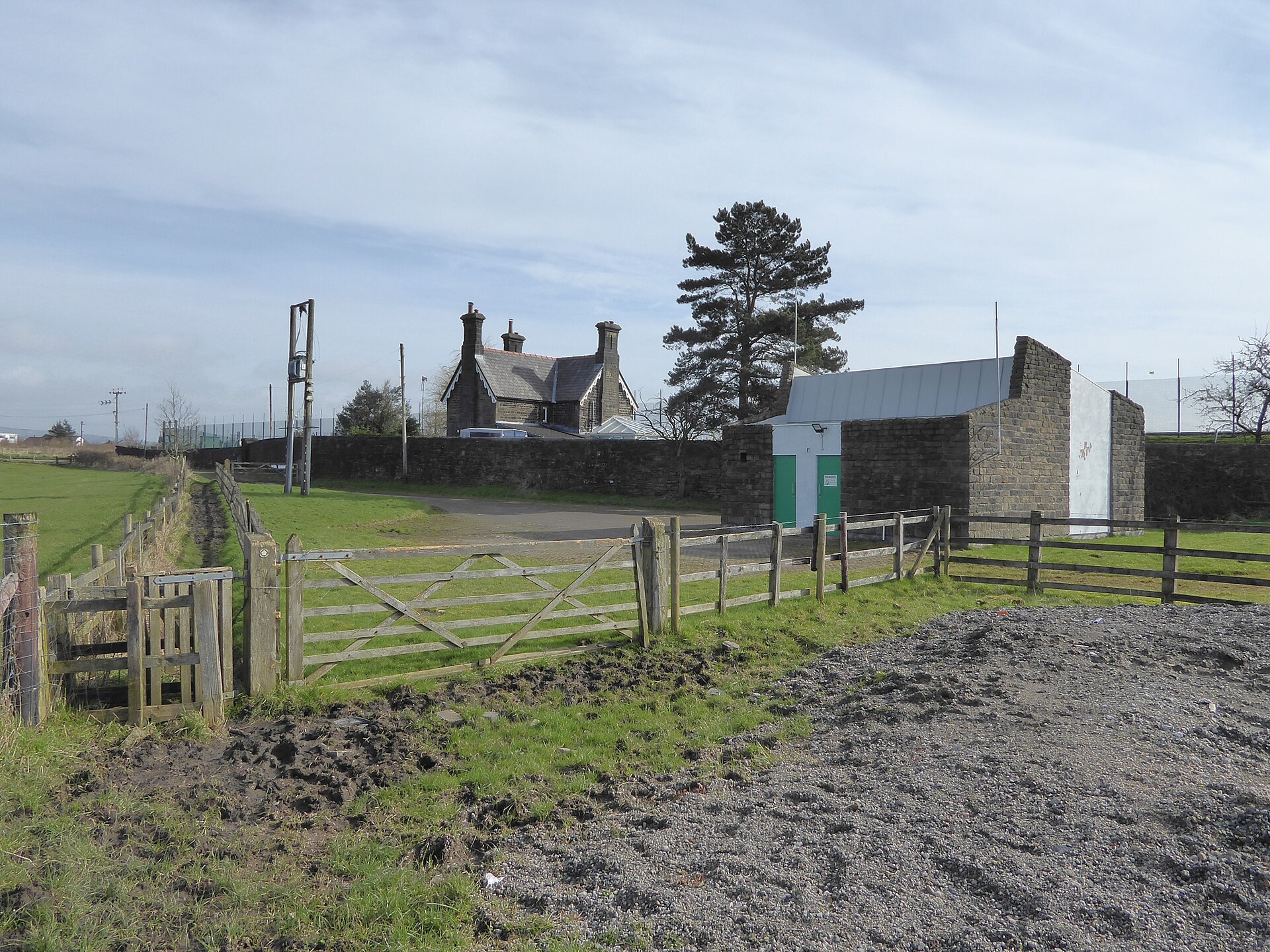
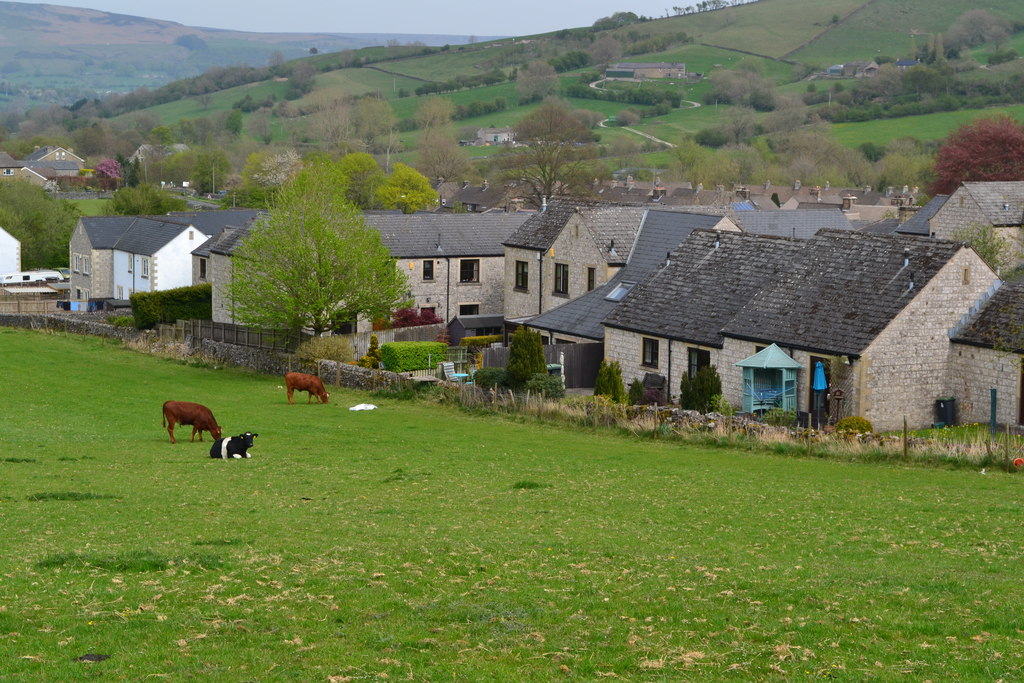
Fritchley Tunnel
Derbyshire
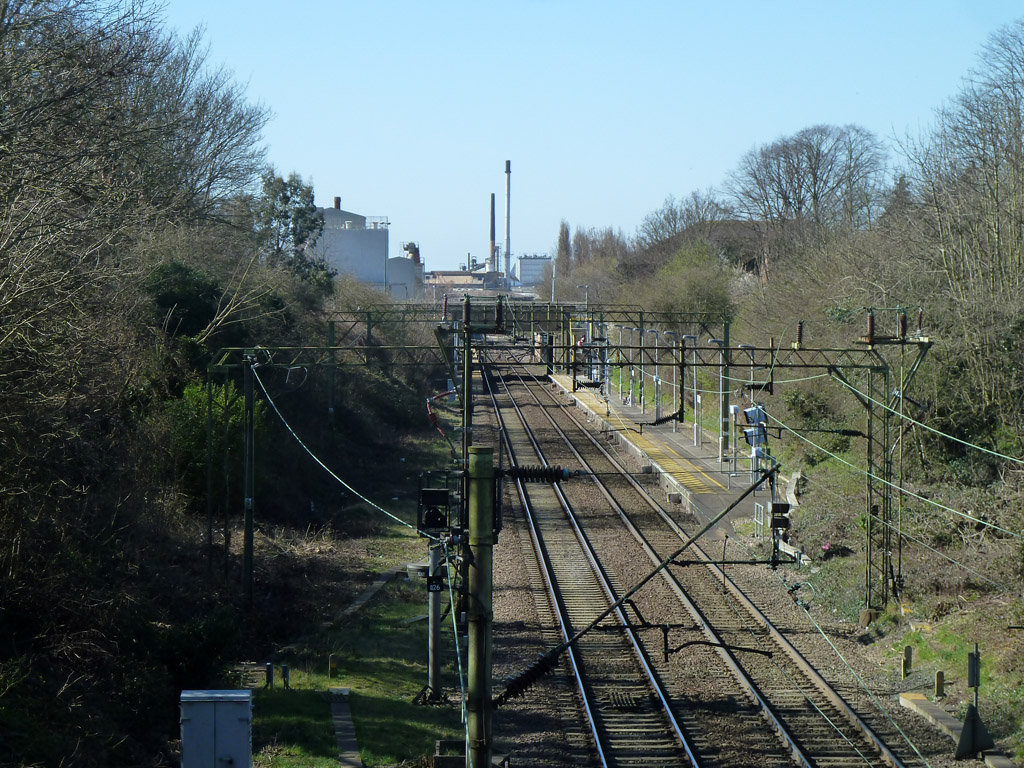
Believed to be the oldest surviving railway tunnel in the world, its stonework still carries the soot, tool-marks and sleeper-scars of the horse-dr…
- Near Bakewell
By type
Page 6 of 14.
Search and filters apply to these 100 places.
Building or ruin · Medieval
Derbyshire
Believed to be the oldest surviving railway tunnel in the world, its stonework still carries the soot, tool-marks and sleeper-scars of the horse-dr…
Building or ruin · Prehistoric
Greater London
Fulham Palace records more than a millennium of London bishops’ stewardship, combining medieval palace fabric, England’s largest domestic moat and…
Fortified place · Prehistoric
Shetland Islands
A stone wall over four kilometres long once ran the full north-south length of Fetlar, splitting the Shetland island into two almost equal halves.…
Building or ruin · Roman
Hertfordshire
A farmer's field near Hemel Hempstead once held the second-largest swimming pool in Roman Britain: outdone only by the great baths at Bath.
Building or ruin · Medieval
herefordshire
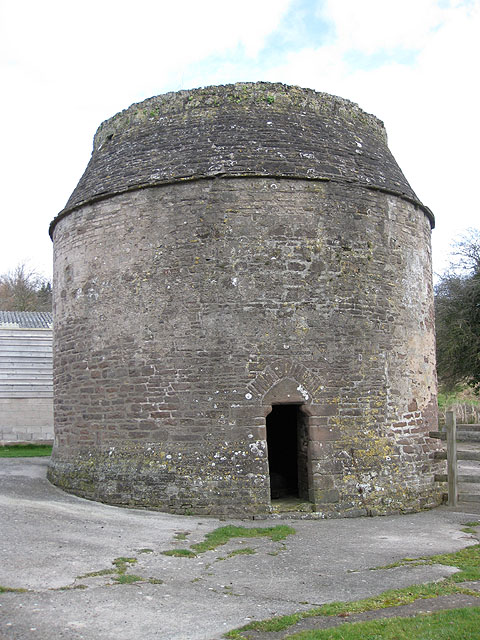
A circular Knights Hospitaller dovecote of 1326 with nineteen rows of nesting boxes, rebuilt on a Templar original and called by some the finest me…
Building or ruin · Medieval
Derbyshire
Scheduled in 2013, the rake preserves an intact surface record of a lead vein worked as a single open trench rather than through scattered shafts a…
Building or ruin · Roman
Norfolk
Gayton Thorpe Roman Villa is a scheduled Norfolk villa complex, where mosaics, heated rooms and detached bathhouses reveal a substantial rural esta…
Fortified place · Iron Age
Cornwall
Giant's Castle uses sea cliffs and a triple line of earthworks to defend a small Iron Age (roughly 800 BC until the Roman conquest) promontory on S…
Tomb or burial place · Prehistoric
Derbyshire
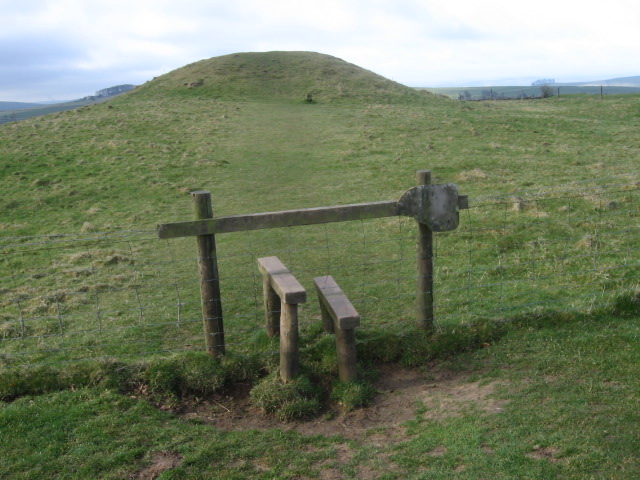
Two burial monuments share one mound: a late Stone Age oval mound, dating roughly 4000–2500 BC in Britain, and a later round mound from roughly 250…
Building or ruin · Medieval
Greater Manchester
Gidlow Hall preserves the moated, partially surviving home of an Aspull family recorded from the 13th century, with visible fabric from its 1574 re…
Minor monument · Medieval
North Yorkshire
Giggleswick Market Cross preserves the village’s late-medieval market status and, through later relocation and competing local traditions, captures…
Building or ruin · Medieval
Glasgow City
One of only two medieval Scottish cathedrals: alongside St Magnus in Orkney: to survive the Reformation (the sixteenth-century suppression of monas…
Sacred place · Medieval
Dumfries and Galloway
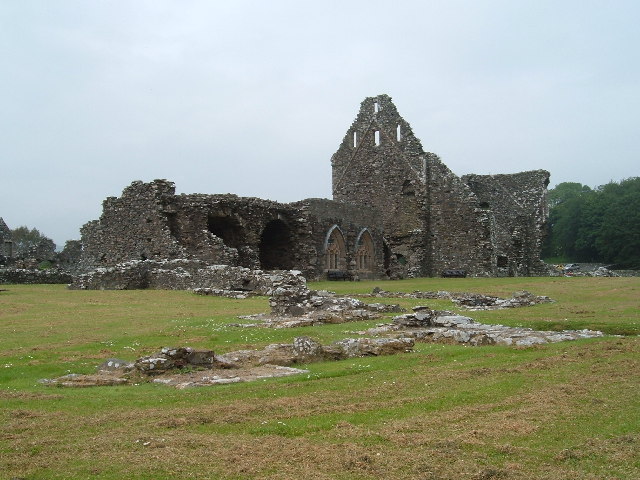
Glenluce Abbey preserves a Cistercian foundation in Galloway whose post-Reformation (the sixteenth-century closure of the monasteries) seizure, Ken…
Building or ruin · Roman
Gloucestershire
One of only a handful of coloniae in Roman Britain, and the likely provincial capital of Britannia Secunda: a rank Glevum shared only with York and…
Building or ruin · Roman
Greater London
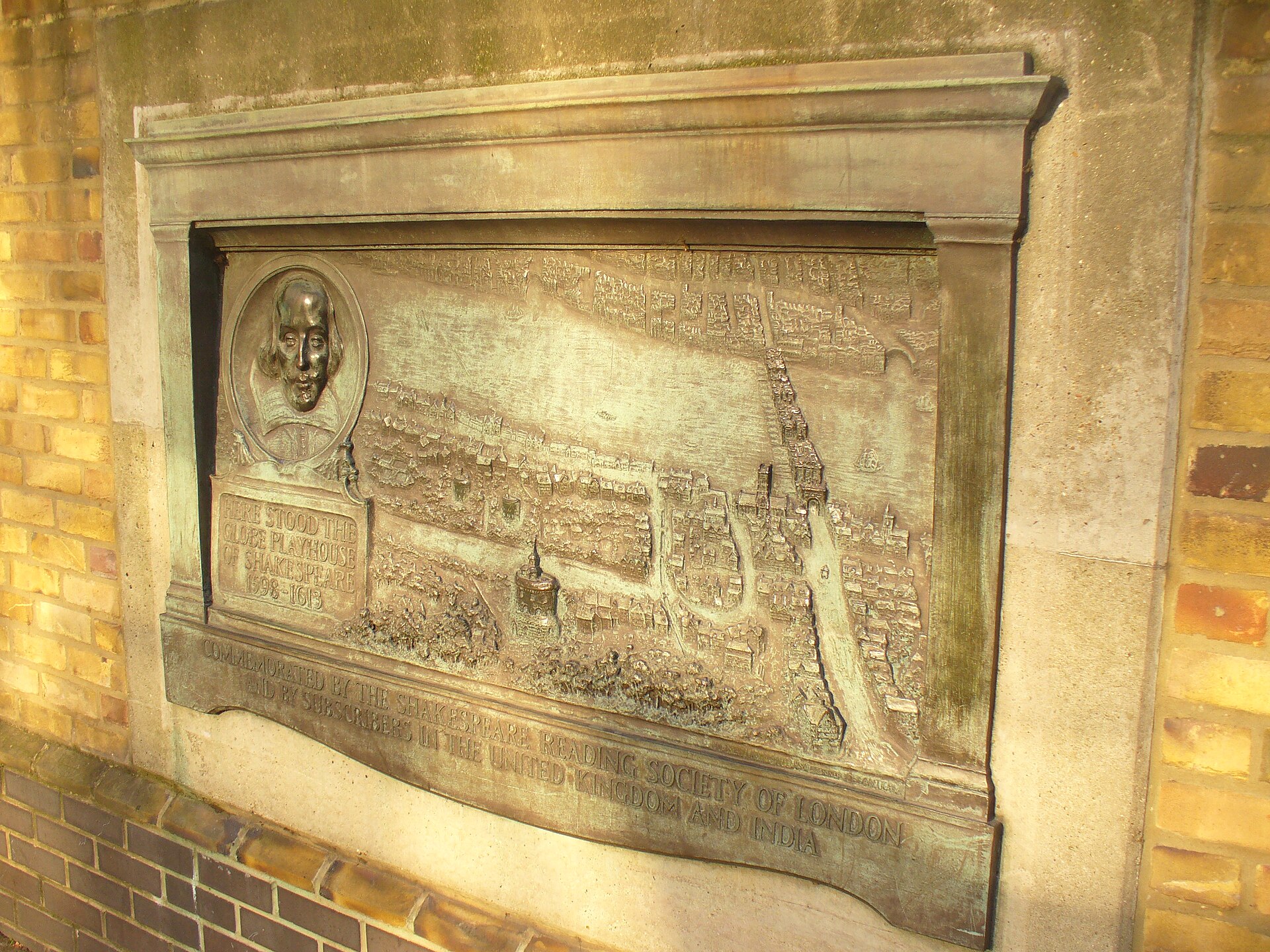
The playhouse built from another theatre stolen beam by beam over Christmas 1598: and found again under a Southwark car park in 1989.
Fortified place · Pictish & early medieval
Hampshire
One of England's earliest purpose-built cannon forts survives here fused onto a medieval town gate, its gunports still facing the water it was rais…
Building or ruin · Prehistoric
Cornwall
Goonhilly Downs combines protected serpentinite heath with one of Britain's defining satellite-station landscapes, showing scientific infrastructur…
Carved stone · Pictish & early medieval
Cumbria
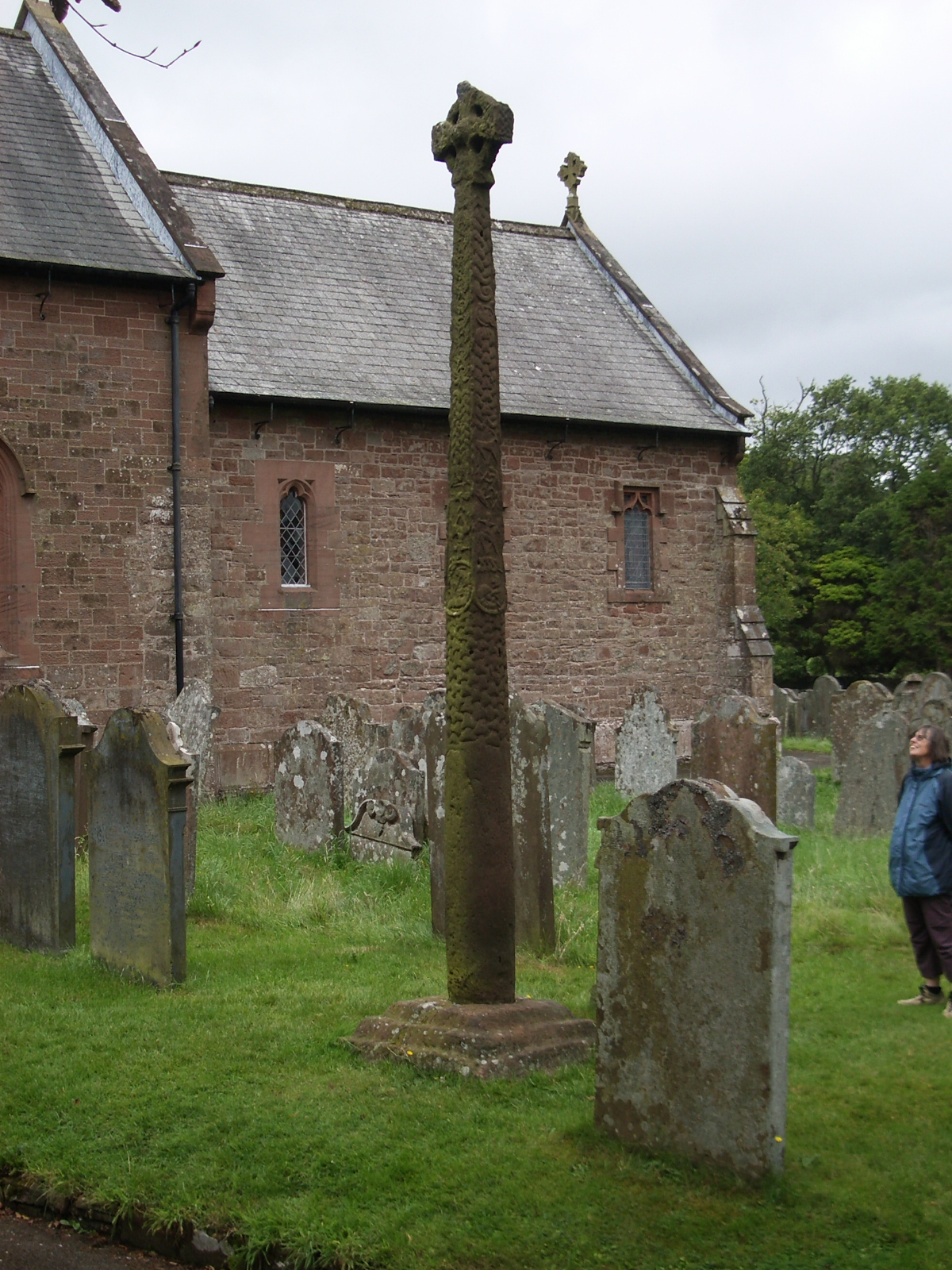
A single carved stone shows a Christian crucifixion and Norse gods sharing the same four faces, caught mid-way between two belief systems rather th…
Building or ruin · Prehistoric
Somerset
A long cave in Cheddar Gorge with large chambers, an underground river and evidence of very early occupation.
Building or ruin · Medieval
Hampshire
Timbers of Henry V's flagship still lie in the River Hamble mud: one of the largest wooden ships ever built in medieval England, rediscovered by ac…
Sacred place · Medieval
Monmouthshire
Grace Dieu was the last Cistercian foundation in Wales: a poor, repeatedly displaced abbey (a monastery headed by an abbot) whose attacks, royal ti…
Building or ruin · Medieval
Oxfordshire
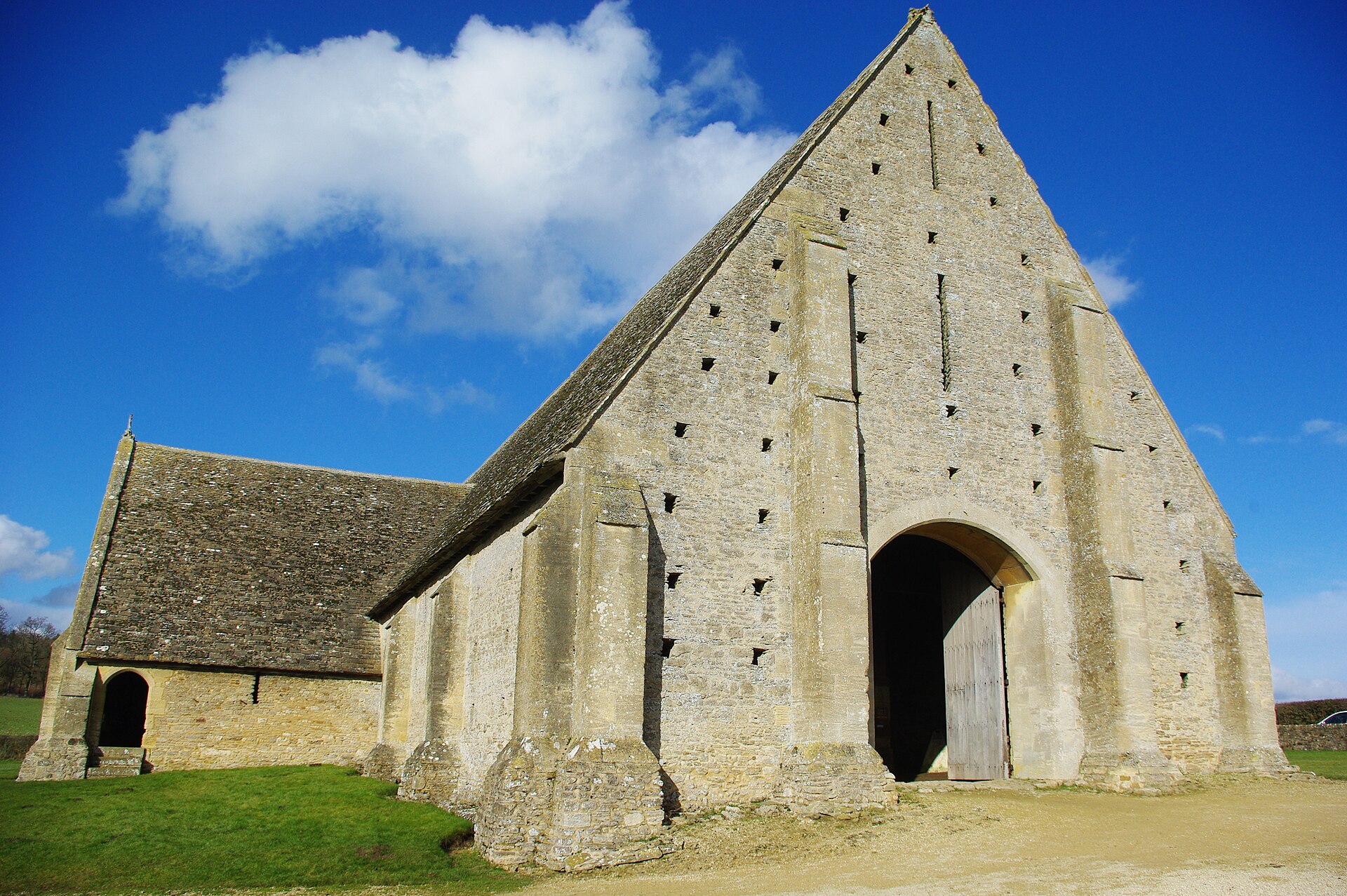
A working monastic barn from the 1290s survives almost complete, its timber roof still resting on the same pairs of posts a Cistercian granger once…
Building or ruin · Prehistoric
Cumbria
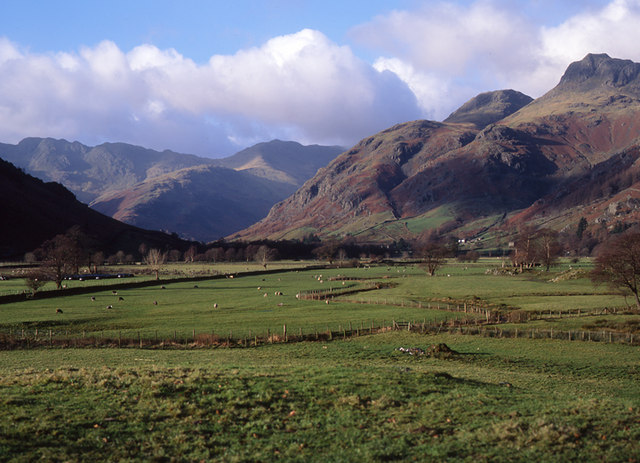
The scree below Pike of Stickle supplied a type of polished stone axe traded as far as Orkney and Cornwall, making this valley a working hub of Neo…
Settlement · Medieval
Monmouthshire
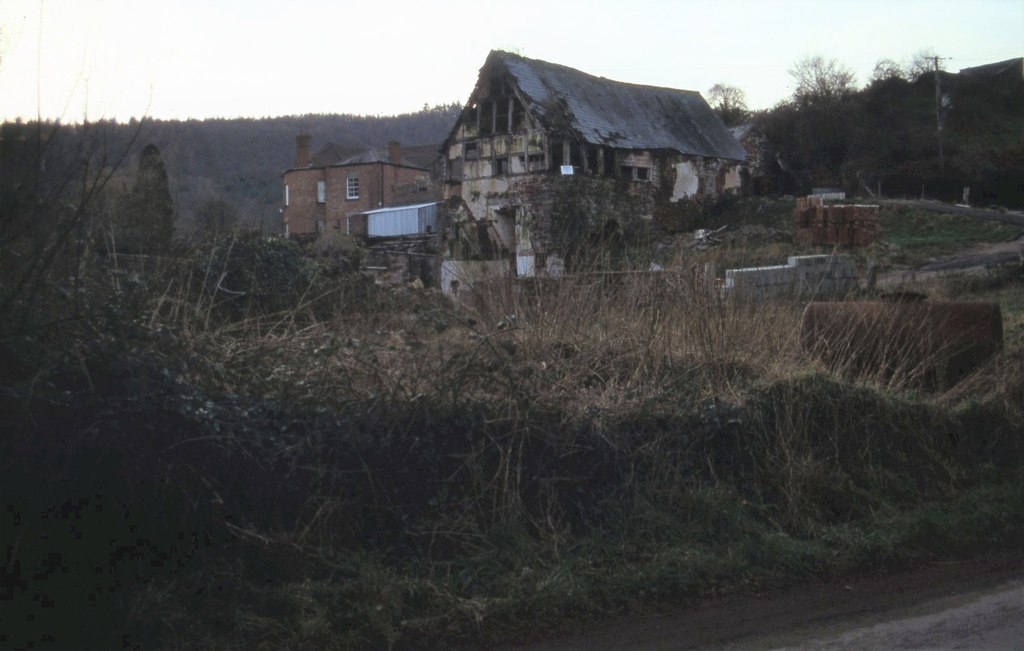
Great Manson Farm is an active sheep farm whose three listed buildings preserve a late-medieval hall adapted as a barn, an eighteenth-century farmh…
Building or ruin · Prehistoric
Cambridgeshire
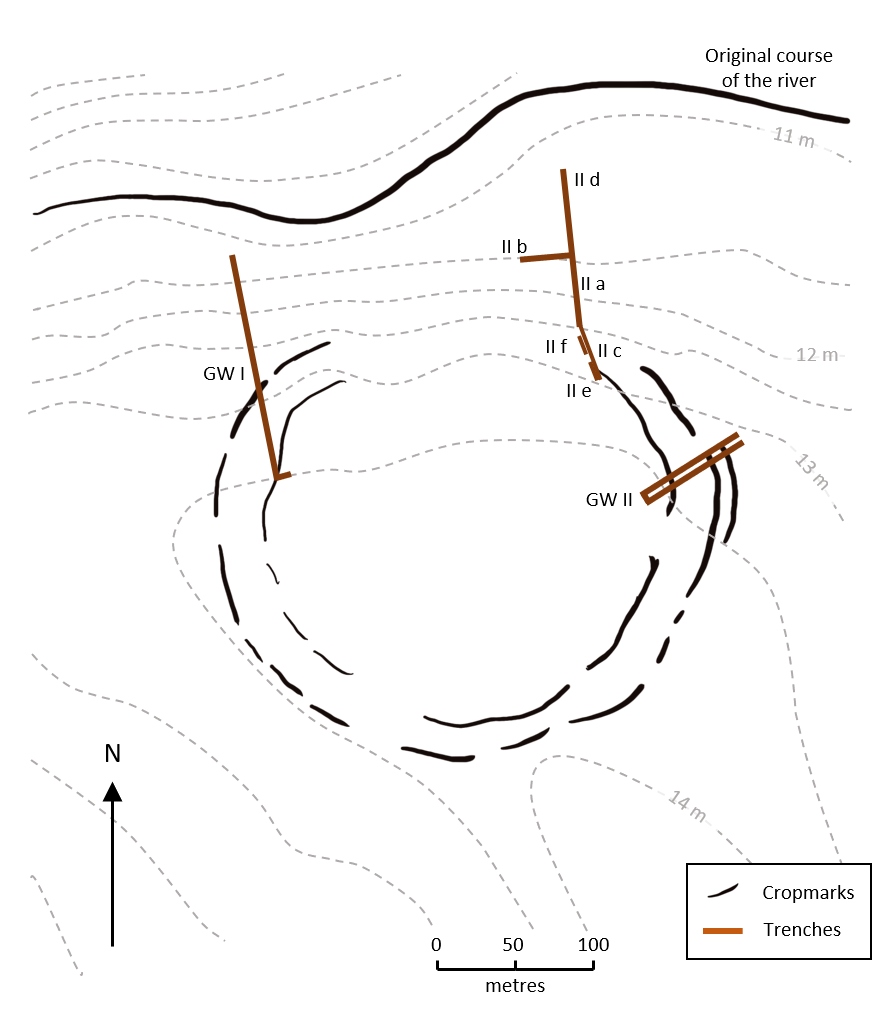
Two ditches drawn as near-perfect circles, a rare geometric variant among Britain's causewayed enclosures, laid out beside a Cambridgeshire fen som…
Building or ruin · Roman
Gloucestershire
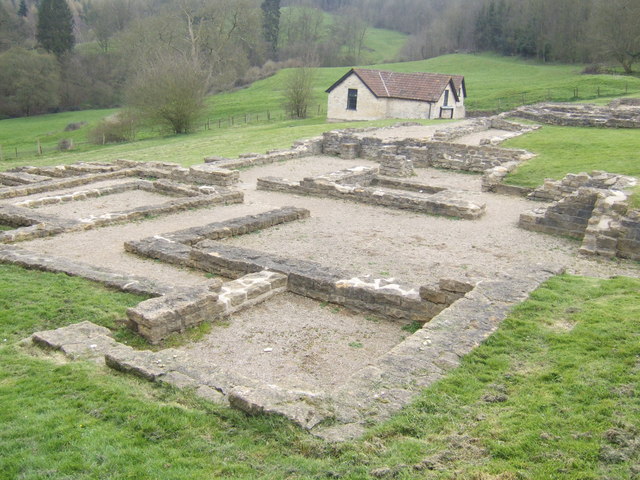
Excavated, admired, then largely destroyed by rain and poor conservation within decades: its bath house mosaic and shrine room still survive to rew…
Sacred place · Pictish & early medieval
Essex
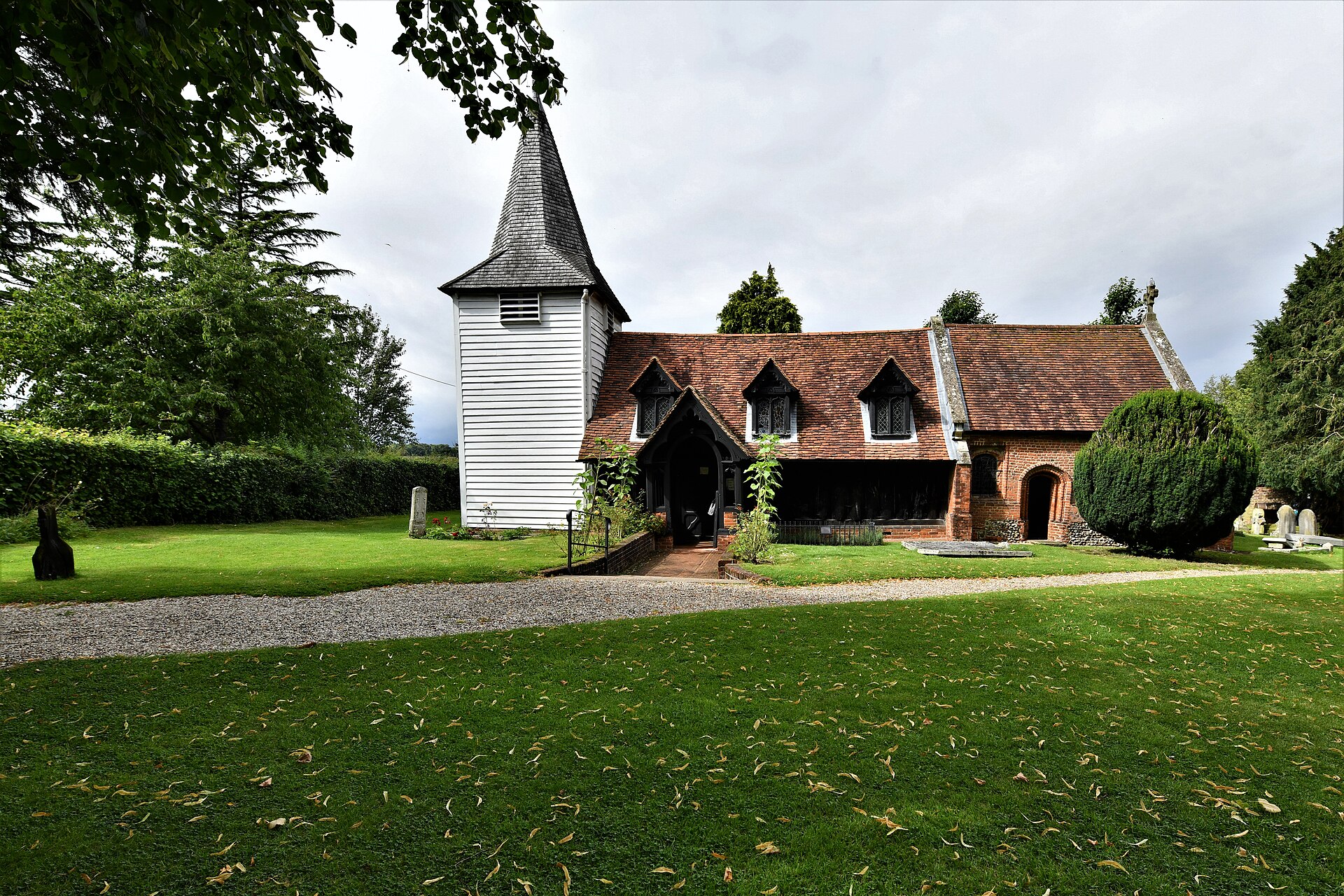
Greensted Church retains rare oak-wall construction from the late Anglo-Saxon or early Norman period, making it an exceptional survivor in debates…
Building or ruin · Roman
Derbyshire
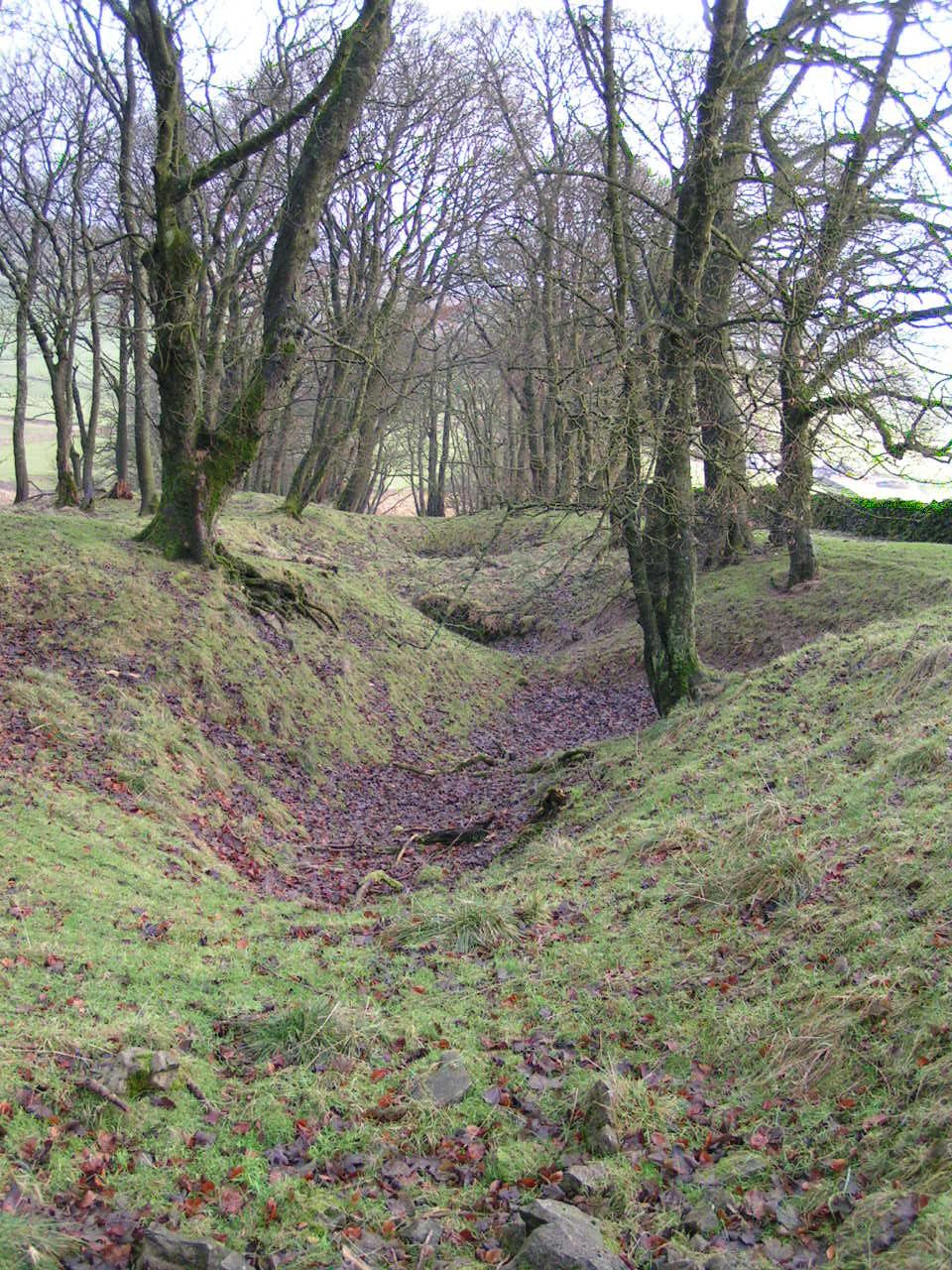
A rare dated boundary earthwork (banks and ditches raised from the earth rather than quarried stone) of the post-Roman centuries, cut across the ol…
Building or ruin · Roman
Dorset
Greyhound Yard preserves evidence of a late Stone Age timber henge: a prehistoric earthwork of bank and ditch enclosing a circular space, with the…
Building or ruin · Prehistoric
Norfolk
Grime’s Graves is Britain’s largest known Neolithic (the closing Stone Age, roughly 4000–2500 BC) flint-mining complex, with at least 433 shafts th…
Settlement · Prehistoric
Devon
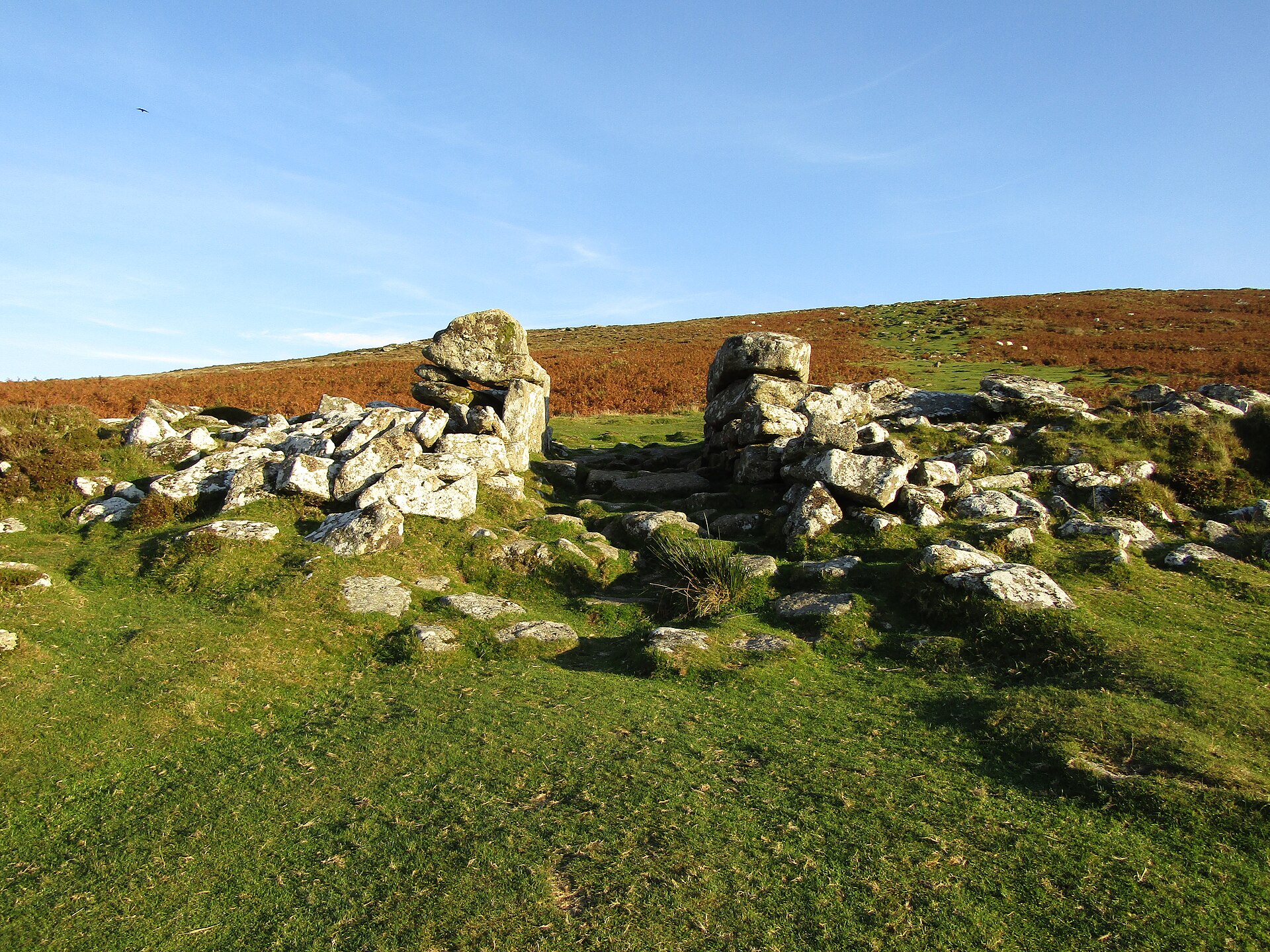
Grimspound is a scheduled late Bronze Age (roughly 2500–800 BC, when metal tools first spread) Dartmoor settlement whose hut circles, enclosing wal…
Fortified place · Iron Age
Wiltshire
Five human skeletons were found inside its banks, and a circular enclosure shows within it on aerial photographs.
Building or ruin · Roman
City of London
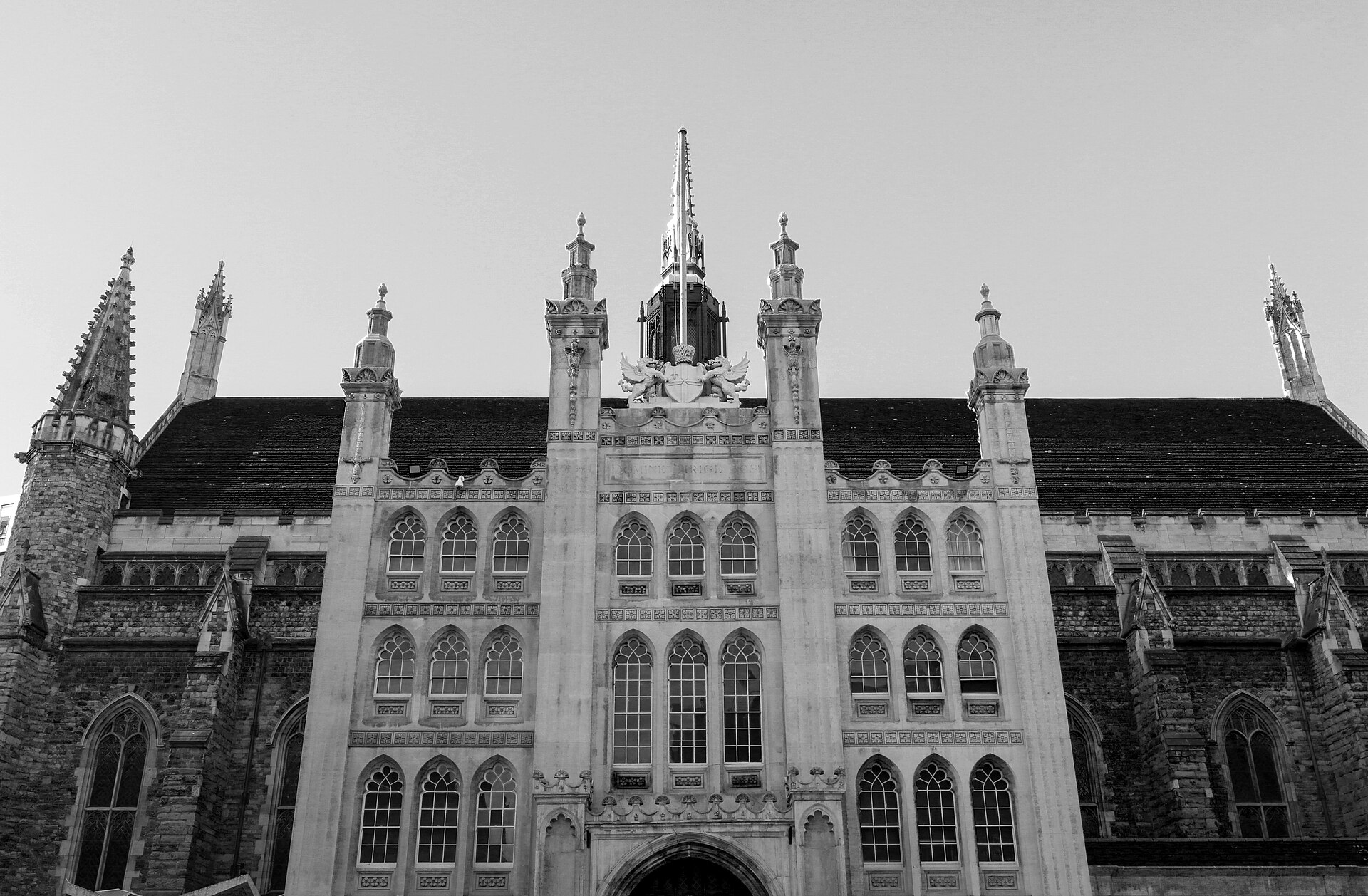
The City of London's medieval civic heart, built over Britain's largest Roman amphitheatre and still used for ceremony, administration and public m…
Building or ruin · Roman
Gloucestershire
A working blast furnace of the 1620s survives here complete with its original lining and covered charging platform, called by specialists the oldes…
Building or ruin · Medieval
Norfolk
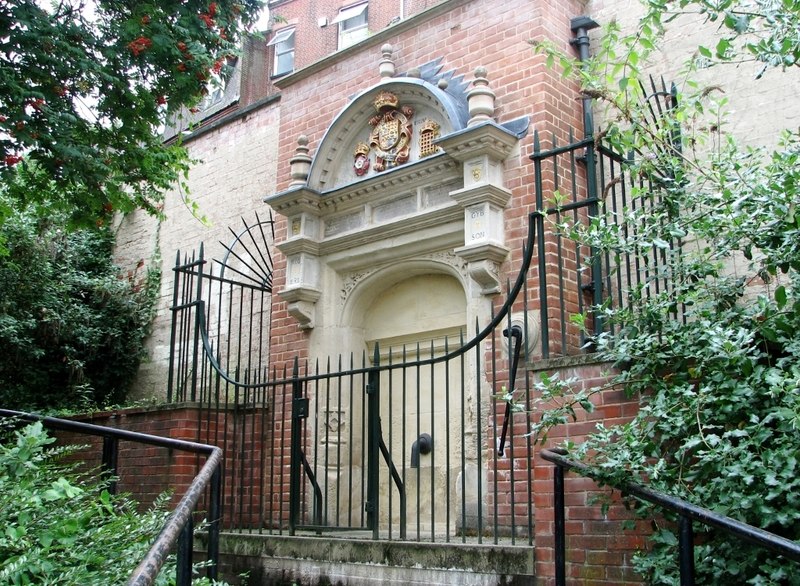
Gybson’s Conduit is a scheduled Early Renaissance water monument in Norwich, showing how Robert Gybson turned a public spring into a display of civ…
Fortified place · Medieval
Argyll and Bute
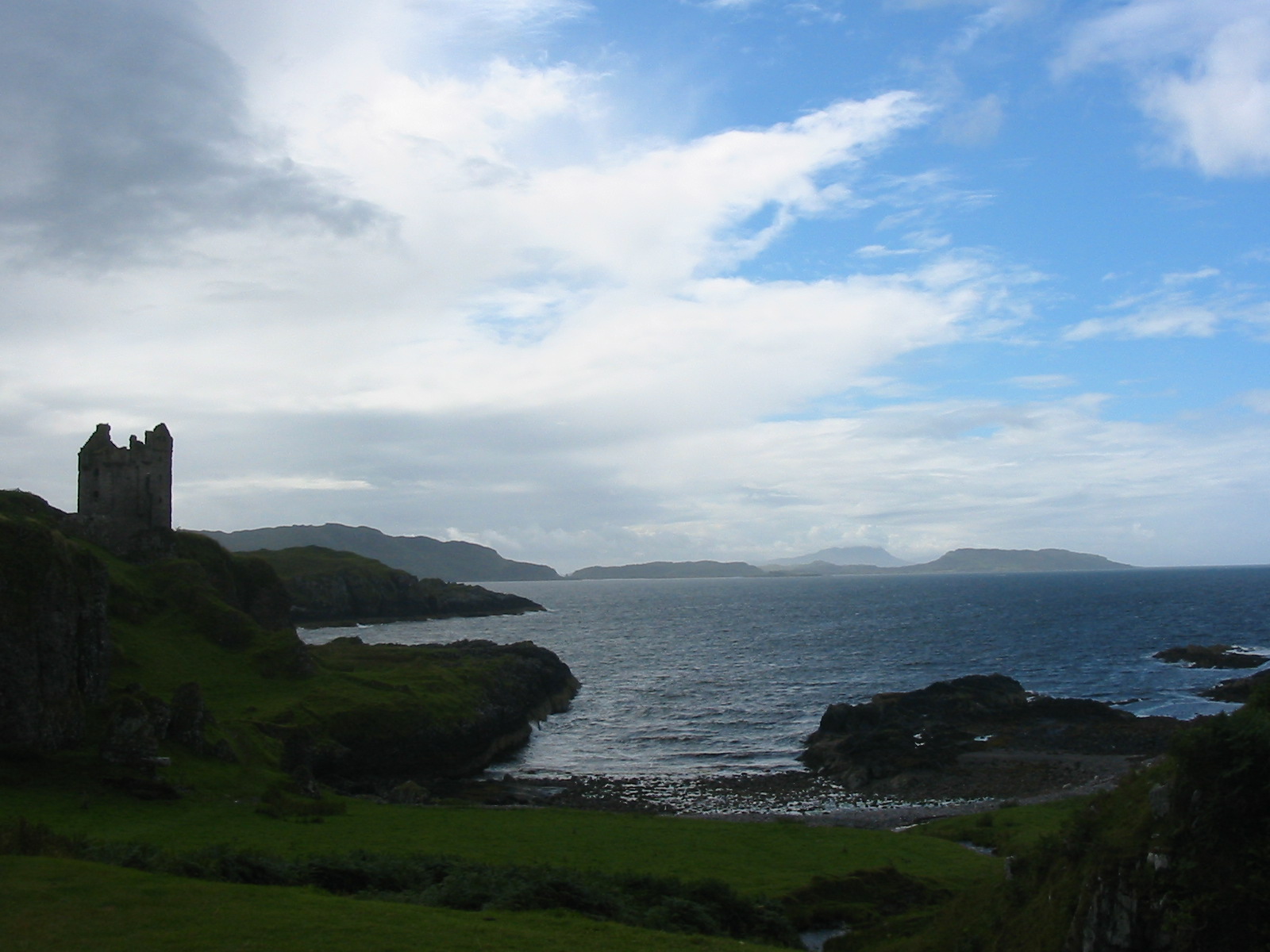
A tower house burnt in a single 1647 siege and left roofless for nearly 360 years, until a worldwide clan fundraising effort helped bring the ruin…
Building or ruin · Roman
Northumberland
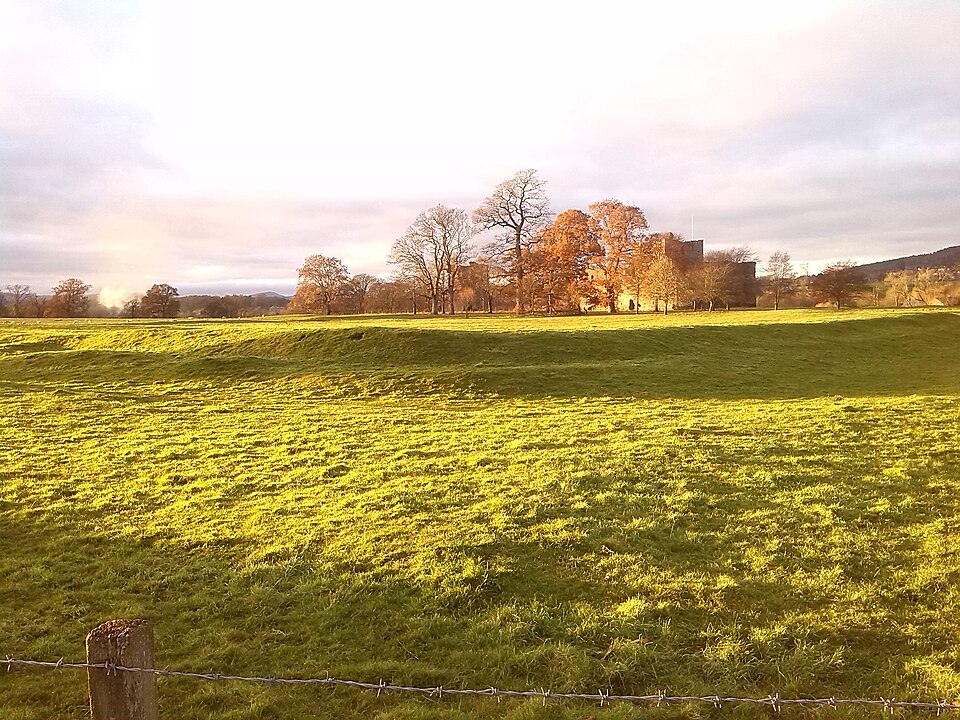
Habitancum is a repeatedly rebuilt Roman fort on Dere Street, whose surviving ditches and settlement traces record centuries of frontier instabilit…
Ancient place · Prehistoric
Oxfordshire
Seventy-one hectares of protected biological downland at Letcombe Bassett.
Building or ruin · Roman
Northumberland
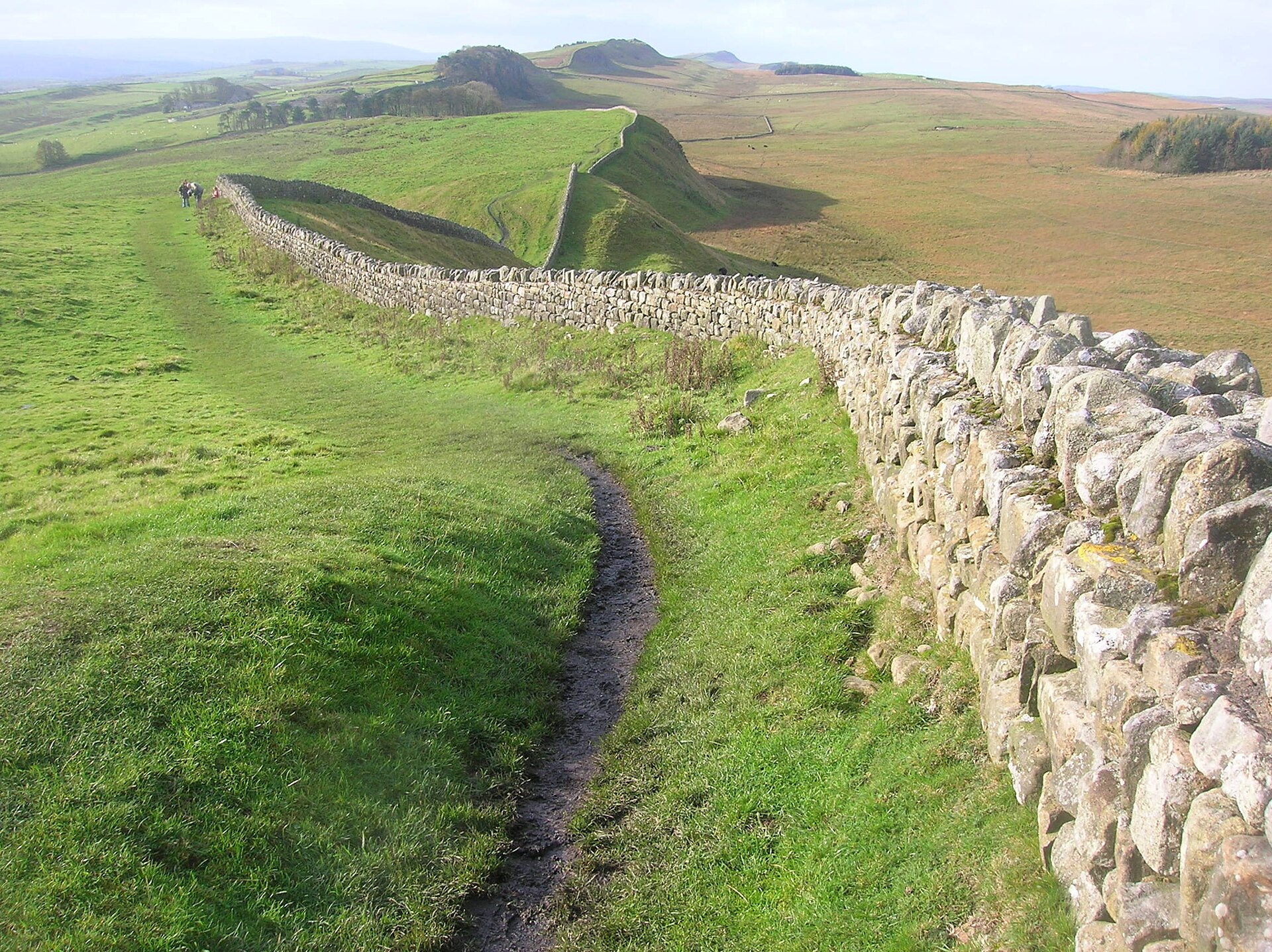
Hadrian’s Wall was Rome’s most monumental frontier in Britain: a 73-mile system of walls, forts, milecastles, turrets, and controlled gates that re…
Building or ruin · Medieval
gwynedd
A mid-fourteenth-century hall house on Anglesey, first built in timber and re-cased in stone, still in Bulkeley hands after five centuries and carr…
Minor monument · Medieval
Cheshire
One of England's few surviving duck decoys still holding its original form: five pipes radiating from a central pond in a pentagon shape used to tr…
Carved stone · Pictish & early medieval
Lancashire
A dismantled Anglo-Saxon cross reused as a sundial for two centuries, its surviving shaft carries what one archaeologist called the clearest carved…
Building or ruin · Roman
Somerset
A 210-acre hillfort taken by the future emperor Vespasian around AD 45: and quarried ever since for the stone that bears its name.
Building or ruin · Medieval
Essex
Hangman’s Wood combines ancient oak woodland, more than seventy former chalk- and flint-mining shafts and Essex’s most important underground bat hi…
Building or ruin · Roman
Cumbria
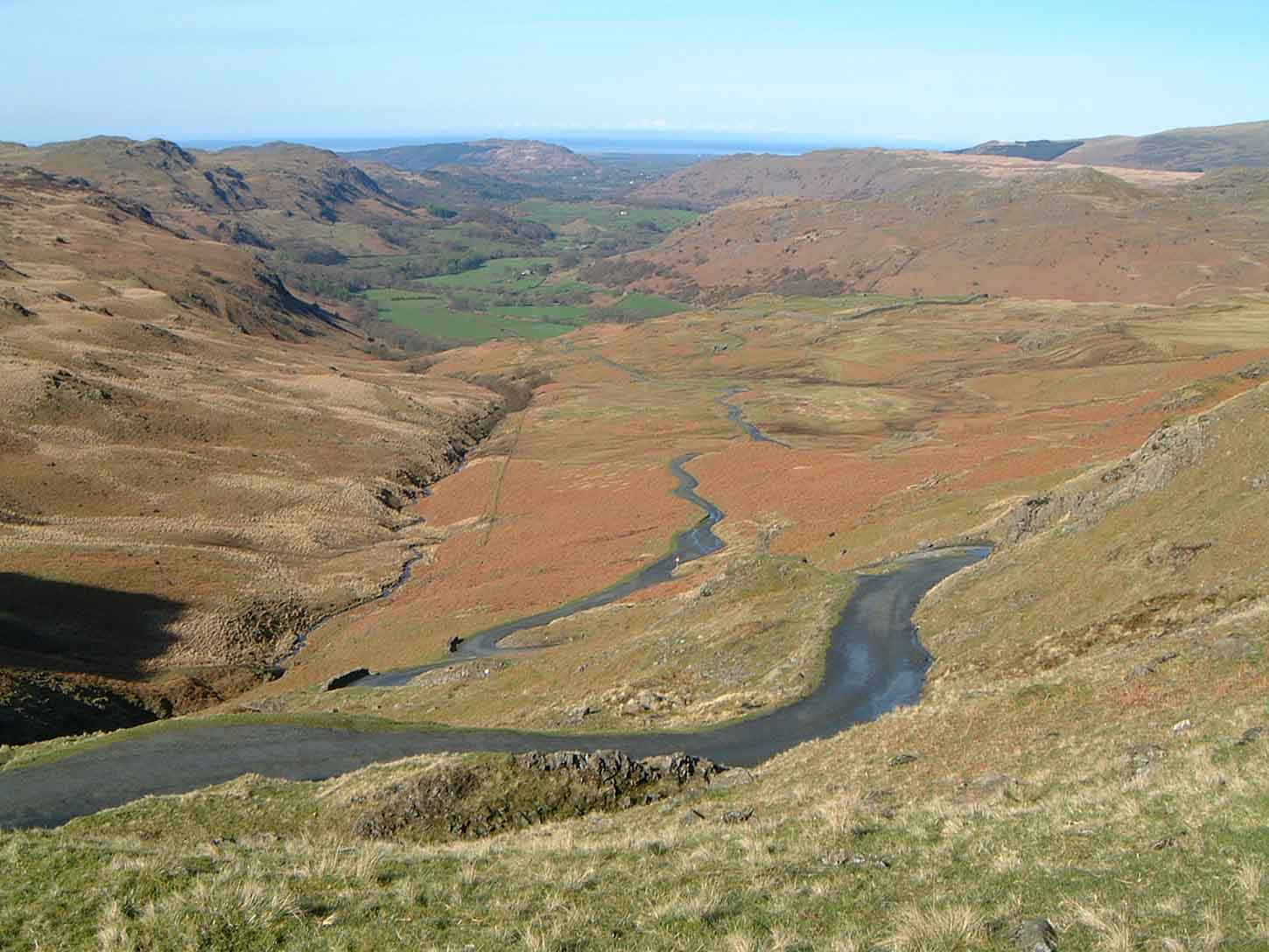
A Roman military road laid down around AD 110 still runs beneath a modern tarmac lane so steep it shares the title of England's toughest climb.
Building or ruin · Roman
Cumbria
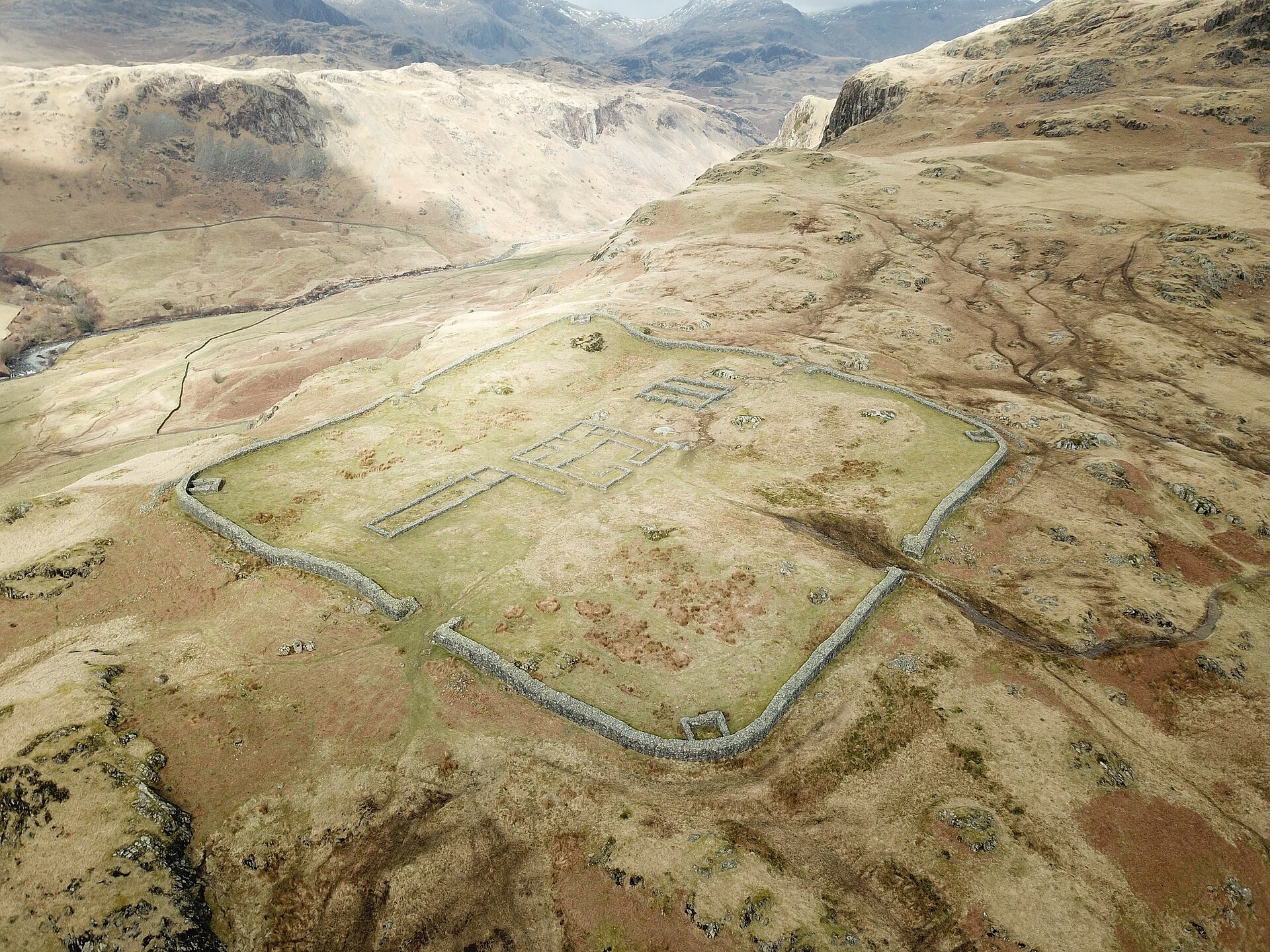
Hardknott’s dramatic mountain setting preserves an unusually complete Roman garrison, whose parade ground, workshops and rebuilt walls show how the…
Fortified place · Iron Age
Oxfordshire
A pair of concentric banks and ditches folded into a hidden curve of the scarp rather than set to command it, seemingly built to be missed, not seen.
Building or ruin · Medieval
Essex
Harlowbury brings together an abbey (a monastic house under the rule of an abbot)-founded manor, Harlow’s oldest standing building and a wider arch…
Sacred place · Prehistoric
monmouthshire
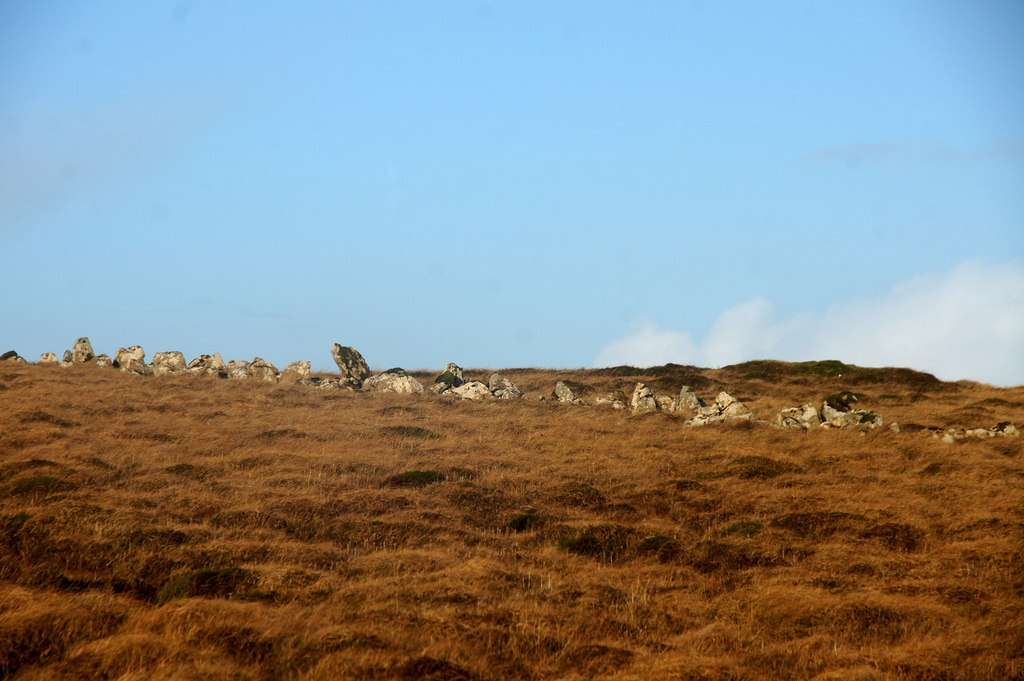
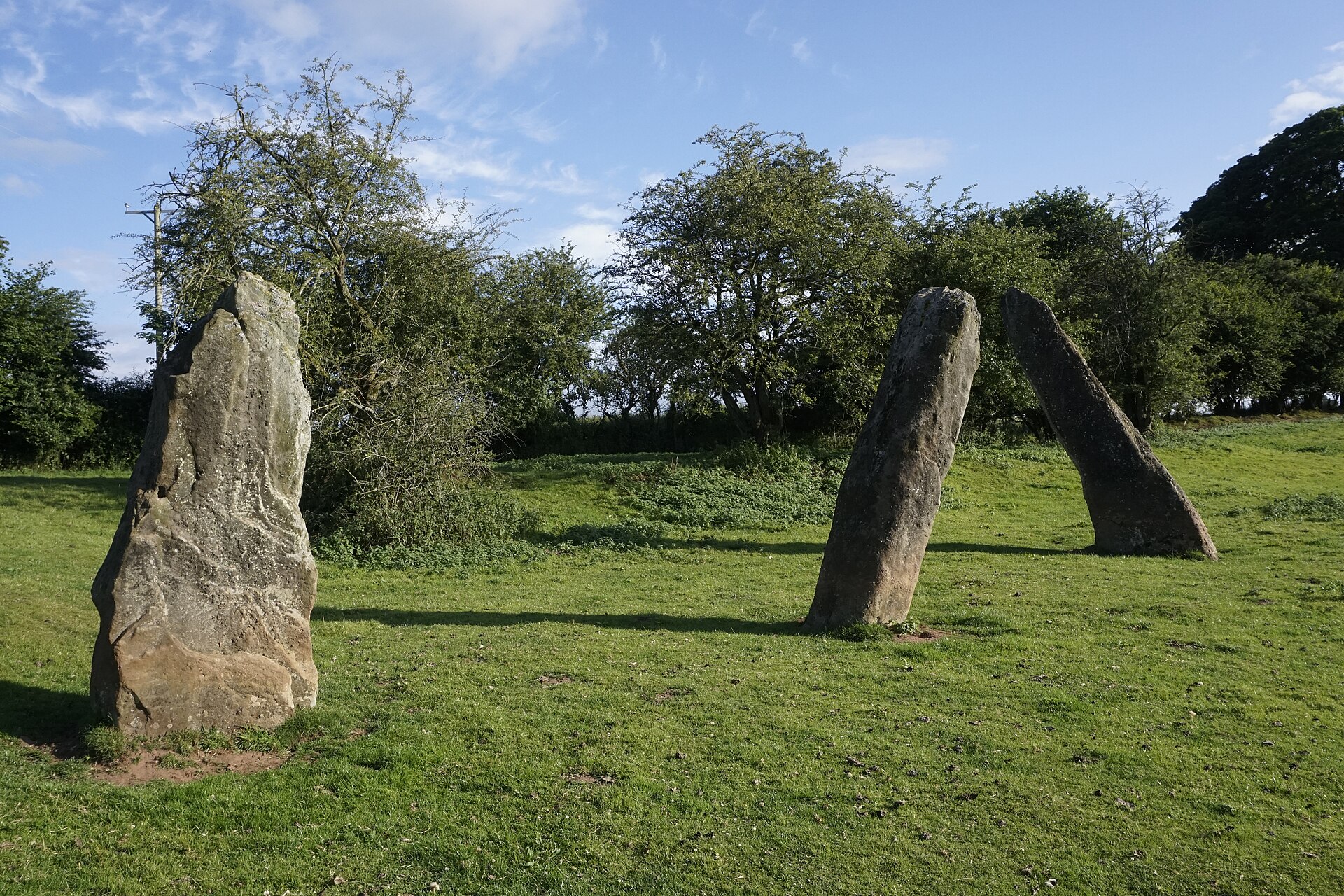
Three puddingstone monoliths in a row eleven metres long, raised in the Bronze Age: the era of metalworking from about 2500 to 800 BC: and aligned…
Building or ruin · Prehistoric
West Sussex
A flint mine of the Neolithic, the late Stone Age, roughly 4000–2500 BC in Britain, of some 245 shafts, one of them proved 6.7 metres deep with six…
Sacred place · Medieval
Pembrokeshire
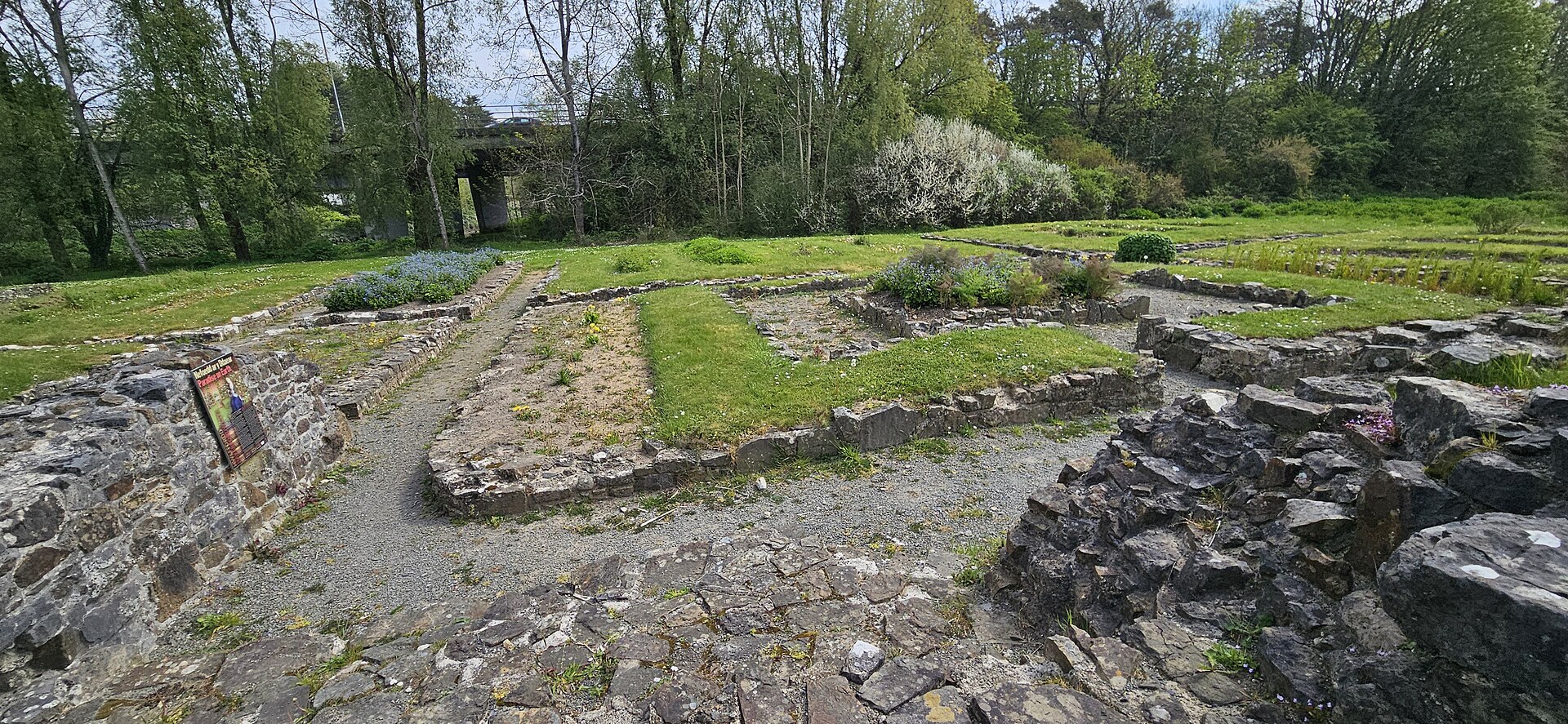
A religious house on the banks of the Western Cleddau, its setting shaped by the river.
Sacred place · Prehistoric
Oxfordshire
A Neolithic (the first farming period in Britain, roughly 4000–2500 BC) monolith whose polished hollow records centuries of hopeful hands, and whos…
Fortified place · Iron Age
Devon
Hawkesdown Hill is a scheduled Iron Age hillfort: a settlement defended by banks and ditches on high ground: above the Axe Estuary, whose surviving…
Fortified place · Medieval
Buckinghamshire
One of only around 200 surviving ringworks in Britain, its oval bank and ditch still rise almost to their original height, entrance causeway intact.
Tomb or burial place · Prehistoric
Gloucestershire
Genetic analysis of its dead reconstructed one of the earliest known family trees from a population living before written records reached Britain,…
Tomb or burial place · Prehistoric
Cumbria
A tiny girl buried here roughly 11,000 years ago is among the oldest human burials yet identified in northern England, pushing the region's story b…
Tomb or burial place · Prehistoric
Derbyshire
Fifty-nine mounds in a Derbyshire wood mark the only known Scandinavian cremation cemetery in the British Isles, raised by the Viking Great Army it…
Sacred place · Prehistoric
County Durham
A single cave near Stanhope yielded over two hundred Late Bronze Age objects: gold, bronze, bone and pottery together: among the richest hoards of…
Tomb or burial place · Prehistoric
Dorset
Hell Stone is a Neolithic (the first farming period in Britain, roughly 4000–2500 BC) chambered tomb whose visible arrangement is shaped as much by…
Building or ruin · Roman
Devon
Hembury is a rare Devon site with occupation spanning a Neolithic causewayed enclosure, an Iron Age hillfort: a defended hilltop settlement of the…
Fortified place · Medieval
Monmouthshire
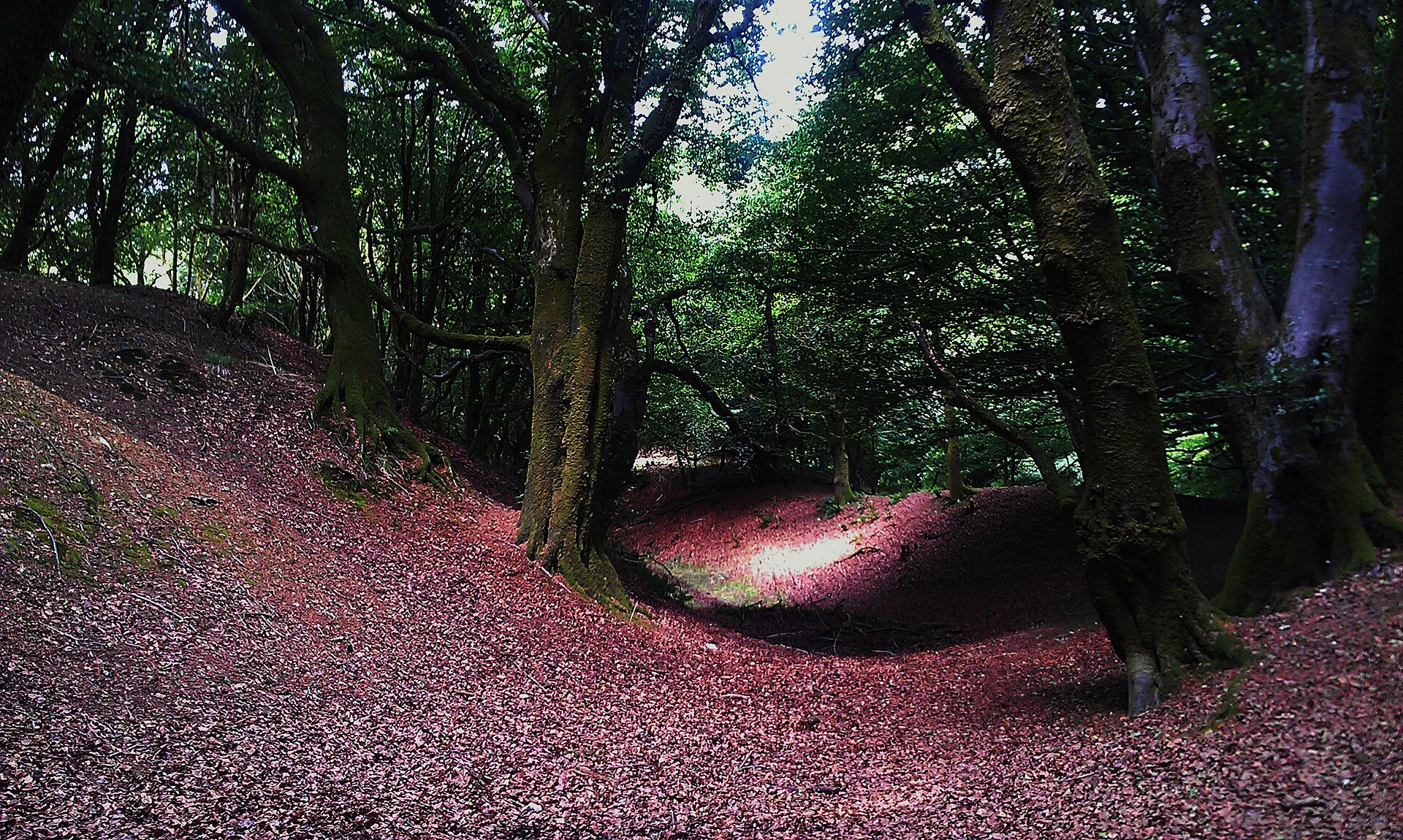
A moat built with no defensive purpose at all now guards nothing but empty grass: every trace of the bishops' manor and the Herberts' hunting lodge…
Tomb or burial place · Prehistoric
Isle of Anglesey
Henblas Burial Chamber is a Neolithic (the closing Stone Age, roughly 4000–2500 BC) dolmen whose unusually massive quartz-rich uprights and displac…
Sacred place · Medieval
Herefordshire
Its library holds the largest surviving collection of chained books in the world, alongside the Mappa Mundi, a circa-1300 map of the known world dr…
Building or ruin · Roman
Cheshire
Beneath a quiet Cheshire field lie a Roman quayside, a mass grave possibly tied to a 7th-century battle, and an earthwork (banks and ditches raised…
Fortified place · Medieval
Northumberland
Hethpool House combines an Edwardian country house on Admiral Lord Collingwood’s former seat with the remains of a fourteenth-century pele tower in…
Tomb or burial place · Pictish & early medieval
Lancashire
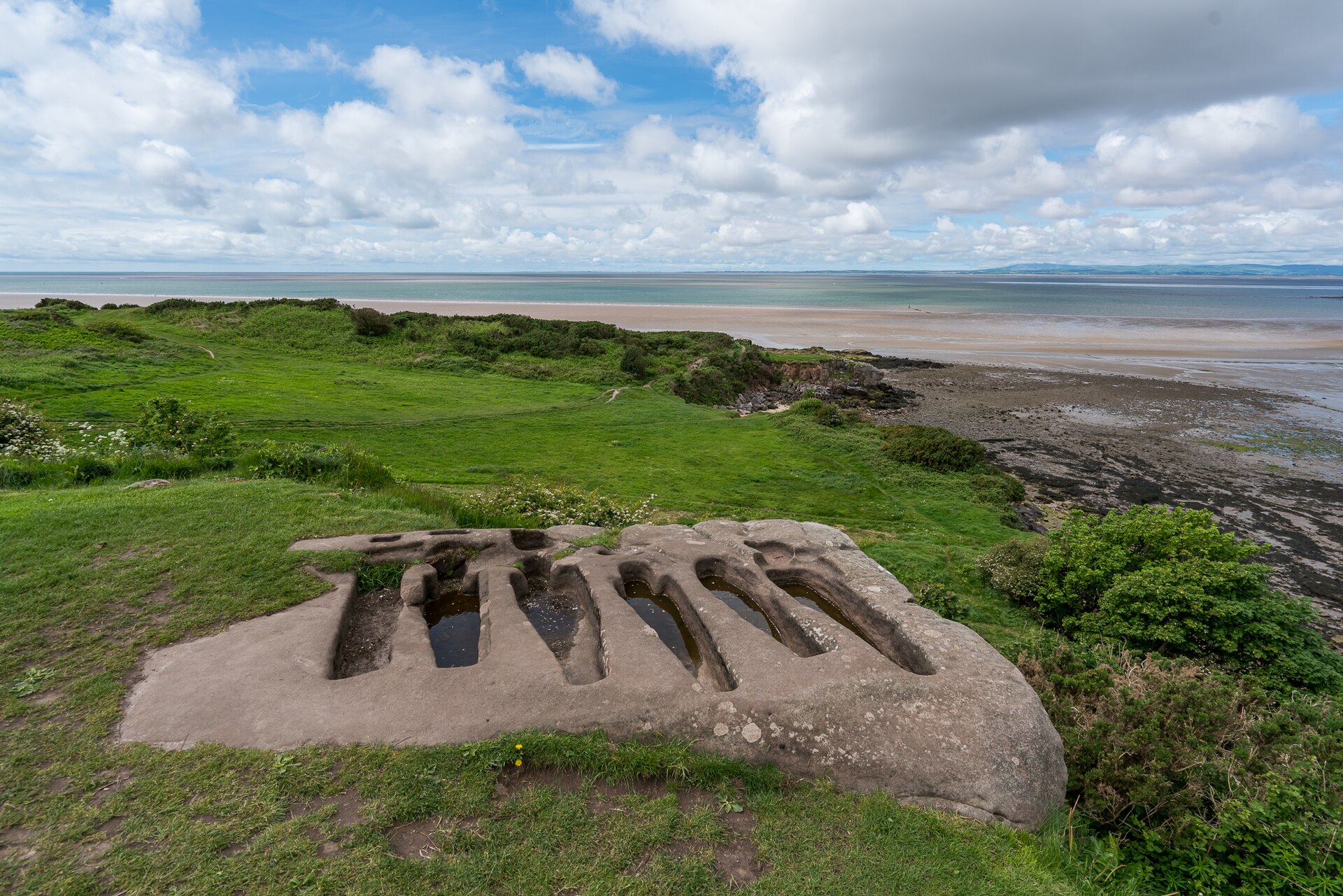
Eight graves cut straight into the bedrock, some shaped to the human body and fitted with sockets for stone or wooden crosses: a form of burial fou…
Building or ruin · Roman
Lincolnshire
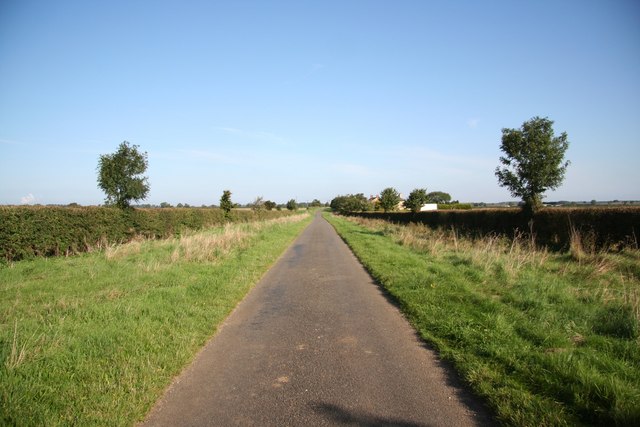
A modern B-road that still runs, mile after mile, along the exact line Roman surveyors cut through Lincolnshire two thousand years ago, past the Ro…
Building or ruin · Roman
Cumbria
A 828-metre fell in the Lake District carries a Roman road along its very summit, sunk in a hollow rather than raised on a bank, still puzzling arc…
Tomb or burial place · Prehistoric
Derbyshire
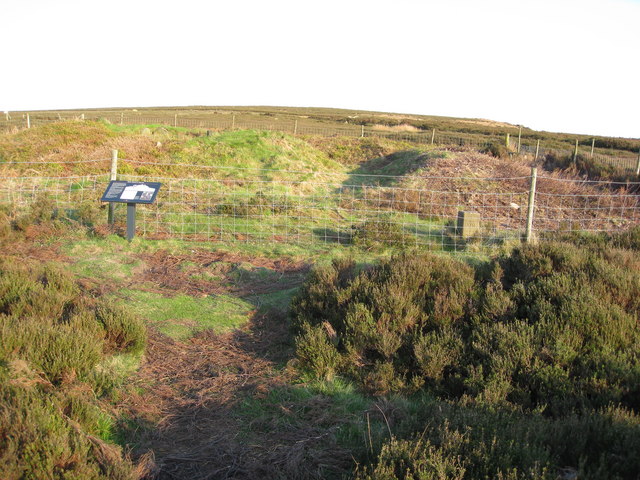
Almost every burial mound in Britain from the Bronze Age, the period from about 2500 to 800 BC, is round; this one on Beeley Moor is rectangular, a…
Building or ruin · Medieval
Cambridgeshire
A working four-way water-splitting system engineered in 1610 still carries chalk-spring water through open street gutters past Cambridge's oldest c…
Building or ruin · Medieval
Cheshire
Holford Hall is a rare surviving fragment of a richly decorated 1601 timber-framed manor, still standing within its moated setting beside the separ…
Briefer entries: recorded and worth knowing, with fuller pages to come.
Sacred place · Prehistoric
County Tyrone
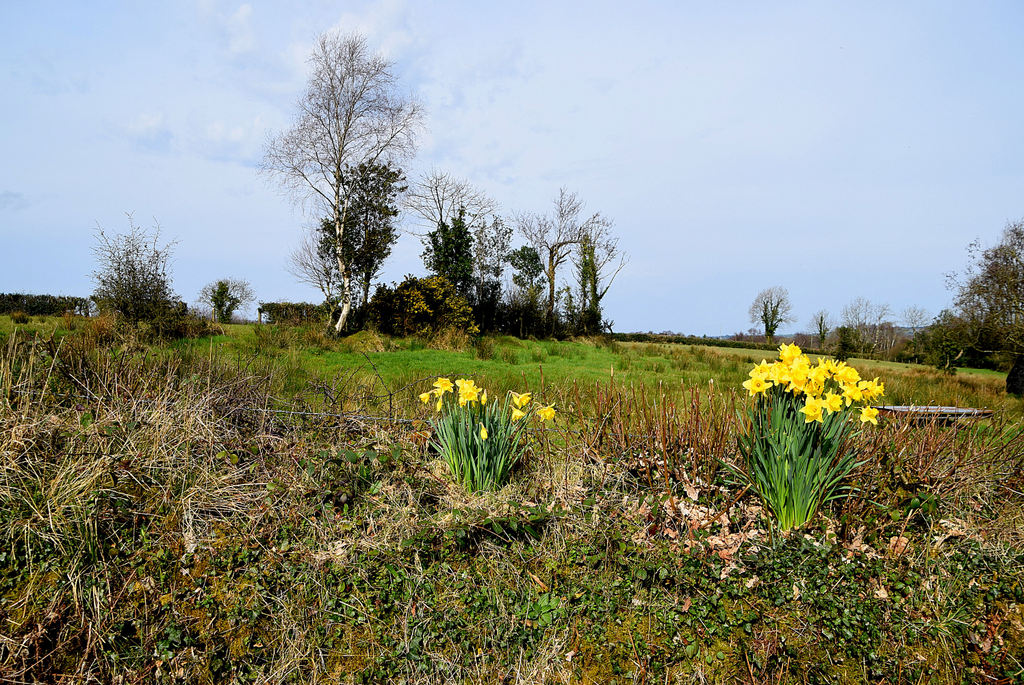
Freughlough’s Scheduled standing stone survives at the edge of a housing estate, bringing a protected prehistoric (from the era before writing arri…
Settlement · Medieval
Lincolnshire
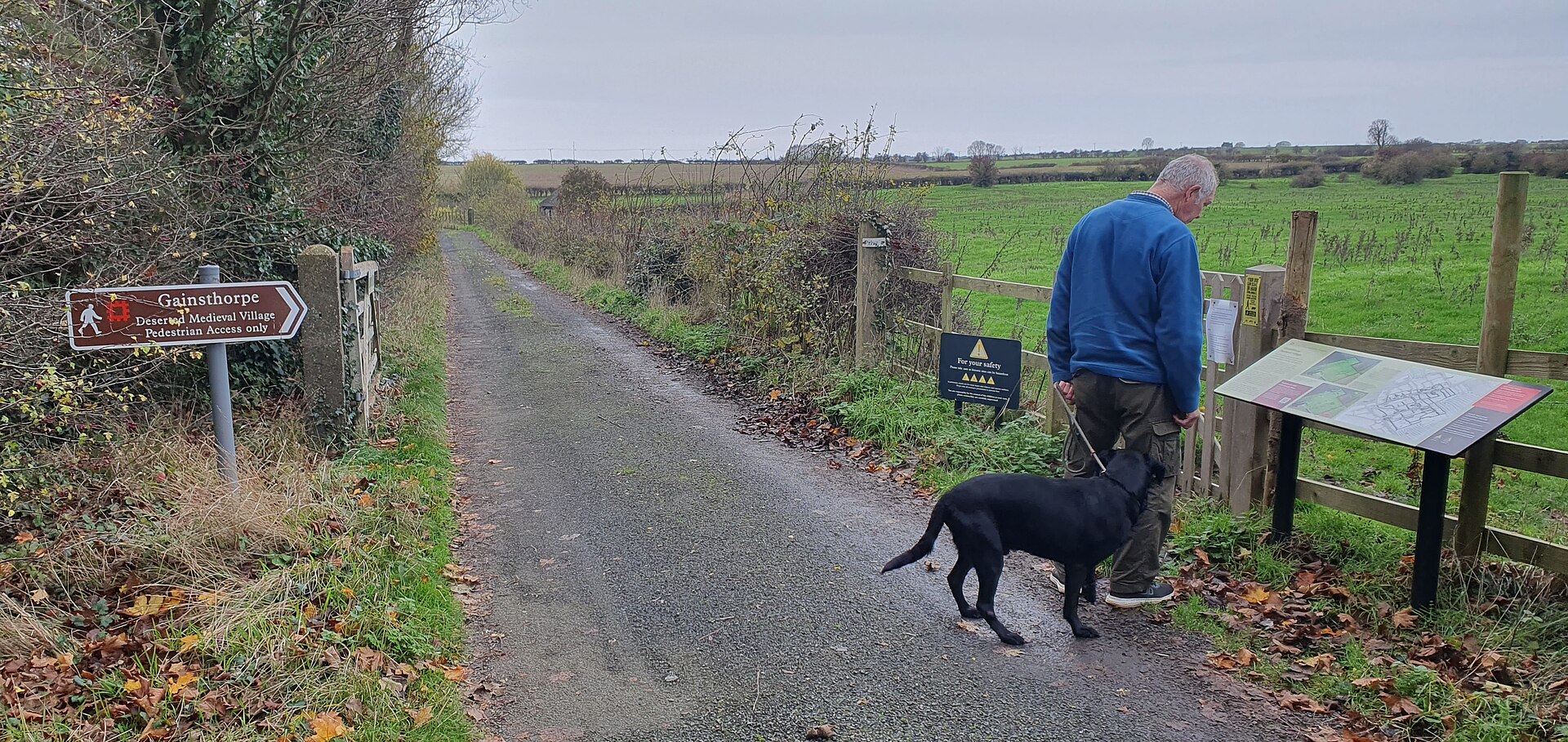
Gainsthorpe is a well-preserved deserted medieval village where sunken roads and raised tofts and crofts make a lost settlement plan visible in the…
Building or ruin · Roman
Norfolk
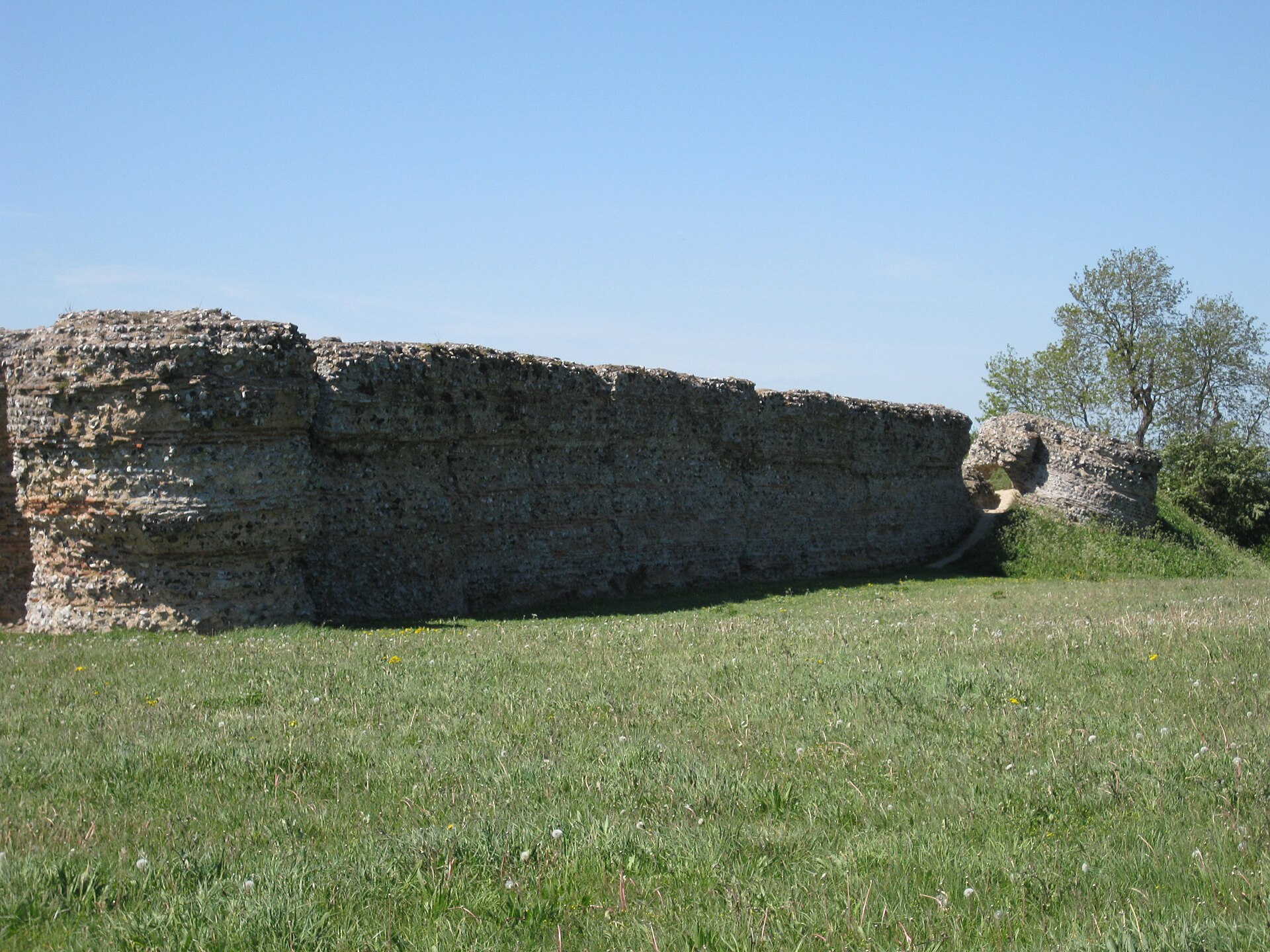
Gariannonum is a debated Saxon Shore fort identity, likely tied to Burgh Castle and/or Caister-on-Sea, revealing how Rome guarded the Yare estuary…
Building or ruin · Medieval
County Tyrone
Garvaghullion preserves a Scheduled Bronze Age wooden trackway found deep in a raised bog landscape heavily reduced by peat extraction.
Sacred place · Prehistoric
Cumbria
Two standing stones at the foot of Black Combe carry rare prehistoric (before any written account of Britain existed) cup and ring carvings, one st…
Building or ruin · Medieval
County Antrim
La Girona’s 1588 wreck off County Antrim joins Spanish Armada loss, local rescue and one of the richest recovered Armada treasure collections.
Fortified place · Roman
Monmouthshire
Stamped into the fabric of roof tiles recovered from beneath the centre of Abergavenny is the mark of the Legio II (the Second Legion, whose base w…
Tomb or burial place · Prehistoric
Cambridgeshire
A wooded chalk knoll conceals a substantially intact Bronze Age: roughly 2500–800 BC: burial mound, sited to loom over the ancient Icknield Way below.
Fortified place · Medieval
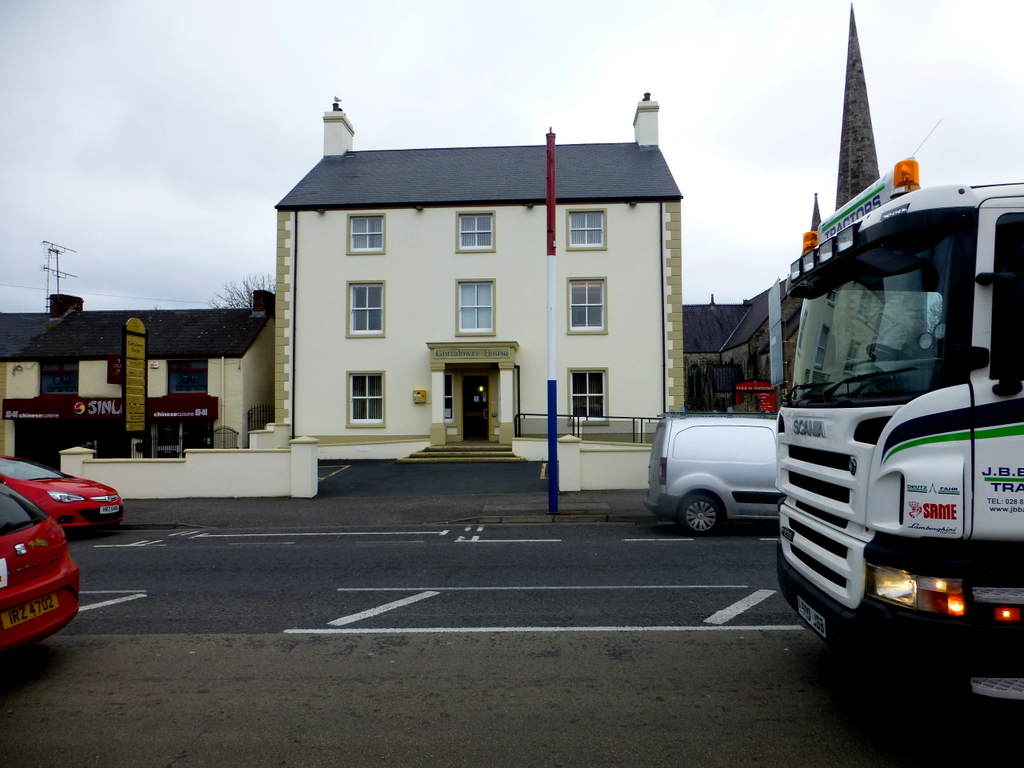
County Tyrone
Gortalowry is a rural–urban County Tyrone townland where a Scheduled rath (an early-medieval Irish farmstead ringed by an earth bank), church and f…
Building or ruin · Medieval
Greater Manchester
Great Haigh Sough is a 17th-century mine-drainage tunnel whose surviving portal records the engineering that prolonged coal workings and later shap…
Ancient place · Medieval
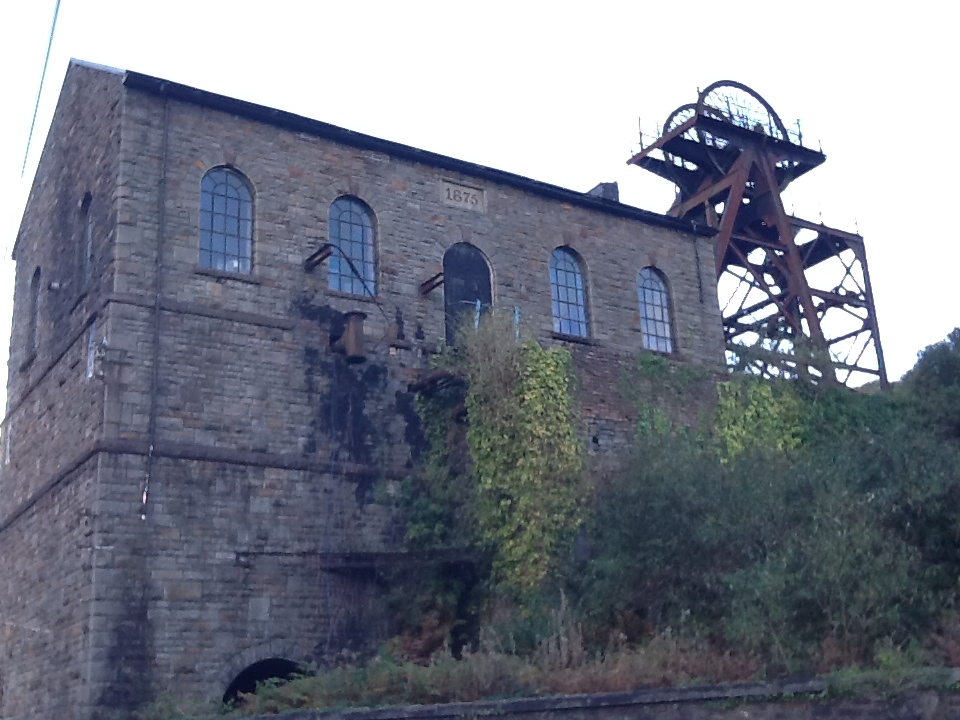
Rhondda Cynon Taf
At Hopkinstown, on the edge of Pontypridd in the Glamorgan valleys, the headframe and engine house of the Hetty Pit still stand above ground where…
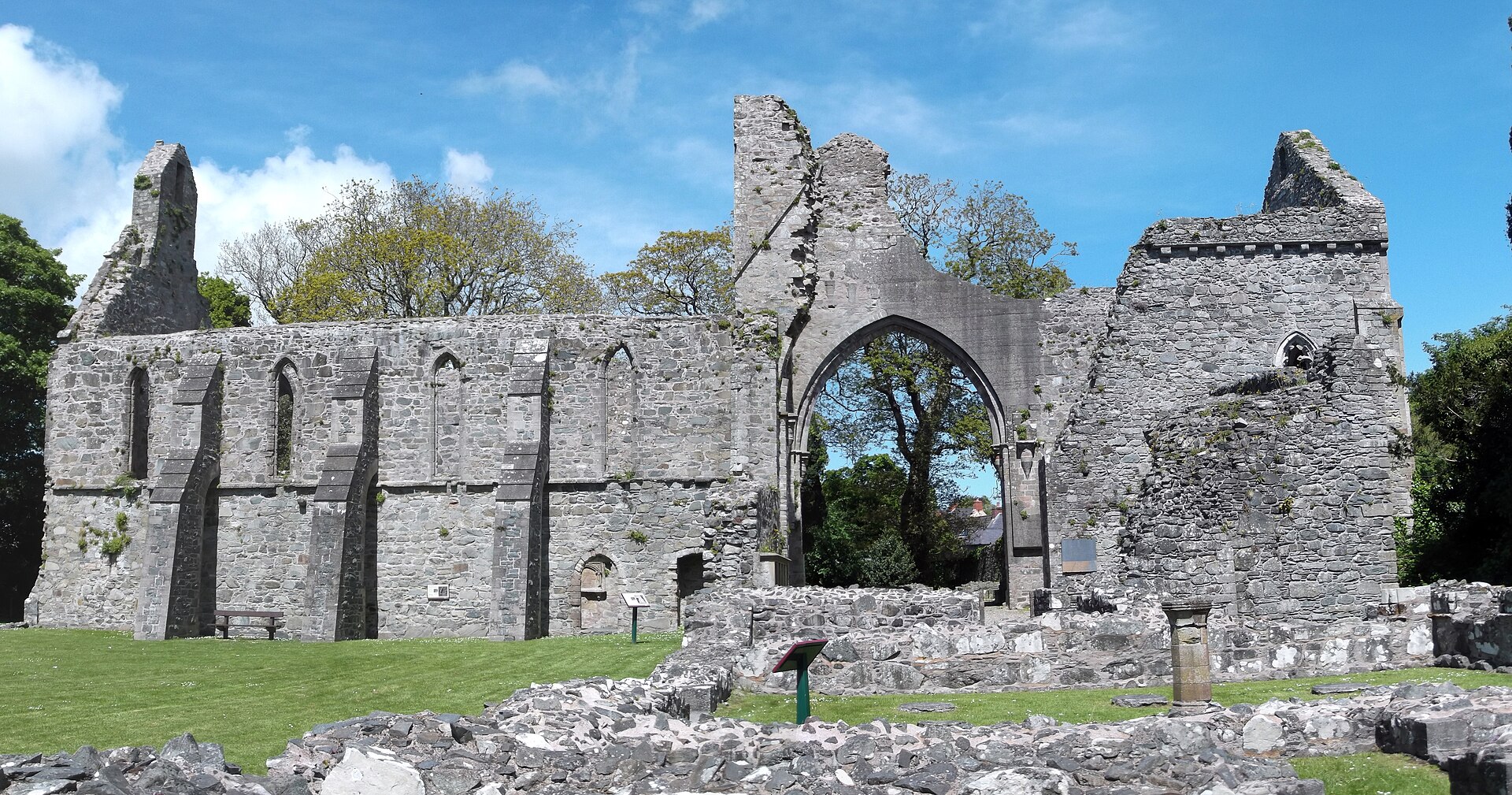
Building or ruin · Medieval
County Down
Grey Abbey preserves a Cistercian foundation with a rare female patron and some of the earliest Early Gothic pointed arches in Ireland.
Fortified place · Roman
Greater London
Grim’s Ditch is a surviving London earthwork (banks and ditches raised from the earth rather than quarried stone) whose ridge-top line, possible la…
Building or ruin · Roman
Warwickshire
A circular wooden temple stood here before the conquest. Stone temples of the Roman period replaced it, in two phases.
Building or ruin · Roman
City of London
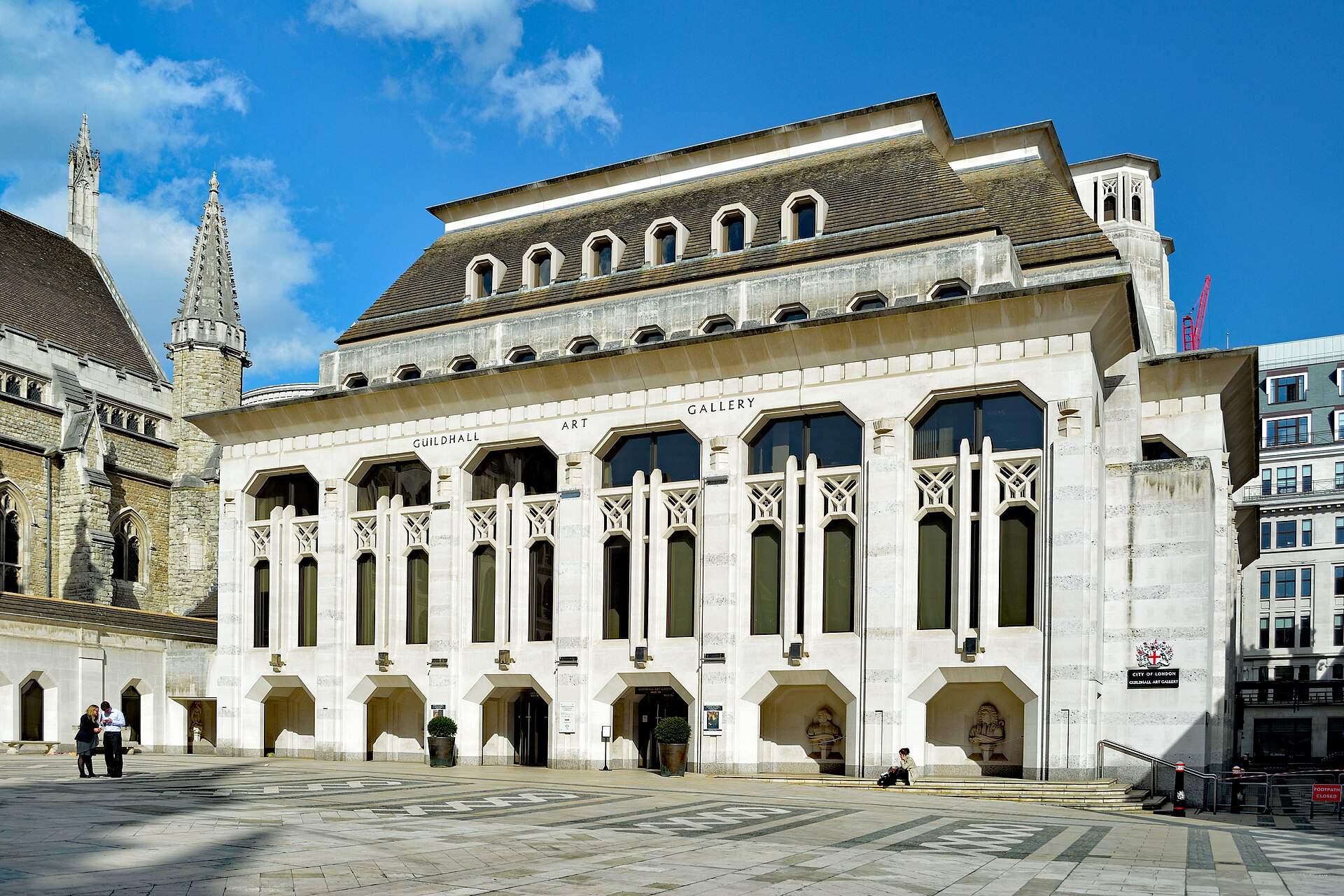
The City of London's art collection displayed above the remains of Britain's largest Roman amphitheatre, joining Victorian paintings to Roman archa…
Building or ruin · Roman
Northumberland
Hadrian’s Wall Path turns the Roman frontier into an 84-mile National Trail, connecting urban Tyne-side sites, exposed Wall country, and the Solway…
Building or ruin · Iron Age
Cornwall
Halangy Down condenses five centuries of prehistoric (before written records reached Britain) and Romano-British (Britain under Roman rule, AD 43–4…
Fortified place · Medieval
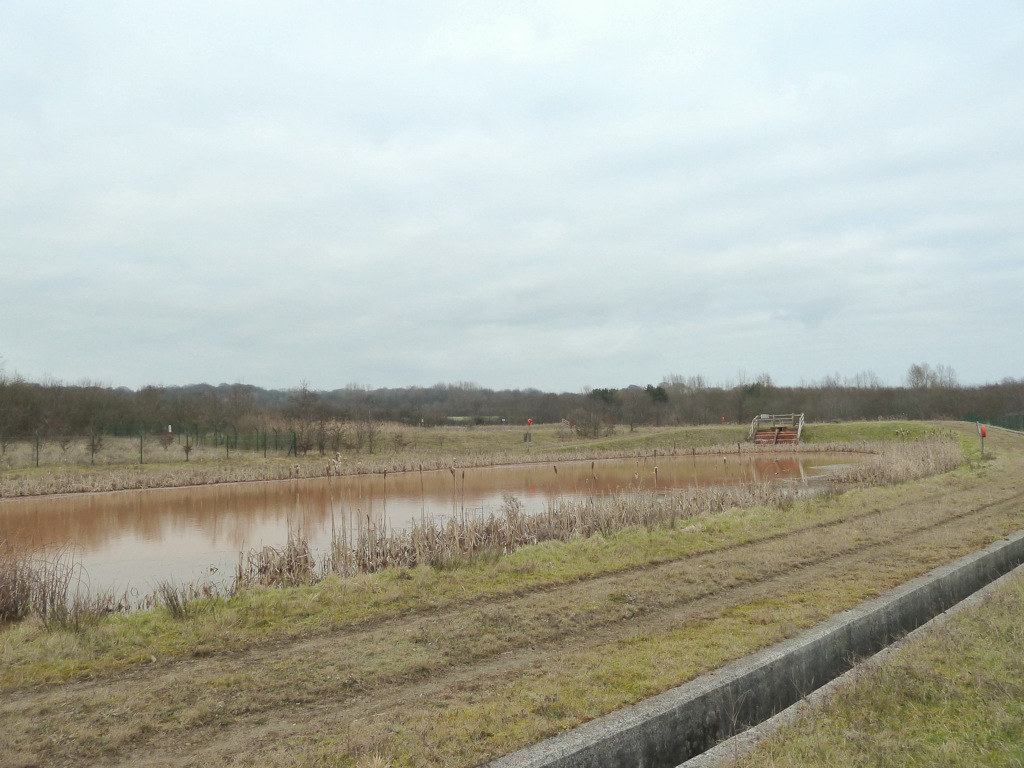
Hertfordshire
A medieval moat, scheduled as a nationally important monument, survives quietly inside a modern wetland reserve of reed beds, wildflower meadow and…
Fortified place · Prehistoric
Armagh
Haughey's Fort is a large late Bronze Age (roughly 2500–800 BC) hilltop enclosure near Armagh, whose concentric ditches preserve an earlier ceremon…
Building or ruin · Prehistoric
Dorset
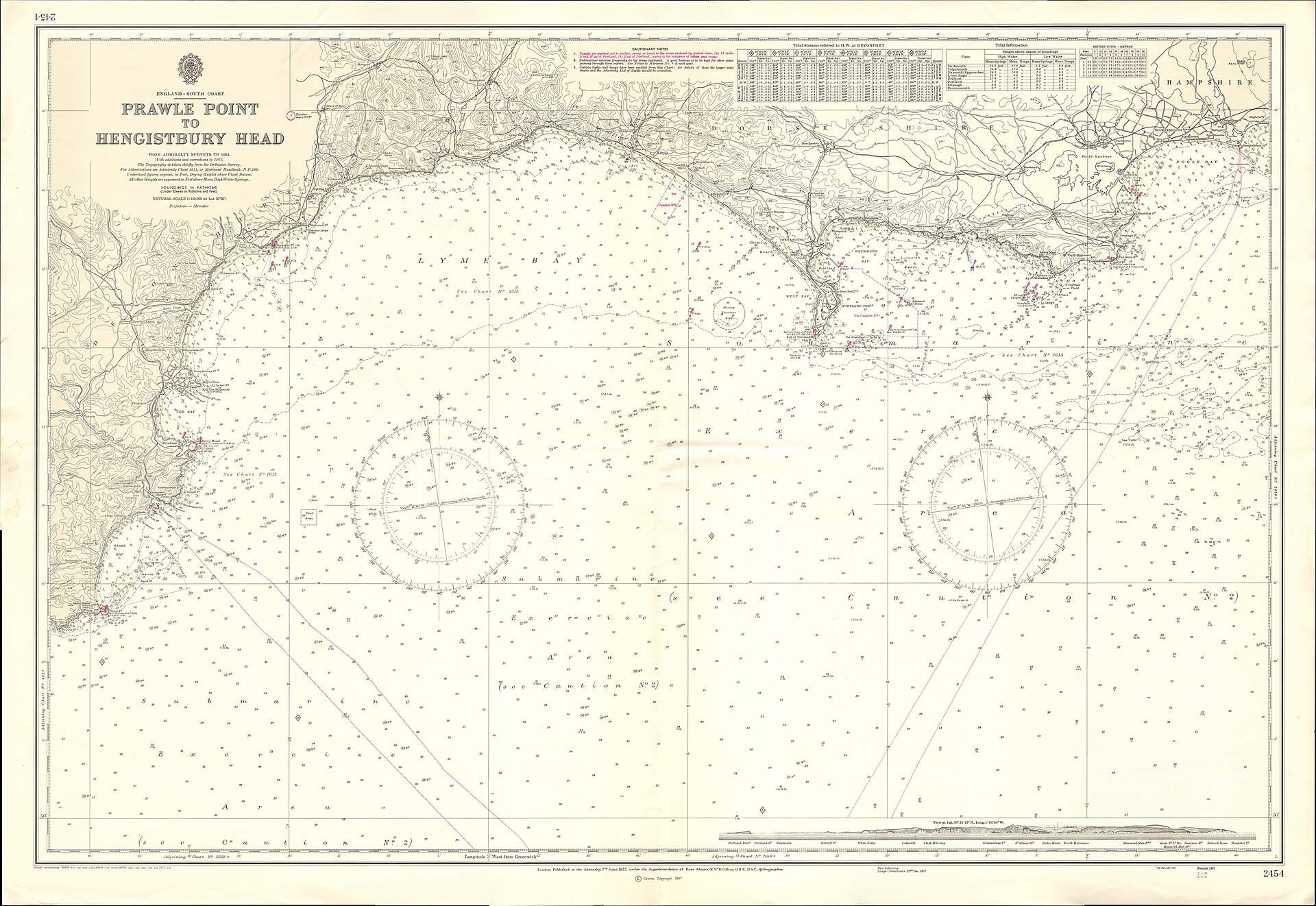
Hengistbury Head is an internationally important coastal archaeological landscape, recording human activity from the Upper Palaeolithic through an…
Building or ruin · Prehistoric
Cornwall
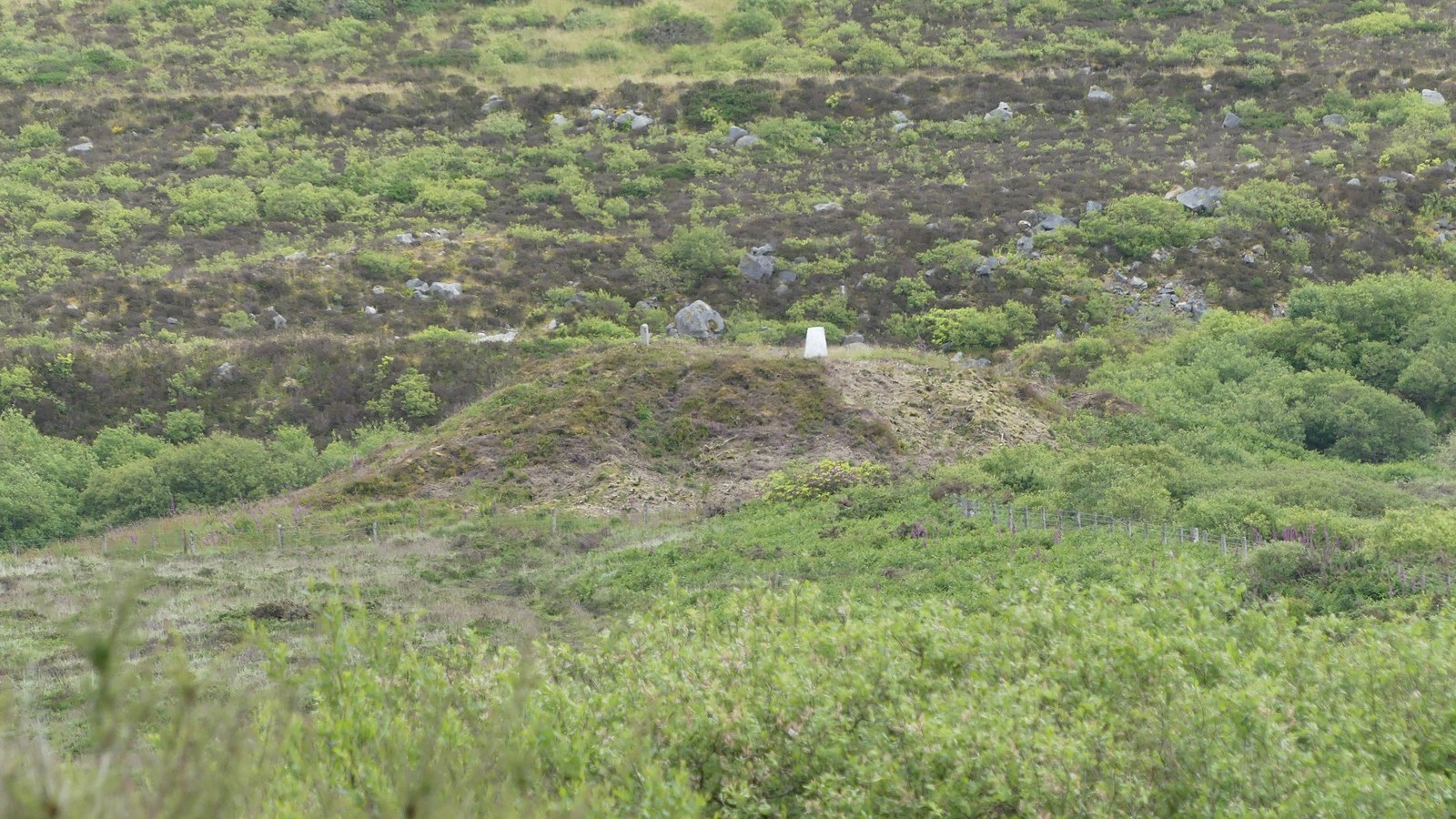
Hensbarrow Beacon combines a medieval stannary centre, a scheduled beacon cairn (a mound of piled stones, often covering a burial) and the mapping…
Building or ruin · Medieval
Antrim
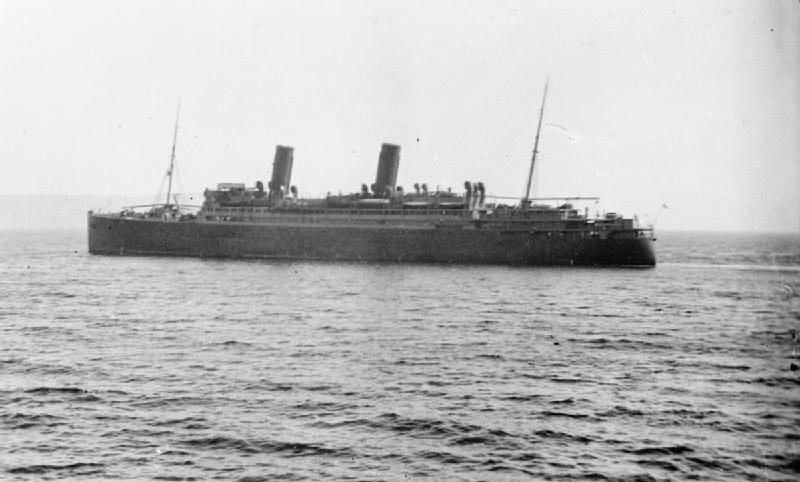
HMS Calgarian was a transatlantic liner turned armed merchant cruiser whose wartime patrols, Halifax Explosion relief work and 1918 U-boat sinking…
Building or ruin
Isle of Anglesey
On 2 March 1918, off Caernarfon Bay, the British merchantman Rutherglen struck HMS H5 head-on, having mistaken the low-lying British submarine for…
Building or ruin · Medieval
Isle of Anglesey
In July 1971 two diving groups working independently off Anglesey each raised bronze cannon from the same scatter of wreckage on the south-west cor…
Building or ruin · Roman
Dorset
Hod Hill is a large Iron Age (roughly 800 BC until the Roman conquest) fort with a short-lived Roman camp inside it, combining Durotrigan settlemen…
Building or ruin · Prehistoric
norfolk
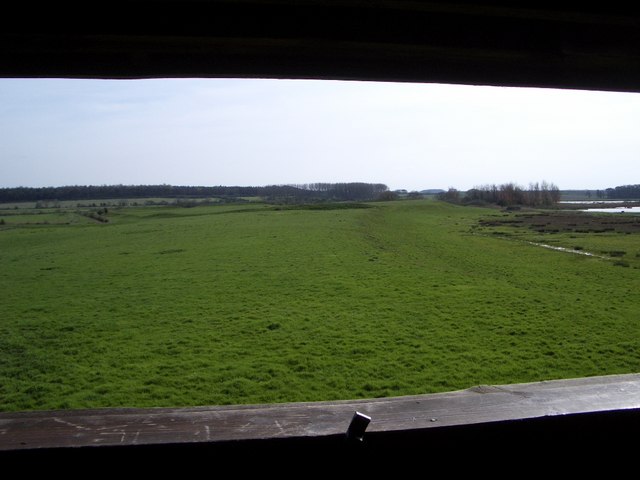
An oval enclosure on a sandy spit, reachable only by eye: the site is not normally walkable, and is watched from a bird hide in the woods to the no…
No places match those filters.




.jpg?width=800)








.jpg?width=800)







.JPG?width=800)