
One of only two medieval Scottish cathedrals — alongside St Magnus in Orkney — to survive the Reformation (the sixteenth-century suppression of monastic houses) virtually intact, and the oldest building standing anywhere in Glasgow.
A worn stone tomb in the Lower Church is said to hold the remains of Mungo, also known as Kentigern, the holy man credited with founding the settlement on the Molendinar Burn that grew into Glasgow. He is said to have built a simple cell of timber and wattle on the site in the sixth century and to have been buried in his own church there in 614; nothing of that structure survives, but the ground he chose has held a church of one kind or another ever since.
The stone building that eventually rose over his grave took shape slowly. A first stone cathedral was consecrated in 1136 before King David I, whose decision to found a bishopric at Glasgow set the project in motion, but fire destroyed or badly damaged it, and the cathedral consecrated in 1197 — largely the building that still stands — was rebuilt and extended for most of the following century. Fragments of that earlier church, excavated beneath the present floor in the 1990s, are among the few physical traces of how the site developed before the current cathedral took its final medieval form.
Because it survived the Reformation largely intact — an accident of being kept in use for Protestant worship rather than abandoned — Glasgow Cathedral is, with St Magnus Cathedral in Orkney, one of only two medieval cathedrals in Scotland that were not reduced to ruin. It later held three separate congregations squeezed into different parts of the same building, before nineteenth-century restoration and state care from 1857 returned it to a single space. It remains a working parish church of the Church of Scotland today, standing beside the Necropolis in what the city treats as its own small district.
What follows is drawn from published sources, with each claim labelled by how firmly it is established.
The name
Tradition holds that the settlement here was first known as Cathures, a name said to date from the sixth century when Saint Mungo brought the body of a holy man named Fergus for burial on the site; the place grew into the city later called Glasgow. The cathedral's Scottish Gaelic name, Cathair-eaglais Ghlaschu, preserves the same underlying idea of a bishop's seat or church-city on this ground.
History
According to tradition, Saint Ninian dedicated a burial ground on the western bank of the Molendinar Burn in the 5th century, and in the following century Saint Mungo is said to have brought the body of a holy man named Fergus there for burial, at a place then called Cathures which grew into Glasgow. Mungo built a simple monastic cell of timber and wattle on the site and was buried in his own church there in 614; his tomb became the focus of everything built afterwards.
In 1136 the first stone cathedral was consecrated in the presence of King David I, whose decision to establish or re-establish a bishopric at Glasgow had set the building in motion. Raised over St Mungo's burial place on high ground above the Molendinar Burn, it took some 150 years to complete and was later destroyed or badly damaged by fire; excavations between 1988 and 1997 uncovered fragments of its walls beneath the floor of the present cathedral.
The present cathedral was consecrated in 1197, and rebuilding continued for most of the 13th century. Between 1207 and 1232 Bishop Walter Capellanus completed the choir and Lower Church and laid out the transepts and nave, and from 1233 Bishop William de Bondington extended the eastern arm to provide a proper shrine for St Mungo and added the chapter house, sacristy and what became the Blacader Aisle, while the central tower, spire and a north-west bell tower rose alongside.
Edward I of England visited the cathedral in August 1301, making offerings at the high altar and St Mungo's tomb over four days. Five years later, after the killing of John Comyn, Robert the Bruce rode to Glasgow and was absolved by Bishop Robert Wishart, who urged the clergy to support him before riding with him to Scone for his coronation as Robert I. Wishart later used English-donated timber meant for the bell tower to build siege engines, and died in 1316, entombed in the Lower Church.
A lightning strike in 1406 damaged the wooden steeple, and bishops William de Lauder, John Cameron and William Turnbull rebuilt the central tower, spire and chapter house over the following decades. Turnbull also prompted King James II to petition Rome for a university in Glasgow, and Pope Nicholas V's bull of 7 January 1451 founded the University of Glasgow, whose first classes were held in the cathedral's own chapter house before it moved to premises on the Rottenrow.
The Scottish Reformation of 1560 forced Archbishop James Beaton to flee to France with the diocesan records, and the cathedral was stripped of altars, sculpture and roof lead, falling into such disrepair that Glasgow's town council raised a tax for its upkeep in 1574. It survived largely intact because it was kept in use for worship, eventually holding three congregations — the Outer High in the nave from 1587, the Barony in the Lower Church from 1595, and the Inner High in the choir from 1635.
By 1835 the Outer High and Barony congregations had moved to other buildings, leaving the cathedral in the sole use of the Inner High and free to be restored towards its medieval form; its two flanking west towers came down in 1846 and 1848, and in 1857 the whole building passed into the care of the state, which fitted new oak roofs in 1909–1912 and later hosted a memorial service for the 1971 Ibrox Stadium disaster and the funeral of First Minister Donald Dewar in 2000.
People
-
Saint Mungo (Kentigern)
Patron saint of Glasgow, said to have founded a monastic cell on the site in the 6th century and traditionally held to be buried in the Lower Church.
-
.jpg?width=320)
Photo: Unknown author / Wikimedia Commons / Public domain David I of Scotland
King whose decision to establish or re-establish the bishopric of Glasgow led to the first stone cathedral, consecrated in his presence in 1136.
-
Robert Wishart
Bishop of Glasgow from 1271 to 1316 who absolved Robert the Bruce in 1306 and accompanied him to Scone for his coronation; he is entombed in the Lower Church.
-
Robert the Bruce
Future King of Scots who was absolved by Bishop Wishart at Glasgow in 1306 shortly after killing John Comyn, before travelling on to be crowned at Scone.
-
William Turnbull
Bishop of Glasgow from 1447 to 1454 whose petition to Rome led to the founding of the University of Glasgow, first taught in the cathedral's chapter house in 1451.
-
Saint John Ogilvie
Martyred Jesuit priest, executed in 1615 and buried in the cathedral's Old Burial Ground.
-
Charles Macintosh
Chemist and inventor, buried in the cathedral's Old Burial Ground.
-
George and Thomas Hutcheson
Lawyer brothers and merchants who founded Hutchesons' Grammar School and are buried in the Old Burial Ground.
Cultural influences
-
Gothic rebuilding and medieval patronage
Thirteenth-century rebuilding under Bishops Walter Capellanus and William de Bondington produced the choir, Lower Church, transepts, nave and shrine architecture that define the surviving medieval cathedral.
Connections
-
St Magnus Cathedral, Orkney
The only other medieval Scottish cathedral, alongside Glasgow, to survive the Reformation virtually intact.
-
Bishop's Castle, Glasgow
The bishops' fortified residence stood immediately west of the cathedral until its demolition in 1789 and is recorded as a separate scheduled monument.
-
University of Glasgow
Founded by papal bull in 1451, the university held its first classes in the cathedral's own chapter house before moving to premises on the Rottenrow.
-
Provand's Lordship
The only other building to survive from the cathedral's walled medieval precinct, standing on the west side of Castle Street.
-
Glasgow Necropolis
The adjoining Victorian cemetery is treated, together with the cathedral grounds, as its own district within the city.
Discovery & excavation
Excavations at the cathedral between 1988 and 1997 uncovered architectural fragments of the first stone cathedral of 1136, buried beneath the floor of the present building. The finds showed that the west front of that earlier church stood at roughly the third pier of today's nave, and that its east end already enclosed the area of St Mungo's tomb.
In culture
-
The Book of Glasgow Cathedral (1898)
Edited by George Eyre-Todd and printed by Morison Brothers of Renfield Street, this is a substantial collection of writings by different authors on the cathedral's history and architecture.
-
The Munich glass scheme
The nave and choir windows were fitted with stained glass made by the Royal Bavarian Stained Glass Establishment in the 1860s, one of the largest public art commissions of the Victorian era; by 1938 its faded colours and deteriorating leadwork led to its gradual replacement with work by contemporary artists.
What to look for
-
St Mungo's tomb, Lower Church
The crypt-like Lower Church holds the reputed tomb of the cathedral's founder, once one of medieval Scotland's most important pilgrimage sites.
-
The Great Bell
Now displayed on the cathedral floor rather than hung in the tower, its inscription records that it was made in Holland in 1583, broken in 1778, and recast in London in 1790 by Thomas Mears.
-
The Father Willis organ
A four-manual organ installed in the choir triforium in 1879, the first organ in the cathedral since the Reformation, maintained by Harrison & Harrison since a 1996 rebuild.
-
The green copper roof
New oak roofs fitted over the choir and nave between 1909 and 1912 were covered in copper sheeting instead of lead and slate, giving the exterior its distinctive weathered green colour.
-
The Blacader Aisle
A 13th-century addition traditionally associated with the site of Saint Ninian's earlier burial ground, and one of several surviving medieval projections at the cathedral's east end.
What is said
Folklore and tradition, recorded as what is said — not as established fact.
-
The king's prayer for an heir
William I is said to have attributed the birth of his only son, the future Alexander II, to the intercession of Saint Mungo.
-
Saint Ninian's dedication
Saint Ninian is reputed to have dedicated the burial ground on the western bank of the Molendinar Burn in the 5th century, and the cathedral's Blackadder Aisle is traditionally said to mark that spot.
-
Mungo's foundation of Cathures
Tradition holds that Saint Mungo brought the body of a holy man named Fergus to the site for burial in the 6th century, giving the settlement later known as Glasgow its first recorded name, Cathures.
Plan your visit
- Location
- 55.8631°N · 4.2346°W
- Nearest settlement
- Gloucester
- Access
- Open access
- Time needed
- About 45 minutes
- Best time
- Visit during published cathedral opening or service-access periods and outside major services, when the historic fabric can be viewed respectfully.
- What survives
- The cathedral survives almost entirely intact from the medieval church that came through the Reformation, with its nave, choir, lower church and west tower still forming a complete monumental interior.
- Facilities
- Visitor facilities depend on the current cathedral operation; check the official information before travelling.
Opening & admission
Free entry; donations are welcome.
- From 1 April to 30 September, open Monday to Saturday 9.30am–5pm and Sunday 1pm–5pm; from 1 October to 31 March, open Monday to Saturday 10am–4pm and Sunday 1pm–5pm.
- Last entry is 45 minutes before closing. As a working church, hours can vary for services and events; check Historic Environment Scotland before travelling.
Nearby places

Fortified place · Roman
Cadder
East Dunbartonshire
Cadder’s quarried-away fort survives through excavated headquarters, granaries and baths, preserving the evidence of a substantial Antonine Wall ga…
- Near Bishopbriggs
- Easy path
Fortified place · Roman
Balmuildy
East Dunbartonshire
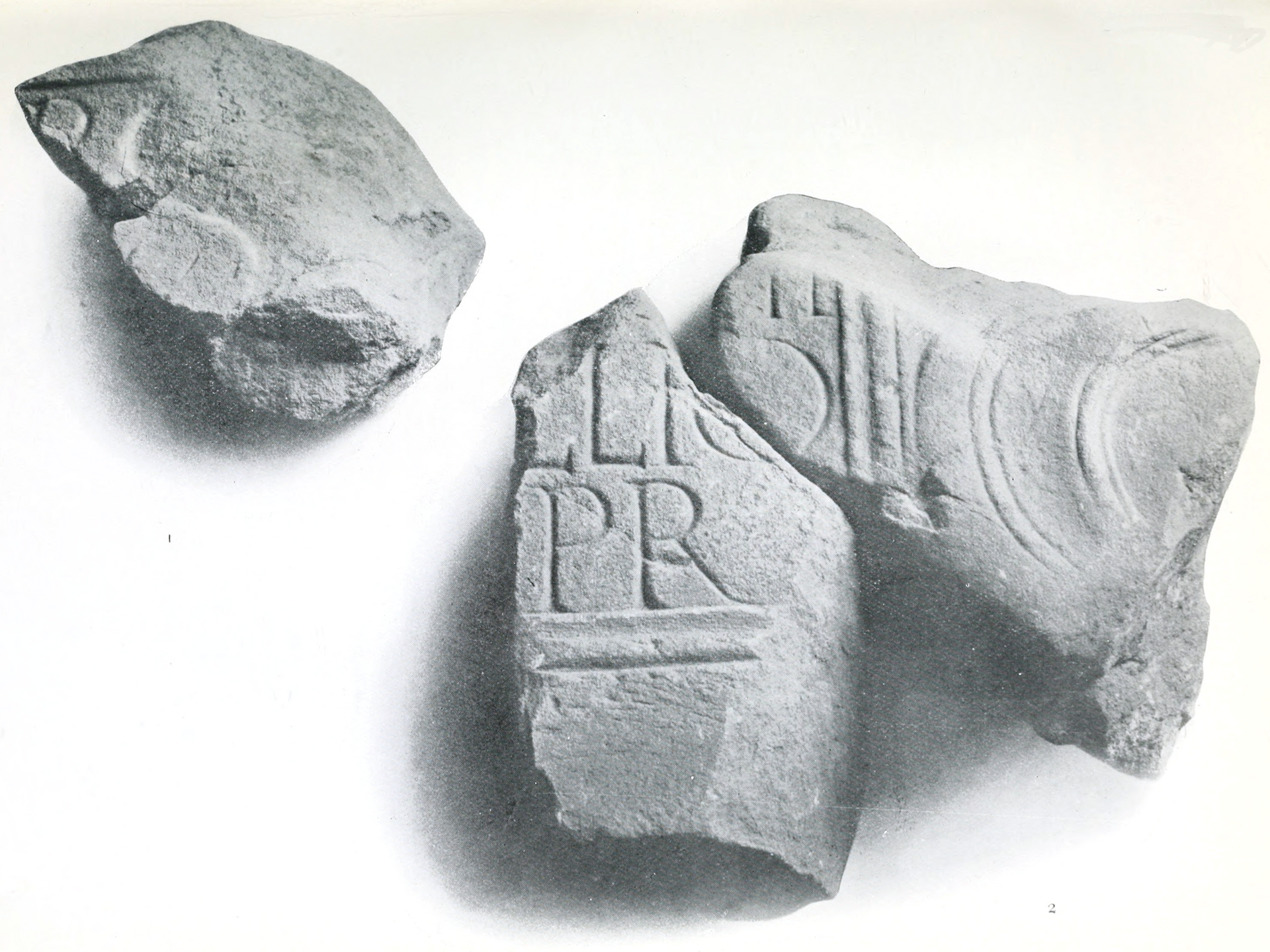
Balmuildy is one of only two Antonine Wall forts known to have stone ramparts, with excavated baths, inscriptions and objects now held in Glasgow’s…
- Near Bearsden
- Some walking
Fortified place · Roman
Wilderness Plantation
East Dunbartonshire
Wilderness Plantation is an Antonine Wall interval fortlet identified from the air and excavated in the 1960s, helping show how the frontier was st…
- Near Kirkintilloch
- Some walking

Fortified place · Medieval
Crookston Castle
Glasgow City
The only medieval castle still standing within Glasgow's boundaries, and the very first property the National Trust for Scotland ever acquired.
- Near Gloucester
The setting
Near Glasgow Cathedral, about 0 metres away.
Photo: Marek Śliwecki / Wikimedia Commons / CC BY-SA 4.0
Near Glasgow Cathedral, about 0 metres away.
Photo: AndyAkira / Wikimedia Commons / CC BY-SA 4.0
Near Glasgow Cathedral, about 0 metres away.
Photo: Yidan Xue / Wikimedia Commons / CC BY-SA 4.0
Near Glasgow Cathedral, about 0 metres away.
Photo: Marek Śliwecki / Wikimedia Commons / CC BY-SA 4.0
Questions people ask
- Why is Glasgow Cathedral historically significant?
- It is the oldest building in Glasgow and, with St Magnus Cathedral in Orkney, one of only two medieval Scottish cathedrals to survive the Reformation largely intact.
- Who is Glasgow Cathedral dedicated to?
- Saint Mungo, also known as Kentigern, the patron saint of Glasgow, whose reputed tomb lies at the centre of the Lower Church.
- Is Glasgow Cathedral still used for worship?
- Yes. It is an active parish church of the Church of Scotland, within the Presbytery of Glasgow, though the building has been Crown and then state property since the 16th and 19th centuries.
- What happened to the cathedral during the Reformation?
- It was stripped of Catholic furnishings and roof lead but kept in use for Protestant worship, eventually holding three separate congregations in different parts of the same building.
- What is the cathedral's connection to the University of Glasgow?
- The university was founded by papal bull in 1451, and its first classes were held in the cathedral's own chapter house before it moved to separate premises.
Sources
- Wikipedia: Glasgow Cathedral
- Historic Environment Scotland — Glasgow Cathedral, precinct and graveyard (SM90150)
- Historic Environment Scotland — Glasgow Cathedral, 70 Cathedral Square, Glasgow (LB32654)
- The Book of Glasgow Cathedral, ed. George Eyre-Todd (Morison Brothers, 1898)
Explore more: Building or ruins · Medieval · Glasgow City
The Ancient Codex, in your pocket
Get the Pocket Codex app
Carry the directory with you — Glasgow Cathedral and thousands of ancient places across Britain and Ireland, offline, wherever you roam.