
The wreck lies almost upside down in 100 feet of water, her hull sixteen feet beneath the surface, marked by a buoy. In clear conditions it can be seen from above, reaching to within five metres of the surface. Nobody may dive on it: HMS Royal Oak is a designated war grave, and all unauthorised exploration is prohibited under the Protection of Military Remains Act 1986.
She was one of five Revenge-class battleships built for the Royal Navy during the First World War, completed in 1916, first in action at Jutland with the Grand Fleet, afterwards serving in the Atlantic, Home and Mediterranean fleets. Twenty-five years of attempted modernisation could not fix what was wrong with her, which was speed, and by the start of the Second World War she was no longer suitable for front-line work. In October 1939 she joined the hunt for the Gneisenau and could not keep up with the fleet — her top speed by then was under 20 knots. She came back into Scapa Flow on 12 October battered by North Atlantic storms, Carley floats smashed, several of the smaller guns flooded and useless.
She should not have been there when U-47 arrived. Admiral Charles Forbes, worried that a German reconnaissance overflight meant an air raid was coming, had dispersed most of the fleet to safer ports. Royal Oak was held back because her anti-aircraft guns were considered a useful addition to Scapa Flow’s otherwise thin air defences.
On the night of 14 October 1939 she was torpedoed at anchor. Of a complement of 1,234 men and boys, 835 were killed that night or died later of their wounds. Many who got off the ship were in little more than their nightclothes, and the water was cold; worse, a thick layer of fuel oil lay on the surface, filling lungs and stomachs and making swimming almost impossible. Of those who tried the half-mile to the nearest shore, only a handful lived.
The naval consequence was small — the first of five British battleships and battlecruisers lost in the war, and no real dent in Allied numerical superiority — but the effect on morale was considerable, and the effect on Gunther Prien, U-47’s commander, was immediate: he became a celebrity and the first German submarine officer awarded the Knight’s Cross of the Iron Cross. Before that night the Royal Navy had thought Scapa Flow impregnable to submarines. It was not.
The Admiralty Board of Inquiry, under Admiral Reginald Plunkett-Ernle-Erle-Drax, condemned the base’s defences and censured Sir Wilfred French, Admiral Commanding, Orkneys and Shetlands, for their unprepared state. French was placed on the retired list — having, the year before, warned about exactly those deficiencies and offered to bring a small ship or a submarine past the blockships himself to prove the point. On Churchill’s orders the eastern approaches were sealed with concrete causeways linking Lamb Holm, Glimps Holm, Burray and South Ronaldsay to Mainland. Built largely by Italian prisoners of war, the Churchill Barriers were essentially complete by September 1944 and were opened officially just after VE Day in May 1945. They carry roads between the islands, which was a useful side-effect rather than the point.
Most of the bodies were never recovered. Twenty-six were interred at the naval cemetery at Lyness, eight of them unidentified. A memorial at St Magnus Cathedral in Kirkwall carries a plaque and a book of remembrance listing the names of the dead — a list the government did not release until forty years after the sinking — with a page turned each week. The ship’s bell, recovered in the 1970s and restored, was added to it. The brass letters of her name were taken from the wreck as a keepsake by a recreational diver in the 1970s, returned almost twenty years later, and are now shown at the Scapa Flow visitor centre in Lyness. Each year Royal Navy divers place a White Ensign underwater at her stern.
The oil was the long problem. She sank fully fuelled, with some 3,000 long tons of furnace oil aboard, and the corroding hull leaked at an increasing rate through the 1990s. Removing it was not straightforward: her status as a war grave required that surveys and methods be handled sensitively — plans in the 1950s to raise and salvage her had been dropped after public opposition — and badly managed work risked destabilising the wreck and releasing the whole remainder at once, with many tons of unexploded ordnance still in the magazines. Multi-beam sonar commissioned by the Ministry of Defence imaged the ship lying almost upside down, top works driven into the seabed, the tip of the bow blown off by U-47’s first torpedo and a gaping hole in the starboard flank where the second salvo struck three times. Briggs Marine was eventually contracted to pump the oil off. All double-bottom tanks were cleared by 2006 and work on the inner wing tanks began the following year; by 2010, 1,600 tons had been removed and the wreck was declared no longer actively releasing oil into Scapa Flow.
What follows is drawn from published sources, with each claim labelled by how firmly it is established.
History
HMS Royal Oak was one of five Revenge-class battleships built for the Royal Navy during the First World War. Completed in 1916, she first saw action at the Battle of Jutland with the Grand Fleet, and afterwards served in the Atlantic, Home and Mediterranean fleets. Attempts to modernise her across a twenty-five-year career could not correct her fundamental lack of speed, and by the start of the Second World War she was no longer fit for front-line duty.
In October 1939 she joined the search for the Gneisenau, sent into the North Sea as a diversion for the commerce raiders Deutschland and Admiral Graf Spee. The search found nothing, and Royal Oak — by then unable to make 20 knots — could not keep up with the fleet. She returned to Scapa Flow on 12 October battered by North Atlantic storms, with many of her Carley floats smashed and several smaller guns flooded and inoperable.
Admiral Charles Forbes, concerned that a recent German reconnaissance overflight signalled an air attack, dispersed most of the fleet to safer ports. Royal Oak stayed behind because her anti-aircraft guns were considered a useful addition to Scapa Flow's otherwise scanty air defences.
On the night of 14 October 1939 she was torpedoed at anchor by the German submarine U-47. Of a complement of 1,234 men and boys, 835 were killed that night or died later of their wounds. Many who jumped were in little more than nightclothes and unprepared for the cold; a thick layer of fuel oil on the surface filled lungs and stomachs and hampered swimming, and of those who attempted the half-mile to the nearest shore only a handful survived.
The loss of an obsolete ship did little to the numerical superiority of the Royal Navy and its allies, but it had a considerable effect on morale, and it made an immediate celebrity of the U-boat commander Gunther Prien, the first German submarine officer to receive the Knight's Cross of the Iron Cross. Scapa Flow had been considered impregnable to submarine attack; U-47 proved otherwise.
The Admiralty Board of Inquiry, under Admiral Reginald Plunkett-Ernle-Erle-Drax, condemned the defences at Scapa Flow and censured Sir Wilfred French, Admiral Commanding, Orkneys and Shetlands, for their unprepared state. French was placed on the retired list despite having warned the previous year of the deficient anti-submarine defences and offered to take a small ship or submarine past the blockships himself to prove the point.
On Churchill's orders the eastern approaches were sealed with concrete causeways linking Lamb Holm, Glimps Holm, Burray and South Ronaldsay to Mainland. Built largely by Italian prisoners of war, the Churchill Barriers were essentially complete by September 1944 and were opened officially just after VE Day in May 1945. They carry roads between the islands, which was a secondary benefit rather than the purpose.
Most of the bodies could not be recovered from the relatively shallow water. The wreck lies almost upside down in 100 feet of water with her hull 16 feet beneath the surface, marked by a buoy, and in clear conditions the upturned hull can be seen reaching to within five metres of the surface. It is a designated war grave, and all diving or other unauthorised exploration is prohibited under the Protection of Military Remains Act 1986.
Royal Navy divers place a White Ensign underwater at her stern each year in a ceremony marking the loss. A memorial at St Magnus Cathedral in Kirkwall carries a plaque and a book of remembrance listing the names of the dead, a page of which is turned each week; the list was not released by the government until forty years after the sinking. The ship's bell, recovered in the 1970s and restored, was added to that memorial, and twenty-six bodies, eight of them unidentified, were interred at the naval cemetery at Lyness.
The brass letters that formed the ship's name were taken as a keepsake by a recreational diver in the 1970s. They were returned almost twenty years later and are now displayed at the Scapa Flow visitor centre in Lyness.
The wreck went down fully fuelled with about 3,000 long tons of furnace oil, and leakage from the corroding hull increased through the 1990s. Removing it was complicated by the ship's status as a war grave — plans in the 1950s to raise and salvage her had been dropped after public opposition — and by the risk that clumsy work could destabilise the wreck and release the remainder at once, the magazines also holding many tons of unexploded ordnance.
Multi-beam sonar surveys commissioned by the Ministry of Defence showed the ship lying almost upside down with her top works forced into the seabed, the tip of the bow blown off by U-47's first torpedo and a gaping hole in the starboard flank from the triple strike of the second salvo. Briggs Marine was contracted to pump off the oil; all double-bottom tanks were cleared by 2006, work on the inner wing tanks began the following year, and by 2010 some 1,600 tons had been removed and the wreck was declared no longer actively releasing oil.
What to look for
-
The buoy over the wreck
The ship lies almost upside down in 100 feet of water with her hull 16 feet below the surface, marked by a buoy. In clear conditions the upturned hull shows to within five metres of the surface.
-
The Churchill Barriers
Concrete causeways sealing the eastern approaches to Scapa Flow, ordered by Churchill after the sinking and built largely by Italian prisoners of war. They were essentially complete by September 1944 and now carry roads between the islands.
-
The memorial in St Magnus Cathedral
A plaque at Kirkwall with a book of remembrance listing the dead, a page turned each week, and the ship's bell, recovered in the 1970s and restored.
-
The naval cemetery at Lyness
Twenty-six bodies were interred here, eight of them unidentified. The Scapa Flow visitor centre at Lyness also holds the brass letters of the ship's name, taken by a diver in the 1970s and returned twenty years later.
Plan your visit
- Location
- General area near Orkney Islands, Orkney Islands
This is a sensitive or fragile site, so we show only its general area. Please check official heritage sources for access before visiting, and take care not to disturb it.
Nearby places
Fortified place · Iron Age
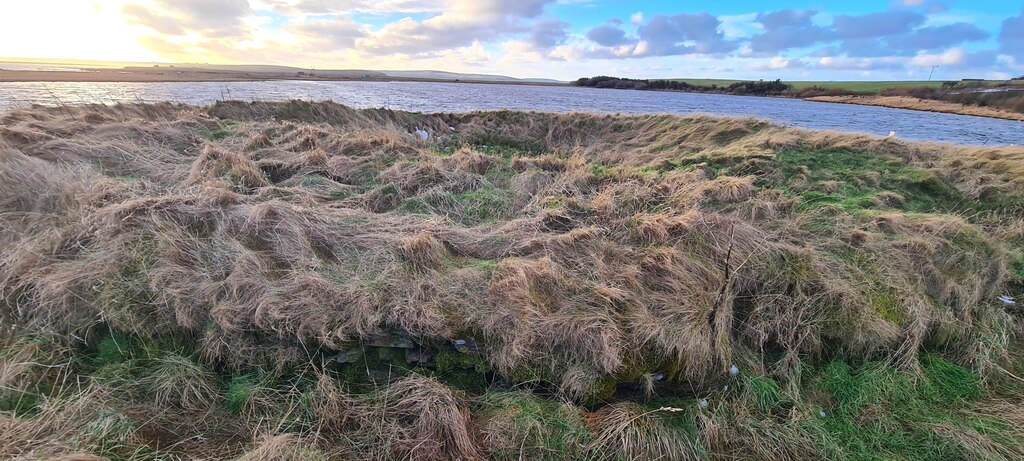
Broch of Ayre
Orkney Islands
The Ayre site is a broch, a tall circular tower of unmortared stone found only in Scotland, on Orkney Mainland.
- Easy path

Sacred place · Medieval
St Magnus Cathedral, Kirkwall
Orkney Islands
The oldest cathedral in Scotland, now a Church of Scotland parish church in Kirkwall.
- Near Kirkwall
Building or ruin · Medieval
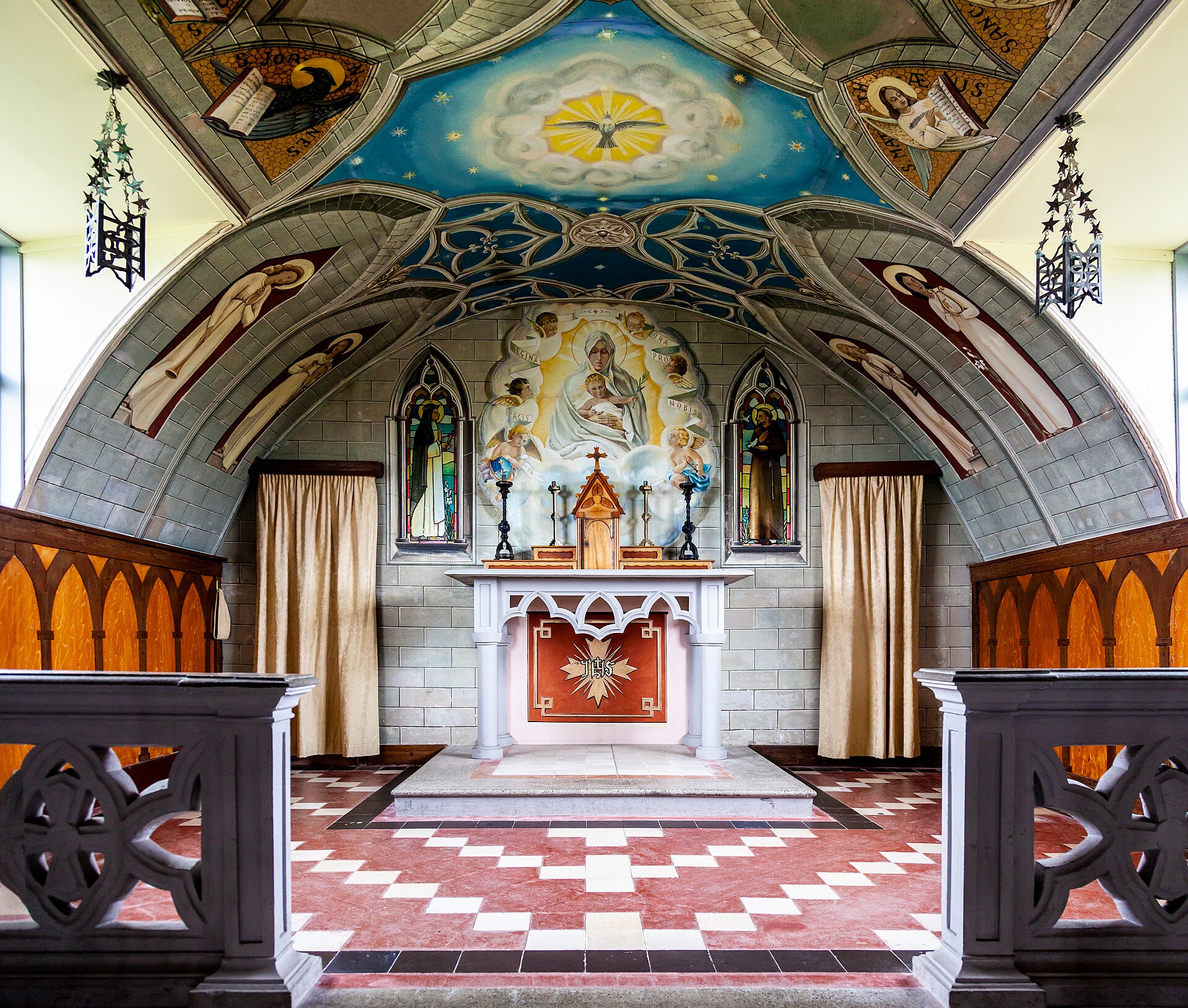
Italian Chapel
Orkney Islands
Two Nissen huts, joined end to end, decorated by a prisoner of war who stayed behind after his comrades were freed in order to finish the work.
Tomb or burial place · Prehistoric
Quanterness chambered cairn
Orkney Islands
A burial monument on Mainland into which a roundhouse was built about 700 BC, and which held the remains of 157 people.
- Some walking
Questions people ask
- What happened to HMS Royal Oak?
- She was torpedoed at anchor in Scapa Flow by the German submarine U-47 on the night of 14 October 1939. Of a complement of 1,234 men and boys, 835 were killed that night or died later of their wounds.
- Why was she still at Scapa Flow?
- Most of the fleet had been dispersed to safer ports on Admiral Charles Forbes's orders, after a German reconnaissance overflight suggested an air attack was coming. Royal Oak was kept back because her anti-aircraft guns were thought a useful addition to Scapa's otherwise scanty air defences.
- What changed as a result?
- Scapa Flow had been considered impregnable to submarine attack. The Admiralty inquiry condemned its defences, and on Churchill's orders the eastern approaches were sealed with concrete causeways — the Churchill Barriers — built largely by Italian prisoners of war and essentially complete by September 1944.
- Can the wreck be dived?
- No. It is a designated war grave, and all diving and other unauthorised exploration is prohibited under the Protection of Military Remains Act 1986. Royal Navy divers place a White Ensign at her stern each year in a ceremony marking the loss.
- What was done about the oil?
- She sank fully fuelled with about 3,000 long tons of furnace oil, and leakage increased through the 1990s. Briggs Marine was contracted to pump it off: all double-bottom tanks were cleared by 2006, work on the inner wing tanks began the next year, and by 2010 some 1,600 tons had been removed and the wreck was declared no longer actively releasing oil.
The Ancient Codex, in your pocket
Get the Pocket Codex app
Carry the directory with you — HMS Royal Oak / Scapa Flow wrecks and thousands of ancient places across Britain and Ireland, offline, wherever you roam.