The Ayre site is a broch, a tall circular tower of unmortared stone found only in Scotland, on Orkney Mainland.
Somebody was working metal inside this tower. Among the finds from the two excavations is a mass of conglomerate with pottery and iron fused into it, alongside nail heads, bronze pins and a ring — and two iron spearheads and an axehead, one of the spears lying by the guard cell at the entrance.
The Broch of Ayre stands on the north shore of Loch Ayre in the parish of Holm, and goes locally by the name St Mary’s Broch. It was dug in December 1901 and again in the summer of 1909, and most of what is known comes from those two campaigns rather than from anything still visible: part of the wall survives, and little else.
What the 1901 excavation recorded was a wall standing over a metre high in places, an entrance passage facing south-east with a broken lintel and a guard cell, radial partitions of vertical slabs inside, and a lintelled well. The tower measured almost eighteen metres across outside, with walls up to five metres thick — which means something close to half the footprint was wall.
The 1909 work found buildings outside the tower, probably later than it, and evidence that the interior had been reoccupied and remodelled. That is a common pattern: a broch is used, abandoned, and then lived in again by people with no need for its original defensive logic.
The animal bone gives the clearest picture of the people themselves — whale, seal, ox, pig, red deer, sheep, horse, gannet — together with bone pins and combs, vessels cut from cetacean bone, and several dice.
What follows is drawn from published sources, with each claim labelled by how firmly it is established.
History
The Broch of Ayre, also known as St Mary's Broch, stands on the northern shore of Loch Ayre in the parish of Holm on the Orkney Mainland. It is an Iron Age broch — a drystone tower of a kind built only in northern Scotland and the islands. It was first excavated in December 1901 and again in the summer of 1909. Little now survives, though part of the broch wall is still standing, and the two campaigns between them recorded a good deal that can no longer be seen.
The 1901 work found the wall surviving over a metre high in places, with an entrance passage facing south-east. That passage held a broken lintel and a guard cell, and inside the tower were radial partitions of vertical stone slabs and a lintelled well. The tower was almost eighteen metres across externally with walls up to five metres thick in places — proportions that put roughly half of the ground plan inside the wall itself, which is the defining oddity of the broch as a building type.
The 1909 excavation exposed external buildings, probably later than the tower, and suggested the interior had been re-used and partly remodelled in a subsequent phase. Brochs commonly have this second life, occupied long after the original structure ceased to be maintained. The finds were substantial. Two iron spearheads and an axehead came out of the tower, along with nail heads, bronze pins and a bronze ring, and evidence of metalworking that included a mass of conglomerate with pottery and iron fused together in it. One of the spearheads was associated with the guard cell.
There was also bone — pins, combs, antler fragments, vessels made from cetacean bone, and several dice — along with a large quantity of pottery and the remains of whale, seal, ox, pig, red deer, sheep, horse, gannet and other birds, and human bone.
Cultural influences
-
The tower was later reoccupied and remodelled, with external buildings added after the original broch phase.
-
Iron and bronze objects and fused iron-bearing debris show metalworking within the broch.
Connections
-
Both are Iron Age broch sites in Orkney, preserving the islands’ tradition of monumental fortified settlement.
-

Photo: Sandy Gerrard / Wikimedia Commons / CC BY-SA 2.0 The broch and underground monument represent different forms of prehistoric activity in Orkney’s landscape, from fortified settlement to ritual or funerary use.
-

Photo: Robert Scarth / Wikimedia Commons / CC BY-SA 2.0 The broch and cathedral span Orkney’s long religious history, from Iron Age community monuments to medieval Christianity centred on Kirkwall.
Discovery & excavation
Excavations in 1901 and 1909 recorded the south-east entrance, guard cell, radial partitions, well, later buildings and extensive metal, bone and animal-bone finds.
What to look for
-
South-east entrance
The south-east entrance passage held a broken lintel and guard cell, controlling access to the broch interior.
-
Lintelled well
A stone-lined well lay within the tower interior, maintaining water supply inside the defended walls.
-
Radial partitions
Vertical slabs divided the interior into radial spaces, organising the tower’s ground-floor living area.
-
Later buildings
External buildings appear to represent a later settlement phase after the original broch tower fell out of use.
Plan your visit
- Location
- 58.8963°N · 2.9210°W
- Access
- Open access
- Terrain
- Easy going
- Time needed
- About 20 minutes
- Best time
- Daylight hours
- What survives
- Little of the broch remains visible, though part of its wall still stands beside Loch Ayre.
Nearby places
Building or ruin · Medieval
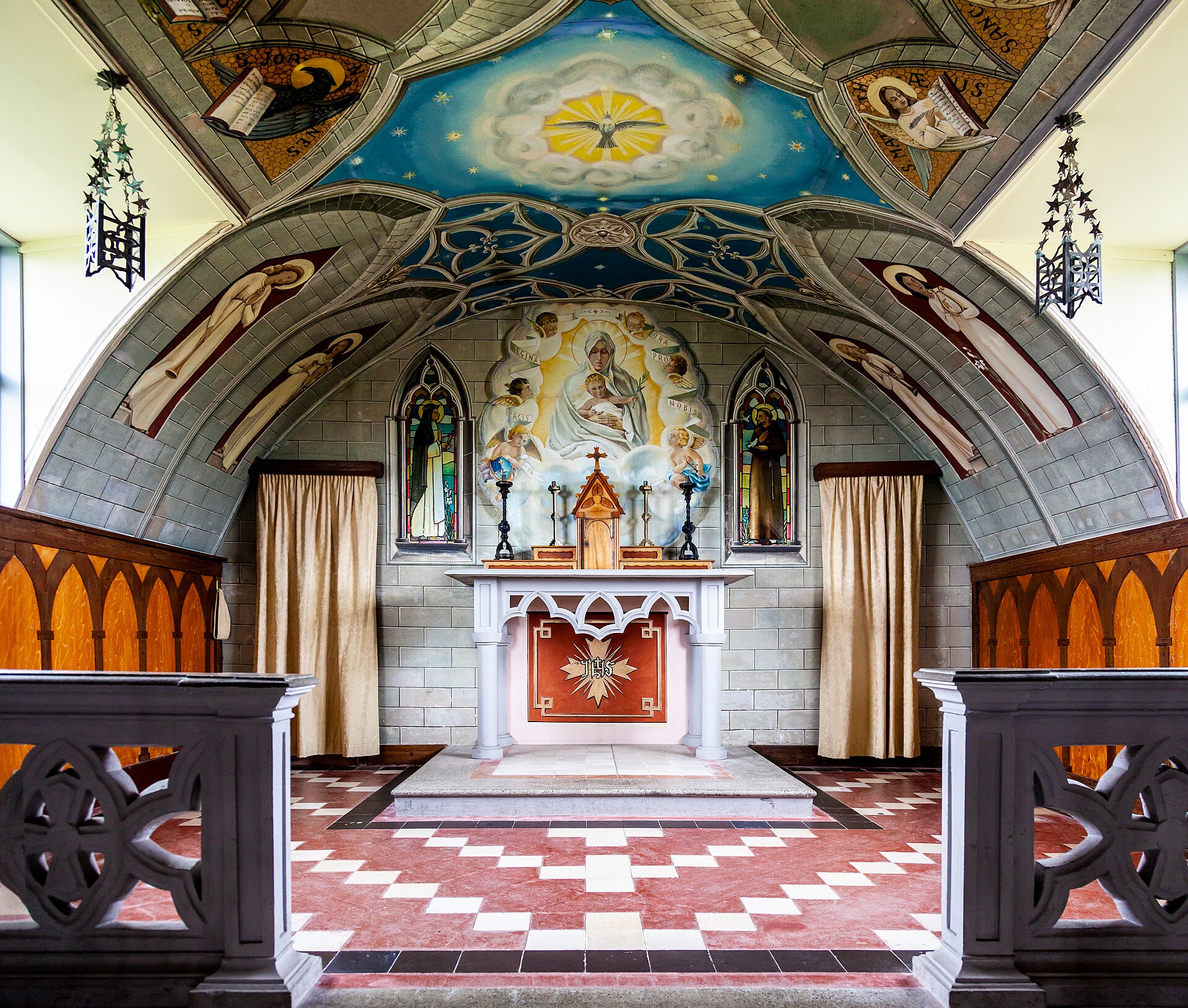
Italian Chapel
Orkney Islands
Two Nissen huts, joined end to end, decorated by a prisoner of war who stayed behind after his comrades were freed in order to finish the work.
Tomb or burial place · Prehistoric
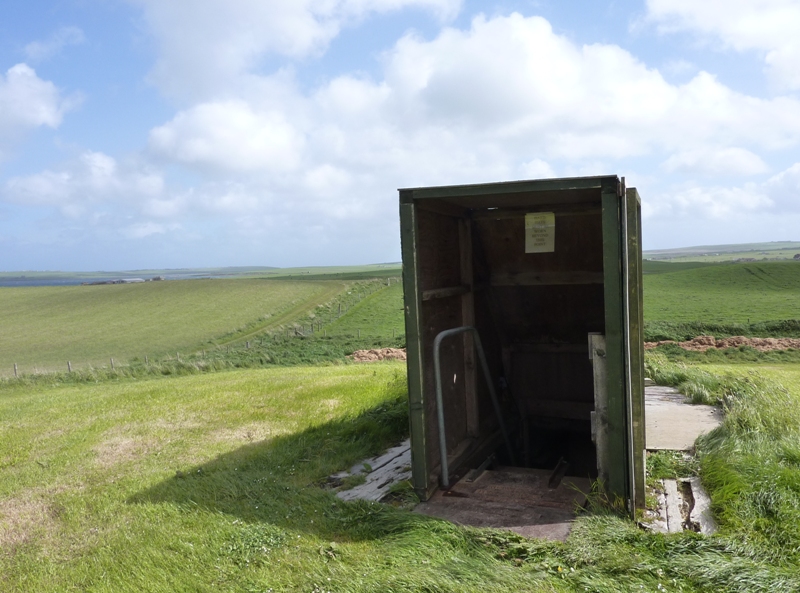
Mine Howe
Orkney Islands
Twenty-nine descending steps and fine stonework lead into an Iron Age chamber whose purpose remains unknown, making Mine Howe as compelling for its…
- Near Kirkwall
- Some walking
Fortified place · Iron Age
Loch of Tankerness
Orkney Islands
A shallow loch whose shrinking water exposed a Bronze Age house, while its shores bring together Iron Age, prehistoric and modern water-supply arch…
- Near Kirkwall
- Easy path
The setting
St Mary's Loch beside the Broch of Ayre.
Photo: Mark Crook / Wikimedia Commons / CC BY-SA 2.0
Questions people ask
- What is a broch?
- A drystone tower built in northern Scotland and the islands during the Iron Age. The Broch of Ayre was almost eighteen metres across outside, with walls up to five metres thick.
- What survives?
- Very little. Part of the broch wall is still standing; most of what is known comes from excavations in December 1901 and the summer of 1909.
- What was found there?
- Two iron spearheads and an axehead, nail heads, bronze pins and a ring, evidence of metalworking, bone pins and combs, cetacean-bone vessels, several dice, pottery, and the bones of whale, seal, ox, pig, red deer, sheep, horse and birds.
- Was it used more than once?
- The 1909 excavation found external buildings that are probably later, and suggested the interior had been re-used and partly remodelled in a subsequent phase.
Sources
The Ancient Codex, in your pocket
Get the Pocket Codex app
Carry the directory with you — Broch of Ayre and thousands of ancient places across Britain and Ireland, offline, wherever you roam.