Two Nissen huts, joined end to end, decorated by a prisoner of war who stayed behind after his comrades were freed in order to finish the work.
When the other prisoners were released, shortly before the war ended, Domenico Chiocchetti stayed on the island to finish painting the chapel.
He had been brought to Orkney in 1942 with 550 other Italians captured in North Africa, to build the Churchill Barriers - four causeways closing the eastern approaches to Scapa Flow. Two hundred of them were housed at Camp 60 on Lamb Holm, an island nobody had lived on before. In 1943 the commandant, Major Thomas Pyres Buckland, and the camp priest, Father Gioacchino Giacobazzi, agreed that the men needed somewhere to worship.
What they built it from is the point. Two Nissen huts were joined end to end and lined with plasterboard. The altar and altar rail were cast from concrete left over from the barrier works. The light holders were made out of corned beef tins, and the font from the inside of a car exhaust with concrete round it. Then they raised a concrete facade across the front to hide the shape of the hut, so that from outside it reads as a church.
Chiocchetti, from Moena in Trentino, painted the sanctuary end; the rest of the men decorated everything else. The chapel was not finished until after the war was over.
Orcadians formed a preservation committee in 1958, and Chiocchetti came back in 1960 to help restore his own work, and again in 1964 with his wife Maria. He was too ill to travel in 1992, when other former prisoners returned for the fiftieth anniversary of their arrival. The chapel was restored again in the 1990s. Of the rest of Camp 60, only concrete foundations remain.
What follows is drawn from published sources, with each claim labelled by how firmly it is established.
History
In 1942, 550 Italian prisoners of war captured in North Africa were brought to Orkney to work on the Churchill Barriers, four causeways built to block sea access to Scapa Flow. Two hundred of them were based at Camp 60 on Lamb Holm, an island that had previously been uninhabited. In 1943 the camp's new commandant, Major Thomas Pyres Buckland, and its Catholic priest, Father Gioacchino Giacobazzi, agreed that a place of worship was needed. What the prisoners had to build with was whatever the camp and the barrier works could spare, which shaped everything about the result.
The chapel was made as a tin tabernacle from two Nissen huts joined end to end. The corrugated interior was covered with plasterboard, and the altar and altar rail were built from concrete left over from work on the barriers. A facade was created in concrete to conceal the shape of the hut and make the building look like a church.
Most of the interior decoration was the work of Domenico Chiocchetti, a prisoner from Moena in Trentino in northern Italy, who painted the sanctuary end while his fellow prisoners decorated the rest. The light holders were made from corned beef tins, and the baptismal font from the inside of a car exhaust covered with a layer of concrete. When his fellow prisoners were released shortly before the end of the war, Chiocchetti stayed on the island to finish decorating the newly consecrated chapel. The chapel itself was not completed until after the war had ended.
A group of Orcadians set up the Chapel Preservation Committee in 1958. Chiocchetti returned in 1960 to help with restoration, and again in 1964 with Mrs Maria Chiocchetti. He was too ill to travel when other former prisoners came back in 1992 to mark the fiftieth anniversary of their arrival on the island.
The chapel was restored in the 1960s and again in the 1990s. Only the concrete foundations of the other buildings of the prisoner-of-war camp survive. It is a Category A listed building, and it lies in the Roman Catholic Parish of Our Lady and St Joseph in Orkney, part of the Diocese of Aberdeen, with Mass held on the first Sunday of the summer months from April to September.
People
-
Domenico Chiocchetti
A prisoner from Moena in Trentino who painted the sanctuary end and stayed on the island after his comrades were released in order to finish the decoration.
-
Major Thomas Pyres Buckland
Camp 60's commandant, who agreed with the camp priest in 1943 that a place of worship was needed.
-
Father Gioacchino Giacobazzi
The camp's Catholic priest, whose agreement with the commandant began the chapel.
Connections
-
The Churchill Barriers
The four causeways blocking sea access to Scapa Flow, which the prisoners of Camp 60 were brought to Orkney to build.
-
Scapa Flow
The anchorage the barriers were built to protect, immediately west of Lamb Holm.
What to look for
-
The concrete facade
Built to conceal the shape of the Nissen hut and make the building read as a church from outside.
-
The corned beef tin light holders
Made from the materials the camp had, like the altar and rail of leftover barrier concrete.
-
The baptismal font
The inside of a car exhaust, covered with a layer of concrete.
-
The painted sanctuary
Chiocchetti's work at the east end, finished after his fellow prisoners had gone home.
Plan your visit
- Location
- 58.8899°N · 2.8896°W
Nearby places
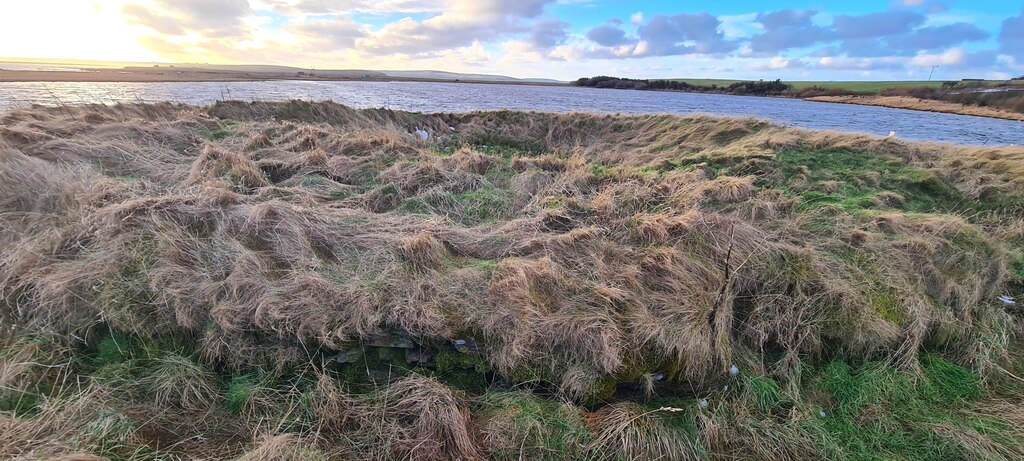
Fortified place · Iron Age
Broch of Ayre
Orkney Islands
The Ayre site is a broch, a tall circular tower of unmortared stone found only in Scotland, on Orkney Mainland.
- Easy path
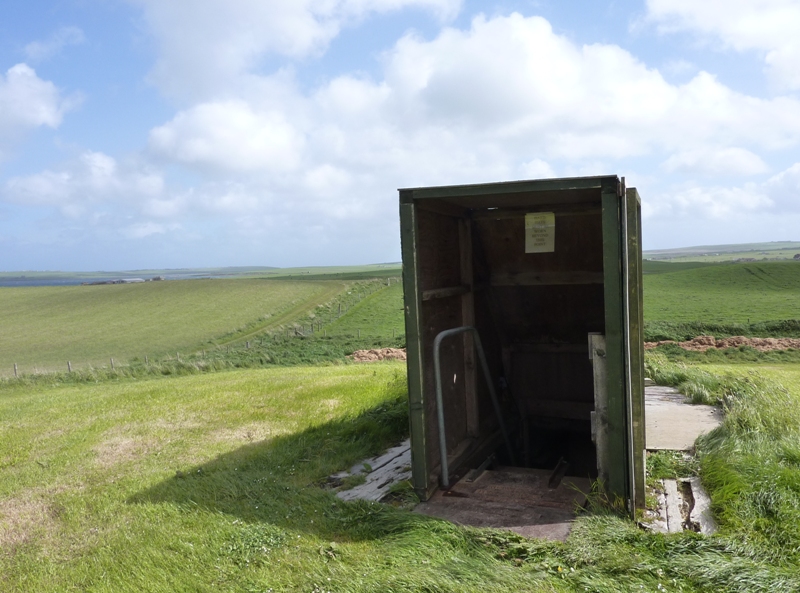
Tomb or burial place · Prehistoric
Mine Howe
Orkney Islands
Twenty-nine descending steps and fine stonework lead into an Iron Age chamber whose purpose remains unknown, making Mine Howe as compelling for its…
- Near Kirkwall
- Some walking
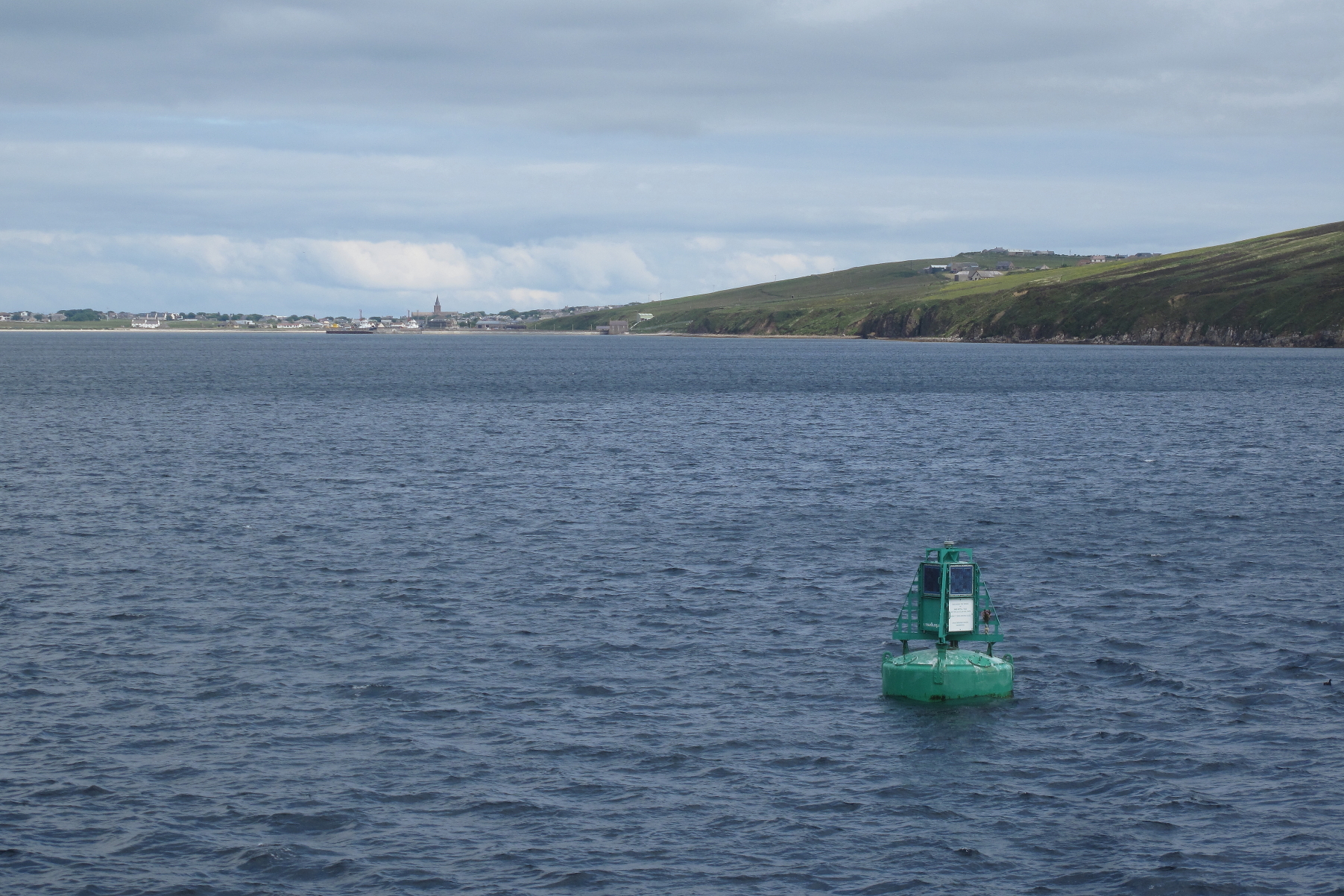
Fortified place · Iron Age
Loch of Tankerness
Orkney Islands
A shallow loch whose shrinking water exposed a Bronze Age house, while its shores bring together Iron Age, prehistoric and modern water-supply arch…
- Near Kirkwall
- Easy path
Questions people ask
- Who built the chapel?
- Italian prisoners of war at Camp 60 on Lamb Holm, captured in North Africa and brought to Orkney in 1942 to work on the Churchill Barriers.
- What is it made of?
- Two Nissen huts joined end to end, lined with plasterboard, with an altar and rail of concrete left over from the barrier works and a concrete facade to disguise the hut shape.
- Who decorated it?
- Mostly Domenico Chiocchetti, a prisoner from Moena in Trentino, who painted the sanctuary end. He stayed on after the other prisoners were released to finish the work.
- Can it be visited?
- Yes. It is a Category A listed building and a popular attraction, and Mass is held on the first Sunday of the summer months, April to September.
The Ancient Codex, in your pocket
Get the Pocket Codex app
Carry the directory with you — Italian Chapel and thousands of ancient places across Britain and Ireland, offline, wherever you roam.