Tomb or burial place · Prehistoric · Orkney Islands
Quanterness chambered cairn
A burial monument on Mainland into which a roundhouse was built about 700 BC, and which held the remains of 157 people.
A hundred and fifty-seven people were buried in this tomb. That number, recovered in the excavation of the early 1970s, is what makes Quanterness important — it demonstrated that Orkney’s chambered cairns were communal burial places on a scale nobody had expected.
The cairn is a Maeshowe-type monument built around 3400 BC, at the foot of the north side of Wideford Hill. What is visible is a grass-covered mound thirty metres across and three metres high. Inside, a long entrance passage runs in from the east to a rectangular chamber 6.5 metres by 1.9 and 3.5 high, with two cells opening off each side and one at each end.
One feature is hard to explain away. A small window-sized opening connects the main chamber to one of the cells — too small to crawl through, too deliberate to be an accident — and it may have played a part in whatever ceremonies took place inside.
The same excavation turned up something else entirely: an Iron Age roundhouse, built into the cairn around 700 BC. Somebody chose to live inside a tomb that was already two and a half thousand years old.
The site was scheduled in 1929 and stands on private land with no public access, so it is a monument known through its excavation record rather than by walking round it.
What follows is drawn from published sources, with each claim labelled by how firmly it is established.
History
Quanterness is a burial monument of the Neolithic — the first farming age — on the Orkney Mainland, at the base of the north side of Wideford Hill and north-east of the Wideford Hill chambered cairn. It is one of three chambered cairns lying between Kirkwall and Finstown. Three cairns in that short stretch of country is itself an indication of how densely Neolithic Orkney was occupied.
Radiocarbon dating places its construction around 3400 BC, and it is a Maeshowe-type cairn. The mound is now grass-covered, thirty metres across and 3.2 metres high, and covers both the Neolithic tomb and a much later structure built into it. Of the Orkney tomb types, the Maeshowe class is the most ambitious in its building. The excavation of the early 1970s found the remains of 157 people inside, together with pottery and other artefacts. That is an exceptional number for a single tomb, and it changed how Orkney chambered cairns were understood as communal rather than individual burial places.
The plan is elaborate. A long entrance passage runs in from the east end into a rectangular primary chamber 6.5 metres by 1.9 and 3.5 metres high, with two cells opening off each side and one at each end. That arrangement gives the chamber six separate cells, which is a great deal of subdivision for one tomb. One detail stands out. A small window-sized opening connects the main chamber to one of the cells, and it may have had a part in ceremonies conducted inside the tomb — it is too small to pass through and too deliberate to be accidental.
The same excavation found an Iron Age roundhouse built into the cairn, constructed around 700 BC. Somebody put a house inside a tomb that was already two and a half thousand years old, which is a striking piece of reuse even by Orkney standards. Reuse on that timescale is common in Orkney and almost never explained. Historic Environment Scotland scheduled the site in 1929. The tomb stands on private property and is not accessible to the public, so it is a monument known through its excavation record rather than through visiting. A monument that cannot be visited is easily forgotten, whatever its importance.
Cultural influences
-
The tomb held the remains of 157 people, illustrating communal burial at a Maeshowe-type cairn.
-
An Iron Age roundhouse was built into the cairn around 700 BC, long after its use as a tomb.
Connections
-
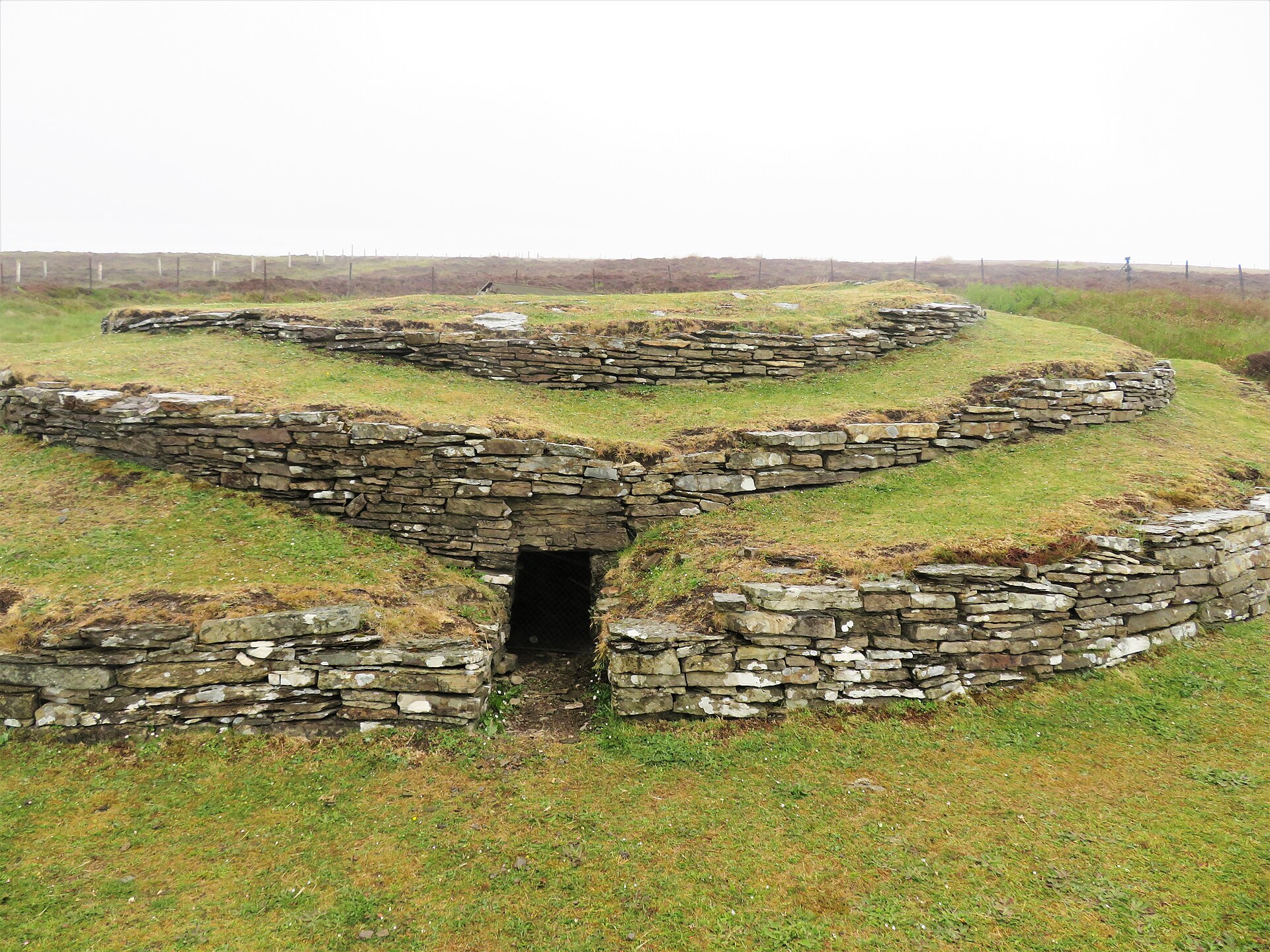
Photo: Gordon Hatton / Wikimedia Commons / CC BY-SA 2.0 Wideford Hill and Quanterness are neighbouring chambered cairns on Mainland Orkney, both recording Neolithic communal burial in the landscape east of Kirkwall; their contrasting chamber plans show the local variety of tomb design.
-

Photo: Otter at Dutch Wikipedia (Original text: Hopmans) / Wikimedia Commons / CC BY-SA 3.0 Rennibister Earth House is a later subterranean settlement structure in the same east-Mainland archaeological landscape. It provides an Iron Age contrast to Quanterness’s much earlier Neolithic burial monument.
-

Photo: Robert Scarth / Wikimedia Commons / CC BY-SA 2.0 St Magnus Cathedral is Kirkwall’s medieval ecclesiastical centre, while Quanterness preserves a Neolithic burial monument on the town’s rural edge. Their relationship is chronological and regional rather than a direct institutional link.
Discovery & excavation
Excavation in the early 1970s found the remains of 157 people, pottery and an Iron Age roundhouse built into the cairn.
What to look for
-
Grass-covered mound
The cairn is a grass-covered mound about 30 metres across and 3.2 metres high.
-
Six-celled chamber
A long eastern passage leads to a rectangular chamber with six side and end cells.
-
Ceremonial opening
A small window-sized opening links the main chamber to one cell.
Plan your visit
- Location
- 58.9920°N · 3.0203°W
- Access
- Open access
- Terrain
- Moderate walking
- Time needed
- About 45 minutes
- What survives
- The grass-covered mound contains the Neolithic tomb and the later Iron Age roundhouse; it is on private ground and not accessible to the public.
Opening & admission
Not open to the public: the cairn is on private property.
- The grass-covered burial mound is visible in its agricultural setting, but entry and access across private land require the owner’s permission.
Nearby places
Tomb or burial place · Prehistoric
Wideford Hill chambered cairn
Orkney Islands
Wideford Hill is a Stone Age burial mound on Mainland Orkney, with a chamber, side chambers and masonry that shows how the tomb was built.
- Near Kirkwall
- Easy path

Tomb or burial place · Prehistoric
Rennibister Earth House
Orkney Islands
An underground structure on Mainland, probably for storage, found in 1926 when a threshing machine broke through it.
- Some walking

Sacred place · Medieval
St Magnus Cathedral, Kirkwall
Orkney Islands
The oldest cathedral in Scotland, now a Church of Scotland parish church in Kirkwall.
- Near Kirkwall
Tomb or burial place · Prehistoric
Cuween Hill Chambered Cairn
Orkney Islands
A crawl into this first-farming-age tomb leads to four side cells and the extraordinary remains of people and twenty-four dogs, evidence of a commu…
- Near Finstown
- 270 metres from car park
- Easy path
The setting
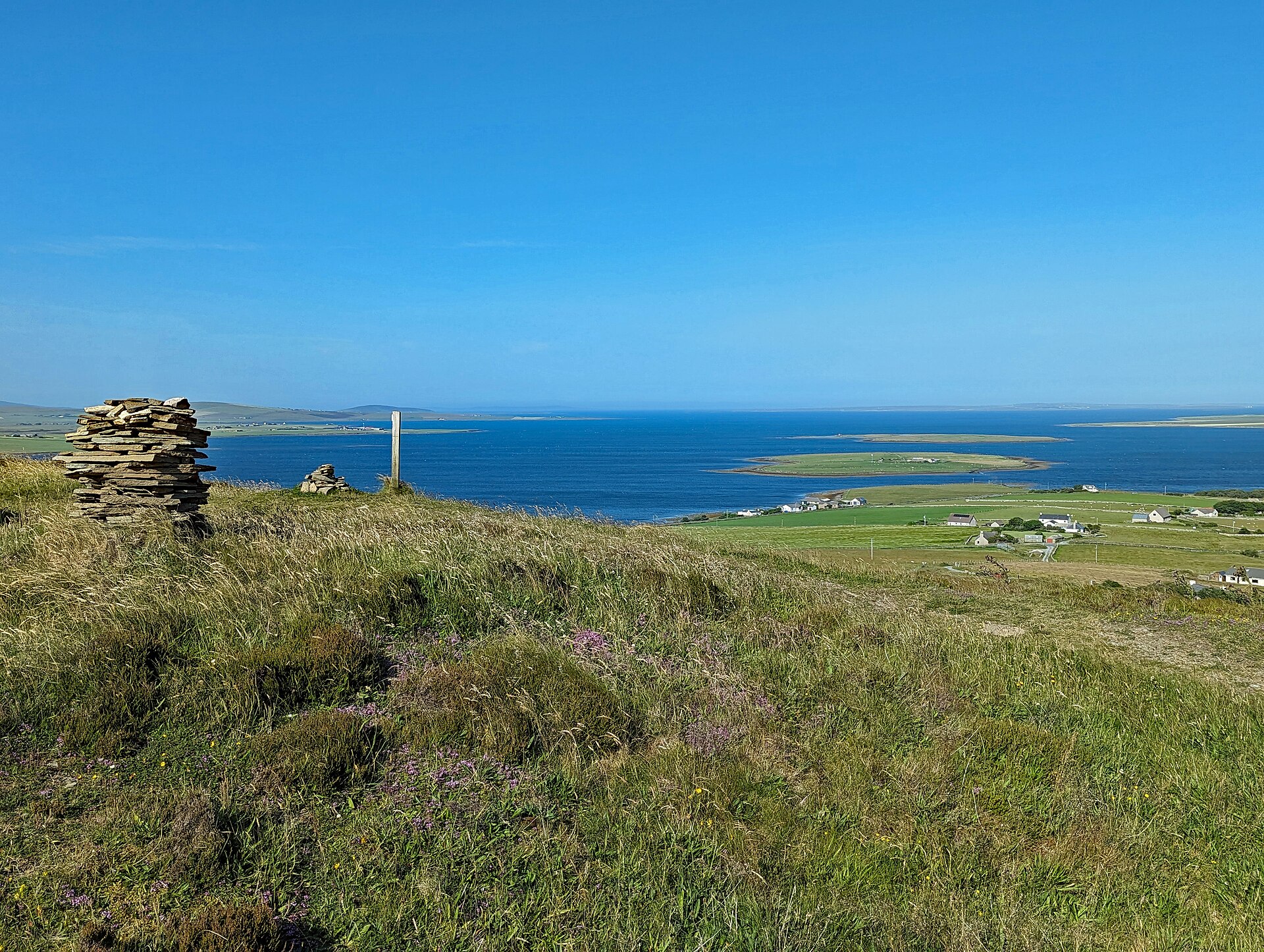
A chambered cairn and farm house near Quanterness, retained as nearby context rather than as the lead image.
Photo: Ian Balcombe / Wikimedia Commons / CC BY-SA 2.0
Questions people ask
- How many people were buried here?
- The remains of 157 individuals were recovered in the excavation of the early 1970s, along with pottery and other artefacts.
- How old is the cairn?
- Radiocarbon dating places construction around 3400 BC. It is a Maeshowe-type chambered cairn.
- What is the Iron Age roundhouse?
- A dwelling built into the cairn around 700 BC and found during the same excavation — a house put inside a tomb that was already two and a half thousand years old.
- Can it be visited?
- No. The tomb is on private property and is not accessible to the public.
Sources
The Ancient Codex, in your pocket
Get the Pocket Codex app
Carry the directory with you — Quanterness chambered cairn and thousands of ancient places across Britain and Ireland, offline, wherever you roam.