An underground structure on Mainland, probably for storage, found in 1926 when a threshing machine broke through it.
A threshing machine went through the roof of this building on 12 November 1926, and the farm at Rennibister found it had been working over a chamber full of human bone, cut in the Iron Age — the centuries from roughly 800 BC until the Roman conquest.
Eighteen people were down there — six adults and twelve children, disarticulated, probably from two or three family groups — along with an ox scapula that had most likely been used as a spade. The bones turned out to be several hundred years younger than the structure itself, dating from the middle to late Iron Age, so somebody had put them into a building that was already old.
What they were put into is a souterrain — an underground chamber, dug and lined with stone, of a kind found across Orkney and usually read as storage. This one is hexagonal, 3.3 metres by 2.5, its walls built from slabs set on edge combined with rough masonry, its corbelled roof carried on four stone pillars and standing a metre and a half high, with five small alcoves let into the walls. The entrance passage runs three and a half metres with a drop at the end of it.
Visitors go down a ladder through a hatch in the roof, which is not how it was meant to be entered but is the only practical way in now.
Historic Environment Scotland scheduled the site in 1928. It sits by the Bay of Firth, fertile ground that has been settled continuously since the Neolithic — three chambered cairns stand nearby, including Wideford Hill and Cuween Hill, and another earth house at Grain was found in the nineteenth century not far off.
What follows is drawn from published sources, with each claim labelled by how firmly it is established.
History
Rennibister Earth House is a souterrain — an underground structure of the Iron Age — in a farmyard near the south-eastern shore of the Bay o' Firth on the Orkney Mainland. It was found in 1926 when a threshing machine broke through its roof. A threshing machine is an unlikely archaeologist, but it is far from the only Orkney site found that way.
The collapse happened on 12 November 1926, and what the farm found underneath was a chamber floor covered with human bone. An ox scapula lay among it, probably used as a spade at some point in the structure's life. Farm work and archaeology have collided repeatedly on these islands, and the collisions are usually how the sites enter the record. The remains were disarticulated and were eventually identified as six adults and twelve children, probably from two or three family groups. Eighteen people in a single small chamber is a great many, and the deposit is one of the more striking finds of its kind in Orkney.
Those bones are considerably later than the building. They have been dated from the middle to late Iron Age, several hundred years after the earth house was first constructed — so this was a reuse of an existing structure rather than its original purpose. The chamber is hexagonal, 3.3 metres long and 2.5 wide, with walls built from a combination of slabs laid on edge and rough masonry. Its corbelled roof stands 1.5 metres high and is carried on four stone pillars, with five small alcoves set into the walls. Alcoves of that kind are a standard feature of Orkney souterrains and are generally read as storage recesses.
The entrance passage runs 3.5 metres with a drop of about 0.7 metres to the chamber floor. Access today is by ladder down through a hatch in the roof, the original passage being too tight and too low for ordinary visiting. Comfort was clearly not a consideration for whoever used it originally either. Historic Environment Scotland scheduled the site in 1928, two years after the threshing machine found it, and it remains protected as a monument of national importance. Scheduling that quickly after discovery is unusual and reflects how remarkable the deposit was thought to be.
The Bay of Firth is fertile ground and has been settled continuously since the Neolithic. Three Neolithic chambered cairns stand nearby, among them Wideford Hill and Cuween Hill, and another souterrain — the Grain Earth House — was found in the nineteenth century a short distance away.
Cultural influences
-
The corbelled chamber, alcoves and narrow passage are characteristic of Orkney souterrains, generally interpreted as storage spaces.
-
Human remains of the middle to late Iron Age were placed in a chamber already several centuries old.
Connections
-

Photo: C Michael Hogan / Wikimedia Commons / CC BY-SA 2.0 Both are prehistoric subterranean or earthwork monuments in Orkney, preserving different forms of settlement and ritual activity.
-
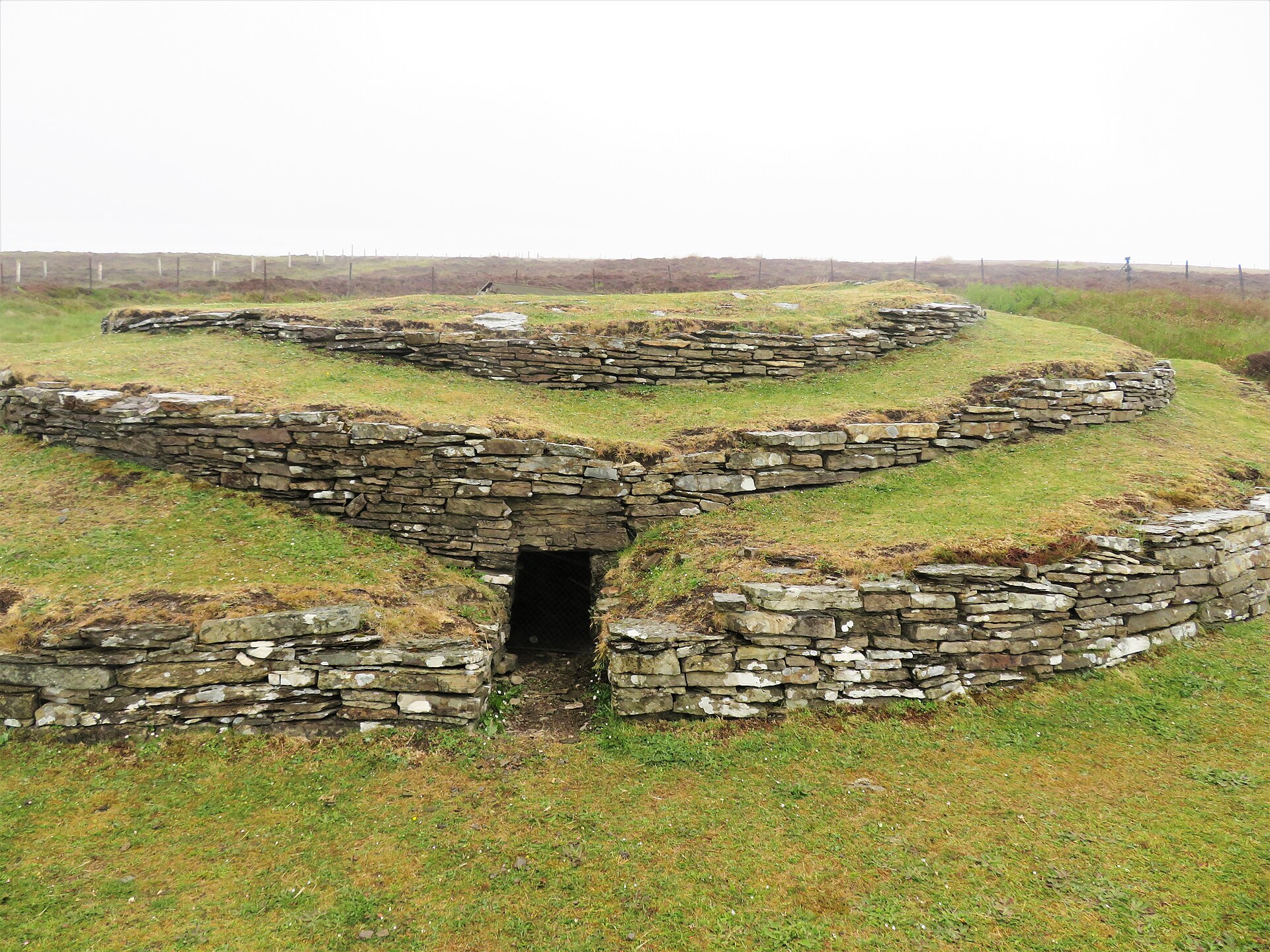
Photo: Gordon Hatton / Wikimedia Commons / CC BY-SA 2.0 The earth house and chambered cairn form part of Orkney’s dense prehistoric landscape, linking domestic and funerary architecture.
-
Both monuments preserve evidence of prehistoric occupation and burial traditions around the Orkney mainland.
Discovery & excavation
On 12 November 1926 a threshing machine broke through the roof, exposing a chamber floor covered with disarticulated human bone.
What to look for
-
Hexagonal chamber
An underground hexagonal chamber, 3.3 metres long and 2.5 metres wide, combines edge-set slabs with rough masonry.
-
Corbelled roof
Four stone pillars support the 1.5-metre-high corbelled roof, whose inward-stepped slabs close the chamber overhead.
-
Storage alcoves
Five small alcoves in the chamber walls are characteristic of Orkney souterrains and are generally interpreted as storage recesses.
Plan your visit
- Location
- 58.9962°N · 3.0506°W
- Access
- Open access
- Terrain
- Moderate walking
- Time needed
- About 30 minutes
- Best time
- Daylight hours
- What survives
- The underground chamber retains its corbelled roof, four pillars, five wall alcoves and narrow entrance passage.
- Facilities
- Access and facilities depend on the current arranged-visit operation; check before travelling.
Opening & admission
No reliable current admission details are recorded; verify before travelling.
Nearby places
Tomb or burial place · Prehistoric
Wideford Hill chambered cairn
Orkney Islands
Wideford Hill is a Stone Age burial mound on Mainland Orkney, with a chamber, side chambers and masonry that shows how the tomb was built.
- Near Kirkwall
- Easy path
Tomb or burial place · Prehistoric
Quanterness chambered cairn
Orkney Islands
A burial monument on Mainland into which a roundhouse was built about 700 BC, and which held the remains of 157 people.
- Some walking
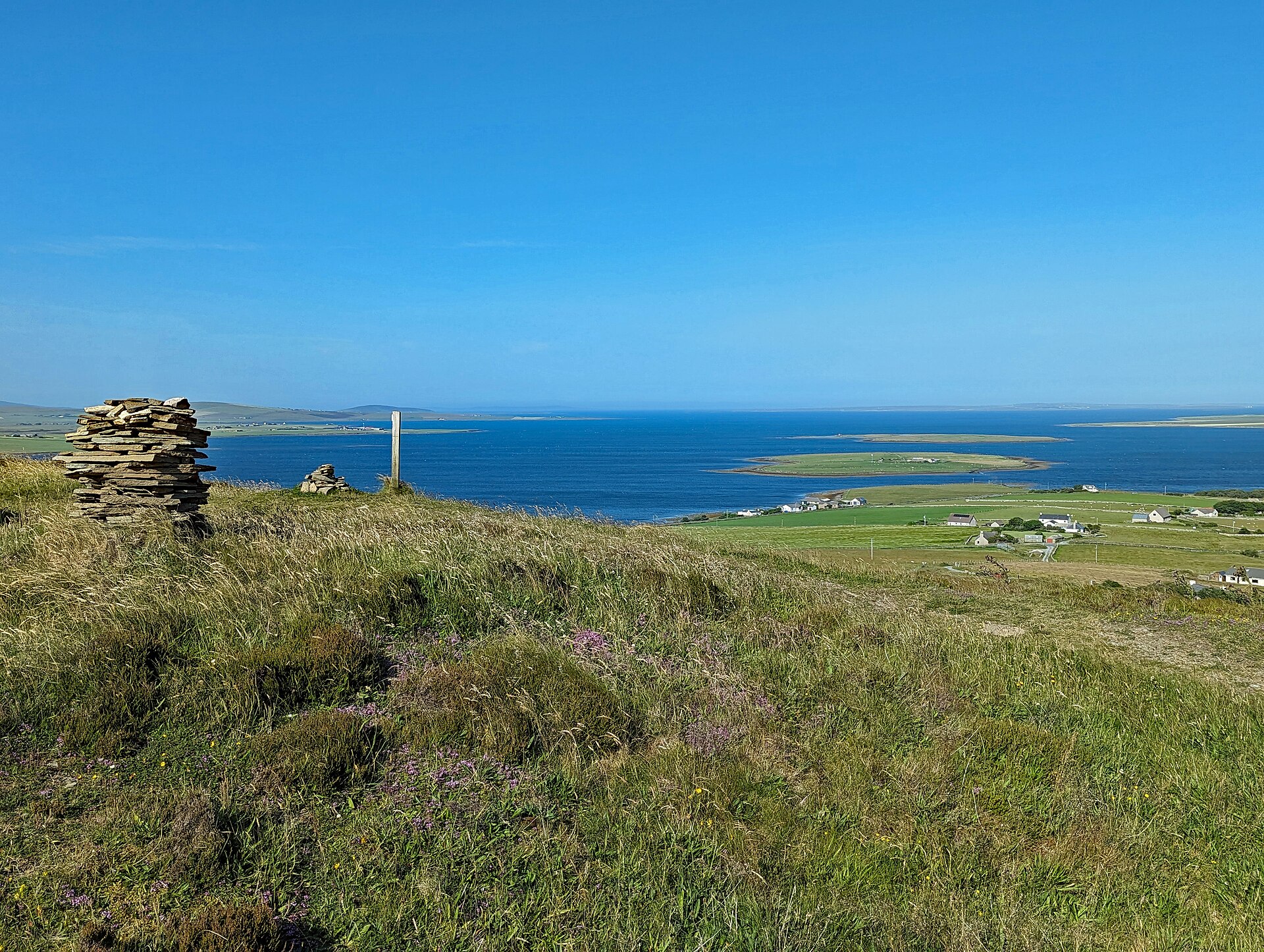
Tomb or burial place · Prehistoric
Cuween Hill Chambered Cairn
Orkney Islands
A crawl into this first-farming-age tomb leads to four side cells and the extraordinary remains of people and twenty-four dogs, evidence of a commu…
- Near Finstown
- 270 metres from car park
- Easy path

Sacred place · Medieval
St Magnus Cathedral, Kirkwall
Orkney Islands
The oldest cathedral in Scotland, now a Church of Scotland parish church in Kirkwall.
- Near Kirkwall
The setting
Rennibister Farm beside the earth house entrance.
Photo: N Chadwick / Wikimedia Commons / CC BY-SA 2.0
Questions people ask
- How was it discovered?
- A threshing machine caused the roof to collapse on 12 November 1926, opening the chamber from above.
- What was found inside?
- The floor was covered with disarticulated human remains — six adults and twelve children, probably from two or three family groups — along with an ox scapula probably used as a spade.
- Are the bones the same age as the building?
- No. They date from the middle to late Iron Age, several hundred years after the earth house was constructed, so the chamber was being reused.
- What is the chamber like?
- Hexagonal, 3.3 metres by 2.5, with walls of slabs on edge and rough masonry, a corbelled roof 1.5 metres high carried on four stone pillars, and five small alcoves.
- How do you get in?
- By ladder through a hatch in the roof. The original entrance passage is 3.5 metres long with a drop of about 0.7 metres to the floor.
Sources
The Ancient Codex, in your pocket
Get the Pocket Codex app
Carry the directory with you — Rennibister Earth House and thousands of ancient places across Britain and Ireland, offline, wherever you roam.