An unresolved Shapinsay structure that may be a burial mound or an underground passage connected with settlement, challenging easy readings of how its stonework was used.
Nobody is certain what this is. The Ordnance Survey marks Castle Bloody on Shapinsay as a chambered mound, which would make it a burial monument. Hogan instead reads it as an underground passage or chamber built beside a settlement, generally for storage or shelter.
The two readings put the same stonework in quite different worlds. One is where the dead were put; the other is where grain or people were kept. The dispute has not been settled, and the site is protected as a scheduled monument regardless of which answer is right.
The name resists explanation as well. Nothing recorded here accounts for Castle Bloody, and names of that kind fasten themselves onto conspicuous mounds without requiring a reason.
A little to the north stands the ruin of Linton Chapel, so a prehistoric structure and a medieval church share the same small stretch of island. That kind of overlap is common in Orkney and is very rarely documented well enough to say whether it means anything.
What follows is drawn from published sources, with each claim labelled by how firmly it is established.
History
Castle Bloody is a prehistoric structure on the island of Shapinsay in Orkney, and what it actually is has been disputed. The Ordnance Survey marks it as a chambered mound; Hogan argues it is more properly a souterrain, an underground passage or chamber built alongside a settlement rather than a tomb. That distinction matters more than it sounds. A chambered mound is a burial monument and a souterrain is a functional structure — usually read as storage or refuge — so the two readings put the same stonework into entirely different parts of prehistoric life.
The name is the other puzzle. Castle Bloody describes nothing that is recorded on the site, and no explanation for it survives. Names of that kind fasten themselves onto conspicuous mounds in Orkney without needing a reason, and they outlast every account of what the mound actually was. The ruined Linton Chapel stands a little to the north, so the prehistoric structure and a medieval church occupy the same stretch of ground on a small island — the sort of continuity that is common in Orkney and rarely documented.
The site is protected as a scheduled monument, which puts it under legal protection for its archaeological importance whichever of the two readings turns out to be correct. Scheduling records that something significant is there, not what it was for.
Cultural influences
-
The structure is read either as a chambered mound or as a souterrain, placing it in the island’s prehistoric settlement or burial landscape.
Connections
-

Photo: C Michael Hogan / Wikimedia Commons / CC BY-SA 2.0 Shapinsay
Castle Bloody is a prehistoric feature on the island of Shapinsay.
-
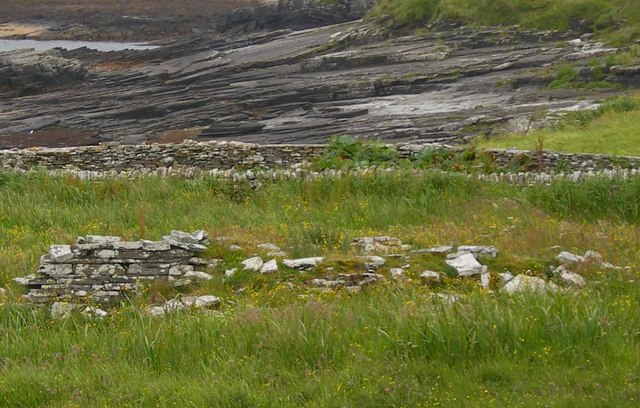
Photo: C Michael Hogan / Wikimedia Commons / CC BY-SA 2.0 The ruined Linton Chapel lies slightly north of Castle Bloody.
-
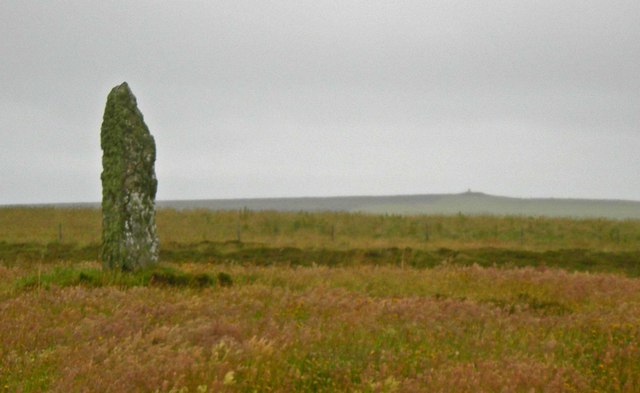
Photo: See above. / Wikimedia Commons / CC BY-SA 2.0 Mor Stein is identified as a Neolithic standing stone on Shapinsay alongside Castle Bloody.
What to look for
-
Chambered structure
The surviving stonework is interpreted either as a chambered mound or as an underground souterrain.
-
Linton Chapel
The ruined medieval chapel stands a short distance to the north.
Plan your visit
- Location
- 59.0324°N · 2.8102°W
- Access
- Open access
- Terrain
- Easy going
- Time needed
- About 20 minutes
- Best time
- Daylight hours
- What survives
- The prehistoric structure survives as a scheduled ruin on Shapinsay, though its original function remains disputed.
Opening & admission
No reliable current admission details are recorded; verify before travelling.
- The prehistoric feature lies on Shapinsay beside Linton Chapel and Mor Stein.
Nearby places
Sacred place · Prehistoric
Mor Stein
Orkney Islands
An isolated three-metre standing stone whose uncarved bulk records the considerable communal labour of quarrying, moving and raising a monument who…
- Near Shapinsay
- Easy path
Sacred place · Prehistoric
Linton Chapel
Orkney Islands
An enigmatic small coastal chapel whose proximity to the disputed Castle Bloody offers a rare glimpse of medieval worship beside a much older Shapi…
- Easy path

Fortified place · Iron Age
Burroughston Broch
Orkney Islands
One of Orkney’s best-preserved brochs, its intact guard chamber, wall gallery and internal well make the defensive engineering of a tower from abou…
- Some walking
Fortified place · Iron Age
Loch of Tankerness
Orkney Islands
A shallow loch whose shrinking water exposed a Bronze Age house, while its shores bring together Iron Age, prehistoric and modern water-supply arch…
- Near Kirkwall
- Easy path
The setting
Near Castle Bloody, about 634 metres away.
Photo: Claire Pegrum / Wikimedia Commons / CC BY-SA 2.0
Questions people ask
- Is Castle Bloody a tomb?
- Disputed. The Ordnance Survey marks it as a chambered mound, but Hogan argues it is more properly a souterrain — an underground passage or chamber built alongside a settlement rather than a burial monument.
- Where is it?
- On the island of Shapinsay in Orkney, with the ruined Linton Chapel a little to the north.
- Is it protected?
- Yes, as a scheduled monument.
Sources
The Ancient Codex, in your pocket
Get the Pocket Codex app
Carry the directory with you — Castle Bloody and thousands of ancient places across Britain and Ireland, offline, wherever you roam.