Ancient place · Roman
Micheldever Wood
Hampshire
Beneath a beech wood William Cobbett once called one of England's finest oak stands, three millennia of land use survive intact: Bronze Age (roughl…
- Near Winchester
By type
Page 9 of 14.
Search and filters apply to these 100 places.
Ancient place · Roman
Hampshire
Beneath a beech wood William Cobbett once called one of England's finest oak stands, three millennia of land use survive intact: Bronze Age (roughl…
Building or ruin · Medieval
North Yorkshire
Middleham Market Cross preserves a medieval market landmark whose worn steps and repeatedly changed summit trace centuries of civic use and repair.
Building or ruin · Roman
Northumberland
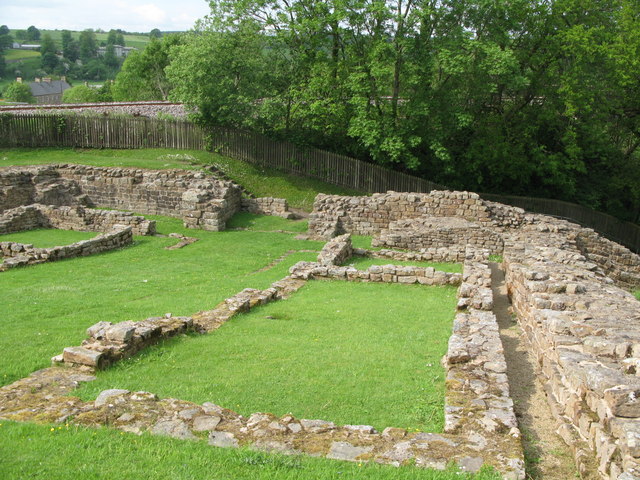
Tower Tye, reduced to an earth platform outlined by robber trenches: while eleven courses of Roman masonry still stand in its turret at Black Carts.
Building or ruin · Roman
Northumberland
At Limestone Corner, where Turret 30A sits forty metres from where measuring west would put it: evidence the turrets were set out first.
Building or ruin · Roman
Northumberland
Beside the Carrawburgh car park, its north wall under the modern road; only the west wall has ever been found, and that was robbed out.
Building or ruin · Roman
Northumberland
What survives at Carraw is the shape of a building rather than the building: shallow trenches left by stone robbers, a low platform between them, a…
Building or ruin · Roman
Northumberland
Shield on the Wall is one of the few posts on this stretch where Roman stone is still uncovered: part of the north gate and wall, standing 1.2 metr…
Building or ruin · Roman
Northumberland
Grindon itself has gone from view entirely, but the tower a short way west survives well enough to show a doorway with its threshold stone still in…
Building or ruin · Roman
Northumberland
Sewingshields is one of the few posts on this frontier whose interior has been dug in depth: four successive phases of Roman building, with two med…
Building or ruin · Roman
Northumberland
Milecastle 36 shows how nineteenth-century stone robbery erased a Roman frontier post, leaving its excavated gateway sequence recoverable only thro…
Building or ruin · Roman
Northumberland
This is one of the most complete of the small posts on the frontier: walls 2.2 metres high inside, a barrack block still standing a metre, and a no…
Building or ruin · Roman
Northumberland
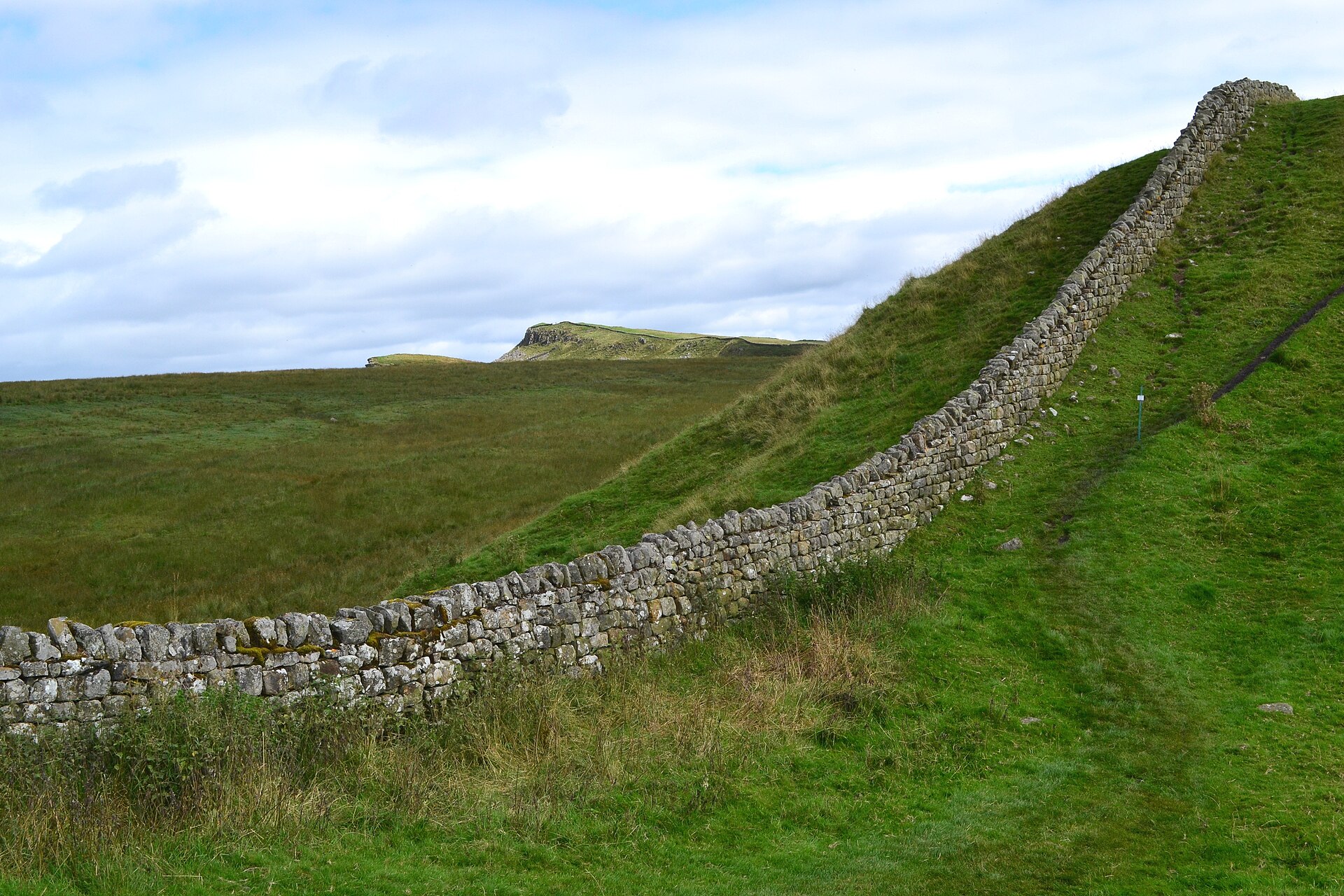
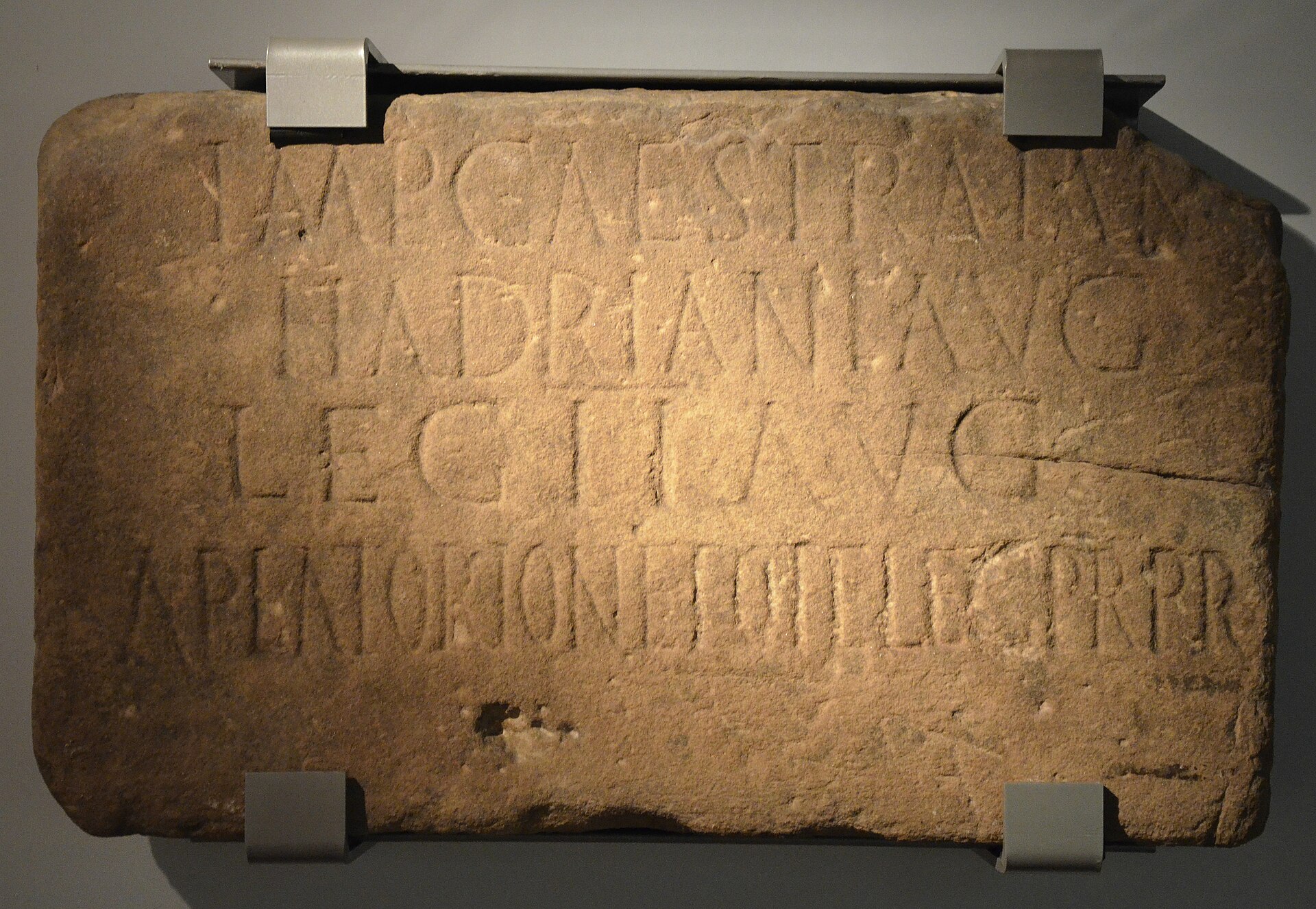
The building inscription from Hotbank names the emperor Hadrian and Aulus Platorius Nepos together, tying this stretch of frontier to the governor…
Building or ruin · Roman
Northumberland
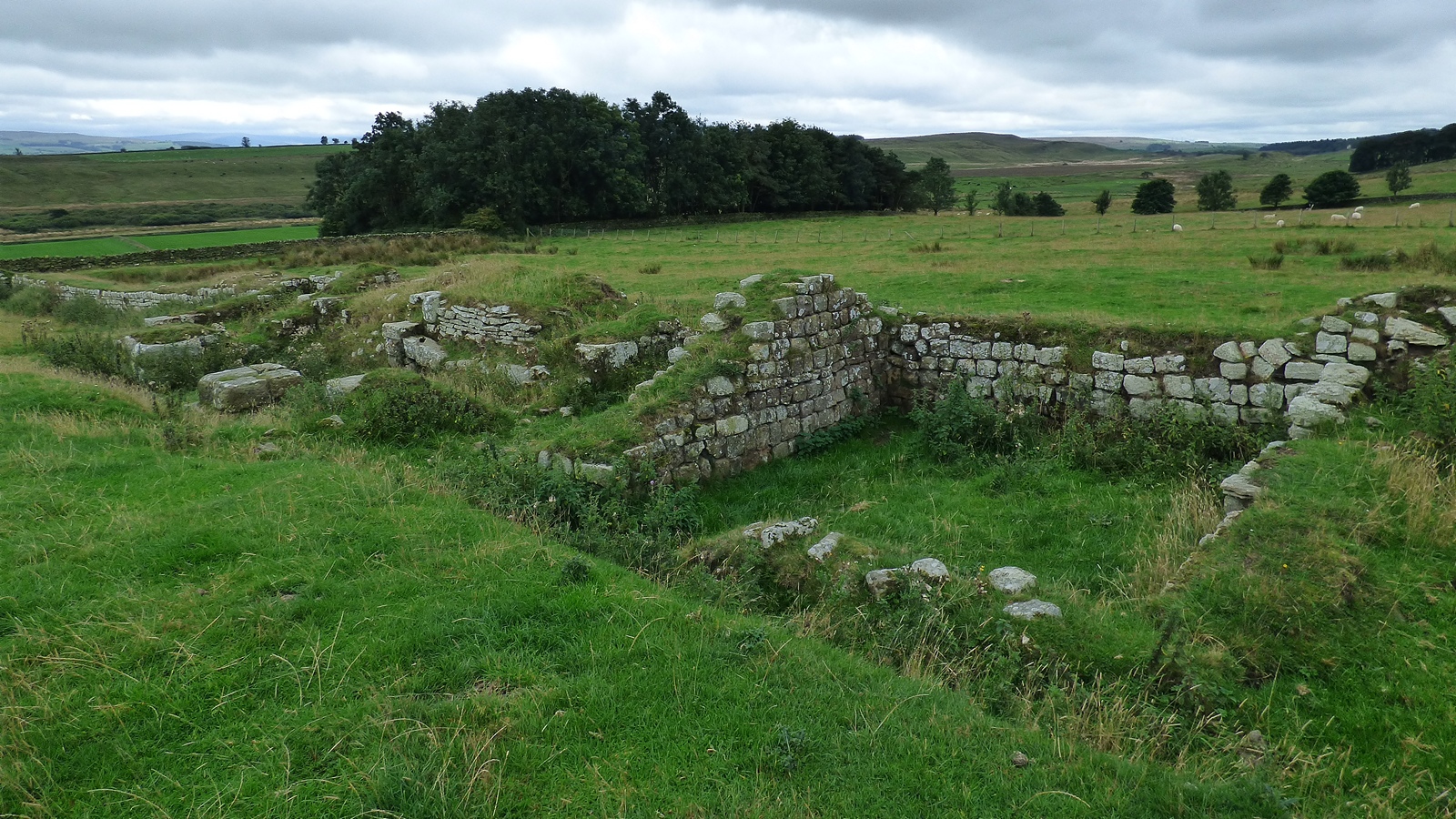
Castle Nick is among the best preserved of the small frontier posts: an oven in one corner, a sunken-floored room in another, and an eighteenth-cen…
Building or ruin · Roman
Northumberland
Winshields is a low mound of turf-covered rubble today, but when it was opened in 1908 the south wall was still standing ten courses high beneath it.
Building or ruin · Roman
Northumberland
A cottage built from this post's own Roman stone once stood on top of it, and the cottage has gone too.
Building or ruin · Roman
Northumberland
Put on a steep slope below Cawfield Crags because the measurement said so: the clearest demonstration that the Wall was laid out by the rule, not t…
Building or ruin · Roman
Northumberland
Demolished by the Roman army itself: the fort of Aesica was built directly over it within about a decade.
Building or ruin · Roman
Northumberland
Milecastle 44 turns a few facing stones, a turf bank and a surviving road agger into evidence for the Wall’s supply system.
Building or ruin · Roman
Northumberland
A milecastle with no visible remains, its site a slight turf platform just west of the broad ditch and mounds behind the Wall.
Building or ruin · Roman
Northumberland
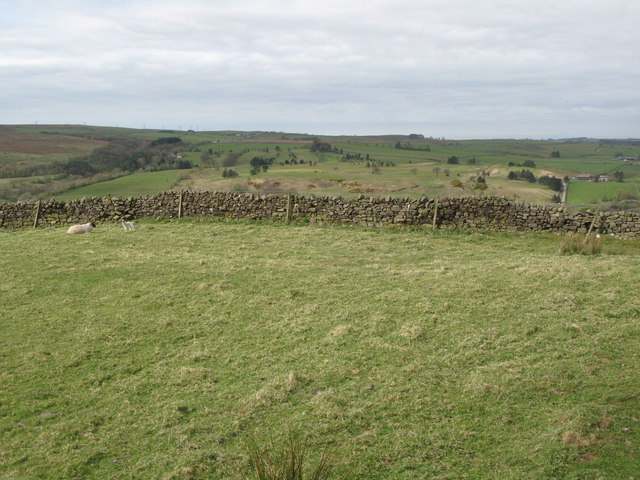
Milecastle 47 shows how nineteenth-century explosive quarrying reduced a Roman garrison post to a slight pasture platform, leaving its vanished fab…
Building or ruin · Roman
Cumbria
Its north-east corner still holds a flight of Roman stone steps, rare enough on Hadrian's Wall to let archaeologists calculate the actual height th…
Building or ruin · Roman
Cumbria
Excavation here found an earlier turf-and-timber milecastle buried beneath the stone one: a rare surviving trace of Hadrian's Wall's first, tempora…
Building or ruin · Roman
Cumbria
A stone milecastle that replaced an earlier turf-and-timber fort on a different footprint entirely: the only Turf Wall milecastle along the whole f…
Building or ruin · Roman
Cumbria
Milecastle 50TW is the only turf-wall milecastle whose stone-built replacement was raised on an entirely different site, leaving its own buried foo…
Building or ruin · Roman
Cumbria
A milecastle built twice: first in turf and timber, then rebuilt in stone with barracks for a garrison detachment: marking the exact seam where Had…
Building or ruin · Roman
Cumbria
Nothing of the milecastle itself survives above ground, yet the ground around it has given up altars to a local war god and a fragment naming Hadri…
Building or ruin · Roman
Cumbria
The milecastle itself has vanished without trace, yet its paired turrets and, 80 metres away, one of the tallest surviving stretches of Hadrian's W…
Building or ruin · Roman
Cumbria
Excavation found a stone milecastle built over an earlier turf-and-timber one, and a nearby stone records tribesmen rebuilding the Wall as late as…
Building or ruin · Roman
Cumbria
A gate in the Roman frontier system has vanished into a pasture field, leaving only a slight rise in a hedgeline to mark where soldiers once contro…
Building or ruin · Roman
Cumbria
The milecastle itself has vanished entirely under a Cumbrian village, yet its two flanking watchtowers still leave traces in a nearby wood and rive…
Building or ruin · Roman
Cumbria
A stone found among its ruins in 1853 named, in Latin, the exact Roman legion that built it: one of the few milecastles on Hadrian's Wall whose bui…
Building or ruin · Roman
Cumbria
Nothing rises above the pasture here, yet a 1981 geophysical survey confirmed the milecastle's south wall still lies intact underground, and two Ro…
Building or ruin · Roman
Cumbria
Part of a stretch of Hadrian's Wall whose turrets went unsought until 1961: a reminder that even a famous Roman frontier still hides points on the…
Building or ruin · Roman
Cumbria
No wall or foundation has ever been uncovered here: the only evidence for this Roman garrison post is a patch of ground that behaved strangely unde…
Building or ruin · Roman
Cumbria
Nothing rises above the field today, yet nine test pits dug in 1999 found the original turf-and-timber milecastle surviving intact beneath its ston…
Building or ruin · Roman
Cumbria
The clearest fact recorded about Milecastle 63 is not what survives here but how its location keeps being revised: a 1980 survey and a 2000 excavat…
Building or ruin · Roman
Cumbria
No stonework rises above the turf here, yet buried foundations and cobbled flooring confirmed in 1976 still anchor this stretch of Hadrian's Wall t…
Building or ruin · Roman
Cumbria
The stones of its vanished bridge lie recovered from the riverbed, nearly a hundred blocks dredged from the Eden and now resting in a Carlisle park…
Building or ruin · Roman
Cumbria
No masonry has ever been found at Milecastle 67: its position rests entirely on mathematical inference from the spacing of Hadrian's Wall's numbere…
Building or ruin · Roman
Cumbria
No stone of it has ever been found, yet its position is known almost to the metre: a milecastle located entirely by mathematics, not masonry.
Building or ruin · Roman
Cumbria
One of the Hadrian's Wall milecastles that has never been pinned down on the ground: stones once mistaken for its remains turned out to belong to a…
Building or ruin · Roman
Cumbria
A frontier post so thoroughly stripped that its very footprint has eluded a modern geophysical survey, yet the ground around it has still given up…
Building or ruin · Roman
Cumbria
Excavation here traced the milecastle's east wall to a possible interior building, one of the few points along this stretch of Hadrian's Wall where…
Building or ruin · Roman
Cumbria
Nothing of Milecastle 72 shows above the turf today, yet three separate digs pieced together a full building sequence from turf fort to stone, down…
Building or ruin · Roman
Cumbria
Nothing shows above the pasture today, yet a geophysical survey found an entire cluster of enclosures and a road pressed into the ground beside the…
Building or ruin · Roman
Cumbria
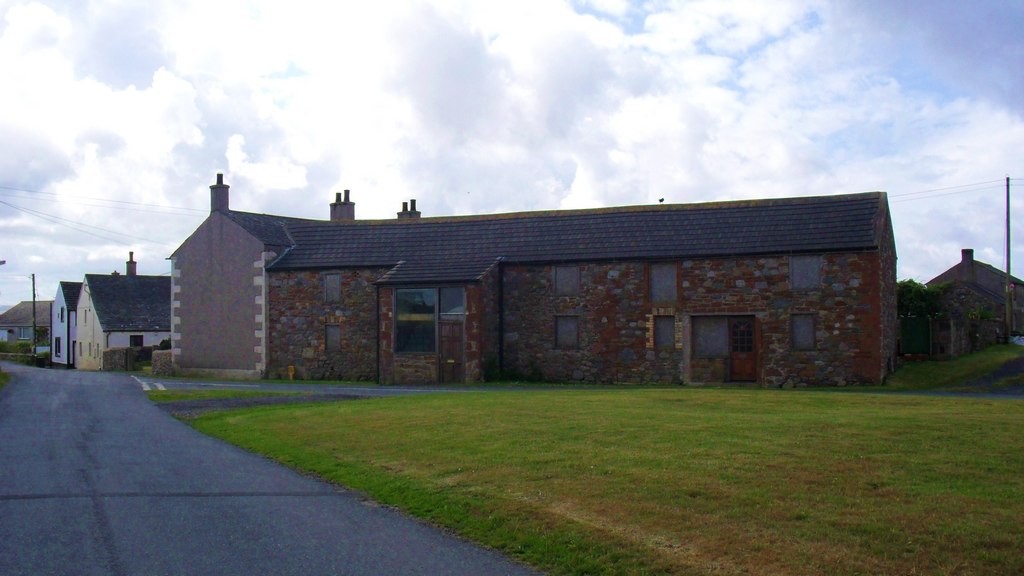
It stands in Burgh Marsh, a stretch of the Solway where no remains of Hadrian's Wall are known at all: so the milecastle is placed by measuring bac…
Building or ruin · Roman
Cumbria
A gatehouse the Roman army certainly built and certainly manned, yet one that has left no trace at all: its site reconstructed only by counting mil…
Building or ruin · Roman
Cumbria
Its exact footprint has never been pinned down: a faint platform near Drumburgh may or may not be the milecastle at all, making this one of the Wal…
Building or ruin · Roman
Cumbria
One of the mile-spaced fortlets that studded Hadrian's Wall, yet unlike many neighbouring stations its exact footprint has never been pinned down o…
Building or ruin · Roman
Cumbria
Nothing stands above ground here, yet two seasons of excavation, 66 years apart, recovered the exact footprint of a Roman garrison post down to a b…
Building or ruin · Roman
Cumbria
Excavated twice fifty years apart, this milecastle shows its own Roman rebuilding in section: a turf-and-timber fort raised on an artificial flood…
Building or ruin · Roman
Cumbria
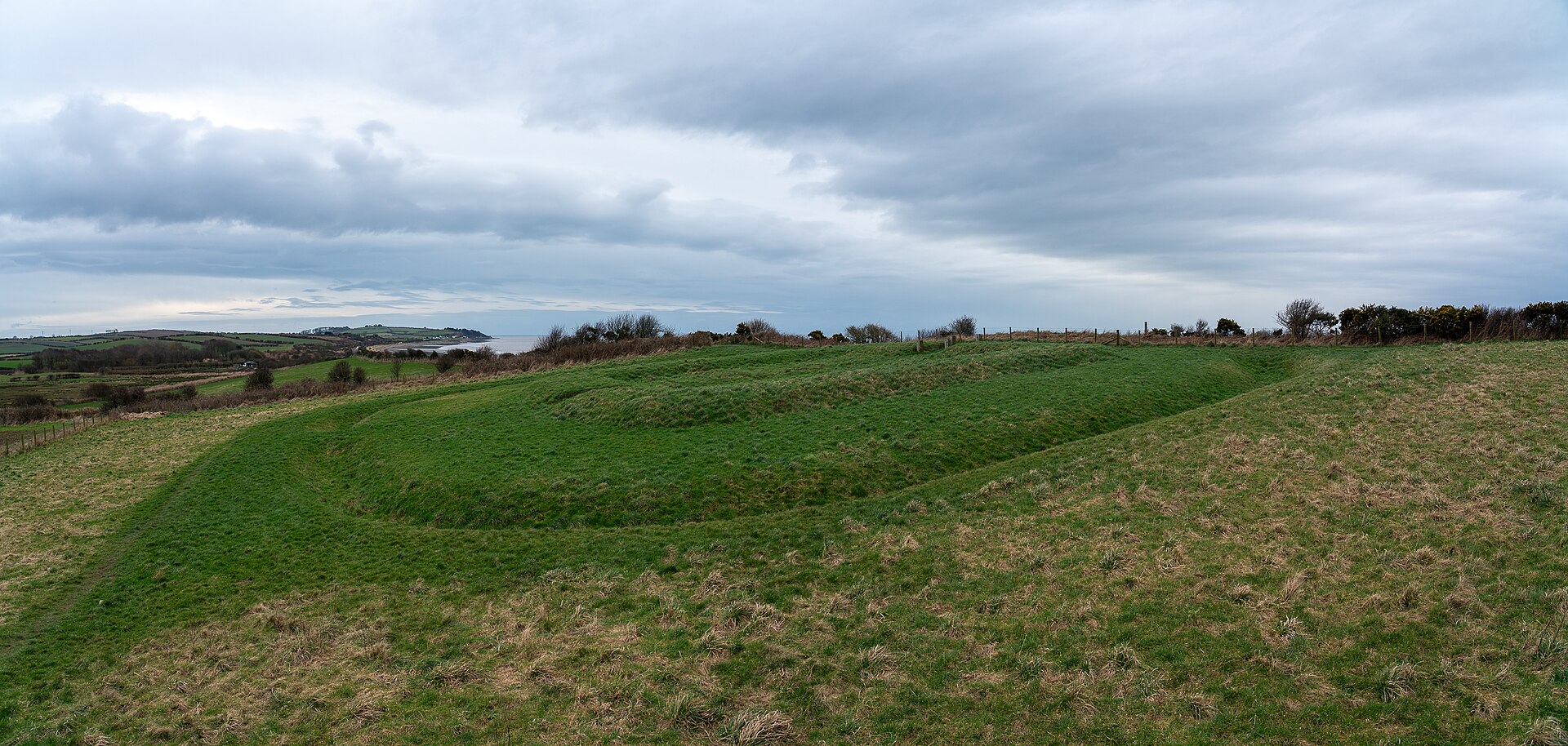
Its exact site was never found - swallowed, most likely, by the very Roman fort that replaced it, with the sea perhaps finishing the job.
Building or ruin · Roman
Cumbria
First in the chain of milefortlets extending Hadrian's Wall's frontier along the Solway coast, its buried remains show three separate rebuildings d…
Building or ruin · Roman
Cumbria
Its exact location has never been confirmed by excavation: a Roman site inferred entirely from measurement, a phantom fort known only through the g…
Building or ruin · Roman
Cumbria
A Roman coastal defence whose exact position has never been pinned down: only calculated from the towers and ditches that survive around it.
Building or ruin · Roman
Cumbria
One link in a chain of small coastal forts that carried Hadrian's Wall's defences off the end of the Wall itself and down the Cumbrian shore.
Building or ruin · Roman
Cumbria
The fortlet itself has never been found: a 1994 survey traced only a possible ditch, while its two flanking towers yielded a Hadrianic coin and Rom…
Building or ruin · Roman
Cumbria
No trace of it survives above ground at all: its very existence is known only because it fits the mathematical rhythm of Rome's coastal defence cha…
Building or ruin · Roman
Cumbria
One of a chain of Roman coastal watch-posts continuing Hadrian's Wall westward, entirely lost to erosion by 1980 and known now chiefly through its…
Building or ruin · Roman
Cumbria
A missing link in Hadrian's frontier system: proof that Rome's coastal defences ran on past the Wall itself, screening the Cumbrian shore with fort…
Building or ruin · Roman
Cumbria
A vanished Roman coastal post recovered only from the air after being written off as lost to the sea, part of the chain that carried Hadrian's Wall…
Building or ruin · Roman
Cumbria
No one has ever found it: its position is only a calculated estimate between two neighbouring forts, making it one of the Cumbrian coast's true gho…
Building or ruin · Roman
Cumbria
A timber fortlet on the Cumbrian coast that carried Hadrian's Wall's defensive system beyond the Wall itself, guarding a shoreline the Wall never r…
Building or ruin · Roman
Cumbria
Milefortlet 21 matters because full excavation revealed an inhabited coastal outpost: buildings, ovens and possessions: not merely the footprint of…
Building or ruin · Roman
Cumbria
A Roman coastal fort now lies beneath a golf green, its ditch and gravel entrance road recovered only through 20th-century excavation.
Building or ruin · Roman
Cumbria
No wall or ditch survives above ground, yet aerial photography and geophysics have pinned this fortlet's exact outline into the Cumbrian coast's Ro…
Building or ruin · Roman
Cumbria
Nothing survives above ground in this Maryport industrial estate, yet its flanking towers gave up a prehistoric (before written records reached Bri…
Building or ruin · Roman
Cumbria
A Roman coastal watch-post so thoroughly ploughed away that only an aerial photograph proves it was ever there: the Cumbrian coast defences reduced…
Briefer entries: recorded and worth knowing, with fuller pages to come.
Building or ruin · Roman
Tyne and Wear
It may never have been built. Peter Hill proposed it; no trace of it has ever been found.
Building or ruin · Roman
Tyne and Wear
Its remains lie under the recreation ground at Miller's Dene. Early excavators dug Turret 0B and thought they had found this instead.
Building or ruin · Roman
Tyne and Wear
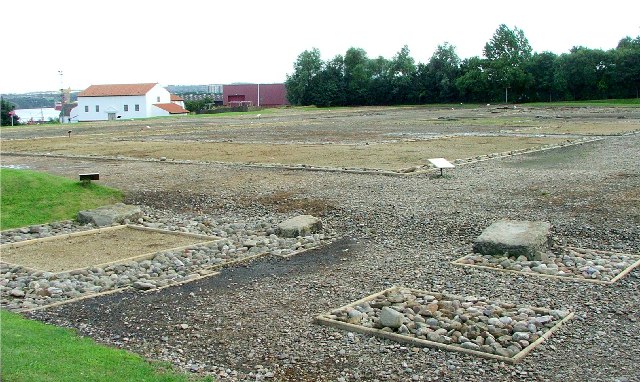
Part of the north gateway survives in the front garden of Dene House: twelve foundation slabs, three blocks, one marked with an asterisk and two wi…
Building or ruin · Roman
Tyne and Wear
Its measured position is the middle of the old village of Throckley Bank Top, underneath the Working Men's Club.
Building or ruin · Roman
Northumberland
Milecastle 12 preserves an archaeological story beneath modern Heddon-on-the-Wall, where inscriptions, coin hoards, and associated turrets reveal a…
Building or ruin · Roman
Northumberland
Milecastle 13 preserves a low Hadrian’s Wall platform whose documented gateway, coin hoard, and turret system illuminate a small frontier post now…
Building or ruin · Roman
Northumberland
Milecastle 14 preserves a low Hadrian’s Wall platform whose short-axis (a milecastle whose long side runs with the Wall rather than across it) plan…
Building or ruin · Roman
Northumberland
Milecastle 15 preserves a bold but unexcavated Hadrian’s Wall platform whose robber trenches and disputed turret evidence show how much of the fron…
Building or ruin · Roman
Northumberland
Milecastle 16 preserves a slight Harlow Hill platform where the Wall itself was removed for the Military Road, while its associated turrets survive…
Building or ruin · Roman
Northumberland
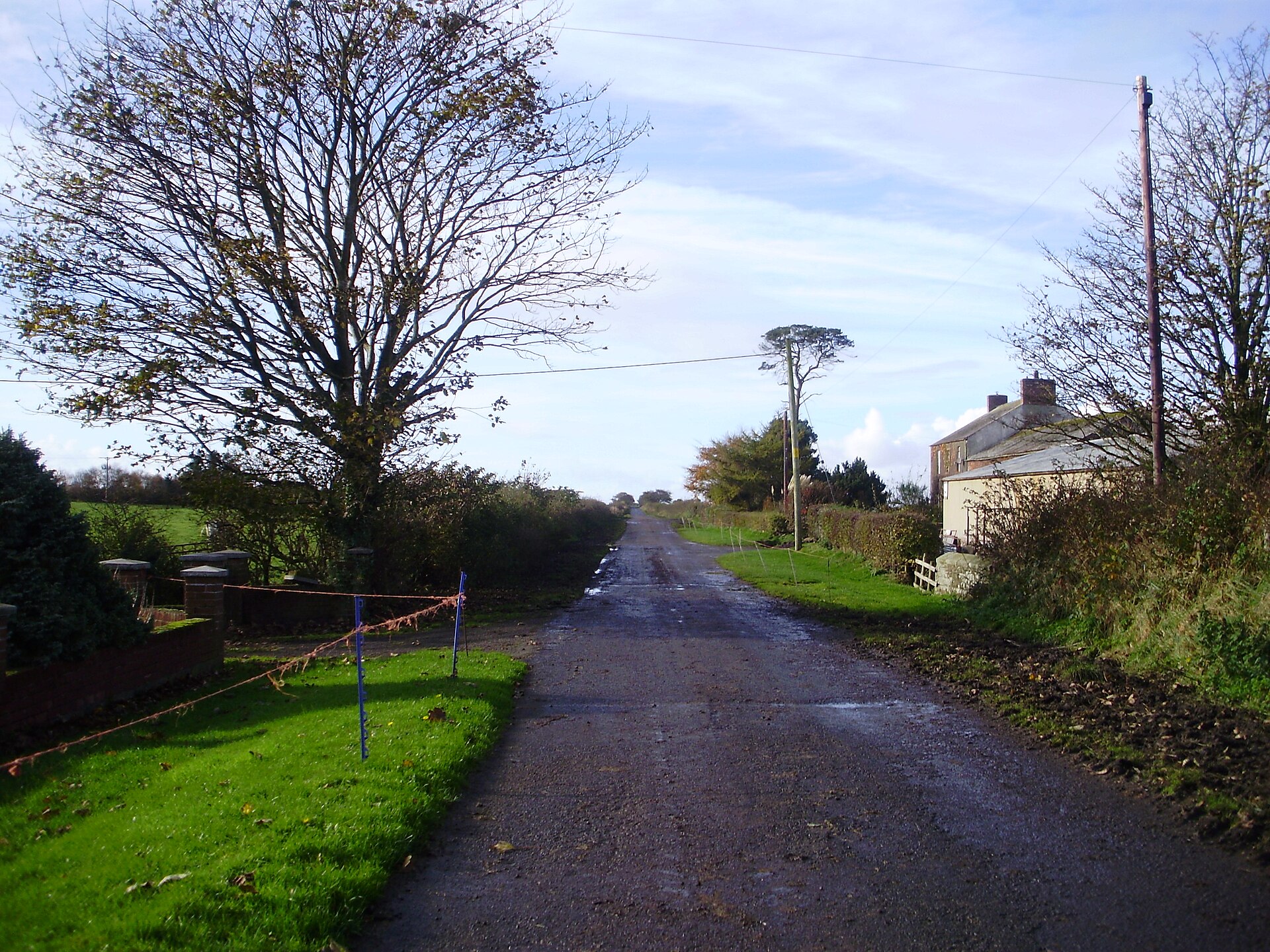
Milecastle 17 is a deeply buried Hadrian’s Wall post whose changing masonry nearby may mark a legionary construction boundary, while later occupati…
Building or ruin · Roman
Northumberland
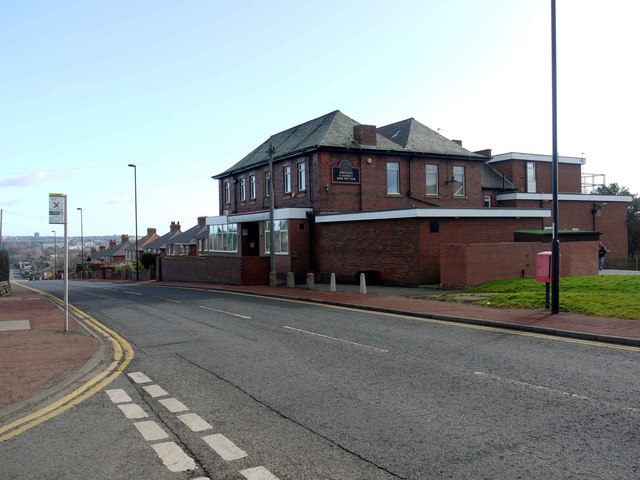
Milecastle 18 is Hadrian’s Wall’s only long-axis (a milecastle whose long side runs across the Wall rather than with it), Type I gateway (one of th…
Building or ruin · Roman
Northumberland
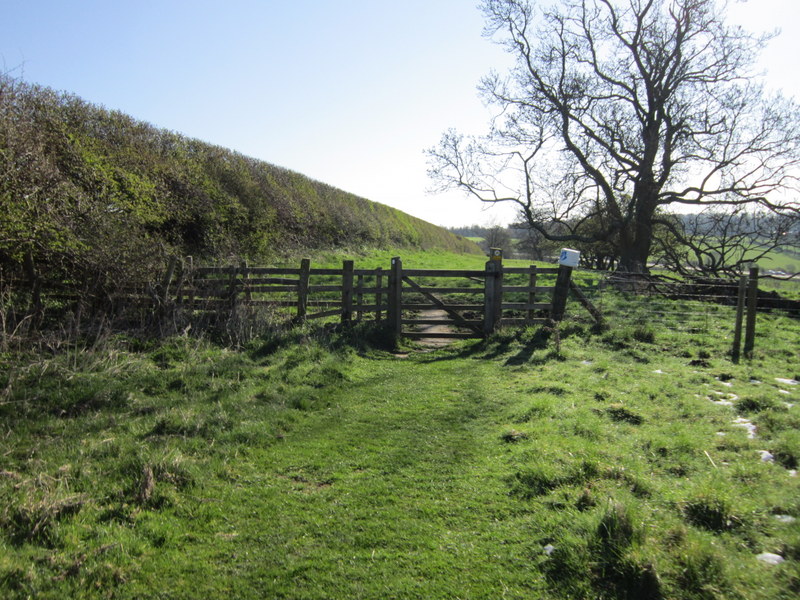
Milecastle 19 is one of Hadrian’s Wall’s most informative small posts, where a rare Mother Goddess dedication and Vardulian unit reveal the religio…
Building or ruin · Roman
Tyne and Wear
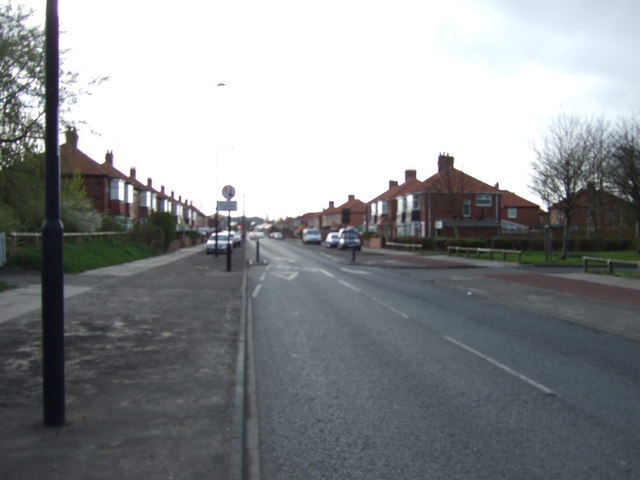
Built over. Its probable position is at or near the junction of the A187 Fossway and Tunstall Avenue.
Building or ruin · Roman
Northumberland
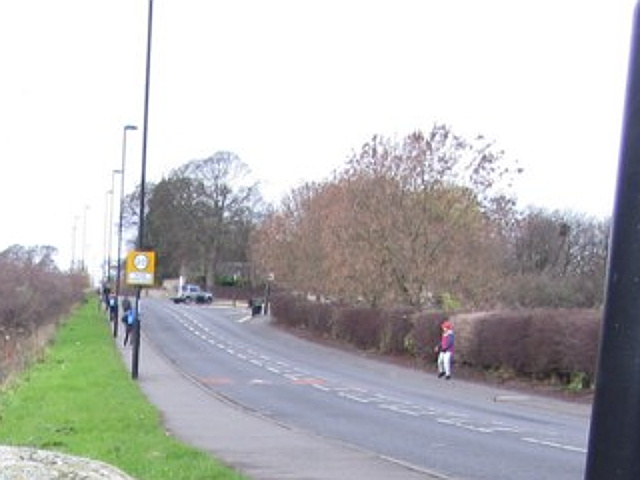
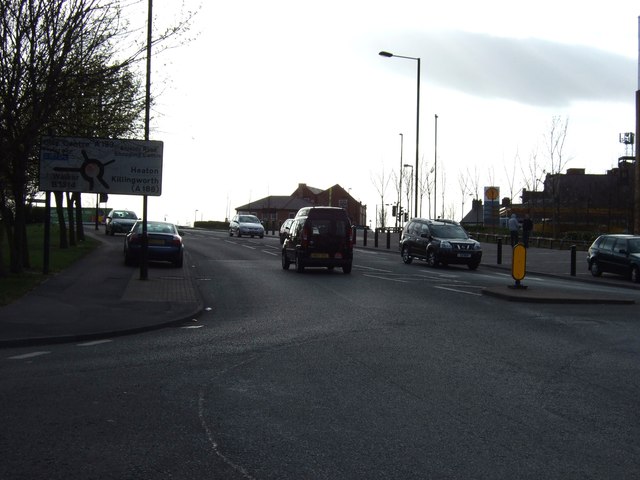
Milecastle 20 (Halton Shields) shows how a Roman frontier installation can remain historically important even when modern buildings and gardens cov…
Building or ruin · Roman
Northumberland
Milecastle 21 (Down Hill) illustrates the limits as well as the reach of archaeological reconstruction on Hadrian’s Wall. Its location is known by…
Building or ruin · Roman
Northumberland
A low turf-covered platform beside the Portgate roundabout preserves a long-axis (a milecastle whose long side runs across the Wall rather than wit…
Building or ruin · Roman
Northumberland
Milecastle 23 survives as a grass-covered platform and shallow ditch, preserving evidence for a long-axis (a milecastle whose long side runs across…
Building or ruin · Roman
Northumberland
Milecastle 24 records a long-axis (a milecastle whose long side runs across the Wall rather than with it) frontier post whose low bank, spoil heaps…
Building or ruin · Roman
Northumberland
Milecastle 25 preserves a low platform and possible ditch beside the B6318, while the excavated turret pair reveals varied construction, occupation…
Building or ruin · Roman
Northumberland
Milecastle 26 connects a buried long-axis (a milecastle whose long side runs across the Wall rather than with it) milecastle with the surviving Pla…
Building or ruin · Roman
Northumberland
Milecastle 27 retains a slight platform in pasture and preserves a close relationship with Chesters Roman Fort, where one associated turret was dis…
Building or ruin · Roman
Northumberland
Milecastle 28 demonstrates how a frontier site can be retained as a measured location even when its platform cannot be securely identified, while t…
Building or ruin · Roman
Tyne and Wear
No remains exist. It was thought to have stood at the junction of Byker Bridge and Stephen Street.
Building or ruin · Roman
Tyne and Wear
It was found between the predicted positions of Turrets 4A and 4B, which has prompted suggestions that the numbering of this stretch should be reco…
Building or ruin · Roman
Northumberland
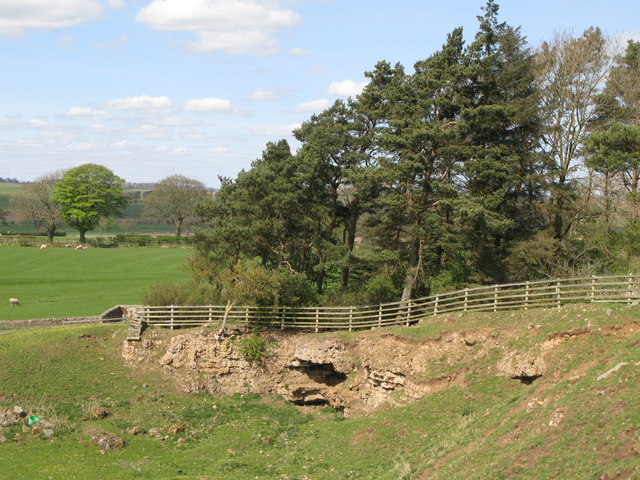
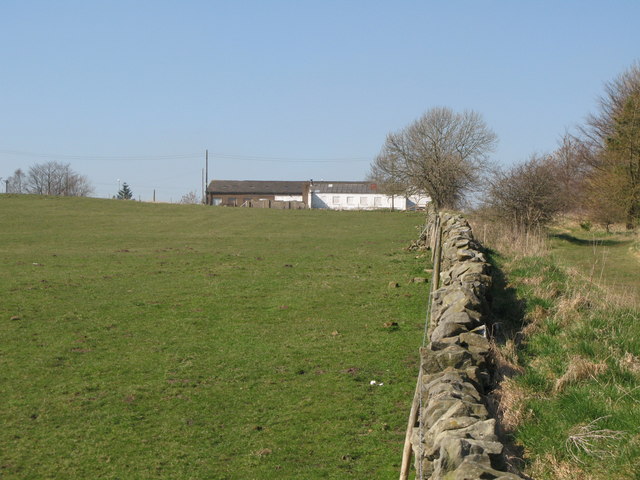
Milecastle 45 lets visitors read a Roman fortlet removed for stone through robber trenches, aerial traces and Walltown Crags’ exposed frontier sett…
Building or ruin · Roman
Tyne and Wear
The first milecastle west of the fort at Newcastle. Its supposed position is a road junction, and nothing of it survives.
Building or ruin · Roman
Cumbria
Its walls were never found: the milecastle survives only as a swelling in a field, a reminder that most of Hadrian's Wall's mile-stations still hid…
Building or ruin · Roman
Tyne and Wear
Its exact location is unknown. The Wall here runs beneath the A186, under roads and terraced houses.
Building or ruin · Roman
Cumbria
Nothing above ground survives here, yet a 1962 dig recovered the exact footprint of a Hadrian's Wall milecastle down to its cobbled road and blocke…
Building or ruin · Roman
Tyne and Wear
Never found. English Heritage places it midway between a turret located in 1751 and one with visible remains.
Building or ruin · Roman
Tyne and Wear
Two surveys a year apart put it 25 yards from each other. The Ordnance Survey maps the average.
Building or ruin · Roman
Tyne and Wear
The watershed of the Wall's archaeology: positions to the west are relatively well defined, those to the east considerably less so.
No places match those filters.

_Milecastle_29_-_Tower_Tye_-_geograph.org.uk_-_1129286.jpg?width=800)

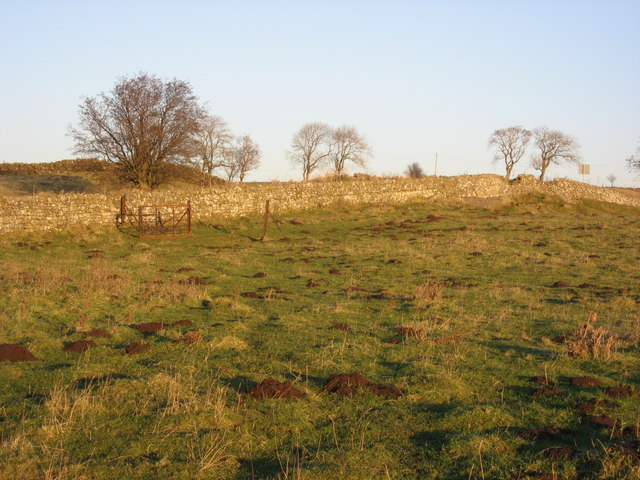
_Milecastle_32_-_geograph.org.uk_-_592657.jpg?width=800)
_Milecastle_33_-_geograph.org.uk_-_592666.jpg?width=800)
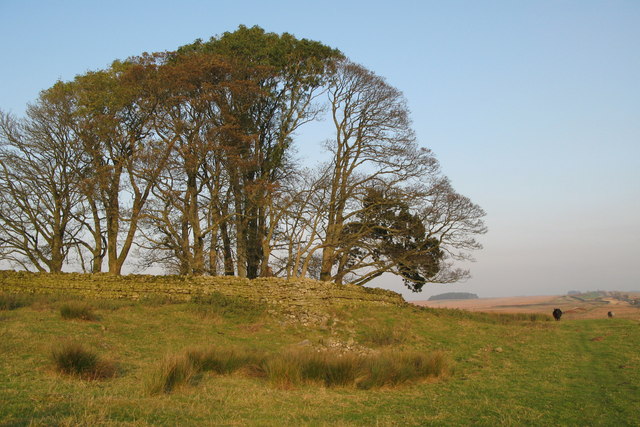


_-_geograph.org.uk_-_599789.jpg?width=800)
_Milecastle_40_-_geograph.org.uk_-_610092.jpg?width=800)


_Milecastle_44_-_geograph.org.uk_-_578353.jpg?width=800)
_Milecastle_47_(2)_-_geograph.org.uk_-_1551268.jpg?width=800)
_(4)_-_geograph.org.uk_-_1359369.jpg?width=800)
_Milecastle_51_(Wall_Bowers)_-_geograph.org.uk_-_1354753.jpg?width=800)


_Hadrian's_Wall_by_the_site_of_Milecastle_18_-_geograph.org.uk_-_2599664.jpg?width=800)
_Hadrian's_Wall_west_of_Piers_Gate_-_geograph.org.uk_-_2599435.jpg?width=800)
_Milecastle_20_(Halton_Shields)_-_geograph.org.uk_-_1377065.jpg?width=800)



_Milecastle_45_-_geograph.org.uk_-_578487.jpg?width=800)