
For generations the stone served as ordinary paving in the church floor, its carved face walked over underfoot before being rediscovered and stood upright again.
A cross wrapped in interlaced knotwork fills the face of a red sandstone slab standing in Fordoun Parish Church, in Auchenblae, Aberdeenshire. Around it are carved a hunting scene and a double disc and Z-rod, one of the most recognisable paired symbols in Pictish art, combined with the cross on a single stone in what is classified as a class II cross-slab (a type of Pictish monument that sets a Christian cross alongside older, pre-Christian symbolism rather than replacing it).
The slab also carries two separate inscriptions, cut in different scripts on the same stone. Along its edges runs a line of Ogham, an early medieval alphabet built from groups of notched strokes, reading VUN-MSETTORBBRE. On the face itself, in roman lettering, is a shorter and distinct inscription, Pidarnoin. Nothing else on the stone explains either word, and no accompanying text identifies who commissioned the carving or whom it was made to honour.
The stone was rediscovered in the late 18th century, having been reused at some point as paving within the floor of the church. It was lifted from that use and raised upright inside Fordoun Parish Church, where it remains today, its cross, hunting scene, symbol pair and both inscriptions now open to view at close range rather than trodden underfoot.
What follows is drawn from published sources, with each claim labelled by how firmly it is established.
History
Carved from a slab of Old Red Sandstone, the stone was shaped as a class II cross-slab, a type of Pictish monument that sets a Christian cross beside older symbols rather than replacing them. Interlaced knotwork fills the cross itself, while a hunting scene and a double disc and Z-rod, one of the most frequently repeated symbol pairs in Pictish carving, occupy the rest of the face alongside it.
The same stone carries two separate inscriptions cut in different scripts. Along its edges runs a line of Ogham, an early medieval alphabet built from groups of notched strokes, spelling out VUN-MSETTORBBRE. On the face itself, in roman lettering, is a second and shorter inscription, Pidarnoin. No accompanying text explains either word, and nothing on the stone identifies who commissioned it or whom it was carved to honour.
At some point after it was carved, the slab passed out of use as a standing monument and was taken up to serve a purely practical purpose, laid flat as paving within the floor of Fordoun Parish Church. Its carved face lay hidden underfoot, worn by footsteps rather than viewed, for an unrecorded length of time before it was noticed again.
The stone was rediscovered in the late 18th century, recognised for what it was while still set into the church floor as paving. It was lifted from that position and raised upright inside Fordoun Parish Church, where it remains today, allowing the cross, the hunting scene, the symbol pair and both inscriptions to be read directly rather than trodden over.
Cultural influences
-
Pictish Christian art
As a Class II cross-slab, Fordoun combines a Christian cross with older Pictish symbols, showing how the newer religious imagery was expressed through an established local carving tradition.
Connections
-
Fordoun Parish Church
The building the slab was found in and now stands inside, having been reused face-down as paving before anyone recognised what it was.
-
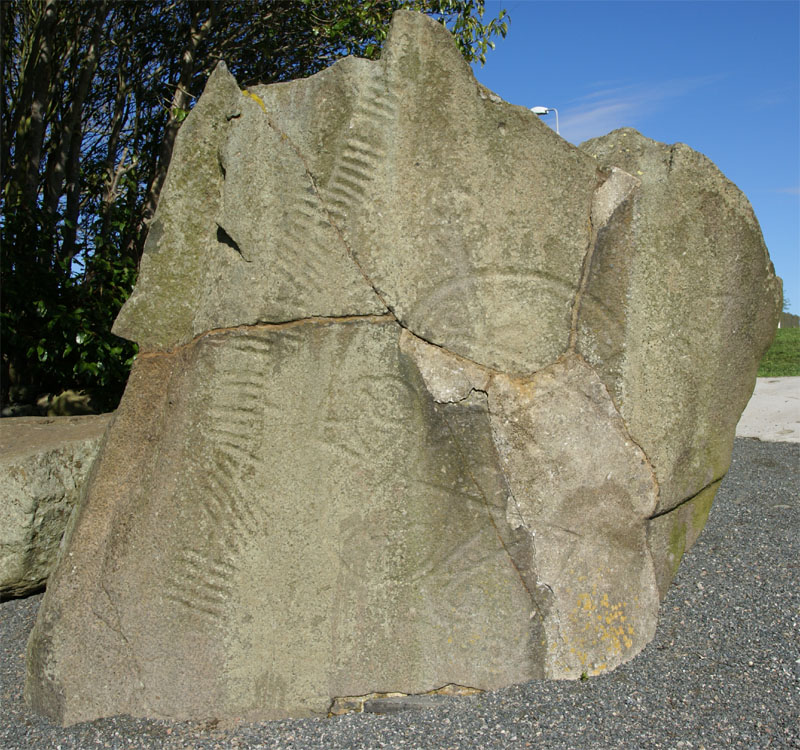
Photo: Otter / Wikimedia Commons / CC BY-SA 3.0 Another Aberdeenshire Pictish stone carrying an ogham inscription alongside symbol carving, the closest parallel in the corpus for the pairing of scripts seen at Fordoun.
-
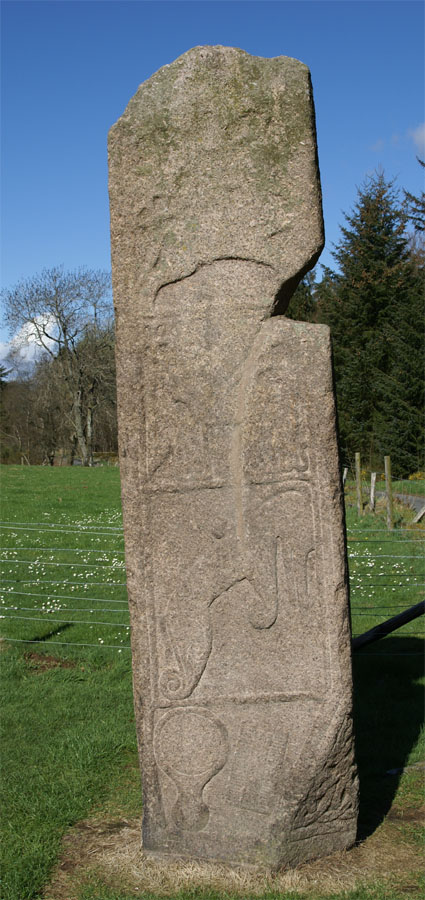
Photo: Otter / Wikimedia Commons / CC BY-SA 3.0 A Class II cross slab in the same county, carved with a cross on one face and Pictish symbols on the other, showing the standard form Fordoun belongs to.
-
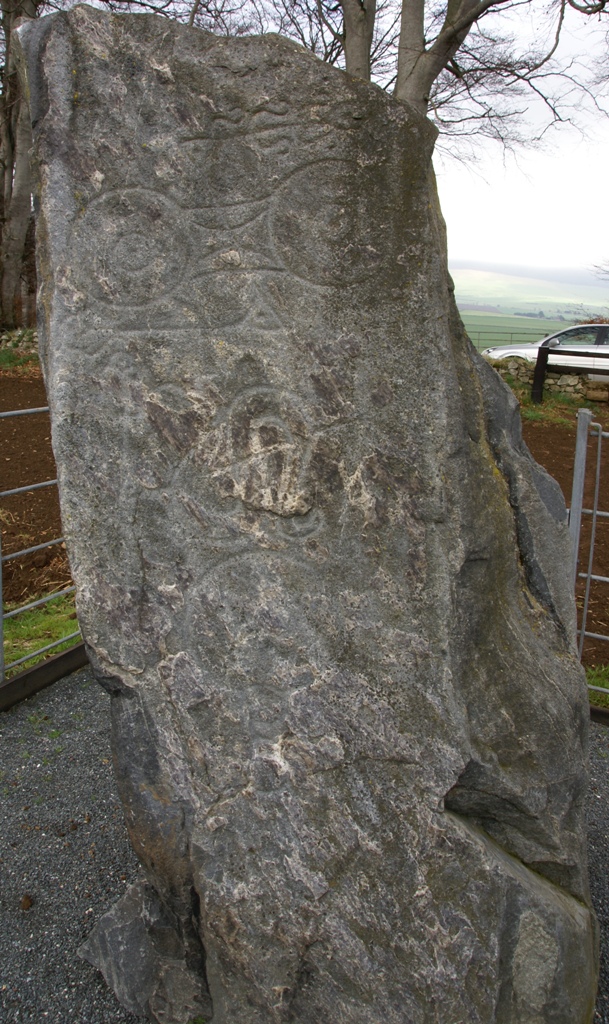
Photo: Otter / Wikimedia Commons / CC BY-SA 3.0 An earlier, uncrossed Pictish stone in Aberdeenshire, useful as the contrast that defines what makes Fordoun a Class II monument rather than a Class I one.
-
Auchenblae
The village in whose parish church the stone is kept.
Discovery & excavation
The stone was rediscovered in the late 18th century, found reused as paving within Fordoun Parish Church, where it had been laid into the floor rather than displayed as a standing monument.
What to look for
-
Interlaced cross
A cross filled with interlaced knotwork forms the central image on the face of the slab.
-
Hunting scene
A carved hunting scene occupies part of the stone's face alongside the cross.
-
Double disc and Z-rod
A double disc and Z-rod symbol, one of the most common paired Pictish symbols, is carved on the stone.
-
Ogham inscription
A line of Ogham script runs along the edges of the stone, reading VUN-MSETTORBBRE.
-
Roman-script inscription
A separate inscription in roman lettering, reading Pidarnoin, is cut into the face of the slab.
Plan your visit
- Location
- 56.8962°N · 2.4512°W
- Nearest settlement
- Auchenblae
- Access
- Open access
- Terrain
- Easy going
- Time needed
- About 20 minutes
- Best time
- During confirmed church opening hours in daylight.
- What survives
- The carved cross-slab survives indoors at Fordoun Parish Church, including both its Ogham and Roman-script inscriptions.
- Facilities
- No dedicated visitor facilities are recorded; the stone is kept inside the parish church.
Opening & admission
No current admission or opening details are recorded — check with the church before visiting.
- The stone stands inside Fordoun parish church at Auchenblae, so access depends on the church being open
Nearby places
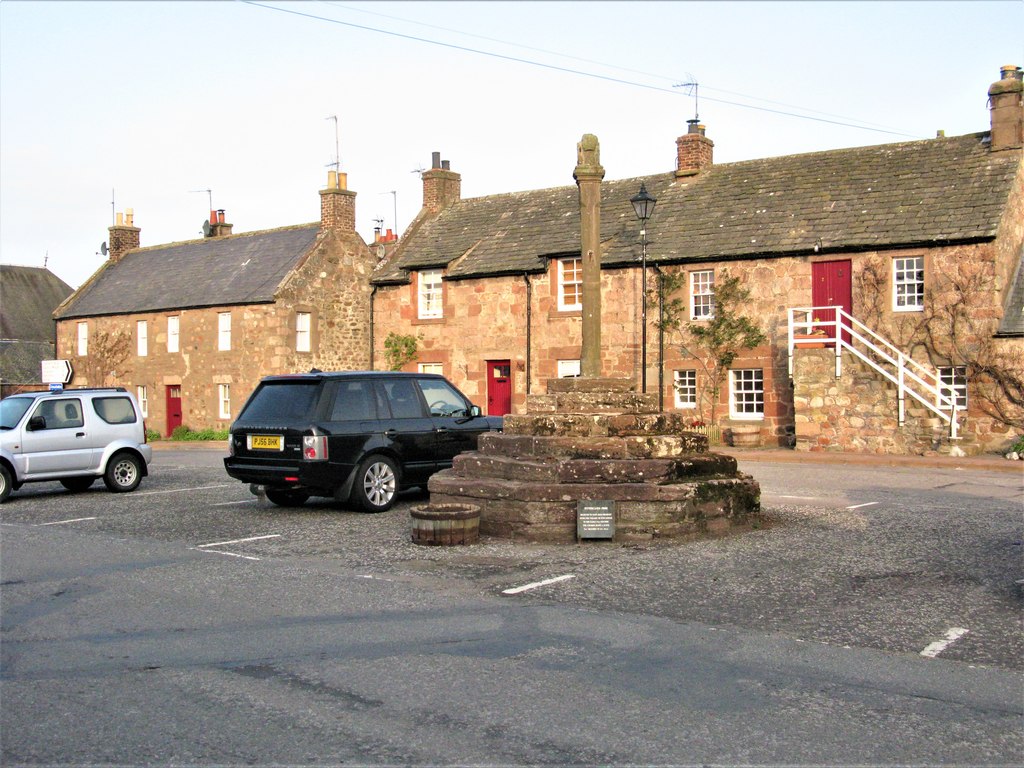
Minor monument · Medieval
Market Cross, The Square, Fettercairn
Aberdeenshire
A 1670 market cross moved from Kincardine to Fettercairn in 1730 carries an ell measure, sundials and the arms of Scotland and the Earl of Middleton.
- Easy path
Minor monument · Medieval
Dovecot, Balbegno Castle
Aberdeenshire
This surviving seventeenth-century pigeon house preserves Balbegno Castle’s food infrastructure, from its crowstepped roof to a projecting masonry…
- Near Fettercairn
Minor monument · Medieval
Dovecot, Fetteresso Castle
Aberdeenshire
The sixteenth-century beehive pigeon house outlasts Fetteresso Castle’s dismantling, its three rat lines preserving the working estate landscape be…
- Near Stonehaven
Carved stone · Pictish & early medieval
Lang Stane of Auquhollie
Aberdeenshire
Carved in Ogam: an alphabet devised for Irish, not Pictish, speech: the stone has anchored more than a century of scholarly argument over how far I…
- Near Stonehaven
- Some walking
The setting
Auchenblae Parish Church, near the Pictish stone at Fordoun.
Photo: Chh bck / Wikimedia Commons / CC BY-SA 4.0
Auchenblae Parish Church viewed from the surrounding village landscape.
Photo: Chh bck / Wikimedia Commons / CC BY-SA 4.0
Questions people ask
- What is the Fordoun Stone?
- A class II Pictish cross-slab carved from Old Red Sandstone, now standing inside Fordoun Parish Church, Auchenblae, Aberdeenshire.
- Where is the Fordoun Stone located?
- It stands inside Fordoun Parish Church in Auchenblae, Aberdeenshire, Scotland.
- When was the Fordoun Stone discovered?
- It was rediscovered in the late 18th century, having been reused as paving within the church floor.
- What is carved on the Fordoun Stone?
- A cross with interlaced knotwork, a hunting scene, a double disc and Z-rod symbol, and two inscriptions in Ogham and roman script.
- What do the inscriptions on the Fordoun Stone say?
- The Ogham text reads VUN-MSETTORBBRE and a separate roman-script inscription reads Pidarnoin; no further meaning is recorded.
Sources
The Ancient Codex, in your pocket
Get the Pocket Codex app
Carry the directory with you — Fordoun Stone and thousands of ancient places across Britain and Ireland, offline, wherever you roam.