
Brandsbutt preserves the symbols of the Picts, people of northern and eastern Scotland from about AD 300 to 900, beside an Ogham inscription still without a settled reading and fractures from its rescue from a wall.
Brandsbutt Stone is a carved stone near Inverurie, Aberdeenshire, Scotland.
What follows is drawn from published sources, with each claim labelled by how firmly it is established.
History
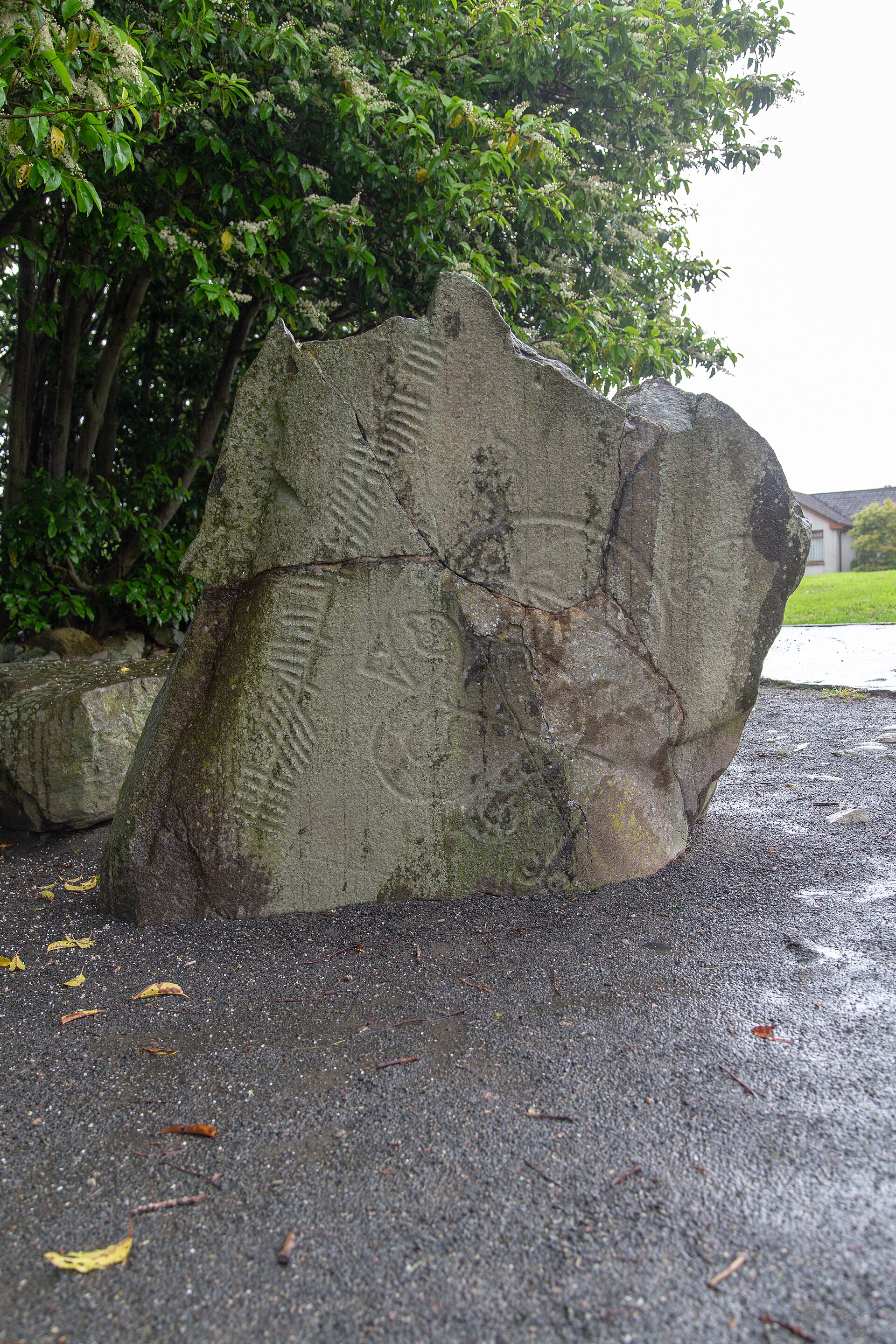
The Brandsbutt Stone is a Class I Pictish symbol stone, dated around AD 600. Its large whinstone block carries two incised pairs of symbols: a crescent with V-rod and a serpent with Z-rod. These are the marks that make it part of the early Pictish carved-stone tradition rather than an unworked standing stone. Before 1866, the stone was broken up and incorporated into a dry-stone wall. It was later reassembled, so the joins are part of its modern appearance as well as evidence of a period when a carved monument was treated as building material.
An Ogham inscription, IRATADDOARENS, runs with the carvings. The text is important precisely because it has not yielded a settled reading: Katherine Forsyth described it as appearing ‘utterly baffling’, and later readings remain scholarly proposals rather than an agreed translation. One proposal sees part of the inscription as a damaged form of Ethernan, a seventh-century saint whose name also appears in discussion of several other Pictish stones. The identification is possible, not certain; the relevant Annals of Ulster entry records Ethernan’s death in AD 669, but does not prove that Brandsbutt names him.
Other interpretations have treated ‘ira-’ as a possible Pictish verb related to Breton irha, ‘he lies’, although that verb’s presence in Pictish has been questioned. Thomas Clancy instead proposed a Gaelic reading meaning approximately ‘this is the property of Aduarén here’. The competing readings show why the inscription is still a live problem, not a label a visitor can simply decode.
The stone is protected as a scheduled monument. Its surviving combination of Pictish symbols, Ogham and a reuse history gives one small Inverurie monument several distinct stories: a sixth- or seventh-century carving, an inscription whose language is disputed, and a later rescue from a wall.
People
-
Katherine Forsyth
Scholar who described the Ogham inscription as appearing 'utterly baffling'
-
Saint Ethernan
7th-century saint venerated by the Picts; the inscription may preserve a corrupted form of his name
-
Thomas Clancy
Scholar who read the inscription as Gaelic for 'this is the property of Aduarén here'
Cultural influences
-
The Pictish symbol tradition — the crescent-and-V-rod and serpent-and-Z-rod are among the standard incised symbols of Class I Pictish stones.
-
The Ogham script — the stone is one of a group of Pictish monuments carrying Ogham inscriptions, here possibly recording the name Ethernan.
Connections
-
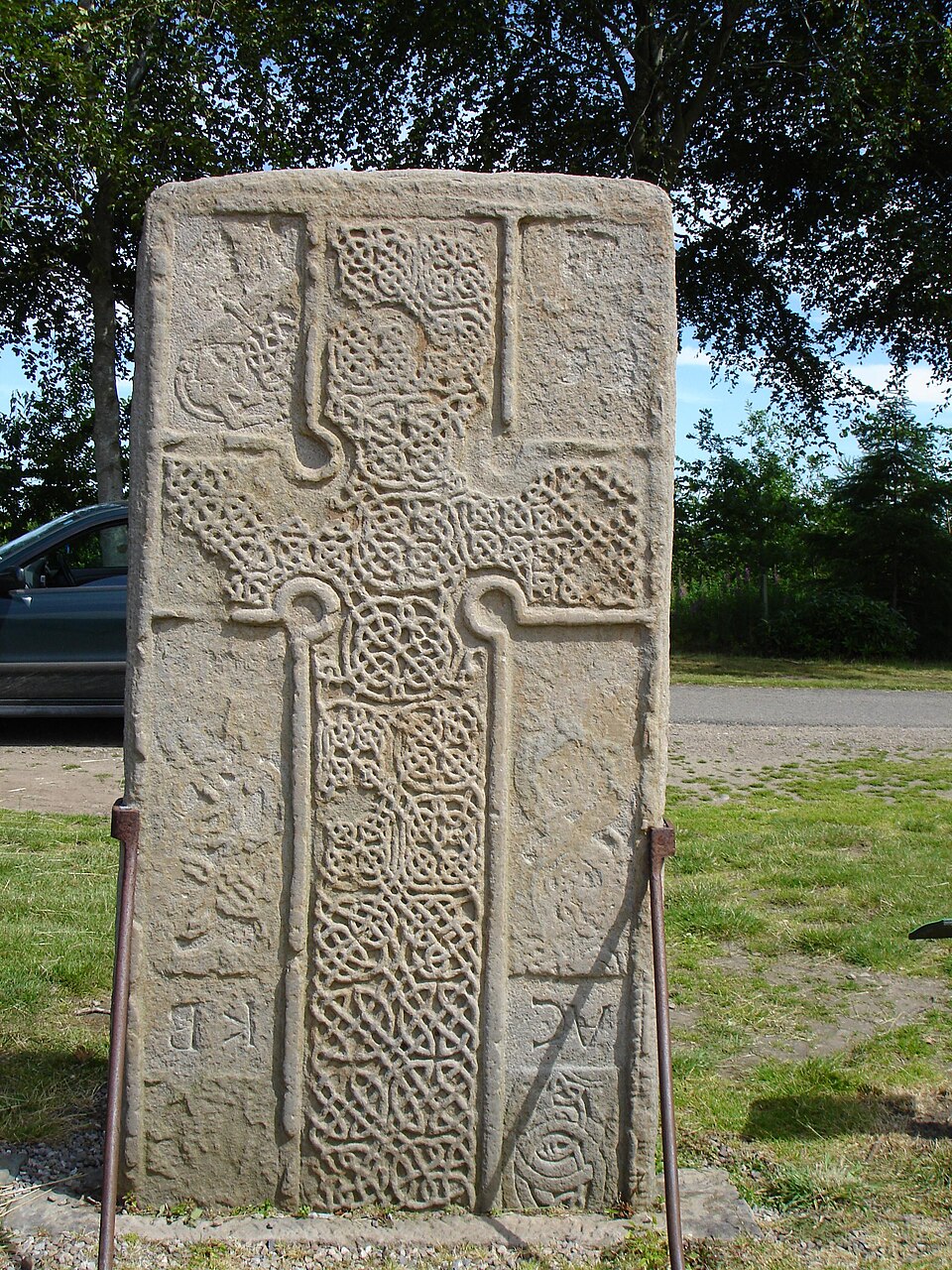
Photo: JThomas / Wikimedia Commons / CC BY-SA 2.0 The Newton Stone
Other Pictish stone preserving the name Ethernan in Ogham (IDDARRNNN)
-

Photo: Calgacus / Wikimedia Commons / Public domain Other Pictish stone with the name Ethernan in Ogham (EDDARRNON)
-
The Scoonie Stone
Other Pictish stone with the name Ethernan in Ogham (EDDARRNONN)
-
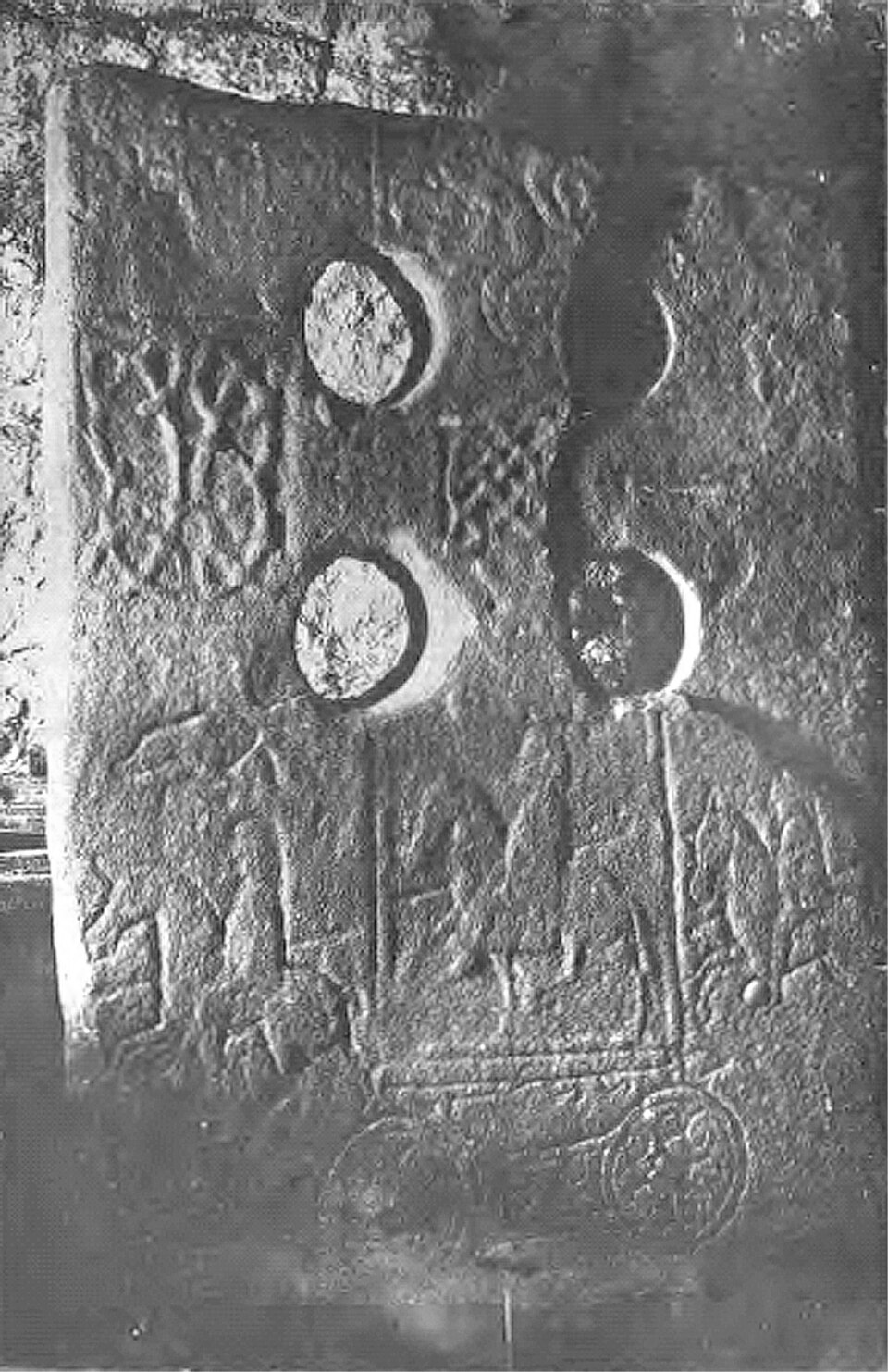
Photo: Edward Williams Byron Nicholson / Wikimedia Commons / Public domain Pictish stone preserving the name Ethernan in Latin script (PIDARNOIN)
What to look for
-
Crescent and serpent symbols
The two incised Pictish symbols — a crescent and V-rod and a serpent and Z-rod.
-
The Ogham inscription
The Ogham inscription IRATADDOARENS running along the stone.
-
Lines of the reassembly
Signs of the stone's reassembly, after it was broken up and built into a dry-stone wall before 1866.
Plan your visit
- Location
- 57.2916°N · 2.4000°W
- Nearest settlement
- Inverurie
- Access
- Open access
- Terrain
- Easy going
- Start point
- The Brandsbutt Stone · About 1m north-west of Inverurie off the A96. · On a pathway between Brankie Rd and Gordon Dr.
- Time needed
- About 20 minutes
- Best time
- Open year-round.
- What survives
- The Pictish symbol stone remains upright beside the public path, with its carved face preserved.
- Facilities
- HES lists no on-site visitor facilities; the stone stands beside a public pathway between Brankie Road and Gordon Drive.
- Start point
- Brandsbutt Stone path parking — Parking area immediately beside the pathway between Brankie Road and Gordon Drive where HES locates the stone.
Opening & admission
Free entry
- Open year-round.
Nearby places
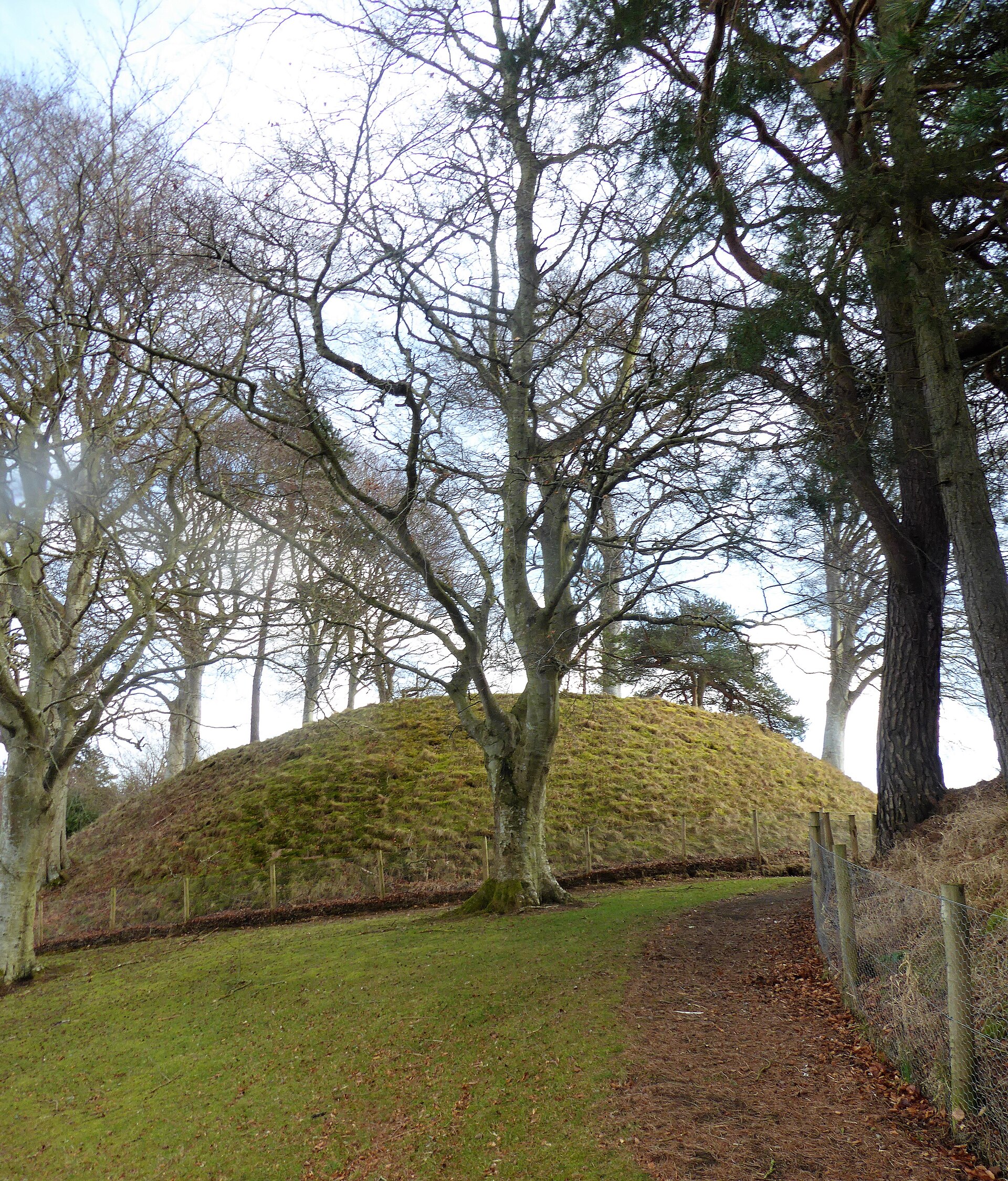
Fortified place · Medieval
Bass of Inverurie
Aberdeenshire
A wooden castle mound that once governed the whole lordship of the Garioch, its earthworks still holding an oak gangway and a 14th-century face-jug…
- Easy path
Sacred place · Prehistoric
Balquhain
Aberdeenshire
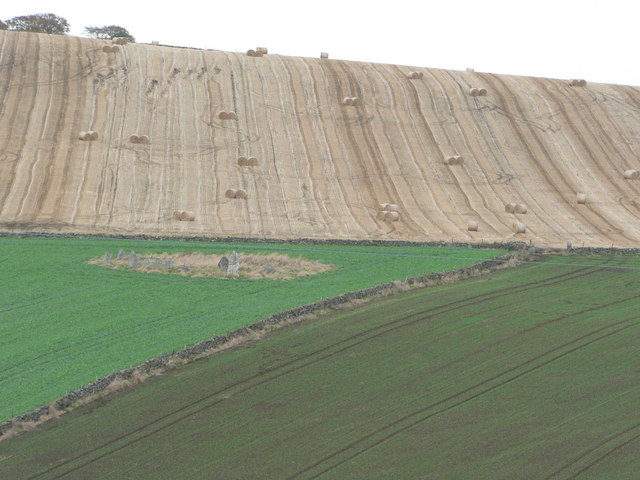
A rounded hump on its ten-tonne recumbent stone echoes the outline of Mither Tap behind it, and 1980s survey work found its flanking stones deliber…
- Some walking
Fortified place · Medieval
Caskieben
Aberdeenshire
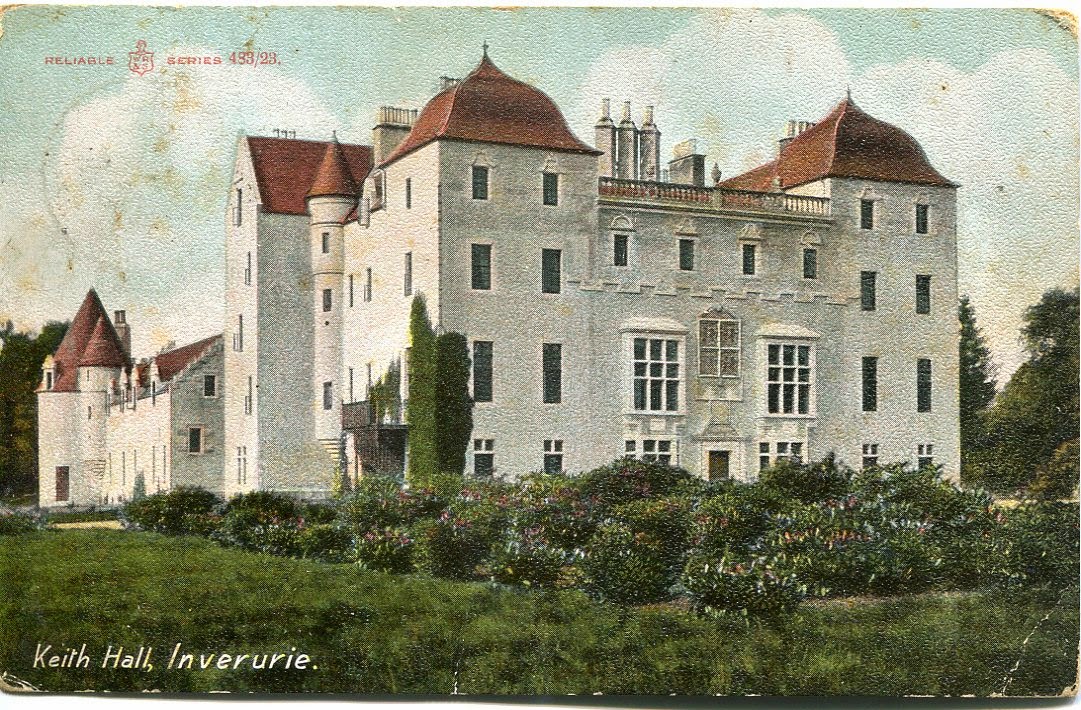
A timber tower's mound and moat still trace the outline beneath Keith Hall, a mansion that grew from Z-plan castle to Georgian seat over seven cent…
- Easy path

Sacred place · Prehistoric
Easter Aquhorthies stone circle
Aberdeenshire
One of Scotland's best-preserved recumbent stone circles, and the only one where every stone still stands exactly where its Bronze Age (roughly 250…
- Easy path
Sources
- Canmore site record 18894 (accessed 2026-06-13)
- Trove (HES) record (accessed 2026-06-13)
- Wikipedia: Brandsbutt Stone (accessed 2026-06-13)
- Wikidata Q4957169 (accessed 2026-06-13)
Explore more: Carved stones · Pictish & early medieval · Aberdeenshire
The Ancient Codex, in your pocket
Get the Pocket Codex app
Carry the directory with you — Brandsbutt Stone and thousands of ancient places across Britain and Ireland, offline, wherever you roam.