Its Ogham inscription is the longest to survive from Pictish (of the Picts, the people of northern and eastern Scotland from about AD 300 to 900) Scotland, preserving the name of a saint whose cult once stretched across the east coast.
Two fish-like monsters swim across the top of the stone, a hybrid creature known only as the “Pictish Beast” curls beneath them, and a double disc joined by a Z-shaped rod fills the space below that. Carved into a slab of stone standing over two metres tall, these symbols sit on one face while a cross, flanked by animals, fills the other. It is a Class II Pictish stone — the term used for cross slabs that carry both a Christian cross and the older, still-undeciphered symbol system of the Picts.
Running down both edges and across the cross face is a long strip of Ogham script, an alphabet of notches and lines cut along a central stem line rather than written in letters as understood today. Weathering has blurred much of the text, but one word survives clearly enough to read: EDDARRNON, a rendering of the Pictish name Ethernan, a saint whose name appears elsewhere in the record of the early medieval church in the east of Scotland.
The stone did not begin its life beside Brodie Castle, where it now stands close to the approach road. It was originally raised, or at least later found, in the grounds of the old church of Dyke and Moy nearby, before being brought to its present position near Forres.
What follows is drawn from published sources, with each claim labelled by how firmly it is established.
History
The stone was carved during the Pictish era, when carvers along Scotland's north-east coast combined a repertoire of enigmatic symbols — animals, discs, rods and abstract devices — with the cross forms introduced by Christian missionaries. Its status as a Class II stone marks it as a product of the period when the two traditions were carved side by side on the same monument rather than kept apart.
At some point after its carving, the stone came to stand in the grounds of the old church of Dyke and Moy, a parish site near Forres in Moray. Church grounds were a common resting place for Pictish stones long after the beliefs that first inspired them had faded, since a carved cross gave the monument a continued Christian meaning even where its symbols were no longer understood.
The stone was later moved from Dyke and Moy to a position close to the approach way to Brodie Castle, where it remains today. The move preserved a monument that might otherwise have been lost or broken up, while placing it firmly within the setting of a later estate rather than its original ecclesiastical ground. The stone has since been given legal protection as a scheduled monument, the formal status applied in Scotland to nationally important archaeological sites, which recognises both the rarity of its inscription and its significance among the surviving corpus of Pictish carved stones.
People
-
Ethernan
A Pictish saint whose name is carved into the stone's Ogham inscription as "EDDARRNON", making this one of the few surviving carved records of his cult.
Cultural influences
-
The Class II monument combines Pictish symbols with a carved cross and Ogham inscription, bringing older visual forms into a Christian setting.
Connections
-
Old Church of Dyke and Moy
The site in whose grounds the stone was originally found, before it was relocated to its present position.
-

Photo: JThomas / Wikimedia Commons / CC BY-SA 2.0 Brodie Castle
The stone now stands close to the approach way to the castle, having been moved there from its original church setting.
Discovery & excavation
The stone was found in the grounds of the old church of Dyke and Moy, near Forres, before being moved to its current position beside the approach to Brodie Castle. No excavation record survives beyond this relocation.
What to look for
-
Two fish monsters
Carved at the top of the symbols face, a pair of fish-like creatures are the uppermost of the stone's Pictish symbols.
-
The Pictish Beast
Below the fish monsters sits an elongated, curled creature of a type found only on Pictish stones and never identified with any real animal.
-
Double disc and Z-rod
One of the most common Pictish symbols, a pair of linked discs crossed by a lightning-bolt-shaped rod, appears beneath the beast.
-
The cross face
The opposite face carries a cross accompanied by carved animals, marking the stone's Christian dimension alongside its symbols.
-
The Ogham inscription
A long inscription runs down both edges and across the cross face, cut in the Ogham alphabet of notches along a stemline. It is the longest surviving Pictish inscription, though weathering has erased much of its text bar the name Ethernan.
Plan your visit
- Location
- 57.5975°N · 3.7011°W
- Nearest settlement
- Forres
- Access
- Visible from a public way
- Terrain
- Easy going
- Time needed
- About 15 minutes
- Best time
- Daylight, when the cross face, symbols and weathered Ogham can be examined.
- What survives
- A surviving scheduled Pictish stone beside the approach to Brodie Castle; weathering has obscured much of the inscription.
Opening & admission
- Stone stands close to the approach way to Brodie Castle.
- Scheduled-monument status means do not touch or climb on the stone.
Nearby places
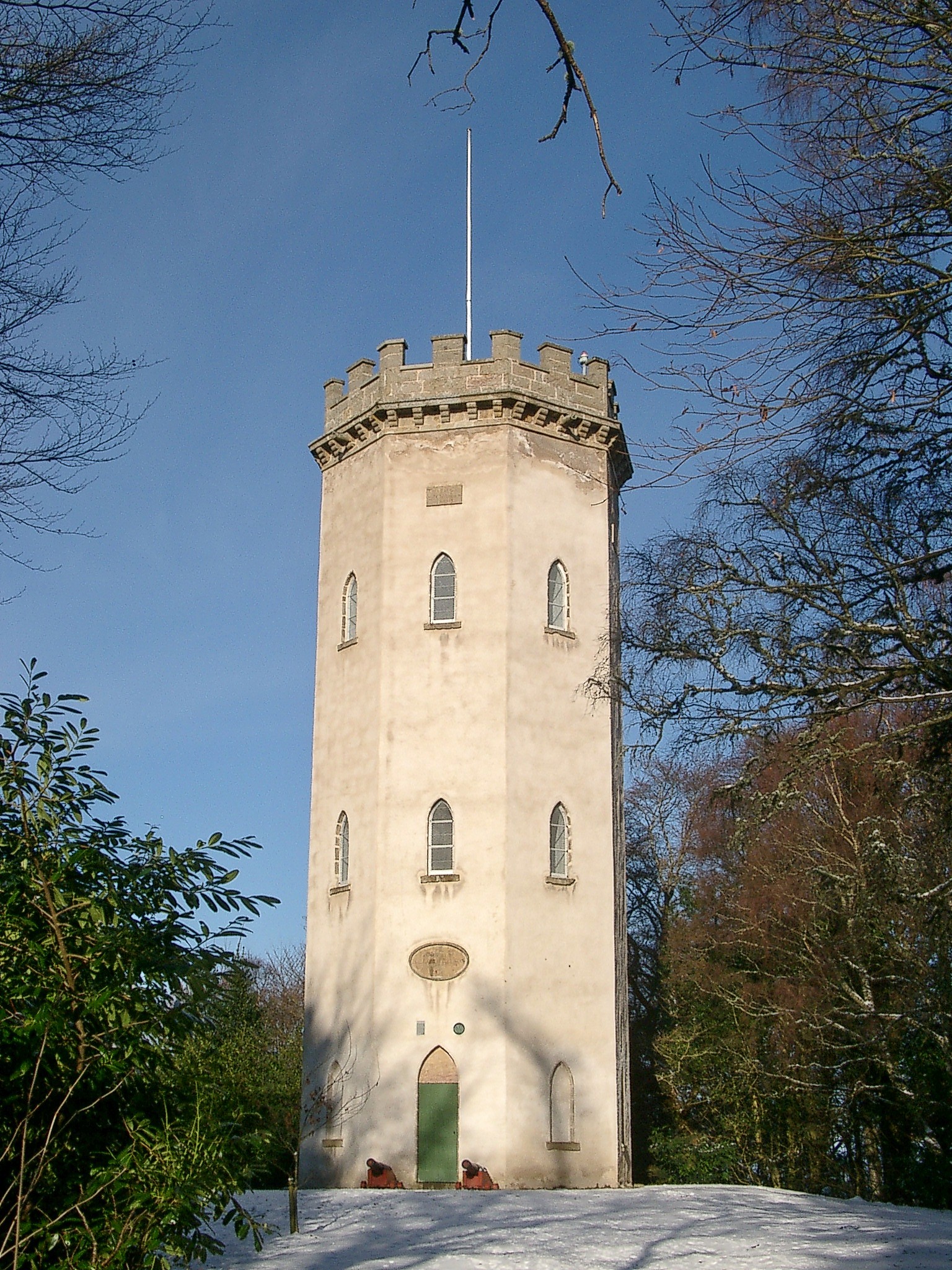
Fortified place · Iron Age
Cluny Hill
Moray
Cluny Hill brings together a confirmed prehistoric (before written records reached Britain) hillfort (an upland enclosure defended by earthen banks…
- Near Forres
- Some walking
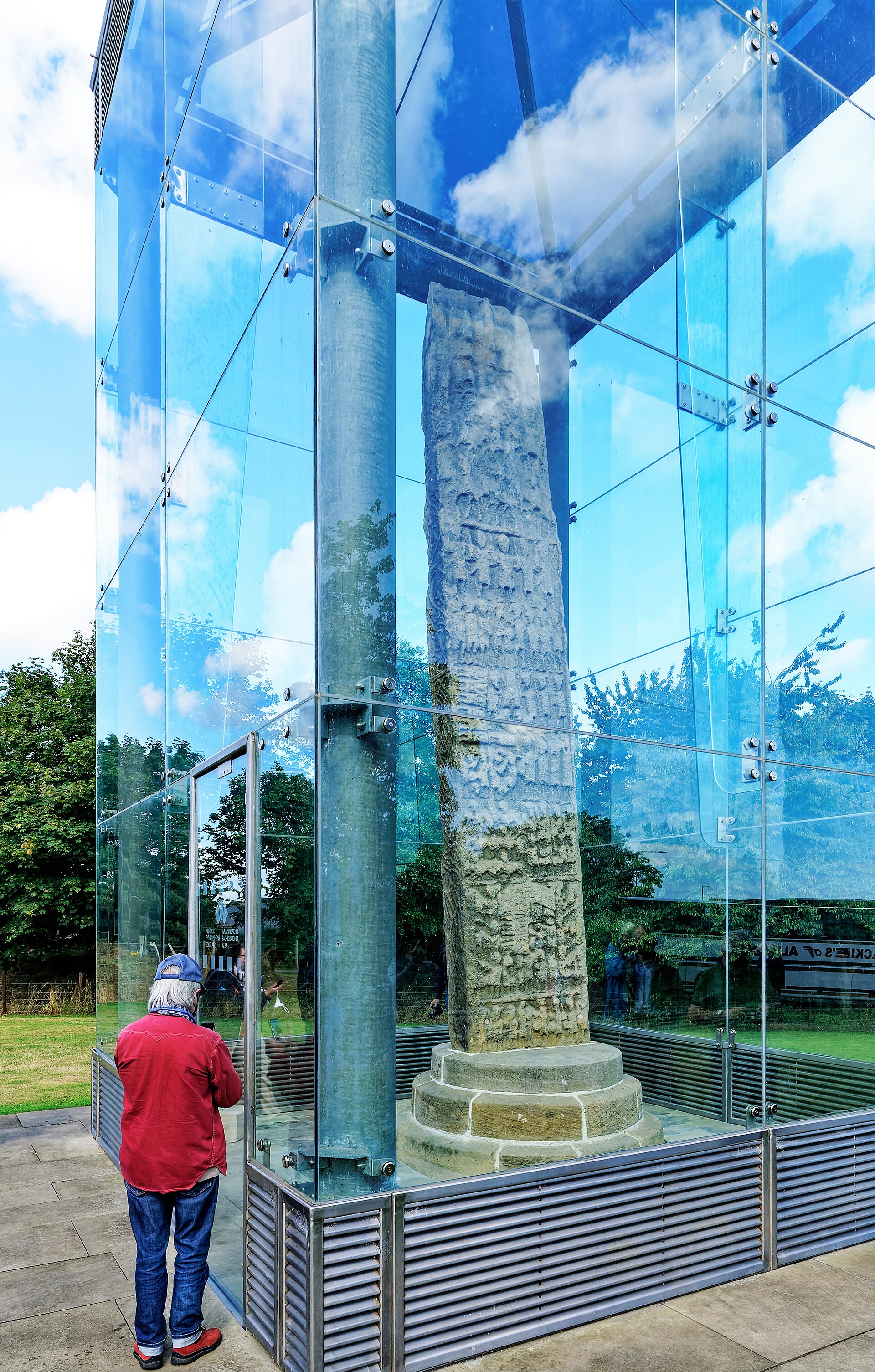
Carved stone · Pictish & early medieval
Sueno's Stone
Moray
At 6.5 metres tall it is the largest surviving Pictish (of the Picts, the people of northern and eastern Scotland from about AD 300 to 900) cross-s…
- Near Elgin
- Easy path

Fortified place · Iron Age
Doune of Relugas
Moray
Doune of Relugas is a long-occupied promontory hillfort, a hilltop enclosure ringed by earth ramparts, overlooking the Findhorn valley, where a tim…
- Near Dunphail
- Some walking

Fortified place · Medieval
Cawdor Castle
Highland
A tower house said to have been built around a living holly tree, its site chosen by tradition after a gold-laden donkey lay down to rest beneath it.
Questions people ask
- What is Rodney's Stone?
- A two-metre-high Class II Pictish cross slab near Brodie Castle in Moray, carved with Pictish symbols on one face and a cross on the other.
- Where was Rodney's Stone originally located?
- It was found in the grounds of the old church of Dyke and Moy, before being moved to its present site near the approach to Brodie Castle.
- What does the inscription on the stone say?
- Much of it is weathered away, but it preserves the Pictish name Ethernan, written as EDDARRNON, referring to a Pictish saint.
- Why is it called a Class II Pictish stone?
- Class II stones carry both incised Pictish symbols and a sculpted Christian cross on the same monument, unlike the symbols-only Class I stones.
- Is Rodney's Stone protected?
- Yes, it is a scheduled monument, the legal status given in Scotland to nationally important archaeological sites.
Sources
- Wikipedia: Rodney's Stone
- Wikidata: Rodney's Stone
- Fraser & Ritchie et al., Pictish Symbol Stones: An Illustrated Gazetteer (RCAHMS, 1999)
- Jones, A Wee Guide to The Picts (Musselburgh, 2003)
Explore more: Carved stones · Pictish & early medieval · Moray
The Ancient Codex, in your pocket
Get the Pocket Codex app
Carry the directory with you — Rodney's Stone and thousands of ancient places across Britain and Ireland, offline, wherever you roam.