
A double-disc, a serpent and a mirror cut into whinstone around AD 600 — three of the clearest Pictish (of the Picts, the people of northern and eastern Scotland from about AD 300 to 900) symbols surviving in Aberdeenshire, their meaning still unrecovered.
A single block of whinstone rises two metres above the fields near Huntly, its base nearly a metre across and tapering upward to a rounded crown. Cut into its face are symbols that have puzzled observers for centuries: a double disc joined by a z-shaped rod, a serpent entwined with its own z-rod, and a small hand mirror, each carved with a confidence that suggests a settled artistic tradition rather than a first attempt at the form.
The carvings are dated to around AD 600, placing the stone within the world of the Picts, the confederation of peoples who dominated eastern and northern Scotland before the kingdom of Alba emerged. What the symbols meant is not recorded — no key survives to translate double-discs, mirrors, or serpents into names, titles, or beliefs — but the same motifs recur on stones across Aberdeenshire, suggesting a shared visual language that needed no accompanying inscription to be understood at the time.
The stone survives today as a scheduled monument, protected for what it represents rather than for any structure built around it. There is no fort, church, or burial ground attached to the spot: only the carved stone itself, standing where it has stood, by most reckonings, since Pictish craftsmen first cut its symbols into the rock.
What follows is drawn from published sources, with each claim labelled by how firmly it is established.
History
Around AD 600, Pictish carvers cut a double disc joined by a z-shaped rod, a serpent entwined with its own z-rod, and a mirror into the face of a large whinstone block standing near Huntly. The symbols were incised with a fluency that points to an established artistic vocabulary rather than experimentation, and the stone remains among the clearest surviving examples of this particular combination of symbols in Aberdeenshire.
In recognition of its rarity and condition, the stone was in time designated a scheduled monument, a legal status administered by Historic Environment Scotland that protects it and its immediate surroundings from unauthorised disturbance. The designation reflects its importance as one of a limited number of Pictish symbol stones surviving in this part of Scotland, rather than any building or earthwork associated with the site.
The stone is recorded in Scotland's national heritage database, catalogued within the wider corpus of Pictish symbol stones from north-east Scotland. That record places it alongside a small group of comparable carved stones from Aberdeenshire, including the Brandsbutt Stone, the Dyce Symbol Stones and the Maiden Stone, each preserving related symbol combinations from the same broad tradition.
Cultural influences
-
An early Pictish visual language
The Picardy Stone belongs to the early Pictish tradition of symbol stones, sharing its double-disc, Z-rod, serpent and mirror motifs with other carvings across north-east Scotland. The recurring vocabulary shows a regional artistic system, although its precise meanings are no longer known.
Connections
-
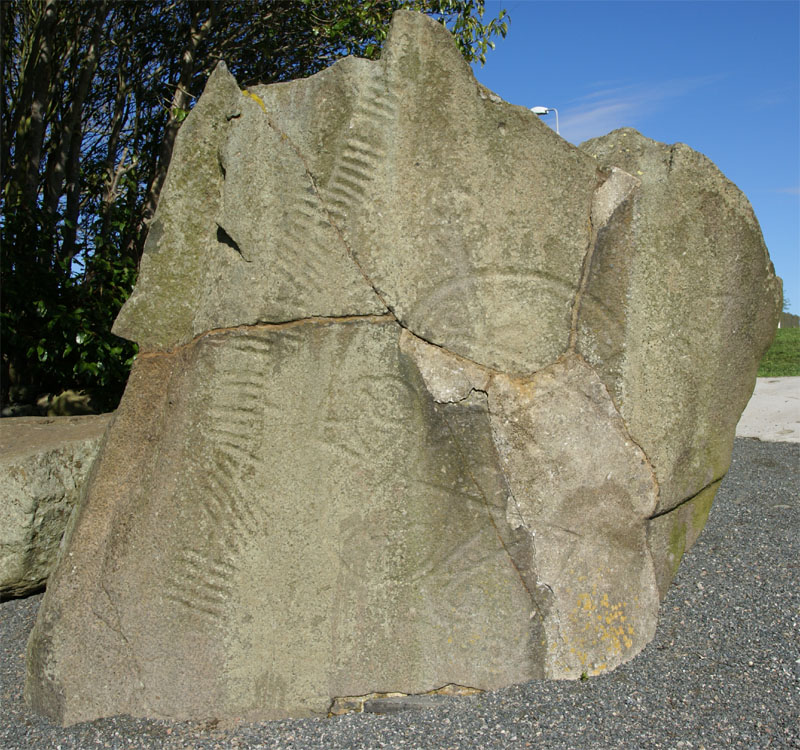
Photo: Otter / Wikimedia Commons / CC BY-SA 3.0 Another Pictish symbol stone in Aberdeenshire, grouped with the Picardy Stone among the region's surviving carved monuments.
-
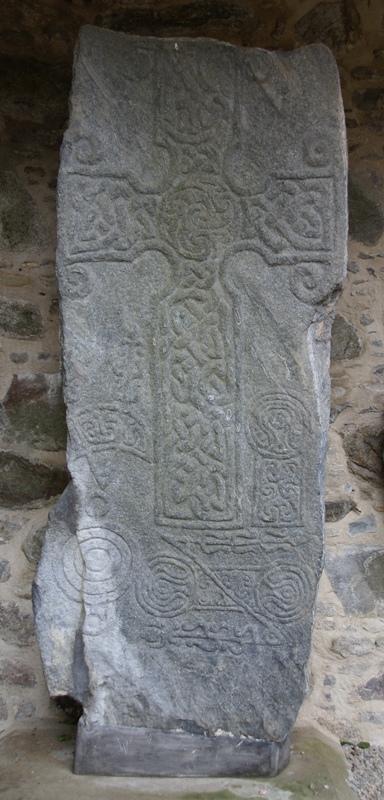
Photo: Otter / Wikimedia Commons / CC BY-SA 3.0 A related set of Pictish carved stones in Aberdeenshire sharing the same broad symbol tradition as the Picardy Stone.
-
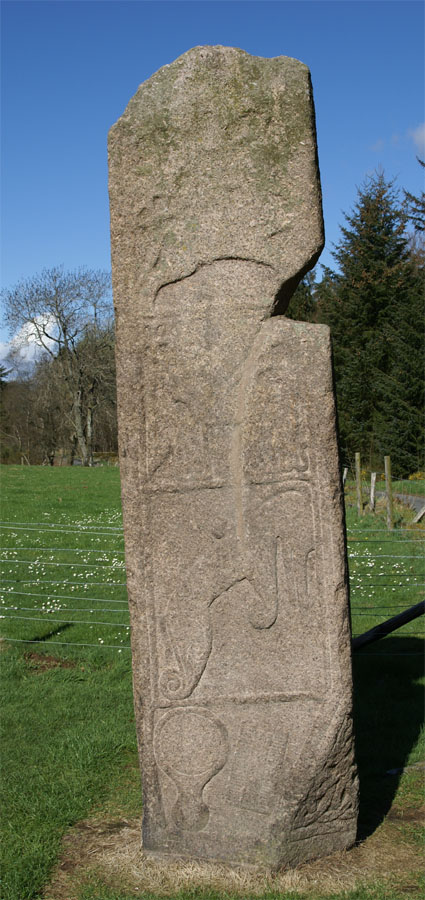
Photo: Otter / Wikimedia Commons / CC BY-SA 3.0 A well-known Aberdeenshire Pictish symbol stone associated with the Picardy Stone within the regional group of carved monuments.
Discovery & excavation
An antiquarian excavation in 1856 found that the stone stood on a small circular cairn with an east–west grave nearby. The records are incomplete, but Historic Environment Scotland considers it possible that cairn, stone and burial formed one monument; the work also indicates that the stone remains in its original position.
What to look for
-
Symbol carvings
Three Pictish symbols are cut into the stone's face: a double disc linked by a z-shaped rod, a serpent with its own z-rod, and a small mirror.
-
Whinstone block
The stone is a large slab of whinstone standing two metres high and 0.9 metres wide at its base — one solid, unworked block rather than a dressed or shaped monument.
Plan your visit
- Location
- 57.3611°N · 2.6501°W
- Nearest settlement
- Insch
- Access
- Open access
- Terrain
- Easy going
- Start point
- 8m south of Huntly off the A96 to Raes of Inch (second road on the left).
- Time needed
- About 15 minutes
- Best time
- Open year-round.
- What survives
- The Pictish symbol stone remains an upright carved slab at its recorded location.
- Facilities
- No dedicated visitor facilities are identified in the cited heritage or operator source; check the official page for current arrangements.
- Start point
- Roadside near the stone, off the A96 (nearest village: Insch) (parking unconfirmed) — HES lists no formal parking. The stone stands in a small fenced enclosure by a minor road; visitors use considerate roadside parking. Nearest village is Insch (~2km south, with rail station); HES directions give it as off the A96 toward Raes of Inch. No verified public car park within 2km.
Opening & admission
Free entry
- Open year-round.
Nearby places

Sacred place · Prehistoric
Inschfield stone circle
Aberdeenshire
Only three stones survive from a ring that once spanned some 27 metres: a fragment of Aberdeenshire's rare recumbent stone circle tradition, now le…
- Near Insch
- Some walking
Sacred place · Prehistoric
Dunnideer stone circle
Aberdeenshire
One of more than seventy recumbent stone circles once raised across lowland Aberdeenshire, its three surviving stones stand at the foot of a hillto…
- Near Insch
- Some walking
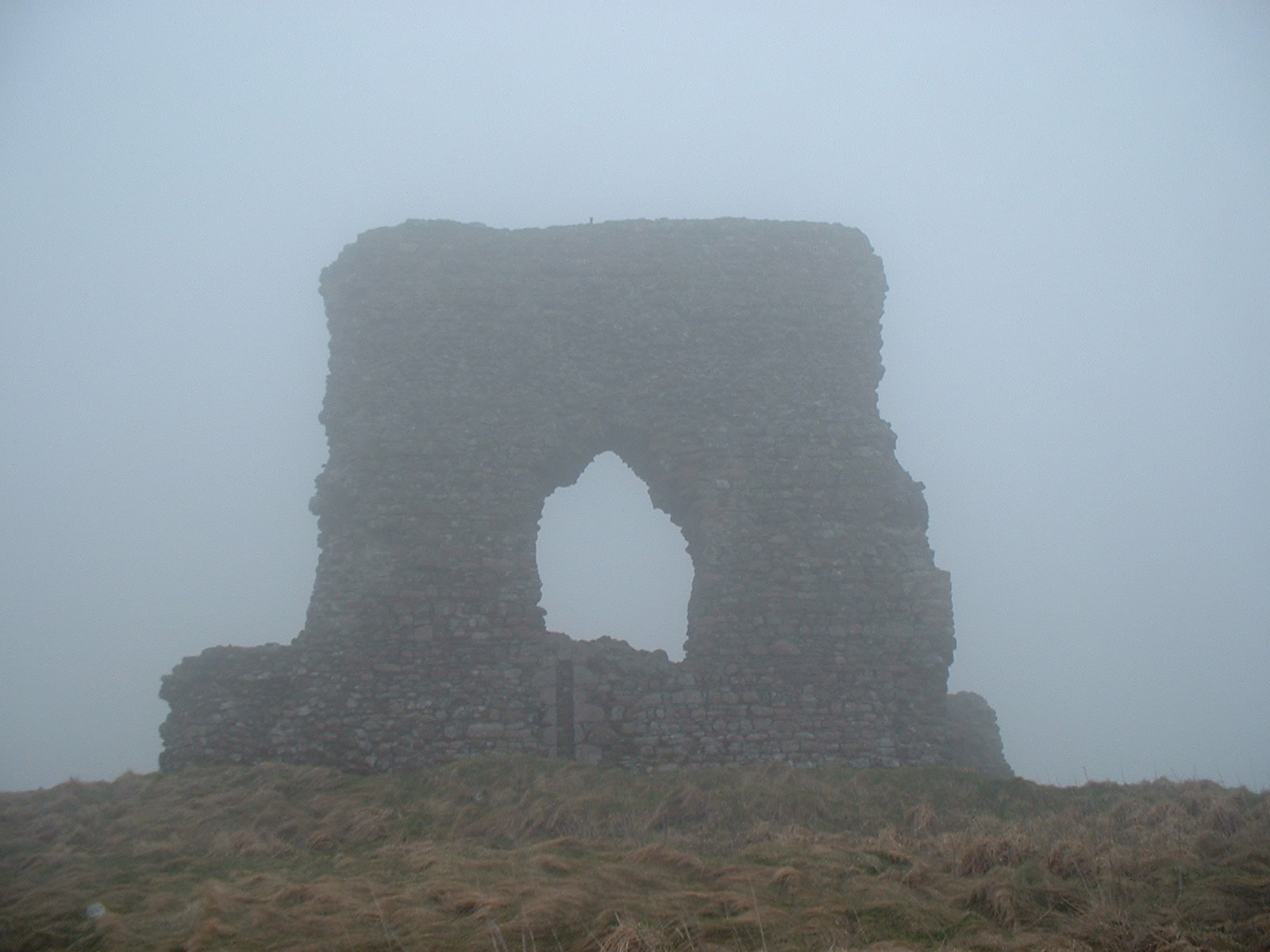
Fortified place · Iron Age
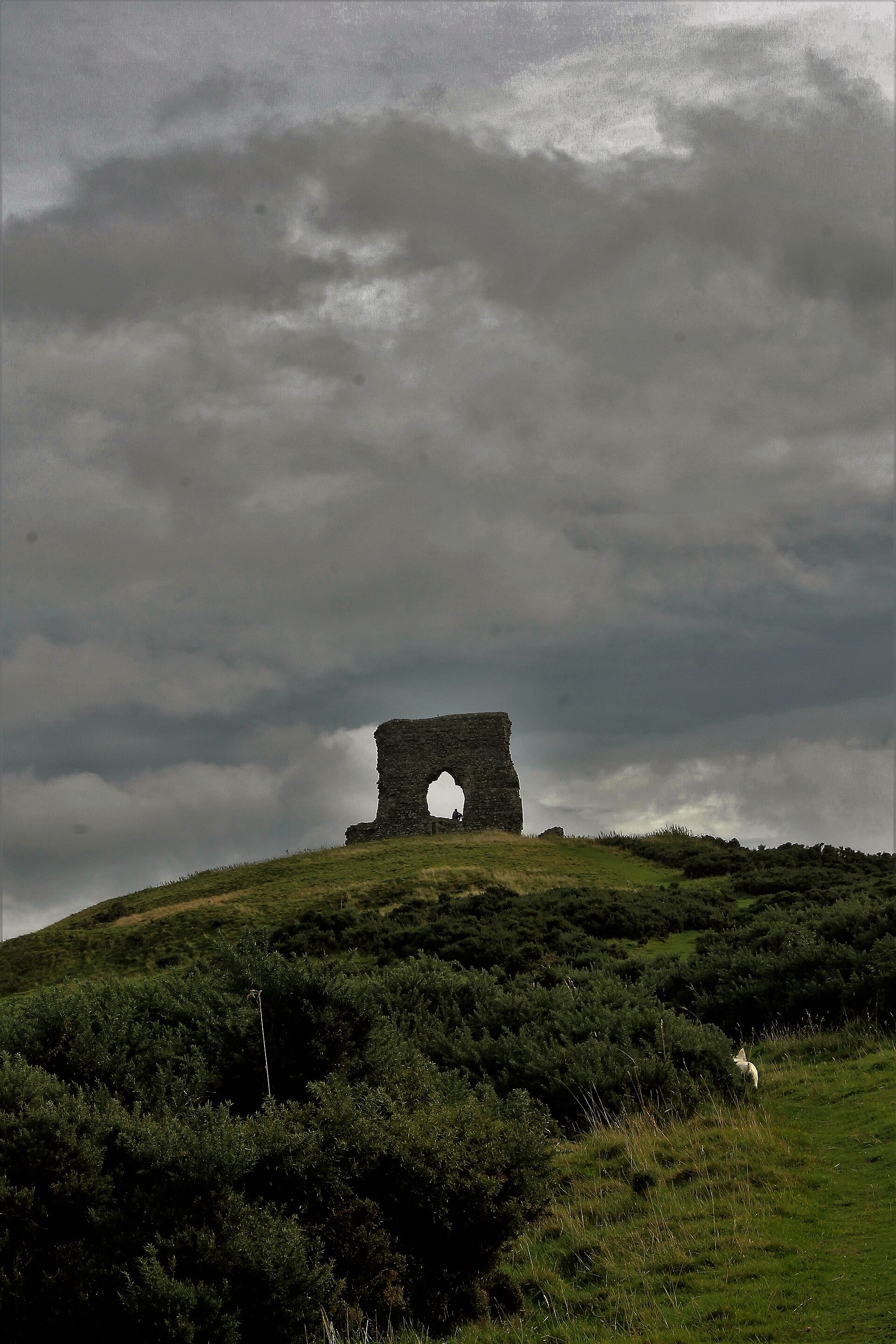
Dunnideer Castle
Aberdeenshire
Its walls were quarried from a vitrified hillfort: an enclosure of the Iron Age, the centuries before Rome from about 800 BC, whose ramparts were b…
- Some walking
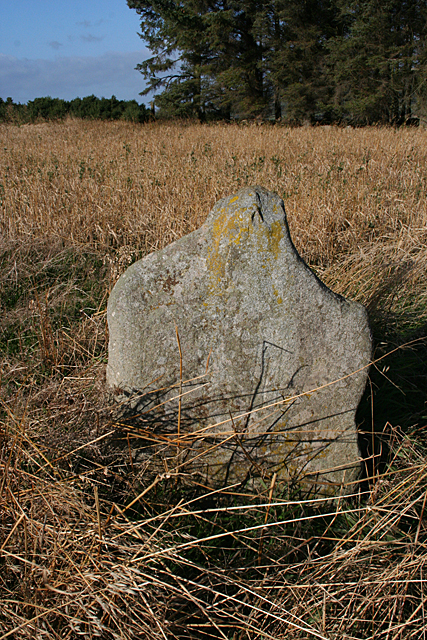
Carved stone · Pictish & early medieval
Ardlair Stone
Aberdeenshire
Carved with the Pictish beast, a tuning fork and a mirror, the stone ties this quiet Aberdeenshire field into the still-unresolved symbol tradition…
- Near Kennethmont
- Easy path
Questions people ask
- What is the Picardy Symbol Stone?
- A Pictish symbol stone of whinstone standing near Huntly, Aberdeenshire, carved around AD 600 with a double disc and z-rod, a serpent and z-rod, and a mirror.
- How old is the stone?
- Its carvings are dated to around AD 600, placing them within the Pictish period of early medieval Scotland.
- What do the symbols mean?
- Their exact meaning is not known. No key survives to explain what Pictish symbols such as the double disc, z-rod, serpent or mirror represented.
- Is the stone protected?
- Yes. It is a scheduled monument, a legal designation administered by Historic Environment Scotland that protects it and its setting from disturbance.
- Are there similar stones nearby?
- Yes. The Brandsbutt Stone, the Dyce Symbol Stones and the Maiden Stone are other Pictish symbol stones in Aberdeenshire sharing the same tradition.
Sources
- Wikipedia: Picardy Stone
- Historic Environment Scotland — trove.scot
- Historic Environment Scotland, scheduled monument SM90239
- Wikidata: Q2178938
Explore more: Carved stones · Pictish & early medieval · Aberdeenshire
The Ancient Codex, in your pocket
Get the Pocket Codex app
Carry the directory with you — Picardy Symbol Stone and thousands of ancient places across Britain and Ireland, offline, wherever you roam.