
Sacred place · Prehistoric · Aberdeenshire
Dunnideer stone circle
One of more than seventy recumbent stone circles once raised across lowland Aberdeenshire, its three surviving stones stand at the foot of a hilltop castle built many centuries later.
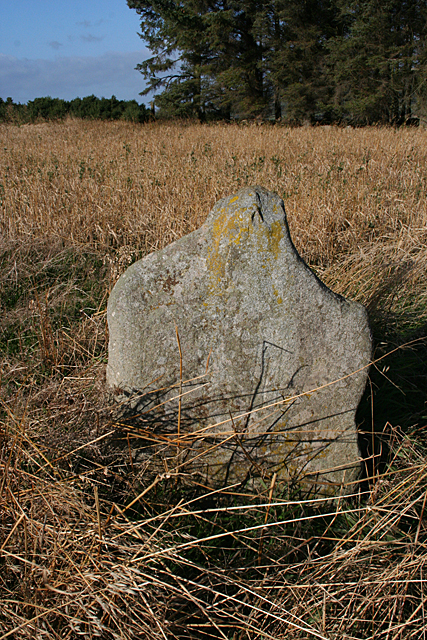
The recumbent slab at Dunnideer lies along the south-west arc of a much-reduced stone circle, flanked by two taller uprights below the ruined walls of Dunnideer Castle. Only three stones remain of the ring once described by antiquarians as a crown of standing stones.
What survives today is a fraction of the original monument. Early accounts describe a much larger ring, and stones are known to have been carted away during the 19th century, a fate shared by many prehistoric monuments across Aberdeenshire once their original purpose had been forgotten. By the 1820s only three or four stones remained standing, and antiquarian surveys through the following century confirmed the same reduced number, the stones by then disfigured, one visitor noted, by an accumulation of weeds and rubbish.
Dunnideer belongs to a distinctive regional tradition: the recumbent stone circles of lowland Aberdeenshire, of which more than seventy examples survive, each built around a single horizontal slab flanked by its tallest stones and graded uprights descending toward the northeast. Their closest architectural relatives lie not elsewhere in Scotland but in the axial stone circles of south-west Ireland, and some archaeologists have suggested the form may have developed from the older Clava cairns of Inverness-shire.
What follows is drawn from published sources, with each claim labelled by how firmly it is established.
History
Dunnideer stone circle is thought to have been raised in the Neolithic age, part of a wider tradition of ring monuments that, in Aberdeenshire, developed into the recumbent stone circles built during the early Bronze Age. Its builders chose a level spur of the hill below Dunnideer, a site with sweeping views toward neighbouring landmarks, following a pattern typical of these monuments across the region.
In 1578 the historian John Lesley described the monument in his Historie of Scotland as 'a wondirful gret croune of stanes' that rang again like an echo in brass or copper, one of the earliest written references to the circle, which by then was already popularly known as a druidical circle rather than understood as a prehistoric ring. Several of the standing stones were removed during the 19th century, reducing what earlier tradition had described as a far more substantial ring. By the 1820s, when the antiquarian James Skene sketched the site, only three or possibly four orthostats remained standing amid the depleted circle.
By 1867 the Ordnance Survey recorded only three stones still standing at the site, confirming the losses of the preceding decades and fixing the diminished circle much as it survives today, its remaining stones and vanished ring cairn lying close to the later ruins of Dunnideer Castle on the hill above. In a paper published in 1902 the antiquary Frederick Coles confirmed that only three stones survived, describing them as much disfigured by an accumulation of weeds and rubbish. He also recorded several other stone circles and standing stones surviving nearby, evidence of a once-dense ritual landscape around Insch.
The circle was designated a scheduled monument in 1925, granting its three surviving stones legal protection as a nationally important archaeological site and formally recognising Dunnideer's place among the many recumbent stone circles scattered across lowland Aberdeenshire. In a paper published in 1985 the archaeologists Aubrey Burl and Clive Ruggles proposed an alternative interpretation, arguing that the circle may only ever have had three stones rather than being a reduced remnant of a once-larger ring, a reading that continues to shape how the site is understood.
People
-
John Lesley
16th-century historian who gave one of the earliest written descriptions of the circle in his 1578 Historie of Scotland.
-
James Skene
Antiquarian who sketched the circle in the 1820s, recording only three or four orthostats still standing.
-
Frederick Coles
Antiquary whose 1902 paper confirmed three surviving stones and surveyed other nearby monuments.
-
Aubrey Burl
Archaeologist who, with Clive Ruggles, argued in 1985 that the circle may only ever have had three stones.
-
Clive Ruggles
Archaeologist who co-authored the 1985 paper with Aubrey Burl reassessing the circle's original form.
Cultural influences
-
Aberdeenshire recumbent-circle tradition
Dunnideer belongs to the distinctive north-east tradition of recumbent stone circles, built around a horizontal slab with tall flankers; the form is most closely paralleled by axial stone circles in south-west Ireland.
Connections
-
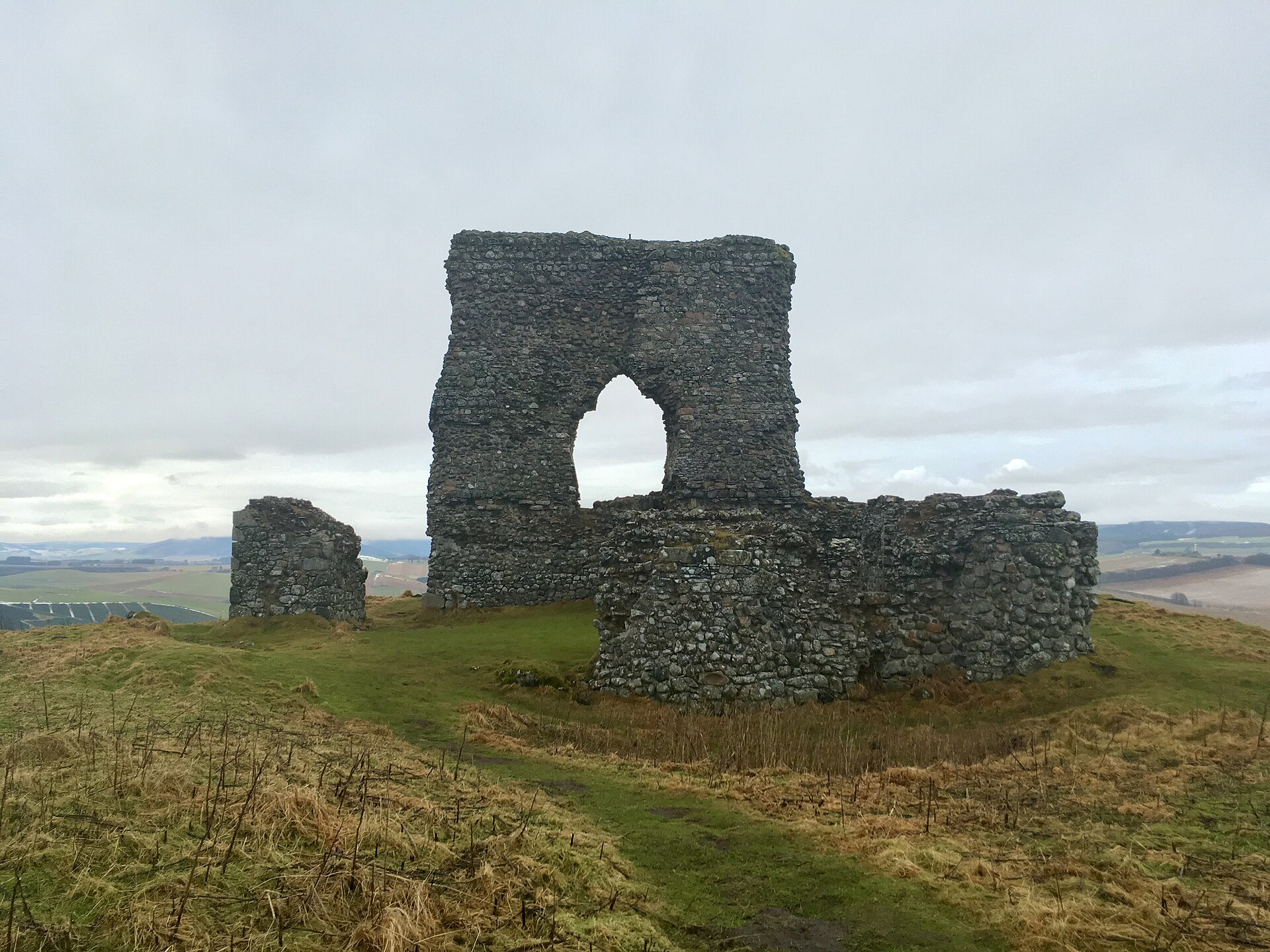
Photo: Astonmartini / Wikimedia Commons / CC BY-SA 4.0 The three surviving stones of the circle lie close to the ruins of this later hilltop castle.
-
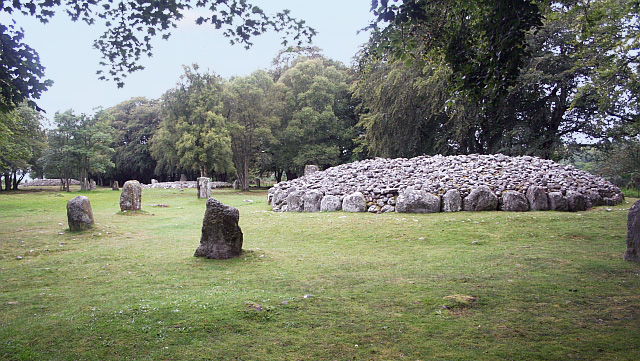
Photo: Bob Embleton / Wikimedia Commons / CC BY-SA 2.0 Recumbent stone circles such as Dunnideer may have developed from these earlier Bronze Age chambered cairns.
-
Axial stone circles of south-west Ireland
Recognised as the closest architectural parallel to Aberdeenshire's recumbent stone circles, including Dunnideer.
-
Recumbent stone circles of lowland Aberdeenshire
Dunnideer is one of more than seventy examples of this circle type recorded across the region.
What to look for
-
The recumbent stone
The great recumbent stone stands 2.80 metres long, 1.95 metres tall and 0.50 metres wide, the largest surviving element of the circle, laid on its side along the south-west arc.
-
The flanker stones
Two re-erected flanker stones stand either side of the recumbent: the eastern stone reaches 2.25 metres tall, while the western stone, split along its length, stands 2.00 metres long.
-
Gabbro construction
All three surviving stones are cut from gabbro, a dark, coarse-grained igneous rock.
-
Dunnideer Castle ruins
The stones stand close to the ruined walls of Dunnideer Castle on the hill above, a later structure unconnected to the circle's prehistoric origins.
What is said
Folklore and tradition, recorded as what is said — not as established fact.
-
The ringing stones
According to a 1578 account by John Lesley, the stones formed a 'wondirful gret croune' that rang again like an echo in brass or copper when struck, though no source explains what produced the sound.
-
The druidical circle
The circle was traditionally described as a 'druidical circle', reflecting a long-held antiquarian belief that stone circles were built by druids rather than by prehistoric farming communities.
Plan your visit
- Location
- 57.3449°N · 2.6519°W
- Nearest settlement
- Insch
- Access
- Open access
- Terrain
- Moderate walking
- Time needed
- About 45 minutes
- Best time
- Dry, clear daylight, when the surviving stones and nearby castle ruins can be read together.
- What survives
- Three gabbro stones survive: the recumbent and two flankers, one split along its length.
Opening & admission
No admission charge is expected as the site is a freely accessible scheduled monument, but check current access before travelling.
- Only three stones remain, standing next to the ruins of Dunnideer Castle near Insch, Aberdeenshire
- A scheduled monument since 1925
Nearby places
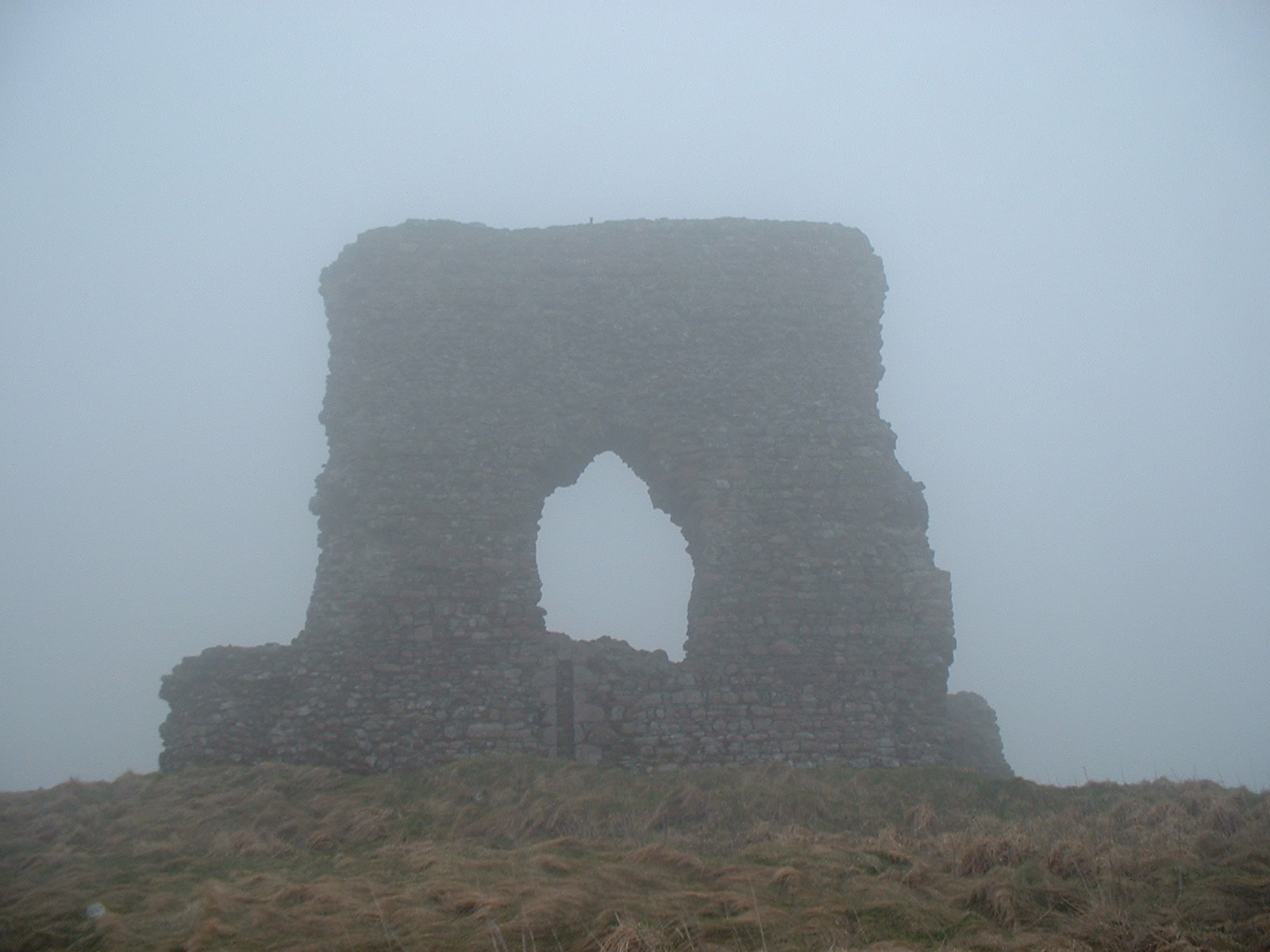
Fortified place · Iron Age
Dunnideer Castle
Aberdeenshire
Its walls were quarried from a vitrified hillfort: an enclosure of the Iron Age, the centuries before Rome from about 800 BC, whose ramparts were b…
- Some walking

Sacred place · Prehistoric
Inschfield stone circle
Aberdeenshire
Only three stones survive from a ring that once spanned some 27 metres: a fragment of Aberdeenshire's rare recumbent stone circle tradition, now le…
- Near Insch
- Some walking
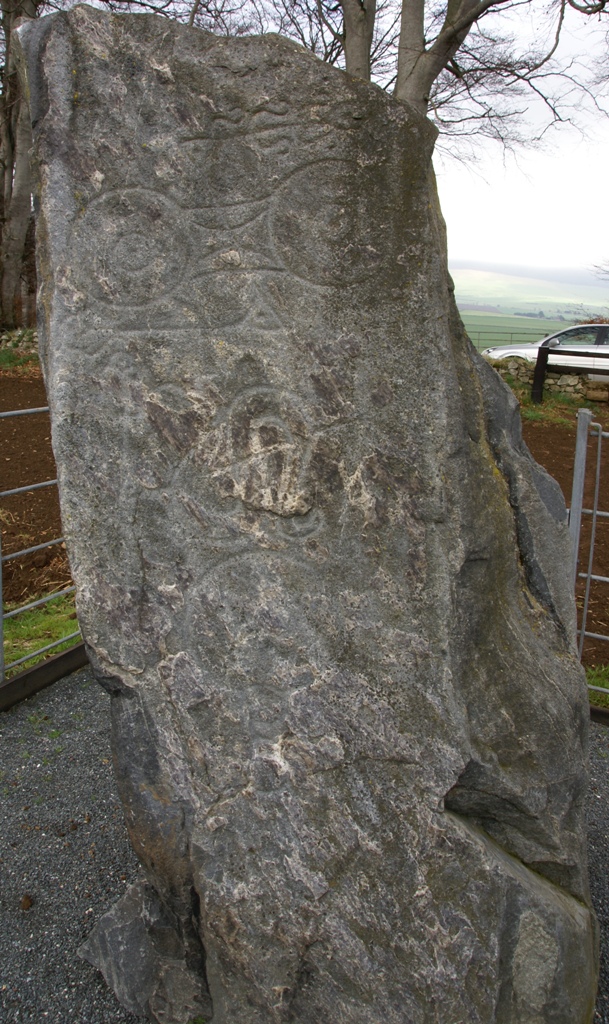
Carved stone · Pictish & early medieval
Picardy Symbol Stone
Aberdeenshire
A double-disc, a serpent and a mirror cut into whinstone around AD 600: three of the clearest Pictish (of the Picts, the people of northern and eas…
- Near Insch
- Easy path
Carved stone · Pictish & early medieval
Ardlair Stone
Aberdeenshire
Carved with the Pictish beast, a tuning fork and a mirror, the stone ties this quiet Aberdeenshire field into the still-unresolved symbol tradition…
- Near Kennethmont
- Easy path
The setting
View across the surrounding farmland and the Dunnideer hill landscape; the stone circle is not visible.
Photo: Gordon Brown / Wikimedia Commons / CC BY-SA 2.0
Questions people ask
- How old is Dunnideer stone circle?
- It is thought to have been built in the Neolithic age, part of the wider tradition that developed into the recumbent stone circles raised across Aberdeenshire during the early Bronze Age.
- How many stones remain standing at Dunnideer?
- Three stones survive today: the recumbent and its two re-erected flankers. Antiquarian records show the circle was already reduced to this number by the 1820s.
- What is a recumbent stone circle?
- A Bronze Age monument type in which the largest stone is laid horizontally between south and south-west, flanked by two tall uprights, found mainly in lowland Aberdeenshire.
- Is Dunnideer stone circle a protected site?
- Yes. It was designated a scheduled monument in 1925, giving its three surviving stones legal protection as a nationally important archaeological site.
- What is Dunnideer stone circle near?
- It stands near Insch in Aberdeenshire, close to the ruins of Dunnideer Castle, which occupies the same hill but dates from a much later period.
Sources
- Wikipedia: Dunnideer stone circle
- Wikidata: Dunnideer stone circle (Q56666207)
- Frederick Coles, 1902 paper on Aberdeenshire stone circles
- Aubrey Burl and Clive Ruggles, 1985 paper
Explore more: Sacred places · Prehistoric · Aberdeenshire
The Ancient Codex, in your pocket
Get the Pocket Codex app
Carry the directory with you — Dunnideer stone circle and thousands of ancient places across Britain and Ireland, offline, wherever you roam.