Clava’s planned arrangement of cairns and standing stones offers rare evidence of a single communal decision about burial and remembrance, rather than gradual accumulation.
Three cairns stand in a line here with stone circles set round them, and the striking thing about the group is that it looks planned. The cairns and their circles appear to have gone up as one deliberate arrangement rather than accumulating over generations, which is unusual — most burial sites from the era before written records grew by accretion, one grave and one monument at a time.
They belong to the communities of the Inverness and Moray Firth country in the Bronze Age, when metalworking was established in the north of Scotland. The form is distinctive enough that archaeologists use the name of this place for the whole class: a Clava cairn is a round chambered tomb ringed by standing stones, and the type is concentrated in this corner of the Highlands.
What the record is confident about is the shape of the thing and the relationship between its parts. What happened here afterwards — who used it, for how long, and when it stopped being used — is not recorded, and the honest position is to say so rather than fill the gap. The site is in the care of Historic Environment Scotland.
What follows is drawn from published sources, with each claim labelled by how firmly it is established.
History
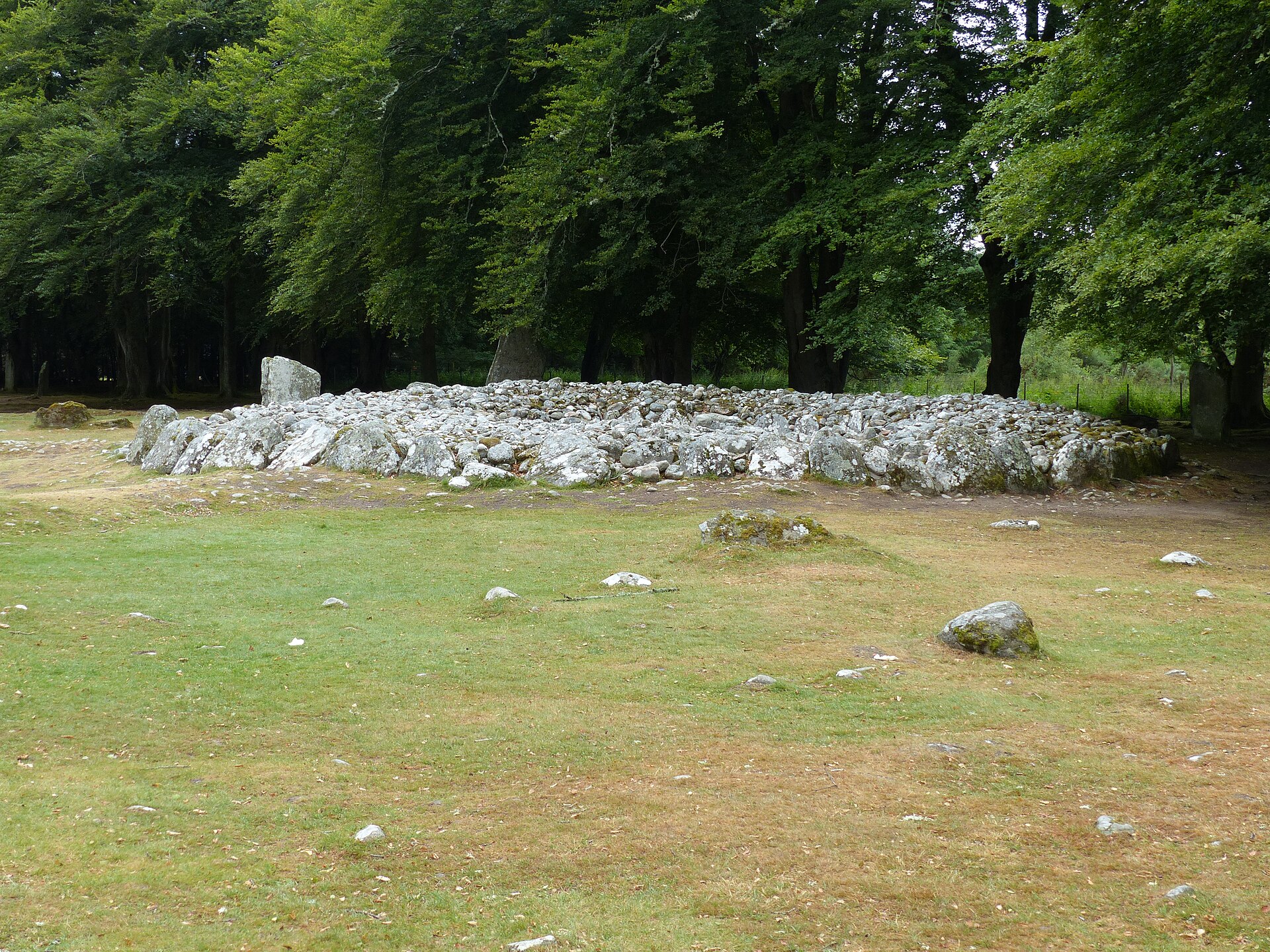
The three cairns and their circles appear to have been built as a single deliberate design rather than added to over generations. That is unusual. Most prehistoric funerary sites in Britain grew by accretion — one burial, one monument, then another beside it — and a group laid out to a plan implies a decision taken once, by people acting together.
The monuments belong to Bronze Age funerary practice among the communities around the Inverness and Moray Firth. Metalworking was established in northern Scotland by then, and the concentration of these tombs in one district suggests a local way of burying the dead rather than a style imported wholesale from elsewhere. The group is recorded as Balnuaran of Clava, which is the name that fixes it in the Highland landscape and in the archaeological literature. The place-name has since been borrowed for the monument type itself, so a Clava cairn anywhere in Scotland is named after this field.
What survives is the designed relationship between the burial monuments and the standing stones set around them. The stones are not an addition to the cairns and the cairns are not an addition to the stones; the two were conceived together, which is what makes the site worth the journey. Beyond the form and the arrangement, the record is thin. Who used the cairns, for how long, and when they went out of use are not documented, and the responsible position is to say so rather than furnish the gap with plausible detail.
Cultural influences
-
Bronze Age funerary design
The cairns and surrounding standing stones were conceived as a single planned group, reflecting a local Bronze Age tradition of burial monuments around the Inverness and Moray Firth.
Connections
-
Bronze Age communities of the Inverness and Moray Firth
The feature is associated with Bronze Age communities of the Inverness and Moray Firth in the available record.
What to look for
-
Kerb stones graded by size and colour
The stones ringing each cairn are not random. They are larger and redder towards the south-west and smaller and whiter towards the north-east, which means the builders sorted their material by hue as well as by size before laying it.
-
The causeways radiating from the central cairn
The middle cairn is of the ring type and carries something found nowhere else — stone paths running out like rays from the platform round the kerb to three of the standing stones.
-
Cup and ring marks, carved beforehand
Several stones in the cairns carry cup and ring marks cut before they were built into the structures. The carvings therefore belong to an earlier use of those stones, and were incorporated rather than made here.
-
Graded standing stones
The circle around each tomb uses stones of varying height, the tallest set at the south-west by the entrance and the shortest directly opposite. The ring is designed with a front and a back.
-
Built as one operation
The grading, the colour selection, the causeways and the circles all point the same way. This is a single deliberate design carried out at one time, not a monument added to piecemeal over generations.
-
Stone circles
The circles around the cairns are part of the complex’s deliberate design.
Plan your visit
- Location
- 57.4737°N · 4.0744°W
- Nearest settlement
- Inverness
- Access
- Open access
- Terrain
- Easy going
- Time needed
- About 45 minutes
- Best time
- Open year-round; the south-west midwinter-sunset alignment is the atmospheric draw in late December.
- What survives
- All three cairns, their stone circles and graded kerbs survive well and are among the best-preserved Clava cairns.
- Facilities
- No dedicated visitor facilities are documented at the cairns; plan to use facilities in nearby settlements.
- Start point
- Clava Cairns (Balnuaran of Clava) car park — On-site HES car park (parking available per HES); note the 17-tonne vehicle weight limit on the access road. Signposted from the B9091, 300 yards east of Culloden Battlefield.
Opening & admission
Free entry
- Open year-round.
Nearby places

Tomb or burial place · Prehistoric
Clava cairn
Highland
A burial mound of piled stones at Balnuaran of Clava, whose kerb stones were sorted by colour before they were laid.
- Near Inverness
- Some walking
Minor monument · Medieval
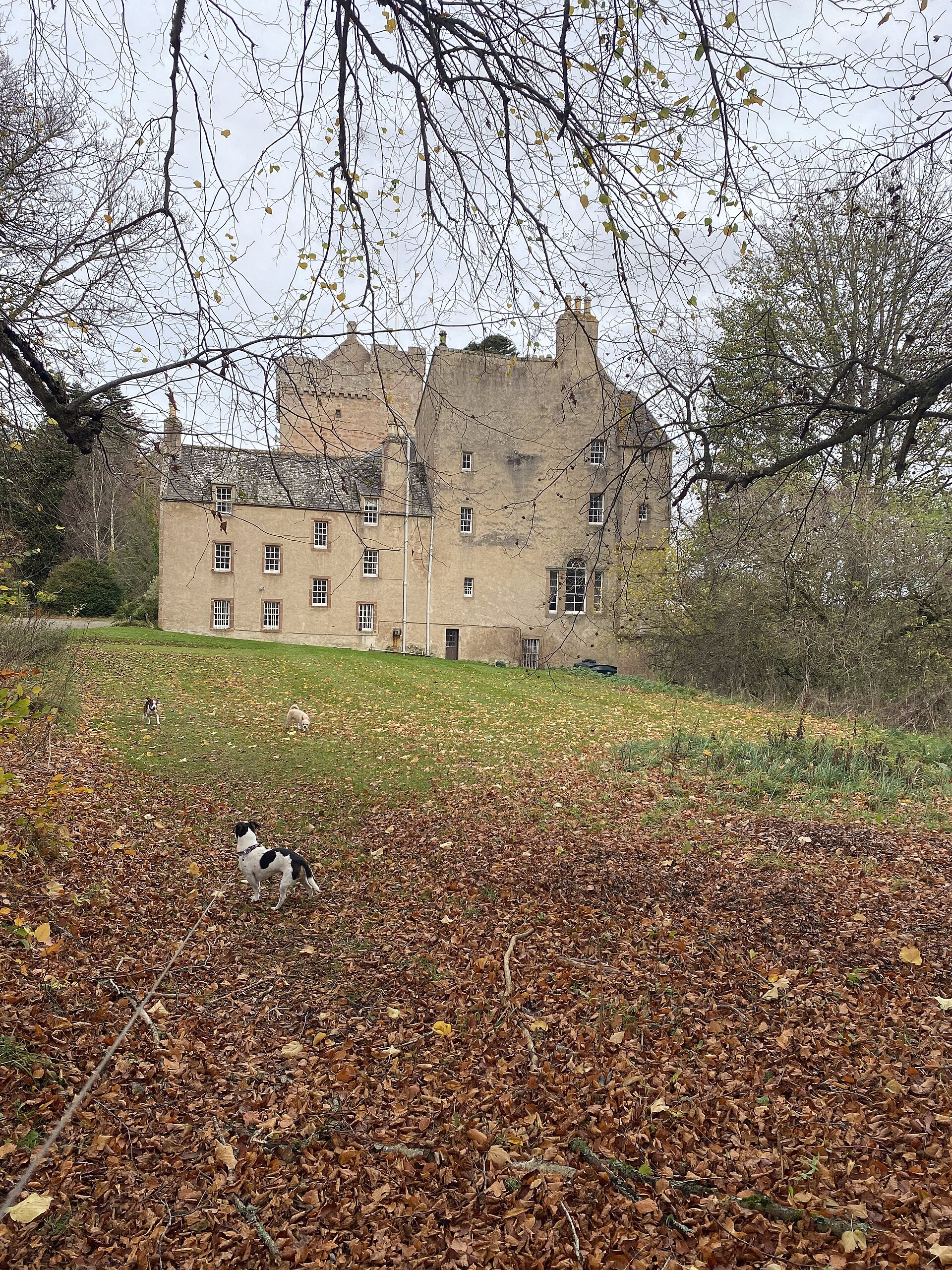
Dovecot, Kilravock Castle
Highland
Kilravock’s pigeon house, built to keep birds for winter meat, makes the estate’s long-running economy tangible within a building altered from medi…
- Near Cawdor

Fortified place · Iron Age
Dun Evan
Highland
A double ring of vitrified (burnt so fiercely that the stone melted and set again) and rebuilt walls crowns a rock between two river valleys, with…
- Near Cawdor
- Some walking

Building or ruin · Medieval
Inverness Castle
Highland
The red sandstone towers standing today are the third castle on this cliff: successor to a fortress whose 1428 parley ended with fifty Highland chi…
Questions people ask
- What is a Clava cairn?
- A round chambered tomb ringed by standing stones. The type is named after this site and is concentrated in the Inverness and Moray Firth area.
- Were the three cairns built together?
- They appear to have been, which is unusual. The cairns and their surrounding circles read as a single deliberate design rather than a monument added to over generations.
- How old is the site?
- Bronze Age — the period when metalworking was established in northern Scotland.
- How much is known about its later use?
- Very little. The form and the arrangement are well recorded; who used the site afterwards, and for how long, is not.
Sources
- Canmore site 14264
- Historic Environment Scotland — Balnuaran of Clava
- Historic Environment Scotland — listing and place records
Explore more: Tomb or burial places · Prehistoric · Highland
The Ancient Codex, in your pocket
Get the Pocket Codex app
Carry the directory with you — Clava Cairns and thousands of ancient places across Britain and Ireland, offline, wherever you roam.