
The red sandstone towers standing today are the third castle on this cliff — successor to a fortress whose 1428 parley ended with fifty Highland chiefs arrested by their own king.
From the steep bank above the River Ness, a pair of castellated towers in red sandstone look out over the town of Inverness — one round, one square, joined by a battlemented front of seven bays. Nothing about the current building is medieval; it was raised in the 1830s and 1840s as a courthouse and prison. But it stands on ground that has carried a fortress since the eleventh century, and the story of what happened on this cliff runs through the making of the Scottish crown’s authority in the Highlands.
A castle here is said to date back to 1057, traditionally linked to Malcolm III, and successive structures were fought over, burned, besieged and rebuilt for the best part of eight hundred years. Robert the Bruce tore its battlements down in 1307; James I used it to spring a trap on fifty clan chiefs in 1428; Mary, Queen of Scots found its gates barred against her in 1562 and had the governor hanged for it. By the time the present building went up, the site had already outlived several kingdoms’ worth of upheaval.
Today the castle is closed for renovation, its grounds pending reopening, but its silhouette is familiar from a different register entirely — printed on the back of a Royal Bank of Scotland fifty-pound note, and cast as the residence of Shakespeare’s Macbeth, murderer of a king in a castle much like this one.
What follows is drawn from published sources, with each claim labelled by how firmly it is established.
History
A castle is said to have stood on this cliff above the River Ness since 1057, traditionally linked to Malcolm III of Scotland. In 1163 Malcolm IV is said to have appointed Shaw Macduff, first chief of Clan Mackintosh, as constable of the castle in reward for help suppressing a rebellion in Moray, tying the site from its earliest recorded history to the politics of the Highland clans.
The castle's medieval fortunes were violent. In 1307 Robert I razed its battlements during his campaign to deny fortified strongholds to his enemies, and the castle was occupied again during the Raid on Ross in 1491. Walter Ogilvy was paid in 1498 for repairing its twin towers, and in 1509 James IV made Alexander Gordon, 3rd Earl of Huntly, hereditary keeper and sheriff of Inverness, binding the castle to one of the north's most powerful families.
In 1428 James I summoned fifty Highland clan chiefs to a parley at Inverness Castle as part of his effort to bring the region under royal control. One by one the chiefs were arrested, shackled and imprisoned in separate rooms, cut off from communication with each other or their followers, and several were executed on the spot. Among those held was Alexander, 3rd Lord of the Isles, who returned within the year with 10,000 men and burned the town, though the castle itself held.
In 1548 George Gordon, 4th Earl of Huntly, completed a new castle and tower on the site, having earlier been obliged by James V to build a hall and chapel there. When Mary, Queen of Scots arrived in August 1562, the Gordons refused her entry, and the clans Chattan, Munro and Fraser rallied to her side, retaking the castle and driving the Gordons out. The governor who had barred the gates was hanged on the Queen's orders, and George Munro of Davochgartie, who had helped organise her journey, was made keeper in the aftermath.
The castle changed keepers repeatedly through the later sixteenth century as royal favour shifted — from George Munro to John Ross, Provost of Inverness, in 1562, then to Hucheon Rose of Kilravock in 1565 following the Chaseabout Raid, before reverting to the Earl of Huntly. Further sieges struck Inverness in 1649, 1650, 1689, 1715 and 1746, and by 1619 the castle was reported to be in such poor repair that a great part of it had fallen down; King James VI ordered its rebuilding but the work was never carried out in his lifetime.
The present castle was built new on the old site in the 19th century. William Burn designed the main southern block, completed in 1836 in red sandstone with an early castellated style and a symmetrical seven-bay front; Thomas Brown II added the north block, used as a prison and courthouse, in 1848; and Joseph Mitchell designed the bastioned walls enclosing the whole complex, replacing the medieval fortress with a working seat of justice.
In 1920 four captured field guns were installed at the castle frontage, including pieces taken at the Battle of Loos in 1915 and a pair of Russian guns seized at the Siege of Sevastopol during the Crimean War and gifted to the town in 1857. Most were sold for scrap during the Second World War, one by administrative error, leaving a single Sevastopol gun which was later moved inside the castle; only the Loos gun survives today, held at the Clan Cameron Museum in Achnacarry.
The castle served Inverness-shire County Council after 1889 and continued to host sheriff and justice of the peace courts even after the council relocated in 1963, until the Inverness Sheriff Court finally moved to a new justice centre in 2020. The castle and grounds closed to the public in 2021 for extensive renovation, with reopening scheduled for 2025.
People
-
Malcolm III of Scotland
traditionally credited with building the first castle on the site around 1057
-
Shaw Macduff
first chief of Clan Mackintosh, said to have been appointed constable of the castle in 1163
-
James I of Scotland
summoned fifty Highland clan chiefs to the castle in 1428 and had them arrested, several executed
-

Photo: Unidentified painter / Wikimedia Commons / Public domain Mary, Queen of Scots
was refused entry by the Gordons in 1562, then had the castle retaken and its governor hanged
-
George Gordon, 4th Earl of Huntly
completed a new castle and tower on the site in 1548 and held it as constable until 1562
-
William Burn
architect of the current castellated main block, completed in 1836
Cultural influences
-
Successive castles above the Ness show the strategic importance of Inverness to royal government and Highland administration.
Connections
-
Clan Mackintosh
its first chief, Shaw Macduff, is said to have been appointed constable of Inverness Castle in 1163
-
Clan Fraser and Clan Munro
rallied with Clan Chattan to retake the castle for Mary, Queen of Scots after the Gordons refused her entry in 1562
-
Earls of Huntly (Clan Gordon)
held hereditary keepership of the castle across the 16th century and built the 1548 tower before being ejected by rival clans
-
Clan Cameron Museum, Achnacarry
holds the sole surviving field gun once displayed at the castle frontage, captured at the Battle of Loos in 1915
-
North Coast 500
the scenic touring route both starts and ends at the castle
In culture
-
Macbeth
Inverness Castle is one of the principal settings in Shakespeare's tragedy, portrayed as the residence of Macbeth and Lady Macbeth and the scene of King Duncan's murder.
-
Royal Bank of Scotland £50 note
An illustration of the castle has appeared on the reverse of the Royal Bank of Scotland's fifty-pound note since its introduction in 2005.
What to look for
-
Twin castellated towers
The main frontage pairs a round tower to the left with a square tower to the right, flanking a symmetrical seven-bay front of round-headed windows and a doorway.
-
Red sandstone construction
Both the 1836 main block and the 1848 north block are built in red sandstone in an early castellated style, giving the whole complex its uniform colour.
-
Bastioned enclosing walls
The walls surrounding the castle grounds, designed by Joseph Mitchell, take the form of bastions rather than a plain perimeter wall.
-
Clifftop position over the River Ness
The castle occupies a steep bank directly above the River Ness, the same commanding position held by every earlier fortress on the site.
What is said
Folklore and tradition, recorded as what is said — not as established fact.
-
Origins under Malcolm III
The first castle on the site is said to have been built by Malcolm III of Scotland, though no contemporary record confirms the date or builder directly.
Plan your visit
- Location
- 57.4763°N · 4.2255°W
- Time needed
- About 90 minutes
- Best time
- Visit during published opening or viewpoint access periods and check current arrangements before travelling.
- What survives
- The castle now operates as the Inverness Castle Experience, an immersive visitor attraction with exhibition spaces and public gardens.
- Facilities
- Visitor facilities depend on the current castle or viewpoint operation; check before travelling.
Opening & admission
The ticketed Inverness Castle Experience operates daily except Christmas Day; the gardens, Saltire Bistro and castle shop do not require a ticket.
- The Experience is open daily 10am–7pm from April to September (last admission 5pm), and 10am–6pm from October to March (last admission 4pm).
Nearby places
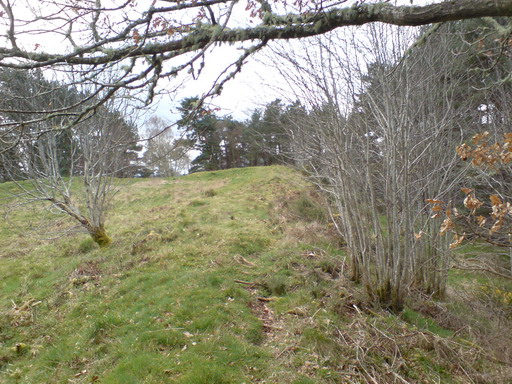
Fortified place · Iron Age
Craig Phadrig
Highland
Its stone rampart was fused to glass by fire in the 4th century, and tradition: never proven: casts it as the seat where a Pictish (of the Picts, t…
- Near Inverness
- Some walking

Tomb or burial place · Prehistoric
Carn Glas
Highland
At 116 metres long, this three-part cairn (a mound of piled stones, often covering a burial) is the longest chambered burial monument yet recorded…
- Near Inverness
- Some walking
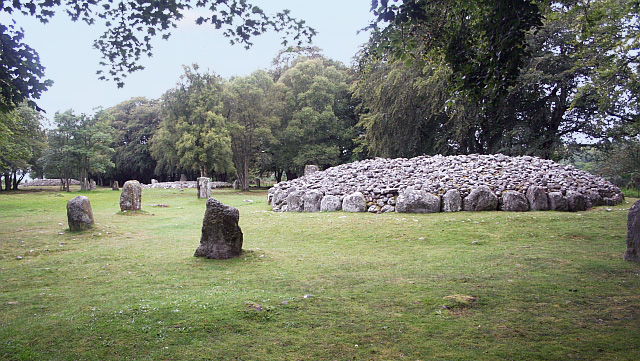
Tomb or burial place · Prehistoric
Clava Cairns
Highland
Clava’s planned arrangement of cairns and standing stones offers rare evidence of a single communal decision about burial and remembrance, rather t…
- Near Inverness
- 149 metres from car park
- Easy path

Tomb or burial place · Prehistoric
Clava cairn
Highland
A burial mound of piled stones at Balnuaran of Clava, whose kerb stones were sorted by colour before they were laid.
- Near Inverness
- Some walking
The setting
Near Inverness Castle, about 3 metres away.
Photo: David Smith / Wikimedia Commons / CC BY-SA 2.0
Questions people ask
- Is the current Inverness Castle medieval?
- No. The visible structure dates from 1836 to 1848; it replaced earlier castles that had stood on the site since around 1057.
- What happened at the castle in 1428?
- James I summoned fifty Highland clan chiefs there for a parley, then had them arrested one by one; several were executed.
- Why was Mary, Queen of Scots refused entry in 1562?
- The Gordon family holding the castle barred her gates; Clan Chattan, Munro and Fraser then retook it on her behalf and the governor was hanged.
- Who designed the current castle buildings?
- William Burn designed the main block (1836), Thomas Brown II the north block (1848), and Joseph Mitchell the enclosing bastioned walls.
- Can visitors currently enter Inverness Castle?
- No. It closed to the public in 2021 for extensive renovation, with reopening scheduled for 2025.
Sources
- Wikipedia: Inverness Castle
- Historic Environment Scotland — Listed Building record
Explore more: Building or ruins · Medieval · Highland
The Ancient Codex, in your pocket
Get the Pocket Codex app
Carry the directory with you — Inverness Castle and thousands of ancient places across Britain and Ireland, offline, wherever you roam.