
Its stone rampart was fused to glass by fire in the 4th century, and tradition — never proven — casts it as the seat where a Pictish (of the Picts, the people of northern and eastern Scotland from about AD 300 to 900) king met St Columba.
On a pine-covered hill above Inverness, sections of the summit rampart have been fused into a glassy, half-melted mass, the unmistakable mark of a vitrified fort — a stronghold whose stone walls were once subjected to fire so intense that the rock itself began to run. Beneath the trees, the inner wall still traces an enclosure roughly seventy-five metres long, its remains standing in places to about a metre and a stone circumference, with a further outer wall and the trace of a third rampart, or hornwork, on its eastern side.
The hill rises to 172 metres above the Beauly Firth and the mouth of the River Ness, a position that made it a natural place to watch the water routes into the heart of the Great Glen. Radiocarbon dating carried out in the 1970s suggested the inner wall was first raised in the 4th century, and later excavation turned up metal-working tools and imported French pottery from a further phase of occupation in the 7th century — evidence of a well-connected, working community on the summit, not simply a lookout post.
That later Pictish phase is what has drawn Craig Phadrig its lasting reputation: it is commonly supposed to have been the stronghold of the Pictish king Bridei mac Maelchon, and by extension the place where, around 565, the Irish churchman Columba is said to have travelled to meet him. The identification has never been settled, and other sites nearby have been argued for instead, but the fort’s scale and its dramatic vitrified stone have kept the claim alive.
What follows is drawn from published sources, with each claim labelled by how firmly it is established.
The name
The name comes from the Scottish Gaelic Creag Phàdraig, meaning "Rock of Patrick".
History
Radiocarbon dating carried out in the 1970s indicated that the inner wall crowning Craig Phadrig was first raised in the 4th century, when a community enclosed the summit with a stone rampart substantial enough that sections still survive today to a height of around 1.2 metres. The same programme of excavation began to reveal just how much activity the hilltop had seen in the centuries that followed.
Further material recovered from the summit pointed to a second, later phase of Pictish life at the fort during the 7th century: metal-working implements, suggesting a resident craft-working population, together with pottery imported from France, the kind of prestige good associated with a well-connected household rather than an isolated hilltop refuge.
Across roughly 554 to 584 the fort is generally supposed to have served as the stronghold of Bridei mac Maelchon, a Pictish king whose reign fell within the period the vitrified fort was occupied, and it is this association that gives Craig Phadrig its long-standing reputation as a royal seat commanding the Beauly Firth and the mouth of the River Ness below.
Around 565 the Irish churchman Columba is recorded, in Adomnán's Life of Columba, as having travelled to meet King Bridei across a series of encounters described in that near-contemporary text; Craig Phadrig has long been proposed as the setting for that meeting, one of the founding stories of Christianity's arrival among the northern Picts, though the identification has never been settled beyond dispute.
The uncertainty has never fully lifted: other candidates for Bridei's court, including Urquhart Castle and Inverness Castle, have been put forward in its place, leaving no single site confirmed. Craig Phadrig is now a scheduled monument within forestry managed by Forestry and Land Scotland, its fused and tumbled walls preserved under tree cover above the town it once overlooked.
People
-
Bridei mac Maelchon
Pictish king (reigned c.554–584) traditionally supposed to have based his power at the fort.
-
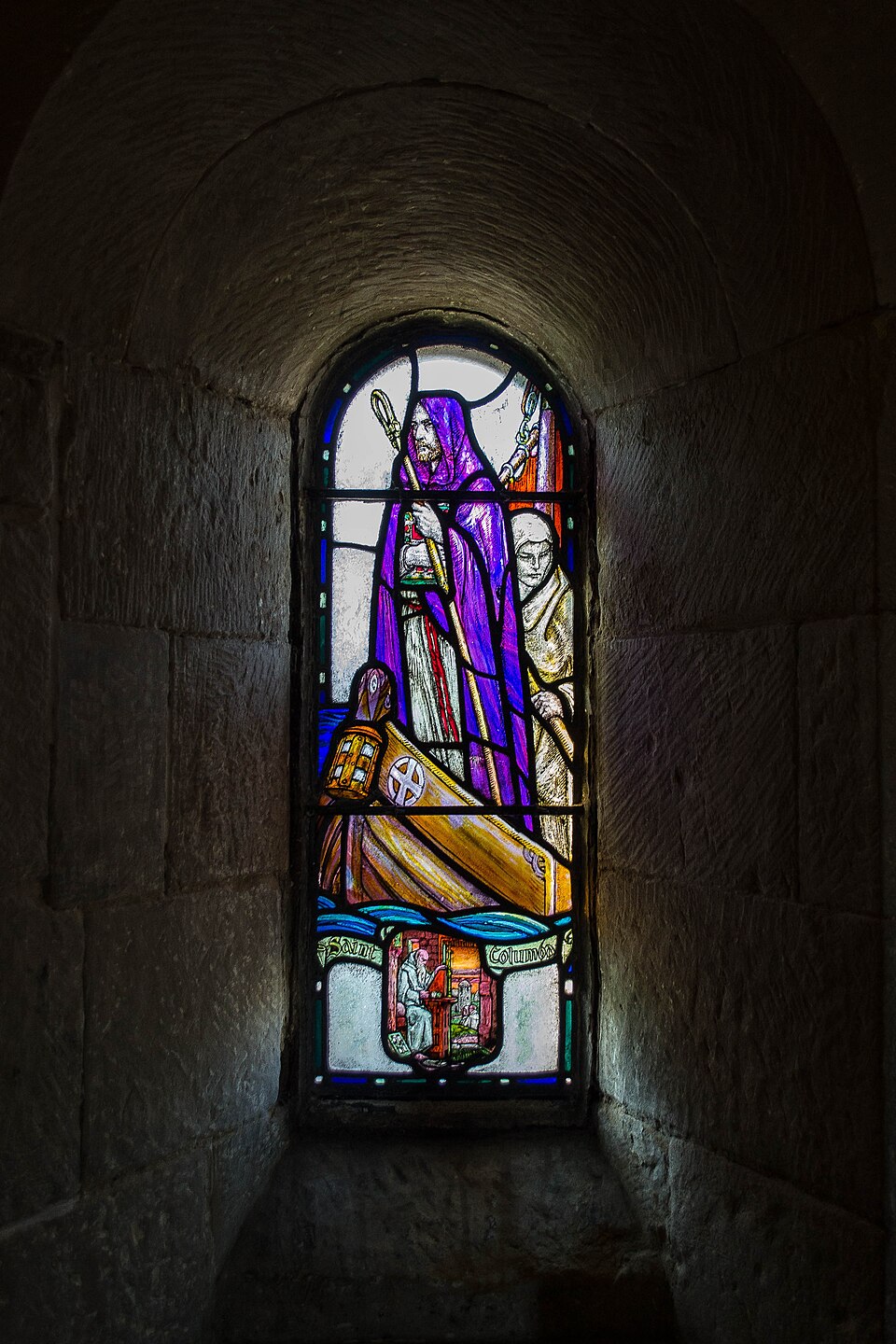
Portrait: MrsEllacott / Wikimedia Commons / CC BY-SA 3.0 Columba
Irish churchman recorded in Adomnán’s Life of Columba as having travelled to meet King Bridei around 565, in an encounter traditionally, though not certainly, located here.
Cultural influences
-
Adomnán's Life of Columba
This near-contemporary biography of the saint records his meetings with the Pictish king Bridei and is the sole documentary source for the story that has attached itself to Craig Phadrig, even though the text itself does not name the fort.
Connections
-

Photo: LornaMCampbell / Wikimedia Commons / CC BY-SA 4.0 Proposed as an alternative site for Bridei's stronghold and his meeting with Columba, since Craig Phadrig's identification with the Pictish king's court is not universally accepted.
-

Photo: Diliff / Wikimedia Commons / CC BY-SA 3.0 Also put forward as a rival candidate for the location of Bridei's fort, reflecting the same unresolved debate over where the historical meeting with Columba took place.
-
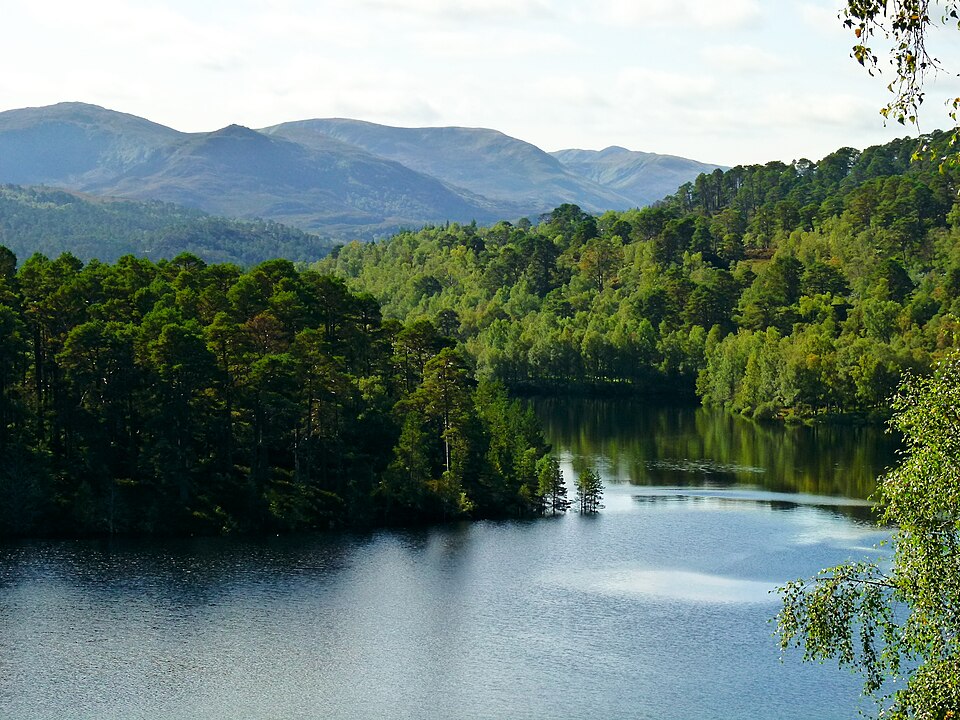
Photo: Dg-505 / Wikimedia Commons / CC BY 3.0 Forestry and Land Scotland
Forestry and Land Scotland owns and manages the wooded hill containing Craig Phadrig. Its stewardship keeps the scheduled fort’s vitrified and tumbled ramparts protected beneath tree cover above Inverness.
Discovery & excavation
Excavations in the 1970s combined radiocarbon dating of the inner wall with the recovery of metal-working implements and imported French pottery, establishing both a 4th-century date for the rampart's construction and a distinct later phase of 7th-century Pictish occupation on the summit.
What to look for
-
Vitrified stone
Sections of the rampart show stone fused into a glass-like material by intense heat, the defining feature of a vitrified fort.
-
Inner wall
The best-preserved rampart, enclosing an area roughly 75 by 23 metres and surviving in places to about 1.2 metres high.
-
Outer wall and hornwork
A second wall beyond the inner enclosure, with the trace of a third rampart, or hornwork, on the eastern side.
-
The view over the firths
From the summit, at 172 metres, the fort commands views over the Beauly Firth to the north and the mouth of the River Ness to the north-east.
What is said
Folklore and tradition, recorded as what is said — not as established fact.
-
The meeting with Columba
Tradition holds that Craig Phadrig was the site of St Columba's meeting with King Bridei around 565, though the identification is not universally accepted and other locations have been suggested instead.
Plan your visit
- Location
- 57.4770°N · 4.2690°W
- Nearest settlement
- Inverness
- Access
- Open access
- Terrain
- Moderate walking
- Time needed
- About 45 minutes
Opening & admission
- Forested hill owned and managed by Forestry and Land Scotland.
Nearby places

Building or ruin · Medieval
Inverness Castle
Highland
The red sandstone towers standing today are the third castle on this cliff: successor to a fortress whose 1428 parley ended with fifty Highland chi…

Tomb or burial place · Prehistoric
Carn Glas
Highland
At 116 metres long, this three-part cairn (a mound of piled stones, often covering a burial) is the longest chambered burial monument yet recorded…
- Near Inverness
- Some walking
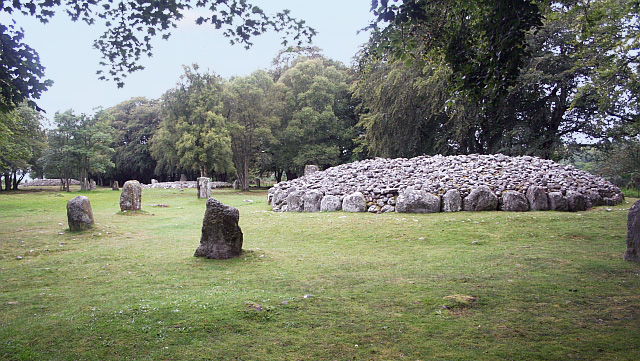
Tomb or burial place · Prehistoric
Clava Cairns
Highland
Clava’s planned arrangement of cairns and standing stones offers rare evidence of a single communal decision about burial and remembrance, rather t…
- Near Inverness
- 149 metres from car park
- Easy path

Tomb or burial place · Prehistoric
Clava cairn
Highland
A burial mound of piled stones at Balnuaran of Clava, whose kerb stones were sorted by colour before they were laid.
- Near Inverness
- Some walking
Questions people ask
- What is a vitrified fort?
- A stone fort whose ramparts were subjected to such intense heat, whether deliberate or accidental, that sections of the rock fused into a glass-like material.
- Did St Columba really meet King Bridei at Craig Phadrig?
- It is commonly supposed but not confirmed; Adomnán's Life of Columba records the meeting without naming the site, and other locations have been proposed instead.
- How old is the fort?
- Radiocarbon dating from the 1970s suggests the inner wall was built in the 4th century, with further Pictish occupation evidenced in the 7th century.
- How big is the fort's inner enclosure?
- The inner wall encloses an area of around 75 by 23 metres and survives in places to a height of about 1.2 metres.
- Who manages Craig Phadrig today?
- The hill is owned and managed by Forestry and Land Scotland, and the fort is protected as a scheduled monument.
Sources
- Wikipedia: Craig Phadrig
- Wikidata: Craig Phadrig
- Forestry Commission Scotland — The Pictish Fort of Craig Phadrig: An Educational Resource
Explore more: Fortified places · Iron Age · Highland
The Ancient Codex, in your pocket
Get the Pocket Codex app
Carry the directory with you — Craig Phadrig and thousands of ancient places across Britain and Ireland, offline, wherever you roam.