
Blown up in 1692 to deny it to Jacobite forces, its shattered gatehouse and leaning tower still mark almost four centuries of siege along the Great Glen.
Large blocks of collapsed masonry still lie scattered beside the gatehouse at Urquhart, thrown down in a single deliberate explosion rather than by slow decay. On the headland beyond, a five-storey tower leans where a storm tore away its southern wall, and the water of Loch Ness laps close beneath low cliffs on either side of the point. Little about the ruin looks tidy, and that is the record of its own history: this was fought over, not simply lived in.
The site had already been defended for centuries before any stone castle stood here, and the documented struggle that followed reads almost as a relay of hands. Crown officials, English garrisons, Scots patriots, and the MacDonald Lords of the Isles took and lost the place in turn across the 13th to 16th centuries, each side leaving behind repairs, raids, or plunder. When the Grant family finally secured lasting possession in 1509, on condition they rebuild it, the fighting did not stop, only its rhythm slowed.
What visitors see today is largely the result of that Grant rebuilding, later reduced by war, weather, and the recycling of its own stone by nearby villagers. Since the early 20th century the ruin has been in state care, its history explained in a visitor centre built into the hillside below the road, and it now draws hundreds of thousands of people each year to a shoreline that was once a battleground.
What follows is drawn from published sources, with each claim labelled by how firmly it is established.
The name
The name Urquhart derives from a 7th-century form, Airdchartdan, combining the Old Irish word aird (a point or promontory) with the Old Welsh cardden (a thicket or wood) — a description of a wooded headland rather than a personal or dynastic name.
History
Long before any stone castle rose here, the rocky knoll at the site's south-west corner carried an early medieval fort. Pieces of vitrified stone (rock fused by intense heat, a hallmark of early fortification) had been noted from the early 20th century, and excavations directed by Professor Leslie Alcock in 1983, backed by radiocarbon dating, showed the knoll had been defended from around the 5th to the 11th centuries.
Adomnán's Life of Columba records that the saint visited the Pictish king Bridei son of Maelchon between 562 and 586, and that during the visit he converted a dying nobleman named Emchath, his son Virolec, and their household at a place called Airdchartdan. Alcock concluded the fort was most likely Emchath's residence rather than Bridei's own base, which was probably at Inverness or Craig Phadrig to the west.
A stone castle emerged in the 13th century after Alexander II granted Urquhart in 1229 to his usher Thomas de Lundin, whose son Alan Durward inherited it; the first fortification is thought to have been built soon after, centred on a motte (an earthen castle mound) at the site's south-west corner. The earliest documentary record dates to 1296, when Edward I of England captured it at the outset of the Wars of Scottish Independence.
Control swung repeatedly during the wars that followed: Sir Andrew de Moray besieged the English garrison in 1297, the Scots held it briefly in 1298, and an English assault retook it in 1303. After killing the Red Comyn in 1306, Robert Bruce marched through the Great Glen the following year and seized Urquhart along with Inverlochy and Inverness, after which it became a royal castle held by a succession of constables.
In 1329 Sir Robert Lauder of Quarrelwood held the castle as constable, later fighting at the Scots' defeat at Halidon Hill in 1333, when Urquhart was one of only five Scottish-held castles left standing. In 1342 David II spent a summer hunting there, the only reigning king recorded to have stayed. From the 1390s the MacDonald Lords of the Isles raided the Great Glen repeatedly, and in 1395 Domhnall of Islay seized the castle from the crown and held it for more than fifteen years.
The MacDonald claim on the earldom of Ross kept the castle contested through the 15th century: Alexander, Earl of Ross, raided the glen in 1437, and his son John seized Urquhart outright in 1452. When John's later dealings with England were discovered in 1476, King James III stripped him of his titles and handed Urquhart to the Earl of Huntly, who brought in Sir Duncan Grant of Freuchie to restore order to the area.
In 1509 James IV granted Urquhart to John Grant in perpetuity, on condition he repair and rebuild it, but MacDonald raids continued regardless — including a 1545 assault, remembered as the Great Raid, in which 2,000 cattle and the castle's own furniture, cannon, and gates were carried off. In 1690 a Grant garrison holding the castle for William of Orange withstood a Jacobite siege, then blew up their own gatehouse on leaving to deny it to the enemy; a storm brought down the tower's south wall in 1715, and by the 1770s the roofless ruin was already being sketched by visiting painters, long before Historic Scotland's 1998 visitor centre made it one of the country's most-visited castles.
People
-
Alan Durward
Inherited Urquhart from his father Thomas de Lundin and is credited with building the original castle around the site's motte in the mid-13th century.
-
Robert Bruce
Took Urquhart along with Inverlochy and Inverness in 1307 after marching through the Great Glen, bringing the castle under permanent royal control.
-
Sir Robert Lauder of Quarrelwood
Held Urquhart as royal constable in 1329 and again after fighting at the Battle of Halidon Hill in 1333.
-
Domhnall of Islay, Lord of the Isles
Seized Urquhart from the crown in 1395 and retained it for more than fifteen years.
-
John Grant of Freuchie
Received Urquhart Castle and the Glen Urquhart estate from James IV in 1509 on condition he rebuild it, founding the Grants' long tenure.
-
Ludovic Grant of Freuchie
Garrisoned the castle for William of Orange in 1689–90 and withstood a Jacobite siege before the garrison withdrew and destroyed the gatehouse.
-
Caroline, Dowager Countess of Seafield
Held the castle from 1884, and her 1911 will instructed that it be entrusted into state care.
-
Professor Leslie Alcock
Led the 1983 excavations that identified the early medieval fort beneath the later castle.
Cultural influences
-
Urquhart commanded the Loch Ness side of the Great Glen and the entrance to Glen Urquhart, making it a royal stronghold and a recurring target in the conflicts between the crown, the Lords of the Isles and Highland clans.
Connections
-
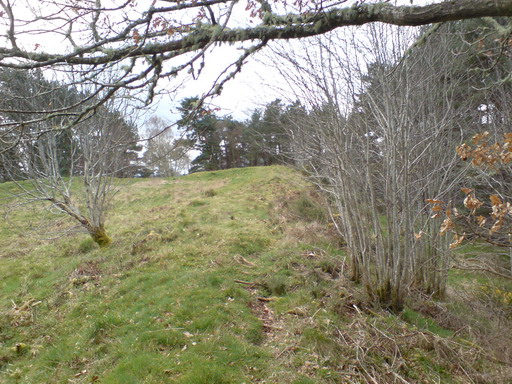
Photo: david johnston / Wikimedia Commons / CC BY-SA 2.0 An alternative candidate, near Inverness, for the residence of the Pictish king Bridei whom St Columba is recorded as having visited.
-
Dumbarton Castle
One of only five Scottish-held castles, alongside Urquhart, still standing against the English in 1333.
-
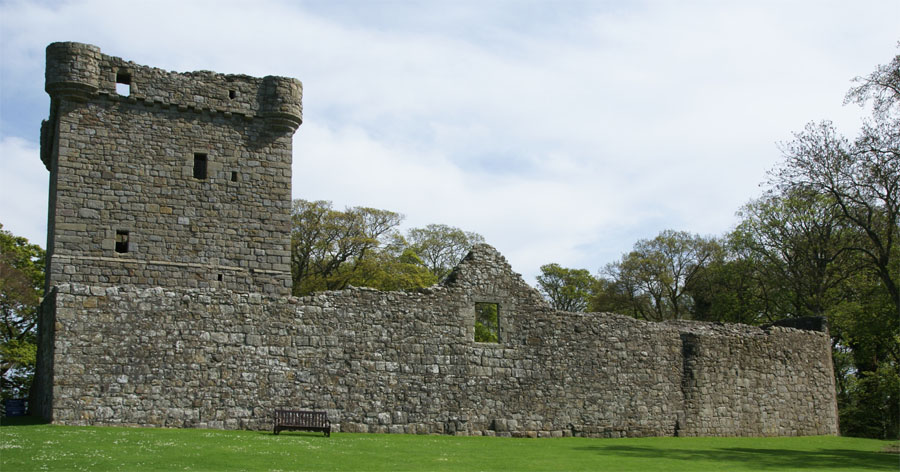
Photo: Otter / Wikimedia Commons / CC BY-SA 3.0 One of the same five Scottish-held strongholds of 1333.
-
National Museum of Scotland, Edinburgh
Holds the bulk of the relics recovered from Urquhart’s post-1913 excavations, including a 15th-century bronze ewer, coins, and jewellery.
Discovery & excavation
Vitrified stone hinting at an early fort was noted at Urquhart from the early 20th century, but systematic work followed the castle's transfer to state care: excavations begun after 1913 were interrupted by the First World War and completed by 1922, recovering a large collection of relics including a 15th-century bronze ewer, coins, jewellery, and crosses spanning the 13th to 17th centuries. Though later criticised for not recording find-locations or stratigraphy, the collection remains valuable and was catalogued in detail by Samson in 1983, the same year Professor Leslie Alcock's radiocarbon-dated excavations identified the early medieval fort on the site.
Finds now held at: National Museum of Scotland, Edinburgh.
In culture
-
Urquhart as a Romantic ruin
By the 1770s Urquhart was already roofless and had become a subject for nineteenth-century painters and Highland visitors, helping establish its later identity as one of Scotland’s best-known ruins.
What to look for
-
Grant Tower
The five-storey tower house at the north end of the castle, 12 by 11 metres with walls up to three metres thick, rebuilt in the 16th century on 14th-century foundations; its corbelled corner turrets and machicolations (slots for dropping objects on attackers) survive despite the loss of its south wall in a 1715 storm.
-
The gatehouse
Twin D-plan towers flanking an arched entrance passage on the inland side of the Nether Bailey, formerly defended by a portcullis and double doors; large blocks of collapsed masonry still lie around it from its deliberate destruction after 1690.
-
The dry moat and causeway
A moat up to 30 metres wide guards the landward approach, crossed by a stone causeway that once carried a drawbridge and an enclosed barbican-like passage.
-
The motte and shell keep
The rocky mound at the south-west of the Upper Bailey, the highest point on the headland, is the site of the earliest defences and became the motte of the 13th-century castle; its surviving walls form a shell keep, a hollow ring of walling with fragmentary towers to north and south.
-
The doocot
The base of a 16th-century doocot, or pigeon house, stands in the Upper Bailey near the scant remains of a 13th-century hall later reused as a smithy.
Plan your visit
- Location
- 57.3240°N · 4.4420°W
- Time needed
- About 120 minutes
- Best time
- Visit during published opening hours and in settled daylight, when the castle ruins, loch setting and views can be explored comfortably.
- What survives
- The castle survives as extensive ruins on a rocky promontory above Loch Ness, including the Grant Tower and the remains of the medieval fortress.
- Facilities
- Visitor facilities depend on the current heritage-site operation; check the official information before travelling.
Opening & admission
Historic Environment Scotland offers ticketed, timed entry to the castle; Historic Scotland members and Explorer Pass holders can book eligible entry.
- Check the live closure notice before travel, as parts of the castle may be restricted for essential maintenance.
Nearby places
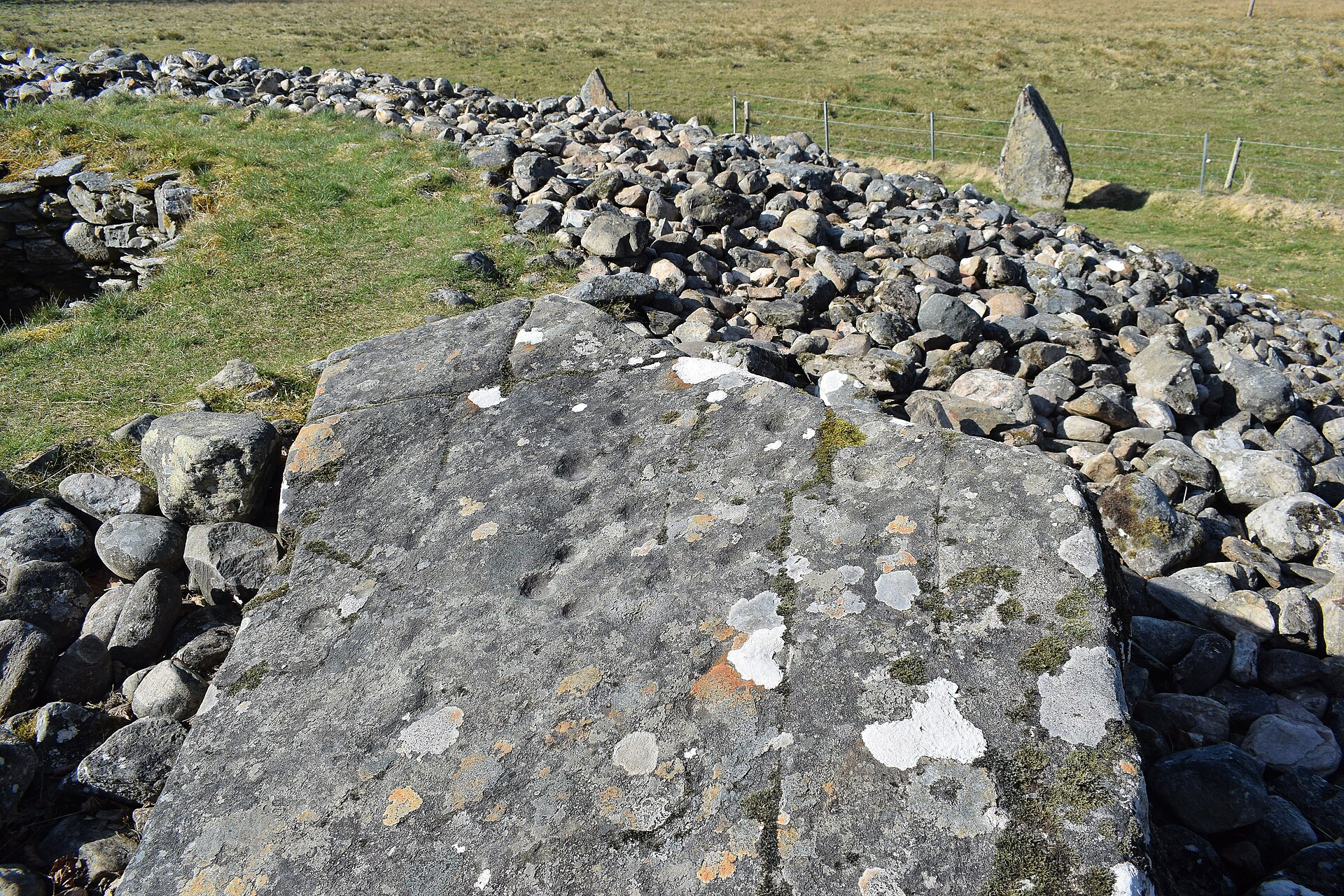
Tomb or burial place · Prehistoric
Corrimony chambered cairn
Highland
One of the best-preserved Clava cairns in the Highlands, its passage still roofed by the original cup-marked capstone and its burial chamber found…
- Near Drumnadrochit
- Easy path

Tomb or burial place · Prehistoric
Carn Glas
Highland
At 116 metres long, this three-part cairn (a mound of piled stones, often covering a burial) is the longest chambered burial monument yet recorded…
- Near Inverness
- Some walking
Fortified place · Iron Age
Craig Phadrig
Highland
Its stone rampart was fused to glass by fire in the 4th century, and tradition: never proven: casts it as the seat where a Pictish (of the Picts, t…
- Near Inverness
- Some walking

Building or ruin · Medieval
Inverness Castle
Highland
The red sandstone towers standing today are the third castle on this cliff: successor to a fortress whose 1428 parley ended with fifty Highland chi…
The setting
Near Urquhart Castle, about 0 metres away.
Photo: Mingkai Zhang / Wikimedia Commons / CC BY-SA 4.0
Near Urquhart Castle, about 0 metres away.
Photo: Hanwenheng Liu / Wikimedia Commons / CC BY-SA 4.0
Near Urquhart Castle, about 0 metres away.
Photo: LornaMCampbell / Wikimedia Commons / CC BY-SA 4.0
Questions people ask
- Why is Urquhart Castle in ruins?
- Its own garrison partly destroyed it in 1692 to stop Jacobite forces reoccupying it after they withdrew; further storm damage and stone-robbing by locals reduced it further.
- Who built Urquhart Castle?
- The first stone castle was likely built by Alan Durward around the mid-13th century; the Grant family rebuilt much of what survives after receiving it from James IV in 1509.
- Is there anything older than the medieval castle at the site?
- Yes — excavations found an early medieval fort on the same headland, occupied roughly between the 5th and 11th centuries, long before the stone castle was built.
- Can Urquhart Castle be visited today?
- Yes, it is open all year, managed by Historic Environment Scotland, with a visitor centre, and was one of Scotland's most-visited castles, drawing 466,420 visitors in 2025.
- What happened to the relics found at Urquhart?
- Excavations completed by 1922 recovered coins, jewellery, crosses, and a 15th-century bronze ewer, now held mostly by the National Museum of Scotland in Edinburgh.
Sources
- Wikipedia: Urquhart Castle
- Historic Environment Scotland — Canmore
- Samson, A. (1983), catalogue of the Urquhart Castle relics collection
Explore more: Building or ruins · Medieval · Highland
The Ancient Codex, in your pocket
Get the Pocket Codex app
Carry the directory with you — Urquhart Castle and thousands of ancient places across Britain and Ireland, offline, wherever you roam.