
Only three stones survive from a ring that once spanned some 27 metres — a fragment of Aberdeenshire's rare recumbent stone circle tradition, now legally protected as a scheduled monument (legally protected as a site of national archaeological importance).
Inschfield’s broken recumbent lies among three weathered survivors in a field near Insch, the last stones of a much larger ring. The large slab was originally laid on its side rather than set upright, the feature that gives this class of monument its name. The rest of the circle, and whatever purpose it once served, has vanished.
What remains hints at the scale of the original structure. The ring is estimated to have measured around 27.4 metres (90 feet) across when complete, placing it among the larger examples of its kind in the area. Whoever built it worked without written records, and little beyond the stones themselves now speaks for the effort that went into raising them.
Despite its ruinous state, the site has not been forgotten. Its remains have been formally designated a scheduled monument, a legal status reserved for archaeological sites judged nationally important, giving the surviving stones a measure of protection that the centuries in between did not.
What follows is drawn from published sources, with each claim labelled by how firmly it is established.
History
At some point in the distant past, a ring of standing stones was raised on the ground now known as Inschfield, near Insch in Aberdeenshire. When complete it measured around 27.4 metres (90 feet) across, making it a substantial example of its kind. No written record survives of who built it or why, and the circle's original date and purpose can no longer be established with certainty.
Over time the ring was reduced from a complete circle to a small handful of remnants. Only three stones now survive in position, among them the recumbent — the large stone that once lay on its side rather than standing upright, the defining feature after which this type of monument is named. The recumbent itself is now broken, a further sign of the damage the site has suffered across the centuries.
In recognition of what survives, the remains of Inschfield stone circle have been designated a scheduled monument. Scheduling gives a site legal protection under Scottish heritage law and marks it as nationally important despite its incomplete state, setting it apart from the many prehistoric monuments that have been lost entirely without ever being formally recorded.
Cultural influences
-
Recumbent-circle tradition
Inschfield belongs to Aberdeenshire’s distinctive recumbent stone-circle tradition, built around a horizontal recumbent with a ring of uprights; nearby Dunnideer preserves the same defining arrangement.
Connections
-
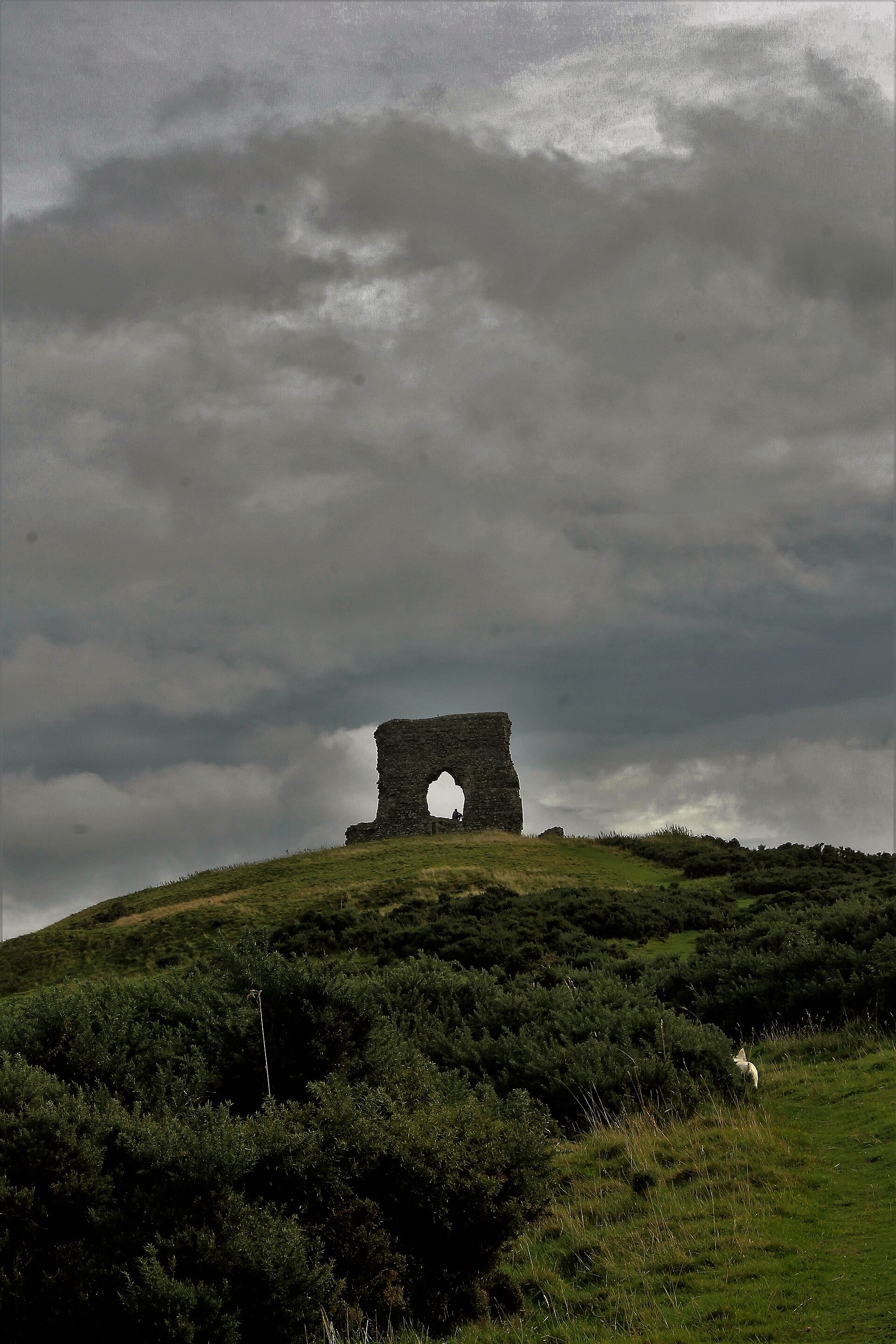
Photo: Andrew Wood / Wikimedia Commons / CC BY-SA 2.0 A second recumbent circle within sight of the same stretch of the Insch basin, one of the cluster that makes this valley unusually dense in the monument type.
-

Photo: ED McIntosh / Wikimedia Commons / CC BY-SA 3.0 Easter Aquhorthies stone circle
A near-complete recumbent circle in the same county, showing the full arrangement of graded uprights and flanking stones that Inschfield has been stripped down from.
-
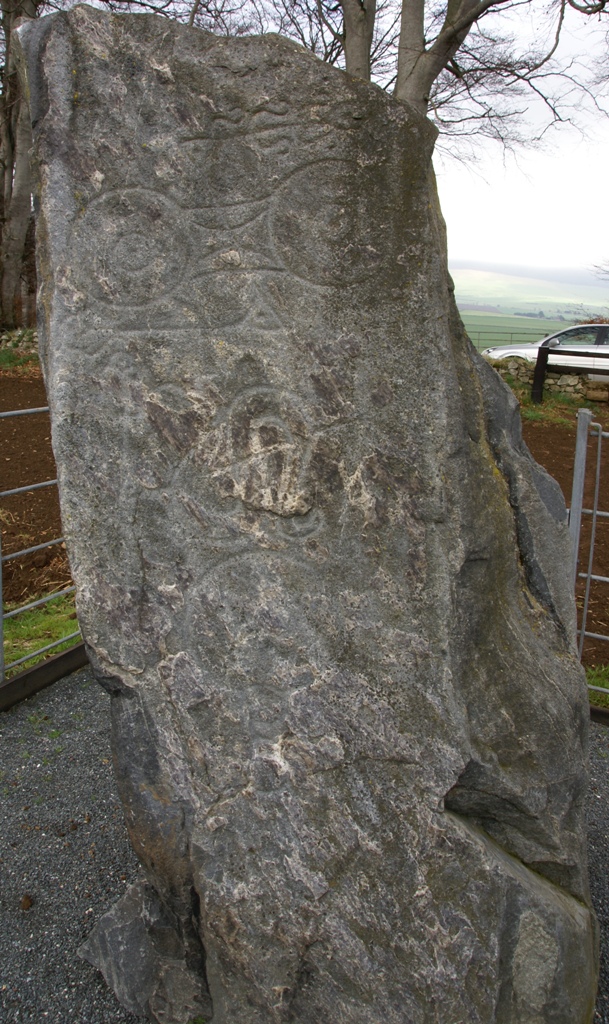
Photo: Otter / Wikimedia Commons / CC BY-SA 3.0 A Pictish carved stone a short distance away at Insch, marking how much later ritual and monument-making continued in the same small area.
-
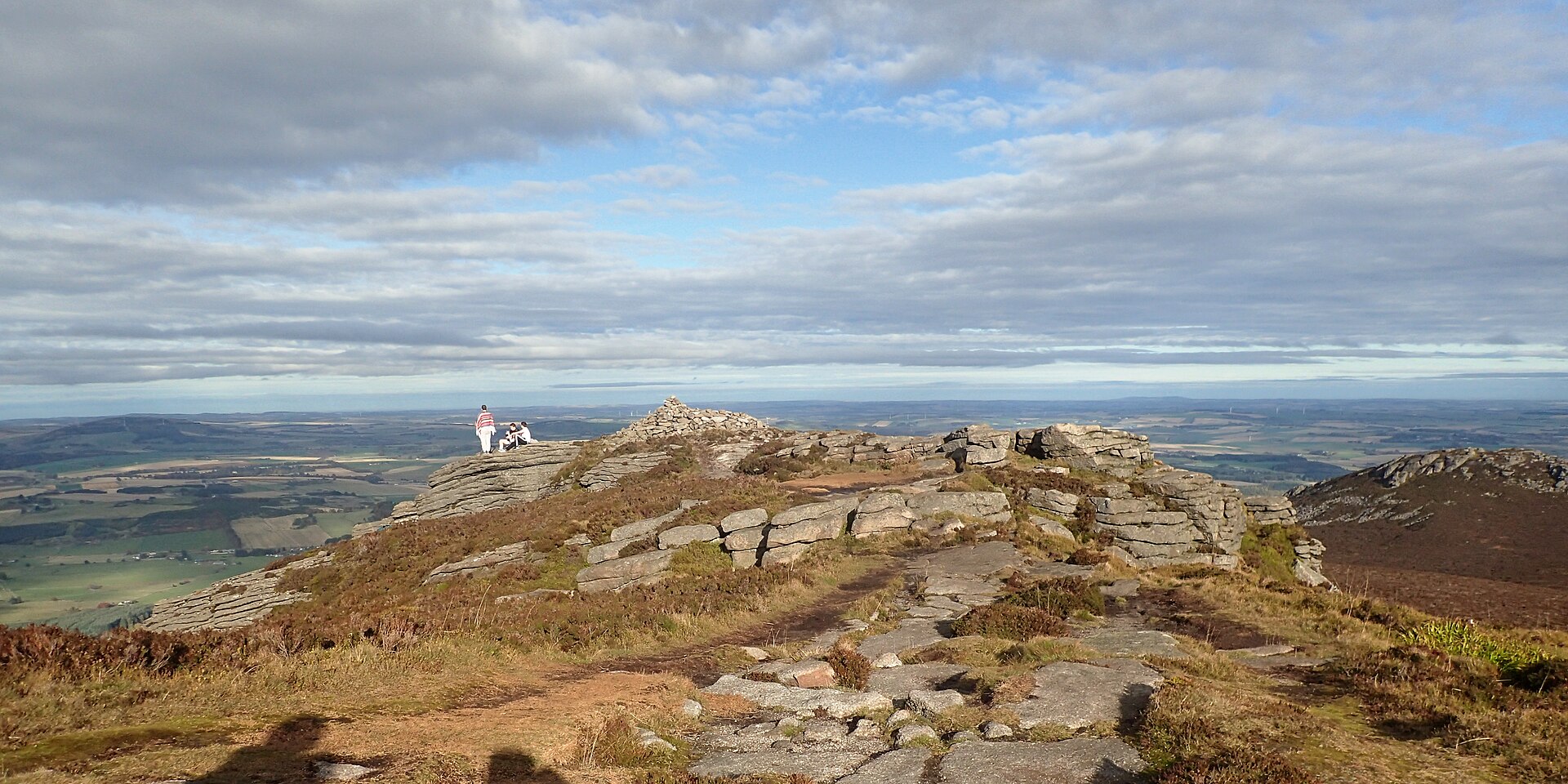
Photo: Andy Waddington / Wikimedia Commons / CC BY-SA 2.0 The hill that dominates the skyline of the Insch basin, and the fixed landmark against which the circles of this group sit.
-
Insch
The circle takes its name from Insch, whose parish preserves a dense cluster of recumbent stone circles in the basin.
What to look for
-
The broken recumbent stone
The site's most distinctive survivor is the large stone that was originally laid on its side; it is now cracked, a visible sign of the wear the monument has suffered.
-
The two remaining uprights
Alongside the recumbent stand the only other stones to survive from what was once a full ring, marking part of the original circle's line.
-
The scale of the missing ring
Though only fragments remain, the original circle spanned some 27.4 metres (90 feet) across — a useful reference point for picturing how much larger the complete monument once was.
Plan your visit
- Location
- 57.3531°N · 2.6277°W
- Nearest settlement
- Insch
- Access
- Open access
- Terrain
- Moderate walking
- Time needed
- About 30 minutes
- Best time
- Dry daylight, when the broken recumbent and the surviving uprights can be read against the wider Insch landscape.
- What survives
- Three stones survive in the field, including a broken recumbent and two uprights from the original ring.
- Facilities
- No visitor facilities are recorded at this field monument.
Opening & admission
No current admission details are recorded — check with local heritage sources before travelling.
- Only three stones survive, including a broken recumbent stone, in a field near Insch
- It is a scheduled monument
Nearby places
Carved stone · Pictish & early medieval
Picardy Symbol Stone
Aberdeenshire
A double-disc, a serpent and a mirror cut into whinstone around AD 600: three of the clearest Pictish (of the Picts, the people of northern and eas…
- Near Insch
- Easy path
Fortified place · Iron Age
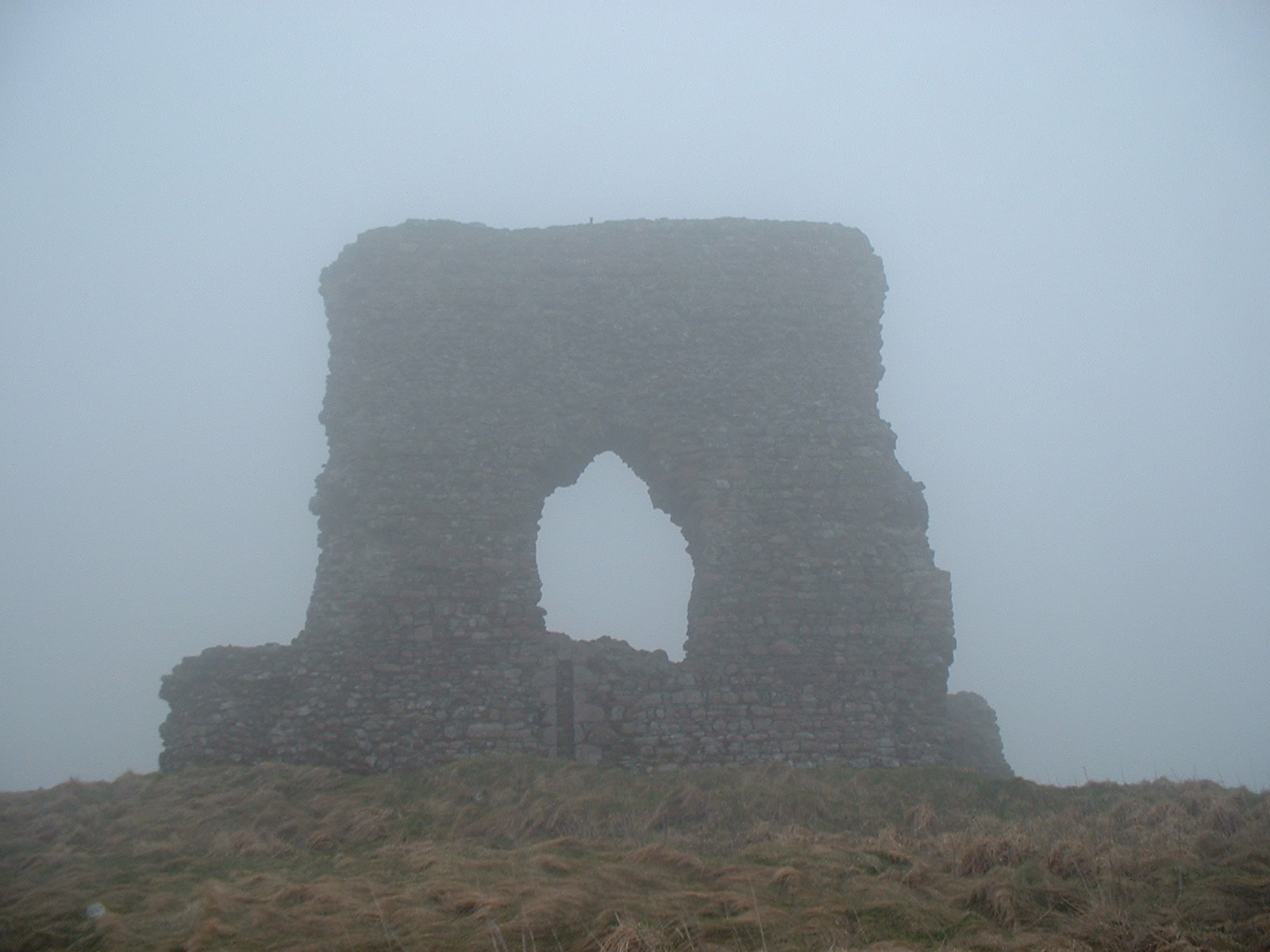
Dunnideer Castle
Aberdeenshire
Its walls were quarried from a vitrified hillfort: an enclosure of the Iron Age, the centuries before Rome from about 800 BC, whose ramparts were b…
- Some walking
Sacred place · Prehistoric
Dunnideer stone circle
Aberdeenshire
One of more than seventy recumbent stone circles once raised across lowland Aberdeenshire, its three surviving stones stand at the foot of a hillto…
- Near Insch
- Some walking
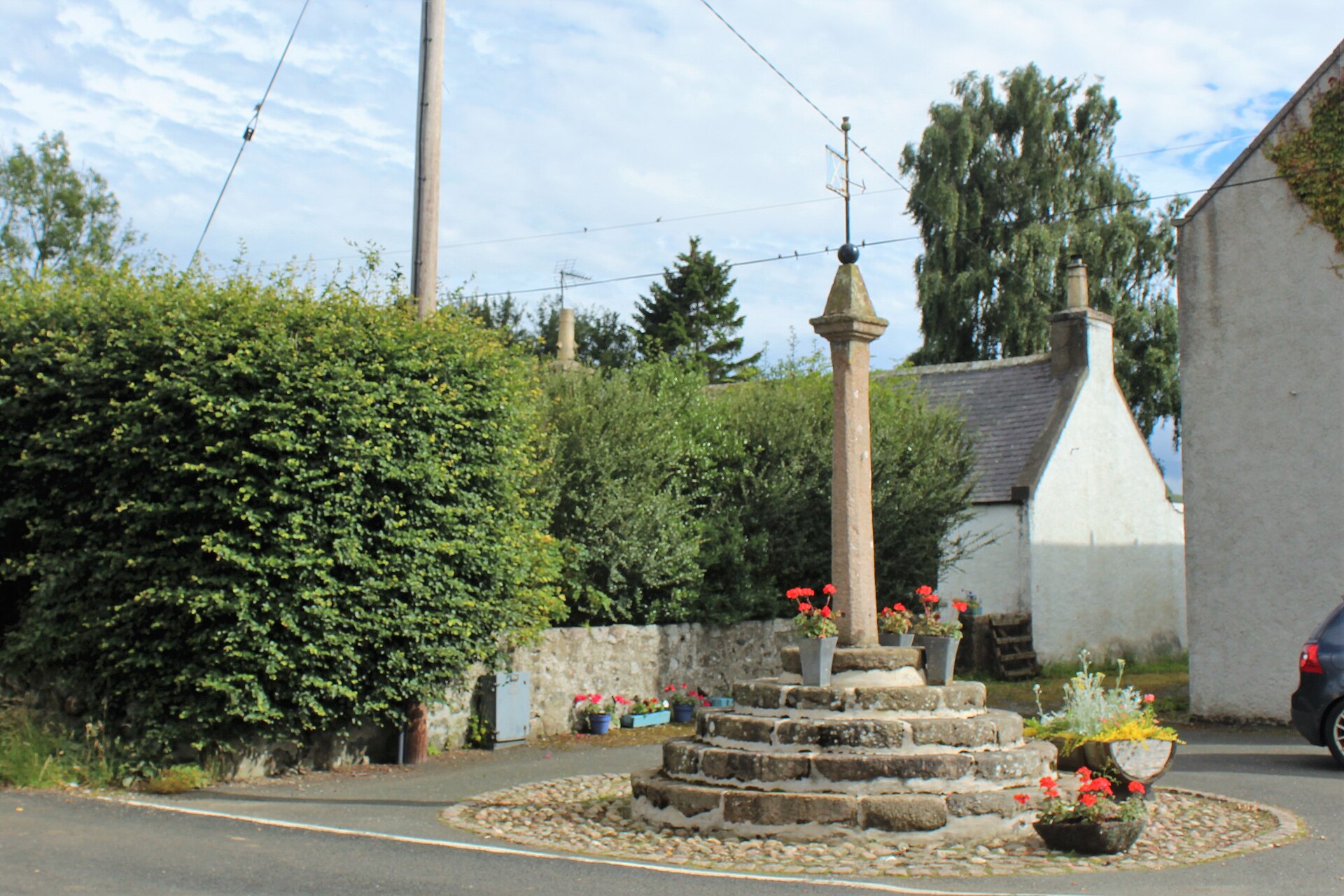
Minor monument · Medieval
Market Cross, Old Rayne
Aberdeenshire
A granite market cross on five circular steps preserves Old Rayne’s status as a burgh of barony created in 1492.
- Easy path
Questions people ask
- What is Inschfield stone circle?
- A ruined recumbent stone circle near Insch, Aberdeenshire, of which only three stones survive, including a broken recumbent stone.
- How big was the original stone circle?
- The complete ring is estimated to have measured about 27.4 metres (90 feet) across, based on the position of the surviving stones.
- Is Inschfield stone circle a protected site?
- Yes. Its remains are a scheduled monument, giving them legal protection as a nationally important archaeological site.
- How many stones remain today?
- Only three stones survive in position, including the broken recumbent stone; the rest of the original ring has been lost.
- Where is Inschfield stone circle?
- It stands near Insch, in Aberdeenshire, in north-east Scotland.
Sources
- Wikipedia: Inschfield stone circle
- Wikidata: Inschfield stone circle
- Historic Environment Scotland — Scheduled Monument record
Explore more: Sacred places · Prehistoric · Aberdeenshire
The Ancient Codex, in your pocket
Get the Pocket Codex app
Carry the directory with you — Inschfield stone circle and thousands of ancient places across Britain and Ireland, offline, wherever you roam.