
A granite market cross on five circular steps preserves Old Rayne’s status as a burgh of barony created in 1492.
An octagonal granite shaft stands on five circular steps at Old Rayne, finished with a wrought-iron finial. The monument is spare in comparison with Scotland’s more elaborate market crosses, but its raised form still gives the settlement a distinct civic marker.
The cross dates from the seventeenth century, while Old Rayne’s status as a burgh of barony reaches back to 1492. The surviving shaft therefore belongs to a later rebuilding or continuation of a market tradition that had already shaped the village for generations.
Its importance is less about ornament than continuity: a simple stone column keeps the memory of local trading rights and civic identity visible in the settlement that held them.
What follows is drawn from published sources, with each claim labelled by how firmly it is established.
The name
Rayne derives from the Scottish Gaelic raon, ‘a field of good ground’. The market cross belongs to Old Rayne, the historic settlement in the group of places that retain the Rayne name.
History
Old Rayne was created a burgh of barony in 1492, a status that provided the civic setting for its market cross. The surviving monument is not dated by an inscription, but Historic Environment Scotland identifies it as a seventeenth-century granite cross. Its survival keeps a physical marker of the settlement's trading and legal identity in the village long after the market arrangements that made such monuments necessary have disappeared.
The cross is built around an octagonal shaft rising from five circular steps. The raised platform sets the shaft apart from the road surface and makes the monument visible at close range, while the eight-sided granite column gives it a more deliberate profile than an ordinary boundary stone. A wrought-iron finial completes the upper part. Historic Environment Scotland lists this restrained composition as the basis of the building's special interest.
Trove's record preserves an 1845 description of the remains as shaft and steps rising to about twelve feet. It also notes an iron staple thought to have held jougs, an iron collar used as a public punishment device. The staple is a small but important detail: it connects the cross not only with market rights but with the public exercise of burgh authority, although the surviving record does not identify particular proceedings held here.
The cross has been recognised in survey records for more than a century. Ordnance Survey mapping marked it in 1959, and RCAHMS staff recorded it again in 2001 as a typical seventeenth-century market cross. Its designation as a Category A listed building reflects the rarity of an intact village cross retaining both shaft and stepped base, rather than later decorative restoration or a reconstructed modern replica.
Old Rayne's monument is most useful read as a civic object at human scale. The steps create a small raised stage; the shaft and finial mark it from the surrounding houses; and the surviving staple hints at the formal powers once attached to the site. Together these details show how a small burgh announced its market status in stone, even where the documentary record leaves the day-to-day business of the cross largely unrecorded.
Connections
-
Old Rayne burgh of barony
Old Rayne was created a burgh of barony in 1492, the civic status represented by the market cross.
-
Jougs
An iron staple recorded on the cross is thought to have held jougs, an iron collar used for public punishment. Although no particular proceedings are known, that surviving fitting connects the market cross with the burgh’s legal authority as well as its trading rights.
What to look for
-
Octagonal shaft
The granite shaft has an eight-sided section and rises from five circular steps to a wrought-iron finial. Together the deliberate geometry and raised base distinguish this civic monument from an ordinary boundary stone in the surrounding street.
Plan your visit
- Location
- 57.3441°N · 2.5422°W
- Access
- Visible from a public way
- Terrain
- Easy going
- Time needed
- About 20 minutes
- Best time
- Daylight is the most useful time to see the carved stonework from the public way.
- What survives
- The historic market cross survives as a visible civic monument in the settlement.
- Facilities
- No dedicated visitor facilities are identified in the cited listed-building source; use the settlement facilities nearby.
Opening & admission
Free to view from the public street or square; no admission arrangement is recorded.
- The cross is a civic street monument in the settlement centre and should be viewed from the public way.
Nearby places
Fortified place · Roman
Durno
Aberdeenshire
The largest Roman marching camp yet found north of the Antonine Wall, revealed only by a chance aerial photograph after two millennia buried beneat…
- Near Inverurie
- Easy path
Carved stone · Pictish & early medieval
Maiden Stone
Aberdeenshire
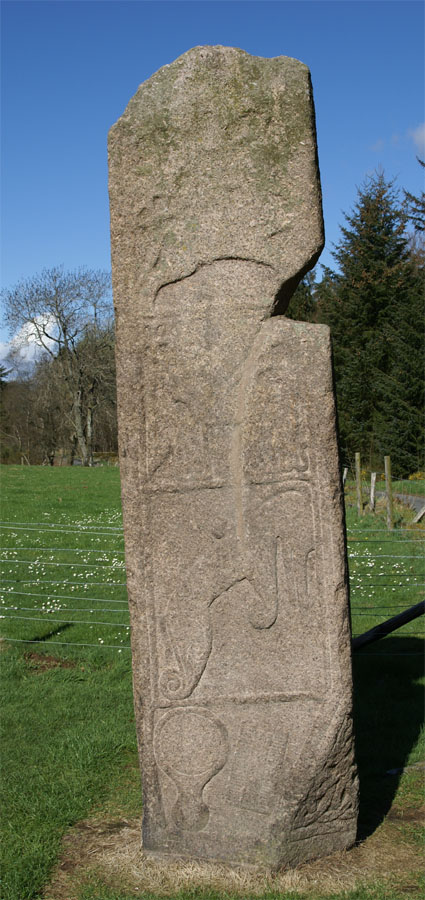
A slab of red granite standing some three metres high, carved on every face with Christian crosses, Pictish beasts and a legend of the Devil's forf…
- Near Inverurie
- Easy path

Sacred place · Prehistoric
Inschfield stone circle
Aberdeenshire
Only three stones survive from a ring that once spanned some 27 metres: a fragment of Aberdeenshire's rare recumbent stone circle tradition, now le…
- Near Insch
- Some walking

Fortified place · Iron Age
Bennachie
Aberdeenshire
Its summit fort at Mither Tap has stone ramparts with none of the vitrification seen at other Aberdeenshire hillforts, and the hill has been floate…
- Some walking
The setting
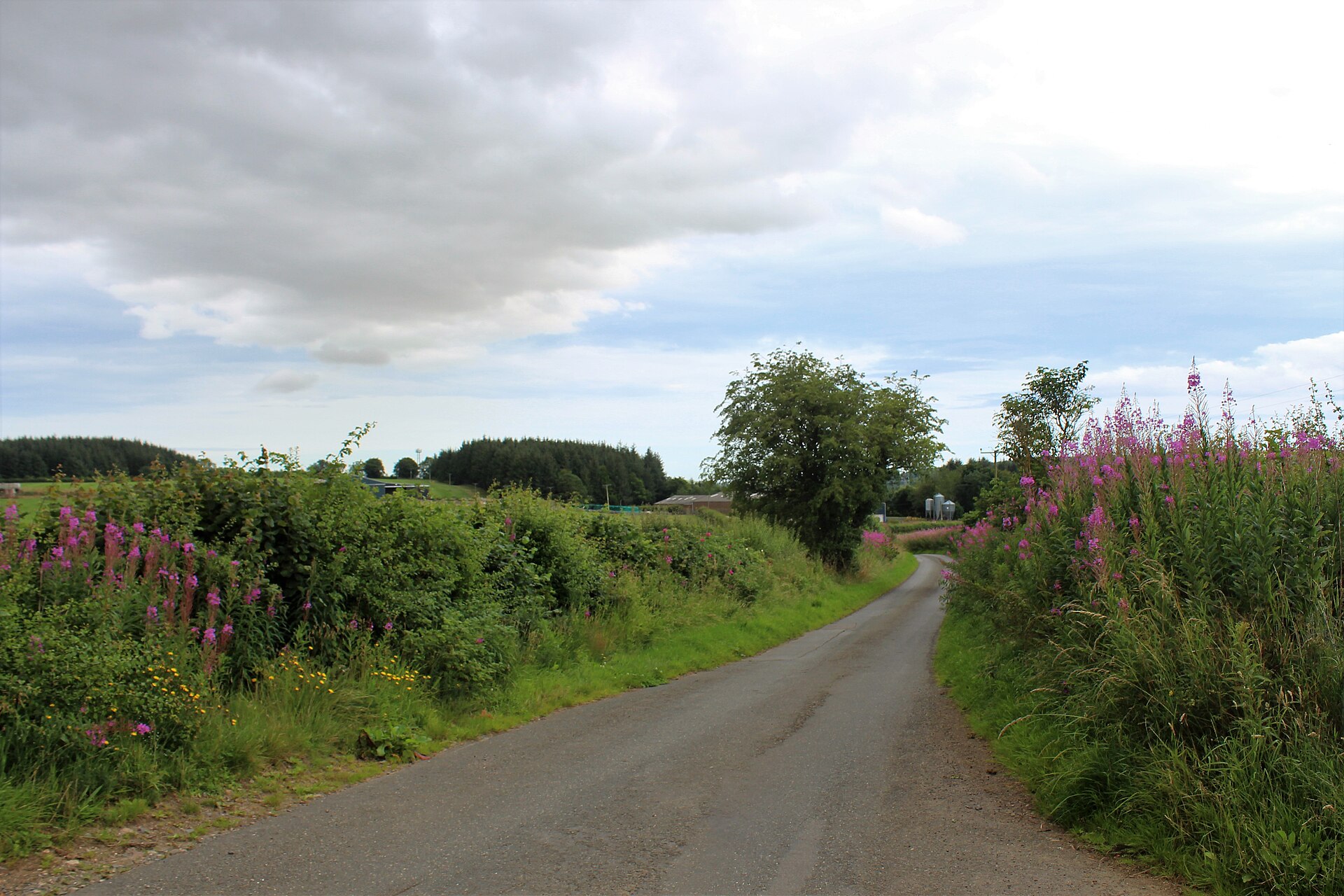
Road through Old Rayne, with the market cross visible beyond the houses.
Photo: David Purchase / Wikimedia Commons / CC BY-SA 2.0
Questions people ask
- When was Old Rayne made a burgh?
- Old Rayne was created a burgh of barony in 1492.
- When does the cross date from?
- The present granite cross dates from the seventeenth century.
- What survives?
- An octagonal granite shaft stands on five circular steps with a wrought-iron finial.
Sources
The Ancient Codex, in your pocket
Get the Pocket Codex app
Carry the directory with you — Market Cross, Old Rayne and thousands of ancient places across Britain and Ireland, offline, wherever you roam.