
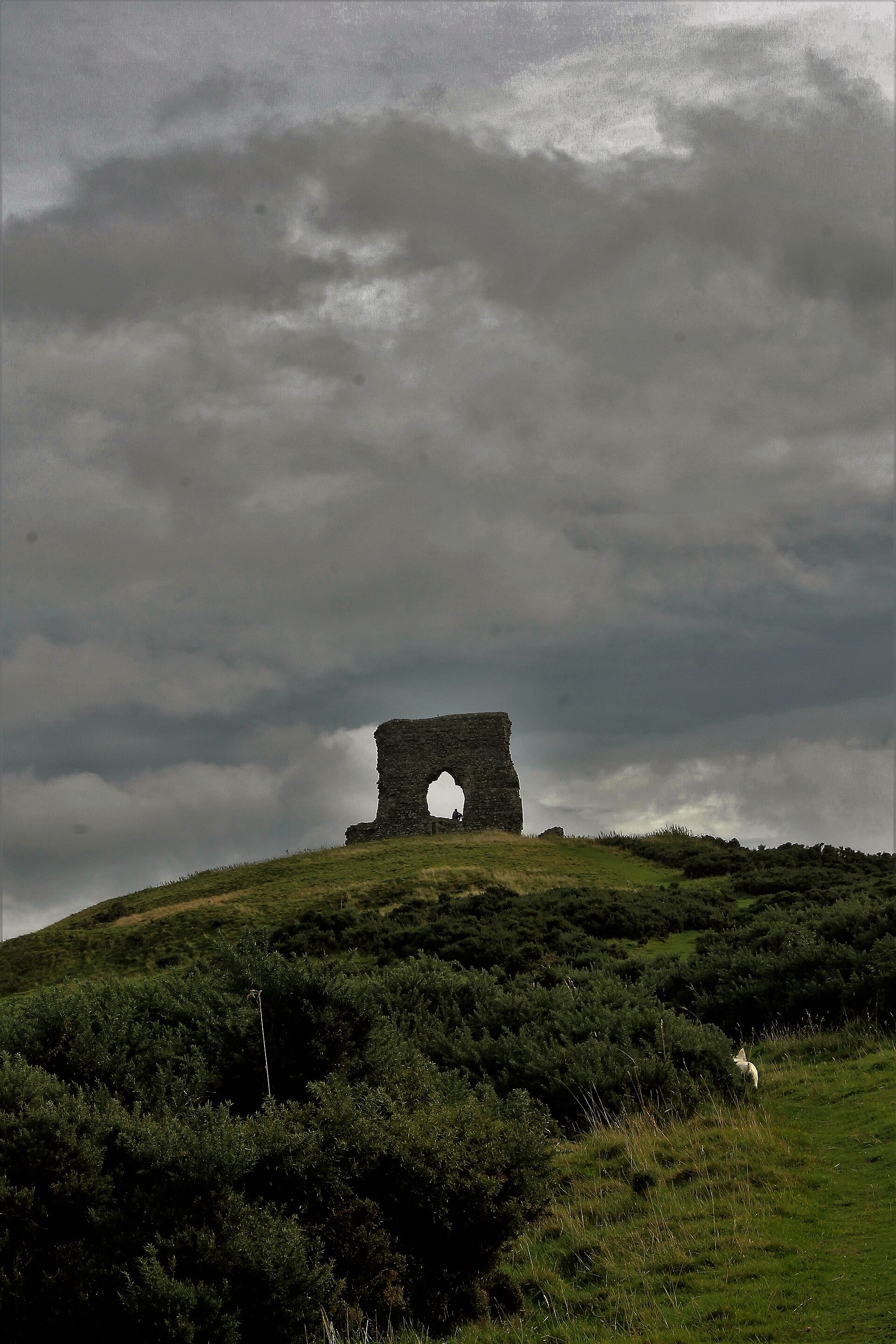
Its walls were quarried from a vitrified hillfort — an enclosure of the Iron Age, the centuries before Rome from about 800 BC, whose ramparts were burnt until the stone fused and ran like glass. It had stood a thousand years before the tower rose from it, and some historians rank the result among Scotland's earliest.
A jagged stone shell crowns a low hill above Insch in Aberdeenshire, its broken walls framing wide views across the surrounding farmland in every direction. What remains is the ruin of a tower house raised around 1260, its builders drawing much of their stone from an earlier structure that had already stood on the same summit for well over a thousand years.
That earlier structure was a hillfort, its stone ramparts vitrified — fused into a glassy mass by intense heat, whether from deliberate burning or destruction in conflict — sometime around 250 BC. When the medieval builders arrived they did not clear the hilltop of its past; they quarried into it and reused what they found, so that the tower’s walls carry stone first shaped by Iron Age hands.
Little survives above the outer walls today, but the footprint remains clear enough to show a substantial building, some 15 by 12.5 metres with walls up to 1.9 metres thick, that likely rose through several storeys above a first-floor hall.
What follows is drawn from published sources, with each claim labelled by how firmly it is established.
History
Around 250 BC a hillfort was raised on the summit above what is now Insch, its ramparts built from stone that was later vitrified — fused into a glassy mass by intense heat, whether from deliberate ritual burning or destruction during conflict. Excavation by archaeologist Murray Cook has shown that an Iron Age community lived and worked within these defences long before any castle stood on the hill.
By around 1260 the hilltop had a new purpose. Builders raising a stone tower house on the summit did not clear away the remains of the older fort but quarried directly into it, reusing stone already shaped by earlier hands. The result was a substantial tower some 15 by 12.5 metres, with walls up to 1.9 metres thick enclosing a first-floor hall and several storeys above it.
The Insch Connection Museum's research also links the castle to the reign of Sir John de Balliol, King of Scots between 1292 and 1296, and highlights Dunnideer as a possible contender for the earliest tower house built on the Scottish mainland. Documentary evidence for such an early date is thin, but the scale of the surviving walls keeps the claim plausible to historians studying the site.
Centuries of exposure reduced the tower to the roofless stone shell that survives today, its walls still standing high enough to show the outline of the original building. The ruin is now a scheduled monument in the care of Historic Environment Scotland, which manages the site to protect what remains of both the medieval castle and the Iron Age fort beneath it.
In 2024 the Insch Connection Museum unveiled a 1:150 scale model of the castle as it may have looked in the 16th century, built by model-maker Clive Metcalfe from research by historian Dr Colin Harris. Named for the exhibition 'The Castle of Dunnydure', the model became the centrepiece of a display exploring the site's medieval life and its claimed place among Scotland's earliest tower houses.
The hill remains open to the public and rewards the climb with wide views across the surrounding Aberdeenshire farmland. The Insch Connection Museum continues to campaign for a permanent on-site facility to display artefacts recovered from the castle and its earlier fort, arguing that the finds deserve to be seen close to where they were found.
People
-
Murray Cook
Archaeologist who excavated the hillfort, revealing the Iron Age settlement later reused as the foundation for the medieval tower house.
-
Dr Colin Harris
Historian whose research informed the Insch Connection Museum's 2024 scale-model reconstruction of the castle.
-
Clive Metcalfe
Model-maker who built the museum's 1:150 scale reconstruction of the castle unveiled in 2024.
-
Sir John de Balliol
King of Scots (1292–1296) traditionally linked to the castle's early history by museum research.
Connections
-
Insch Connection Museum, Insch
Local museum that researched and unveiled a 2024 scale model of the castle and campaigns for an on-site display facility.
Discovery & excavation
Archaeologist Murray Cook's excavation of the hillfort uncovered evidence of an Iron Age settlement that was later reused as the base for the medieval tower house, showing continuous reuse of the same hilltop across more than a thousand years.
In culture
-
The Castle of Dunnydure exhibition
A 2024 Insch Connection Museum exhibition built around a 1:150 scale model of the castle, exploring its possible 16th-century appearance and its claimed place among Scotland's earliest tower houses.
What to look for
-
The tower's massive walls
Sections of walling up to 1.9 metres thick survive, hinting at the scale of a building that once measured some 15 by 12.5 metres and rose through several storeys.
-
Reused hillfort stone
Close inspection of the tower's masonry shows stone quarried from the earlier hillfort, some of it still bearing the fused, glassy texture left by vitrification.
-
Panoramic summit views
The hill rewards the climb with wide views across the surrounding Aberdeenshire farmland in every direction.
What is said
Folklore and tradition, recorded as what is said — not as established fact.
-
Gregory’s Wall
Local tradition identifies the surviving wall of the tower as Gregory’s Wall and attributes the earlier fort to King Gregory, who was said to have used the hill as a hunting seat. Historic record descriptions stress that this early history is conjectural rather than established fact.
Plan your visit
- Location
- 57.3422°N · 2.6455°W
- Access
- Open access
- Terrain
- Moderate walking
- Time needed
- About 60 minutes
Opening & admission
Free to view; check Historic Environment Scotland's site for current visitor information.
- Open access to the ruined tower on a hilltop site with panoramic views, so some uphill walking is involved.
Nearby places
Sacred place · Prehistoric
Dunnideer stone circle
Aberdeenshire
One of more than seventy recumbent stone circles once raised across lowland Aberdeenshire, its three surviving stones stand at the foot of a hillto…
- Near Insch
- Some walking

Sacred place · Prehistoric
Inschfield stone circle
Aberdeenshire
Only three stones survive from a ring that once spanned some 27 metres: a fragment of Aberdeenshire's rare recumbent stone circle tradition, now le…
- Near Insch
- Some walking
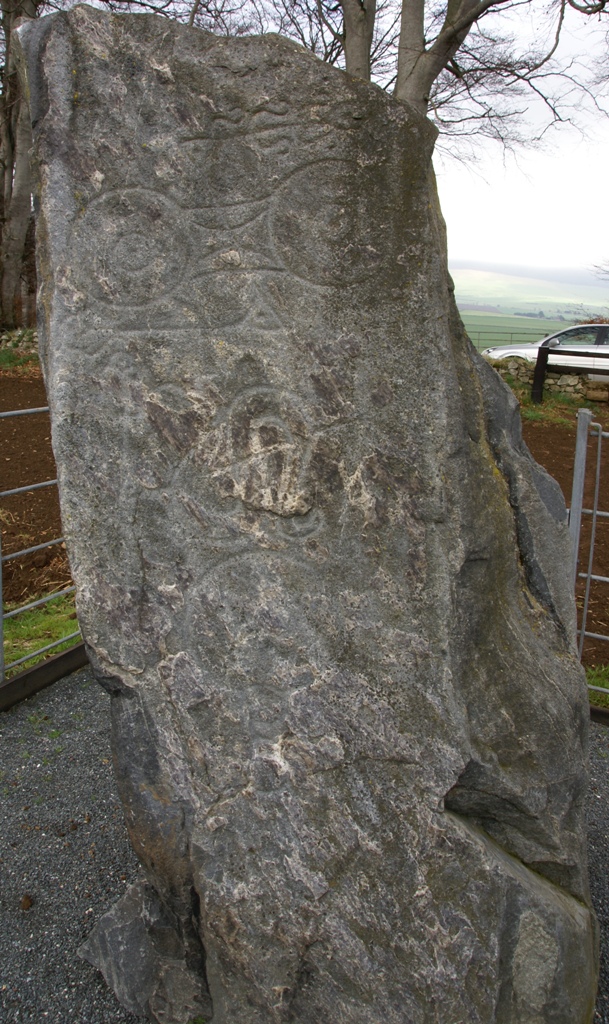
Carved stone · Pictish & early medieval
Picardy Symbol Stone
Aberdeenshire
A double-disc, a serpent and a mirror cut into whinstone around AD 600: three of the clearest Pictish (of the Picts, the people of northern and eas…
- Near Insch
- Easy path
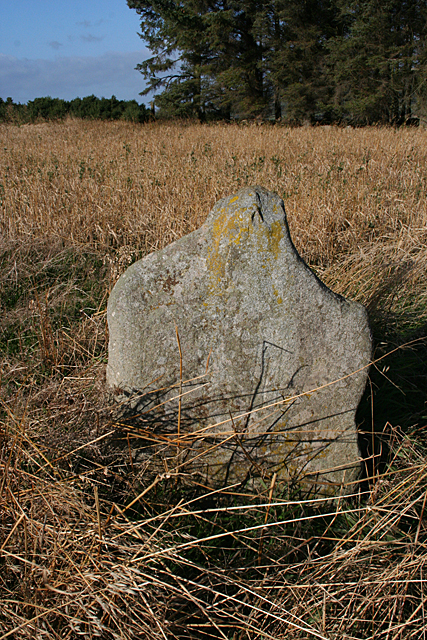
Carved stone · Pictish & early medieval
Ardlair Stone
Aberdeenshire
Carved with the Pictish beast, a tuning fork and a mirror, the stone ties this quiet Aberdeenshire field into the still-unresolved symbol tradition…
- Near Kennethmont
- Easy path
Questions people ask
- What is Dunnideer Castle?
- A ruined 13th-century tower house near Insch, Aberdeenshire, built around 1260 on the site of a much older, vitrified Iron Age hillfort.
- Why was the earlier hillfort's stone vitrified?
- The exact cause is uncertain — vitrification could result from deliberate ritual burning or from a fort's ramparts being destroyed by fire, fusing the stone into a glassy mass.
- Could Dunnideer be Scotland's oldest tower house?
- Some historians and the Insch Connection Museum regard it as a strong candidate for the earliest tower house on the Scottish mainland, though this is not definitively proven.
- Is Dunnideer Castle open to visitors?
- Yes — the hilltop site is open to the public and offers panoramic views across the surrounding Aberdeenshire countryside, though the tower itself is a roofless ruin.
- Who excavated the hillfort beneath the castle?
- Archaeologist Murray Cook excavated the site, revealing an Iron Age settlement that was later reused as the foundation for the medieval tower house.
Sources
- Wikipedia: Dunnideer Castle
- Wikidata: Dunnideer Castle
- Historic Environment Scotland
- Insch Connection Museum
Explore more: Fortified places · Iron Age · Aberdeenshire
The Ancient Codex, in your pocket
Get the Pocket Codex app
Carry the directory with you — Dunnideer Castle and thousands of ancient places across Britain and Ireland, offline, wherever you roam.