One of only a handful of Aberdeenshire recumbent circles with every stone still standing, its granite ring encloses a cairn (a mound of piled stones, often covering a burial) and stands beside a cemetery of over thirty cremation burials.
Split cleanly along its length by a natural crack in the granite, the great recumbent stone at the heart of this circle now looks like two slabs standing one behind the other rather than the single block it once was. It lies low along the south-facing arc of the ring, flanked by two tall pillars that were themselves found fallen and had to be reset into their sockets, a small clue to how much of the monument’s completeness is owed to twentieth-century repair rather than untouched survival.
Around them stands a full set of eight more orthostats, making this one of only a handful of recumbent stone circles in Aberdeenshire where every stone of the original design — the recumbent, its flankers, and the full ring — remains in place. Inside, a low cairn edged by dozens of graded kerbstones holds a shallow court at its centre, cleared of infill stones in the late twentieth century to reveal a shape closer to what excavators believe it once had.
A short distance to the east lies something the circle’s builders may never have set out to create alongside it: a sunken enclosure where cremation pyres burned for generations, leaving the remains of dozens of people packed into urns and pits. The two sites, ring and cemetery, sit close enough in date and space that they are now read as parts of a single burial landscape on the ridge above the village of Daviot.
What follows is drawn from published sources, with each claim labelled by how firmly it is established.
History
The granite ring and its recumbent setting were raised in the early Bronze Age, though pottery recovered from beneath and around the monument includes sherds reaching back to the Early Neolithic, showing that the ridge above Daviot had drawn people to it long before the circle itself took shape. Around 1000 BCE a low ring cairn may have been briefly built within the stones, edged by thirty-eight graduated kerbstones rising in size towards the recumbent.
In 1901 Frederick Coles produced the first detailed survey of the site, recording the east flanker and four orthostats lying fallen on the ground with only the upper portions of the split recumbent visible above the turf. Coles concluded that the recumbent had always existed as two separate slabs rather than one stone broken apart, arguing that their facing surfaces showed none of the correspondence needed to fit them back together.
In 1918 James Ritchie re-examined the stone and reached the opposite conclusion, proposing that the recumbent had originally been a single block that later split along a natural weakness in the granite. During his survey Ritchie also identified the cupmarks carved into the eastern flanker and two of the eastern orthostats, adding a rock-art dimension to a monument studied until then mainly for its architecture.
The circle was scheduled as an ancient monument in 1925 and taken into state guardianship in 1933; in 1934 Howard Kilbride-Jones led a major excavation on behalf of HM Office of Works. Stripping back up to 0.6 metres of soil, his team recovered cremated bone and over 100 sherds of probable late Bronze Age pottery, uncovered the buried kerbstones, and exposed a pit at the cairn's centre before resetting the stones to restore the ring's form.
Towards the end of the 1934 season, at the eastern edge of his trenches, Kilbride-Jones uncovered a small stone cist holding an incense cup and cremated human bone. The following year he found the cist on the edge of a sunken enclosure some 10 metres across, later reinterpreted as a burnt timber wall packed with stone, within which pyres had left cremated remains of at least 31 people in twelve urns and thirteen pits, dated broadly to between 1000 and 2000 BCE.
In 1989 the stones filling the centre of the ring cairn were removed and the area re-turfed, exposing an internal court some 4.3 metres across. The archaeoastronomer Clive Ruggles later measured the recumbent setting's orientation at an azimuth of between 196 and 202 degrees from the circle's centre, and because the cremated deposits were lifted during excavation, they can no longer be located, so no further dating of the cemetery has since been possible.
People
-
Frederick Coles
Made the first detailed antiquarian record of the circle in 1901, arguing the split recumbent had always been two separate slabs.
-
James Ritchie
Reassessed the recumbent in 1918, concluding it had split from a single block, and identified the cupmarks on the stones.
-
Howard Kilbride-Jones
Led the major 1934-35 excavation for HM Office of Works that uncovered the kerb cairn and the cremation cemetery.
-
Adam Welfare
Produced the modern reassessment of the site's stones and cairn published in Great Crowns of Stone (2011).
-
Clive Ruggles
Archaeoastronomer who measured and published the orientation of the recumbent setting.
Cultural influences
-
A regional recumbent-circle tradition
Loanhead of Daviot belongs to the north-east Scottish tradition of recumbent stone circles, combining a south-facing recumbent with flanking stones and a surrounding ring. Its ring cairn and open central court show how that shared monument form was adapted for burial and ceremonial use at this particular site.
Connections
-
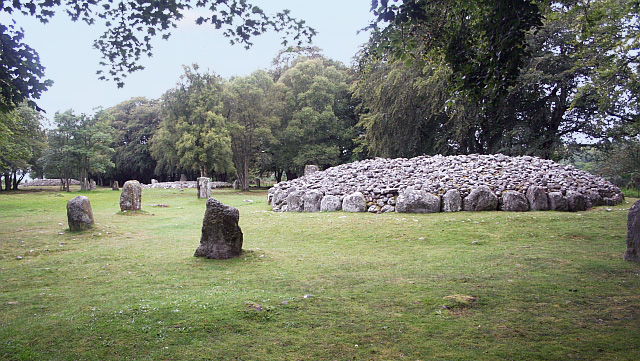
Photo: Bob Embleton / Wikimedia Commons / CC BY-SA 2.0 Recumbent stone circles such as this one may represent a development from the earlier Clava cairn tradition found nearby.
-
Axial stone circles of southwest Ireland
Described as the most closely similar monument type outside Scotland, sharing the recumbent-and-flanker layout, and possibly influenced by the Aberdeenshire design.
-
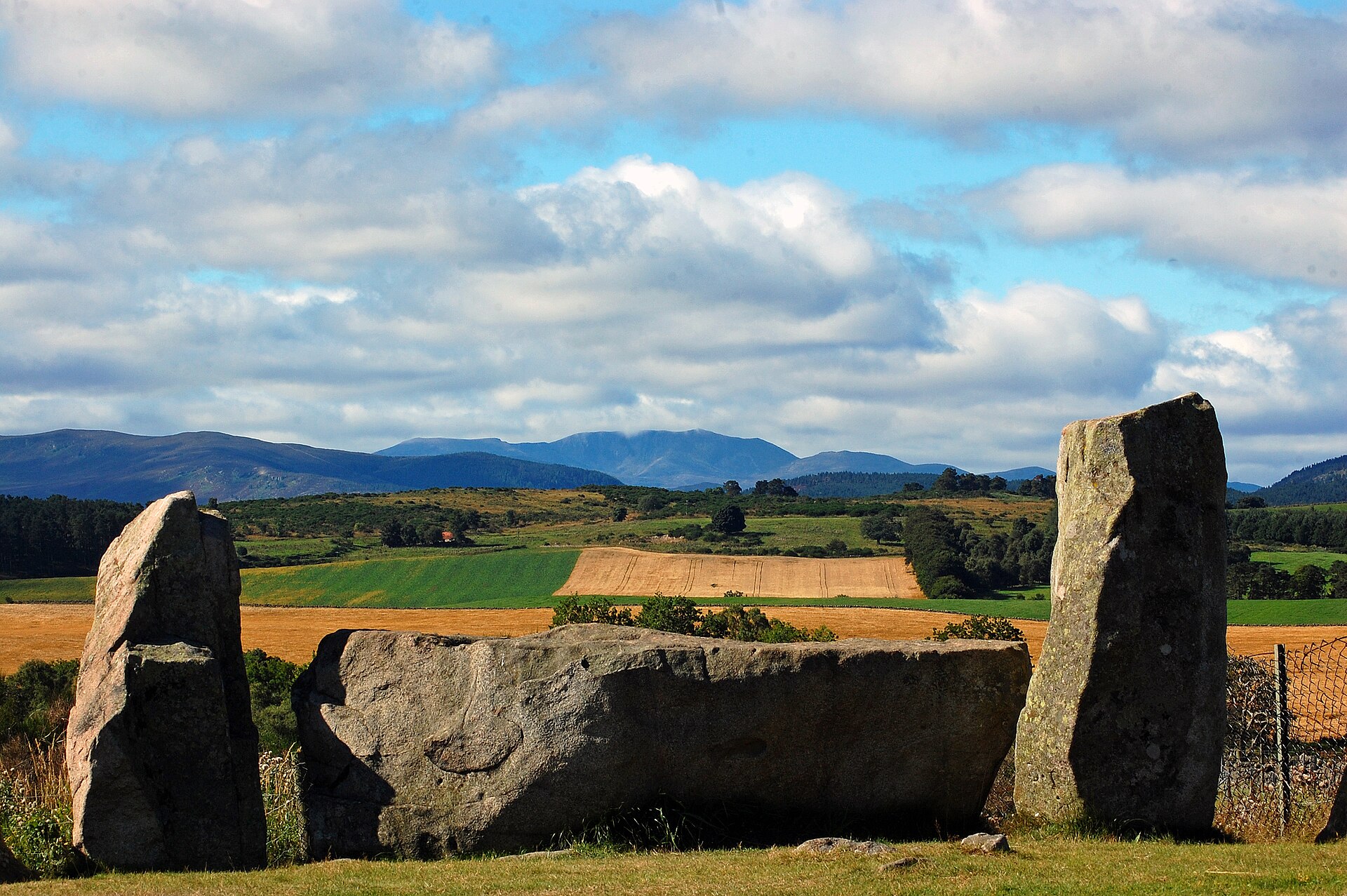
Photo: Silkie / Wikimedia Commons / CC BY-SA 3.0 Shares the feature of the kerbstone line becoming double behind the recumbent setting, the same arrangement seen at Loanhead of Daviot.
-
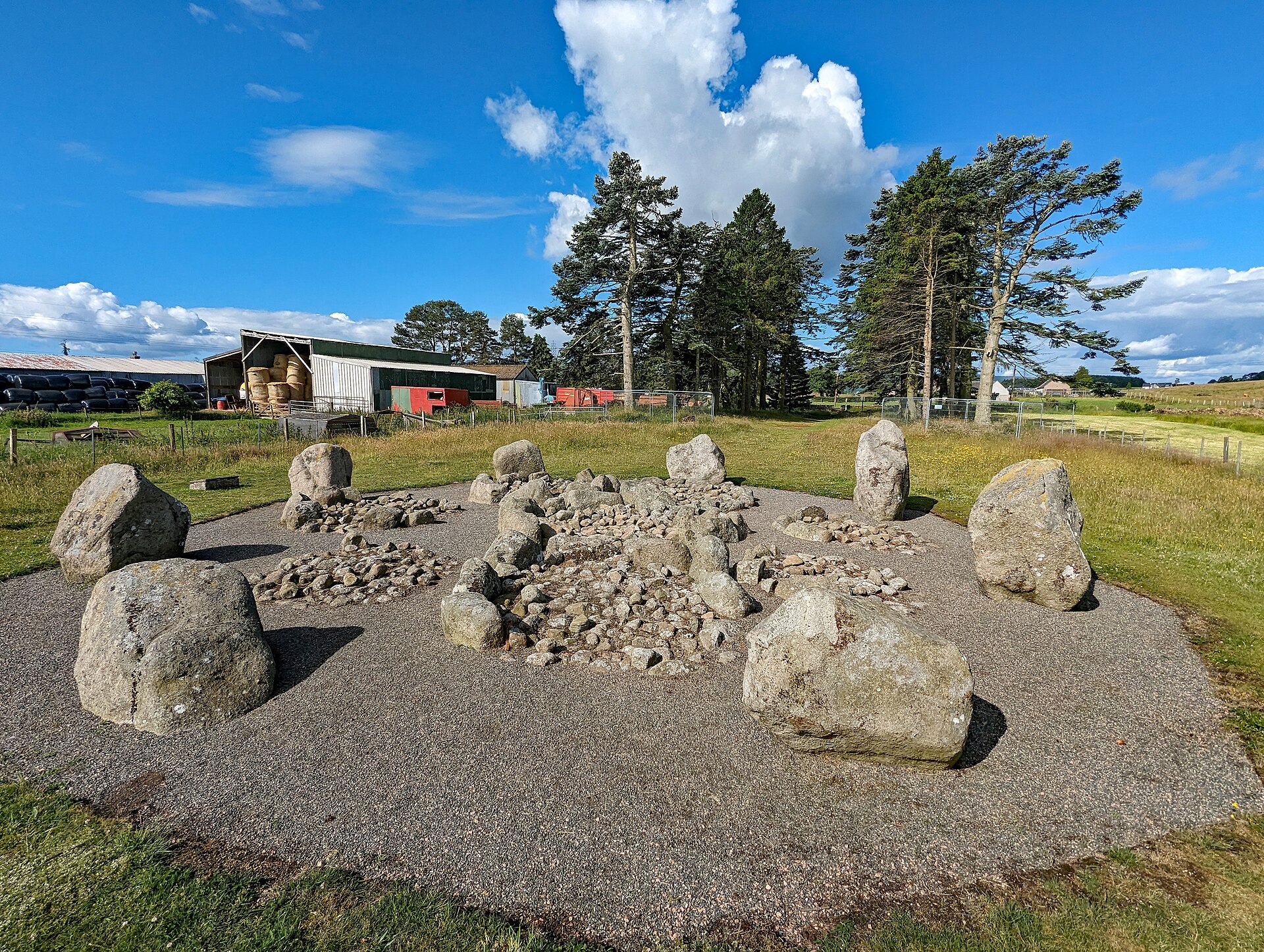
Photo: PaulT (Gunther Tschuch) / Wikimedia Commons / CC BY-SA 4.0 Excavated by Howard Kilbride-Jones under the same 1934-35 commission for HM Office of Works that covered Loanhead of Daviot.
Discovery & excavation
Investigation unfolded across three main phases: Frederick Coles's 1901 antiquarian survey, James Ritchie's 1918 study of the recumbent and its cupmarks, and Howard Kilbride-Jones's 1934-35 excavation for HM Office of Works, which uncovered the kerb cairn, the pit at its centre, and the unexpected cremation cemetery beyond the ring. The completeness of the stones seen today owes much to restoration carried out during and after that campaign, with further conservation clearing the cairn's centre in 1989.
What to look for
-
The split recumbent stone
The great recumbent block lies along the south-south-west arc of the ring, split lengthways along a natural weakness into two parallel slabs; the rear slab, on the inside of the circle, stands about 1.8 metres high.
-
The flanking pillars
Two tall flankers stand either side of the recumbent, both partly restored after being found fallen — the western flanker's top was replaced during 1934-35 restoration and the eastern flanker was reset into its original socket.
-
Cupmarks on the stones
The eastern flanker carries a single cupmark on its inner face, and the two neighbouring orthostats bear twelve and two shallow cupmarks respectively, evidence of rock art added to the stones after they were raised.
-
The kerbed ring cairn
Thirty-eight kerbstones, growing larger towards the recumbent, edge a low polygonal cairn at the circle's heart, with an internal court about 4.3 metres across exposed when the cairn's centre was cleared in 1989.
-
The graded orthostats
The eight orthostats vary in height, with the eastern stones stepping down from south to north and the western stones, set on sloping ground, appearing graded even though they are close in actual height.
Plan your visit
- Location
- 57.3494°N · 2.4211°W
- Nearest settlement
- Daviot
- Access
- Open access
- Terrain
- Easy going
- Parking
- Parking available nearby — see the official getting-here page.
- Start point
- Loanhead Stone Circle · Near Daviot, 5m north west of Inverurie off the A920.
- Time needed
- About 30 minutes
- Best time
- The circle is open year-round. Visit in daylight with strong footwear, as recommended by Historic Environment Scotland.
- What survives
- Loanhead is an open-air recumbent stone circle in the rolling hills above Oldmeldrum, with a ring cairn and the remains of an adjacent enclosed cremation cemetery.
- Facilities
- No dedicated visitor facilities are identified on the official getting-here information.
- Start point
- Loanhead Stone Circle car park — Small dedicated car park beside the circle near Daviot, about 5 miles north-west of Inverurie off the A920.
Opening & admission
Free entry
Nearby places
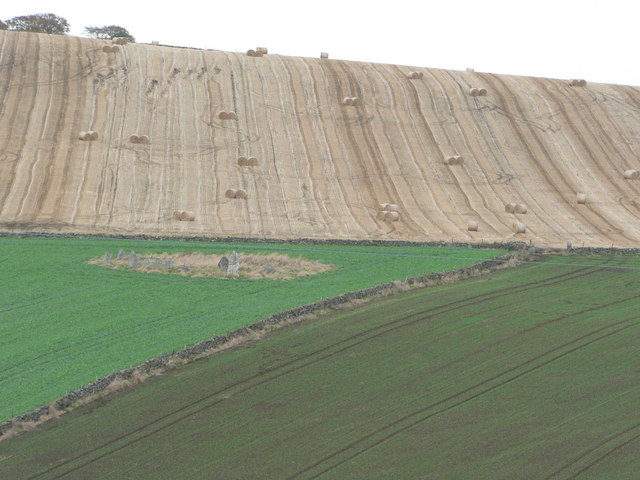
Sacred place · Prehistoric
Balquhain
Aberdeenshire
A rounded hump on its ten-tonne recumbent stone echoes the outline of Mither Tap behind it, and 1980s survey work found its flanking stones deliber…
- Some walking
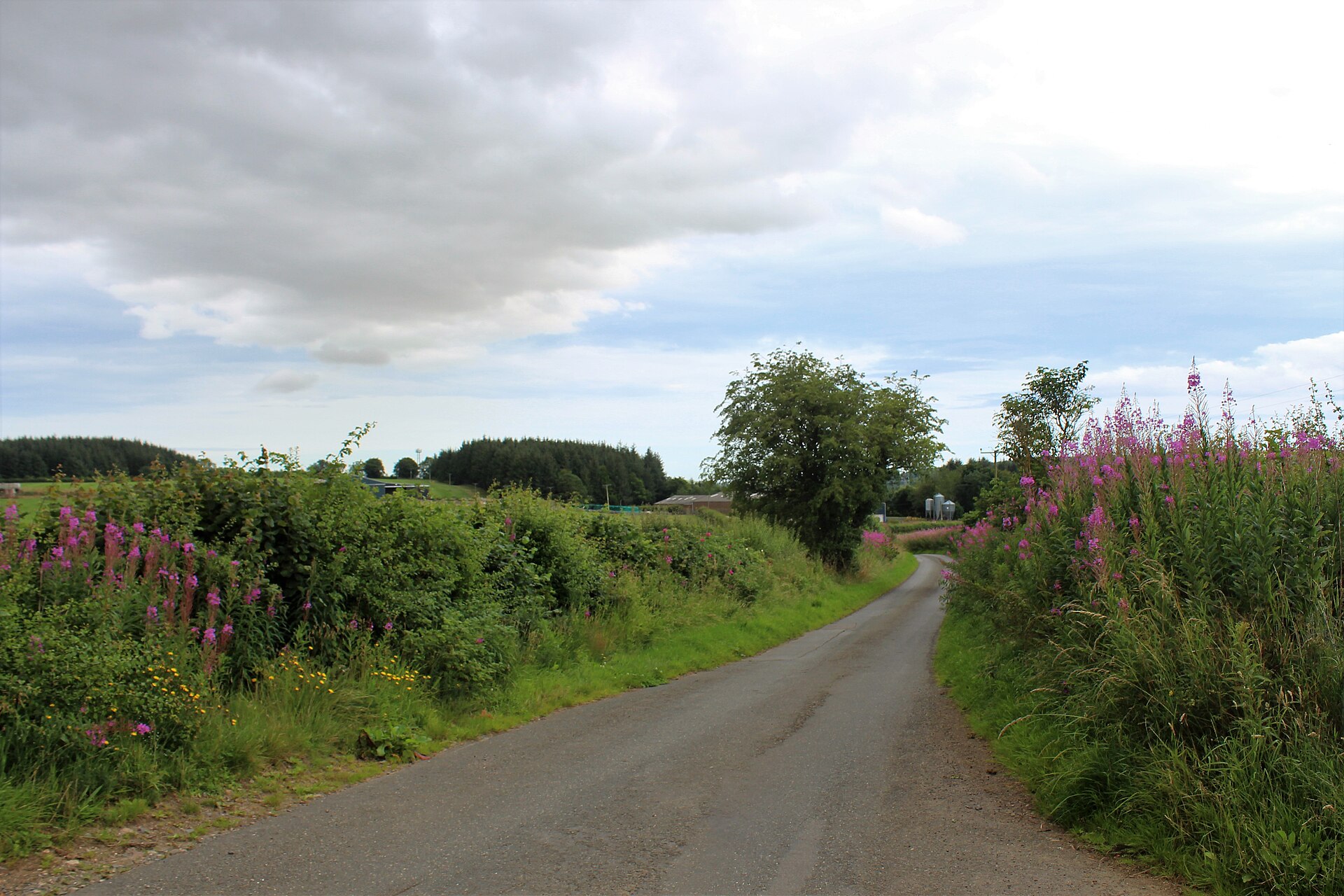
Fortified place · Roman
Durno
Aberdeenshire
The largest Roman marching camp yet found north of the Antonine Wall, revealed only by a chance aerial photograph after two millennia buried beneat…
- Near Inverurie
- Easy path
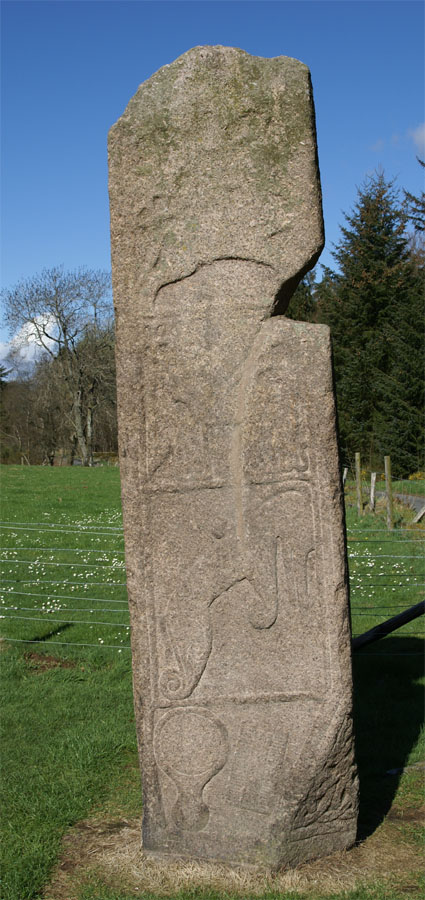
Carved stone · Pictish & early medieval
Maiden Stone
Aberdeenshire
A slab of red granite standing some three metres high, carved on every face with Christian crosses, Pictish beasts and a legend of the Devil's forf…
- Near Inverurie
- Easy path
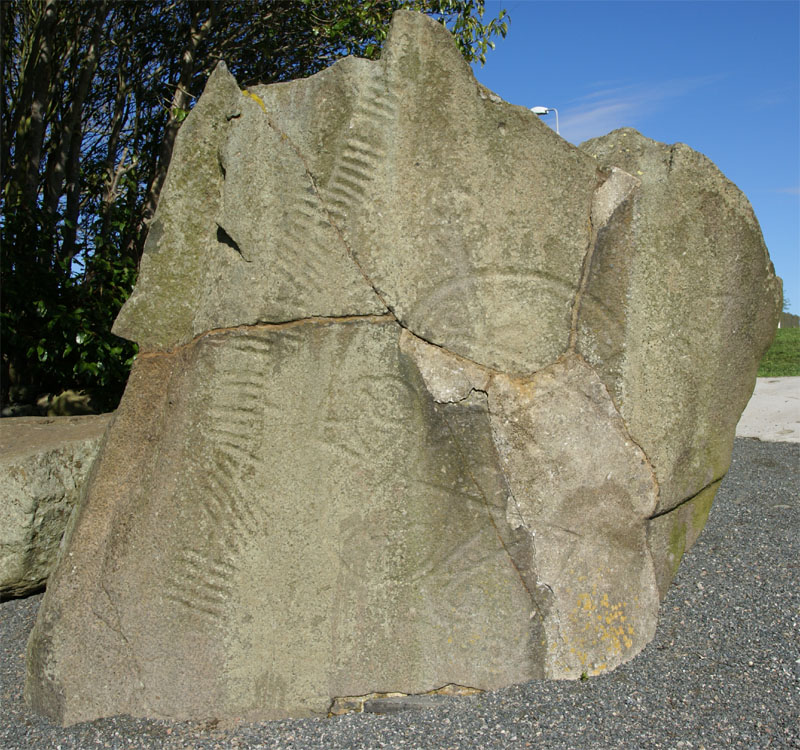
Carved stone · Pictish & early medieval
Brandsbutt Stone
Aberdeenshire
Brandsbutt preserves the symbols of the Picts, people of northern and eastern Scotland from about AD 300 to 900, beside an Ogham inscription still…
- Near Inverurie
- 1 min walk from car park
- Easy path
Questions people ask
- How old is Loanhead of Daviot stone circle?
- The granite ring and recumbent setting were raised in the early Bronze Age, though pottery from the site includes Early Neolithic sherds, pointing to earlier activity on the ridge.
- What makes this circle unusual among recumbent stone circles?
- It is one of very few examples with every stone still in place — the recumbent, both flankers, and all eight orthostats — around a ring some 21 metres across.
- What is the cremation cemetery beside the circle?
- An enclosure roughly 10 metres across just east of the ring, where pyres left cremated remains of at least 31 people in twelve urns and thirteen pits, dated broadly to 1000-2000 BCE.
- Who excavated the site?
- Howard Kilbride-Jones led the main excavation in 1934-35 for HM Office of Works, following earlier surveys by Frederick Coles in 1901 and James Ritchie in 1918.
- Is the circle as seen today original?
- Only in part — the western flanker's top was rebuilt during 1934-35 restoration and the cairn's centre was cleared in 1989, so its present form reflects twentieth-century conservation work.
Sources
- Wikipedia: Loanhead of Daviot stone circle
- Historic Environment Scotland — Scheduled Monument SM90202
- Historic Environment Scotland — Canmore: Loanhead of Daviot Recumbent Stone Circle
- Kilbride-Jones, H. (1935). An Account of the Excavation of the Stone Circle at Loanhead of Daviot
- Kilbride-Jones, H. (1936). Late Bronze Age cemetery: Loanhead of Daviot, Aberdeenshire
- Welfare, Adam (2011). Great Crowns of Stone: The Recumbent Stone Circles of Scotland
Explore more: Sacred places · Prehistoric · Aberdeenshire
The Ancient Codex, in your pocket
Get the Pocket Codex app
Carry the directory with you — Loanhead of Daviot Stone Circle and thousands of ancient places across Britain and Ireland, offline, wherever you roam.