Each of its eight cairns is fenced by its own ring of kerbstones and holds cremated remains, making the circle a burial ground built inside a ring of stones rather than beside one.
Eight squat stones of red granite stand at even spacing around a gravel shelf near Echt, and inside their circle sit eight low mounds, each one hemmed in by its own small ring of kerbstones. It is an arrangement found nowhere else in quite this form: rather than a single central feature, the ring encloses a cluster of individually bordered burial cairns, the middle one marked out with a double ring of stones and the rest with single rings.
The monument, also known as the Standing Stones of Echt, was raised in the second millennium BC on a dry gravel ridge that ran out toward Leuchar Moss, at a time when the land around it was wet bog rather than open farmland. Builders cleared the ground, burned brushwood across it, and set the outer stones with their bases shaped to points for stability, before turning to the work at the centre — burning wood within rings of stone, adding cremated human bone to several of them, then packing them with smaller stones to raise the cairns still visible today.
Centuries of acidic peat have since eaten into the lower edges of the standing stones, and a 2004 survey found that some of them carry cup marks, small carved hollows whose purpose is uncertain but which appear on stone monuments across Scotland. An 1820 account claimed a further nine circles once stood close by, though a 1934 excavation found no trace that they had existed.
What follows is drawn from published sources, with each claim labelled by how firmly it is established.
History
During the second millennium BC, when the land around Echt lay under wet bog rather than today's farmland, builders chose a dry gravel ridge running toward Leuchar Moss as the site for a stone circle. They first cleared and levelled the ground, then burned piles of willow twigs across it, a deliberate act of preparation before a single stone was raised.
The eight outer stones, all of red granite, were dragged from higher ground some distance away and set at roughly equal intervals to enclose a ring 10.2 metres (33 feet) across. Their bases had been shaped to points so they would sit more firmly in the loose gravel, and centuries of acidic peat have since eaten into their lower portions, eroding them where they meet the ground.
Within the rings of stone at the centre of the circle, oak and hazel wood were burned, leaving charcoal in the ashes. Cremated human bone was placed among the burnt remains in five of the eight rings, and the rings were then packed with smaller stones to build the low kerbed cairns that still stand today, each bounded by its own ring of kerbstones — a double ring around the central cairn, single rings around the rest.
In 1820 the antiquarian James Logan recorded that the circle was not alone, writing that a short distance to the southwest lay nine further circles of similar size to the small rings within Cullerlie's enclosure. His account suggested the site once belonged to a wider group of monuments rather than standing in isolation. In 1934 H. E. Kilbride-Jones excavated the site on behalf of the Ministry of Works, uncovering the sequence of clearing, burning, stone-setting and cremation burial that gave the circle its final form. The dig also tested Logan's report of nearby satellite circles, but found no physical trace that they had ever existed.
A survey carried out in 2004 examined the stones more closely and identified cup marks — small carved hollows — on several of them that had gone unnoticed for generations, adding a further layer of prehistoric carving to a monument already recognised as unusual for combining a stone circle with kerbed burial cairns inside it.
People
-
H. E. Kilbride-Jones
Excavated the circle in 1934 on behalf of the Ministry of Works, uncovering its construction sequence and burial deposits.
-
James Logan
Antiquarian who in 1820 recorded reports of nine further stone circles said to stand near Cullerlie.
Cultural influences
-
Recumbent stone-circle tradition
Cullerlie is regarded as a later development from Aberdeenshire’s recumbent stone-circle tradition, while its ring of individual kerbed cairns makes it an unusual variation within that regional monument landscape.
Connections
-
Aberdeenshire's recumbent stone circles
Cullerlie's circle is regarded as a later development from this earlier regional tradition, though its kerbed cairns inside the ring make it unique among them.
-
Leuchar Moss
The circle sits on the end of a dry gravel ridge running toward this moss, the higher ground that made the site buildable amid surrounding bog.
-
Ministry of Works
Commissioned H. E. Kilbride-Jones's 1934 excavation of the site.
Discovery & excavation
The circle was excavated in 1934 by H. E. Kilbride-Jones on behalf of the Ministry of Works. The dig showed that the ground had been cleared, levelled and burned before the stones were raised, that oak and hazel had been burned within the inner rings, and that cremated human bone had been added to five of them before the rings were filled with stone to form the visible cairns. A 2004 survey later found cup marks carved on several of the outer stones.
What to look for
-
The eight kerbed cairns
Each of the eight small cairns inside the circle is bounded by its own ring of kerbstones; the central cairn has a double ring, the others a single ring, and all but one have eleven ringstones, the exception having nine.
-
Cup-marked stones
Several of the outer granite stones carry cup marks, small carved hollows identified during a 2004 survey after going unnoticed for generations.
-
The tallest stone
The tallest of the eight outer stones marks the north side of the circle; the stones range in height from 1.09 m (3.6 ft) to 1.80 m (5.9 ft).
-
Eroded stone bases
The bases of the outer stones were originally shaped into points to hold them steady in the gravel, though acidic peat has since eaten away at their lower portions.
Plan your visit
- Location
- 57.1289°N · 2.3566°W
- Nearest settlement
- Echt
- Access
- Open access
- Terrain
- Easy going
- Time needed
- About 30 minutes
- What survives
- Eight red-granite outer stones and eight low kerbed cairns survive; several stones bear cup marks and peat has eroded their lower edges.
Opening & admission
No current admission details are recorded — check the managing body's site before travelling.
- A scheduled stone circle in open landscape near Echt, Aberdeenshire
Nearby places
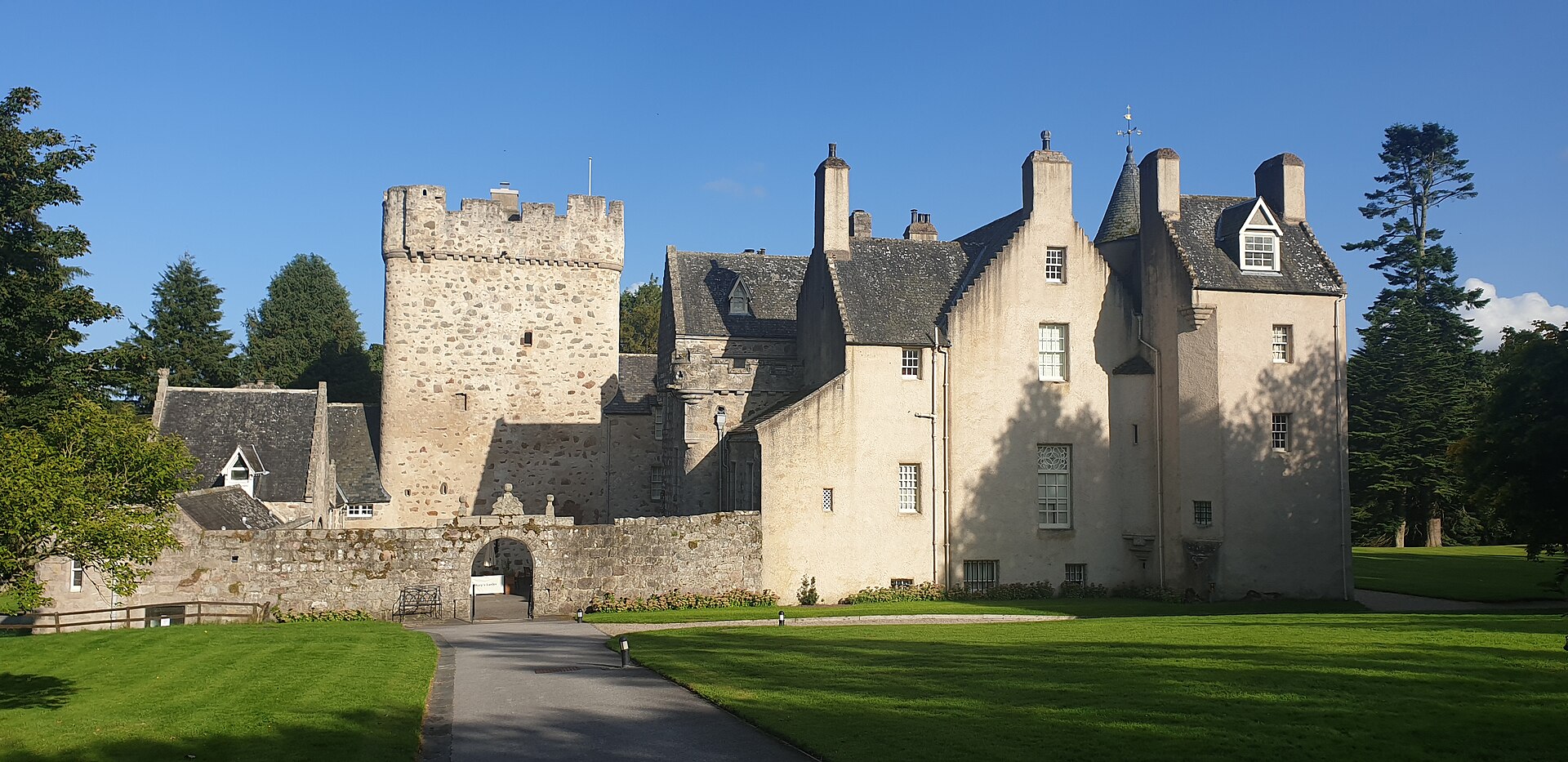
Fortified place · Medieval
Drum Castle
Aberdeenshire
One of only three 13th-century tower houses in Scotland to survive largely unaltered, and held unbroken by one family, the Irvines, for roughly 650…
- Easy path
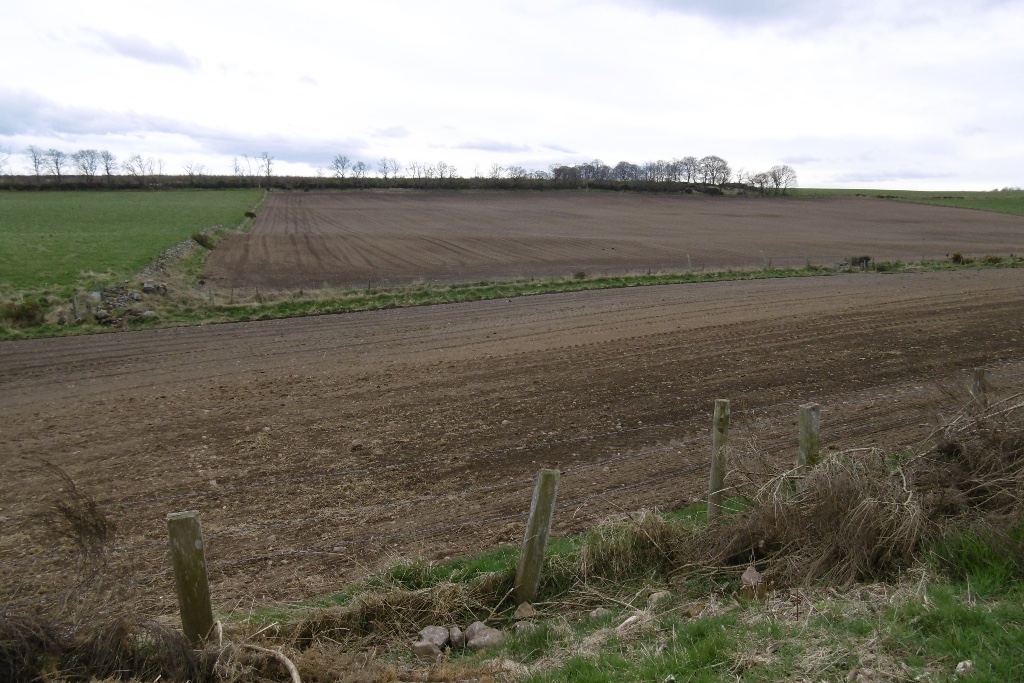
Building or ruin · Roman
Normandykes
Aberdeen City
A Roman marching camp misread for fifty years as a Danish fort, its true imperial origin restored only when its rectangular plan gave the game away.
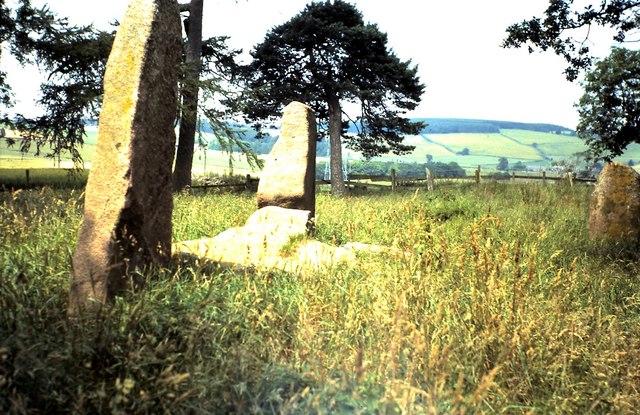
Sacred place · Prehistoric
Sunhoney
Aberdeenshire
A cup-marked recumbent stone facing a specific hill has drawn five generations of archaeoastronomers to this circle, from Norman Lockyer to Clive R…
- Easy path
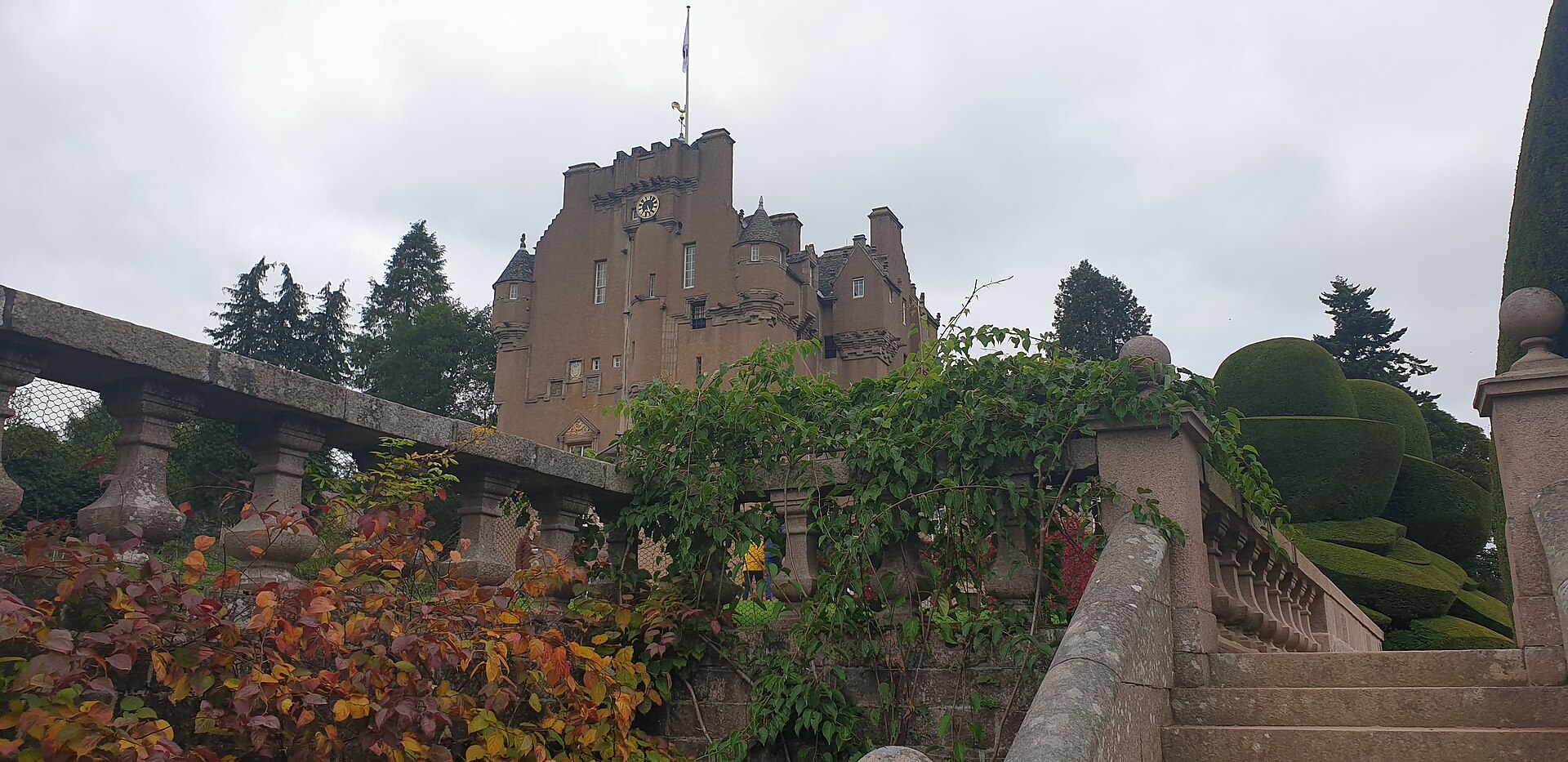
Fortified place · Medieval
Crathes Castle
Aberdeenshire
Beneath a 16th-century Burnett tower house lies Warren Field, where pits dug some 10,000 years ago form what analysis in 2013 identified as the wor…
- Easy path
Questions people ask
- What is Cullerlie stone circle?
- A small Bronze Age monument near Echt, Aberdeenshire, made of eight red granite stones enclosing eight kerbed cairns rather than open ground — a layout unique among Scottish stone circles.
- Why does the circle contain cairns instead of a single central feature?
- Excavation in 1934 showed oak and hazel were burned within eight rings of stone, cremated bone was added to five, and the rings were then filled with stone to form individual cairns.
- How old is the circle?
- It was built in the second millennium BC, when the surrounding land was wet bog rather than farmland, on a dry gravel ridge linking the site to Leuchar Moss.
- Did other stone circles once stand nearby?
- In 1820 antiquarian James Logan recorded nine further circles a short distance to the southwest, but a 1934 excavation found no physical trace that they had ever existed.
- What did the 2004 survey find?
- It identified cup marks, small carved hollows, on several stones that had gone unnoticed for generations, adding evidence of prehistoric carving to the monument.
Sources
- Wikipedia: Cullerlie stone circle
- James Logan — 1820 account
- Kilbride-Jones — 1934 excavation report (Ministry of Works)
Explore more: Sacred places · Prehistoric · Aberdeenshire
The Ancient Codex, in your pocket
Get the Pocket Codex app
Carry the directory with you — Cullerlie stone circle and thousands of ancient places across Britain and Ireland, offline, wherever you roam.