A cup-marked recumbent stone facing a specific hill has drawn five generations of archaeoastronomers to this circle, from Norman Lockyer to Clive Ruggles.
Twelve stones ring a low mound west of Echt, and the largest of them lies flat on the ground rather than standing upright, cracked clean into two pieces and pocked across its surface with dozens of shallow cup marks. This is the recumbent — the stone that gives the whole class of monument its name — flanked by a tall pillar on either side, with nine further stones completing a ring some 25.4 metres across.
The design is a regional one. Recumbent stone circles were built in the early Bronze Age and are found in concentration across lowland Aberdeenshire, where more than seventy examples survive, most densely along the River Dee. In each, the largest stone is laid on its side with its long axis running between south and southwest, and cremated remains have turned up inside some of the low ring cairns the circles enclose, though what the monuments were actually used for is still not settled.
Sunhoney has had more attention than most. An 1865 excavation opened up its ring cairn, and because the circle survives in good condition it has since become a favourite subject for archaeoastronomers checking whether its recumbent stone was aligned on the sun, the moon, or a landmark on the horizon.
What follows is drawn from published sources, with each claim labelled by how firmly it is established.
History
Sunhoney was raised in the early Bronze Age as one of more than seventy recumbent stone circles built across lowland Aberdeenshire, a regional tradition whose closest architectural parallel is the axial stone circles of southwest Ireland. Twelve stones were arranged around a low ring cairn, with the largest laid flat on its side as the recumbent, flanked by two upright pillars, in a design some researchers believe developed from the Clava cairns of nearby Inverness-shire.
In 1865 Charles Dalrymple excavated the ring cairn at the centre of the circle and uncovered cremated remains, providing direct evidence of burial practice at the site and confirming what many recumbent circles across Aberdeenshire were suspected, but not always proven, to contain beneath their stones.
Norman Lockyer became the first researcher to study Sunhoney for possible astronomical alignment, examining whether the recumbent stone's orientation related to solar or lunar events. George Browne followed with two further surveys of his own, in 1906 and 1920, adding to a growing body of archaeoastronomical work built around the circle's unusually well-preserved condition.
Later researchers, among them Alexander Thom, Aubrey Burl and Clive Ruggles, returned to Sunhoney to reassess its geometry and orientation using more rigorous survey methods than their predecessors, and it was through this sequence of studies that the recumbent stone was established as facing towards Blackyduds hill. The most recent geological survey of the stones was carried out in 2006 by Simon Howard, Diane Mitchell and Nigel Ruckley, continuing the long record of specialist study that Sunhoney's condition and setting have attracted since the nineteenth century.
People
-
Charles Dalrymple
Excavated the ring cairn in 1865 and uncovered cremated remains at the centre of the circle.
-
Norman Lockyer
First researcher to study Sunhoney’s stones for a possible astronomical alignment.
-
George Browne
Carried out two further archaeoastronomical surveys of the circle, in 1906 and 1920.
-
Alexander Thom
Reassessed the geometry and orientation of Sunhoney as part of later research into its possible astronomical setting.
-
Aubrey Burl
Included Sunhoney in the later archaeological study of recumbent stone circles, reassessing a monument whose earlier alignment claims began with Lockyer and Browne.
-
Clive Ruggles
Established in later survey work that the recumbent stone faces Blackyduds hill.
Cultural influences
-
Clava cairns
Recumbent stone circles such as Sunhoney may have developed from the Clava cairns of nearby Inverness-shire, an earlier related Bronze Age monument type.
-
Axial stone circles of southwest Ireland
The axial stone circles of southwest Ireland are the closest architectural parallel to Aberdeenshire's recumbent circles, and may in turn have followed the recumbent design.
Connections
-
Midmar stone circle
Another recumbent stone circle stands about two kilometres to the west, at the church of Midmar.
-
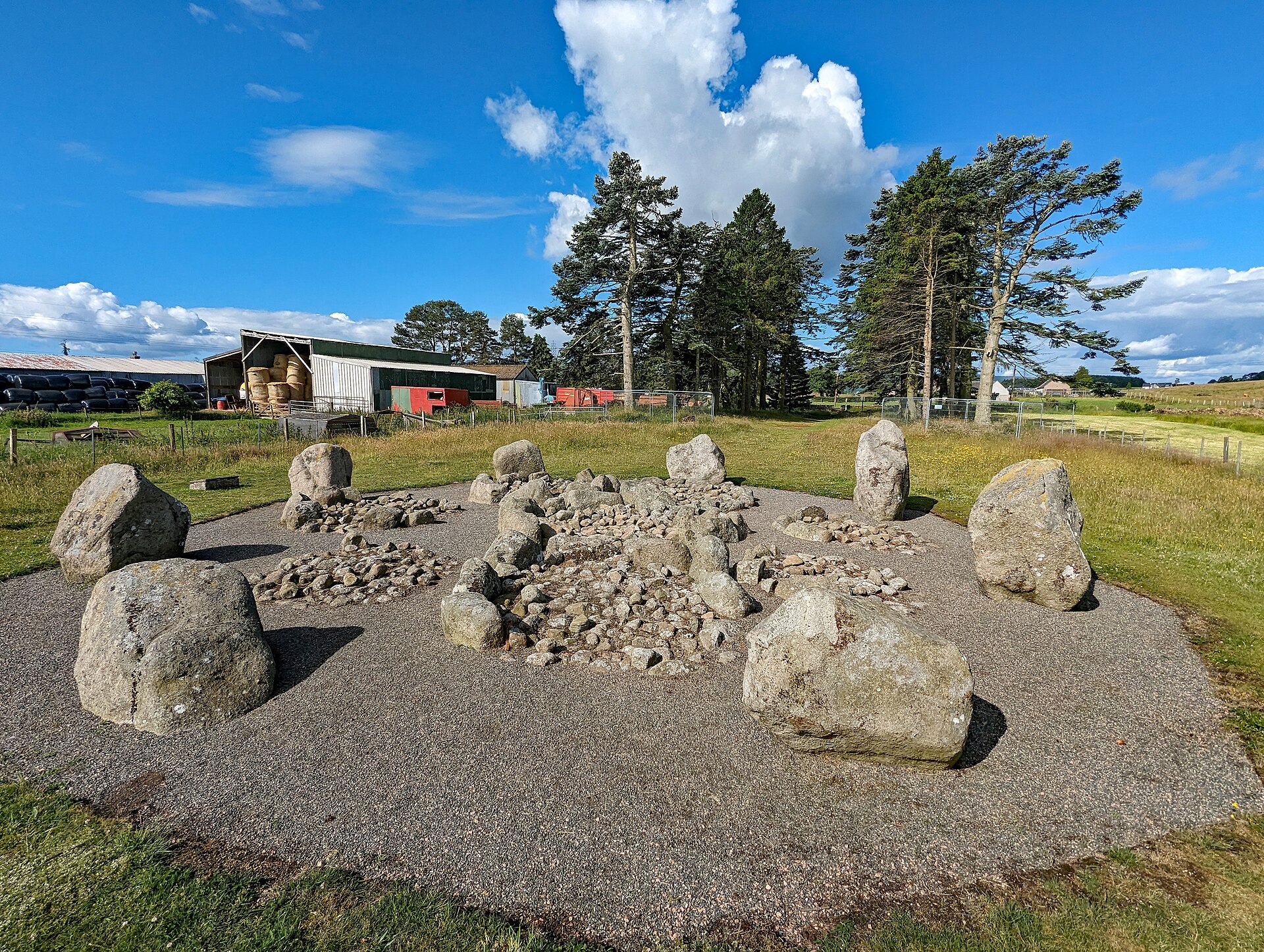
Photo: PaulT (Gunther Tschuch) / Wikimedia Commons / CC BY-SA 4.0 A nearby stone circle in the same recumbent tradition, sited close to Sunhoney in Aberdeenshire.
-
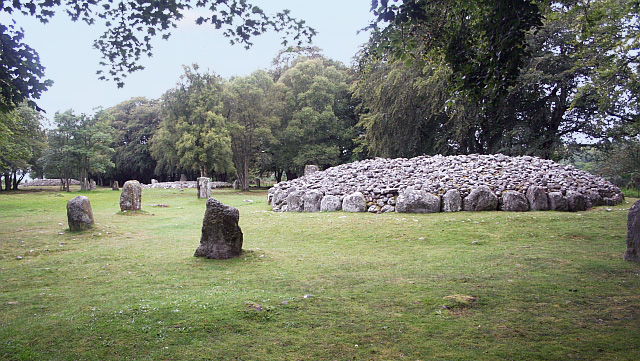
Photo: Bob Embleton / Wikimedia Commons / CC BY-SA 2.0 An earlier Bronze Age monument type in Inverness-shire from which recumbent stone circles like Sunhoney may have developed.
-
Axial stone circles of southwest Ireland
The closest architectural parallel to Aberdeenshire's recumbent circles, sharing the principle of a single dominant stone set on the circle's axis.
Discovery & excavation
Charles Dalrymple excavated Sunhoney's ring cairn in 1865, uncovering cremated remains within the stone circle's interior.
What to look for
-
The recumbent stone
Now broken into two pieces, the recumbent lies flat between its two flanker stones and bears as many as 31 cup marks across its surface.
-
The flanker stones
A tall pillar stands on each side of the recumbent, typically the highest stones anywhere in the ring.
-
The ring cairn
A low cairn sits inside the circle, the surviving remnant of the burial mound the stones once enclosed.
-
The alignment to Blackyduds hill
The recumbent stone was found to face towards Blackyduds hill, a detail that has drawn repeated archaeoastronomical study since the early twentieth century.
Plan your visit
- Location
- 57.1413°N · 2.4711°W
- Access
- Open access
- Terrain
- Easy going
- Time needed
- About 30 minutes
Opening & admission
No current admission or access details are recorded — check with Historic Environment Scotland before travelling.
- Scheduled monument on a hillside site near Echt, Aberdeenshire; no public access route is documented
Nearby places
Fortified place · Medieval
Castle Fraser
Aberdeenshire
The signed mason's mark of John Bell links this tower house to the same masonic family credited with Craigievar, Crathes and Midmar, the grandest o…
- Easy path
Sacred place · Prehistoric
Cullerlie stone circle
Aberdeenshire
Each of its eight cairns is fenced by its own ring of kerbstones and holds cremated remains, making the circle a burial ground built inside a ring…
- Near Echt
- Easy path
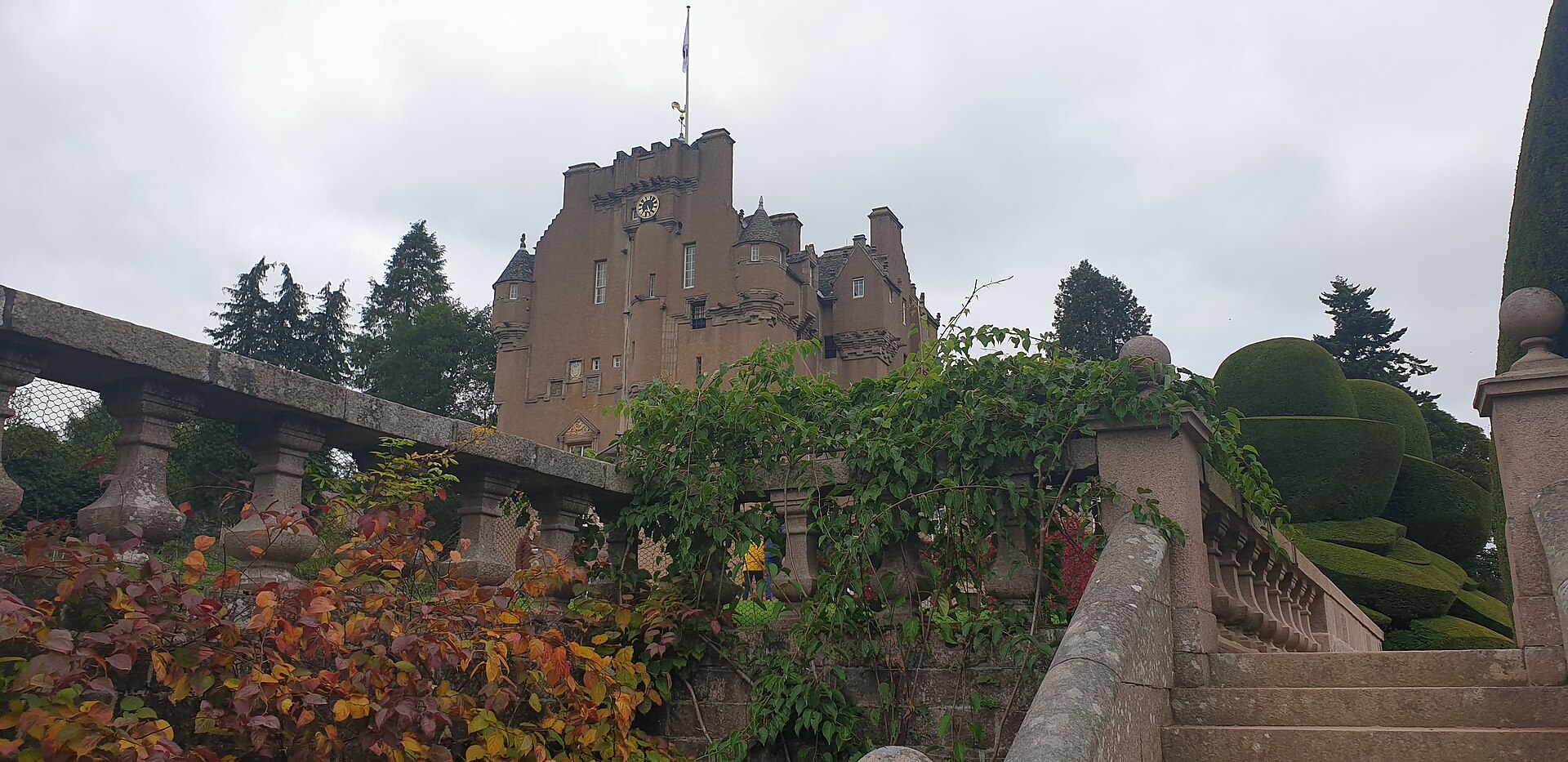
Fortified place · Medieval
Crathes Castle
Aberdeenshire
Beneath a 16th-century Burnett tower house lies Warren Field, where pits dug some 10,000 years ago form what analysis in 2013 identified as the wor…
- Easy path
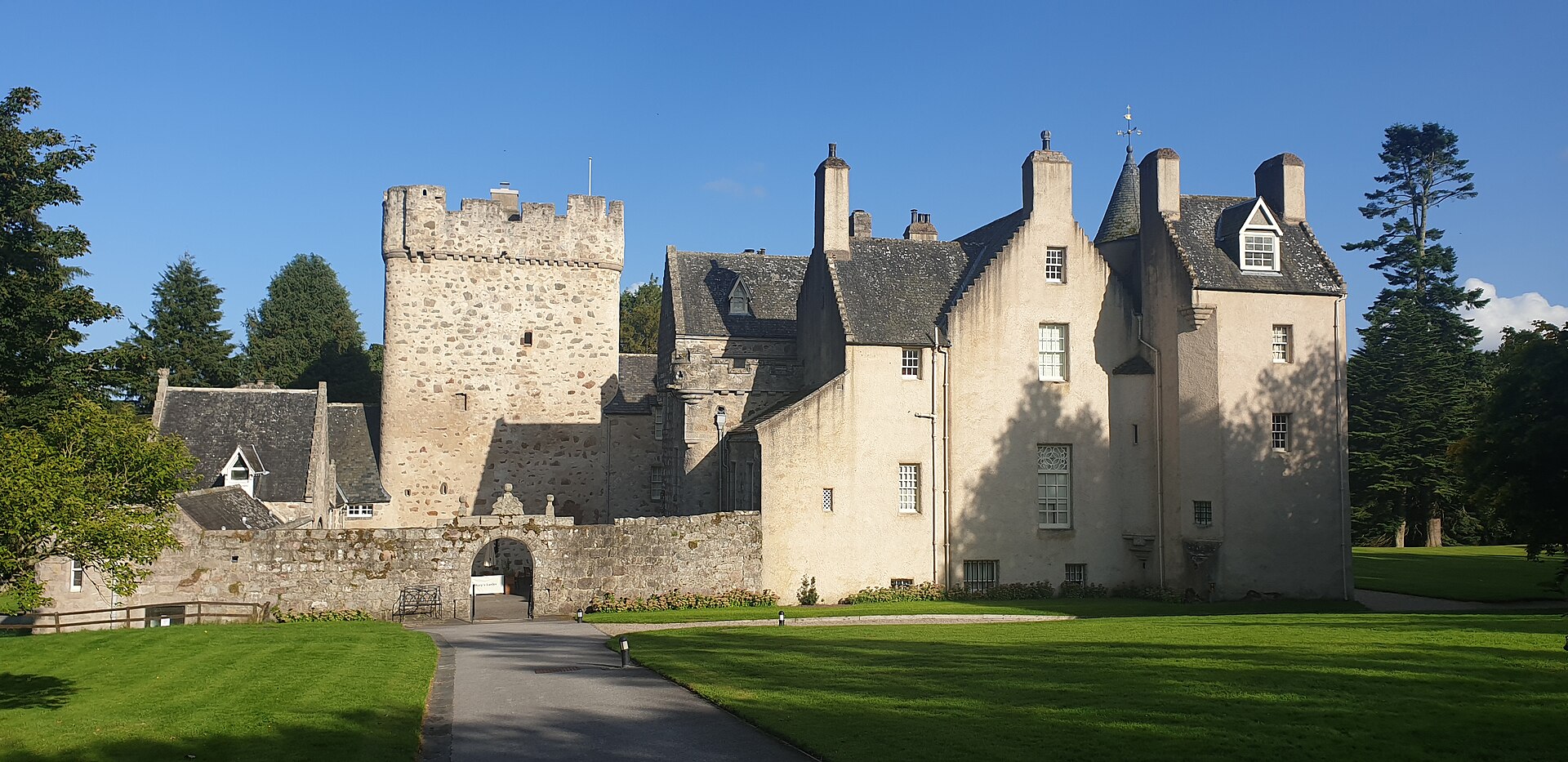
Fortified place · Medieval
Drum Castle
Aberdeenshire
One of only three 13th-century tower houses in Scotland to survive largely unaltered, and held unbroken by one family, the Irvines, for roughly 650…
- Easy path
Questions people ask
- What type of stone circle is Sunhoney?
- Sunhoney is a recumbent stone circle, a regional Bronze Age type in which the largest stone lies flat on its side, flanked by two upright pillars.
- How big is the circle and how many stones does it have?
- The ring is 25.4 metres across and formed by twelve stones — the recumbent, two flankers and nine others — enclosing a low ring cairn.
- What did the 1865 excavation find?
- Charles Dalrymple's 1865 excavation uncovered cremated remains within the ring cairn at the centre of the circle.
- What are the marks on the recumbent stone?
- The fallen, broken recumbent stone bears shallow carved cup marks, counted variously as 28, 30 or 31 across different surveys.
- Are there other stone circles nearby?
- Yes — recumbent circles at Midmar and Cullerlie stand around two kilometres away, part of a dense Aberdeenshire cluster of over seventy such monuments.
Sources
- Wikipedia: Sunhoney
- Historic Environment Scotland — Canmore
- Anna and Graham Ritchie, Scotland – An Oxford Archaeological Guide (1998)
Explore more: Sacred places · Prehistoric · Aberdeenshire
The Ancient Codex, in your pocket
Get the Pocket Codex app
Carry the directory with you — Sunhoney and thousands of ancient places across Britain and Ireland, offline, wherever you roam.