Excavation here overturned a long-held theory: the cairn (a mound of piled stones, often covering a burial) was built before the circle, not after, undermining the idea people once gathered inside to watch the sky.
A single slab of pale, quartz-veined granite lies on its side along the southwest edge of a ring of standing stones above Tarland, paler than the reddish stones around it, its upper face marked with two shallow cup carvings. This recumbent block anchors a recumbent stone circle, a Bronze Age (roughly 2500–800 BC) monument type in which the largest stone is always laid flat rather than stood upright, flanked by the two tallest stones in the ring.
By the early twentieth century the circle had been reduced to a jumble. A quarry cutting into the hillside had swallowed one standing stone entirely and left only four still upright, and antiquarians who visited feared what remained of the monument would collapse completely. It took an antiquarian’s public row with the landowner in the 1920s to stop the quarrying, and decades more before anyone attempted to put the stones back.
An archaeological dig at the end of the twentieth century did more than rescue the site: it also overturned an assumption about how such circles were built and used. Digging beneath the stones showed that the ring cairn at the centre had been laid out first, with the circle raised around it afterwards according to a plan — evidence that has since changed how researchers think about whether these monuments were built for watching the sky.
What follows is drawn from published sources, with each claim labelled by how firmly it is established.
The name
The name is recorded in 1792 as 'Tamnaverie', said in the First Statistical Account of Scotland to signify the Hill of Worship, reflecting how the ruined circle was perceived at the time as a place of ancient religious use.
History
Around 2500 BC, early in the Bronze Age, builders raised a ring of granite stones on a hilltop above Tarland, hauling a recumbent slab weighing some 6.5 tonnes into place along the circle's southwest side. Excavation later showed the ring cairn at the centre had been built first, with the standing stones added afterwards according to a plan already fixed before a single upright was raised.
In 1792 the First Statistical Account of Scotland recorded the ruin as 'the remains of a Druidical temple', noting a few large stones, some upright and some fallen, with no visible carvings or inscriptions. The description shows the circle was already reduced to scattered stones over two centuries ago, long before any formal excavation was attempted.
In 1852 the antiquarian John Stuart described 'two circles of large erect stones' at the site, a phrase that puzzled the surveyor Frederick Coles when he examined the monument in 1905. Coles found it smothered in broom scrub and a quarry cutting to within a metre of one stone, and although he could confirm only faint traces of a second inner ring, he surveyed the recumbent's alignment and warned the circle was in danger of collapse.
By 1916 quarrying had claimed one of the standing stones, which fell into the workings and was never recovered, prompting archaeologist James Ritchie to warn the circle was at risk. Ten years later, with only four stones upright, antiquarian Alexander Keiller forced a confrontation with the landowner, Lord Aberdeen, that halted the quarrying; the monument was scheduled in 1927 and taken into state guardianship in 1930, though care meant little more than a fence and cut grass.
Writing in 1995, the stone circle scholar Aubrey Burl described Tomnaverie bluntly as 'a wreck' with its stones reduced to 'a jumble', an assessment that helped make the case for major intervention. Archaeologists led by Richard Bradley excavated the site over the 1999 and 2000 seasons, aiming both to establish how and when the circle had been built and to guide its physical restoration for public display.
Beneath the stones the excavation found fragments of Beaker pottery and charcoal that returned a radiocarbon date of around 2500 to 2450 BC, confirming the circle's early Bronze Age origin. It also showed, unexpectedly, that the ring cairn had been built to prepare the ground for the circle rather than added afterwards, a sequence since repeated at other recumbent circles and one that has cast doubt on theories that people gathered inside the ring to watch the sky.
Following the excavation, stones were lifted by crane back into their original sockets, and the recumbent — traced to a resting place in the quarry itself where it had lain unbroken since before 1870 — was returned to its precise original position. In 2003 part of the quarry was backfilled and landscaped, restoring the view by which the recumbent aligns towards the distant mountain Lochnagar, an alignment later observations have treated with more caution.
People
-
Alexander Keiller
Antiquarian who halted the quarrying that was destroying the circle in the 1920s and secured its scheduling and state guardianship.
-
Richard Bradley
Archaeologist who led the 1999–2000 excavation that reinterpreted the circle's construction sequence and guided its restoration.
-
Frederick Coles
Surveyor who recorded the circle's dilapidated condition and the recumbent stone's alignment in 1905.
-
James Ritchie
Archaeologist who warned in the 1910s that continued quarrying threatened the monument's survival.
-
Aubrey Burl
Stone circle scholar whose 1995 description of the circle as 'a wreck' helped prompt the 1999 excavation.
-
John Stuart
Antiquarian whose 1852 account of 'two circles of large erect stones' raised the question of whether Tomnaverie was a double ring.
Cultural influences
-
Recumbent stone circles
Tomnaverie is part of the north-east Scottish recumbent stone-circle tradition, in which a large horizontal slab and flanking pillars structure the ring.
Connections
-
Axial stone circles of southwest Ireland
Described as the closest parallel monument type to Aberdeenshire's recumbent stone circles, and thought to have possibly followed their design.
-
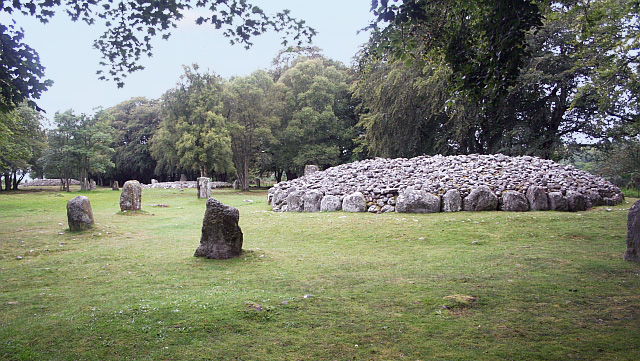
Photo: Bob Embleton / Wikimedia Commons / CC BY-SA 2.0 Recumbent stone circles such as Tomnaverie may represent a development from this earlier, nearby cairn tradition.
-
Historic Environment Scotland — Canmore
Holds the official monument record and scheduling for the site, listed under reference 17006.
-
Lochnagar
The recumbent stone's restored alignment points towards this mountain some 30 kilometres to the southwest, where the full moon has been observed to set at midsummer during a minor lunar standstill.
-
The wider group of recumbent stone circles in lowland Aberdeenshire
Tomnaverie is one of more than seventy such circles in the region, sharing their characteristic layout of a horizontal recumbent stone flanked by the two tallest uprights.
Discovery & excavation
The 1999–2000 excavation, directed by Richard Bradley, began with a detailed photogrammetric survey before the turf was removed to reveal an interior far better preserved than expected. It uncovered the polygonal cairn's outer kerb, radial lines of boulders dividing the cairn into segments, fragments of Beaker pottery, flint blades, and charcoal used to radiocarbon-date the monument's construction to around 2500–2450 BC.
What to look for
-
The recumbent stone
A granite block 3.2 metres long and weighing about 6.5 tonnes, laid on its side along the circle's southwest arc; its quartz-veined granite is paler than the surrounding stones, and its upper and outer faces each bear a shallow cup mark.
-
The flanking stones
Two tall stones stand either side of the recumbent, the eastern about 1.8 metres high and the western about 1.9 metres, framing the recumbent setting as the visual focus of the circle.
-
The kerb and platform
A granite kerb of slabs and blocks originally encircled the central cairn, set on a levelled stone platform up to 24 metres across built out over the hilltop to support the circle.
-
The view to Lochnagar
Looking out past the restored recumbent, the alignment is said to point towards the mountain Lochnagar on the horizon some 30 kilometres to the southwest.
-
Cup-marked stones
Field survey around the circle recorded as many as 29 separate cup-marked rocks in the surrounding area, in addition to the two cup marks on the recumbent itself.
What is said
Folklore and tradition, recorded as what is said — not as established fact.
-
The Hill of Worship
Local tradition recorded in 1792 held that the ruin was a 'Druidical temple', and the place-name Tamnaverie was said to signify the 'Hill of Worship', reflecting a belief that the site had once been used for ancient religious rites.
Plan your visit
- Location
- 57.1194°N · 2.8496°W
- Access
- Open access
- Terrain
- Moderate walking
- Time needed
- About 30 minutes
- What survives
- The stone circle and cairn survive on raised ground; the approach includes a short uphill walk.
Opening & admission
No reliable current admission details are recorded; verify before travelling.
- A visitor car park serves a short uphill walk to the stone circle.
Nearby places
Sacred place · Prehistoric
Blue cairn circle
Aberdeenshire
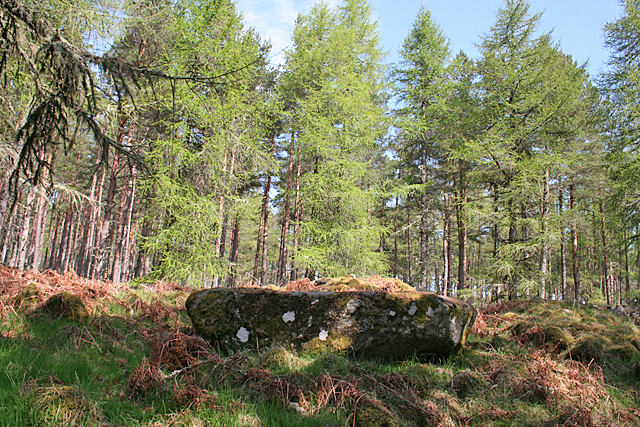
The recumbent slab lies squared and deliberate rather than fallen, and the stone cairn (a mound of piled stones, often covering a burial) heaped in…
- Near Logie Coldstone
- Rough ground
Fortified place · Medieval
Craigievar Castle
Aberdeenshire
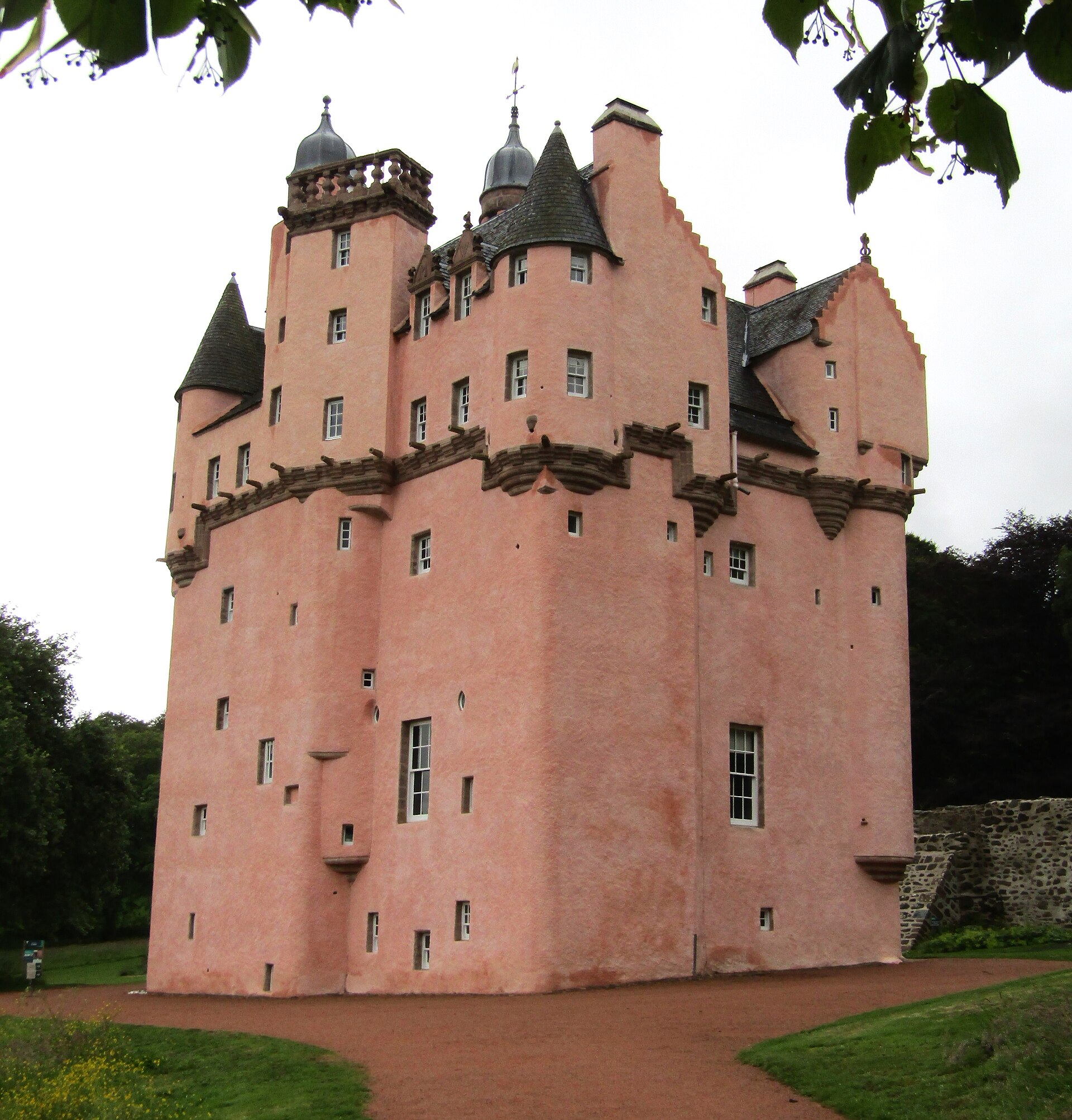
A merchant's Baltic trading fortune built a seven-storey pink tower whose plasterwork ceilings rank among Scotland's finest, and whose silhouette r…
- Easy path
Fortified place · Medieval
Kildrummy Castle
Aberdeenshire
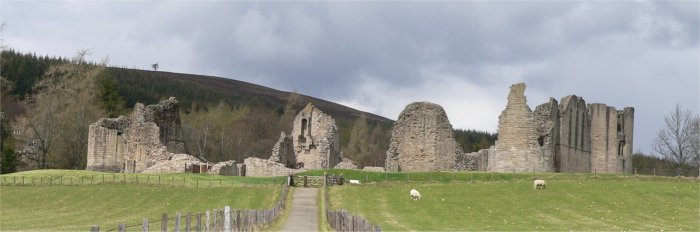
A shield-shaped fortress whose sieges shaped a kingdom: from the capture and execution of Robert the Bruce's brother in 1306 to a countess's defian…
- Some walking
Fortified place · Medieval
Glenbuchat Castle
Aberdeenshire
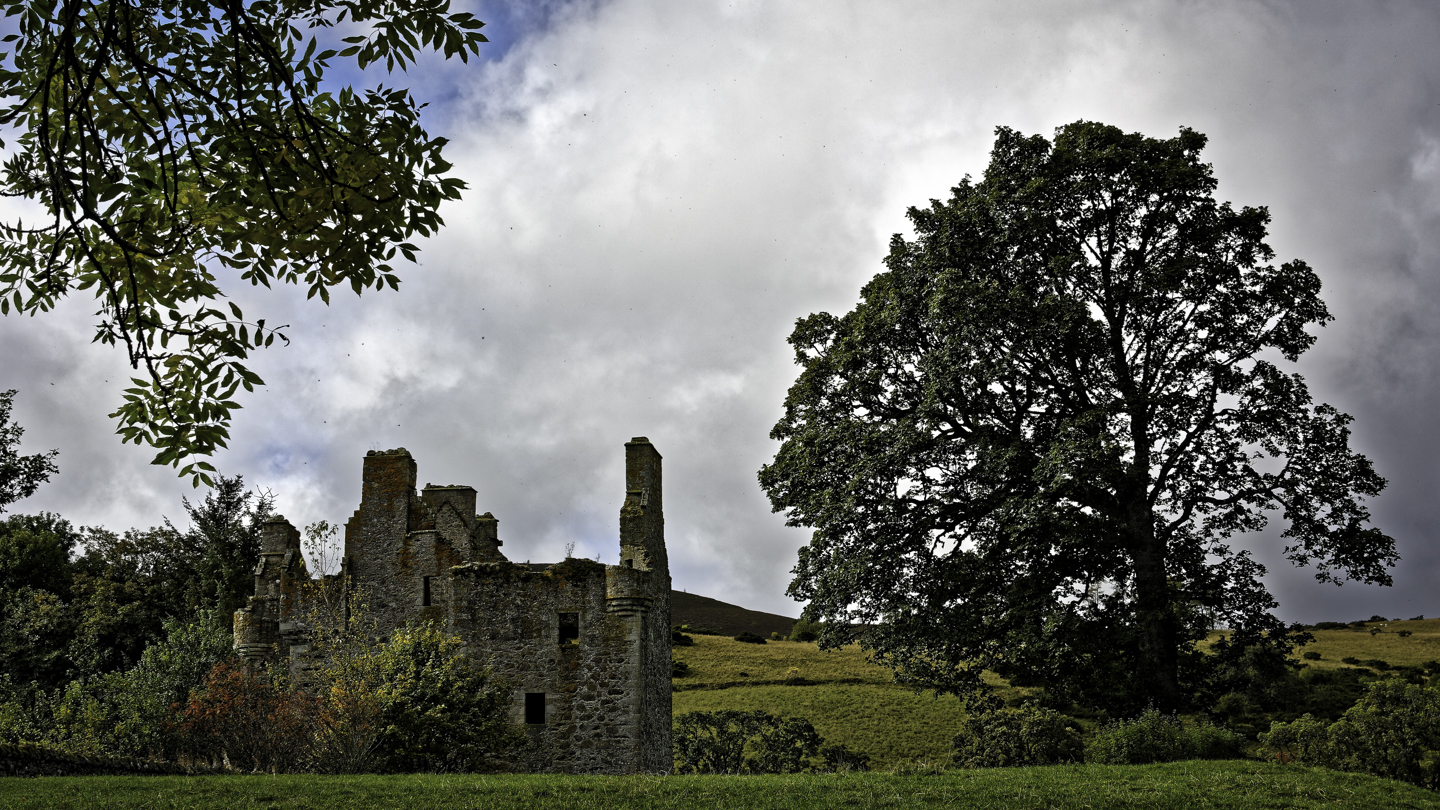
In 1948 a local club bought the surrounding parkland just so the castle's setting would stay intact: a community rescue of a landscape, not the bui…
Questions people ask
- How old is Tomnaverie stone circle?
- Radiocarbon dating places its construction around 2500 to 2450 BC, in the early Bronze Age, confirming an age long suspected but not proven until the 1999–2000 excavation.
- Why was Tomnaverie nearly destroyed?
- A neighbouring quarry encroached on the site through the nineteenth and early twentieth centuries, toppling and removing stones until only four remained upright by the 1920s, when campaigning finally halted the quarrying.
- What did the 1999 excavation discover?
- It found that the central ring cairn had been built before the stone circle, not after, meaning the circle could not have been designed for viewing astronomical events from inside it as once theorised.
- Does the recumbent stone align with anything?
- Its restored position points towards the mountain Lochnagar, roughly 30 kilometres to the southwest, and towards where the full moon sets at midsummer during a minor lunar standstill.
- Can visitors see the original stones today?
- Most of the circle stands restored in its excavated sockets; only one stone, at the west, could not be located and remains missing after the 1999–2000 restoration.
Sources
- Wikipedia: Tomnaverie stone circle
- Historic Environment Scotland — Canmore
- Bradley et al., The Moon and the Bonfire (2005)
- Burl, A Guide to the Stone Circles of Britain, Ireland, and Brittany (1995)
- Henty, 'The Archaeoastronomy of Tomnaverie Recumbent Stone Circle' (2014)
Explore more: Sacred places · Prehistoric · Aberdeenshire
The Ancient Codex, in your pocket
Get the Pocket Codex app
Carry the directory with you — Tomnaverie stone circle and thousands of ancient places across Britain and Ireland, offline, wherever you roam.