
In 1948 a local club bought the surrounding parkland just so the castle's setting would stay intact — a community rescue of a landscape, not the building itself.
Above the River Don near Kildrummy, a roofless stone shell traces the diagonal footprint of a Z-plan castle — a design in which two towers sit at opposite corners of a rectangular block, so that defenders in one tower could cover the stretch of wall the other tower could not reach. Glenbuchat Castle was raised in 1590 for John Gordon of Cairnbarrow, timed to mark his marriage that year to Helen Carnegie, daughter of Robert Carnegie of Kinnaird in Angus. Tradition holds that some of the stone came from Kildrummy Castle, a few miles away along the same river, recycled into the new house rather than freshly quarried.
The castle’s role in national conflict came early. In 1594, only four years after it was completed, government forces took Glenbuchat and installed a garrison there in the aftermath of the Battle of Glenlivet. Ownership passed by descent through the Gordons of Cairnbarrow until 1738, when the family sold the castle, and it moved into other private hands, where it would remain for almost two centuries.
That private ownership lasted until the twentieth century, when the castle changed hands in ways that settled its future. James William Barclay bought it in 1901, and in 1946 his grandson, Colonel James Barclay Milne, placed it into state care. Two years later, a local club bought the surrounding parkland and gave it to the state as well, so that the castle’s setting would stay intact alongside the building itself. Today both castle and grounds are managed by Historic Environment Scotland as a scheduled monument, roofless but otherwise in fairly good repair.
What follows is drawn from published sources, with each claim labelled by how firmly it is established.
History
In 1590 John Gordon of Cairnbarrow built Glenbuchat Castle on rising ground above the River Don, timing the new house to mark his marriage that year to Helen Carnegie, daughter of Robert Carnegie of Kinnaird in Angus. Local tradition holds that stone for the walls was taken from nearby Kildrummy Castle rather than freshly quarried, a practical reuse of ready-cut masonry from an older stronghold only a few miles along the same river valley.
The castle's independence from national conflict did not last long. In 1594, only four years after it was completed, the king's forces took Glenbuchat and installed a garrison there in the aftermath of the Battle of Glenlivet, a reminder that even a private tower house built for a wedding could be drawn straight into the crown's struggles with rebellious northern nobles.
The Gordons of Cairnbarrow held the castle for close to a century and a half before selling it in 1738. Ownership then passed through a succession of private hands for nearly two hundred years, with no single family staying long enough to leave its own mark on the building, and the castle gradually settled into the roofless but structurally sound state in which it survives today.
That long period of private ownership ended in two steps within a single family. James William Barclay bought Glenbuchat Castle in 1901, and in 1946 his grandson, Colonel James Barclay Milne, placed the building into state care, formally handing responsibility for its upkeep to the nation rather than leaving it to further private owners.
Two years later, in 1948, a local club bought the parkland surrounding the castle and gave it to the state as well, ensuring that Glenbuchat's immediate setting would remain intact alongside the building itself. Historic Environment Scotland now manages both castle and grounds together as a scheduled monument.
People
-
John Gordon of Cairnbarrow
Built Glenbuchat Castle in 1590 to mark his marriage to Helen Carnegie that year.
-
Helen Carnegie
Daughter of Robert Carnegie of Kinnaird, Angus, whose 1590 marriage to John Gordon prompted the castle's construction.
-
James William Barclay
Bought Glenbuchat Castle in 1901.
-
Colonel James Barclay Milne
Grandson of James William Barclay; placed the castle into state care in 1946.
Cultural influences
-
Possible French influence in the stair turrets
Historic Environment Scotland notes that the unusual arches supporting Glenbuchat’s projecting spiral staircases may reflect French influence, perhaps through Helen Carnegie’s father, an ambassador to France. The source also allows a Scottish explanation: they may instead adapt medieval corner arches known as squinches.
Connections
-
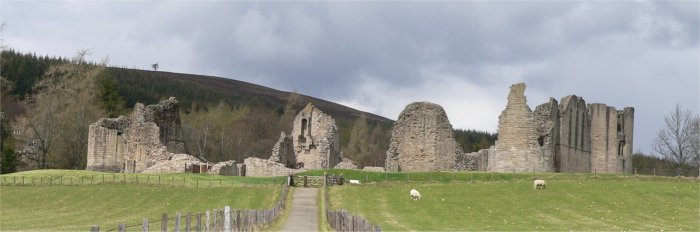
Photo: Van de Beek / Wikimedia Commons / CC BY-SA 3.0 Tradition holds that stone from Kildrummy Castle, a few miles up the River Don, was reused to build Glenbuchat in 1590.
What to look for
-
The Z-plan footprint
The castle follows a Z-plan design, with towers set at opposite corners of a rectangular main block, giving the building the stepped, diagonal footprint that gives the plan its name.
-
Roofless but standing walls
The roof is gone, but the stonework survives in fairly good repair, letting the scale and layout of the 1590 house be read clearly on the ground.
-
Setting above the River Don
The castle stands on rising ground above the River Don, near Kildrummy, with its surrounding parkland preserved as part of the scheduled monument.
What is said
Folklore and tradition, recorded as what is said — not as established fact.
-
Recycled stone from Kildrummy Castle
Local tradition holds that some of the stone used to build Glenbuchat Castle in 1590 was taken from nearby Kildrummy Castle rather than freshly quarried.
Plan your visit
- Location
- 57.2207°N · 2.9988°W
- Access
- Paid entry — managed visitor site
- Time needed
- About 60 minutes
- Best time
- Do not plan a visit until the official page confirms that the castle has reopened; it is currently closed for conservation work.
- What survives
- The roofless castle remains a substantial ruin, but it is currently closed while Historic Environment Scotland carries out vital conservation work.
- Facilities
- No dedicated visitor facilities are identified in the cited heritage or operator source; check the official page for current arrangements.
Opening & admission
Glenbuchat Castle is currently closed while Historic Environment Scotland carries out vital conservation work. Check the official page for reopening information.
- No visitor access is currently available.
Nearby places
Fortified place · Medieval
Kildrummy Castle
Aberdeenshire
A shield-shaped fortress whose sieges shaped a kingdom: from the capture and execution of Robert the Bruce's brother in 1306 to a countess's defian…
- Some walking
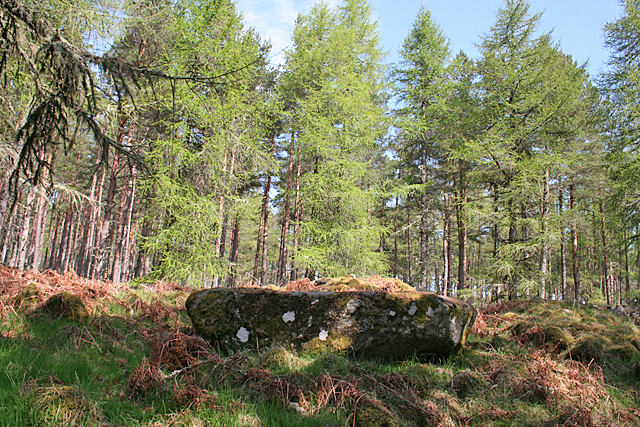
Sacred place · Prehistoric
Blue cairn circle
Aberdeenshire
The recumbent slab lies squared and deliberate rather than fallen, and the stone cairn (a mound of piled stones, often covering a burial) heaped in…
- Near Logie Coldstone
- Rough ground
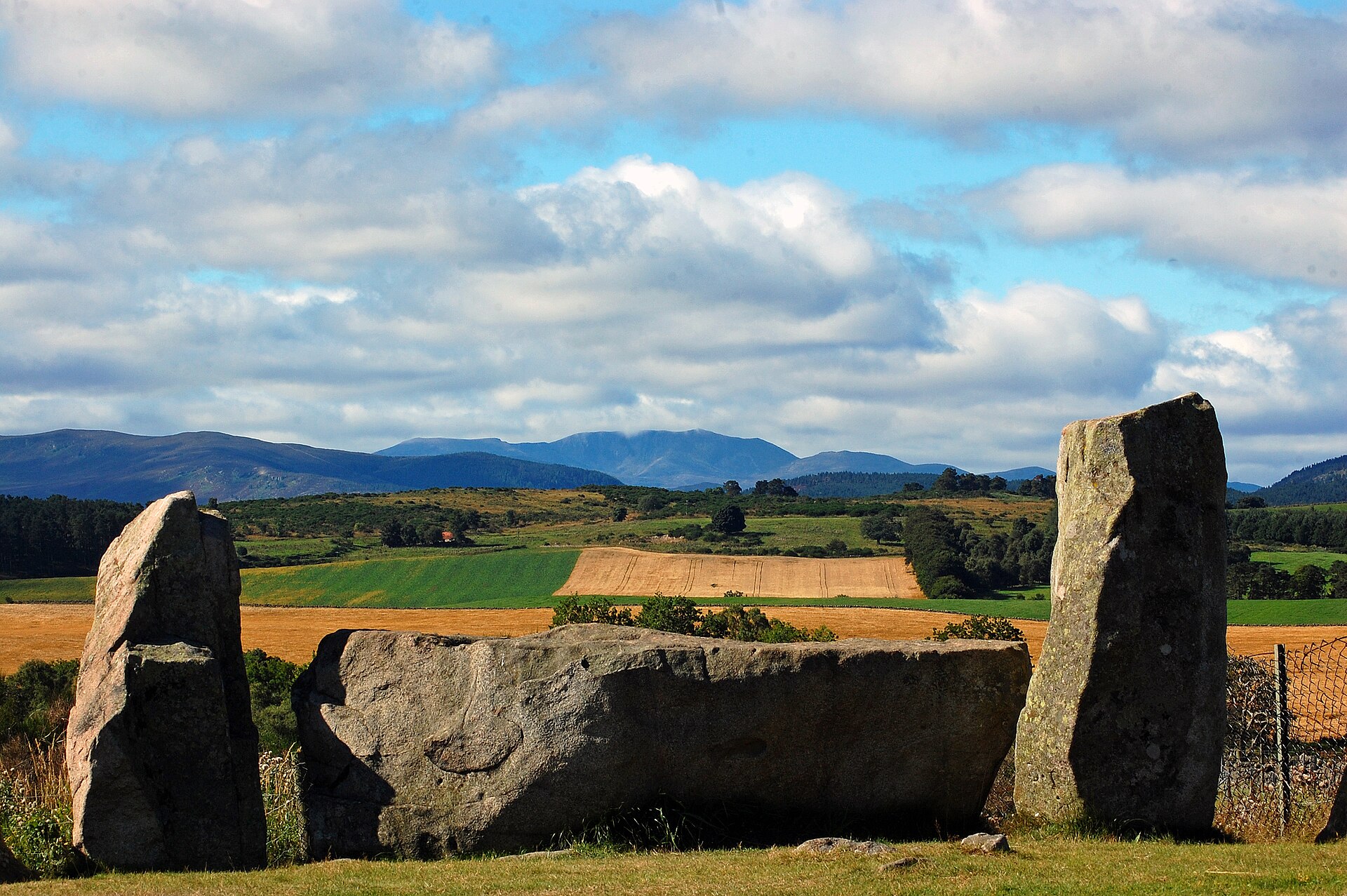
Sacred place · Prehistoric
Tomnaverie stone circle
Aberdeenshire
Excavation here overturned a long-held theory: the cairn (a mound of piled stones, often covering a burial) was built before the circle, not after,…
- Some walking
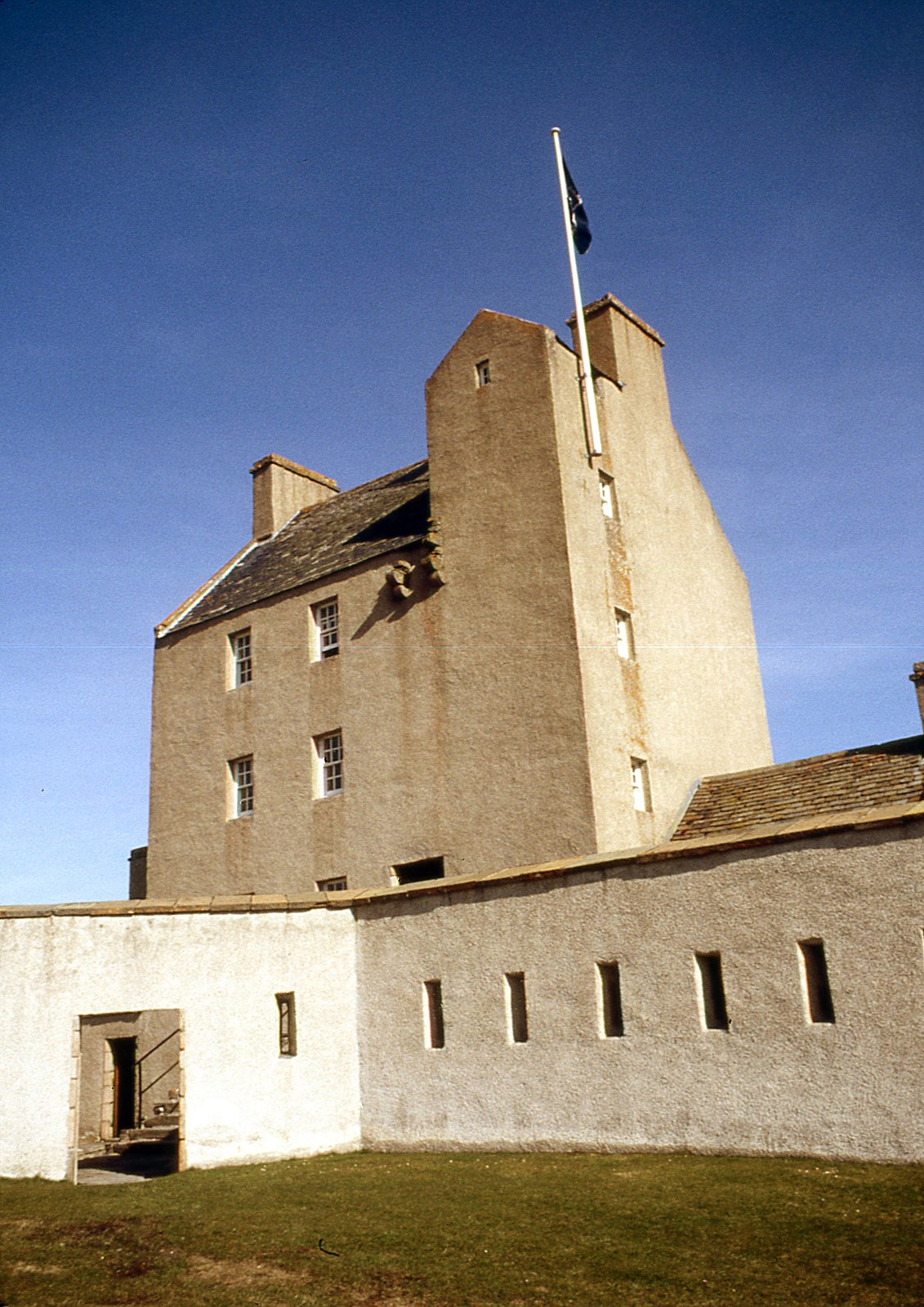
Fortified place · Medieval
Corgarff Castle
Aberdeenshire
Burned three times over two centuries in family feuds and Jacobite risings, the tower was finally rebuilt as a government barracks to police the pa…
- Near Corgarff
- Easy path
Questions people ask
- When was Glenbuchat Castle built?
- Glenbuchat Castle was built in 1590 for John Gordon of Cairnbarrow, timed to mark his marriage that year to Helen Carnegie.
- What happened to the castle after the Battle of Glenlivet?
- In 1594 the king's forces took Glenbuchat Castle and installed a garrison there in the aftermath of the battle.
- Who owns Glenbuchat Castle today?
- Historic Environment Scotland manages the castle and its surrounding parkland as a scheduled monument, following state care in 1946 and 1948.
- Does Glenbuchat Castle have a roof?
- No. The castle is roofless but otherwise in fairly good repair, with its Z-plan walls still standing above the River Don.
- Is it true the castle was built from stone taken from another castle?
- Tradition holds that stone from nearby Kildrummy Castle was reused to build Glenbuchat, though this is not confirmed by formal records.
Sources
- Wikipedia: Glenbuchat Castle
- Historic Environment Scotland — Visitor Guide
Explore more: Fortified places · Medieval · Aberdeenshire
The Ancient Codex, in your pocket
Get the Pocket Codex app
Carry the directory with you — Glenbuchat Castle and thousands of ancient places across Britain and Ireland, offline, wherever you roam.