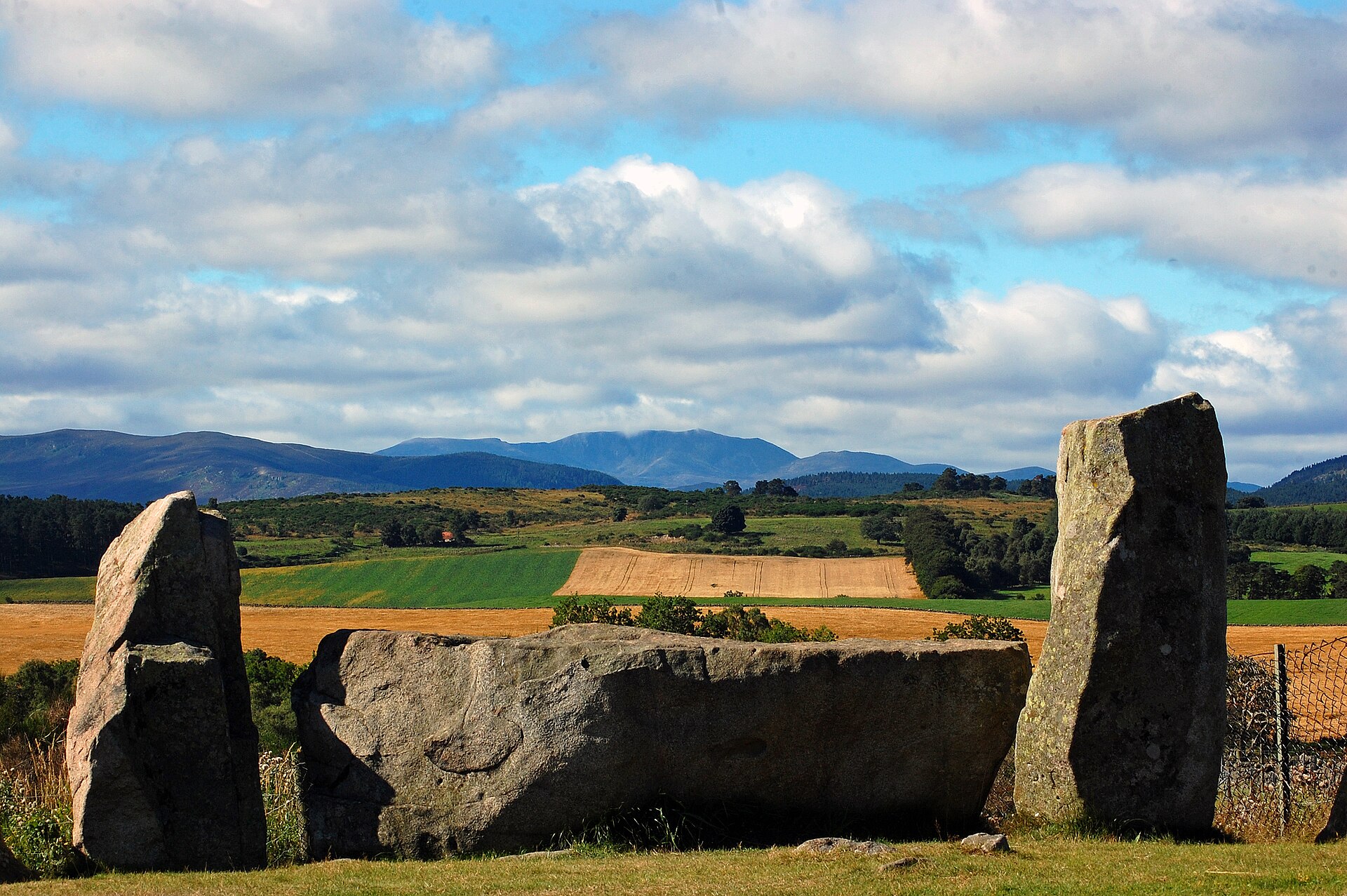
The recumbent slab lies squared and deliberate rather than fallen, and the stone cairn (a mound of piled stones, often covering a burial) heaped inside marks this as one of a monument type found almost nowhere else on Earth.
A huge slab of stone lies on its side within a ring of standing pillars in woodland near Logie Coldstone, its long face turned toward the south-southwest as if deliberately laid down rather than fallen. Heaped inside the ring is a mound of stone, its surface broken by several pits, and taller flanking stones stand guard on either side of the recumbent slab. Locally the monument is also remembered as the Blue Cairn of Ladieswell.
The circle belongs to a family of monuments unique to this corner of Scotland: a recumbent stone circle (a Bronze Age ring in which the largest stone is laid flat rather than stood upright, always toward the south or southwest, with a shorter graded run of upright stones completing the ring and two taller flankers bracketing the recumbent itself). More than seventy such circles survive across lowland Aberdeenshire, and their closest architectural cousins lie not in Scotland at all but in the axial stone circles of southwest Ireland.
Surveying archaeologists from Historic Environment Scotland have described this particular example bluntly as “mutilated”, a reminder that the ring cairn once heaped within many of these circles has, over the millennia, usually been robbed, ploughed, or worn away. Here at Logie Coldstone the cairn survives, pitted and disturbed but present, alongside a recumbent measuring 3.60 metres long and 0.90 metres tall — one of the more substantial examples of its kind still standing in its original woodland setting.
What follows is drawn from published sources, with each claim labelled by how firmly it is established.
History
During the early Bronze Age, communities working in lowland Aberdeenshire built a ring of standing stones on a level shoulder of ground near Logie Coldstone, choosing a spot with clear sightlines across the surrounding hills. Following a design used across the district, they laid the circle's single largest slab flat on its side to the south-southwest, flanked by two of the tallest stones in the ring, and heaped a cairn of stone within the enclosed space.
The circle belongs to a distinctive local tradition: recumbent stone circles, so called because their largest stone is laid flat rather than stood upright, are known from over seventy sites across lowland Aberdeenshire alone, each pairing a low ring cairn with graded standing stones and flanking uprights either side of the recumbent slab, though the precise purpose of the arrangement, whether burial, ceremony, or something else, has never been established with certainty.
Over the centuries that followed construction, the low ring cairn found at many circles of this type gradually disappeared, whether through stone robbing, ploughing, or simple decay, and Blue cairn circle's own central cairn survived only in an altered and pitted condition. Historic Environment Scotland's archaeologists later recorded the monument bluntly as "mutilated", reflecting how much of its original stone and form had been lost by the time it came under formal record.
In 1942 the circle was captured on canvas by the artist William Cormack, whose painting preserved the monument's mid-twentieth-century appearance, cairn, recumbent slab and all, in the woodland near Logie Coldstone, decades before the site received the kind of detailed archaeological survey that later generations of researchers would apply to it.
People
-
William Cormack
Artist who painted the stone circle in 1942, leaving a visual record of its mid-twentieth-century appearance.
Cultural influences
-
Clava cairns
Recumbent stone circles are thought by some researchers to have developed out of the Clava cairns found nearby in Inverness-shire, a related Bronze Age monument tradition that may have supplied the basic idea of a stone ring enclosing a cairn.
Connections
-
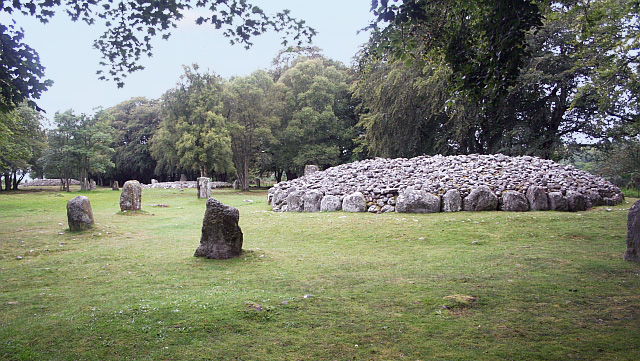
Photo: Bob Embleton / Wikimedia Commons / CC BY-SA 2.0 Recumbent stone circles such as this one may represent a development from the Clava cairn tradition of neighbouring Inverness-shire.
-
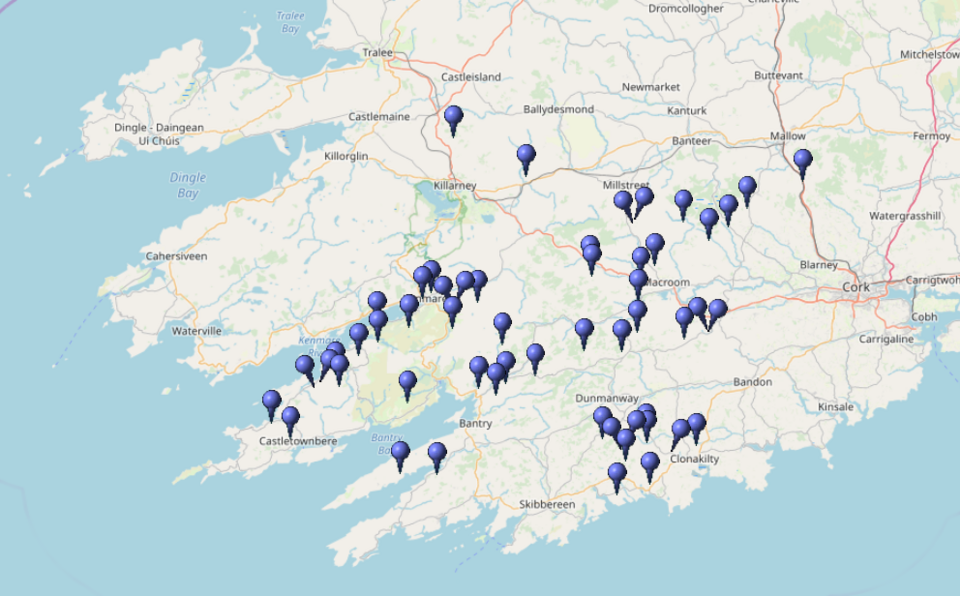
Photo: OpenStreetMap contributors / Wikimedia Commons / CC BY-SA 2.0 Axial stone circles, southwest Ireland
The closest architectural parallels to Aberdeenshire's recumbent stone circles are found in the axial stone circles of southwest Ireland, suggesting a shared or related building tradition.
-
Recumbent stone circles of lowland Aberdeenshire
This circle is one of more than seventy surviving recumbent stone circles concentrated in lowland Aberdeenshire, the densest concentration of the monument type anywhere.
In culture
-
William Cormack painting
Artist William Cormack painted the circle in 1942, preserving a visual record of its mid-twentieth-century appearance.
What to look for
-
The recumbent slab
A single massive stone, 3.60 metres long and 0.90 metres tall, laid on its side facing south-southwest — the defining feature of the monument type.
-
Flanker stones
Two of the tallest stones in the ring stand immediately either side of the recumbent, framing it within the wider circle.
-
The central cairn
A mound of heaped stone fills the interior of the ring, its surface marked by several pits from disturbance over the centuries.
-
Woodland setting
The circle stands among trees near Logie Coldstone, a setting that has helped shield it from ploughing even as its cairn was disturbed.
Plan your visit
- Location
- 57.1438°N · 2.9750°W
- Nearest settlement
- Logie Coldstone
- Access
- Open access
- Terrain
- Rough ground — reasonable boots advised
- Time needed
- About 30 minutes
- Best time
- Daylight is the most useful time to see the monument and assess the approach.
- What survives
- A mutilated 21-metre recumbent stone circle with a large, pitted central cairn; the 3.6-metre recumbent slab and flanking stones survive.
- Facilities
- No visitor facilities are provided at the stone circle; plan for rural conditions and check access before travelling.
Opening & admission
No current admission or access details are recorded — check with Historic Environment Scotland or local access sources before travelling.
- Situated in woodland near Logie Coldstone, Aberdeenshire
- The monument is described as mutilated, with a large central cairn
Nearby places
Sacred place · Prehistoric
Tomnaverie stone circle
Aberdeenshire
Excavation here overturned a long-held theory: the cairn (a mound of piled stones, often covering a burial) was built before the circle, not after,…
- Some walking
Fortified place · Medieval
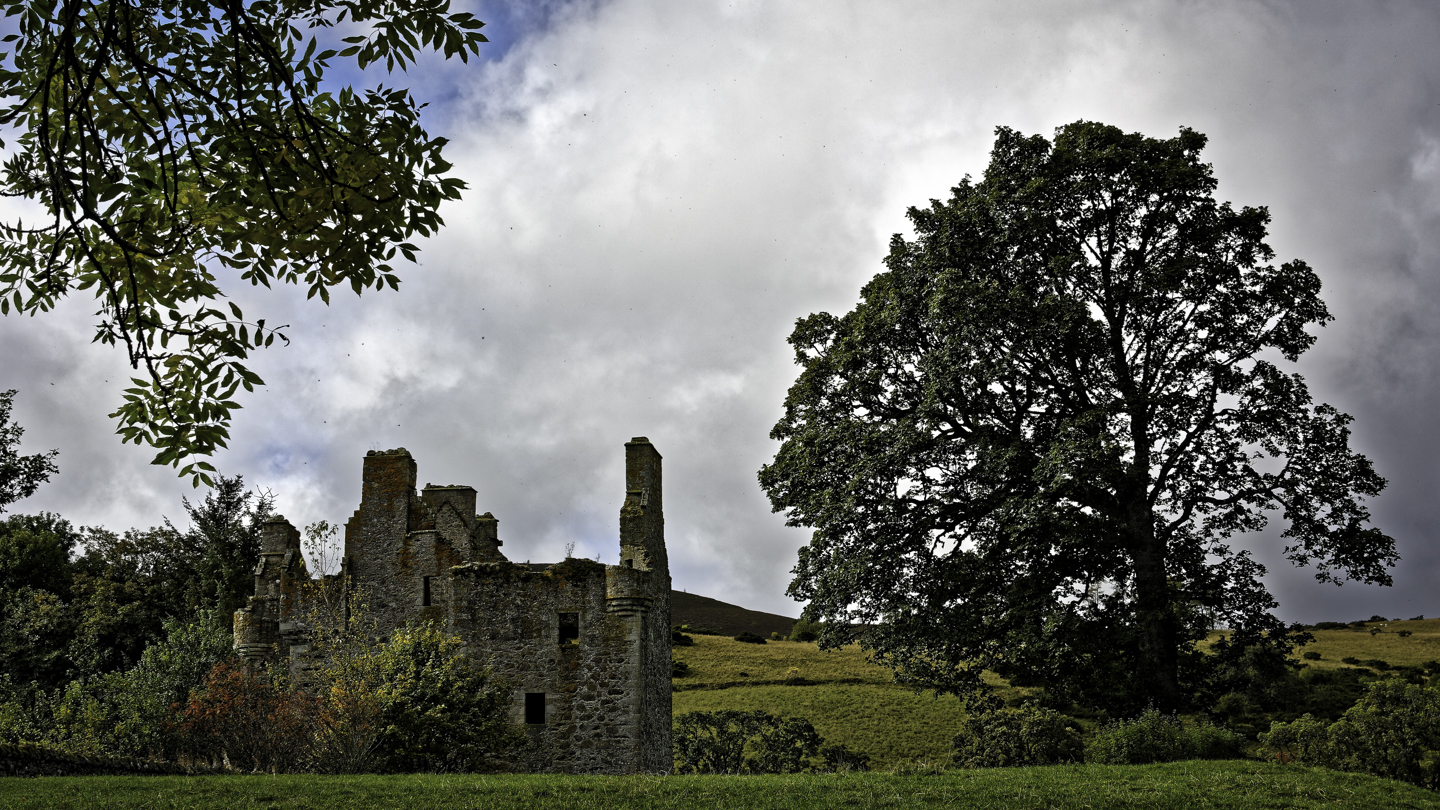
Glenbuchat Castle
Aberdeenshire
In 1948 a local club bought the surrounding parkland just so the castle's setting would stay intact: a community rescue of a landscape, not the bui…
Fortified place · Medieval
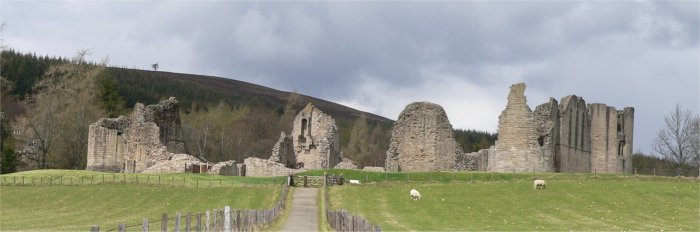
Kildrummy Castle
Aberdeenshire
A shield-shaped fortress whose sieges shaped a kingdom: from the capture and execution of Robert the Bruce's brother in 1306 to a countess's defian…
- Some walking
Fortified place · Medieval
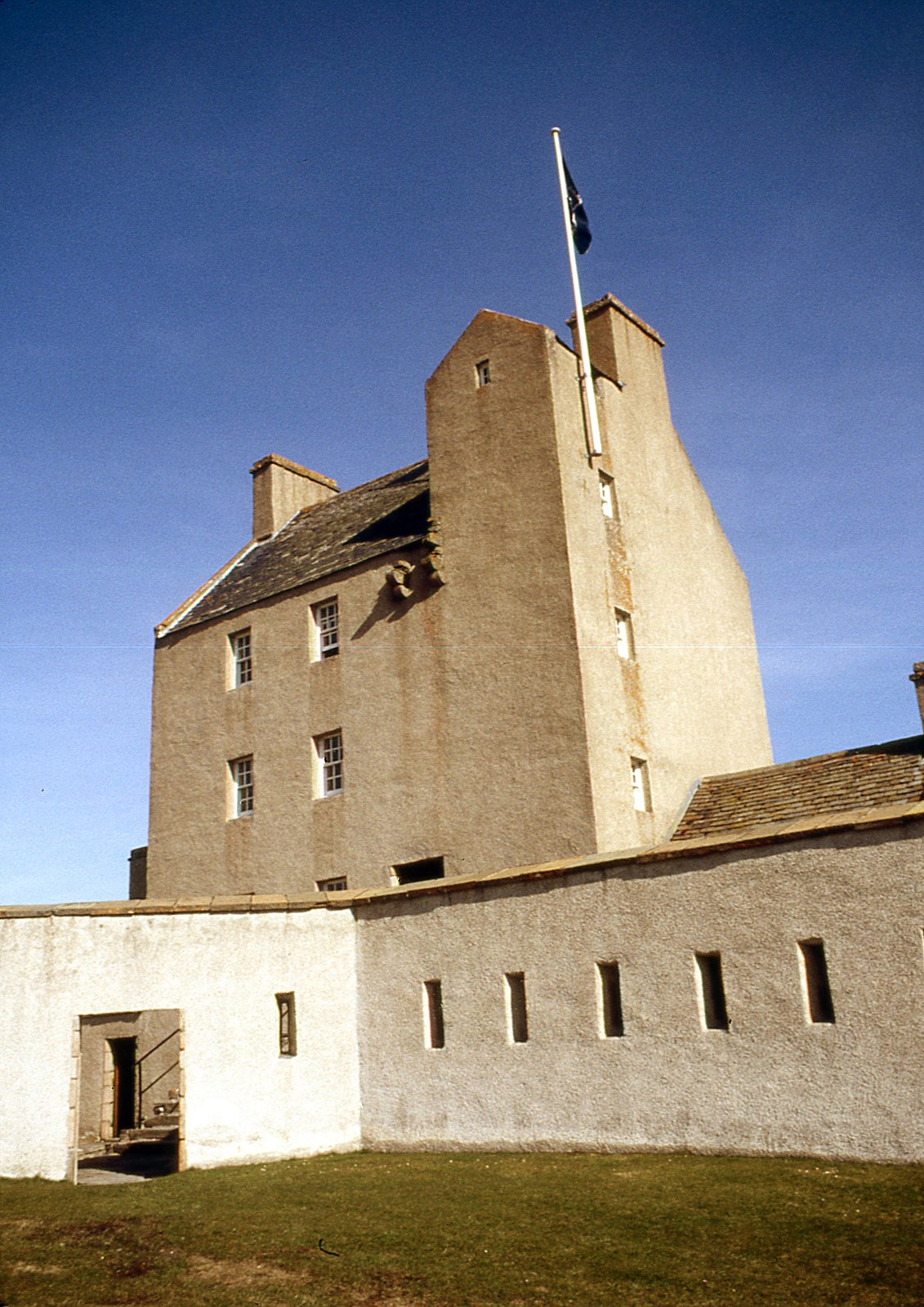
Corgarff Castle
Aberdeenshire
Burned three times over two centuries in family feuds and Jacobite risings, the tower was finally rebuilt as a government barracks to police the pa…
- Near Corgarff
- Easy path
Questions people ask
- What is the Blue cairn circle?
- A recumbent stone circle roughly 21 metres across in Aberdeenshire, with a large stone cairn heaped at its centre and a horizontally laid recumbent slab facing south-southwest.
- Why is it also called the Blue Cairn of Ladieswell?
- This is the monument's alternative local name, used alongside "Blue cairn circle" in records of the site.
- What is a recumbent stone circle?
- A Bronze Age ring in which the largest stone is laid flat rather than upright, usually facing south or southwest, flanked by two of the tallest stones in the circle.
- Why did Historic Environment Scotland call it "mutilated"?
- Because the monument's original form and stone, including its central cairn, has been altered and disturbed, leaving pits and damage recorded by surveying archaeologists.
- How big is the recumbent stone itself?
- The recumbent measures 3.60 metres long and 0.90 metres tall, one of the larger examples among Aberdeenshire's recumbent stone circles.
Sources
- Wikipedia: Blue cairn circle
- Historic Environment Scotland — Canmore
- Wikidata: Blue cairn circle
Explore more: Sacred places · Prehistoric · Aberdeenshire
The Ancient Codex, in your pocket
Get the Pocket Codex app
Carry the directory with you — Blue cairn circle and thousands of ancient places across Britain and Ireland, offline, wherever you roam.