
The Abdie Stone is a rare Class I Pictish (of the Picts, the people of northern and eastern Scotland from about AD 300 to 900) monument in Fife whose two carved faces preserve several key symbols despite its movement from its original hilltop setting.
The Abdie Stone stands in Abdie Churchyard at Lindores, a compact but striking survival of Pictish carving. Standing 1.7 metres high, its paired symbol faces reward close looking: a triple disc, crescent and V-rod on one side, and a mirror on the other.
Its present churchyard setting is not its first home. The stone originally stood on the crest of Kaim Hill, was later built into a garden wall at Grange of Lindores, and then moved to the Morthouse of Abdie Church. That sequence makes its survival as much a story of reuse and relocation as of early medieval carving.
What follows is drawn from published sources, with each claim labelled by how firmly it is established.
History
The Abdie Stone is a Class I Pictish stone in Abdie Churchyard, Lindores, Fife. Class I stones are defined here by incised symbols, and the monument preserves carving on both faces. Its survival provides a concentrated example of Pictish visual culture in a later churchyard setting. The stone is 1.7 metres high and 0.56 metres wide. One face bears a triple disc and a crescent with V-rod, while the other bears a mirror. These motifs are cut into the stone rather than presented as a sculpted cross, making the individual marks and the two-sided arrangement central to its significance.
The monument originally stood on the crest of Kaim Hill. It was later removed and incorporated into a garden wall at Grange of Lindores before being moved to the Morthouse of Abdie Church. This documented sequence records several phases of relocation while retaining the stone as a visible historic object.
Cultural influences
-
The Abdie Stone’s incised triple disc, crescent and V-rod, and mirror place it within the visual language of Class I Pictish stones, rather than the later cross-slab tradition.
Connections
-
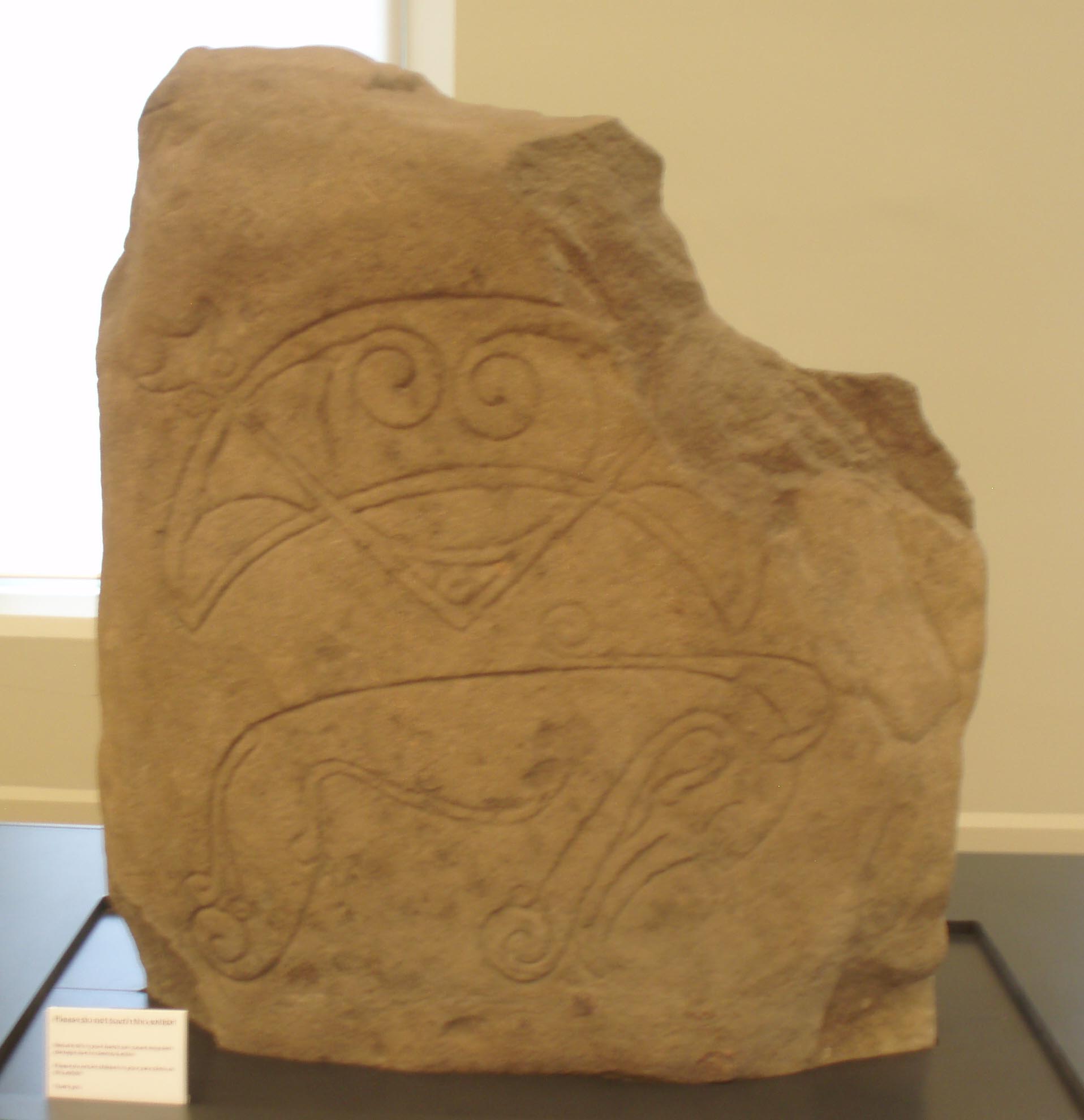
Photo: Catfish Jim and the soapdish / Wikimedia Commons / CC BY-SA 3.0 Another Pictish carved stone, allowing comparison with Abdie’s monument and the wider distribution of early medieval sculpture.
-
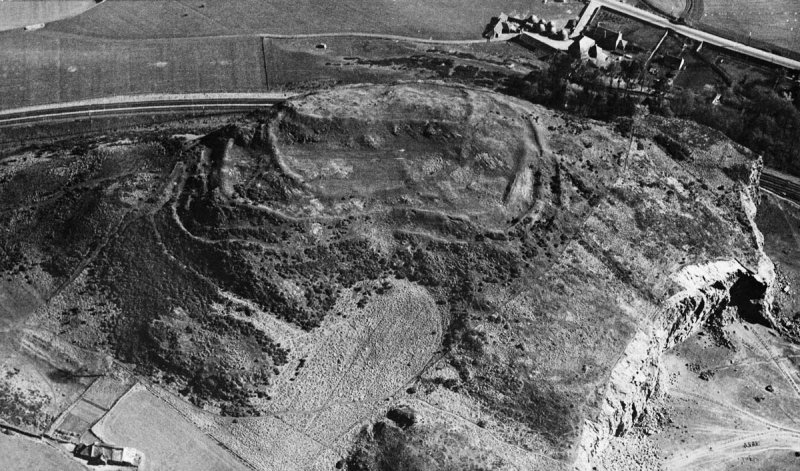
Photo: Royal Air Force / Wikimedia Commons / Public domain A nearby defended hillfort that provides a settlement context for the early medieval communities represented by Abdie Stone.
-
A Roman military site in the wider landscape, extending the area’s history of monument and settlement beyond the Pictish period.
Discovery & excavation
The stone’s documented relocation from Kaim Hill to a garden wall and then Abdie Churchyard preserves the otherwise lost sequence of its later history.
What to look for
-
A Class I Pictish stone
Class I stones carry incised Pictish symbols and no Christian cross, which puts them earlier than the relief-carved cross-slabs of Class II. The classification is John Romilly Allen and Joseph Anderson's, and it remains the framework these stones are read through.
-
Moved three times
The stone originally stood on the crest of Kaim Hill. It was taken down and built into a garden wall at Grange of Lindores, then moved again to the morthouse at Abdie Church, where it now stands in the churchyard.
-
Built into a wall
Being incorporated into field or garden walling is the commonest fate of Pictish stones that left their original settings. It usually preserves them — the stone is kept because it is useful — while destroying every trace of the context they came from.
-
What the move cost
Because it was taken off Kaim Hill, nothing can now be said about what stood around it, what it faced, or why that crest was chosen. The carving survives; the siting, which is half the evidence in a monument of this kind, does not.
-
The triple disc
The triple disc on one carved face.
-
The crescent and V-rod
The crescent and V-rod beside it.
-
The mirror
The mirror symbol on the other face.
-
The stone’s proportions
The stone’s tall, narrow proportions in Abdie Churchyard.
Plan your visit
- Location
- 56.3365°N · 3.2038°W
- Access
- Open access
- Terrain
- Easy going
- Time needed
- About 45 minutes
Nearby places
Fortified place · Iron Age
Clatchard Craig
Fife
Clatchard Craig was an important stronghold of the Picts, the people of northern and eastern Scotland from about AD 300 to 900, with evidence of el…
- Some walking
Building or ruin · Roman
Carpow Roman Fort
Perth and Kinross
A thirty-acre Roman fort at the meeting of the Tay and the Earn, held from the late second century into the early third.
- Near Carpow

Fortified place · Iron Age
Norman's Law
Fife
Norman’s Law pairs a scheduled defended settlement dating from from around 800 BC up to the Roman conquest with commanding views over Fife, the Tay…
- Near St Andrews
- Some walking
Fortified place · Iron Age
Norman's Law Hillfort
Fife
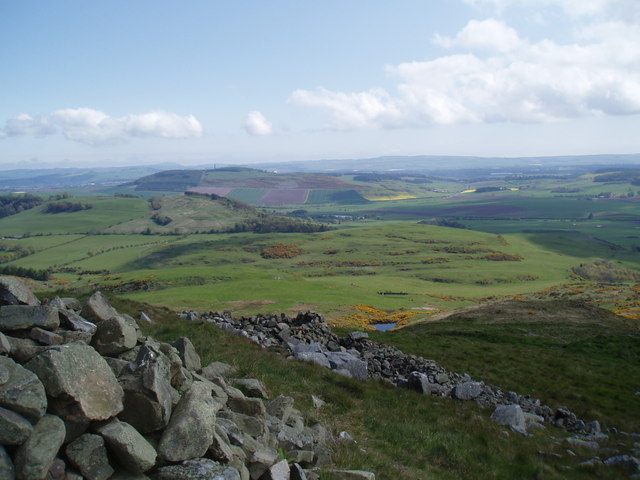
Two concentric stone ramparts enclosing roughly four hectares mark this as a hillfort (an upland enclosure defended by earthen banks) community of…
- Near St Andrews
- Rough ground
The setting
Kirk of Abdie and Dunbog, where the Abdie stone was recorded.
Photo: Les Hull / Wikimedia Commons / CC BY-SA 2.0
Abdie Parish Kirk, the church associated with the recorded Abdie stone.
Photo: Bill Harrison / Wikimedia Commons / CC BY-SA 2.0
Abdie and Dunbog Kirk, the church associated with the recorded Abdie stone.
Photo: Scott Cormie / Wikimedia Commons / CC BY-SA 2.0
Questions people ask
- What type of monument is the Abdie Stone?
- It is a Class I Pictish stone.
- Which symbols are carved on it?
- It has a triple disc, crescent and V-rod on one face, and a mirror on the other.
- Where did the stone originally stand?
- It originally stood on the crest of Kaim Hill.
Sources
The Ancient Codex, in your pocket
Get the Pocket Codex app
Carry the directory with you — Abdie stone and thousands of ancient places across Britain and Ireland, offline, wherever you roam.