
Carved with the Pictish beast and the crescent and V-rod, the stone was recycled as ordinary wall-stone for generations before Dundee Museums rescued it into public keeping in 1969.
A slab of red sandstone, its face worked with two curling symbols, spent an unknown stretch of its history doing nothing more dignified than holding up a wall. Whoever built that wall, somewhere south-east of Strathmartine Castle in Angus, seems to have cared little for the carving on the stone they were using as ordinary masonry — a fate that has befallen a good many Pictish monuments, quietly recycled into later buildings by people who no longer read their meaning.
What survives on the stone’s surface is unmistakably Pictish: the so-called Pictish beast, an elongated creature with a curling snout that appears again and again on symbol stones across eastern Scotland without ever being convincingly identified with a real animal, paired with a crescent and V-rod, one of the most common symbol combinations in the whole Pictish repertoire. As a Class I stone — meaning it bears only incised symbols, with no cross or other Christian imagery worked into it — it belongs to the plainer, earlier tradition of Pictish carving, before symbols began to be combined with overtly religious sculpture.
The stone’s more recent history is better documented than its origin. It was taken from the wall and moved to a property in Dundee in the early twentieth century, then formally acquired for Dundee Museums in 1969. It has been on public display at the McManus Galleries in Dundee ever since, one of a scatter of Pictish stones now kept in civic collections some distance from the Angus landscape in which they were carved.
What follows is drawn from published sources, with each claim labelled by how firmly it is established.
History
Long before any record of it exists, an unknown carver worked a slab of Old Red Sandstone with two symbols that sit at the heart of Pictish visual culture: the enigmatic Pictish beast, with its curling snout and paddle-like limbs, and the crescent and V-rod, a pairing repeated on stones the length of eastern Scotland. As a Class I stone, it carries these symbols alone, incised into the bare rock with no cross or other Christian carving added, placing it among the plainer and generally earlier tradition of Pictish symbol stones.
At some later point, in a stretch of the stone's history that goes unrecorded, it stopped being a monument and started being building material. It was built into a wall south-east of Strathmartine Castle, its carved face presumably no more remarkable to the builders than any other block of sandstone to hand. Reusing older carved stones in later walls and buildings was common practice across Scotland, and it is this kind of casual recycling that hid, and incidentally preserved, a good number of surviving Pictish stones.
In the early twentieth century the stone was removed from that wall and taken to a property in Dundee, a move that separated it permanently from the Strathmartine ground it had stood near for so long. The relocation brought it into private hands in the city rather than leaving it exposed to further building work, weathering, or simple loss, and set it on the path toward eventual public custody.
The stone was formally acquired for Dundee Museums in 1969, passing from private ownership into a civic collection where it could be catalogued, conserved, and studied alongside other Pictish material gathered in the city. That acquisition marked the point at which the stone's future as a museum object, rather than a piece of a private garden or wall, was secured. The stone remains on display at the McManus Galleries in Dundee, where its two symbols can still be read on the sandstone surface, one of a number of Pictish stones drawn out of the Angus countryside and into the city's museum collections.
Connections
-
McManus Galleries, Dundee
The stone has been held and displayed here since its acquisition for Dundee Museums in 1969.
-
Strathmartine Castle
The stone was formerly built into a wall south-east of the castle before being removed to Dundee in the early 20th century.
-
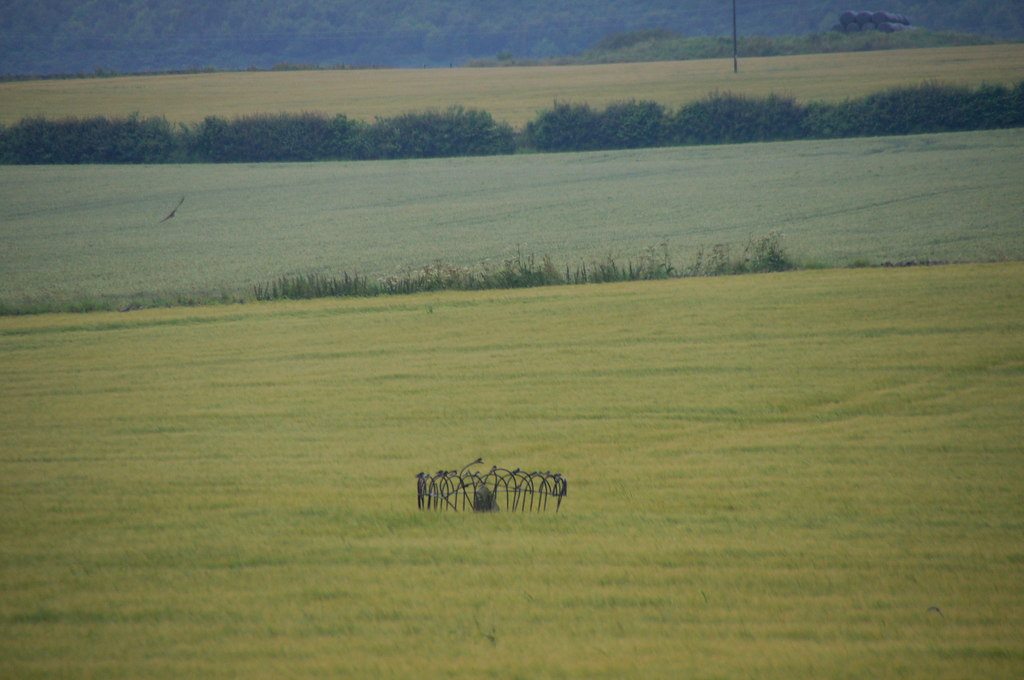
Photo: Mike Pennington / Wikimedia Commons / CC BY-SA 2.0 A nearby Class II Pictish cross-slab at Balluderon, associated with the wider Strathmartine concentration of carved stones.
Discovery & excavation
The stone was recovered from a wall south-east of Strathmartine Castle and moved to a Dundee property in the early twentieth century. Dundee Museums acquired it in 1969; it is now displayed at the McManus Galleries.
Finds now held at: McManus Galleries, Dundee.
What to look for
-
The Pictish beast
An elongated creature with a curling snout and paddle-like limbs, one of the most recognisable and least understood symbols in the Pictish repertoire.
-
Crescent and V-rod
A crescent shape overlaid with a broken, V-shaped rod, one of the most frequently paired symbols found on Pictish stones across eastern Scotland.
-
Old Red Sandstone
The stone is carved from Old Red Sandstone, the reddish sedimentary rock typical of Angus and the wider Strathmore area.
Plan your visit
- Location
- 56.5128°N · 3.0188°W
- Nearest settlement
- Dundee
- Access
- Paid entry — managed visitor site
- Terrain
- Easy going
- Time needed
- About 45 minutes
- Best time
- Visit during the published museum opening hours, since the original stones are preserved indoors.
- What survives
- The Class I sandstone slab survives in the McManus Galleries, where its Pictish beast and crescent-and-V-rod carvings remain visible.
- Facilities
- The museum provides the relevant visitor facilities; check the official page for current opening arrangements.
Opening & admission
Check the McManus Galleries' own site for current opening hours before visiting.
- The stone itself is a museum object, not a site to visit in situ — it's displayed at the McManus Galleries in Dundee, not at Strathmartine.
Nearby places
Carved stone · Pictish & early medieval
Balluderon Stone
Angus
Only the lower half of this Pictish (of the Picts, the people of northern and eastern Scotland from about AD 300 to 900) cross slab survives, yet l…
- Near Dundee
- Easy path
Building or ruin · Medieval
Tealing Earth House
Angus
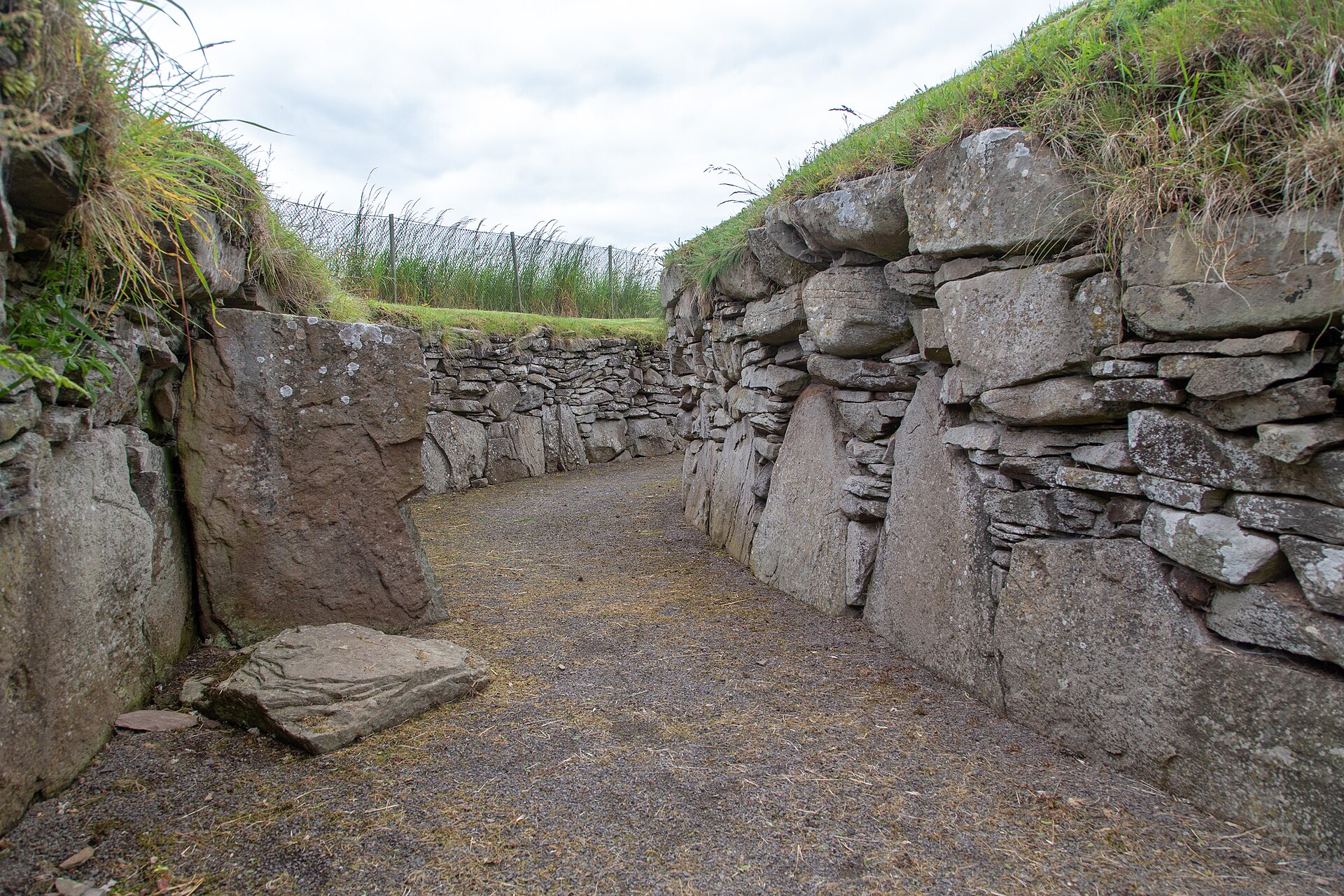
Its walls incorporate two Bronze Age (roughly 2500–800 BC, when metal tools first spread) stones carved with cup-and-ring marks, built by Iron Age…
- Near Tealing
Sacred place · Prehistoric
Balgarthno Stone Circle
dundee-city
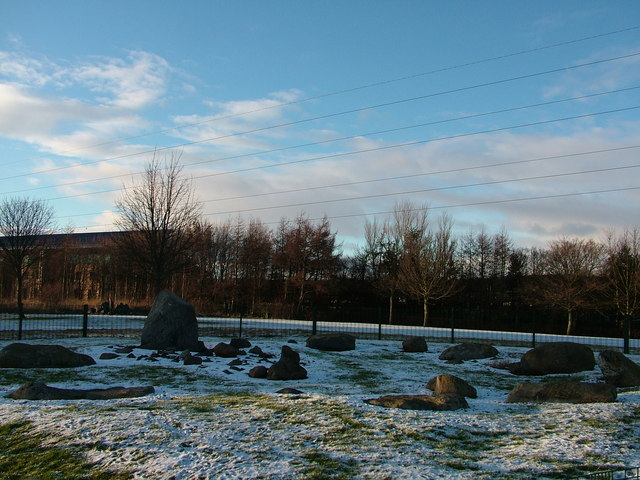
Nine stones on a circle six and a half metres across, all but one of them down, with a causeway running thirty metres east: surrounded now by the h…
.jpg?width=800)
Minor monument · Medieval
Market Cross, Main Street, Longforgan
Perth and Kinross
Removed to the grounds of Castle Huntly at the end of the eighteenth century, and not put back on Main Street until 1989.
- Near Longforgan
- Easy path
Questions people ask
- What is the Strathmartine Castle Stone?
- A Class I Pictish symbol stone from Strathmartine, Angus, carved with the Pictish beast and a crescent and V-rod, now held in Dundee's civic museum collection.
- What material is the stone made from?
- Old Red Sandstone, the reddish sedimentary rock common across Angus and the wider Strathmore area.
- Where can the stone be seen today?
- On display at the McManus Galleries in Dundee, having been acquired for Dundee Museums in 1969.
- Where was the stone found before it reached Dundee?
- It was formerly built into a wall south-east of Strathmartine Castle, then moved to a Dundee property in the early 20th century.
- What symbols are carved on the stone?
- Two Pictish symbols: the enigmatic Pictish beast and a crescent and V-rod, incised without any Christian imagery.
Sources
- Wikipedia: Strathmartine Castle Stone
- Historic Environment Scotland — Canmore
- Wikidata: Strathmartine Castle Stone
Explore more: Carved stones · Pictish & early medieval · Angus
The Ancient Codex, in your pocket
Get the Pocket Codex app
Carry the directory with you — Strathmartine Castle Stone and thousands of ancient places across Britain and Ireland, offline, wherever you roam.