Removed to the grounds of Castle Huntly at the end of the eighteenth century, and not put back on Main Street until 1989.
For about two hundred years this cross was not in the village at all. Towards the end of the eighteenth century it was removed from Longforgan and set up in the policies of Castle Huntly — the landscaped grounds around the house — where it stood as an ornament rather than as the marker of a burgh’s market rights. It was not returned to Main Street until 1989.
The cross itself is sandstone and belongs to the later seventeenth century: a slim column with a Corinthian capital, standing on a corniced square pedestal above a wide octagonal base, with a lion on top. Such a cross was a burgh’s licence to trade rendered in stone, and the fixed point at which official business was announced aloud, so its position in the street was the whole purpose of it.
Its attribution rests on a family likeness. It is presumed to have been erected by Patrick Lyon, third Earl of Kinghorne and first Earl of Strathmore, who inherited the Huntly Castle estate in about 1660 and put up a similar cross at Glamis. Nothing on the stone itself names him; the pairing with the Glamis cross is the evidence.
Two centuries of weather in the castle grounds have told on it. The capital and the lion above are described as considerably weathered, so the carving that would once have made the cross legible from the street is now indistinct.
The cross was formerly Scheduled Ancient Monument number 1648, scheduled on 12 March 1963 and descheduled on 12 May 2016, when its protection transferred to the listing. It is described by Lawrence Melville in The Fair Land of Gowrie of 1939 and recorded in the Old Statistical Account of 1797 — the latter written while the cross was, or was about to be, away from the village.
What follows is drawn from published sources, with each claim labelled by how firmly it is established.
History
The cross belongs to the later seventeenth century and is cut from sandstone — a slim column with a Corinthian capital, set on a corniced square pedestal above a wide octagonal base, and surmounted by a lion. Crosses of this kind were a burgh's licence to trade made visible in stone, and the fixed spot at which anything official was announced aloud. It is presumed to have been erected by Patrick Lyon, third Earl of Kinghorne and first Earl of Strathmore, who inherited the Huntly Castle estate in about 1660. He put up a similar cross at Glamis, and the resemblance between the two is the basis for attributing this one to him.
Towards the end of the eighteenth century the cross was removed from the village and taken into the policies of Castle Huntly, the landscaped grounds around the house. It stood there rather than in the settlement it had been raised to serve. In 1989 the cross was re-erected at its present site on Main Street in Longforgan, returning it to the village after roughly two centuries in the castle grounds. The capital and its lion are considerably weathered.
It was formerly Scheduled Ancient Monument number 1648, scheduled on 12 March 1963 and descheduled on 12 May 2016, when protection passed to the listing instead. Lawrence Melville described it in The Fair Land of Gowrie in 1939, and it appears in the Old Statistical Account of 1797.
People
-
Patrick Lyon, third Earl of Kinghorne and first Earl of Strathmore
Inherited the Huntly Castle estate about 1660 and is presumed to have erected this cross, along with a similar one at Glamis.
Cultural influences
-
A restored village market symbol
The mercat cross made Longforgan’s trading and public-announcement rights visible before its removal to Castle Huntly and return to Main Street in 1989.
Connections
-
Glamis
Patrick Lyon erected a similar cross there, and the likeness between the two is what attributes this one to him.
-
Castle Huntly
The cross stood in the castle's policies from the late eighteenth century until it was returned to Longforgan in 1989.
What to look for
-
The Corinthian capital and lion
A slim column with a carved capital carrying a lion above it, both considerably weathered.
-
The octagonal base
A wide octagonal base supporting a corniced square pedestal, which in turn carries the shaft.
Plan your visit
- Location
- 56.4572°N · 3.1200°W
- Nearest settlement
- Longforgan
- Access
- Visible from a public way
- Terrain
- Easy going
- Time needed
- About 15 minutes
- What survives
- The sandstone column, Corinthian capital and lion are re-erected on Main Street; the carved capital and lion are considerably weathered.
Nearby places
Minor monument · Medieval
Village And Market Cross, Rossie
Perth and Kinross
Two lions and two unicorns share the top of this cross, holding up a ball finial between them.
- Easy path
Sacred place · Prehistoric
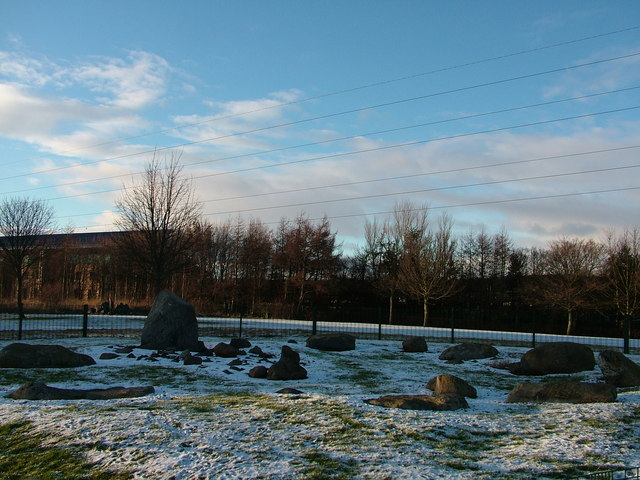
Balgarthno Stone Circle
dundee-city
Nine stones on a circle six and a half metres across, all but one of them down, with a causeway running thirty metres east: surrounded now by the h…

Sacred place · Medieval
Balmerino Abbey
Fife
Balmerino Abbey preserves rare Cistercian fabric on the Fife coast, including a vaulted chapter house, after centuries of destruction, residential…
.jpg?width=800)
Ancient tree · Medieval
The Balmerino Sweet Chestnut
Fife
The Balmerino Sweet Chestnut makes former monastic grounds a record of living heritage: inventory data, exceptional girth and national tree designa…
- Near Balmerino
The setting
Near Market Cross, Main Street, Longforgan, about 14 metres away.
Photo: JThomas / Wikimedia Commons / CC BY-SA 2.0
Near Market Cross, Main Street, Longforgan, about 18 metres away.
Photo: JThomas / Wikimedia Commons / CC BY-SA 2.0
Near Market Cross, Main Street, Longforgan, about 20 metres away.
Photo: JThomas / Wikimedia Commons / CC BY-SA 2.0
Questions people ask
- How old is the Longforgan market cross?
- It dates from the later seventeenth century and is presumed to have been erected by Patrick Lyon, first Earl of Strathmore, who inherited the Huntly Castle estate around 1660.
- Has the cross always stood on Main Street?
- No. It was removed to the policies of Castle Huntly towards the end of the eighteenth century and only re-erected at its present site in 1989.
- What is a mercat cross?
- A stone marker of a burgh's licence to trade, which doubled as the fixed point for announcing anything official.
Sources
The Ancient Codex, in your pocket
Get the Pocket Codex app
Carry the directory with you — Market Cross, Main Street, Longforgan and thousands of ancient places across Britain and Ireland, offline, wherever you roam.