
Balmerino Abbey preserves rare Cistercian fabric on the Fife coast, including a vaulted chapter house, after centuries of destruction, residential reuse and archaeological conservation.
A long north wall of the former church and the vaulted rooms of the eastern range give Balmerino Abbey its distinctive silhouette in Fife. The chapter house, sacristy and service rooms preserve rare Cistercian fabric within a monastery that has stood ruinous since the 16th century.
Founded from Melrose under royal and queenly patronage, the abbey’s history includes burial, wartime burning, Reformation dismantling and later conversion into a house. Archaeological excavation and 20th-century repairs have helped clarify its plan, while the present condition remains fragile and access restricted for safety.
What follows is drawn from published sources, with each claim labelled by how firmly it is established.
The name
The medieval settlement name Balmerinach is glossed as ‘St Merinac’s Place’. The association is traditionally linked with St Merinac, said to have travelled with St Regulus when the relics of St Andrew reached Scotland.
History
Balmerino Abbey, also called St Edward’s Abbey, was founded between 1227 and 1229 by monks from Melrose Abbey, with the patronage of Ermengarde de Beaumont and King Alexander II. It remained a daughter house of Melrose, and its church was complete enough for Ermengarde’s burial by 1233. Around 20 monks lived there at the beginning of the 16th century.
During the Rough Wooing, an English force burned the abbey in December 1547. It was allegedly damaged again in 1559 during Reformation destruction, and the community appears to have died out soon afterwards. John Hay, made lay commendator in 1561, converted parts of the abbey to a house while dismantling buildings such as the church for stone; the estate became a temporal lordship in the early 17th century.
The ruins were excavated in 1896, revealing the church plan, and Francis William Deas carried out repairs and consolidation after a 1910 survey. The 13th-century chapter house retains three bays of quadripartite vaulting; the sacristy, later used as a kitchen, also survives. The site is a scheduled monument under the National Trust for Scotland, though access is restricted because of its condition.
People
-
Ermengarde de Beaumont
Queen of Scotland and a patron of the abbey’s foundation; she was buried in its church in 1233.
-
John Hay
Lay commendator from 1561 who converted parts of the abbey buildings into a house while other structures, including the church, were dismantled for stone.
Cultural influences
-
Founded by monks from Melrose Abbey, Balmerino remained its daughter house and carried Cistercian religious life to the Fife coast until the Reformation period.
Connections
-
.jpg?width=320)
Photo: Bill Harrison / Wikimedia Commons / CC BY-SA 2.0 A long-lived natural landmark in the abbey’s landscape, preserving a tangible link between the monastic site and its estate setting.
-
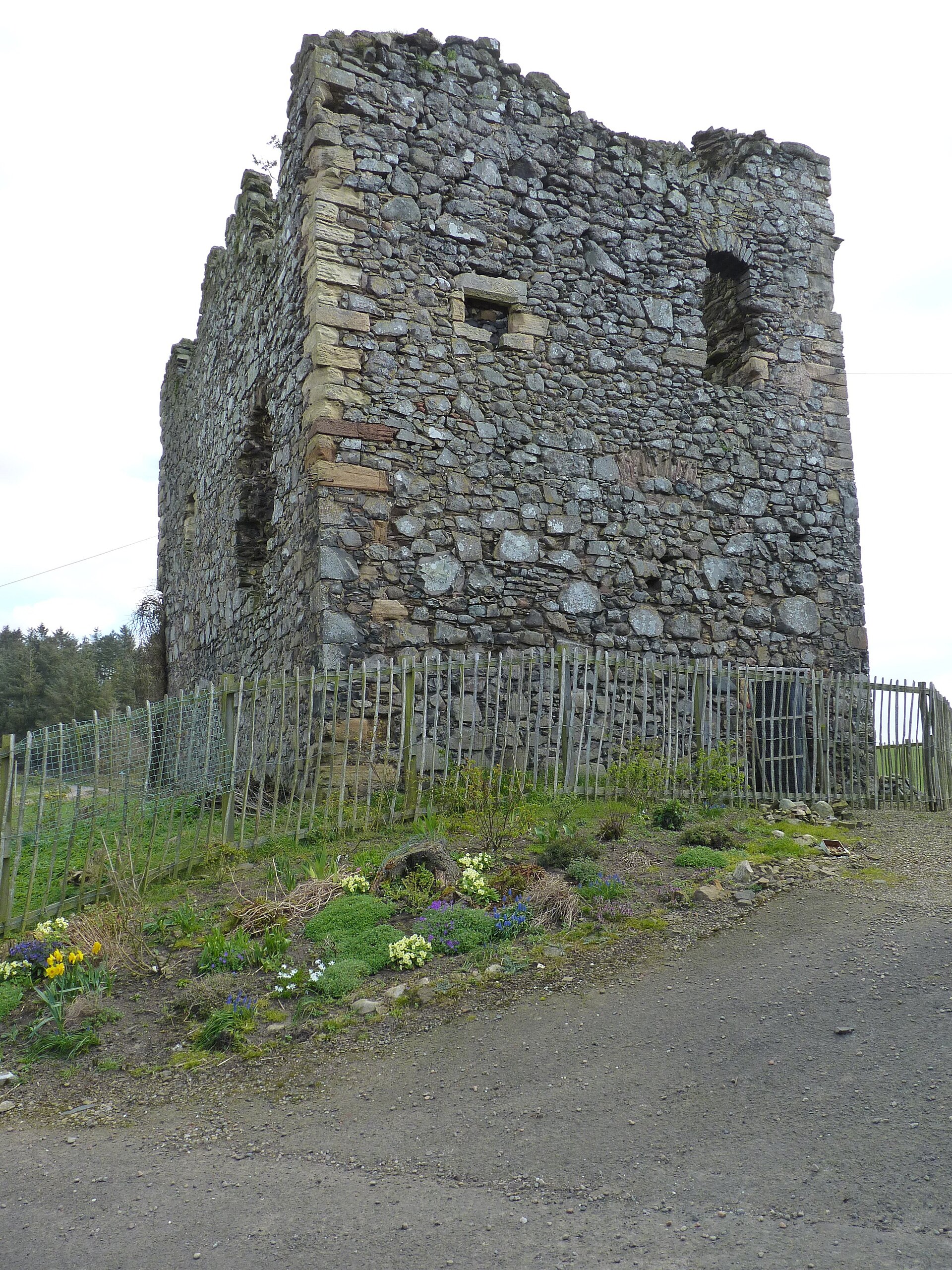
Photo: James Allan / Wikimedia Commons / CC BY-SA 2.0 A surviving estate structure that helps interpret the agricultural landscape around Balmerino Abbey and later Fife residences.
-

Photo: Richard Webb / Wikimedia Commons / CC BY-SA 2.0 A prominent hillfort in north-east Fife, extending the area’s history of settlement and defence beyond the medieval abbey.
Discovery & excavation
The ruins were excavated in 1896, when the plan of the church was uncovered. A 1910 survey by Francis William Deas led to repairs and consolidation of the surviving buildings.
What to look for
-
The north wall
Trace the surviving north wall of the former 66-metre church, whose long run shows the scale of the abbey church after the rest was dismantled.
-
The chapter house
Look into the thirteenth-century chapter house for the three surviving bays of quadripartite vaulting, the abbey’s most legible interior architectural detail.
-
The sacristy stair
Find the sacristy beside the chapter house and the staircase added when this former liturgical room was adapted as a later kitchen.
-
The day stair
Look for the day stair built into the chapter-house north wall, a narrow surviving route that makes the multi-level abbey buildings easier to read.
-
The Spanish chestnut
In the grounds, seek out the Spanish chestnut tree, a conspicuous living landmark beside the stone ruins and the abbey’s former precinct.
What is said
Folklore and tradition, recorded as what is said — not as established fact.
-
Local tradition identifies Balmerinach as St Merinac’s Place and says that the monk accompanied St Regulus when St Andrew’s relics came to Scotland in 347. The tradition further associates the abbey’s site with an early chapel chosen by St Merinac.
Plan your visit
- Location
- 56.4098°N · 3.0415°W
- Time needed
- About 60 minutes
Nearby places
.jpg?width=800)
Ancient tree · Medieval
The Balmerino Sweet Chestnut
Fife
The Balmerino Sweet Chestnut makes former monastic grounds a record of living heritage: inventory data, exceptional girth and national tree designa…
- Near Balmerino
Minor monument · Medieval
Dovecot, Creich Castle
Fife
Creich’s 1723 pigeon house is an unusually formal castle lean-to, where twin chambers, rat-proofing and dormer entries make estate food production…

Fortified place · Iron Age
Norman's Law
Fife
Norman’s Law pairs a scheduled defended settlement dating from from around 800 BC up to the Roman conquest with commanding views over Fife, the Tay…
- Near St Andrews
- Some walking
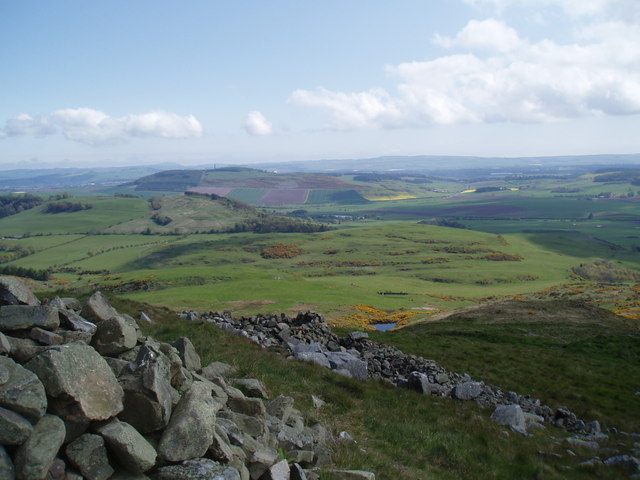
Fortified place · Iron Age
Norman's Law Hillfort
Fife
Two concentric stone ramparts enclosing roughly four hectares mark this as a hillfort (an upland enclosure defended by earthen banks) community of…
- Near St Andrews
- Rough ground
Questions people ask
- Who founded Balmerino Abbey?
- Monks from Melrose Abbey founded it between 1227 and 1229, with Ermengarde de Beaumont and King Alexander II as patrons.
- What happened during the Rough Wooing?
- An English force burned the abbey in December 1547.
- Which room is best preserved?
- The original 13th-century chapter house is the best survival, retaining three bays of quadripartite vaulting.
Sources
The Ancient Codex, in your pocket
Get the Pocket Codex app
Carry the directory with you — Balmerino Abbey and thousands of ancient places across Britain and Ireland, offline, wherever you roam.