Minor monument · Medieval · Perth and Kinross
Village And Market Cross, Rossie
Two lions and two unicorns share the top of this cross, holding up a ball finial between them.
Two lions and two unicorns share the head of this cross, holding a ball finial up between them. The lion and the unicorn are the supporters of the royal arms, and one of each is the usual allowance; doubling both on a village cross is a far more ambitious scheme than the size of the monument would lead anyone to expect.
Below them the shaft is a square fluted Corinthian column, and at its neck the stone carries a date and two sets of initials — 1746, K.G. and R.H. That is the year of Culloden. The record does not connect the two, and neither should this page, but it does place the raising of an emphatically royal group of beasts in a year when the question of which crown Scotland answered to had just been settled by force.
Such a cross stood for a burgh’s licence to trade, and doubled as the platform from which announcements were delivered to whoever was in the street. This one no longer performs that function in a street. It stands at Old Rossie within the policies of Rossie Priory — the landscaped grounds around the house — rather than in an open market place, which is a common enough fate for crosses in this part of Perthshire.
It is Scheduled Ancient Monument number 1649 as well as being listed, and it is recorded by Lawrence Melville in The Fair Land of Gowrie and in J. W. Small’s Scottish Market Crosses.
What follows is drawn from published sources, with each claim labelled by how firmly it is established.
History
The cross is dated 1746 at the neck of the shaft, alongside two sets of initials given as K.G. and R.H. That places its raising in the year of Culloden, though nothing in the record ties the two events together beyond the coincidence of date. It takes the form of a square fluted Corinthian column, the flutes running the length of the shaft below the carved group. Crosses of this kind stood for a burgh's licence to trade and doubled as the platform for public announcement, delivered to whoever happened to be in the street at the time.
The top carries an unusual arrangement — two lions and two unicorns together, bearing a ball finial between them. The lion and the unicorn are the supporters of the royal arms of Scotland and of the union, and doubling both of them on a village cross is a considerably more elaborate scheme than most crosses of this size attempt. The cross is at Old Rossie within the policies of Rossie Priory, the landscaped grounds around the house, rather than in an open market place where it could still be used for its original purpose. It carries protection twice over, being Scheduled Ancient Monument number 1649 as well as a listed structure.
Lawrence Melville describes it in The Fair Land of Gowrie, and it appears again in J. W. Small's Scottish Market Crosses, which records it among the crosses of the region and places it in the company of the other surviving Perthshire examples, several of which have likewise been moved into private grounds.
Cultural influences
-
Royal heraldry at a former market cross
The cross combines the familiar market-cross form with carved lions and unicorns, royal symbols now set in the grounds of Rossie Priory rather than an active market place.
Connections
-
Rossie Priory
The cross stands at Old Rossie within the priory's policies, the landscaped grounds around the house.
What to look for
-
The lions and unicorns
Two of each share the head of the cross, holding a ball finial between them.
-
The dated neck
The shaft carries the date 1746 with the initials K.G. and R.H. at its neck.
-
The fluted column
A square Corinthian column, fluted along its length, carrying the carved group above.
Plan your visit
- Location
- 56.4634°N · 3.1504°W
- Access
- Visible from a public way
- Terrain
- Easy going
- Time needed
- About 15 minutes
- What survives
- The 1746 fluted Corinthian column survives with carved lions, unicorns and a ball finial, within the Rossie Priory grounds.
Nearby places
.jpg?width=800)
Minor monument · Medieval
Market Cross, Main Street, Longforgan
Perth and Kinross
Removed to the grounds of Castle Huntly at the end of the eighteenth century, and not put back on Main Street until 1989.
- Near Longforgan
- Easy path
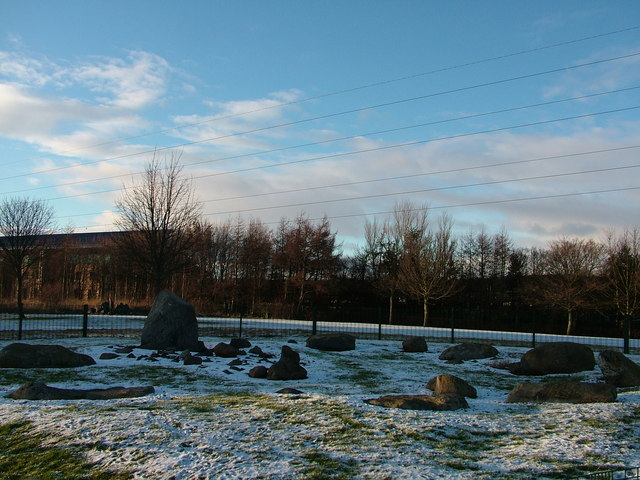
Sacred place · Prehistoric
Balgarthno Stone Circle
dundee-city
Nine stones on a circle six and a half metres across, all but one of them down, with a causeway running thirty metres east: surrounded now by the h…
.jpg?width=800)
Minor monument · Medieval
Perth Mercat Cross, Fingask Castle
Perth and Kinross
A cross assembled out of loose window tracery, standing beside a font carried here from Kinnaird: both given nineteenth-century dates that the ston…
- Near Perth
- Easy path
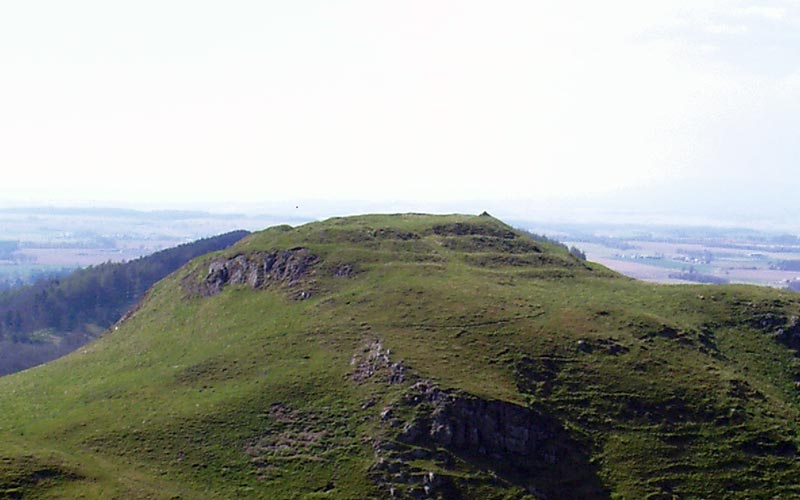
Fortified place · Iron Age
Dunsinane Hill
Perth and Kinross
Nineteenth-century antiquarians came here because of Macbeth and dug the hill fort apart. Little of value was learned.
- Some walking
Questions people ask
- When was the Rossie market cross raised?
- It is dated 1746 at the neck of the shaft, with the initials K.G. and R.H.
- What is carved on top?
- Two lions and two unicorns together, bearing a ball finial between them.
- Is the cross protected?
- Yes. It is Scheduled Ancient Monument number 1649, as well as being listed.
Sources
The Ancient Codex, in your pocket
Get the Pocket Codex app
Carry the directory with you — Village And Market Cross, Rossie and thousands of ancient places across Britain and Ireland, offline, wherever you roam.