
A cross assembled out of loose window tracery, standing beside a font carried here from Kinnaird — both given nineteenth-century dates that the stones themselves do not support.
The cross in the gardens at Fingask was never made as a cross. It has been put together out of tracery fragments — the carved stone ribs that once divided the lights of a Gothic window — salvaged from somewhere and reassembled into an upright. Cut into it is the date 1100, in lettering of the nineteenth century.
Beside it is a plain octagonal font, brought here from Kinnaird and mounted on a base made for it in the nineteenth century. That base carries the date 1153, again in Victorian letters. Neither number can be checked against the stone it is cut into, because in both cases the inscription is several hundred years younger than the object it purports to date.
This is a collection rather than a monument. Medieval fragments were gathered into the castle gardens and arranged there, which was a common enough thing for a nineteenth-century owner to do — the stones were rescued from wherever they had fetched up after the buildings they belonged to came down, and set out where they could be admired.
The result is genuinely medieval material presented in a Victorian frame. The tracery is real; the cross is not. The font is real; its date is a nineteenth-century opinion. Reading the group means separating the stones from the confidence with which they were labelled.
What follows is drawn from published sources, with each claim labelled by how firmly it is established.
History
What stands in the gardens at Fingask is a collection of medieval fragments rather than a single monument. The pieces were brought together here, and they come from more than one original building, so the group is best read as an assembly rather than as anything that ever stood as a whole. Among them is a plain octagonal font on a nineteenth-century base. The font was brought from Kinnaird, and its base carries the date 1153 cut in nineteenth-century lettering — a date supplied by whoever set the font up rather than by anyone who made it.
The cross in the group is made up from tracery fragments, the carved stone ribs that divide the lights of a Gothic window. It carries the date 1100, again in later lettering. Neither the font nor the cross can be dated from its own inscription, since both were cut long after the stones were carved. The practice of gathering medieval fragments into a country-house garden was widespread in the nineteenth century, and the Fingask group is a clear example. The stones were rescued from wherever they had ended up, given dates that flattered them, and arranged as garden ornaments.
Cultural influences
-
Medieval fragments turned garden ornaments
The assembled cross and font reflect the nineteenth-century practice of collecting medieval fragments into country-house gardens.
Connections
-
Kinnaird
The plain octagonal font in the Fingask group was brought from Kinnaird and set on a new base in the nineteenth century.
-
Fingask Castle
The fragments are arranged in the castle gardens, where they were assembled as ornaments rather than as a working monument.
Discovery & excavation
The upper part of Perth’s demolished mercat cross was moved to Fingask Castle’s gardens in 1765, where it survives as a displaced fragment rather than an excavated find.
What to look for
-
The tracery cross
A cross made up from fragments of Gothic window tracery — carved stone ribs that once divided the lights of a window — rather than from a purpose-cut shaft.
-
The nineteenth-century inscriptions
The dates 1153 and 1100 are cut in nineteenth-century letters, so they record what a Victorian owner believed rather than what the stones can prove.
-
The plain octagonal font
Brought from Kinnaird and mounted on a base made for it in the nineteenth century.
Plan your visit
- Location
- 56.4329°N · 3.2533°W
- Nearest settlement
- Perth
- Access
- Visible from a public way
- Terrain
- Easy going
- Time needed
- About 15 minutes
- What survives
- A plain octagonal font on a nineteenth-century base stands beside a cross assembled from Gothic window-tracery fragments.
Nearby places
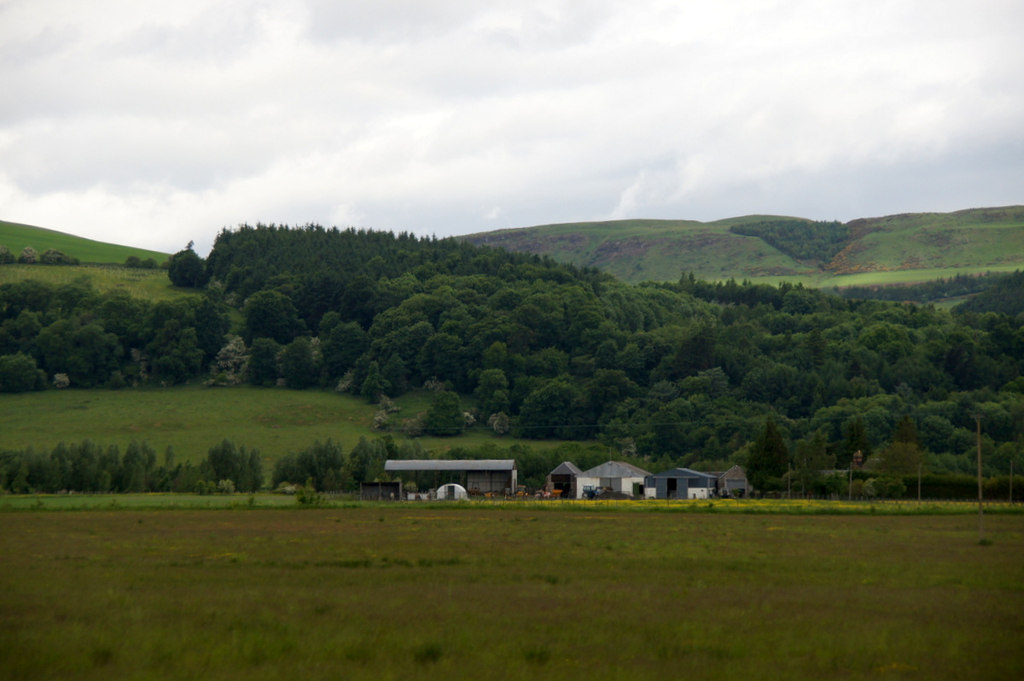
Minor monument · Medieval
Dovecot, Megginch Castle
Perth and Kinross
The weathervane on top is a model of the East Indiaman General Elliot, which Captain Robert Drummond commanded from her launch in 1783: at the age…
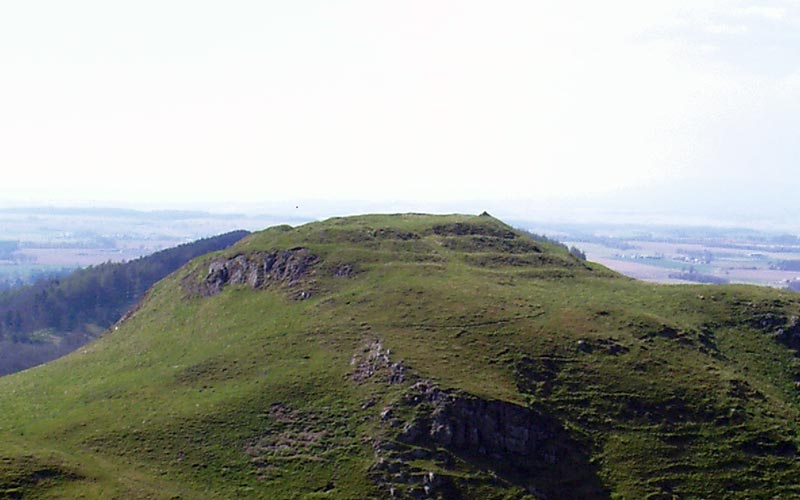
Fortified place · Iron Age
Dunsinane Hill
Perth and Kinross
Nineteenth-century antiquarians came here because of Macbeth and dug the hill fort apart. Little of value was learned.
- Some walking
Minor monument · Medieval
Village And Market Cross, Rossie
Perth and Kinross
Two lions and two unicorns share the top of this cross, holding up a ball finial between them.
- Easy path
.jpg?width=800)
Minor monument · Medieval
Market Cross, Main Street, Longforgan
Perth and Kinross
Removed to the grounds of Castle Huntly at the end of the eighteenth century, and not put back on Main Street until 1989.
- Near Longforgan
- Easy path
The setting
Near Perth Mercat Cross, Fingask Castle, about 14 metres away.
Photo: Anne Burgess / Wikimedia Commons / CC BY-SA 2.0
Near Perth Mercat Cross, Fingask Castle, about 20 metres away.
Photo: Anne Burgess / Wikimedia Commons / CC BY-SA 2.0
Near Perth Mercat Cross, Fingask Castle, about 22 metres away.
Photo: Anne Burgess / Wikimedia Commons / CC BY-SA 2.0
Questions people ask
- What is at Fingask Castle gardens?
- A collection of medieval fragments, including a plain octagonal font brought from Kinnaird and a cross made up from pieces of window tracery.
- Are the dates 1100 and 1153 reliable?
- They are cut in nineteenth-century lettering, so they record what a later owner believed about the stones rather than anything the stones themselves establish.
- What is tracery?
- The carved stone ribwork that divides the lights of a Gothic window. The cross here has been made up out of such fragments rather than cut as a cross.
Sources
The Ancient Codex, in your pocket
Get the Pocket Codex app
Carry the directory with you — Perth Mercat Cross, Fingask Castle and thousands of ancient places across Britain and Ireland, offline, wherever you roam.