
Only the lower half of this Pictish (of the Picts, the people of northern and eastern Scotland from about AD 300 to 900) cross slab survives, yet local memory still ties it to a dragon-slaying legend that gave its name to the valley around it.
A weathered slab of red sandstone stands inside an iron fence in a field near Balluderon, in Angus. Only its lower half survives, but the carving still holds a fragment of a Celtic cross, two riders on horseback, a serpent paired with a symbol known as a z-rod (a stylised zigzag device found in Pictish symbol art), and the outline of the so-called Pictish beast, an unidentified creature that appears on other Pictish carvings.
The stone is known locally as Martin’s Stone, after a legend that has attached itself to the site. Local tradition holds that nine maidens who lived in the valley were devoured one by one by a dragon, until a hero named Martin tracked the creature down and killed it. Folk etymology even credits Martin with lending his name to Strathmartine, the valley in which the stone stands.
Combining a Christian cross with older Pictish symbols marks the stone out as what specialists term a class II cross slab — a type of monument that fuses the two traditions on a single carved face. What survives of the carving, and the field-set stone itself, is recorded in the Canmore database.
What follows is drawn from published sources, with each claim labelled by how firmly it is established.
The name
Folk etymology holds that Strathmartine — the strath, or river valley, in which the stone stands — takes its name from Martin, the legendary dragon-slayer whose story is attached to the stone, though this origin is not confirmed.
History
The Balluderon Stone survives only as its lower half, a fragment of what was once a complete Pictish cross slab carved from Old Red Sandstone. Standing in a field near Balluderon in Angus, the stone is now enclosed by iron fencing that marks it out from the surrounding pasture and protects the exposed carving from livestock and casual damage.
What remains still carries the marks of a skilled hand: a fragment of a Celtic cross runs down the face, flanked by two mounted riders, a serpent paired with the curling Pictish symbol known as the z-rod, and the enigmatic curved outline of the Pictish beast. Together the cross and the older symbol carvings place the stone among the class II cross slabs, monuments that fuse Christian imagery with the earlier Pictish symbol tradition.
Long after its carving, the stone became bound up with a local story: that nine maidens once living in the valley were devoured one by one by a dragon, until a hero named Martin tracked the creature down and killed it. The tale attached itself firmly to this particular stone, which is still known locally as Martin's Stone in memory of the slayer. Local tradition also credits the same legend with naming the valley itself: Strathmartine, the strath in which the stone stands, is said in folk etymology to take its name from Martin the dragon-slayer. Whatever its true origin, the name and the stone are now inseparable in local memory.
The stone's condition and carvings have been formally recorded in the Canmore database, the national record of Scotland's archaeological and historic sites. That entry keeps the fragment's imagery and setting on the public record even as the missing upper half remains lost.
Cultural influences
-
Pictish Christian art
As a Class II cross-slab, the Balluderon Stone combines Christian cross imagery with older Pictish symbols, an established form of early medieval carving in eastern Scotland.
Connections
-

Photo: Val Vannet / Wikimedia Commons / CC BY-SA 2.0 Strathmartine
Folk etymology derives the name of this valley from Martin, the legendary dragon-slayer whose story is attached to the stone.
-
Canmore (Historic Environment Scotland's national record)
The stone's location, condition and carvings are catalogued in the Canmore database.
What to look for
-
The surviving cross
A fragment of a Celtic cross runs down the face of the slab, the only part of the original cross design still visible on the lower half that survives.
-
Two mounted riders
Carved figures of two riders on horseback appear among the symbols, a common motif on Pictish cross slabs of this type.
-
Serpent and z-rod
A serpent paired with the curling z-rod symbol, one of the recurring abstract symbol pairs found on Pictish monuments, is carved into the stone.
-
The Pictish beast
An outline of the so-called Pictish beast, an unidentified curved creature that appears frequently on Pictish carved stones, is among the surviving designs.
-
Iron fencing
The slab stands within a field and is enclosed by iron fencing that marks and protects it from the surrounding pasture.
What is said
Folklore and tradition, recorded as what is said — not as established fact.
-
The Nine Maidens and the Dragon
Local tradition holds that nine maidens who lived in the valley were devoured one by one by a dragon, which was then said to have been slain by a hero named Martin.
-
Naming of Strathmartine
Folk etymology suggests that the valley of Strathmartine takes its name from Martin, the legendary slayer of the dragon associated with this stone, though this origin is not confirmed.
Plan your visit
- Location
- 56.5261°N · 3.0179°W
- Nearest settlement
- Dundee
- Access
- Open access
- Terrain
- Easy going
- Time needed
- About 15 minutes
- Best time
- Clear daylight, when the weathered carvings can be examined through the protective railings.
- What survives
- Only the lower half of the sandstone cross-slab survives, protected by iron fencing in a field.
- Facilities
- No visitor facilities are recorded at the field site.
Opening & admission
Free to view; check Historic Environment Scotland or Canmore for any current access notes before visiting.
- The stone stands in a field enclosed by iron railings.
- No public path or parking details are recorded.
Nearby places
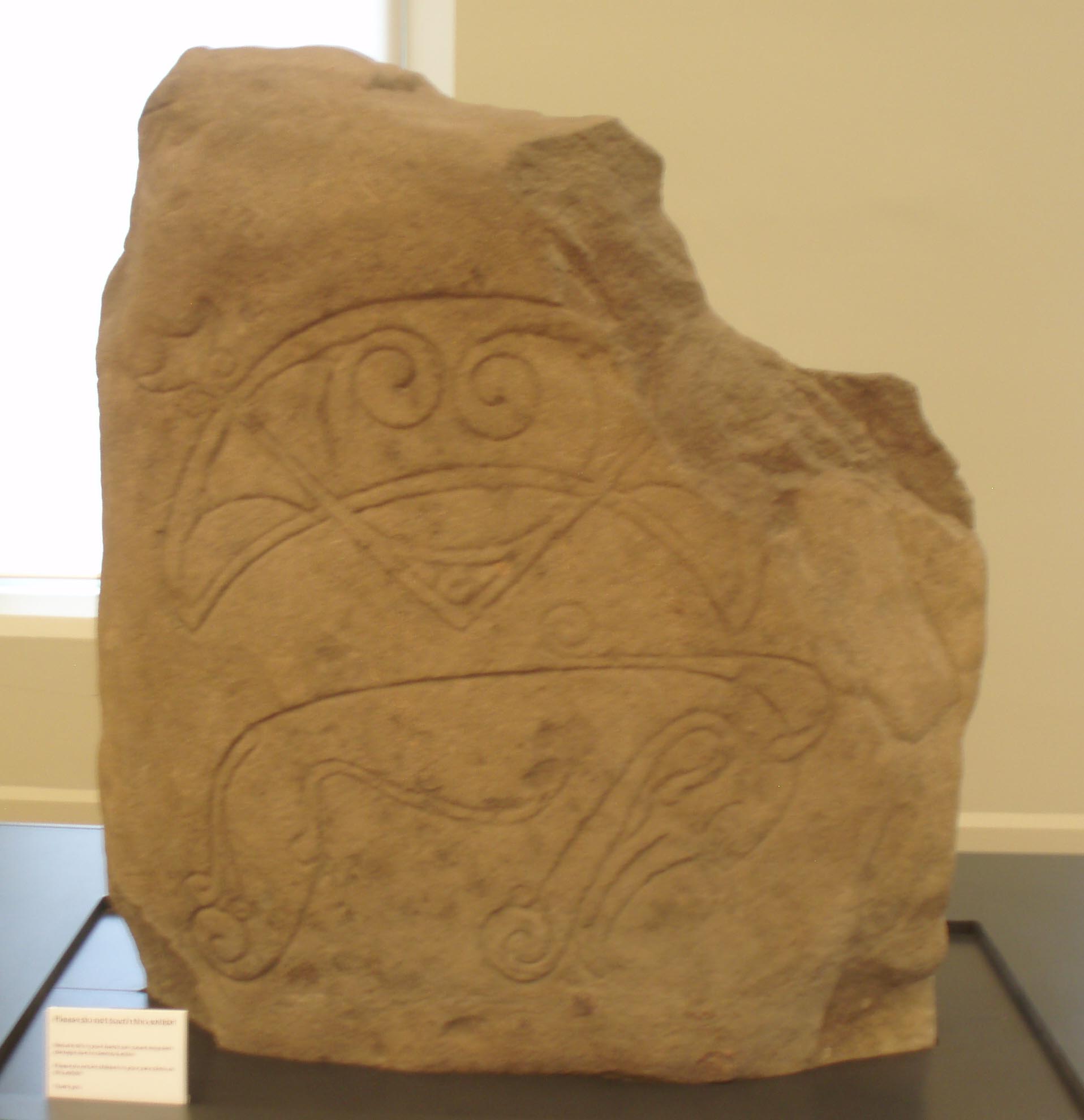
Carved stone · Pictish & early medieval
Strathmartine Castle Stone
Angus
Carved with the Pictish beast and the crescent and V-rod, the stone was recycled as ordinary wall-stone for generations before Dundee Museums rescu…
- Near Dundee
- Easy path
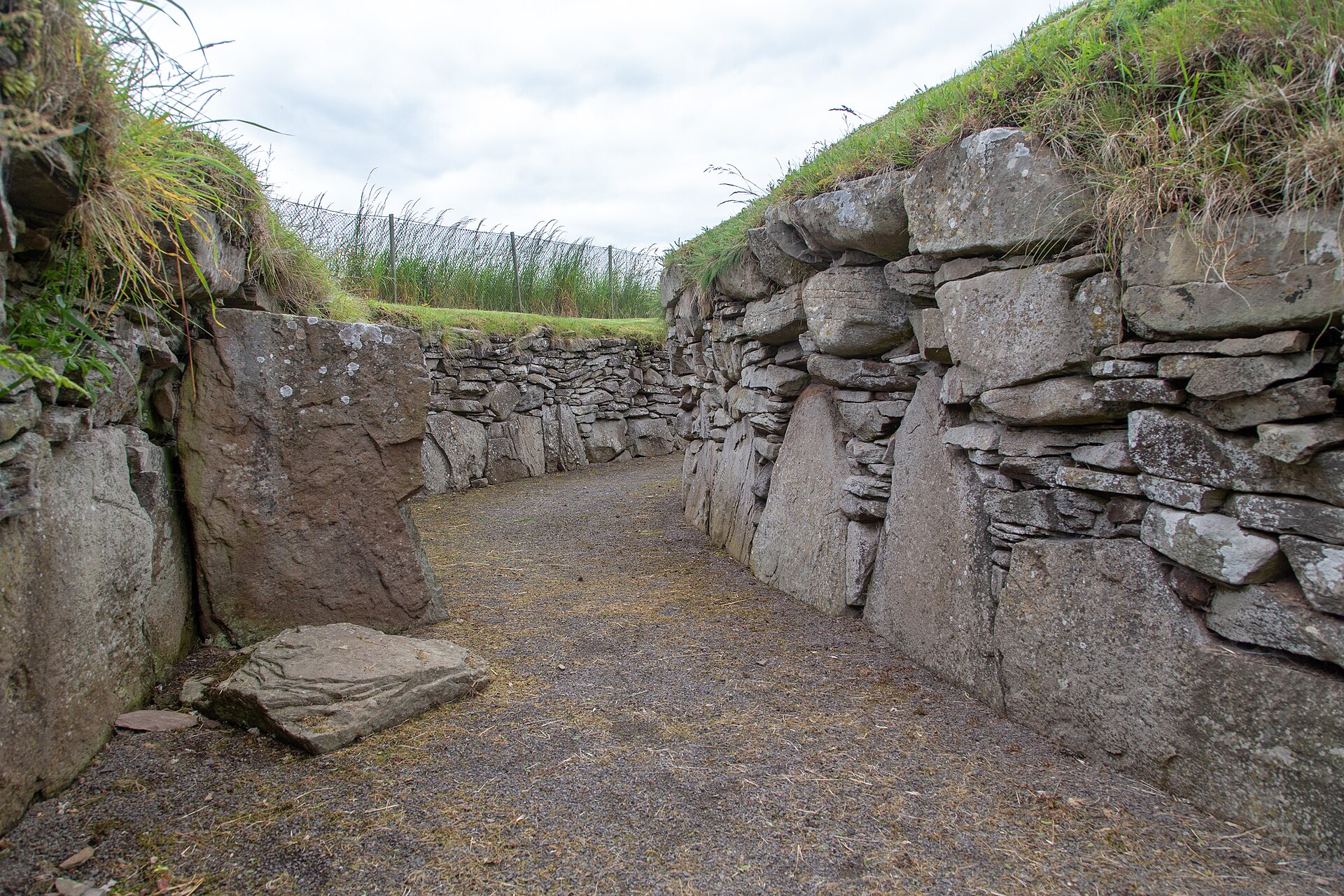
Building or ruin · Medieval
Tealing Earth House
Angus
Its walls incorporate two Bronze Age (roughly 2500–800 BC, when metal tools first spread) stones carved with cup-and-ring marks, built by Iron Age…
- Near Tealing
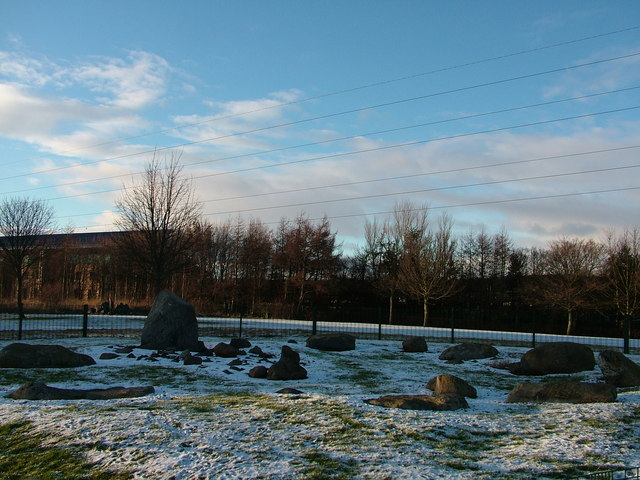
Sacred place · Prehistoric
Balgarthno Stone Circle
dundee-city
Nine stones on a circle six and a half metres across, all but one of them down, with a causeway running thirty metres east: surrounded now by the h…
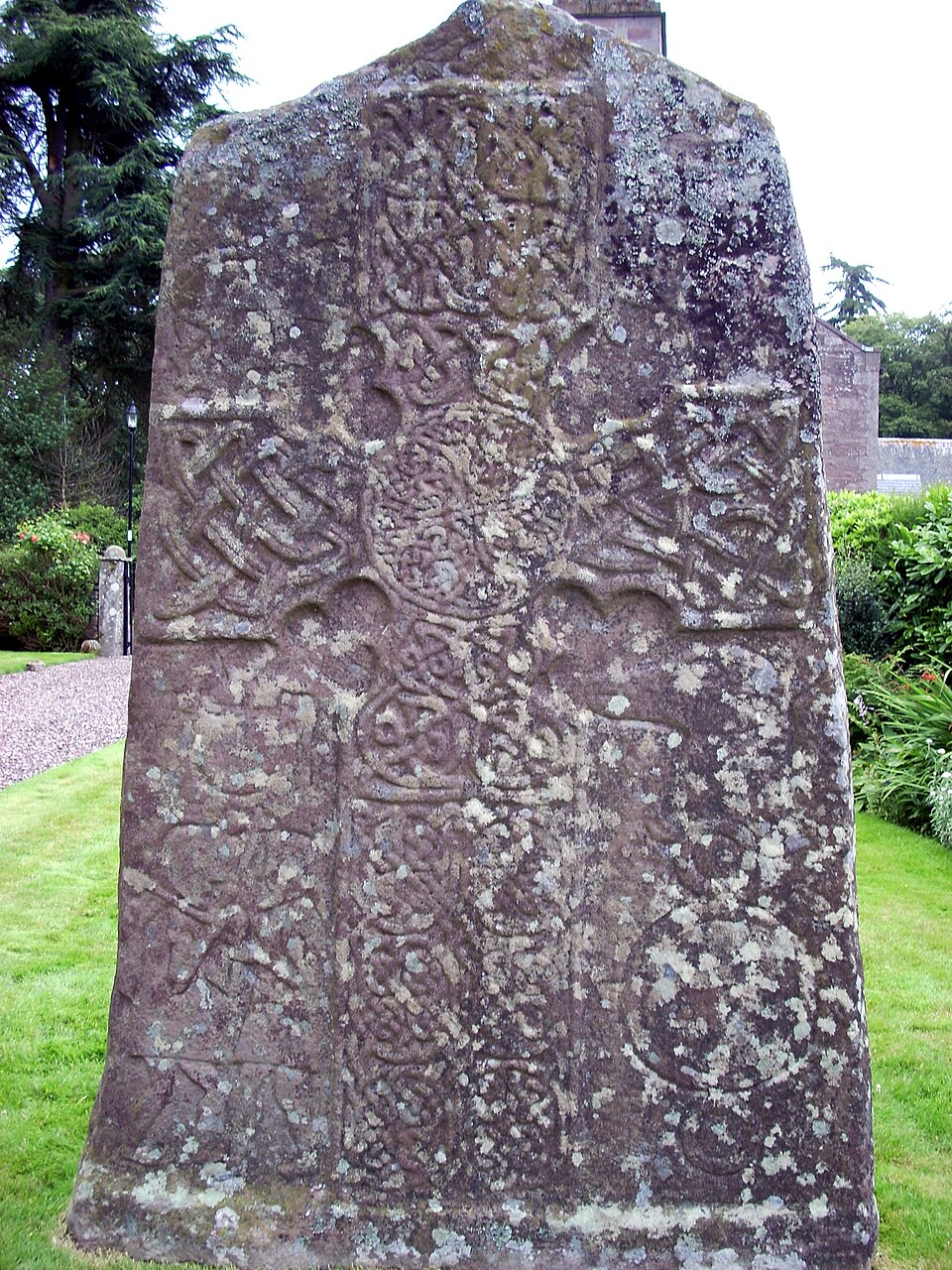
Carved stone · Pictish & early medieval
Hunter's Hill Stone
Angus
Its rear face still carries an older set of incised symbols beneath a later relief-carved cross: one of only two stones nearby known to have been r…
- Near Glamis
- Some walking
The setting
Roadside milestone in the wider Strathmartine landscape near the Balluderon Stone; the carved stone is not visible.
Photo: Scott Cormie / Wikimedia Commons / CC BY-SA 2.0
Questions people ask
- What is the Balluderon Stone?
- It is a Pictish cross slab, also known as Martin's Stone, standing in a field at Balluderon in Angus. Only its lower half survives.
- Why is it also called Martin's Stone?
- Local tradition holds that a hero named Martin slew a dragon that had devoured nine maidens, and the stone became linked with his name.
- What carvings survive on the stone?
- The surviving lower half shows part of a Celtic cross, two mounted riders, a serpent and z-rod symbol, and a Pictish beast design.
- What material is the stone made of?
- The slab is carved from Old Red Sandstone.
- Does the stone's legend explain a place name?
- Folk etymology holds that Strathmartine, the valley where the stone stands, takes its name from Martin the dragon-slayer, though this is not confirmed.
Sources
- Wikipedia: Balluderon Stone
- Historic Environment Scotland — Canmore
- Wikidata: Balluderon Stone
Explore more: Carved stones · Pictish & early medieval · Angus
The Ancient Codex, in your pocket
Get the Pocket Codex app
Carry the directory with you — Balluderon Stone and thousands of ancient places across Britain and Ireland, offline, wherever you roam.