
Its walls incorporate two Bronze Age (roughly 2500–800 BC, when metal tools first spread) stones carved with cup-and-ring marks, built by Iron Age (roughly 800 BC until the Roman conquest) farmers a thousand years after those symbols were first cut.
A farmer’s plough struck stone in a field at Tealing in 1871, and what came up out of the ground was not a boulder but the roofline of a passage that had lain hidden for some 1,800 years. Following the curve of buried slabs led down into a long, narrow underground chamber, an unexpected survival from a world of Iron Age farmsteads that had otherwise left almost no trace above the surface.
The structure is a souterrain, an underground stone-built passage that archaeologists think was used mainly for storage rather than as a place to live. Raised by farming communities around the first or second century AD, it curves for some 24 metres beneath the field, its drystone walls originally roofed over with heavy slabs. Among the stones used to build those walls were two carved centuries earlier, in the Bronze Age, with cup-and-ring marks, circular grooves pecked into rock whose original meaning is still debated. The builders reused them as ordinary construction material, preserving them by accident inside a much later structure.
When the antiquarian Andrew Jervise excavated the chamber three years after its discovery, he found it divided into a run of compartments ending in a small room formed by two upright slabs, and among the fill lay animal bones, native pottery, grinding stones, and fragments of Roman glass and pottery, ordinary traces of a farming settlement that was nonetheless in touch with a much wider world.
What follows is drawn from published sources, with each claim labelled by how firmly it is established.
History
Around the first or second century AD, farming communities working the land near Tealing cut a long, curving passage into the ground and lined it with drystone walling, roofing the chamber over with heavy stone slabs. Running to some 24.4 metres, the souterrain was built on a considerable scale for an underground structure of its kind, and most likely served as a cool, secure store for grain or other produce belonging to the settlement above it.
During construction, the builders set into the internal walls two stones carved centuries before with cup-and-ring marks, a Bronze Age tradition of circular grooves pecked into rock whose purpose is still not fully understood. Rather than being left where they had originally stood, the carved stones were reused as ordinary building material, a small sign of how one generation's monument could become the next generation's masonry.
In 1871 a farmer ploughing the field above the buried chamber broke through into the passage below, bringing the souterrain to light for the first time in centuries. The chance discovery, typical of how many Scottish souterrains have come to be found, exposed a structure that had lain sealed and forgotten beneath cultivated ground.
Three years later, in 1874, the antiquarian Andrew Jervise excavated the site properly, uncovering a chamber composed of a series of compartments and a small end room formed by two upright slabs, all originally roofed with stone. His dig recovered animal bones, native pottery sherds, ten quern-stones used for grinding grain, and fragments of Roman glass and pottery, finds that pointed to a working farming settlement in contact, directly or indirectly, with the Roman world beyond it.
In the 1970s, repair and consolidation work was carried out on the souterrain to stabilise the surviving stonework and keep the passage safe and intact for the future. The intervention altered the structure's original architecture in the process, meaning the fabric visible today reflects both the Iron Age builders and this later, protective repair.
People
-
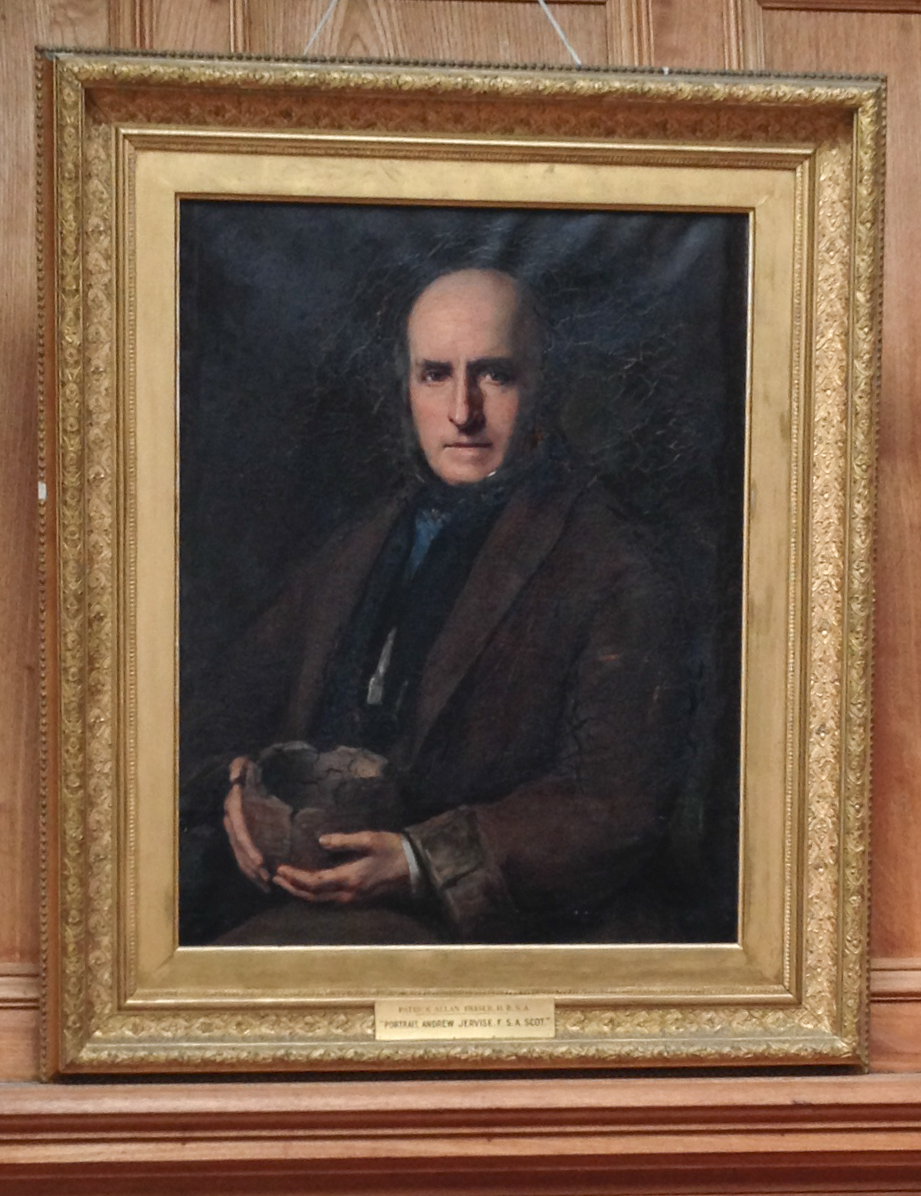
Portrait: Ray Oaks / Wikimedia Commons / CC BY-SA 3.0 Andrew Jervise
Antiquarian who excavated Tealing Earth House in 1874, three years after its discovery, and recorded the chamber's compartments, construction and finds.
Connections
-
Carlungie and Ardestie earth houses
These related Angus souterrains share Tealing’s Iron Age underground-storage tradition. Comparing their layouts helps show how similar communities adapted below-ground spaces for storage and shelter, while the surviving stonework lets a visitor read Tealing as one part of a regional network rather than an isolated monument. The comparison also gives context for judging which features are local choices and which belong to a wider building habit. It helps explain why the monument is interpreted through comparison as well as through its own surviving fabric.
-
Angus souterrain tradition
Tealing belongs to a regional group of underground structures rather than standing alone. That wider pattern gives its construction a cultural context and helps visitors understand the earth house as evidence for Iron Age storage and shelter practices in Angus.
Discovery & excavation
The souterrain was found by chance in 1871 when a farmer ploughing the field struck stone and broke through into the buried passage. Andrew Jervise excavated the site in 1874, exposing a chamber of linked compartments ending in a small stone-lined room, and recovering animal bone, native pottery, ten quern-stones and fragments of Roman glass and pottery from within the fill.
What to look for
-
The curved passage
The souterrain runs about 24.4 metres (80 feet) in a curving line, roughly 2.5 metres (8 feet 2 inches) wide and 2 metres (6 feet 7 inches) high, a scale that marks it out among Scotland's surviving earth houses.
-
Reused Bronze Age stones
Two stones carved with Bronze Age cup-and-ring marks were built into the internal walls, recycled from an earlier monument or standing stone into ordinary construction material.
-
The end chamber
The passage terminates in a small room formed by two upright slabs, distinct from the run of compartments that makes up the main body of the souterrain.
Plan your visit
- Location
- 56.5318°N · 2.9572°W
- Nearest settlement
- Tealing
- Access
- Open access
- Time needed
- About 45 minutes
- What survives
- The 24.4-metre stone-lined underground passage survives after twentieth-century consolidation; its present fabric combines Iron Age construction with later repairs.
Opening & admission
No admission details are recorded — check the managing body's site before visiting.
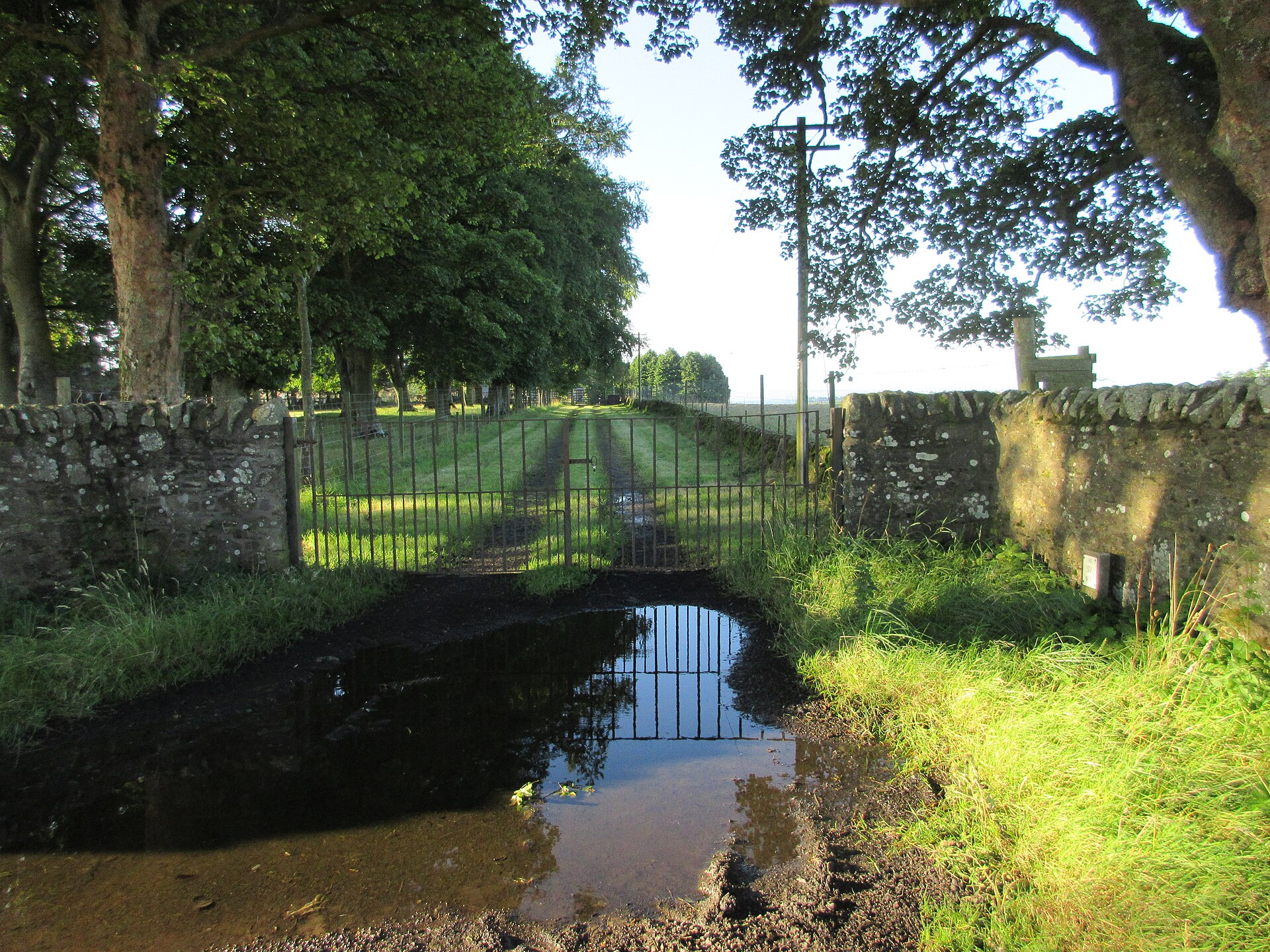
- An Iron Age underground souterrain in a field near Tealing, Angus.
Nearby places
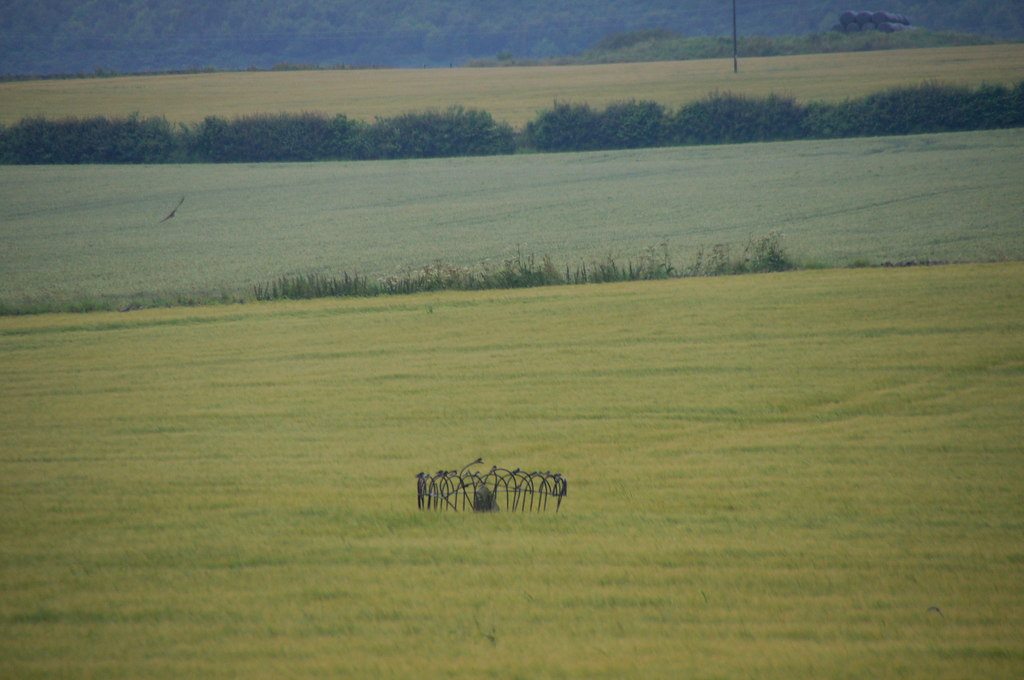
Carved stone · Pictish & early medieval
Balluderon Stone
Angus
Only the lower half of this Pictish (of the Picts, the people of northern and eastern Scotland from about AD 300 to 900) cross slab survives, yet l…
- Near Dundee
- Easy path
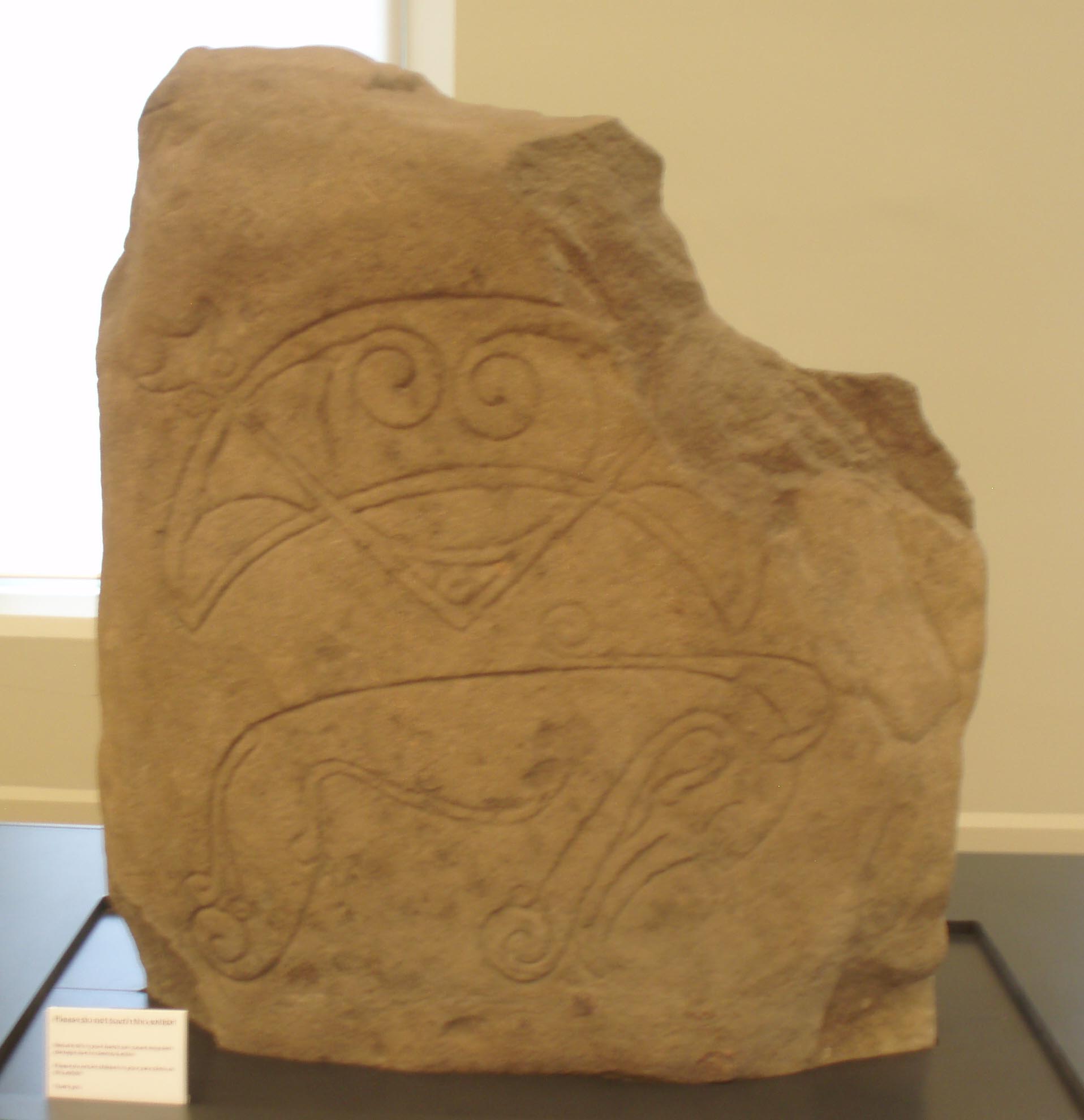
Carved stone · Pictish & early medieval
Strathmartine Castle Stone
Angus
Carved with the Pictish beast and the crescent and V-rod, the stone was recycled as ordinary wall-stone for generations before Dundee Museums rescu…
- Near Dundee
- Easy path
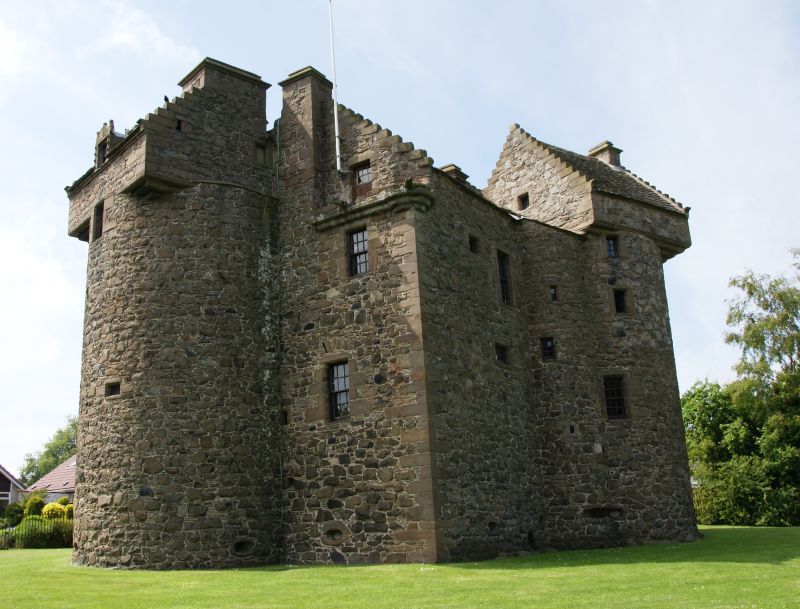
Fortified place · Medieval
Claypotts Castle
Dundee City
Claypotts Castle is one of Scotland’s best-preserved sixteenth-century Z-plan tower houses, combining a compact domestic residence with a striking…
Fortified place · Medieval
Affleck Castle
Angus
Its interior has scarcely been touched since the 1700s: spy-hole, private chapel and mural bedrooms all still in place, making it one of the most c…
- Near Monifieth
Questions people ask
- What is Tealing Earth House?
- An Iron Age souterrain in Angus, Scotland — a curved, drystone underground passage built around the first or second century AD, most likely for storage.
- How big is the souterrain?
- It runs about 24.4 metres (80 feet) long, 2.5 metres (8 feet 2 inches) wide and 2 metres (6 feet 7 inches) high, curving along its length.
- When was it discovered?
- A farmer broke into it while ploughing in 1871; antiquarian Andrew Jervise excavated the site fully three years later, in 1874.
- What was found inside?
- Excavation recovered animal bones, native pottery sherds, ten quern-stones, and fragments of Roman glass and pottery, along with two reused Bronze Age carved stones in the walls.
- Is the structure as it was originally built?
- No — 1970s repair and consolidation work stabilised the stonework but altered the souterrain's original architecture in the process.
Sources
- Wikipedia: Tealing Earth House
- Historic Environment Scotland — Scheduled Monuments, Angus
Explore more: Building or ruins · Medieval · Angus
The Ancient Codex, in your pocket
Get the Pocket Codex app
Carry the directory with you — Tealing Earth House and thousands of ancient places across Britain and Ireland, offline, wherever you roam.