St Orland’s in-situ cross-slab joins a richly interlaced Christian cross to symbols, hunters, a boat and beasts, preserving a remarkably complex programme on both faces.
St Orland’s Stone stands in situ at Cossans in Angus: a tall slab of Old Red Sandstone, weathered but still densely carved on both faces. Its 2.4-metre height makes the monument read less as a loose relic than as a deliberate marker in the former parish of Glamis, between Kirriemuir and Forfar.
The cross face carries interlace, spirals and fantastic beasts; the reverse changes the scene entirely, bringing together early-medieval symbols, horsemen, hounds, a boat and a bull. Damage and repair are also part of its visible story: the slab broke at some point and has been reinforced with iron staples moved from its faces to its edges.
What follows is drawn from published sources, with each claim labelled by how firmly it is established.
The name
The alternate Cossans or Cossins name comes from the nearby settlement; the origin of the St Orland dedication is uncertain.
History
St Orland’s Stone, also called the Cossans or Cossins Stone, was carved from Old Red Sandstone as a tall cross-slab. It stands in situ at Cossans in the former parish of Glamis, south-west of the A926 between Kirriemuir and Forfar. At about 2.4 metres high, 0.7 metres wide and 0.25 metres thick, it remains a substantial monument rather than a fragment displayed away from its setting.
The stone belongs to the Class II category in the classification developed by John Romilly Allen and Joseph Anderson because it combines a relief cross with Pictish symbols. On its cross face, a ringed Celtic cross is worked with interlaced knotwork and spiral designs. Interlaced fantastic beasts occupy the lower quadrants, while the weathered border appears once to have carried further knotwork.
The reverse face preserves a different programme of carving. Its upper field pairs a crescent with a V-rod, then a double-disc mark with a Z-rod, above a hunting scene of four horsemen accompanied by two hounds. Below them is a boat carrying passengers and a fantastic beast facing, or attacking, a bull. Interlaced knotwork frames the carving, although a quadrangular section between the symbols and the figurative scene is missing.
The slab broke at an unknown date and was repaired with iron staples. Those staples were formerly visible on the faces of the stone but have since been moved to its edges to reinforce it. The repair sits beside the weathering and missing panel as part of the monument’s present condition, showing that its carved surfaces have survived both damage and later intervention.
People
-
John Romilly Allen
Co-devised, with Joseph Anderson, the classification system that groups Pictish carved stones into Class I, II and III, placing St Orland's Stone in Class II.
-
Joseph Anderson
Co-devised, with John Romilly Allen, the classification system used to categorise St Orland's Stone as a Class II Pictish cross-slab.
Connections
-
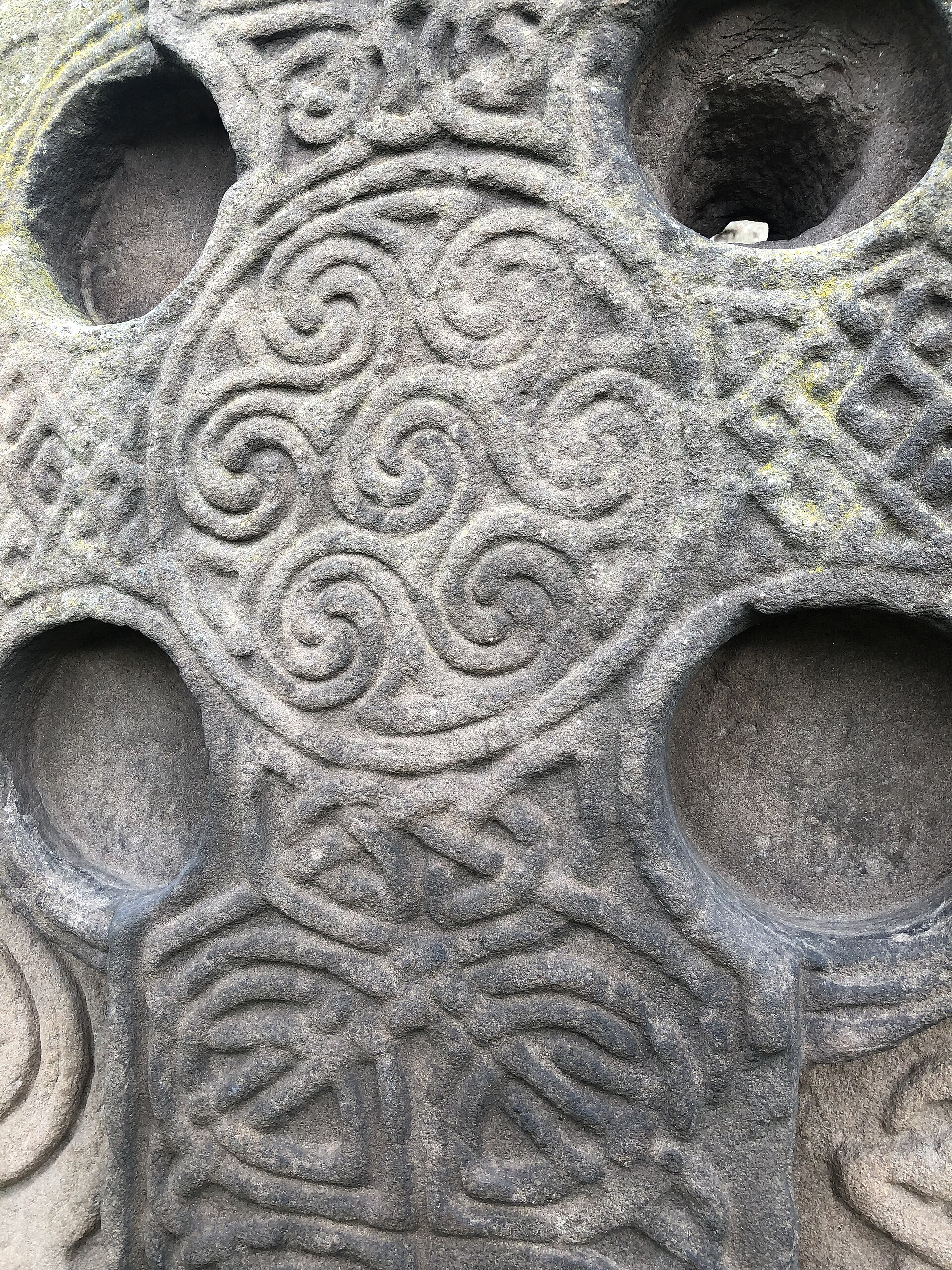
Photo: Richard Webb / Wikimedia Commons / CC BY-SA 2.0 The best-known group of Angus cross-slabs, carved in the same relief technique and combining cross and Pictish symbols as St Orland's does.
-
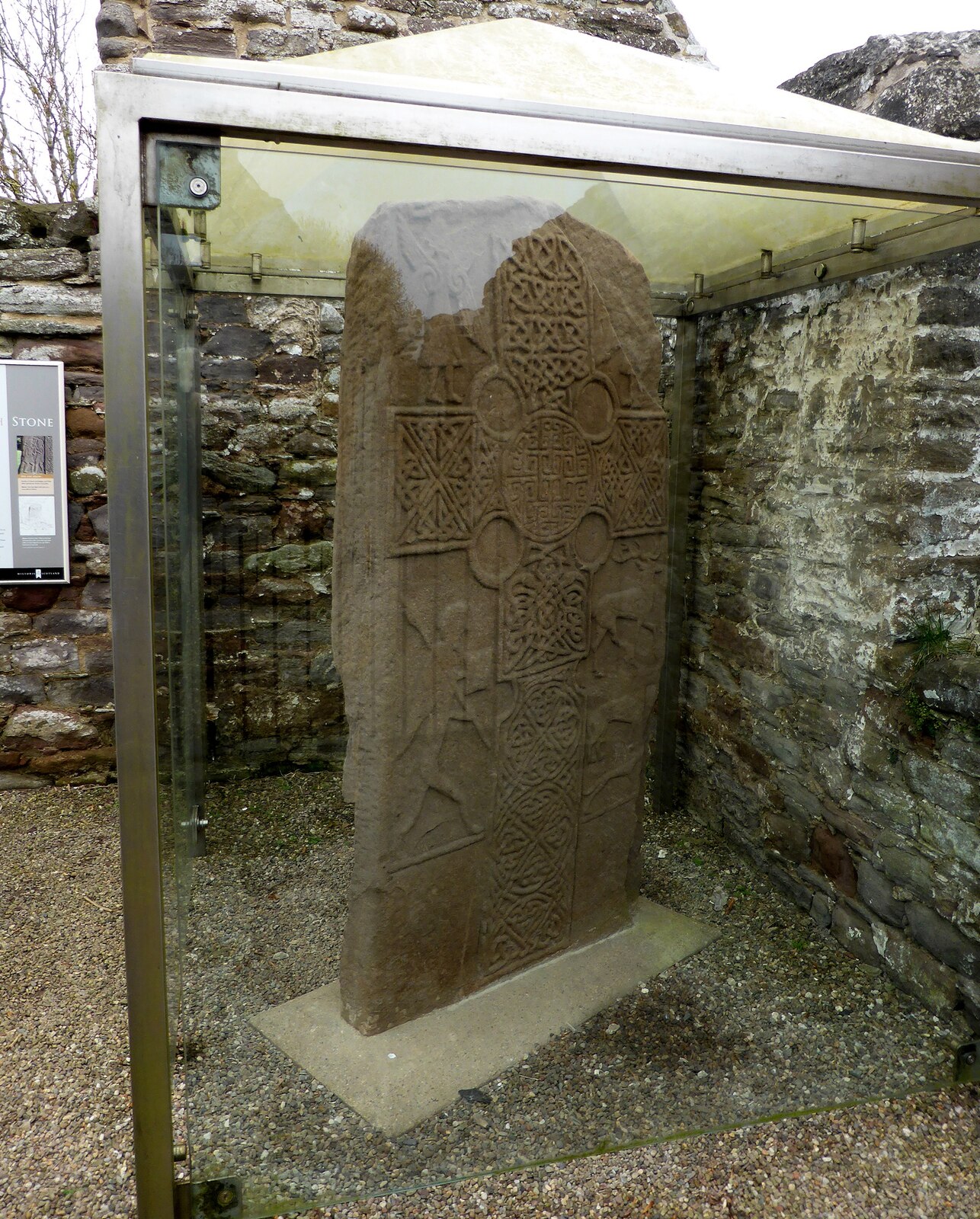
Photo: Sandy Gerrard / Wikimedia Commons / CC BY-SA 2.0 Another Class II slab in the same corner of Angus, useful for comparing how the two carvers handled the cross face.
-
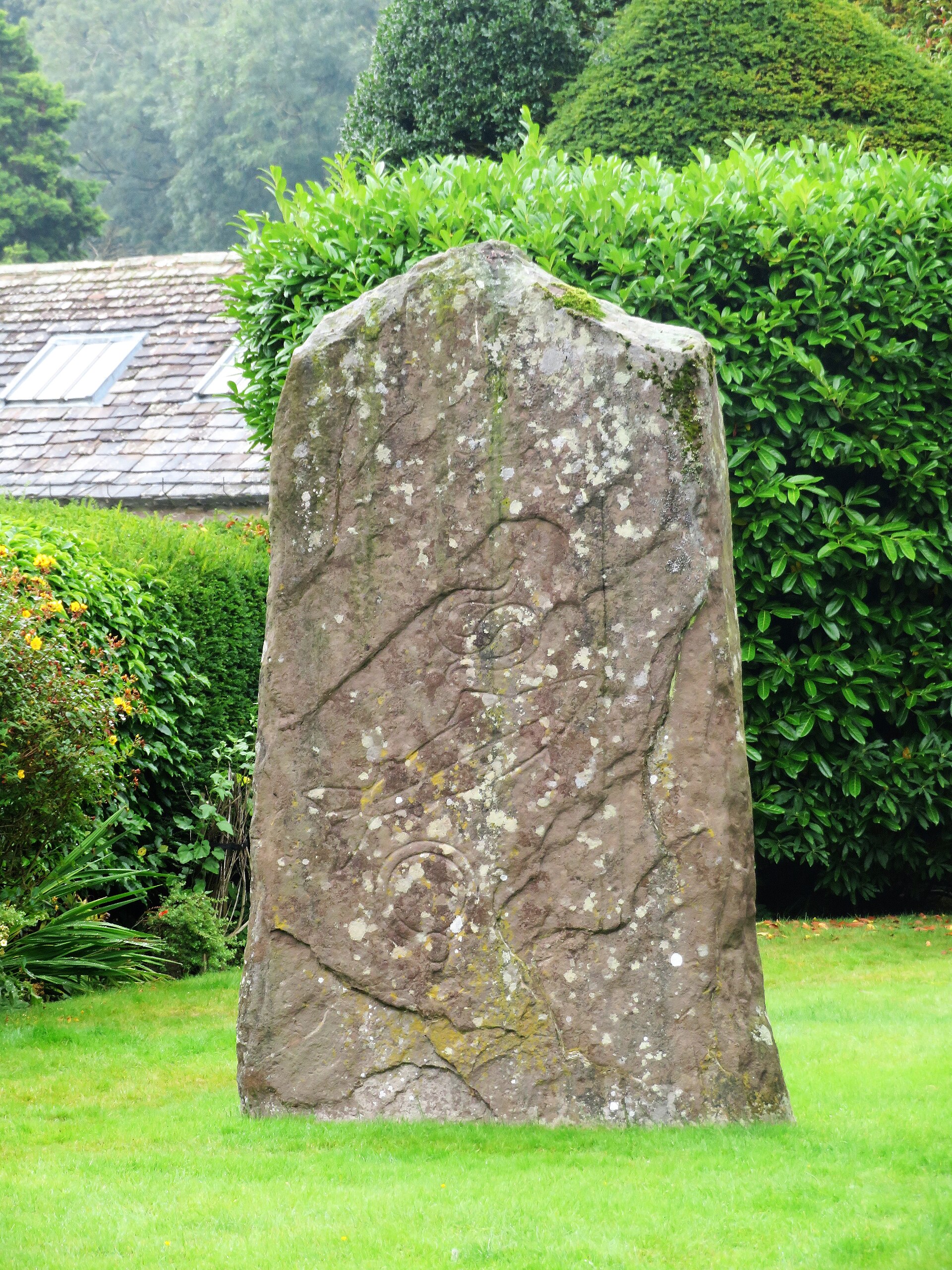
Photo: Gordon Hatton / Wikimedia Commons / CC BY-SA 2.0 A cross-slab in the parish St Orland's Stone historically belonged to, the old parish of Glamis.
-
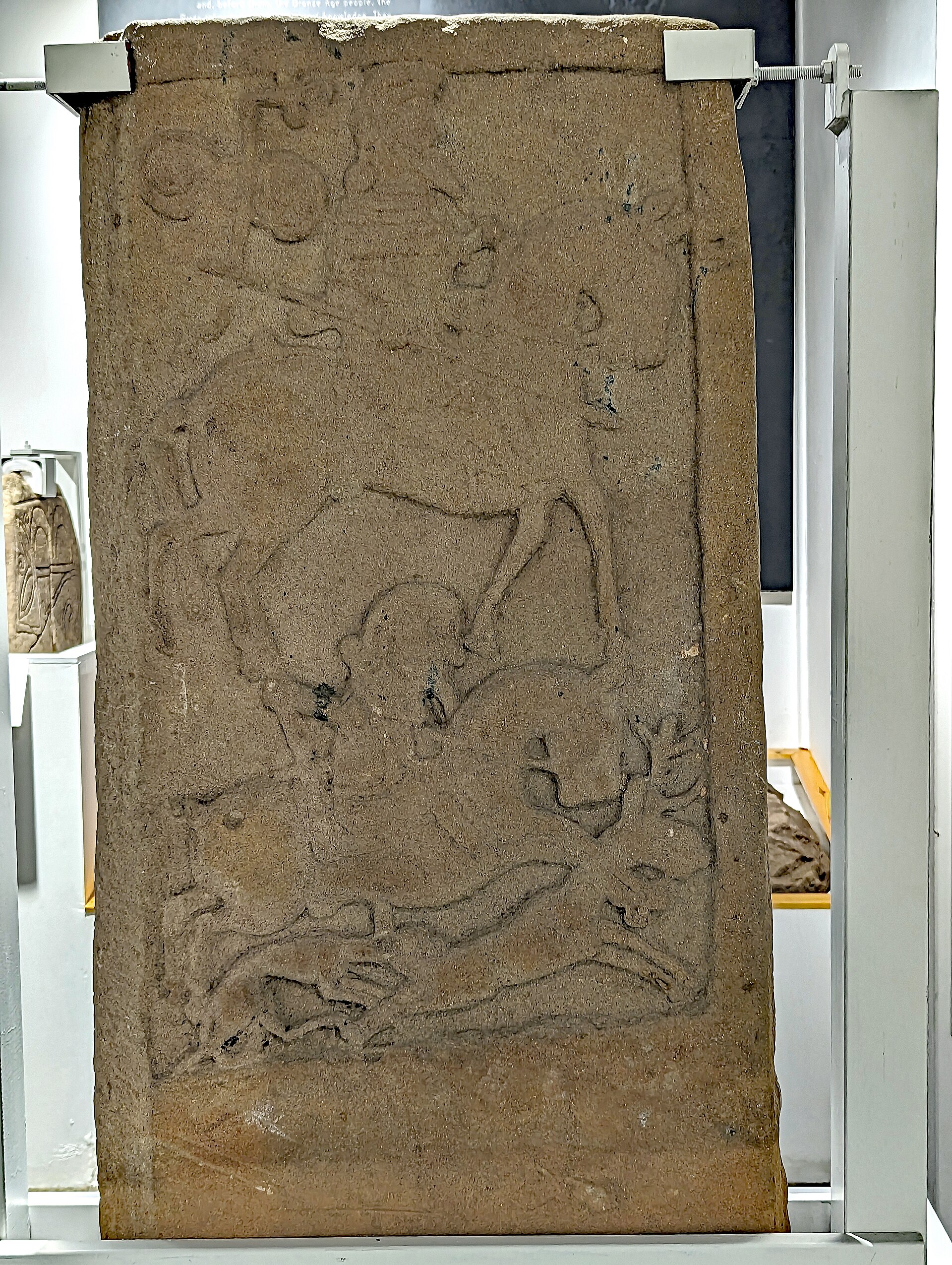
Photo: PaulT (Gunther Tschuch) / Wikimedia Commons / CC BY-SA 4.0 The collection at the town a few kilometres north-west, part of the same dense Angus concentration of Pictish carving.
-
Cossans
The place the stone stands at, and the reason it is also called the Cossans or Cossins stone.
-
Forfar
St Orland’s Stone stands at Cossans in Angus, near Forfar, as a surviving Class II Pictish cross-slab.
What to look for
-
Two carved faces
The cross face carries a ringed Celtic cross with interlace and fantastic beasts; the reverse combines Pictish symbols with riders, hounds, a boat and animals.
-
Repair staples
Iron staples on the slab’s edges record a repair after the stone broke.
Plan your visit
- Location
- 56.6382°N · 2.9785°W
- Nearest settlement
- Glamis
- Access
- Open access
- Terrain
- Moderate walking
- Time needed
- About 20 minutes
- What survives
- The Class II cross-slab remains in situ, with a relief cross, Pictish symbols and figural scenes; old breaks are secured with iron staples.
Opening & admission
Free to view at any time; check the managing body's site for any current guidance before visiting.
- The stone stands in situ in open countryside south-west of the A926 between Kirriemuir and Forfar.
Nearby places
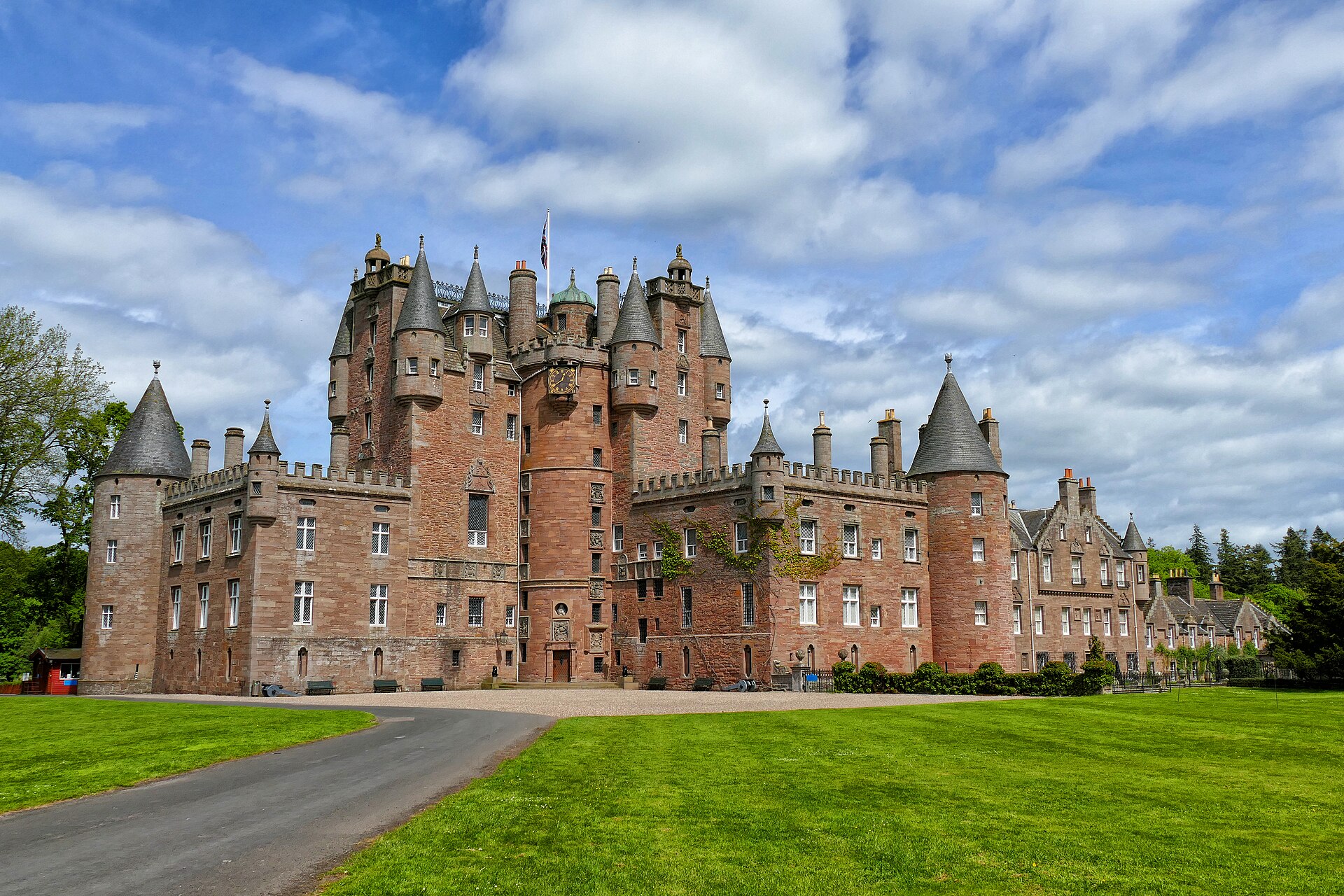
Fortified place · Medieval
Glamis Castle
Angus
One family, the Lyons, has held this Strathmore estate since the 1370s, and its rooms have hosted a murdered king, a woman burned for witchcraft, a…
- Easy path
Carved stone · Pictish & early medieval
Glamis Manse Stone
Angus
One of the most crowded cross faces in Pictish sculpture: axe-fighters, a cauldron with legs dangling from it, and a centaur share the stone with a…
- Easy path
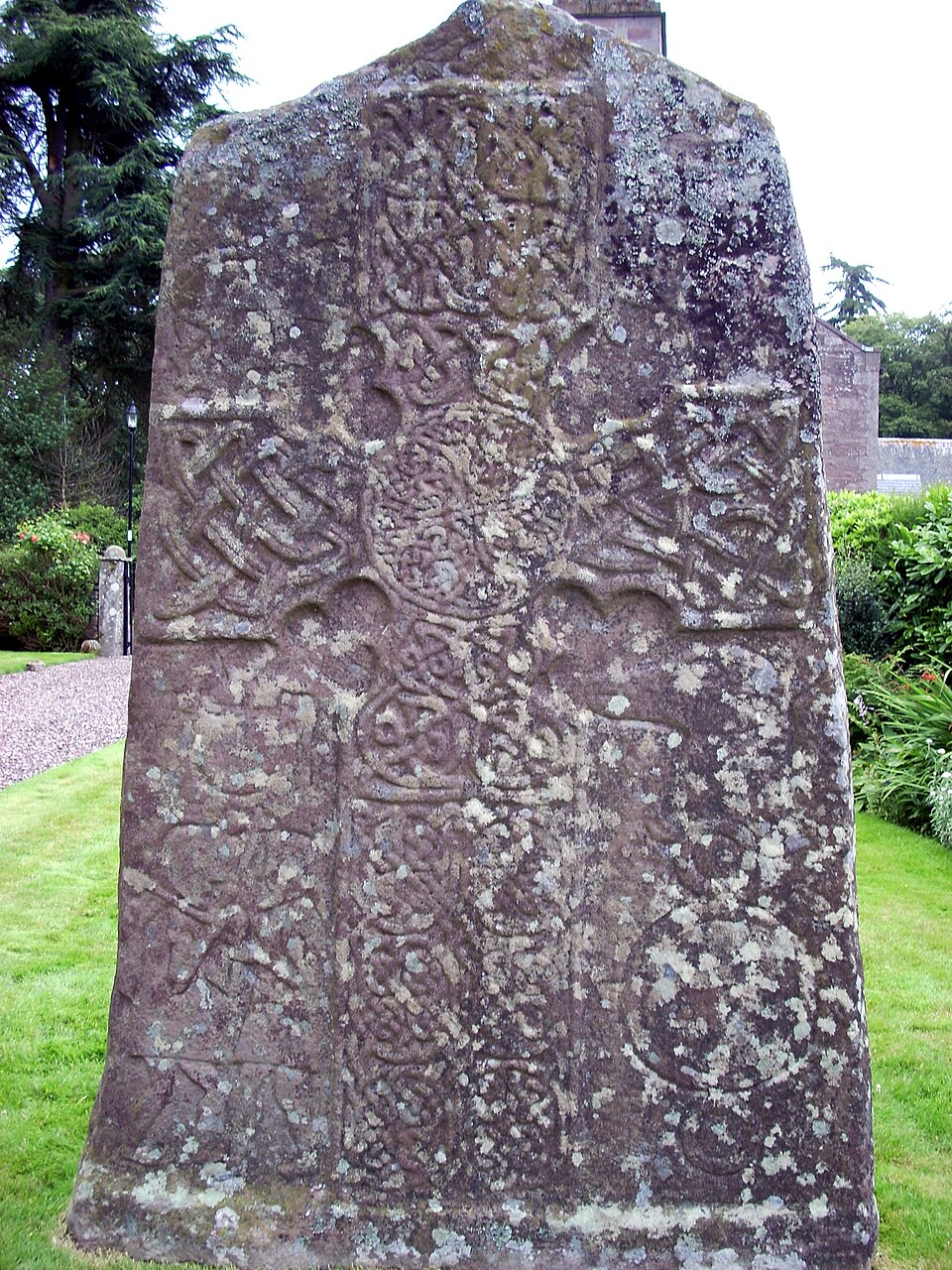
Carved stone · Pictish & early medieval
Hunter's Hill Stone
Angus
Its rear face still carries an older set of incised symbols beneath a later relief-carved cross: one of only two stones nearby known to have been r…
- Near Glamis
- Some walking
Carved stone · Pictish & early medieval
Eassie Stone
Angus
Carved on both faces with warriors, hunters, angels and a figure entangled with severed heads, it survived only because Georgian antiquarians pulle…
- Near Eassie
- Easy path
Questions people ask
- Where is St Orland’s Stone?
- It stands in situ at Cossans in the former parish of Glamis, between Kirriemuir and Forfar in Angus.
- What is carved on the stone?
- One face has a ringed Celtic cross with interlace and fantastic beasts; the other has Pictish symbols, riders, hounds, a boat and animals.
- How large is St Orland’s Stone?
- The Old Red Sandstone slab is about 2.4 metres high, 0.7 metres wide and 0.25 metres thick.
- What is St Orland's Stone?
- Its sandstone combines a Christian ringed cross with the Pictish symbol tradition, the feature that places the Cossans monument in Class II.
- Where is St Orland's Stone located?
- Cossans lies in the former parish of Glamis, on the road between Kirriemuir and Forfar and about three kilometres south-west of the A926; the slab remains in situ.
- What does 'Class II' mean for a Pictish stone?
- Allen and Anderson used Class II for monuments that combine an incised Pictish symbol scheme with a sculpted Christian cross.
- What scenes are carved on the stone?
- The front carries a ringed cross, interlace and beasts; the reverse places paired symbols above horsemen and hounds, then shows a vessel passing a beast that confronts a bull.
- Is the stone damaged?
- Yes. An old break was repaired with metal fasteners, now along the edges, and a rectangular section of the reverse appears to have been removed.
Sources
- Wikipedia: St Orland’s Stone
- Wikidata: St Orland’s Stone (Q7595003)
- Historic Environment Scotland — Canmore
- Canmore — St Orland's Stone (33868)
Explore more: Carved stones · Pictish & early medieval · Angus
The Ancient Codex, in your pocket
Get the Pocket Codex app
Carry the directory with you — St Orland's Stone and thousands of ancient places across Britain and Ireland, offline, wherever you roam.