
Carved on both faces with warriors, hunters, angels and a figure entangled with severed heads, it survived only because Georgian antiquarians pulled it from a streambed rather than leaving it to be broken up.
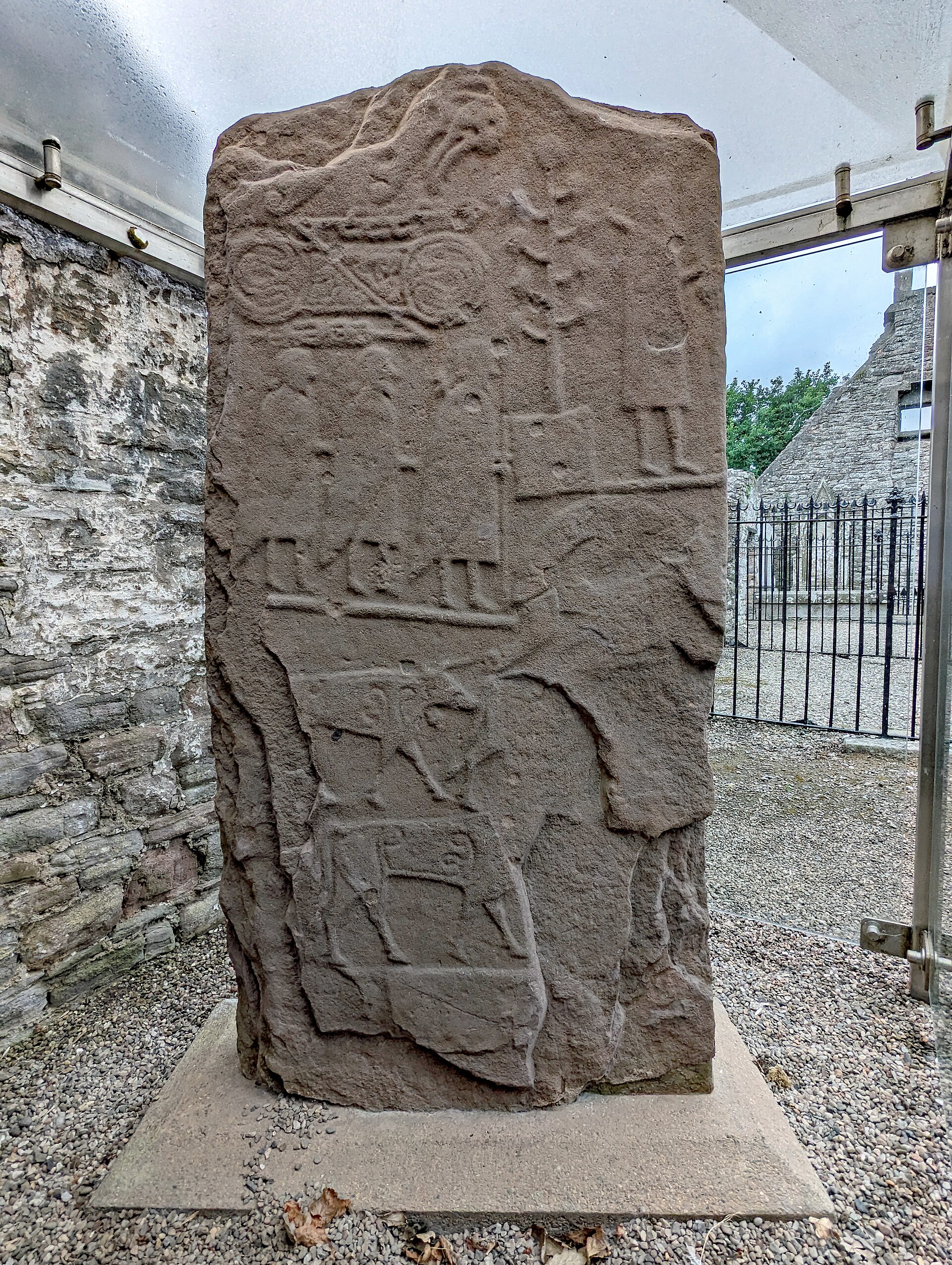
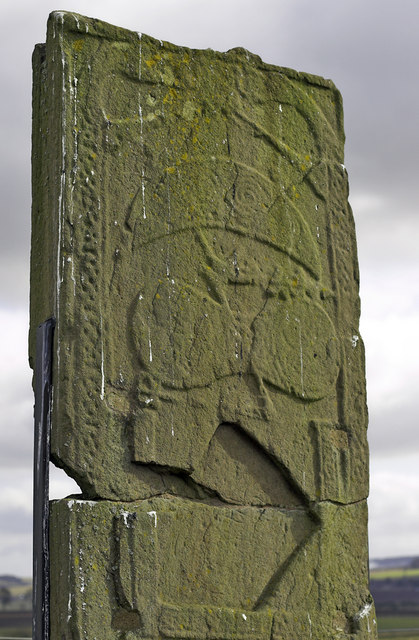
A shelter inside Eassie’s roofless church holds the carved slab recovered from the burn beside it. One face is dominated by a relief cross and hunting scene; the other retains Pictish (of the people of northern and eastern Scotland) symbols, weathered cattle and a figure beside a potted tree.
The stone left the Eassie Burn in the late eighteenth century and spent its next century outdoors beside the church. The 1960s enclosure changed that setting, bringing both carved faces under cover.
The stone is grouped with related Pictish sculpture from Angus, including carvings at Aberlemno, Glamis and Kirriemuir. Its dense imagery includes cloaked figures, a stag hunt, cattle and a potted tree whose hanging shapes one historian read as human heads.
What follows is drawn from published sources, with each claim labelled by how firmly it is established.
History
A single tapering sandstone block received the cross and symbol carving in the middle decades of the eighth century. The commission and original setting are not recorded; the surviving designs instead connect the slab with the wider Angus tradition later called the Aberlemno School. The roofless church around the monument probably began as a sixteenth-century building on an earlier, undocumented site. Its later association with the slab followed a long period in which the carved block's first location had fallen out of the surviving record.
Reverend Cordiner lifted the stone from the burn beside the church in about 1786 and placed it in the churchyard. More than a century of exposure then softened the sandstone under rain and frost before a protective structure was provided. Transparent walls were installed inside the ruined church during the 1960s. The arrangement keeps both faces available for close viewing while shielding the rear carving's finer details from further weathering, and remains the stone's present protective setting.
Ross Trench-Jellicoe first proposed the Aberlemno School grouping, and Lloyd Laing later extended it to related stones at Aberlemno, Glamis, Kirriemuir, Menmuir, Monifieth and Rossie Priory. The label links this slab to a wider family of Angus carvings.
People
-
Rev. Cordiner
Found the slab lying in the bed of the Eassie Burn around 1786, returning it to view.
-
Lloyd Laing
Historian who interpreted the potted-tree figure on the rear face and extended the Aberlemno School classification of related Pictish stones.
-
Ross Trench Jellicoe
Proposed the original list of related stones that Lloyd Laing later extended into the Aberlemno School grouping.
Connections
-
Glamis 2 (the Manse Stone)
Shares the same four-winged angel design found in the upper quadrants of the Eassie Stone's cross face, and belongs to the same Aberlemno School grouping.
-
Aberlemno 2 (the Kirkyard Stone)
A fellow member of the Aberlemno School of Pictish sculpture, the wider grouping of related monuments the Eassie Stone belongs to.
-
Rossie Priory stone
Grouped with the Eassie Stone as part of the Aberlemno School of related Pictish sculpture.
-

Photo: Simon Burchell / Wikimedia Commons / CC BY-SA 3.0 Meigle Sculptured Stone Museum
Located a few miles west of Eassie and holds a major regional collection of Pictish carved stones from the same part of Angus.
Discovery & excavation
Around 1786 Rev. Cordiner noticed the stone in the Eassie Burn and had it raised beside the old church. Its subsequent century in the open churchyard left rain and frost to wear the sandstone before the modern shelter enclosed it.
What to look for
-
The central boss and cross
At the centre of the front is a round boss of interlaced keywork, surrounded by four rings; further knotwork runs across the cross's arms and shaft.
-
The damaged angels
The cross once had an angel at each upper corner. Damage has almost erased the right-hand figure, while the surviving angel retains the four-winged form also seen on Glamis 2.
-
The warrior and the hunt
Below the cross, a cloaked fighter carries a small square buckler and spear while a stag flees hunting hounds.
-
The Pictish beast and cloaked figures
The reverse begins with a weathered animal over a paired disc-and-rod sign, followed by three cloaked figures and a tree-side figure. One reading identifies the hanging shapes as human heads.
-
Weathered cattle at the base
Faint cattle carvings remain along the reverse's lower edge, with a worn horseshoe symbol above them.
Plan your visit
- Location
- 56.6144°N · 3.0566°W
- Nearest settlement
- Eassie
- Access
- Reached on a public path
- Terrain
- Easy going
- Time needed
- About 20 minutes
- What survives
- The eighth-century sandstone cross-slab survives in a transparent shelter within the roofless old Eassie church; weathering has softened parts of the carving.
Opening & admission
Free to view; check the managing body's site before travelling for any current details.
- Housed in a see-through purpose-built shelter within the roofless old Eassie church, viewable through the walls
- Beside the A94 roadside, a short distance from Glamis and Meigle
Nearby places
Carved stone · Pictish & early medieval
Glamis Manse Stone
Angus
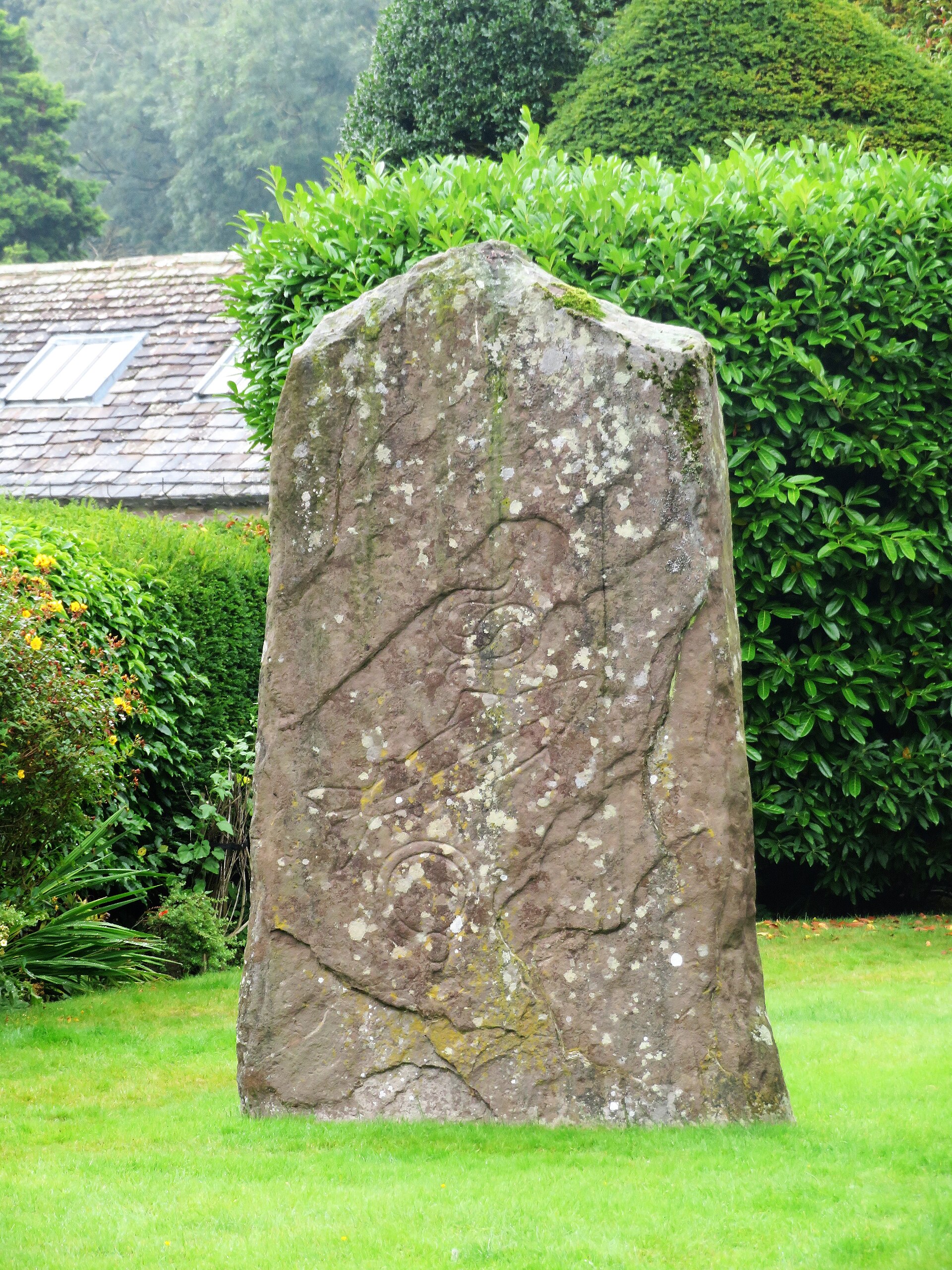
One of the most crowded cross faces in Pictish sculpture: axe-fighters, a cauldron with legs dangling from it, and a centaur share the stone with a…
- Easy path
Fortified place · Medieval
Glamis Castle
Angus
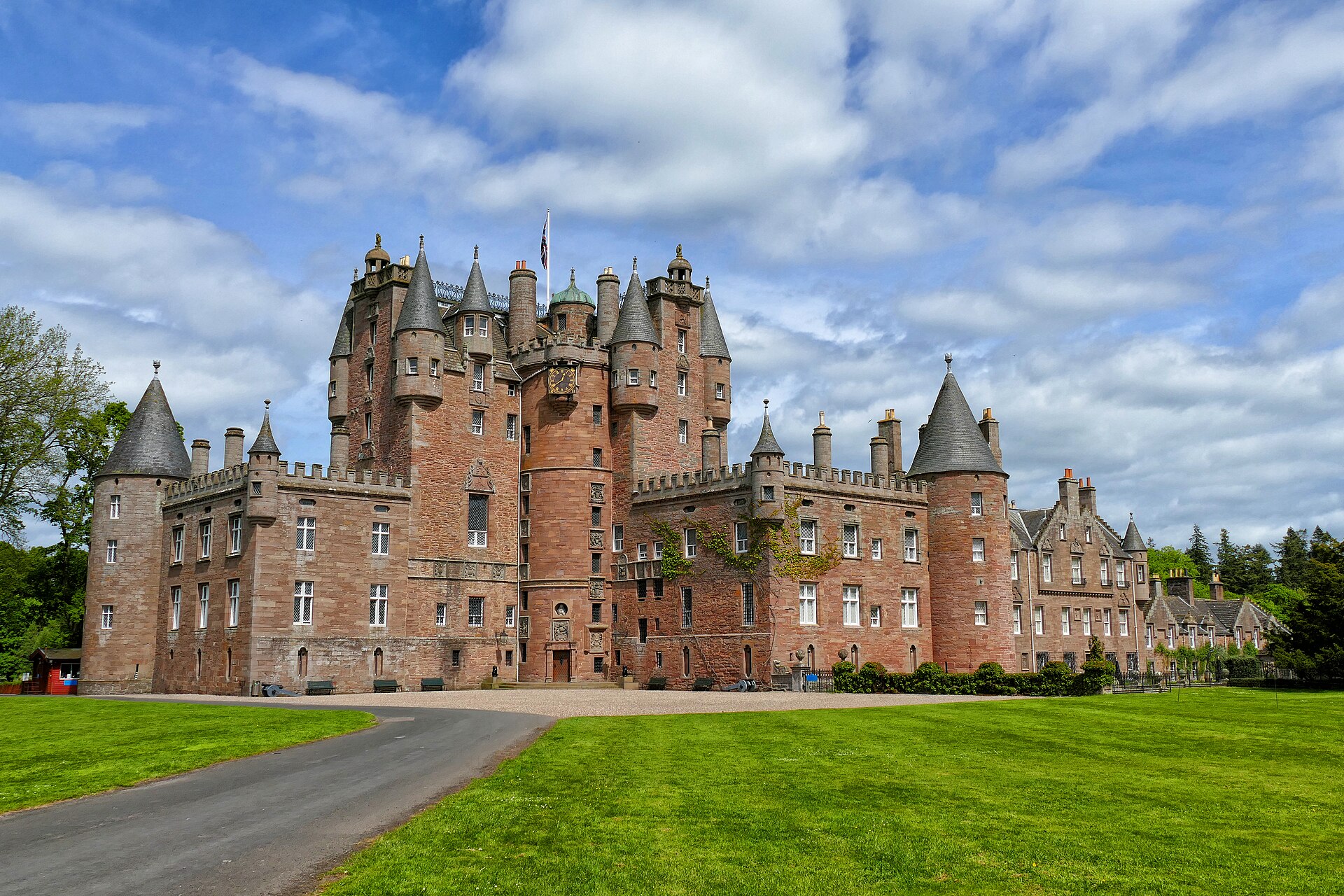
One family, the Lyons, has held this Strathmore estate since the 1370s, and its rooms have hosted a murdered king, a woman burned for witchcraft, a…
- Easy path
Carved stone · Pictish & early medieval
Hunter's Hill Stone
Angus
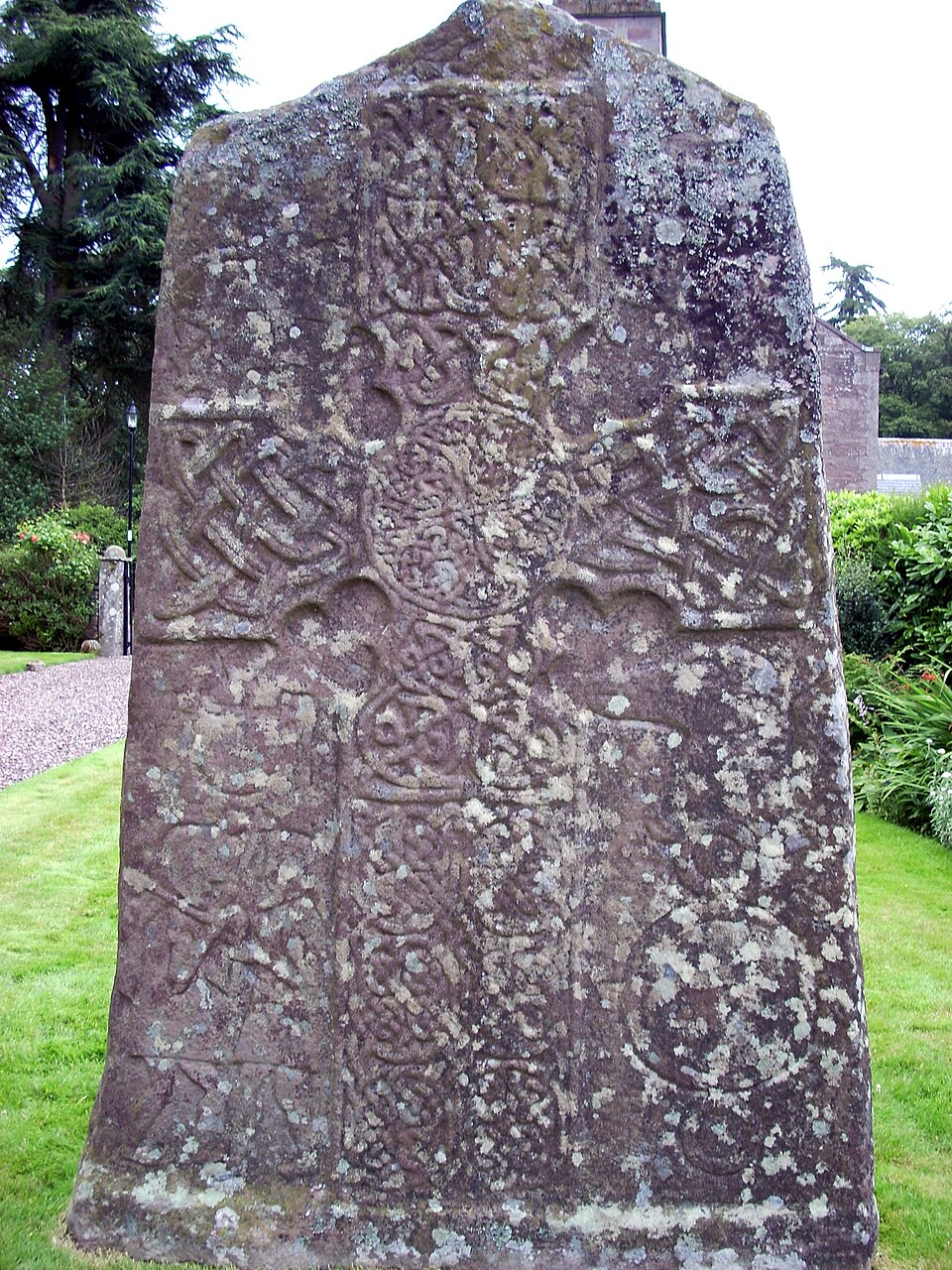
Its rear face still carries an older set of incised symbols beneath a later relief-carved cross: one of only two stones nearby known to have been r…
- Near Glamis
- Some walking
Carved stone · Pictish & early medieval
St Orland's Stone
Angus
St Orland’s in-situ cross-slab joins a richly interlaced Christian cross to symbols, hunters, a boat and beasts, preserving a remarkably complex pr…
- Near Glamis
- Some walking
Questions people ask
- What is the Eassie Stone?
- A Class II Pictish cross-slab of about the mid-8th century, carved on both faces with a cross, Pictish symbols and figural scenes, near Eassie, Angus.
- Where is the Eassie Stone kept?
- It stands inside the transparent shelter in the roofless old parish church, beside the route from Glamis to Meigle.
- When and where was the stone discovered?
- Reverend Cordiner reportedly recovered it from the burn beside the church in about 1786.
- What does the carving show?
- One face bears a cross with angels, a warrior and a hunting scene; the other shows Pictish symbols, cloaked figures and weathered cattle.
- What is the Aberlemno School?
- A grouping of related Pictish sculpture including the Eassie Stone, Aberlemno 2 and 3, Glamis 1 and 2, Menmuir 1 and others sharing carving style.
Sources
- Wikipedia: Eassie Stone
- Historic Environment Scotland — Canmore
- The Megalithic Portal
- Wikidata
- Historic Environment Scotland — Canmore (Eassie Old Church and cross slab, SM90125)
- The Megalithic Portal — Eassie Stone (C. Michael Hogan)
Explore more: Carved stones · Pictish & early medieval · Angus
The Ancient Codex, in your pocket
Get the Pocket Codex app
Carry the directory with you — Eassie Stone and thousands of ancient places across Britain and Ireland, offline, wherever you roam.