One family, the Lyons, has held this Strathmore estate since the 1370s, and its rooms have hosted a murdered king, a woman burned for witchcraft, and a future queen's childhood.
A pink sandstone tower rises out of the flat farmland of Strathmore, its turrets and pepper-pot roofs crowding together until the building looks more like a small fortified town than a single house. Inside, a locked and windowless room is said by family tradition to hold a secret so terrible that generations of Lyons have refused to name it, and visitors have supposedly counted the windows from outside trying to work out which room it is.
The present castle is largely the work of the seventeenth century, when Patrick, Lord Glamis, and his wife Anna Murray rebuilt an older tower house into the ornate, turreted mass seen today, but the site’s connection to the Lyon family reaches back to 1372, when Robert II granted it to Sir John Lyon, who had married the king’s daughter. For over 650 years the same family has held Glamis, weathering a witchcraft trial, a fatal sword-thrust witnessed by a full-length portrait still hanging in the drawing room, and two devastating fires.
Glamis is also a royal childhood home. Elizabeth Bowes-Lyon, later Queen Elizabeth the Queen Mother, grew up here before her marriage into the royal family, and her second daughter, Princess Margaret, was born within its walls in 1930 — a domestic detail that sits oddly alongside the castle’s older reputation for a hidden monster and a card-playing Devil.
What follows is drawn from published sources, with each claim labelled by how firmly it is established.
History
Long before any castle stood on the site, the vicinity of Glamis already carried traces of prehistoric activity, and the intricately carved Eassie Stone, a Pictish symbol stone, was recovered from a creek bed at the neighbouring village of Eassie. In 1034 the site is recorded as the location of a royal hunting lodge, where King Malcolm II was mortally wounded nearby and brought to die, giving Glamis a claim to royal association centuries before the Lyon family ever arrived.
By 1372 a castle had been built at Glamis, and in that year Robert II granted it to Sir John Lyon, Thane of Glamis, who had married the king's daughter. The Lyon family, later Bowes-Lyon, has held the estate ever since. In the early fifteenth century the building was reconstructed as an L-plan tower house, and in 1445 the title Lord Glamis was created for Sir Patrick Lyon, grandson of Sir John, fixing the family's status among the Scottish nobility.
In December 1528 Janet Douglas, wife of John Lyon, 6th Lord Glamis, was accused of treason for bringing supporters of the Earl of Angus to Edinburgh during James V's feud with the Douglas family. After her husband's death that September she was further charged with poisoning him, and the accusations escalated into a charge of witchcraft; she was burned at the stake in Edinburgh on 17 July 1537, and James V seized the castle for the crown before Janet's family recovered it in 1543.
In 1606 Patrick Lyon, 9th Lord Glamis, was created Earl of Kinghorne and began major building works, commemorated by an inscription on the central tower naming him and his wife, Dame Anna Murray. The English architect Inigo Jones has traditionally been credited with the redesign, though Historic Scotland regards the King's Master Mason William Schaw as more likely, given the strongly Scottish character of the resulting architecture. Soldiers were later garrisoned at the castle during the Commonwealth period.
In 1670 Patrick Lyon, 3rd Earl of Strathmore and Kinghorne, returned to Glamis and found it uninhabitable after the disruption of the Commonwealth years; restoration continued until 1689 and included the creation of a major Baroque garden. On 9 May 1728, following a funeral in Forfar, the 6th Earl of Strathmore and Kinghorne was accidentally killed by James Carnegie of Finhaven, who had drawn his sword against another man and run the Earl through as he stepped in to separate them; the resulting trial, defended by Robert Dundas of Arniston, returned a Not Guilty verdict and helped establish the right of Scottish juries to judge intent as well as fact.
In 1767 John Lyon, 9th Earl of Strathmore and Kinghorne, married Mary Eleanor Bowes, heiress to a coal-mining fortune, and in the 1770s he reworked the grounds in a fashionable formal style, while the south-west wing was later rebuilt after an early nineteenth-century fire. In the 1920s a large fireplace bearing the Blakiston coat of arms was brought from the family's Gibside estate near Gateshead and installed in the castle's Billiard Room.
In 1900 Lady Elizabeth Bowes-Lyon, later Queen Elizabeth the Queen Mother, was born the youngest daughter of the 14th Earl of Strathmore and Kinghorne, and spent much of her childhood at Glamis. During the First World War the castle served as a military hospital, and on 16 September 1916 a serious fire broke out; Elizabeth was particularly credited with helping organise the rescue of the castle's contents. She married Prince Albert, Duke of York, in 1923, and their second daughter, Princess Margaret, was born at Glamis in 1930. Since 1987 an illustration of the castle has appeared on the reverse of Royal Bank of Scotland ten-pound notes, and Glamis remains the family seat, currently home to Simon Bowes-Lyon, 19th Earl, who succeeded in 2016.
People
-
Sir John Lyon, Thane of Glamis
Received the castle from Robert II in 1372 after marrying the king's daughter, founding the family's centuries-long tenure.
-
Janet Douglas, Lady Glamis
Wife of the 6th Lord Glamis, accused of treason, poisoning and witchcraft, and burned at the stake in Edinburgh in 1537.
-
Patrick Lyon, 9th Lord Glamis and 1st Earl of Kinghorne
Began major seventeenth-century rebuilding works with his wife Anna Murray, commemorated by an inscription on the castle's central tower.
-
Elizabeth Bowes-Lyon, Queen Elizabeth the Queen Mother
Born in 1900, spent much of her childhood at Glamis and helped organise the rescue of its contents during the 1916 fire.
-
Simon Bowes-Lyon, 19th Earl of Strathmore and Kinghorne
Current owner of Glamis Castle, having succeeded to the earldom in 2016.
-
Princess Margaret
Second daughter of the future Queen Mother, born at Glamis Castle on 21 August 1930.
Cultural influences
-
The castle’s seventeenth-century remodelling belongs to the Scottish Renaissance and Baroque building tradition. Historic Environment Scotland records the association with Patrick, 3rd Earl of Kinghorne, and treats the commonly repeated attribution to Inigo Jones as unproven; William Schaw is considered the more likely influence.
Connections
-
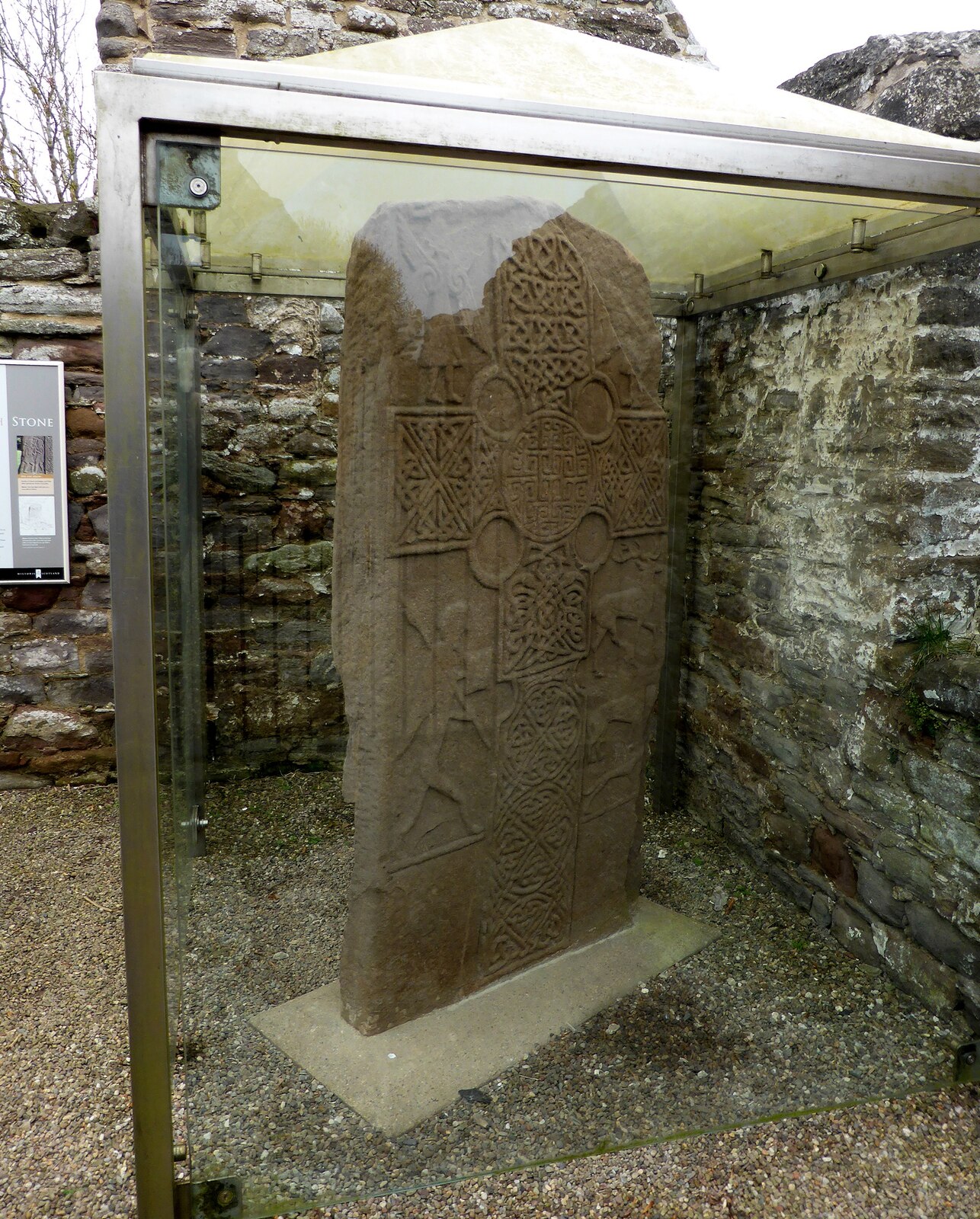
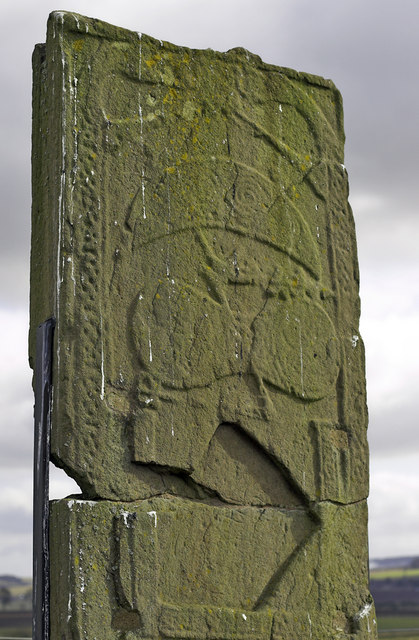
Photo: Sandy Gerrard / Wikimedia Commons / CC BY-SA 2.0 A carved Pictish symbol stone found in a creek bed at the neighbouring village of Eassie, evidence of activity in the area before the castle existed.
-
Gibside, near Gateshead
The Bowes-Lyon family's estate in County Durham, from which a large fireplace bearing the Blakiston coat of arms was moved into Glamis's Billiard Room in the 1920s.
-
University of Dundee Archives
Holds close links with the Glamis Castle Archive, and researchers wishing to consult material from the castle's collection do so in the university's search room.
-
Forfar Tolbooth
The prison where James Carnegie of Finhaven was held and expressed remorse after fatally wounding the 6th Earl of Strathmore and Kinghorne in 1728.
In culture
-
Macbeth
William Shakespeare's Macbeth (1603–06) places its title character at Glamis Castle, although the historical King Macbeth, who died in 1057, had no actual connection to the building.
-
Thomas & Friends
In the British children's television series Thomas & Friends, Lord Callan's castle is depicted based on Glamis Castle.
-
La Proie et l'ombre
The 1982 Yoko Tsuno album by Roger Leloup features the fictional 'Loch Castle', drawn as near-identical to Glamis Castle.
-
Star Trek: The Next Generation
Glamis Castle is mentioned by the planet's Governor in the season seven episode 'Sub Rosa'.
What to look for
-
The turreted tower house
The seventeenth-century remodelling gave Glamis its distinctive cluster of turrets and pepper-pot roofs, built around the earlier L-plan tower house of the fifteenth century.
-
The statues on the approach avenue
Four 'brazen' statues placed in the seventeenth century depict Charles I, James VI, Charles II and James VII; the first two were sculpted by Arnold Quellin.
-
The chapel
A small chapel seating 46 people, still used for family functions, where tradition holds one seat is permanently reserved and left unoccupied.
-
The clock tower archives
Houses the castle's historical records, including a papal bull and the memoirs of Mary Eleanor Bowes, with close links to the University of Dundee.
-
The Gibside fireplace, Billiard Room
A large fireplace bearing the Blakiston family coat of arms, moved from the Bowes-Lyon estate of Gibside near Gateshead in the 1920s.
What is said
Folklore and tradition, recorded as what is said — not as established fact.
-
The Monster of Glamis
According to a legend partly attributed to accounts from singer and composer Virginia Gabriel, who stayed at the castle in 1870, a hideously deformed child was born into the family and kept hidden in the castle all his life, with his suite of rooms said to have been bricked up after his death; an alternative version holds that a vampire child is born to every generation and walled up in the same room, and the legend is thought to have been inspired by the true story of the Ogilvie family.
-
The towel-hanging story
Guests are said to have once hung towels from every window of the castle in an attempt to identify the bricked-up room from outside, only to find several windows apparently towel-less — though relatives of the family have suggested this was more likely because the owners deliberately removed the towels before the guests could compare them.
-
Earl Beardie
A fifteenth-century figure known as 'Earl Beardie', identified in different tellings with either Alexander Lyon, 2nd Lord Glamis, or Alexander Lindsay, 4th Earl of Crawford, is said to have flown into a rage when told he could not play cards on the Sabbath and to have declared he would play until doomsday or with the Devil himself; tradition holds that a stranger then arrived to take up the game and was later revealed to be the Devil, condemning Earl Beardie to play on forever.
-
The White Lady
Castle tour guides say that one seat in the small chapel is always left empty, reserved for the 'White Lady', a ghost believed to be Janet Douglas, Lady Glamis, though the chapel is said to still be used regularly for family functions.
Plan your visit
- Location
- 56.6203°N · 3.0024°W
- Access
- Paid entry — managed visitor site
- Terrain
- Easy going
- Parking
- Estate car park at the castle; check current visitor arrangements with Glamis Castle before travelling.
- Time needed
- About 150 minutes
- Best time
- During the seasonal opening period, when the castle tours, gardens and estate facilities are operating; check current times before travelling.
- What survives
- The castle survives as a substantially standing and maintained visitor property, with guided interior tours and accessible grounds.
- Facilities
- Car park, café/restaurant, shops and gardens on the estate.
- Start point
- Glamis Castle estate driveway
Opening & admission
Privately owned by the Strathmore estate; ticketed entry with seasonal opening (typically spring to early winter). Castle tours and grounds — check current times.
- Level driveway and lawns to the castle; guided tours cover the interior.
Nearby places
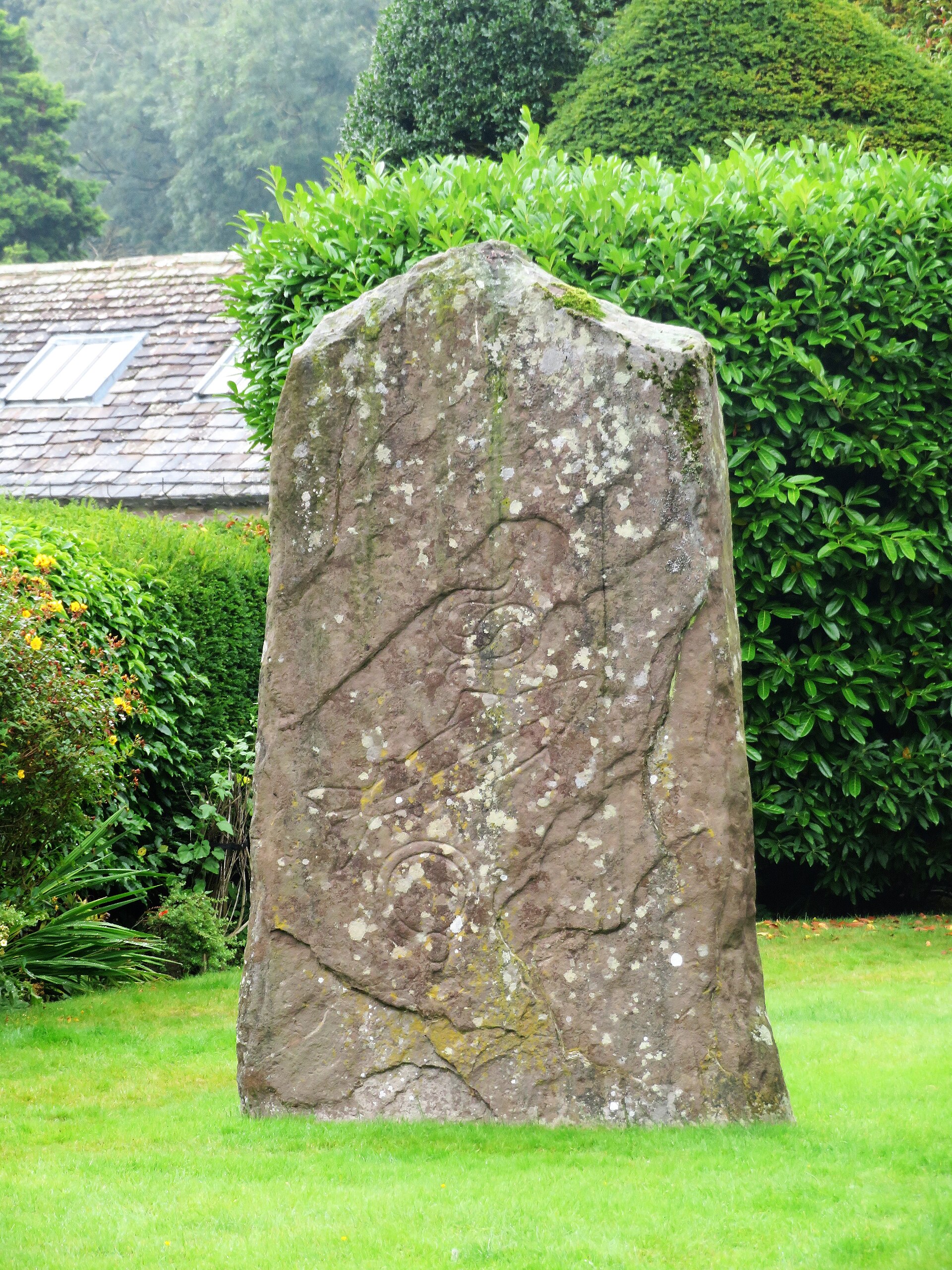
Carved stone · Pictish & early medieval
Glamis Manse Stone
Angus
One of the most crowded cross faces in Pictish sculpture: axe-fighters, a cauldron with legs dangling from it, and a centaur share the stone with a…
- Easy path
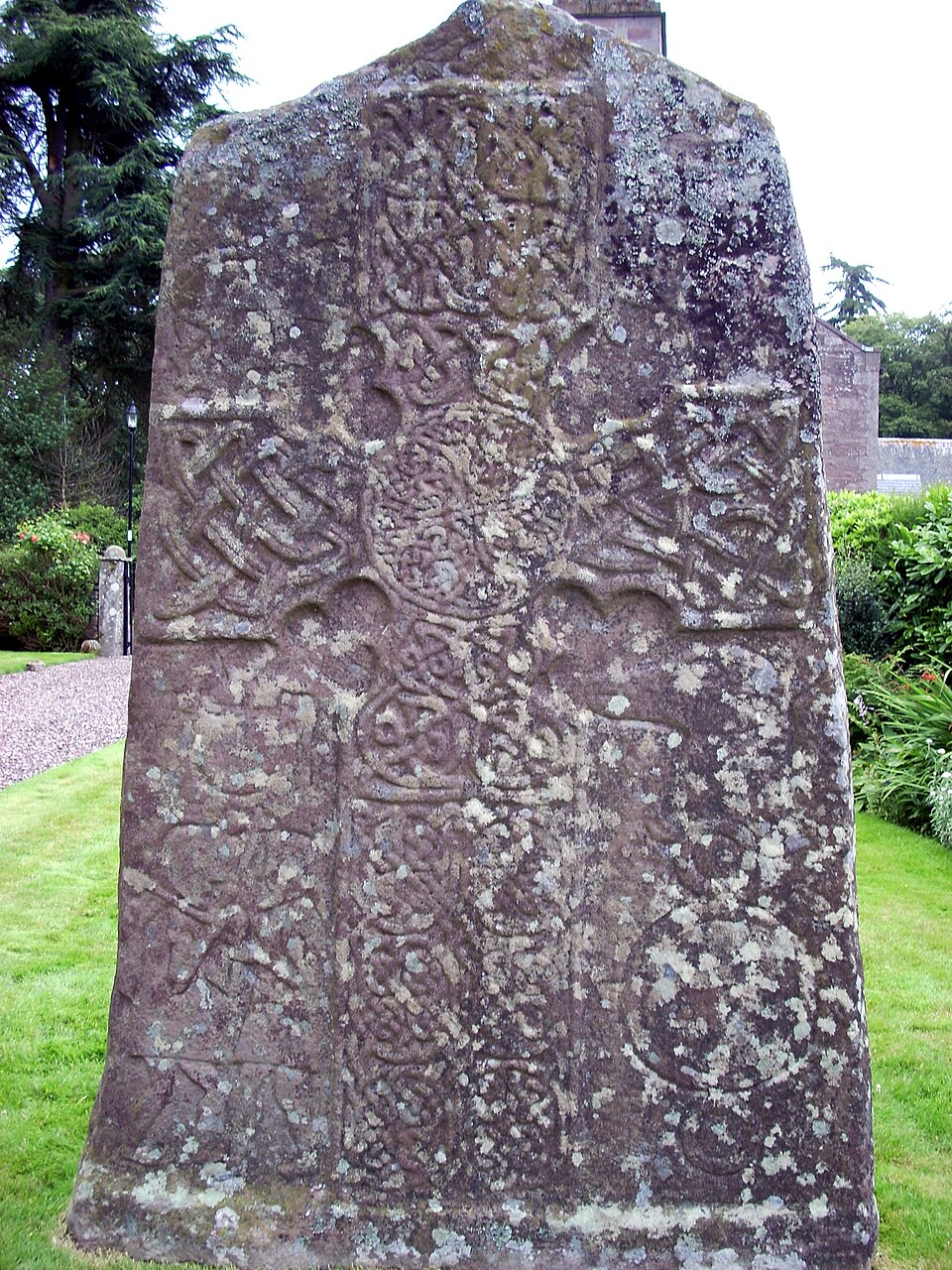
Carved stone · Pictish & early medieval
Hunter's Hill Stone
Angus
Its rear face still carries an older set of incised symbols beneath a later relief-carved cross: one of only two stones nearby known to have been r…
- Near Glamis
- Some walking
Carved stone · Pictish & early medieval
St Orland's Stone
Angus
St Orland’s in-situ cross-slab joins a richly interlaced Christian cross to symbols, hunters, a boat and beasts, preserving a remarkably complex pr…
- Near Glamis
- Some walking
Carved stone · Pictish & early medieval
Eassie Stone
Angus
Carved on both faces with warriors, hunters, angels and a figure entangled with severed heads, it survived only because Georgian antiquarians pulle…
- Near Eassie
- Easy path
Questions people ask
- How old is Glamis Castle?
- A castle existed at Glamis by 1372, when Robert II granted it to Sir John Lyon, though the present turreted building dates largely from the 17th century.
- Who owns Glamis Castle today?
- Glamis remains the seat of the Lyon (Bowes-Lyon) family, currently held by Simon Bowes-Lyon, 19th Earl of Strathmore and Kinghorne, who succeeded in 2016.
- Was Princess Margaret born at Glamis Castle?
- Yes, Princess Margaret, second daughter of Queen Elizabeth the Queen Mother, was born at Glamis Castle on 21 August 1930.
- What is the Monster of Glamis legend?
- Tradition holds that a hideously deformed child born into the family was kept hidden at the castle and his room bricked up after his death, though this is unverified.
- Is Glamis Castle connected to Shakespeare's Macbeth?
- Shakespeare's Macbeth is set partly at Glamis Castle, but the historical King Macbeth, who died in 1057, had no real connection to the building.
Sources
- Wikipedia: Glamis Castle
- Historic Environment Scotland — Listed Building record
- Inventory of Gardens and Designed Landscapes in Scotland
Explore more: Fortified places · Medieval · Angus
The Ancient Codex, in your pocket
Get the Pocket Codex app
Carry the directory with you — Glamis Castle and thousands of ancient places across Britain and Ireland, offline, wherever you roam.