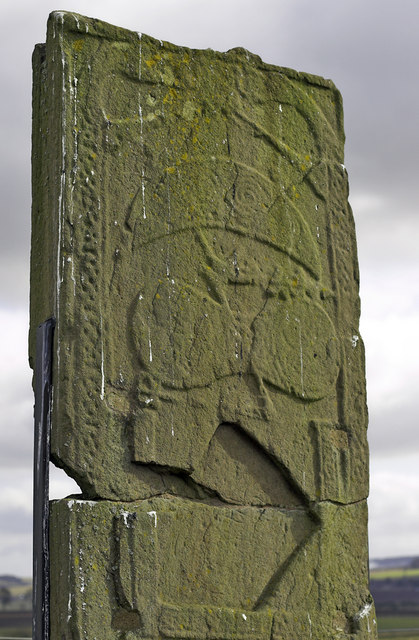
One of the most crowded cross faces in Pictish sculpture: axe-fighters, a cauldron with legs dangling from it, and a centaur share the stone with a Celtic cross.
Two bearded axe-fighters and a cauldron with apparent human legs occupy the lower face of the Glamis Manse Stone, beneath a large relief Celtic cross filled with knotwork. The tall slab stands in the manse garden close to the parish church, combining Christian imagery with older narrative scenes on a monument raised in the 9th century.
The slab stands 2.76 metres high, and its carvers packed the space around the cross with further incised figures: a deer or hound’s head above a triple disc, a centaur gripping two axes, and a creature read as a lion. Turn to the back of the stone and the imagery changes register entirely — a serpent, a fish, and a mirror, incised in a plain vertical line, echo the older tradition of Pictish symbol stones that predates the cross on the other side.
Known to scholars as Glamis 2 to distinguish it from a second carved stone in the village, the Manse Stone is protected as a scheduled monument but remains on private ground, visible to those passing by only from a distance of around 20 metres.
What follows is drawn from published sources, with each claim labelled by how firmly it is established.
The name
The stone takes its name from its location in the grounds of the Manse — the traditional residence of a parish minister — beside St Fergus church at Glamis; it is also catalogued by researchers as Glamis 2, distinguishing it from the nearby Hunter's Hill Stone, Glamis 1.
History
During the 9th century, carvers raised the Glamis Manse Stone as a cross-slab standing 2.76 metres high, 1.5 metres wide and 24 centimetres thick, shaping its top to a pediment and setting a Celtic cross in relief across the principal face. Rather than leaving the field around the cross plain, they filled it with an unusually dense scene of incised figures and symbols, marking the slab out even among other elaborately carved Pictish cross-slabs of the period.
The cross itself was cut with an incised ring at the crossing and ogee curves in its armpits, while the shaft and the roundel at its centre were filled with knotwork interlace; the arms and the panel above the roundel instead carried zoomorphic interlace, patterns built from the interwoven bodies of stylised beasts rather than plain cord-work, giving the cross face a texture that shifts across its surface rather than repeating a single design.
Around that cross, the carvers set a run of narrative and symbolic images: in the lower left quadrant, two bearded, long-haired men appear to fight with axes, with what looks like a cauldron holding a pair of human legs above them; the lower right quadrant holds a deer or hound's head over a triple disc, a design echoed on the Monifieth 2 stone; the upper quadrants hold a centaur wielding a pair of axes and a beast read as a lion.
On the reverse of the slab, the carvers incised three further symbols in a vertical line: a serpent above a fish, with a mirror at the foot. These belong to the older, plainer repertoire of Pictish symbol stones, so that the same block of stone carries both the pre-Christian symbol tradition on its back and a fully Christian cross scene on its front, a combination that places the Manse Stone among the Class II stones of Pictland.
Studying the finished layout, the historian Lloyd Laing identified two structural quirks in how the cross face was set out: its arms sit some 2.5 degrees anticlockwise of true perpendicular to the shaft, and the knotwork interlace filling the roundel is skewed roughly 13 degrees from the shaft's own axis, suggesting the carving was laid out with less precision than is often assumed for such monuments.
Scholars later classified the slab as a Class II stone under the scheme John Romilly Allen and Joseph Anderson devised for Pictish sculpture, distinguishing plain symbol stones from those combining symbols with a cross, and grouped it within the Aberlemno School proposed by Ross Trench-Jellicoe and extended by Laing to include Aberlemno 2 and 3, Menmuir 1, Kirriemuir 1, Monifieth 2, Eassie, Rossie Priory and Glamis 1.
The Glamis Manse Stone is now a scheduled monument, a legal status recognising its national importance and giving it protection under Scottish heritage law. It nonetheless remains within a private garden close to St Fergus church, and passers-by can view it only from a distance of around 20 metres rather than approaching the carved faces directly.
People
-
Lloyd Laing
Historian who analysed the layout of the cross face, identifying its skewed geometry, and who extended the proposed grouping of the Aberlemno School of Pictish sculpture to include the Manse Stone.
-
Ross Trench-Jellicoe
Researcher who first proposed the grouping of related carved stones later named the Aberlemno School.
-
John Romilly Allen
Co-author of the classification system that categorises the Manse Stone as a Class II Pictish cross-slab.
-
Joseph Anderson
Co-author, with John Romilly Allen, of the classification system used to categorise the stone.
Cultural influences
-
Two traditions on one stone
The front is Christian and the back is not. Class II stones like this one carry the old Pictish symbol repertoire — serpent, fish, mirror — on one face and a cross on the other, which is why they are read as monuments of a society partway through its conversion rather than either side of it.
-
The Aberlemno School
The stone belongs to a group of Angus carvings that share a way of laying out a cross face and a taste for crowded narrative scenes around it, suggesting workshops working to a common manner within a few miles of each other.
Connections
-
Glamis 1 (Hunter's Hill Stone)
Standing in the same village, it is grouped with the Manse Stone as a member of the Aberlemno School of Pictish sculpture.
-
Monifieth 2
Carries a deer or hound's head symbol above a triple disc closely echoing the same motif on the Manse Stone.
-
Aberlemno 2 (the Kirkyard Stone)
Classed alongside the Manse Stone as part of the Aberlemno School grouping of related carved stones.
-
Eassie
Included with the Manse Stone in the Aberlemno School as the grouping was extended by Lloyd Laing.
-
Rossie Priory
One of the further stones grouped into the Aberlemno School alongside the Manse Stone.
What to look for
-
The cross face
A Celtic cross carved in relief with an incised ring and ogee-curved armpits, its shaft and central roundel filled with knotwork interlace and its arms filled with zoomorphic interlace.
-
The axe-fighters and cauldron
In the lower left quadrant, two bearded, long-haired men appear to fight with axes, with what looks like a cauldron holding a pair of human legs carved above them.
-
The centaur and lion
The upper quadrants hold a centaur gripping a pair of axes and a creature that has been interpreted as a lion.
-
The deer or hound's head and triple disc
In the lower right quadrant, a deer or hound's head sits above a triple disc symbol, a design also found on the Monifieth 2 stone.
-
The rear symbols
On the back of the slab, a serpent, a fish and a mirror are incised in a plain vertical line, in the older tradition of Pictish symbol stones.
Plan your visit
- Location
- 56.6096°N · 3.0022°W
- Access
- Visible from a public way
- Terrain
- Easy going
- Time needed
- About 15 minutes
- Best time
- During daylight hours, when the stone can be viewed from the permitted distance.
- What survives
- The Pictish cross-slab survives in the Manse garden, where it can be viewed from the boundary at a distance.
Opening & admission
Free to view; check current access arrangements before visiting as it stands within private grounds.
- Located in the garden of the Manse near the parish church, visible only from about 20 metres away
- No public entry route onto the grounds is recorded
Nearby places
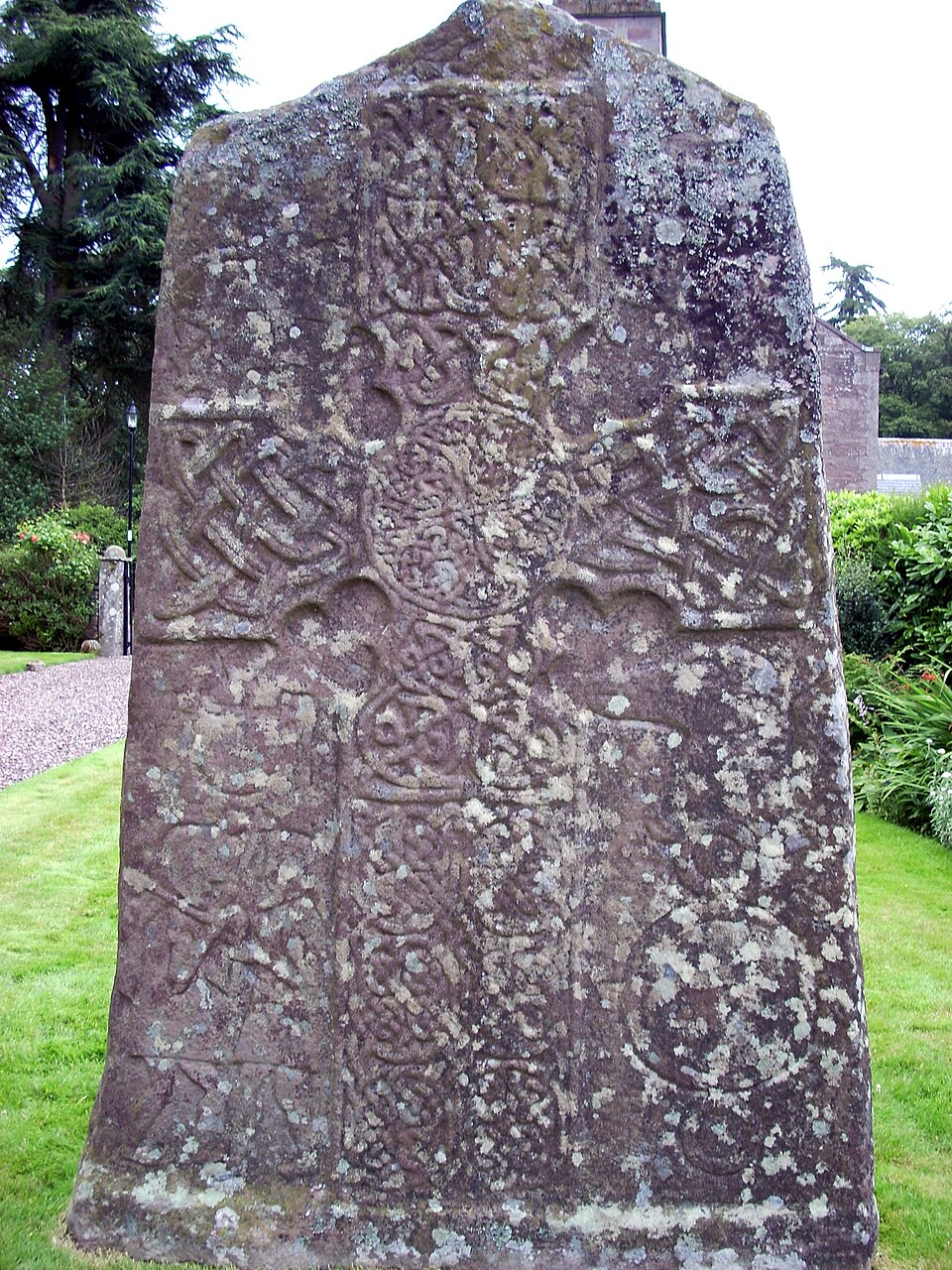
Carved stone · Pictish & early medieval
Hunter's Hill Stone
Angus
Its rear face still carries an older set of incised symbols beneath a later relief-carved cross: one of only two stones nearby known to have been r…
- Near Glamis
- Some walking
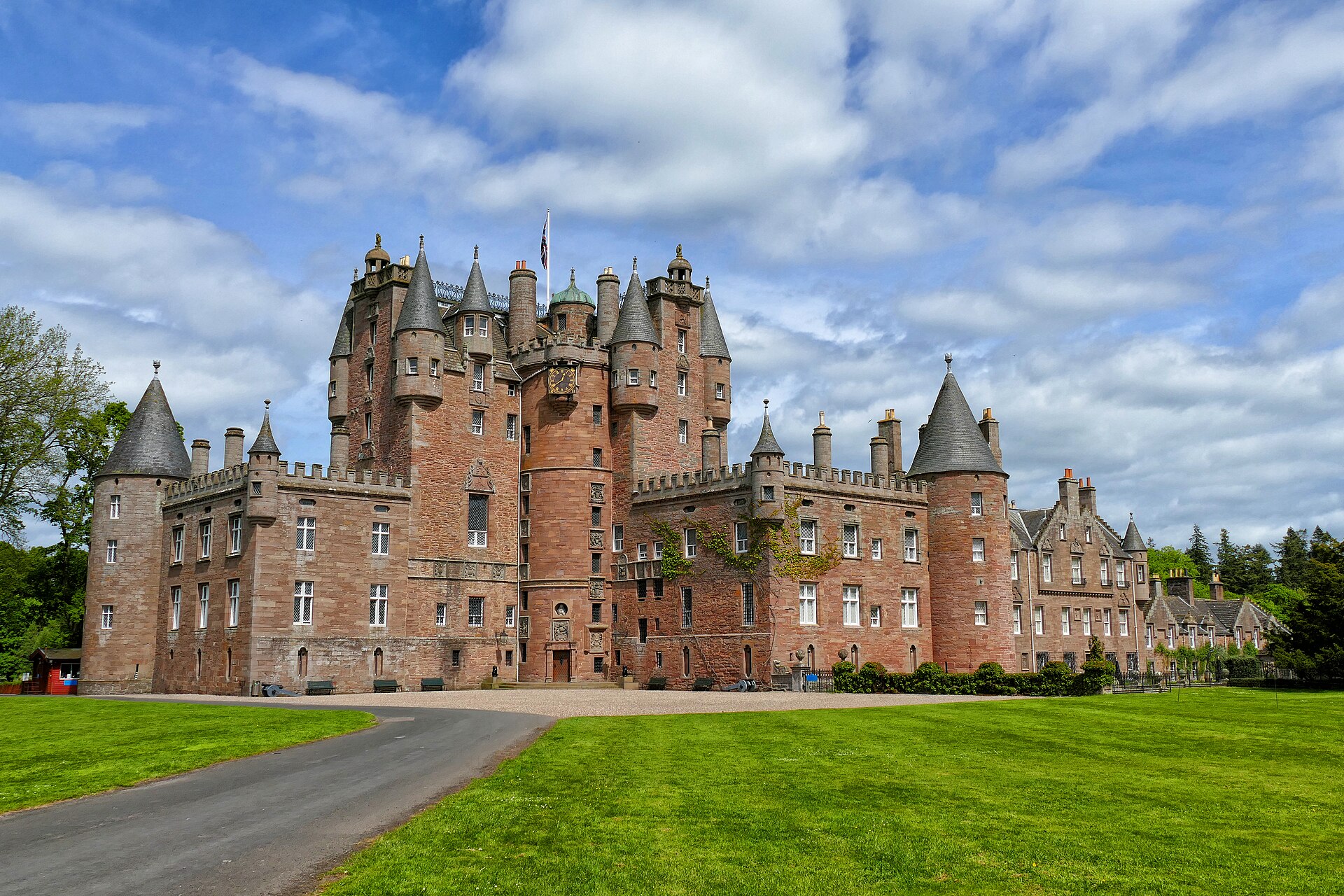
Fortified place · Medieval
Glamis Castle
Angus
One family, the Lyons, has held this Strathmore estate since the 1370s, and its rooms have hosted a murdered king, a woman burned for witchcraft, a…
- Easy path
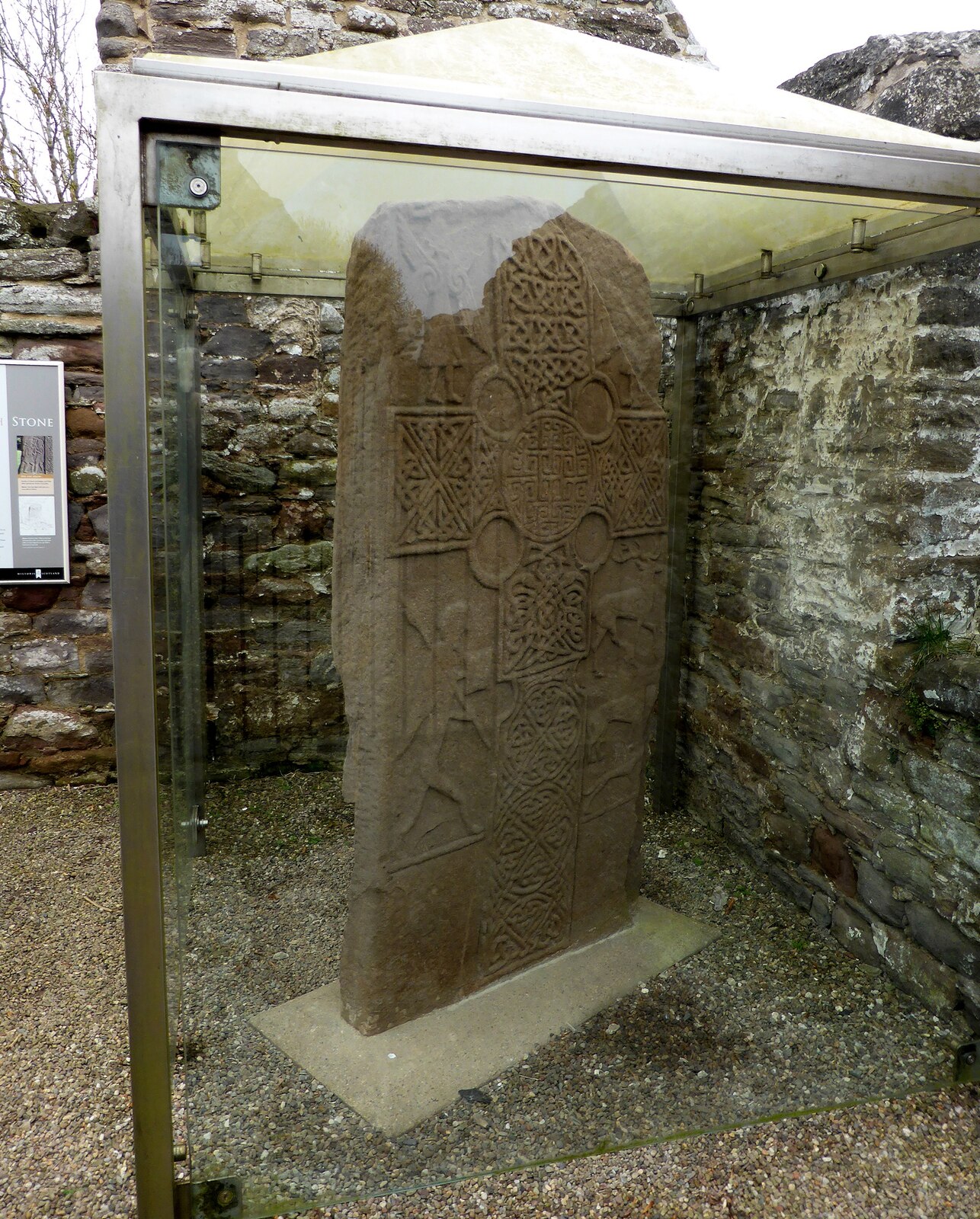
Carved stone · Pictish & early medieval
Eassie Stone
Angus
Carved on both faces with warriors, hunters, angels and a figure entangled with severed heads, it survived only because Georgian antiquarians pulle…
- Near Eassie
- Easy path
Carved stone · Pictish & early medieval
St Orland's Stone
Angus
St Orland’s in-situ cross-slab joins a richly interlaced Christian cross to symbols, hunters, a boat and beasts, preserving a remarkably complex pr…
- Near Glamis
- Some walking
The setting
St Fergus Kirk beside the Manse garden at Glamis.
Photo: Gordon Hatton / Wikimedia Commons / CC BY-SA 2.0
The former Manse garden at Glamis, where the carved stone stands.
Photo: M J Richardson / Wikimedia Commons / CC BY-SA 2.0
Questions people ask
- What is the Glamis Manse Stone?
- A 9th-century Class II Pictish cross-slab standing in the garden of the Manse at Glamis, Angus, carved with a Celtic cross on one face and Pictish symbols on the other.
- Can visitors get close to the stone?
- No — it stands in a private garden and is visible to passers-by only from around 20 metres away.
- Why is it also called Glamis 2?
- Researchers use the number to distinguish it from Glamis 1, the Hunter's Hill Stone, a separate carved stone in the same village.
- What images appear on the cross face?
- Axe-wielding fighters, a cauldron with human legs, a centaur with axes, a lion-like beast, and a deer or hound's head over a triple disc.
- Is the stone protected?
- Yes, it is a scheduled monument, giving it legal protection as a site of national importance.
Sources
- Wikipedia: Glamis Manse Stone
- Wikidata: Glamis Manse Stone (Q5566518)
- Historic Scotland — Meigle Museum Pictish Carved Stones
Explore more: Carved stones · Pictish & early medieval · Angus
The Ancient Codex, in your pocket
Get the Pocket Codex app
Carry the directory with you — Glamis Manse Stone and thousands of ancient places across Britain and Ireland, offline, wherever you roam.