
The stones' Pictish symbols were carved as the symbol tradition itself was dying out — among the last such carvings made anywhere before it vanished for good.
Carved in relief on both faces, a slab bearing two robed, bearded figures facing one another has stood at various points in a churchyard in Angus, then inside a parish kirk, and now inside a museum case in Forfar. The figures are usually read as Saints Anthony and Paul, hermits of the Egyptian desert whose legendary meeting became a favourite subject for early Christian sculptors, and the scene sits on the same stone as a Pictish mirror-and-comb symbol — two very different visual languages, cut side by side on one piece of stone.
Two such carved slabs, both cross-slabs worked in relief on both sides, were recovered from the grounds of Kirriemuir Kirk. Because they combine Pictish symbols with overtly Christian imagery, specialists have long treated their find-spot as evidence that Kirriemuir held real ecclesiastical standing in the closing centuries of the first millennium, even though almost nothing else about that community survives in writing. The symbols on the first stone are among the last Pictish symbols carved anywhere before the tradition died out, which lets it be dated with some confidence to the late 9th or early 10th century.
Today both stones are held at the Meffan Institute in Forfar, a short distance from where they were found, kept as museum pieces rather than left standing in the churchyard that first gave them meaning.
What follows is drawn from published sources, with each claim labelled by how firmly it is established.
History
During the later centuries of the first millennium AD, Kirriemuir appears to have held some ecclesiastical standing, a status inferred almost entirely from the sculpture its church grounds have yielded rather than from any surviving charter or chronicle. No document names the settlement directly; the case for its importance rests on the stones themselves, carved with a fluency that argues for a resident community capable of producing skilled work, not a single itinerant carver passing through.
The first of the two surviving slabs, known as Kirriemuir 1, was carved in relief on both faces and combines Pictish symbols — among them a mirror and comb — with figural scenes generally identified as Saints Anthony and Paul, the desert hermits whose meeting was a popular subject in early Christian art well beyond Egypt. Because it is one of the last stones anywhere to carry genuine Pictish symbols, it can be dated with some confidence to the late 9th or early 10th century, right at the end of that symbol tradition.
A second cross-slab, Kirriemuir 2, was carved in the same manner, worked in relief on both faces and likewise bearing Pictish symbols. Antiquarians John Romilly Allen and Joseph Anderson, compiling their influential survey of early Scottish sculpture, classified both stones as Class II monuments — stones that combine incised Pictish symbols with crosses and other Christian imagery, marking a midpoint between the purely symbol-bearing Class I stones and the symbol-free Class III crosses that came after.
Both slabs were recovered from the grounds of Kirriemuir Kirk, at grid reference NO38955448, where they had presumably lain — built into later structures, buried, or simply left standing — since whatever earlier foundation the Pictish-period community used was replaced by the present kirk. No detailed record survives of exactly when or how each stone came to light, only that the kirkyard was their reported find-spot.
The stones were subsequently moved to the Meffan Institute in Forfar, a museum a few miles from Kirriemuir, where both remain on public display. The transfer took them out of ecclesiastical custody and into a curated collection, protecting the carvings from further weathering but separating them permanently from the churchyard in which they were carved and first erected.
People
-
John Romilly Allen
Co-author, with Joseph Anderson, of the classification system that placed both Kirriemuir stones in Class II.
-
Joseph Anderson
Co-author, with John Romilly Allen, of the influential survey of early Scottish sculpture used to classify the stones.
Cultural influences
-
Allen and Anderson's Class I/II/III system
The stones are read through the classification devised by John Romilly Allen and Joseph Anderson, which sorts Pictish stones into Class I (incised symbols only), Class II (symbols combined with a cross and Christian imagery), and Class III (crosses without Pictish symbols). Both Kirriemuir slabs fall into Class II, marking them as products of a period when Pictish and Christian visual traditions were carved onto the same stone.
Connections
-
The Meffan Institute, Forfar
Both Kirriemuir stones are now held and displayed at this museum, a few miles from where they were found.
-
Kirriemuir Kirk
The churchyard grounds from which both sculptured stones were recovered, and the basis for treating Kirriemuir as an early ecclesiastical site.
Discovery & excavation
Both stones were found in the grounds of Kirriemuir Kirk, recorded at grid reference NO38955448. No excavation account survives to explain the circumstances of their recovery; they are known only to have come from the kirkyard before being moved to museum care in Forfar.
Finds now held at: The Meffan Institute, Forfar.
What to look for
-
The mirror and comb symbol
Kirriemuir 1 carries a Pictish mirror and comb symbol alongside its figural carving, a pairing found on Pictish stones across eastern Scotland.
-
The meeting of Saints Anthony and Paul
The figural scene on Kirriemuir 1 is generally identified as the meeting of the desert hermits Anthony and Paul, a subject carved across early Christian art far beyond its Egyptian origin.
-
Relief carving on both faces
Both slabs are cross-slabs worked in relief on both faces rather than simply incised, a more laborious technique than the flat-cut symbols of earlier Pictish stones.
Plan your visit
- Location
- 56.6441°N · 2.8891°W
- Nearest settlement
- Kirriemuir
- Access
- Paid entry — managed visitor site
- Terrain
- Easy going
- Time needed
- About 30 minutes
- Best time
- Visit during the published museum or visitor-venue opening hours, since the original stone is preserved indoors.
- What survives
- The original stones are no longer at the findspot; both are preserved and displayed at the Meffan Institute in Forfar.
- Facilities
- The relevant museum or visitor venue provides the facilities; check the official page for current opening arrangements.
Opening & admission
The stones themselves are no longer on site, so no visitor admission arrangement applies here.
- The original stones have been removed to the Meffan Institute in Forfar for display
- No public access route to the original findspot is recorded
Nearby places
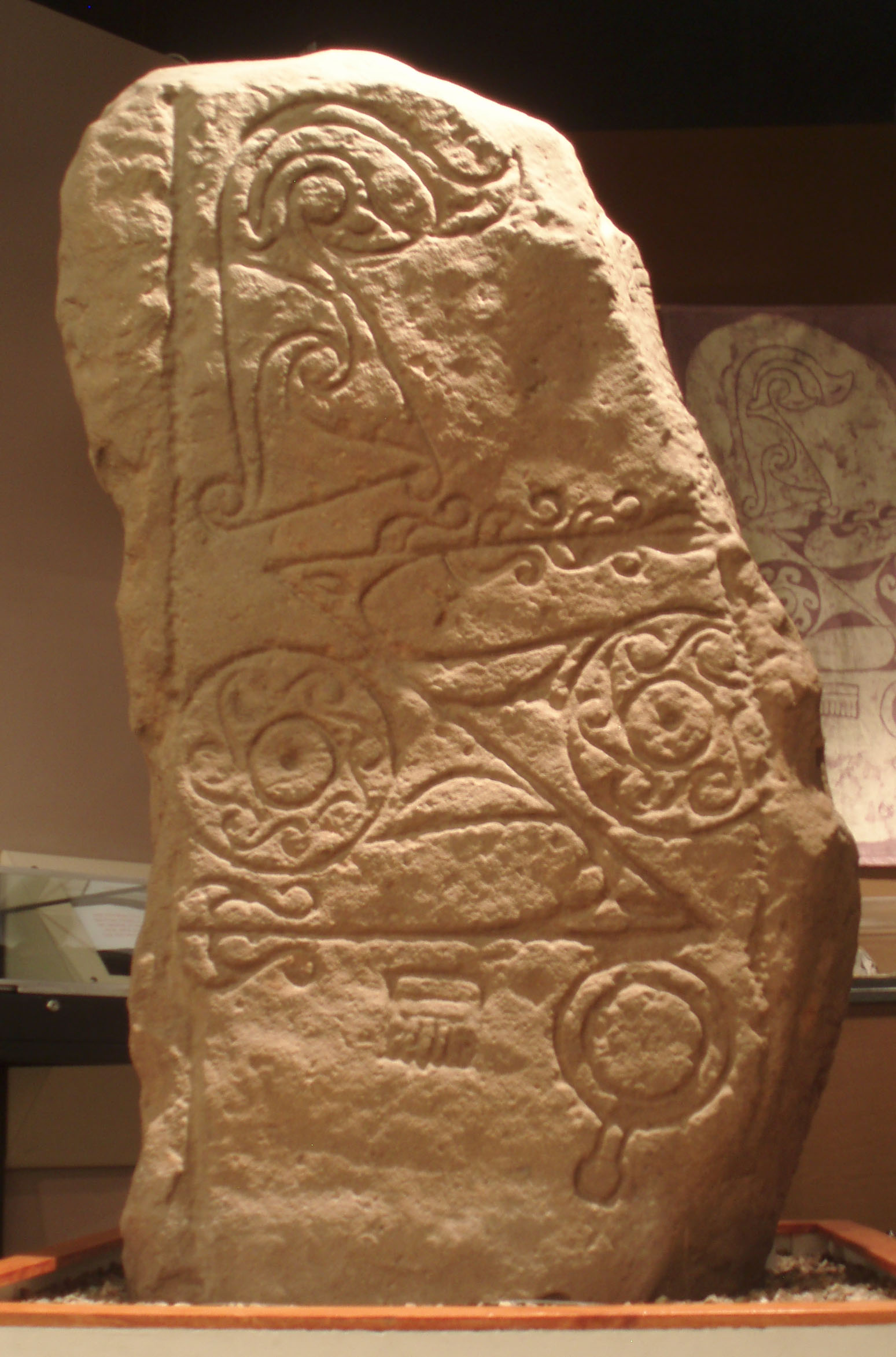
Carved stone · Pictish & early medieval
Dunnichen Stone
Angus
Its carved flower motif is rare among Pictish (of the Picts, the people of northern and eastern Scotland from about AD 300 to 900) symbol stones, w…
- Near Forfar
- Easy path
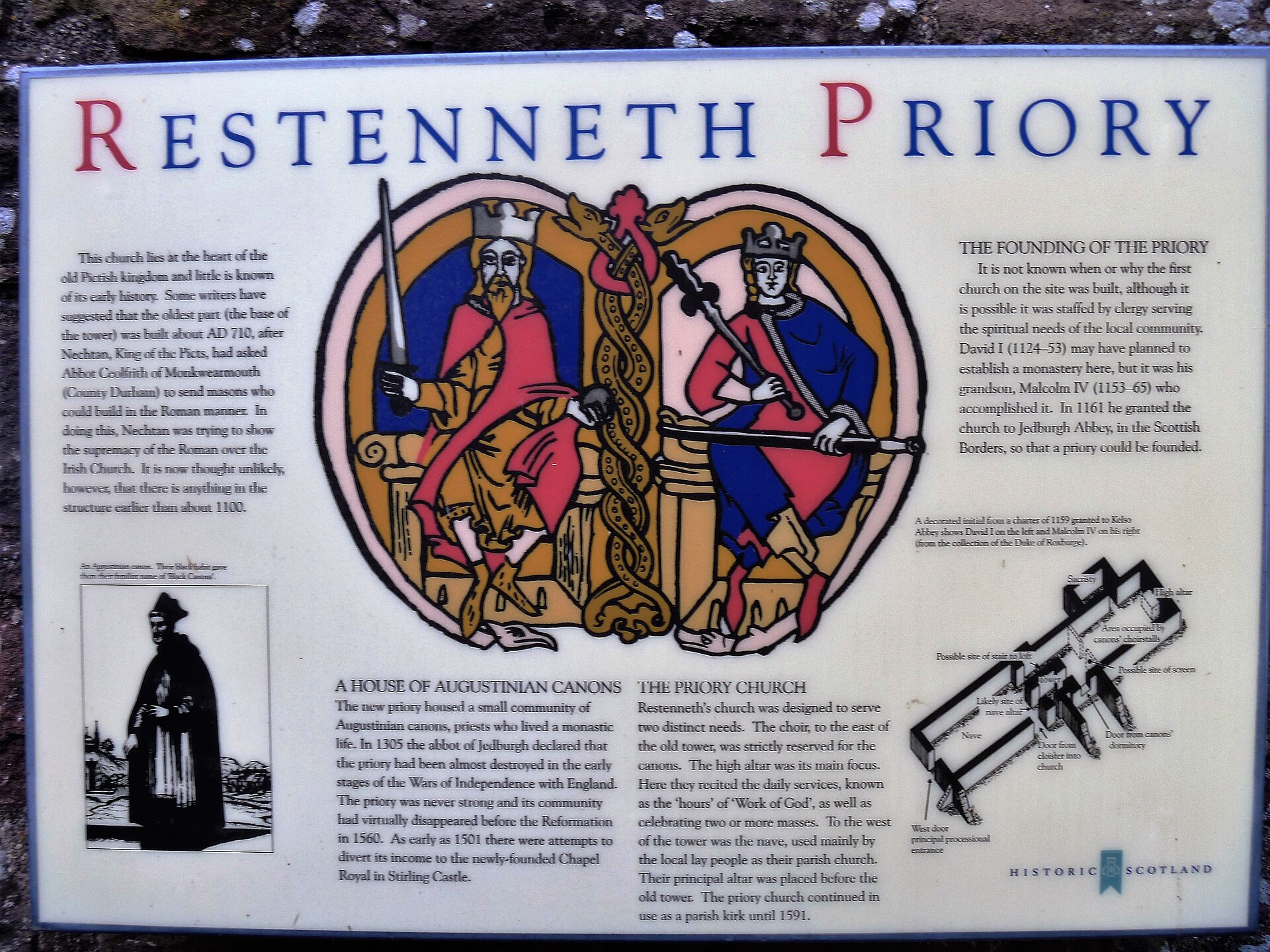
Building or ruin · Pictish & early medieval
Restenneth Priory
Angus
Restenneth Priory was a monastic house of Augustinian canons founded by Jedburgh Abbey, under the patronage of King Malcolm IV of Scotland, in 1153…
- Near Forfar
- 3 min walk from car park
Fortified place · Roman
Battledykes
Angus
Assessed to have sheltered 50,000 to 60,000 men, this is one of the largest Roman camps ever built in Scotland: a single night's stop on a campaign…
- Near Forfar
- Some walking
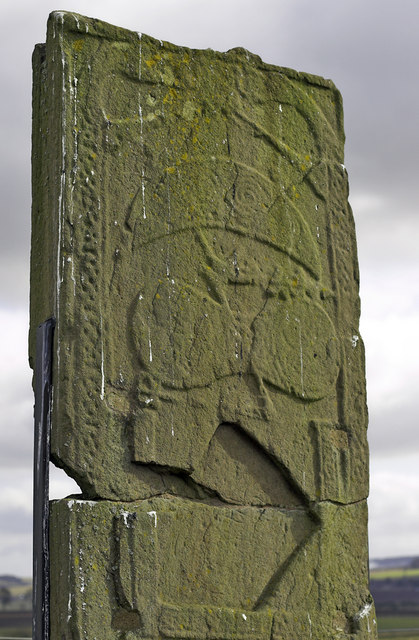
Carved stone · Pictish & early medieval
St Orland's Stone
Angus
St Orland’s in-situ cross-slab joins a richly interlaced Christian cross to symbols, hunters, a boat and beasts, preserving a remarkably complex pr…
- Near Glamis
- Some walking
The setting
Meffan Institute exterior in Forfar, the museum setting for the Kirriemuir sculptured stones.
Portrait: John Romilly Allen (1847 – 1907) / Wikimedia Commons / Public domain
Questions people ask
- What are the Kirriemuir sculptured stones?
- Two Class II Pictish stones, carved in relief on both faces, found in the grounds of Kirriemuir Kirk in Angus; one bears figures identified as Saints Anthony and Paul.
- Where can the stones be seen today?
- Both stones are on display at the Meffan Institute in Forfar, Angus, a short distance from where they were found in Kirriemuir Kirk's grounds.
- What is carved on Kirriemuir 1?
- Figures identified as Saints Anthony and Paul, alongside Pictish symbols including a mirror and comb, carved in relief on both faces.
- How old are the stones?
- Kirriemuir 1 is dated with some confidence to the late 9th or early 10th century, as one of the last stones anywhere to carry genuine Pictish symbols.
- Why do the stones matter for Kirriemuir's history?
- They are the main surviving evidence that Kirriemuir held ecclesiastical importance in the late first millennium AD, since no written record confirms it.
Sources
The Ancient Codex, in your pocket
Get the Pocket Codex app
Carry the directory with you — Kirriemuir sculptured stones and thousands of ancient places across Britain and Ireland, offline, wherever you roam.