
Its carved flower motif is rare among Pictish (of the Picts, the people of northern and eastern Scotland from about AD 300 to 900) symbol stones, which usually repeat a small stock of discs, rods, mirrors and combs rather than floral designs.
A ploughman working a field above Dunnichen Moss turned up more than soil one day in 1811: a slab of rough sandstone bearing, to early eyes, the head and shoulders of an armed warrior. What had actually surfaced was older and stranger than that description suggests — a Pictish symbol stone, probably carved in the 7th century AD, incised with three designs whose meaning has never been fully explained.
The carvings are a double disc joined by a Z-shaped rod, a mirror paired with a comb, and a stylised flower. The first two motifs turn up together on other Pictish stones, including the well-known Aberlemno Serpent Stone a few miles away, but the flower is unusual: very few surviving symbol stones carry anything like it, which has made this otherwise modest slab disproportionately interesting to specialists in Pictish art.
The stone itself has had a restless afterlife. Raised first at an unidentified church, moved into a private garden, then shifted between three different museums over the course of a century, it now stands on long-term loan at the Meffan Institute in Forfar, while a fibreglass replica keeps its place at the church in Dunnichen village.
What follows is drawn from published sources, with each claim labelled by how firmly it is established.
History
Probably during the 7th century AD, a Pictish carver incised a slab of rough sandstone with three symbols — a double disc and Z-rod, a mirror and comb, and a stylised flower — somewhere on the slope of Dunnichen Hill overlooking Dunnichen Moss. No record survives of why the stone was raised there or what the symbols were meant to communicate, but the combination places it firmly within the tradition of Pictish class I symbol stones found across eastern Scotland.
The stone lay buried for centuries until, in 1811, a plough struck it in a field remembered locally as the Chashel or Castle Park, on what later became the East Mains of Dunnichen farm. The antiquarian James Headrick recorded the discovery, describing a flat stone cut with the outline of an armed warrior's head and shoulders — a description later antiquarians judged inaccurate, but which Andrew Jervise confidently matched to the stone that survives today.
That same field later became a quarry, and by 1966 the disused quarry on the East Mains of Dunnichen farm was accepted as marking the stone's original findspot, even though its exact original position had never been fixed. The uncertainty over the precise spot reflects how casually such finds were treated by early 19th-century agricultural workers, for whom a carved stone in a field was an obstacle to clear rather than an antiquity to record.
Following its discovery, the stone was erected at an unidentified building known only as the "Kirkton Church", situated either in Dunnichen or in the neighbouring parish of Letham. From there it was moved again, this time into the private garden of Dunnichen House, where it stood as an ornamental antiquity rather than a public monument for a considerable period.
In 1967 the stone left Dunnichen altogether, relocating to the museum at St Vigeans, an established repository for Angus's collection of Pictish carved stones. It remained there only five years before moving again in 1972 to Dundee Museum, the institution now known as the McManus Galleries, which has held the stone as part of its collection ever since.
The stone is currently on long-term loan from Dundee to the Meffan Institute in Forfar, where it is on public display today. A fibreglass replica now stands at the church in Dunnichen itself, allowing the village to keep a version of its own stone even though the original has travelled well beyond it.
People
-
James Headrick
Antiquarian who recorded the stone's discovery in a field at East Mains of Dunnichen and left the earliest written description of the carving.
-
Andrew Jervise
Antiquarian who related that the stone was found in the Chashel or Castle Park field and identified it, despite Headrick's imprecise description, with the stone that survives today.
Cultural influences
-
The stone belongs to the Pictish Class I symbol-stone tradition, using the double-disc and Z-rod, mirror-and-comb and flower motifs found on other eastern Scottish carvings.
Connections
-
Aberlemno Serpent Stone
Carries the same double disc and Z-rod, and mirror and comb, symbol pairing found on the Dunnichen Stone, showing the two stones share a common Pictish symbolic vocabulary.
-
St Vigeans Museum
Held the Dunnichen Stone from 1967 until 1972, when it was moved on to Dundee Museum.
-
McManus Galleries, Dundee
Has held the Dunnichen Stone in its collection since 1972 and currently lends it long-term to the Meffan Institute.
-
Meffan Institute, Forfar
Currently displays the Dunnichen Stone on long-term loan from the McManus Galleries in Dundee.
Discovery & excavation
The stone was turned up by a plough in a field at East Mains of Dunnichen in 1811, in ground once known as the Chashel or Castle Park. Its exact original findspot was never precisely fixed, and the field itself later became a quarry; in 1966 a disused quarry on the same farm was accepted as the likely location.
What to look for
-
The Pictish flower symbol
A stylised flower carving that is rare among surviving Pictish symbol stones, making this one of the more distinctive examples of the class.
-
Double disc and Z-rod
A pair of linked discs crossed by a zigzag rod, a motif that also appears on the nearby Aberlemno Serpent Stone.
-
Mirror and comb
A carved mirror paired with a comb, one of the most common symbol combinations on Pictish stones.
-
The stone itself
A slab of rough sandstone standing 1.5 metres (4 foot 8 inches) high, 0.7 metres (2 foot 3 inches) wide and 0.3 metres (1 foot) thick, incised on a single face.
Plan your visit
- Location
- 56.6441°N · 2.8891°W
- Nearest settlement
- Forfar
- Access
- Paid entry — managed visitor site
- Terrain
- Easy going
- Time needed
- About 30 minutes
- Best time
- Visit during the published museum or visitor-venue opening hours, since the original stone is preserved indoors.
- What survives
- The original stone is preserved indoors at the Meffan Institute; a fibreglass replica stands at Dunnichen church.
- Facilities
- The relevant museum or visitor venue provides the facilities; check the official page for current opening arrangements.
Opening & admission
This is a museum-held artefact, not an outdoor site — check the Meffan Institute's own site for current visiting details.
- The original stone is displayed inside the Meffan Institute, Forfar, not at its findspot
- A fibreglass replica stands at the church in Dunnichen
Nearby places
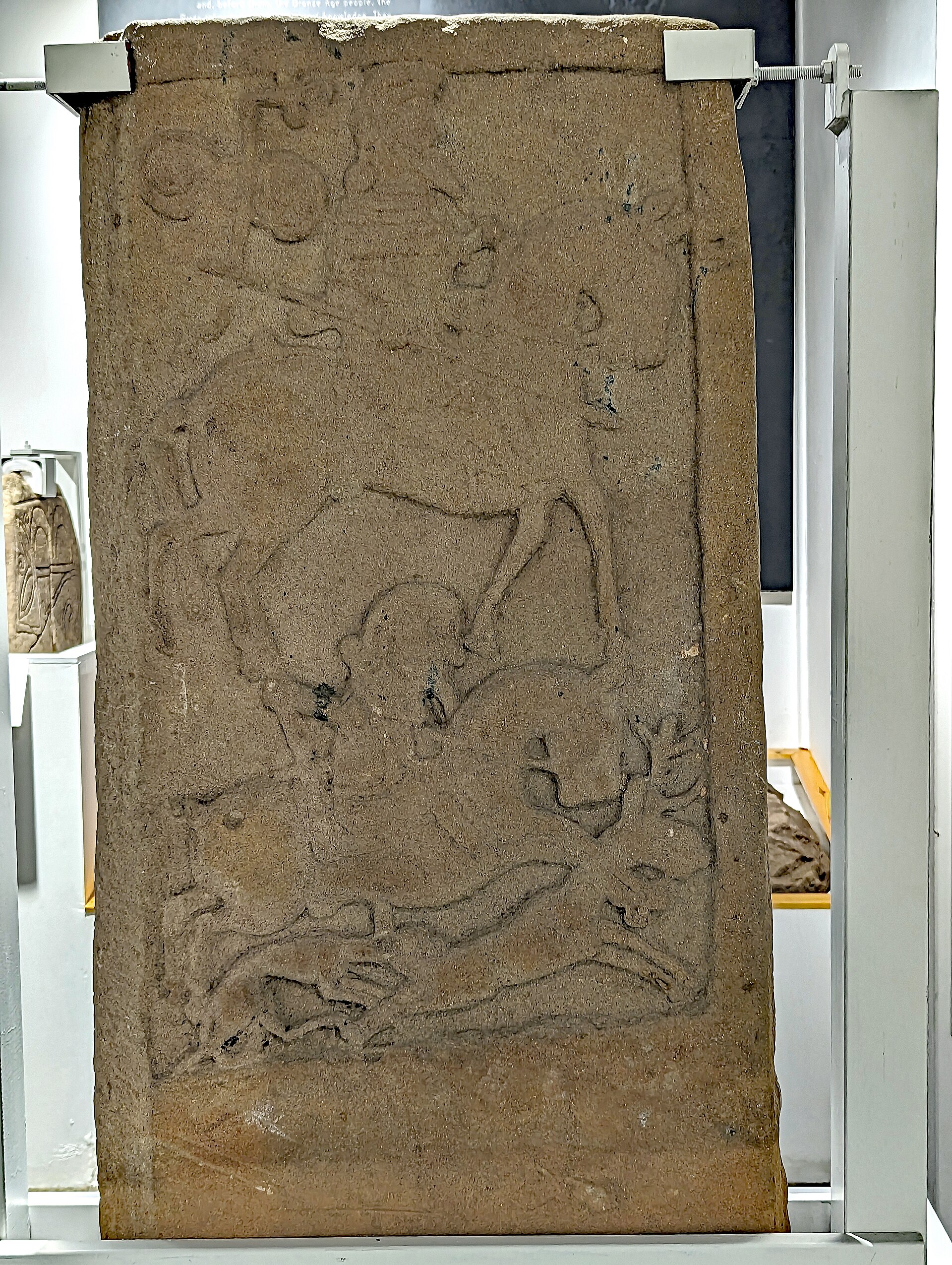
Carved stone · Pictish & early medieval
Kirriemuir sculptured stones
Angus
The stones' Pictish symbols were carved as the symbol tradition itself was dying out: among the last such carvings made anywhere before it vanished…
- Near Kirriemuir
- Easy path
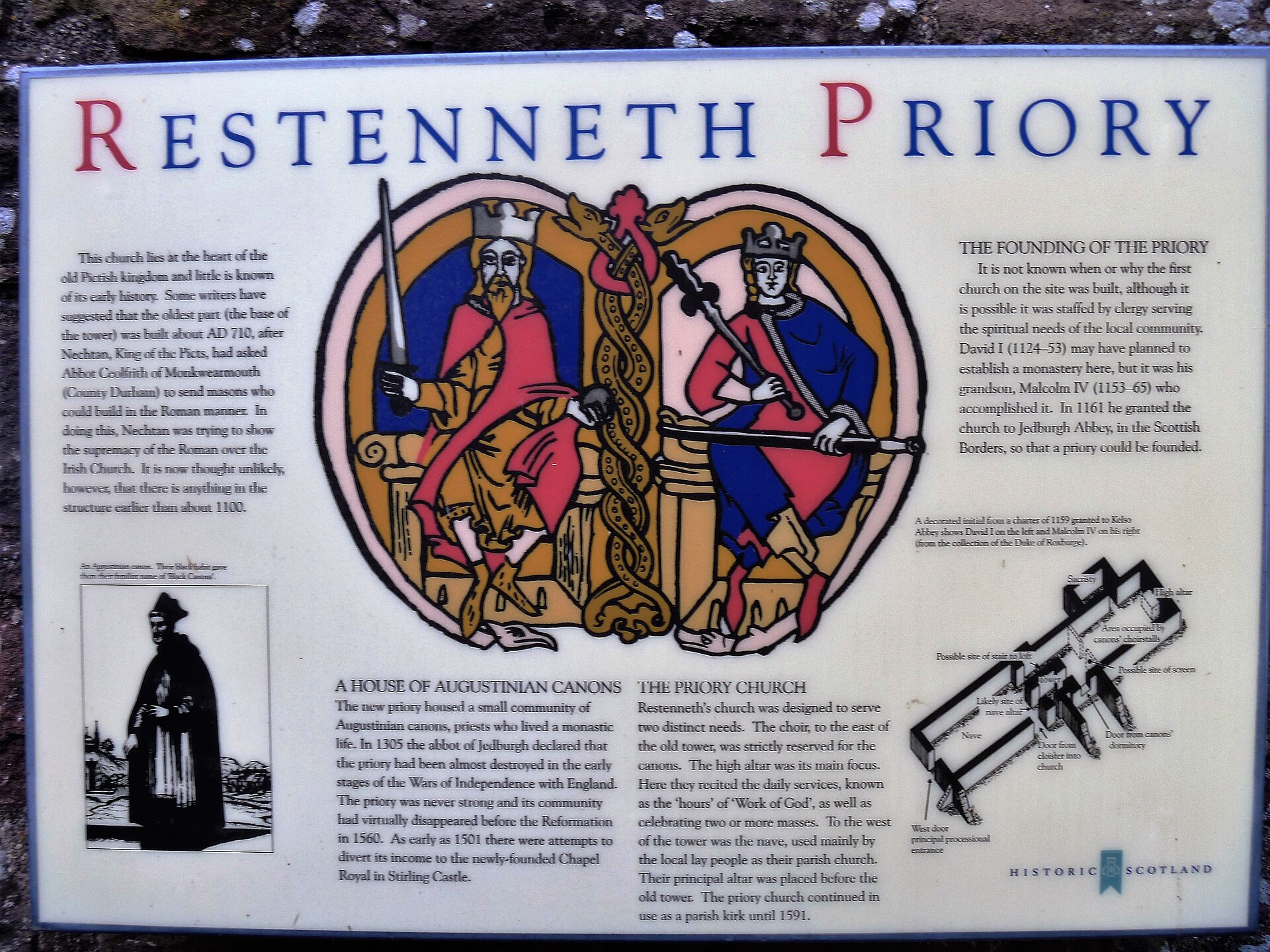
Building or ruin · Pictish & early medieval
Restenneth Priory
Angus
Restenneth Priory was a monastic house of Augustinian canons founded by Jedburgh Abbey, under the patronage of King Malcolm IV of Scotland, in 1153…
- Near Forfar
- 3 min walk from car park
Fortified place · Roman
Battledykes
Angus
Assessed to have sheltered 50,000 to 60,000 men, this is one of the largest Roman camps ever built in Scotland: a single night's stop on a campaign…
- Near Forfar
- Some walking
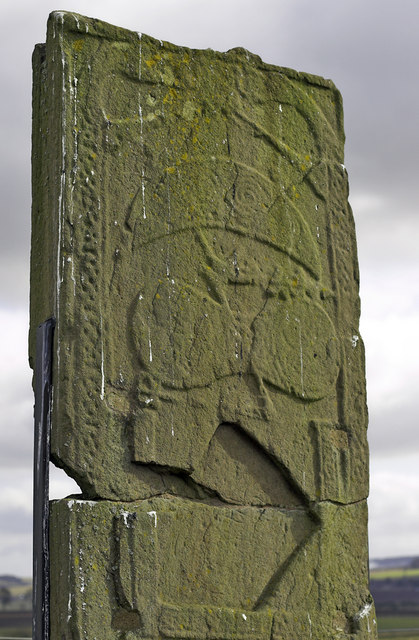
Carved stone · Pictish & early medieval
St Orland's Stone
Angus
St Orland’s in-situ cross-slab joins a richly interlaced Christian cross to symbols, hunters, a boat and beasts, preserving a remarkably complex pr…
- Near Glamis
- Some walking
Questions people ask
- What is the Dunnichen Stone?
- A class I Pictish symbol stone from Angus, probably carved in the 7th century AD and incised with a double disc and Z-rod, a mirror and comb, and a flower.
- When and where was the Dunnichen Stone found?
- It was found by a plough in 1811 in a field at East Mains of Dunnichen, Angus, in ground once called the Chashel or Castle Park.
- Where can the Dunnichen Stone be seen today?
- It is on long-term loan from Dundee's McManus Galleries to the Meffan Institute in Forfar, where it is on public display.
- Why is the flower symbol on the stone significant?
- It is relatively rare among Pictish symbol stones, which more commonly repeat disc, rod, mirror and comb motifs rather than floral designs.
- Is there a copy of the stone in Dunnichen village?
- Yes, a fibreglass replica stands at the church in Dunnichen, standing in for the original, which now resides in Forfar.
Sources
The Ancient Codex, in your pocket
Get the Pocket Codex app
Carry the directory with you — Dunnichen Stone and thousands of ancient places across Britain and Ireland, offline, wherever you roam.