One of the largest caches of Roman military finds in Britain — arms and armour from 117 pits — came from a fort that was, briefly, the empire's most northerly point.
Beneath the three summits of the Eildon Hills, where the Tweed turns near Melrose, farmland conceals the remains of one of Rome’s most far-flung strongholds in Britain. For over a century, soldiers, cavalry troopers, and the traders and families who followed them lived here, on a site the Romans knew as Trimontium — three hills — after the peaks that dominate the skyline above it. Dere Street, the main road driving Roman power northward, ran past its gates, and the rivers Tweed and Leader offered further routes for moving goods and people through the valley.
Trimontium’s story is one of expansion and retreat, mirroring Rome’s uncertain grip on Scotland. Built to secure ground won by the general Agricola in the 70s and 80s AD, it was strengthened, abandoned after a Pictish attack, then reoccupied and repurposed as a supply base once the Antonine Wall pushed the frontier further north, before slipping back to a front-line post and finally being given up around 180 AD.
What has been recovered from the ground here has made Trimontium as important below the surface as it once was above it. Excavations beginning in the early twentieth century, and continuing with modern techniques through the 1990s, uncovered one of the richest collections of Roman military equipment found anywhere in Britain — cavalry helmets, horse harness and weapons drawn from pits dug across the site, much of it now on display at the National Museum of Scotland and at the Trimontium Trust’s museum in nearby Melrose.
What follows is drawn from published sources, with each claim labelled by how firmly it is established.
The name
The name Trimontium derives from the Latin trium montium, meaning three hills, almost certainly a reference to the three Eildon Hills that rise directly above the fort site. The Roman geographer Ptolemy recorded the name in his Geography.
History
In 79 AD the Roman general Agricola advanced against the Brigantes of northern England and the Selgovae of southern Scotland, using overwhelming force to secure the region and building a network of military roads and forts to hold it. Trimontium was founded as part of this push, sited on Dere Street beneath the three Eildon Hills, and became a key link in the chain of forts guarding the approaches to the Highlands.
The earliest phase, from about 79 to 87 AD, saw an enormous temporary camp of some 49 acres raised on the highest point of the ridge, large enough to have held a legionary force and commanding the crossing of the Leader valley. A smaller, more permanent fort was then built to the west by the Twentieth Legion, Valeria Victrix, with a turf rampart on a cobble base and double ditches, alongside a defended annexe for civilians and camp followers.
Between about 90 and 105 AD the Romans returned in strength, filling in the old ditches and rebuilding the defences on a far larger scale, with a turf rampart over 13 metres across and more than 8 metres high fronted by a deep ditch. New annexes were added on several sides to house the growing civilian population that had gathered around the garrison, trading and working alongside the soldiers.
Around 105 AD the frontier suffered a serious setback, apparently at the hands of Pictish tribes: several Roman forts were burned, and human remains and damaged armour found at Trimontium point to violence at the fort itself. The site was abandoned, and in the 120s Emperor Hadrian chose to fix the frontier far to the south, building the wall that bears his name instead of holding this line.
Trimontium was reoccupied a few years before Antoninus Pius pushed north into Caledonia around 140 AD, becoming once again a fortified outpost with a civilian population settled in its annexes. As work began on the Antonine Wall from 142 AD the fort's role shifted from frontier post to a supply and logistics centre behind the new front line, its defences reduced and a thick masonry wall built through it as manufacturing grew in importance, supporting a civilian population that may have numbered two to three thousand.
Around 160 AD, as the Antonine Wall was abandoned and the frontier fell back to Hadrian's Wall, Trimontium reverted once more to a front-line fort: the dividing wall built a few years earlier was removed and a long, narrow barrack block raised, while the civilian settlement around the fort shrank sharply. The garrison held on until around 180 AD, when the fort was finally deserted, though scattered coin finds hint that some local trade with Rome's world continued afterwards.
The site's importance first became apparent in 1846, when mid-Victorian railway workers cutting the Waverley Line uncovered pits packed with Roman artefacts east of Newstead village. Major excavation began under James Curle between 1905 and 1910, yielding an unparalleled collection of armour, cavalry helmets and everyday objects that he published in 1911 as 'A Roman Frontier Post and its People', still the standard account of the site.
People
-
James Curle
Led the first major excavations of Trimontium between 1905 and 1910 and published the findings in 1911.
-
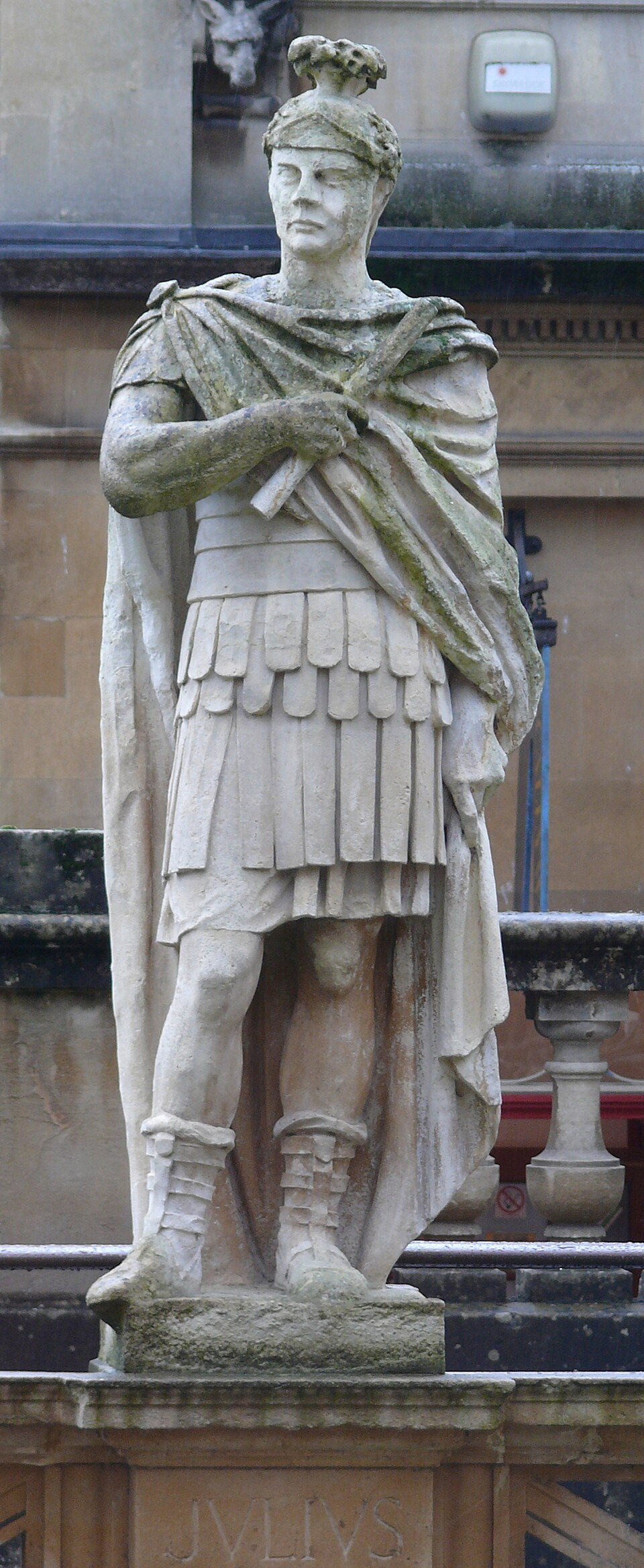
Portrait: Ad Meskens / Wikimedia Commons / CC BY-SA 3.0 Gnaeus Julius Agricola
Roman general who campaigned against the Brigantes and Selgovae from 79 AD and established the network of forts, including Trimontium, that secured the conquest.
-
Sir Ian Richmond
Carried out small-scale excavations and re-interpreted Curle's earlier findings in 1947.
-
Dr Simon Clarke
Bradford University archaeologist who directed later phases of the Newstead Project and produced the sequence of building and destruction phases for the fort.
-
Ptolemy
Roman-era geographer who identified Trimontium by name in his Geography.
Connections
-
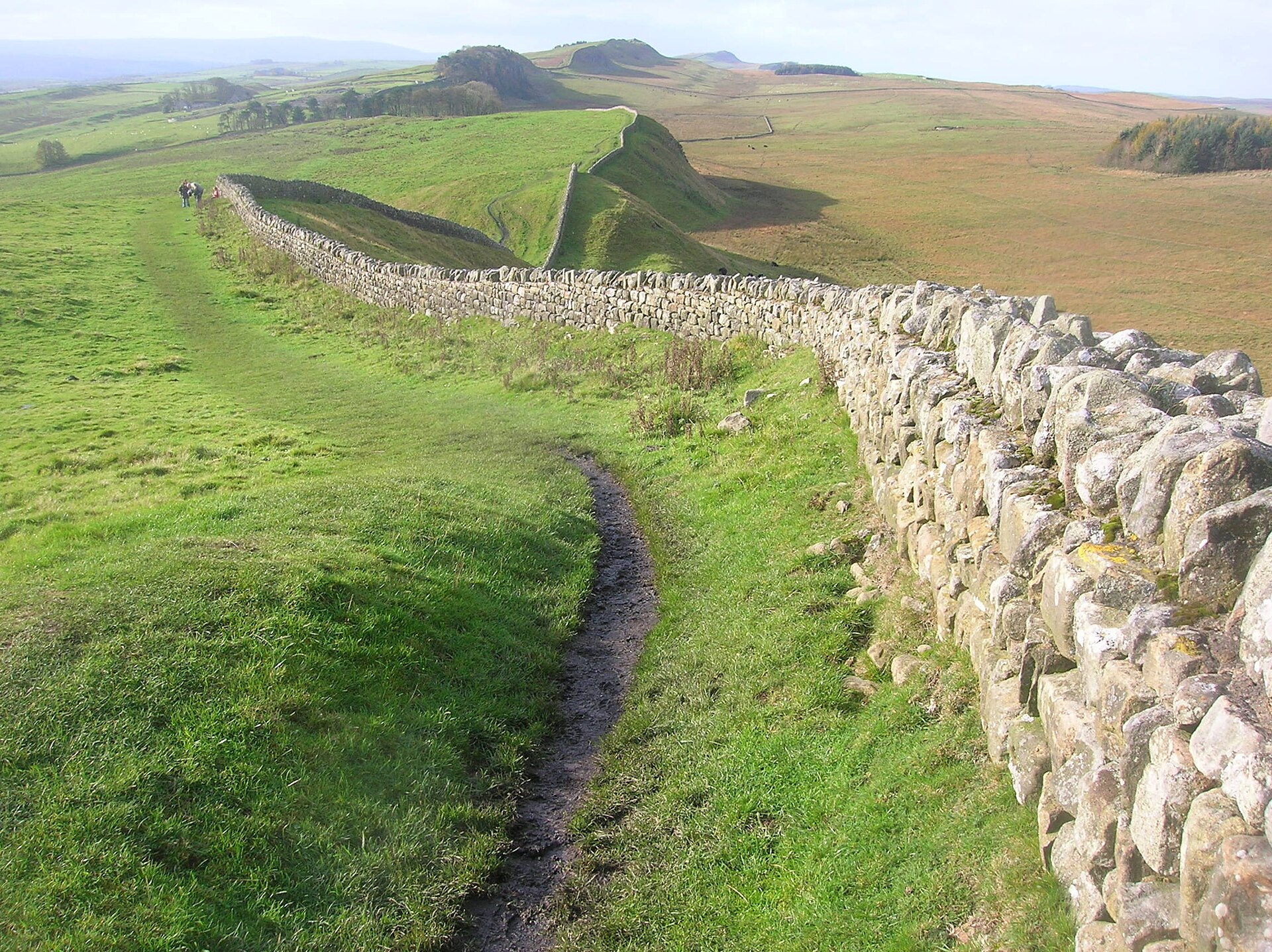
Photo: quisnovus from Gloucester, England / Wikimedia Commons / CC BY 2.0 After a Pictish attack around 105 AD, Hadrian chose to fix the Roman frontier at this wall rather than hold the line at Trimontium, which then became an outpost fort beyond it.
-
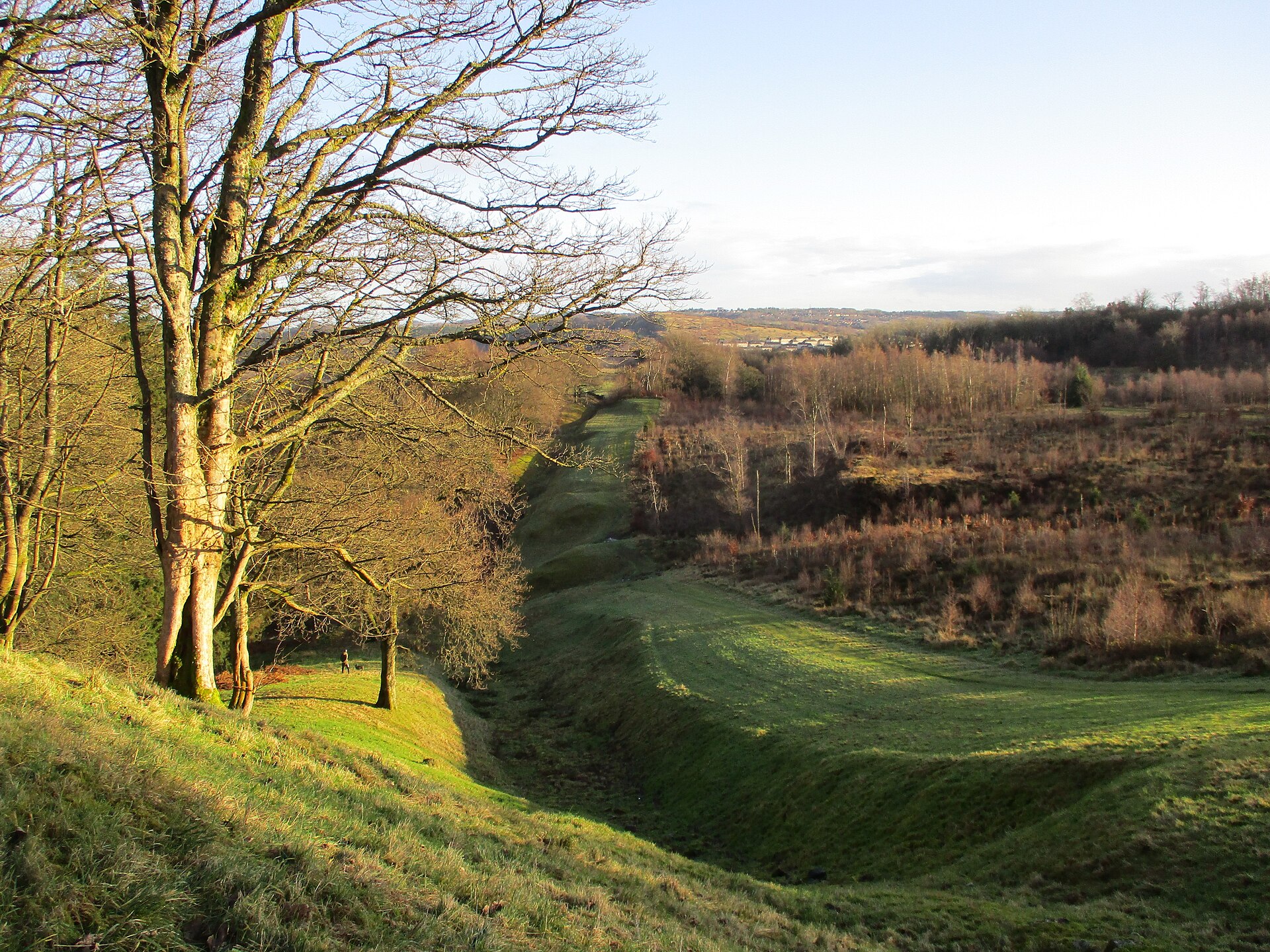
Photo: Alan O'Dowd / Wikimedia Commons / CC BY-SA 2.0 Once construction began from 142 AD, Trimontium's role shifted from frontier post to the wall's chief supply and logistics base.
-
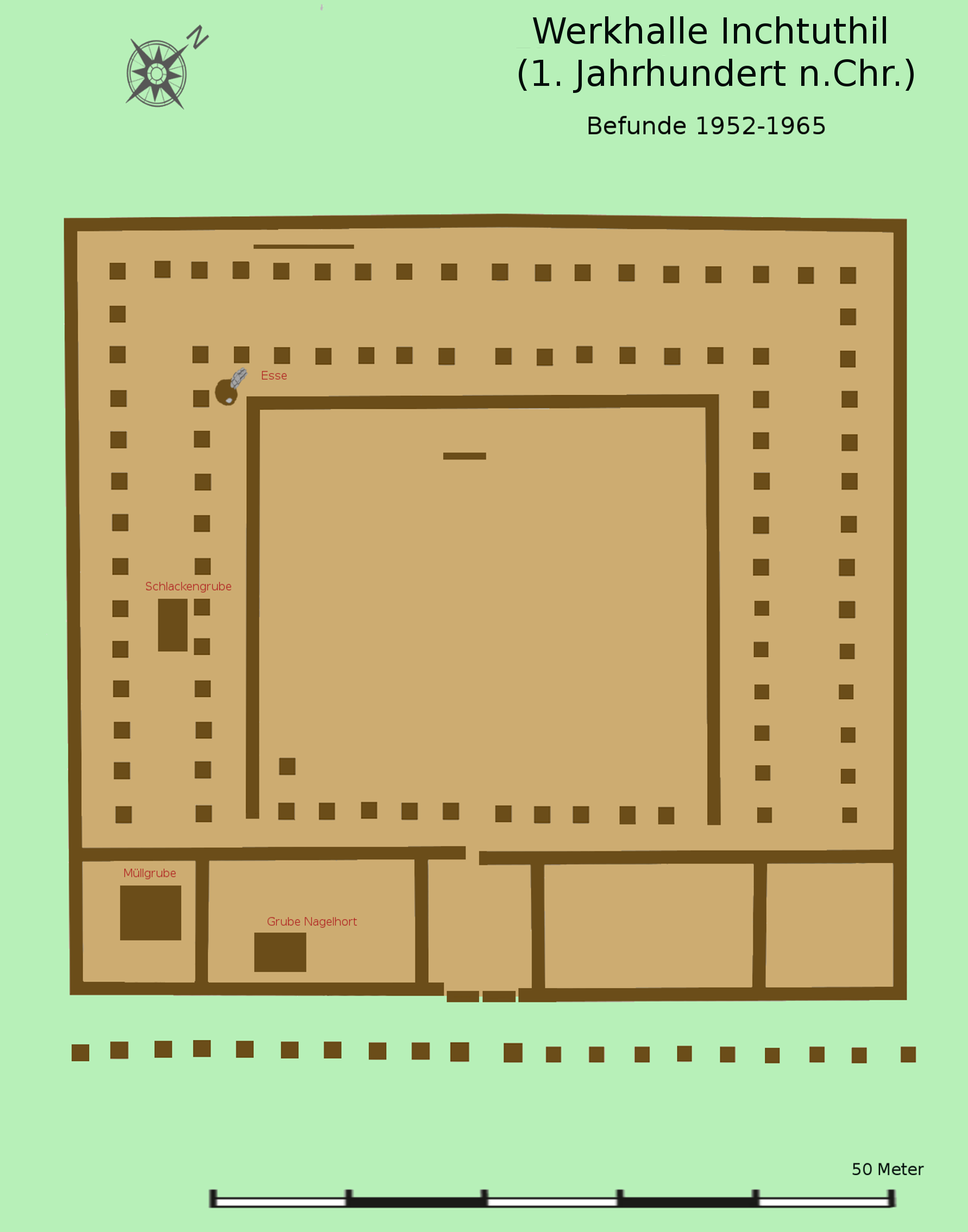
Photo: Veleius / Wikimedia Commons / CC BY 3.0 The only excavated Roman camp in Scotland comparable in size to Trimontium's early 'Great Camp' phase.
-
Eildon North hillfort
The Iron Age hillfort atop this Eildon peak overlooked the fort, physical evidence of the local population Trimontium existed alongside.
-
National Museum of Scotland, Edinburgh
Houses many of Trimontium's most important finds, including cavalry parade helmets, face masks and horse fittings.
Discovery & excavation
Roman remains at Trimontium first came to light in 1846, when railway workers cutting the Waverley Line uncovered pits filled with Roman artefacts on land east of Newstead village. James Curle carried out the first systematic excavation between 1905 and 1910, publishing his results in 1911. Sir Ian Richmond re-examined the site in 1947, around the same time that aerial photography by Dr Kenneth St Joseph revealed as many as nine temporary Roman encampments through cropmarks. From 1989 the Newstead Project, run by Bradford University's Department of Archaeological Sciences under Dr Rick Jones and later Dr Simon Clarke, applied modern techniques to the site: a 1994 rescue excavation uncovered forty major features including six pits rich in organic material, a 1996 season examined a suspected amphitheatre and annexe, and a 1997 survey completed the site's geophysics.
Finds now held at: National Museum of Scotland, Edinburgh; Trimontium Trust Museum, Melrose.
What to look for
-
The three Eildon Hills
The three summits dominate the skyline above the fort site and almost certainly gave Trimontium its name, Latin for 'three hills'.
-
Eildon North hillfort
An Iron Age hillfort crowns Eildon North, visible from the fort site and a reminder of the local population living alongside the Roman garrison.
-
Trimontium Trust Museum, Melrose
A recently redeveloped museum in nearby Melrose displaying finds from the fort, with guided walks run out to the site itself.
-
Cavalry parade helmets and horse fittings
Ornate decorated helmets, face masks and bronze saddleplates recovered from the site are on display at the National Museum of Scotland in Edinburgh.
Plan your visit
- Location
- 55.6010°N · 2.6870°W
- Access
- Reached on a public path
- Terrain
- Easy going
- Time needed
- About 90 minutes
Opening & admission
- The fort landscape is interpreted through the Trimontium Trust museum and guided walks; check official details before visiting.
Nearby places
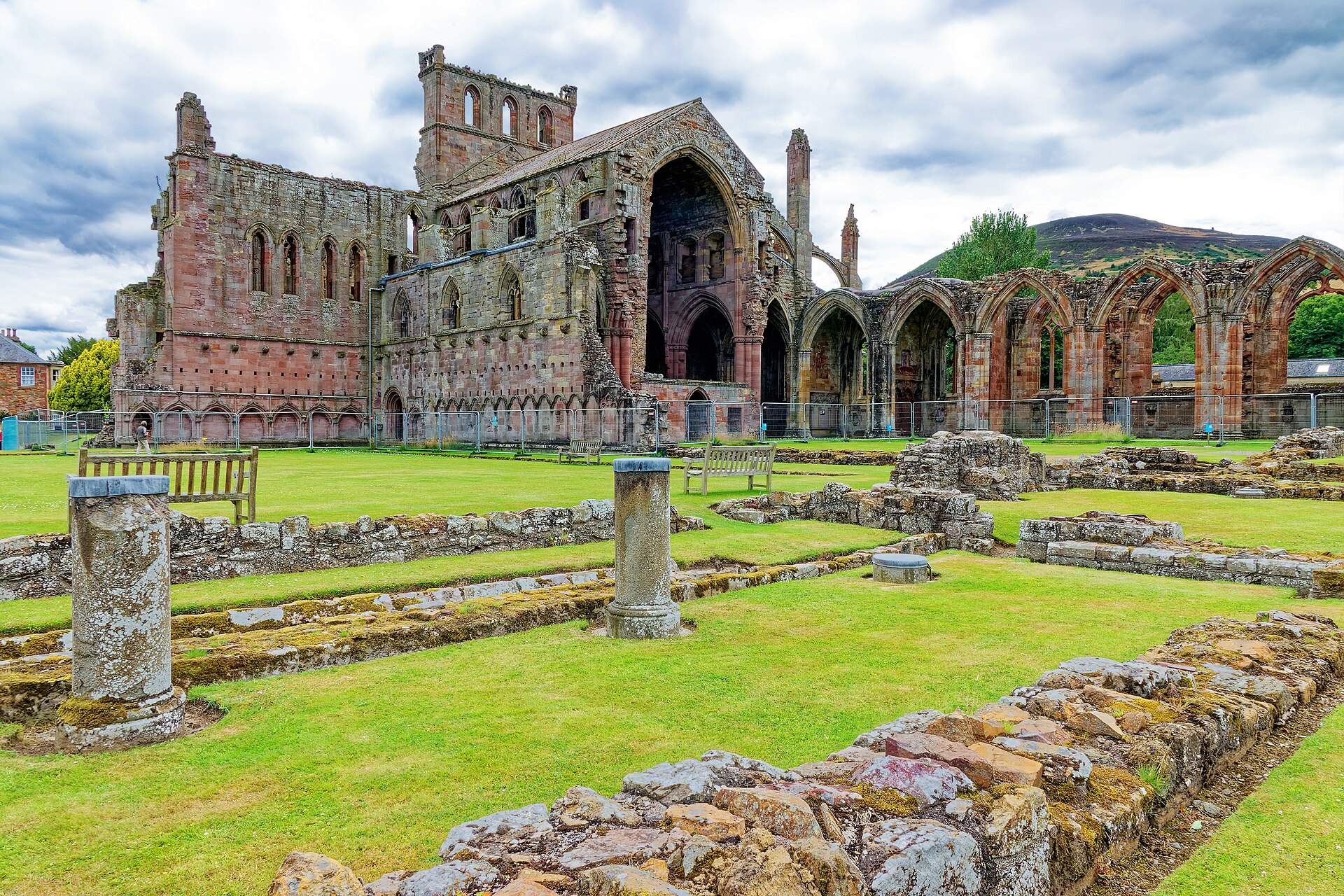
Building or ruin · Medieval
Melrose Abbey
Scottish Borders
St Mary's Abbey, Melrose was founded in 1136 by Cistercian monks at the request of King David I of Scotland: the first Cistercian abbey in Scotland…
- Near Melrose
- 2 min walk from car park

Minor monument · Medieval
Market Cross, Market Square, Melrose
Scottish Borders
Melrose’s 1645 market cross combines a restored seventeenth-century shaft with a nineteenth-century base and a weathered unicorn finial carrying th…
- Easy path
Fortified place · Iron Age
Eildon Hill North Hillfort
Scottish Borders
Excavation has shown the hillfort: a defended settlement on high ground: was occupied by 1000 BC, in the Bronze Age, roughly 2500–800 BC, when meta…
- Near Melrose
- 1.7 km from car park
- Some walking
Fortified place · Iron Age
Eildon Hill
Scottish Borders
Nearly 300 house platforms cut into a volcanic hilltop make this one of the largest hillforts known in Scotland: later crowned by a Roman signal to…
- Rough ground
The setting
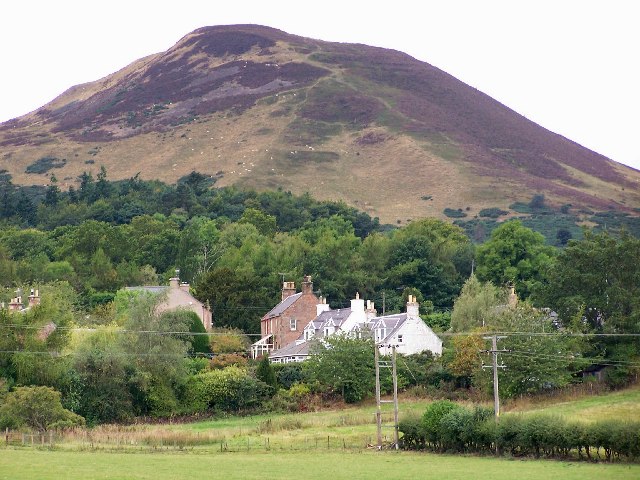
The Eildon Hills above the landscape of Trimontium, whose Roman fort survives below ground.
Photo: Unknown / Wikimedia Commons / CC BY-SA 2.0 de
Questions people ask
- What does the name Trimontium mean?
- The name comes from the Latin for 'three hills', referring to the three Eildon Hills that rise above the fort site and are almost certainly the source of its name.
- When was Trimontium occupied?
- The fort was occupied intermittently from about 79 to 184 AD, its role shifting between frontier outpost, Antonine Wall supply base, and front-line fort before final abandonment.
- Why is Trimontium archaeologically important?
- It yielded one of the largest caches of Roman military finds in Britain, recovered from 117 pits, and was the largest outpost fort north of Hadrian's Wall.
- Where can Trimontium's finds be seen today?
- Major finds, including cavalry parade helmets and horse fittings, are held at the National Museum of Scotland, while the Trimontium Trust Museum in Melrose displays further material.
- Who first excavated Trimontium?
- James Curle led the first major excavations between 1905 and 1910, publishing his findings in 1911 as 'A Roman Frontier Post and its People'.
Sources
- Wikipedia: Trimontium (Newstead)
- Curle, J. (1911), A Roman Frontier Post and its People
- Hunter & Keppie (eds.), A Roman Frontier Post and its People: Newstead 1911–2011 (National Museums Scotland, 2012)
- National Museums Scotland — Trimontium (Newstead) objects
- The Trimontium Trust Museum, Melrose
Explore more: Fortified places · Roman · Scottish Borders
The Ancient Codex, in your pocket
Get the Pocket Codex app
Carry the directory with you — Trimontium (Newstead) and thousands of ancient places across Britain and Ireland, offline, wherever you roam.