St Mary's Abbey, Melrose was founded in 1136 by Cistercian monks at the request of King David I of Scotland — the first Cistercian abbey in Scotland. Its first community came from Rievaulx Abbey in…
St Mary’s Abbey at Melrose was founded in 1136 by Cistercian monks at the request of David I, and remained the chief house of that order in Scotland until the Reformation — the sixteenth-century break with the Roman Church. It was headed by the abbot, and later the commendator, of Melrose. Historic Environment Scotland maintains the ruins today, protected by law for their archaeological importance.
An earlier monastery stood about three and a half kilometres east, founded by — and later dedicated to — Saint Aidan of Lindisfarne, shortly before his death at Bamburgh in 651. Set in a bend of the Tweed, that site is now marked by a graveyard. Saint Cuthbert, who grew up nearby, trained at Old Melrose and was prior from 662 before moving to Lindisfarne. Æthelweald, a novice at Lindisfarne when Cuthbert became bishop, attended him on some of his missionary journeys and witnessed at least one of his miracles, later becoming prior and then abbot at Melrose. Saint Oduvald, a Scottish nobleman, followed Cuthbert as abbot, and the visionary Dryhthelm was a monk there in the early eighth century. Kenneth I raided the site in 839.
Melrose was the first Cistercian abbey in Scotland. David I wanted the new house built on that older site, but the Cistercians judged the land too poor for farming and chose the present one. It is said to have been built in ten years; the convent church was dedicated to St Mary — as all Cistercian churches were — on 28 July 1146, and the abbey became the mother house of the order in Scotland. Its first community came from Rievaulx in North Yorkshire, itself colonised from Cîteaux.
Through the twelfth century the Cistercians introduced new farming methods around Melrose and sold its wool through the great trading ports of northern Europe. A town grew slowly around the abbey. During one famine the monastery fed four thousand starving people for three months.
The house held a hundred monks, not counting the abbot and the dignitaries, and its privileges and possessions were very extensive. David endowed it with the lands of Melrose and Eildon among others, and with the right of fishery on the Tweed; succeeding monarchs added to that property. Many of its abbots were men of distinction. Waltheof, stepson of King David and at one time prior of Kirkham, was abbot from 1148 to 1159 and gave Melrose a reputation for sanctity and learning that placed it alongside Fountains and Rievaulx and made it the premier abbey in Scotland. His tomb in the chapter house later became a focus of pilgrimage.
The east end of the church was completed in 1146, with other buildings added over the following fifty years. The abbey was built in the Gothic manner and laid out in the form of a St John’s Cross. A considerable part of it is now ruined, though a structure of 1590 is maintained as a museum open to the public.
Alexander II and other Scottish kings and nobles are buried here. A lead container believed to hold the embalmed heart of Robert the Bruce was found below the chapter house site in 1921, found again in a 1998 excavation, and documented in the records of his death; the rest of his body lies at Dunfermline Abbey.
The abbey is known for its carved decorative detail — saints, dragons, gargoyles and plants. On one of its stairways the master mason John Morow left an inscription reading Be halde to ye hende, a reminder to keep the end in mind, which has become the motto of the town.
What follows is drawn from published sources, with each claim labelled by how firmly it is established.
History
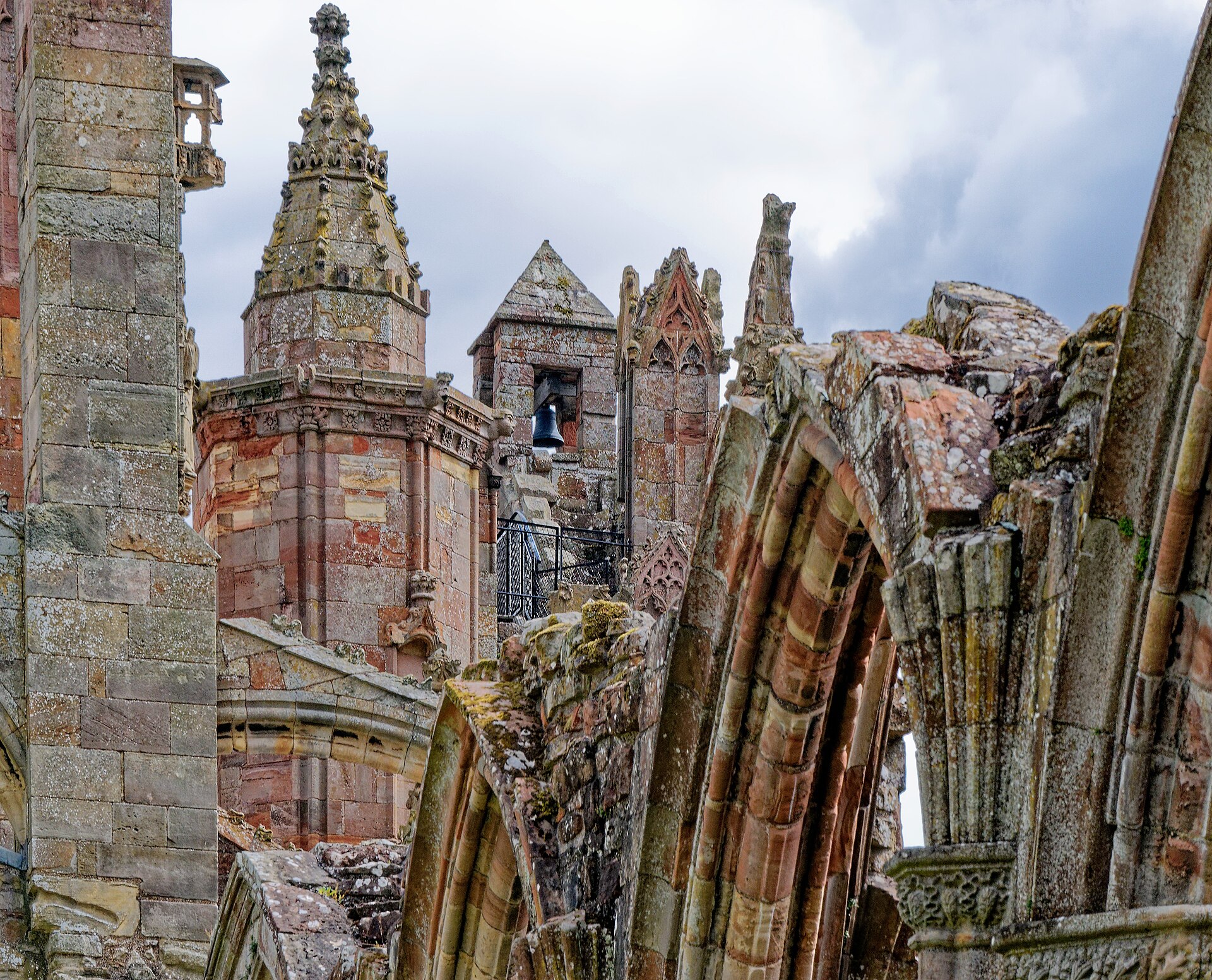
St Mary's Abbey, Melrose was founded in 1136 by Cistercian monks at the request of King David I of Scotland — the first Cistercian abbey in Scotland. Its first community came from Rievaulx Abbey in North Yorkshire. The east end was completed in 1146 and the church was dedicated to St Mary on 28 July 1146, after which it became the mother church of the order in Scotland.
The 12th-century Cistercians ran the abbey's estate on a commercial scale, introducing new farming techniques and marketing Melrose wool across the great trading ports of northern Europe; a town grew up around it. During one famine the monastery is recorded as feeding four thousand starving people for three months. One of the earliest accounts of the Magna Carta agreement reached at Runnymede in 1215 survives in the Chronicle of Melrose Abbey.
Sitting on a main road from Edinburgh to the south, the abbey was repeatedly attacked. The army of Edward II of England destroyed much of it in 1322; it was rebuilt on the order of Robert the Bruce, with Sir James Douglas as principal auditor of finance. Richard II of England's army burned it again in 1385. Rebuilding ran for about a century and was still unfinished when James IV visited in 1504.
In 1544, as English armies ravaged Scotland to force the marriage of the infant Mary, Queen of Scots to Henry VIII's son, the abbey was badly damaged and never fully repaired. From 1541 the abbacy passed to a series of commendators; the last abbot, James Stuart (an illegitimate son of James V), died in 1557, and Melrose's last monk died in 1590.
The abbey's walls still bear marks of cannon fire from a bombardment by Oliver Cromwell's troops during the Wars of the Three Kingdoms. In 1618 part of the church was converted into a parish church, used until 1810. In the early 19th century Sir Walter Scott, as Sheriff-Depute of Roxburghshire, supervised repair work funded by the Duke of Buccleuch; the duke gave the ruins to the state in 1918.
People
-
King David I of Scotland
Founder; requested the abbey's foundation in 1136
-
Waltheof of Melrose (St Waltheof)
Stepson of King David and abbot 1148–1159; gave Melrose a reputation for sanctity and learning, and his tomb in the chapter house became a focus of pilgrimage
-
Robert the Bruce (Robert I)
Ordered the abbey's rebuilding after 1322; his embalmed heart is believed to be buried at the abbey
-
Sir James Douglas
Principal auditor of finance for the post-1322 rebuilding
-
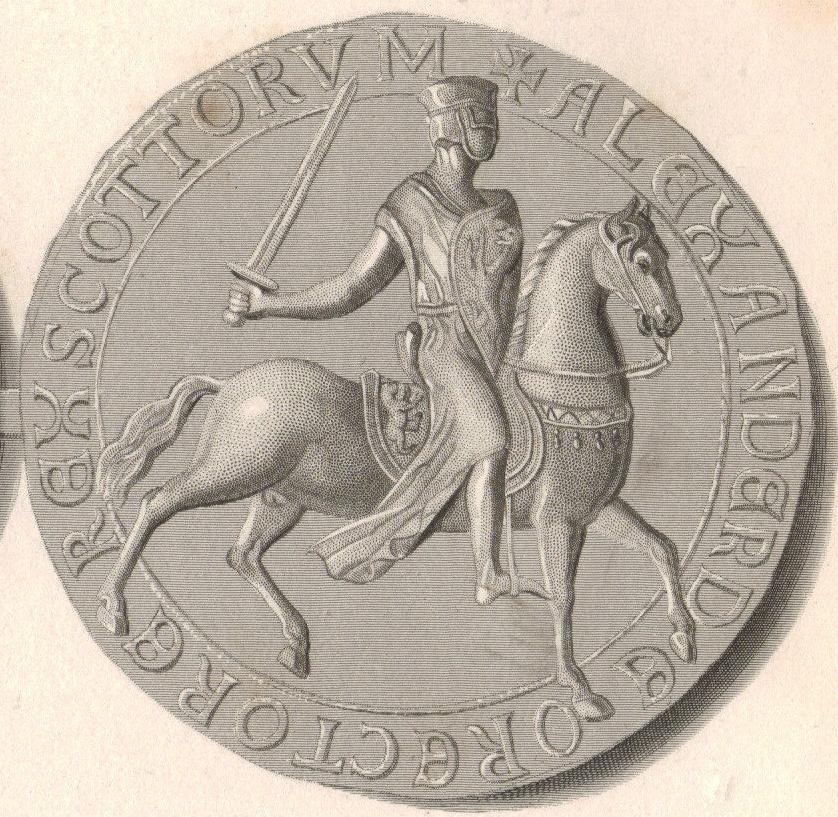
Portrait: Unknown author / Wikimedia Commons / Public domain Alexander II of Scotland
Buried at the abbey, along with other Scottish kings and nobles
-
John Morow
Master mason whose inscription 'Be halde to ye hende' on a stairway became the motto of the town of Melrose
-
Sir Walter Scott
As Sheriff-Depute of Roxburghshire, supervised the 19th-century preservation work and described the abbey in 'The Lay of the Last Minstrel'
Cultural influences
-
Cistercian monasticism — Melrose was the first Cistercian house in Scotland, colonised from Rievaulx (itself a daughter house of Cîteaux), and became the order's mother church in the country.
-
Gothic architecture — the abbey was built in the Gothic manner in the form of a St John's Cross, and is famed for its carved decorative detail: saints, dragons, gargoyles and plant forms.
Connections
-

Photo: Tilman2007/Dr. Volkmar Rudolf / Wikimedia Commons / CC BY-SA 4.0 Mother house in North Yorkshire from which Melrose's first community came
-
Old Melrose
Earlier monastery ~2 miles east, founded by/dedicated to St Aidan of Lindisfarne; where St Cuthbert trained
-
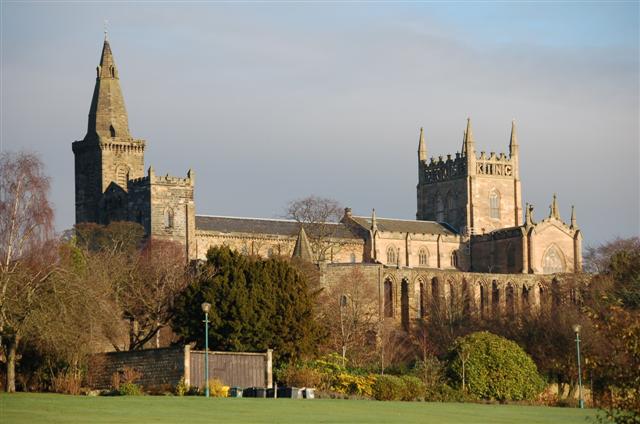
Photo: Paul McIlroy / Wikimedia Commons / CC BY-SA 2.0 Burial place of the rest of Robert the Bruce's body (his heart being at Melrose)
-
Jedburgh, Dryburgh and Kelso abbeys
Fellow Borders abbeys; Melrose forms part of the Borders Abbeys Way walk
Discovery & excavation
A lead container believed to hold the embalmed heart of Robert the Bruce was first found below the Chapter House site in 1921 by His Majesty's Office of Works, then located again in a 1996 archaeological excavation alongside an engraved copper plaque recording the 1921 find. Investigated by AOC Archaeology in Leith, the casket held a still-recognisable human heart; as no other heart is recorded as buried at Melrose it was presumed to be the Bruce's, and was reburied under a memorial stone on 22 June 1998. No DNA testing was attempted.
Finds now held at: Beneath the Chapter House floor (heart casket; reburied at Melrose under a memorial stone).
In culture
-
Sir Walter Scott described Melrose Abbey in 'The Lay of the Last Minstrel' (Canto Second).
-
Kirk in the Hills, a Gothic church in Bloomfield Hills, Michigan completed in 1958, was patterned after Melrose Abbey.
-
The abbey was recreated in the video game Minecraft by 4J Studios in 2015, featured in an official tutorial world.
What to look for
-
The eastern church
The more intact eastern section of the church, laid out on the traditional east–west axis; the western section survives only as foundations.
-
The carved detail
Carved decorative detail across the ruins — likenesses of saints, dragons, gargoyles and plant forms, among the richest medieval carving in Scotland.
-
Morow’s inscription
John Morow's mason's inscription, 'Be halde to ye hende', a reminder to keep the end in mind, on one of the stairways.
-
The heart casket stone
The memorial stone over the reburied heart casket near the Chapter House site, associated with Robert the Bruce.
-
The medieval floor tiles
Original medieval floor tiles — Melrose is the only Scottish abbey to retain some of its original tiling.
-
The museum and graveyard
The 1590 structure now maintained as a museum, and the surviving graveyard (mostly 19th-century stones) to the south and southeast.
What is said
Folklore and tradition, recorded as what is said — not as established fact.
-
Robert the Bruce's heart was said to have been brought back to the abbey from a crusade together with the body of Lord Douglas, around 1330–1331, the spot marked by a small metal plaque. (consistent with the 1921/1996 casket find but not independently confirmed as the Bruce's)
-
When a stone coffin was exhumed from the south chancel aisle in 1812, some speculated the remains were those of Michael Scot, the medieval philosopher remembered as a 'wizard'. (speculation only)
Standing there
- Standing in the roofless eastern church today, the eye is drawn upward over some of the richest carved stone in Scotland — saints, dragons, gargoyles and curling plant-forms worked into the pink-red sandstone, the same warm stone that glows when the Borders sun catches the ruined gables.
- Underfoot in places lie the original medieval floor tiles — Melrose is the only Scottish abbey to keep some of its own tiling — so a visitor walks on the very surface trodden by the Cistercian community; nearby a memorial stone marks where the lead casket of a human heart, taken to be Robert the Bruce's, was reburied in 1998.
- Today the ruin sits quiet within its graveyard of mostly 19th-century stones beside the little Borders town, open sky where the vaulting fell to Cromwell's bombardment, whose cannon-marks the walls still bear; the wind moves freely through arcades that once enclosed a sung, candlelit interior.
- In its working medieval centuries this was a place of ordered Cistercian silence broken by the eight daily offices of plainchant, the church heavy with incense and the smell of beeswax candles and tallow lamps; up to a hundred monks moved between choir, chapter house and cloister to a strict horarium.
- Beyond the church walls the abbey ran a vast working estate, so a 12th-century visitor would have met the smells and sounds of a wool economy — fleeces, sheep, woodsmoke and cart traffic — the monastery prosperous enough on Melrose wool to feed four thousand starving people for three months during one famine.
Plan your visit
- Location
- 55.5996°N · 2.7187°W
- Nearest settlement
- Melrose
- Access
- Paid entry — managed visitor site
- Parking
- Parking available nearby — see the official getting-here page.
- Start point
- Abbey Street · Melrose · Roxburghshire · TD6 9LG · National Grid reference: NT 548 341 · Telephone: 01896 822 562
- Best time
- Some access restrictions are in place due to ongoing conservation work. 1 Apr to 30 Sept: Daily, 9.30am to last entry at 4.30pm (closes 5pm) 1 Oct to 31 Mar: Daily, 10am to last entry at 3.30pm (closes 4pm) The museum closes for lunch 12 noon - 2pm.
- What survives
- Much of the abbey and its grounds are open, although some areas are closed during conservation work.
- Facilities
- Facilities include toilets, a shop, picnic area, bicycle rack, coach and car parking, and water-bottle refill.
- Start point
- Abbey Car and Coach Park (Pay & Display, Scottish Borders Council) — HES notes a Pay & Display public car park ~75m from the abbey with two accessible bays and EV charging; on-road parking also nearer the site. Can be busy in summer.
- Sat-nav
- TD6 9LG
Opening & admission
Free entry
- Some access restrictions are in place due to ongoing conservation work.
- 1 Apr to 30 Sept: Daily, 9.30am to last entry at 4.30pm (closes 5pm) 1 Oct to 31 Mar: Daily, 10am to last entry at 3.30pm (closes 4pm) The museum closes for lunch 12 noon - 2pm.
Nearby places

Minor monument · Medieval
Market Cross, Market Square, Melrose
Scottish Borders
Melrose’s 1645 market cross combines a restored seventeenth-century shaft with a nineteenth-century base and a weathered unicorn finial carrying th…
- Easy path
Fortified place · Iron Age
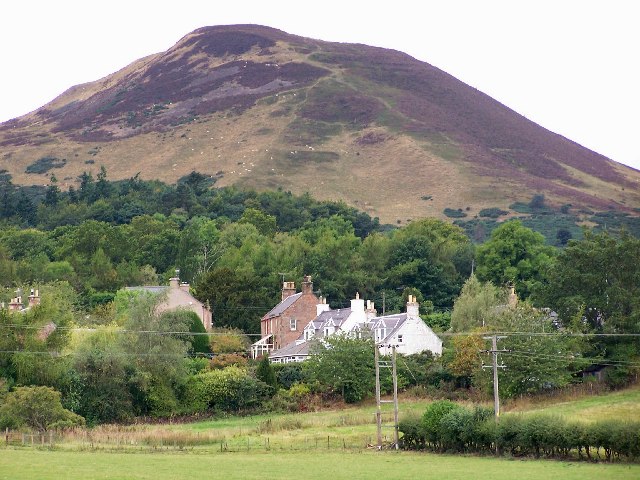
Eildon Hill North Hillfort
Scottish Borders
Excavation has shown the hillfort: a defended settlement on high ground: was occupied by 1000 BC, in the Bronze Age, roughly 2500–800 BC, when meta…
- Near Melrose
- 1.7 km from car park
- Some walking
Fortified place · Roman
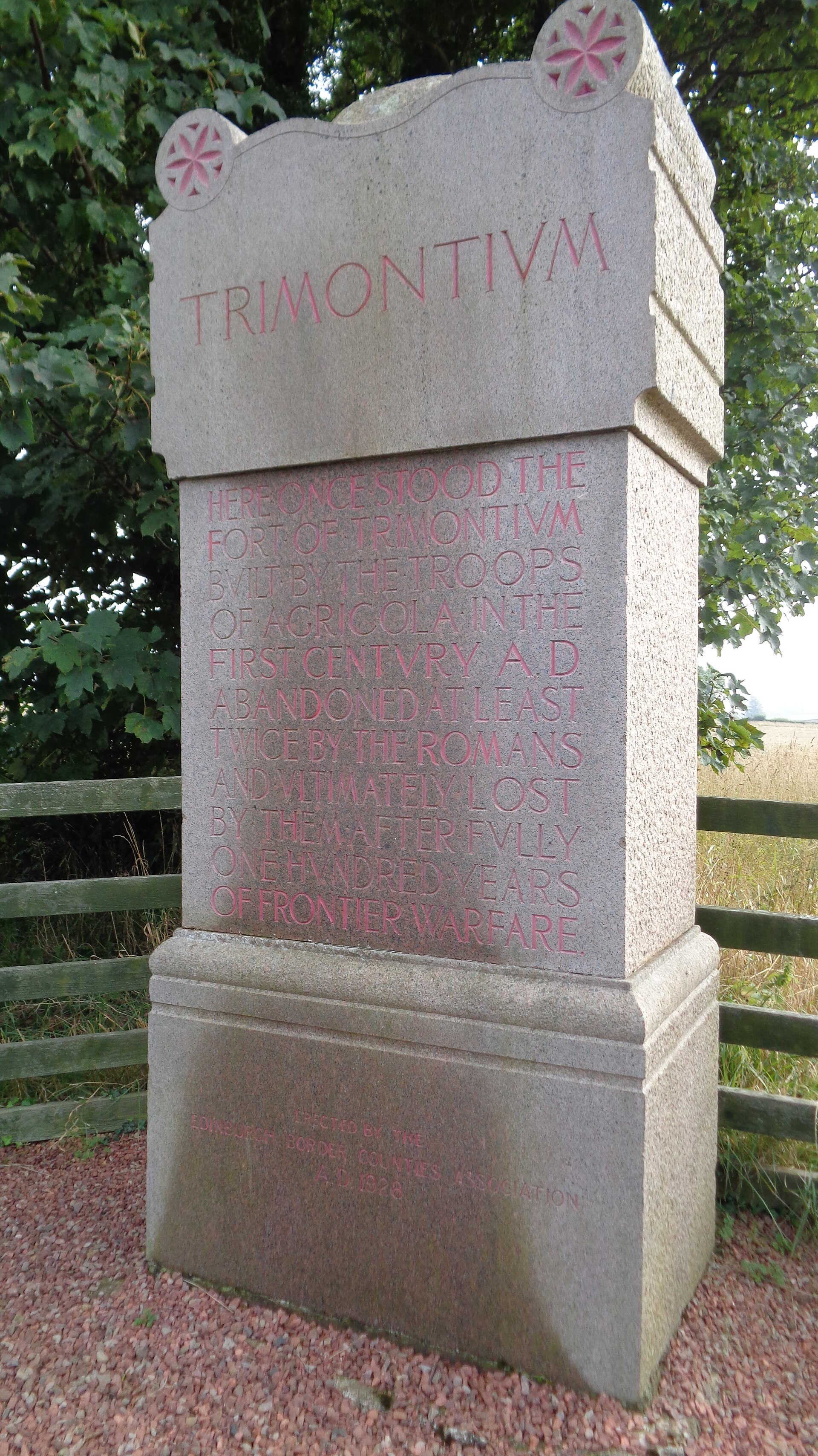
Trimontium (Newstead)
Scottish Borders
One of the largest caches of Roman military finds in Britain: arms and armour from 117 pits: came from a fort that was, briefly, the empire's most…
- Easy path
Fortified place · Iron Age
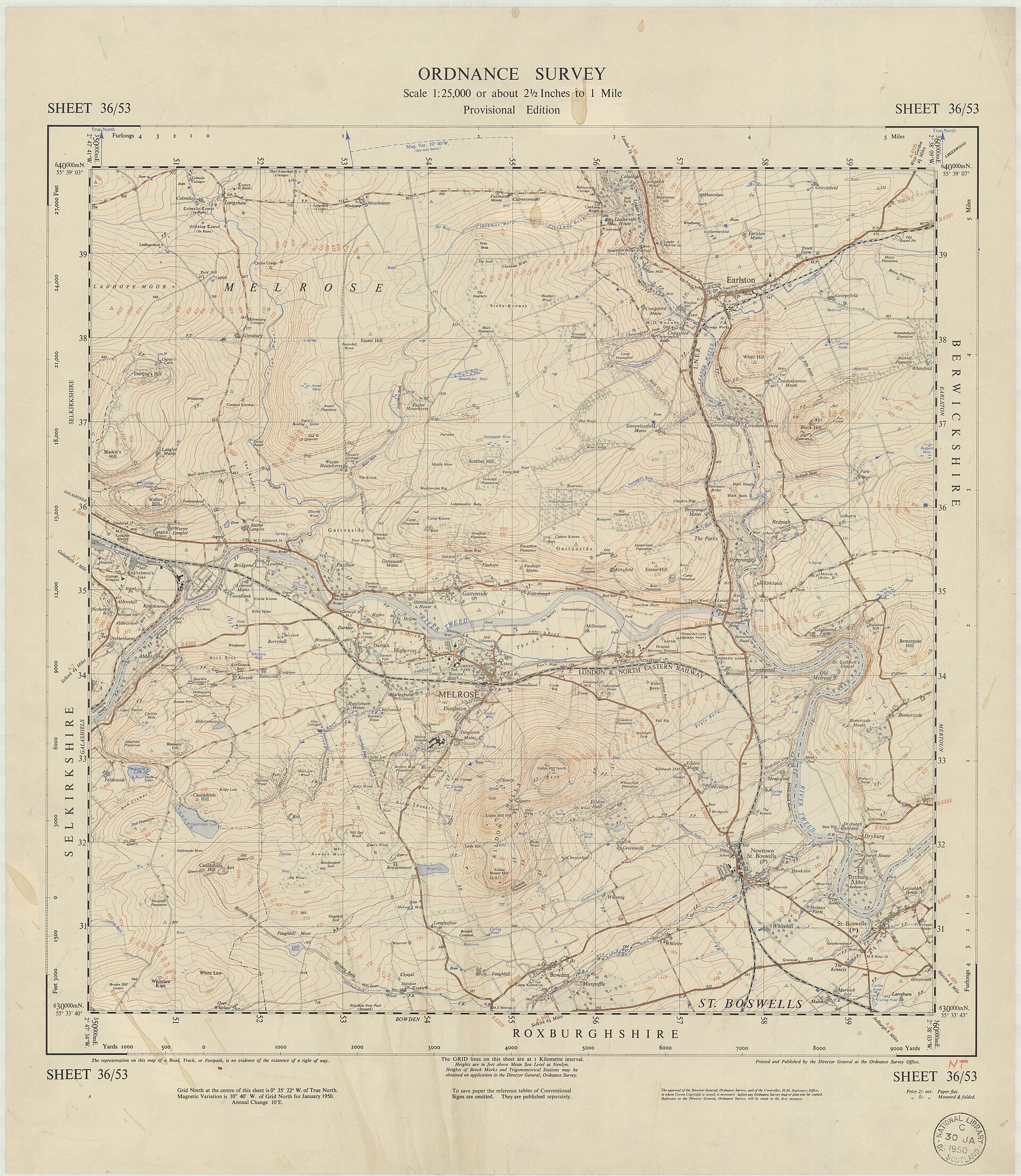
Eildon Hill
Scottish Borders
Nearly 300 house platforms cut into a volcanic hilltop make this one of the largest hillforts known in Scotland: later crowned by a Roman signal to…
- Rough ground
Questions people ask
- What can be seen at Melrose Abbey?
- Much of the abbey church and grounds are open; the bell tower, cloister artefacts in the Commendator’s House Museum, and the ruins can be explored, although conservation work restricts some areas.
- When is Melrose Abbey open?
- It is open daily 9.30am–5pm from 1 April to 30 September and 10am–4pm from 1 October to 31 March; last entry is 30 minutes before closing.
Sources
- Canmore site record 55738 (accessed 2026-06-13)
- Trove (HES) record (accessed 2026-06-13)
- Wikipedia: Melrose Abbey (accessed 2026-06-13)
- Wikidata Q1919732 (accessed 2026-06-13)
- Historic Environment Scotland — Melrose Abbey (accessed 2026-08-22)
Explore more: Building or ruins · Medieval · Scottish Borders
The Ancient Codex, in your pocket
Get the Pocket Codex app
Carry the directory with you — Melrose Abbey and thousands of ancient places across Britain and Ireland, offline, wherever you roam.