
A Pictish high cross carrying the name of a king who reigned around AD 800 — the fixed point from which the rest of Pictish sculpture is dated.
Almost everything carved by the Picts is dated by comparison with something else. The Dupplin Cross is the exception, and that is why it matters out of all proportion to its size.
Cut into the stone is an inscription of which very little can now be read. What survives is four words: CUSTANTIN FILIUS FIRCUS. That is the Latin form of Caustantin son of Fergus, a Pictish king who flourished between about 793 and 820, and it means the cross was carved during his reign or shortly after it. One dated monument in a body of undated sculpture becomes the point everything else is measured against.
The inscription carries a second piece of information almost incidentally. The father’s name is given as Fergus — the Gaelic form — inside a Latin text. Gaelic was therefore in use among the people who commissioned this stone, at a place and date where that could not otherwise be demonstrated.
The cross stood on a hillside in Strathearn, a short way north of Forteviot and Dunning and across the River Earn from both. Forteviot was a royal centre, so the monument was raised within sight of the power that paid for it, on ground where it would be seen from the seat of Pictish kingship.
It is a high cross: a free-standing stone cross, as opposed to a slab with a cross cut into its face. That distinction is worth making because it is the rarer form here. High crosses are relatively common in Ireland, in Northumbria and in Dal Riata, the Gaelic kingdom of the western seaboard, but among the Picts they barely survive at all. Broken fragments show that others once stood and were probably thrown down during the Reformation of the sixteenth century. One of them was still remembered in the eighteenth: the Cross of Dronachy, recorded on the lands of Invermay south of Forteviot, already fallen and broken by the time anyone wrote it down. Its base is still in place. No record says what the cross above it looked like.
The Dupplin Cross is carved from Old Red Sandstone and stands about 2.5 metres high and a metre across the arms. The carving runs to three kinds of subject at once — religious, martial, and the animal work that is the signature of Pictish sculpture — and it makes no attempt to keep them apart.
Some of the individual scenes are unmistakable in intent. A mounted figure has a head far too large for his body and wears a ponytail; both are conventions marking a man of authority, not errors of proportion. On the obverse, a man fights bears with his bare hands. One side carries a harper, most probably David, along with hunting dogs. A king, a warrior, a psalmist and a hunt, arranged on the four faces of a single stone, is a reasonably complete statement of what a Pictish ruler wished to be understood as.
Thomas Pennant recorded the cross in 1769 on his tour of Scotland, and it stayed where it was for another two hundred and thirty years. In 2002 it passed into the care of Historic Scotland and was moved indoors, to stand under the eleventh or twelfth-century tower of St Serf’s Church at Dunning. Twelve centuries of Perthshire weather had done what weather does to sandstone, and the inscription that makes the monument valuable is the part most easily lost.
What follows is drawn from published sources, with each claim labelled by how firmly it is established.
History
The cross was carved around AD 800 and stood on a hillside in Strathearn, a little north of Forteviot and Dunning and on the opposite bank of the River Earn from them. Forteviot was a royal centre of the Picts, so the monument was raised in sight of the seat of the power that commissioned it. Thomas Pennant recorded it in 1769 during his tour of Scotland, the first documented notice of the stone. It stayed on its hillside for a further two centuries.
In 2002 the cross was placed in the care of Historic Scotland and moved indoors for preservation, under the eleventh or twelfth-century tower of St Serf's Church at Dunning. A free-standing sandstone monument that had weathered on open ground for twelve hundred years could not be left there much longer. It is a high cross — a free-standing stone cross, as opposed to a slab with a cross carved on it. These are relatively common in Ireland, Northumbria and Dal Riata, but they are rare survivals in Pictish territory, which makes the Dupplin Cross unusual as an object and not only as a carving.
Fragments of shattered crosses show that a number of others once existed and were probably cast down during the Reformation of the sixteenth century. A second cross, the Cross of Dronachy, was recorded in the eighteenth century on the lands of Invermay south of Forteviot, fallen and broken; its base survives in place, but no record describes its form. The cross is cut from Old Red Sandstone and stands about 2.5 metres tall and a metre broad across the arms. Its faces carry religious scenes, martial scenes and traditional Pictish animal carving — the three registers of Pictish sculpture appearing together on a single monument.
A partially legible inscription survives, of which only the words CUSTANTIN FILIUS FIRCUS can be read. The name is the Latin form of Caustantin son of Fergus, a Pictish king who flourished between about 793 and 820, and it dates the carving to his reign or shortly after. That single legible name makes the cross one of the fixed points in the chronology of Pictish sculpture — a body of work otherwise dated by comparison rather than by evidence. It also shows that Gaelic was in use at the time, because the Latin inscription renders the father's name in its Gaelic form.
People
-
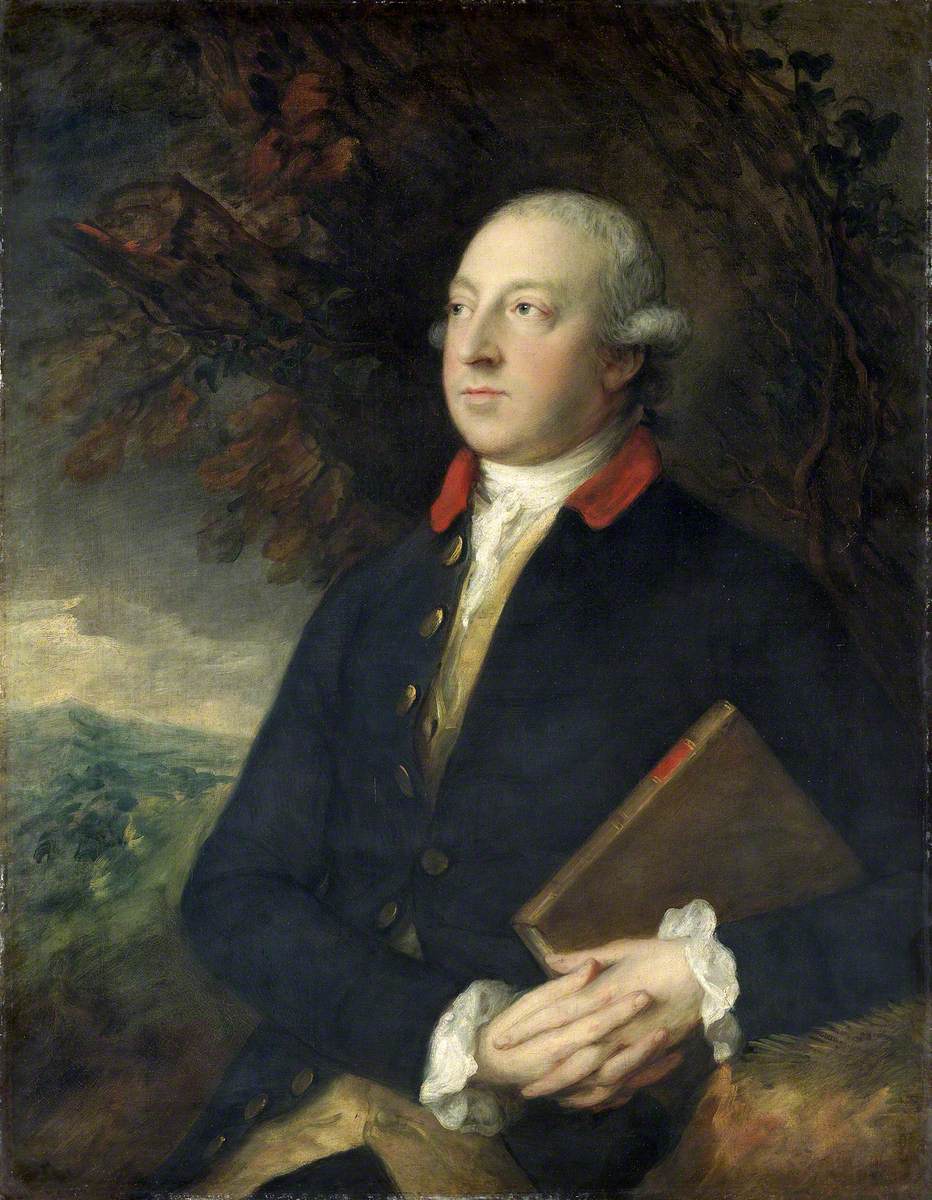
Portrait: Thomas Gainsborough / Wikimedia Commons / Public domain Thomas Pennant
Recorded the Dupplin Cross on its Strathearn hillside in 1769, the first documented notice before its 2002 move indoors for preservation.
-
Caustantin son of Fergus
Pictish king whose Latinised name, CUSTANTIN FILIUS FIRCUS, survives in the cross inscription and dates its carving to about 800.
Cultural influences
-
The high cross combines religious scenes, martial imagery and Pictish animals in a rare Pictish monument form.
Connections
-

Photo: Ewen Rennie / Wikimedia Commons / CC BY-SA 2.0 Both are Pictish carved stones in eastern Scotland, preserving evidence of early medieval sculpture and Christian monumentality.
-
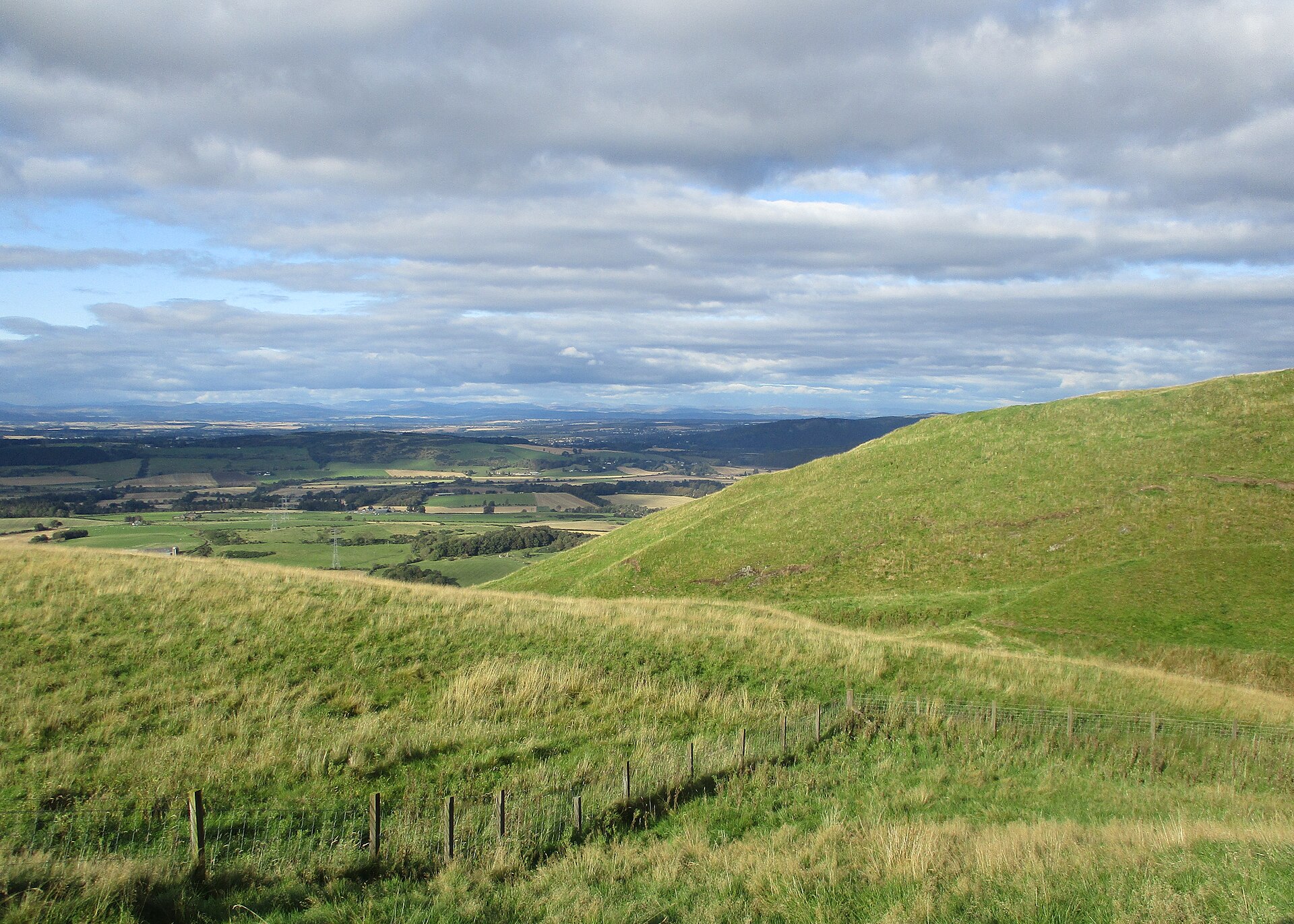
Photo: Alan O'Dowd / Wikimedia Commons / CC BY-SA 2.0 The cross and hillfort represent different periods of occupation and power in the Perthshire landscape.
-
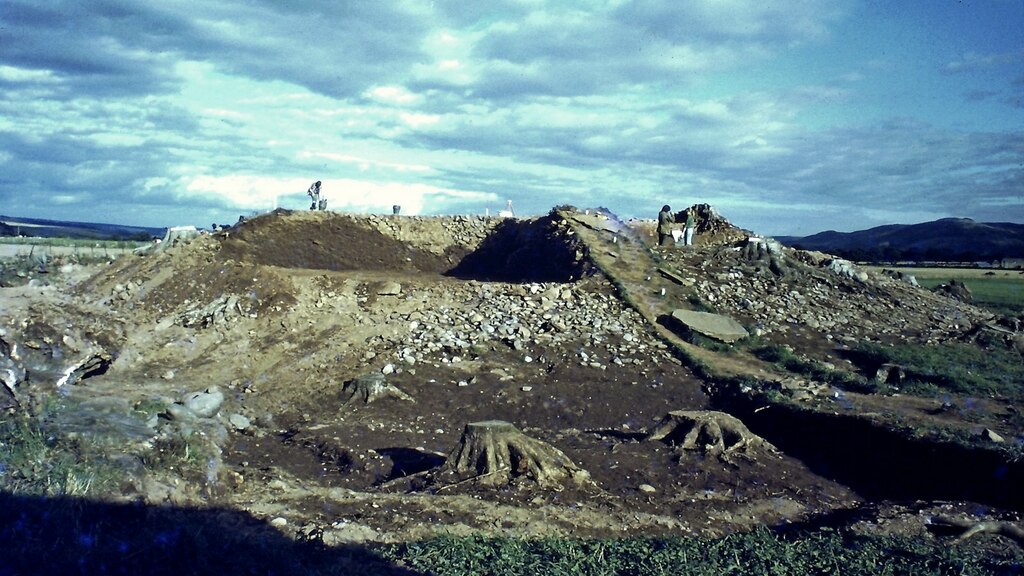
Photo: Sandy Gerrard / Wikimedia Commons / CC BY-SA 2.0 The Pictish cross and henge span different phases of monument building in the Strath Earn landscape.
Discovery & excavation
Thomas Pennant’s 1769 record first documented the cross; it was moved indoors to St Serf’s Church at Dunning in 2002 for preservation.
What to look for
-
The inscription
Only CUSTANTIN FILIUS FIRCUS remains legible — Caustantin son of Fergus, a Pictish king of about 793 to 820. It is the most valuable thing on the stone, because it dates the carving.
-
The rider with the oversized head
A mounted figure carved with a head out of proportion to his body and a ponytail. Both are markers of authority in Pictish sculpture rather than mistakes of scale.
-
The bear-fighter
On the obverse a man fights bears with his bare hands — a scene of physical prowess set alongside the religious carving rather than apart from it.
-
David with the harp
One side carries a harper, most probably David, and hunting dogs. The Old Testament king was a standard subject in insular sculpture and his presence marks the monument as unambiguously Christian.
Plan your visit
- Location
- 56.3125°N · 3.5872°W
- Nearest settlement
- Dunning
- Access
- Open access
- Terrain
- Easy going
- Time needed
- About 30 minutes
- Best time
- Daylight hours
- What survives
- A 2.5-metre Pictish high cross of Old Red Sandstone, protected indoors beneath the tower of St Serf’s Church.
Opening & admission
- Cross is preserved under the tower of St Serf's Church, Dunning.
- Check current Historic Scotland or local opening arrangements before travelling.
Nearby places
Fortified place · Prehistoric
Castle Law, Forgandenny
Perth and Kinross
A multiple-enclosure hillfort above Forgandenny whose banks and ditches are effectively its entire history: the written record has almost nothing t…
Sacred place · Prehistoric
North Mains
Perth and Kinross
Two pits and a cremation were placed here before the henge was built: a prehistoric earthwork of bank and ditch enclosing a circular space, with th…
- Near Crieff
- Some walking
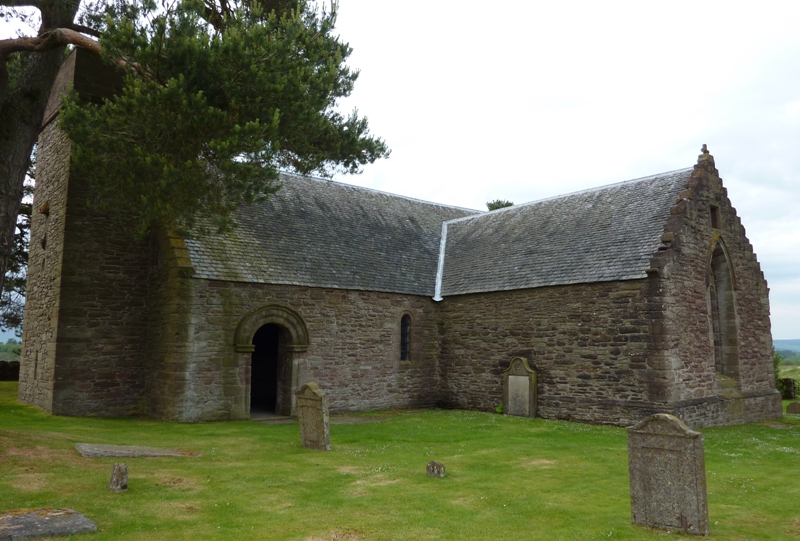
Building or ruin · Medieval
Tullibardine Chapel
Perth and Kinross
A large part of the chapel dates to 1446, when it was built by Sir David Murray, Baron of Tullibardine, of Tullibardine Castle, as a family chapel…
- Near Auchterarder
- 1 min walk from car park
Fortified place · Medieval
Huntingtower Castle
Perth and Kinross
The Ruthven name was suppressed by Act of Parliament in 1600, and the castle had to be renamed. It had been Ruthven Castle for centuries.
- Near Perth
Questions people ask
- Why does the Dupplin Cross matter so much?
- Because of its inscription. Only CUSTANTIN FILIUS FIRCUS is legible, but that names a Pictish king who flourished between about 793 and 820, so the cross can be dated to his reign or just after — a fixed point in a body of sculpture that is otherwise dated by comparison alone.
- Where is it now?
- Indoors at St Serf's Church, Dunning, under the eleventh or twelfth-century tower. It was placed in the care of Historic Scotland in 2002 and moved from its original hillside in Strathearn for preservation.
- What is a high cross?
- A free-standing stone cross, as distinct from a cross carved on a slab. They are common in Ireland, Northumbria and Dal Riata but rare in Pictish territory, though broken fragments show others once stood.
- What does the inscription say about language?
- That Gaelic was spoken. The inscription is in Latin but renders the father's name in its Gaelic form, Fergus, rather than a Pictish equivalent.
Sources
The Ancient Codex, in your pocket
Get the Pocket Codex app
Carry the directory with you — Dupplin Cross and thousands of ancient places across Britain and Ireland, offline, wherever you roam.