The Ruthven name was suppressed by Act of Parliament in 1600, and the castle had to be renamed. It had been Ruthven Castle for centuries.
This castle had to be renamed because its owners’ surname was abolished. After the Gowrie Conspiracy of 1600 the Ruthvens were forfeited and the Ruthven name was suppressed by Act of Parliament, and contemporary writers recorded the consequence in plain terms: the principal house called Ryven is now called the Huntynge towre. A building that had been Ruthven Castle, the House of Ruthven, or simply Ryffane for several hundred years acquired the name it still carries by statute.
The family had earned it. In the summer of 1582 the 4th Lord Ruthven, 1st Earl of Gowrie, seized the young King James VI here on 22 or 23 August — the Raid of Ruthven — and the Protestant conspirators behind it hoped to hold power by holding the king. James was moved between locations for ten months and escaped at St Andrews on 27 June 1583. James Stewart, Earl of Arran, was imprisoned in the castle during the episode.
Remarkably, James forgave Gowrie and came back for a banquet at the house where he had been taken. After a second abortive attempt on the throne, Gowrie was executed and his property forfeited; in May 1584 Dorothea Stewart, Countess of Gowrie, was ordered to surrender Dirleton, Huntingtower, Cousland and the Gowrie lodging in Perth to the crown.
The castle was older than any of that. It stood at least by the fourteenth century as one of the holdings of the Lords of Badenoch, and Alexander Stewart, Earl of Buchan — the Wolf of Badenoch, named for his misdeeds — died here in 1394. Mary, Queen of Scots visited twice in 1565, and Regent Morton was summoned here from Ballinbreich in 1575 for the christening of the Ruthven heir.
What follows is drawn from published sources, with each claim labelled by how firmly it is established.
The name
The present name replaced Ruthven Castle after Parliament suppressed the Ruthven name in 1600, requiring the former House of Ruthven to be called Huntingtower.
History
Huntingtower Castle was built at least by the fourteenth century, being one of the castles owned by the Lords of Badenoch. Alexander Stewart, Earl of Buchan — called the Wolf of Badenoch for his misdeeds — died there in 1394. In the fifteenth century the castle was claimed by the Huntly family, or by Clan Ruthven. For several hundred years it was known as the House or Place of Ruthven, or Ruthven Castle, or simply Ryffane, and the Ruthvens also held a substantial townhouse in nearby Perth called Gowrie House.
Mary, Queen of Scots visited on 25 June and 16 September 1565. Regent Morton, making a progress in Fife in September 1575, was summoned from Ballinbreich Castle to Huntingtower for the christening of James Ruthven, the heir. In the summer of 1582 the castle was occupied by the 4th Lord Ruthven, who was also 1st Earl of Gowrie, and his family. On 22 or 23 August that year Gowrie and his associates seized the young King James VI at the castle, in the episode known as the Raid of Ruthven.
The Protestant conspirators behind the kidnapping hoped to gain power by controlling the king. James was held prisoner for ten months in various locations, and James Stewart, Earl of Arran, was imprisoned at Ruthven Castle. The king eventually escaped from his captors at St Andrews on 27 June 1583. James VI forgave Gowrie and returned to the House of Ruthven for a banquet. After a second abortive attempt by Gowrie and others to overthrow him, however, Gowrie was executed and his property — Huntingtower included — was forfeited to the crown.
In May 1584 Dorothea Stewart, Countess of Gowrie, was commanded to surrender Dirleton, Huntingtower, Cousland and the Gowrie lodging in Perth to the crown. The family's holdings were dismantled by order rather than by sale. The Ruthvens were finally forfeited for the Gowrie Conspiracy in 1600, and the Ruthven name itself was suppressed by Act of Parliament. Contemporary writers recorded the consequence directly — the principal house called Ryven is now called the Huntynge towre, and the House of Riven to be called Hunt towre.
A castle renamed by statute is an unusual thing indeed. The present name exists only because a family name was legally erased from the record, and the building has carried the replacement ever since without anybody thinking to change it back.
People
-
Alexander Stewart, Earl of Buchan
Called the Wolf of Badenoch for his misdeeds; died at the castle in 1394.
-
William Ruthven, 1st Earl of Gowrie
Seized the young James VI at the castle in August 1582 in the Raid of Ruthven; later executed and his property forfeited.
-
James VI
Kidnapped here in 1582 and held for ten months; escaped at St Andrews on 27 June 1583, and later returned for a banquet.
Cultural influences
-
The castle was the Ruthven family seat and the setting for the 1582 Raid of Ruthven, when they seized James VI.
Connections
-
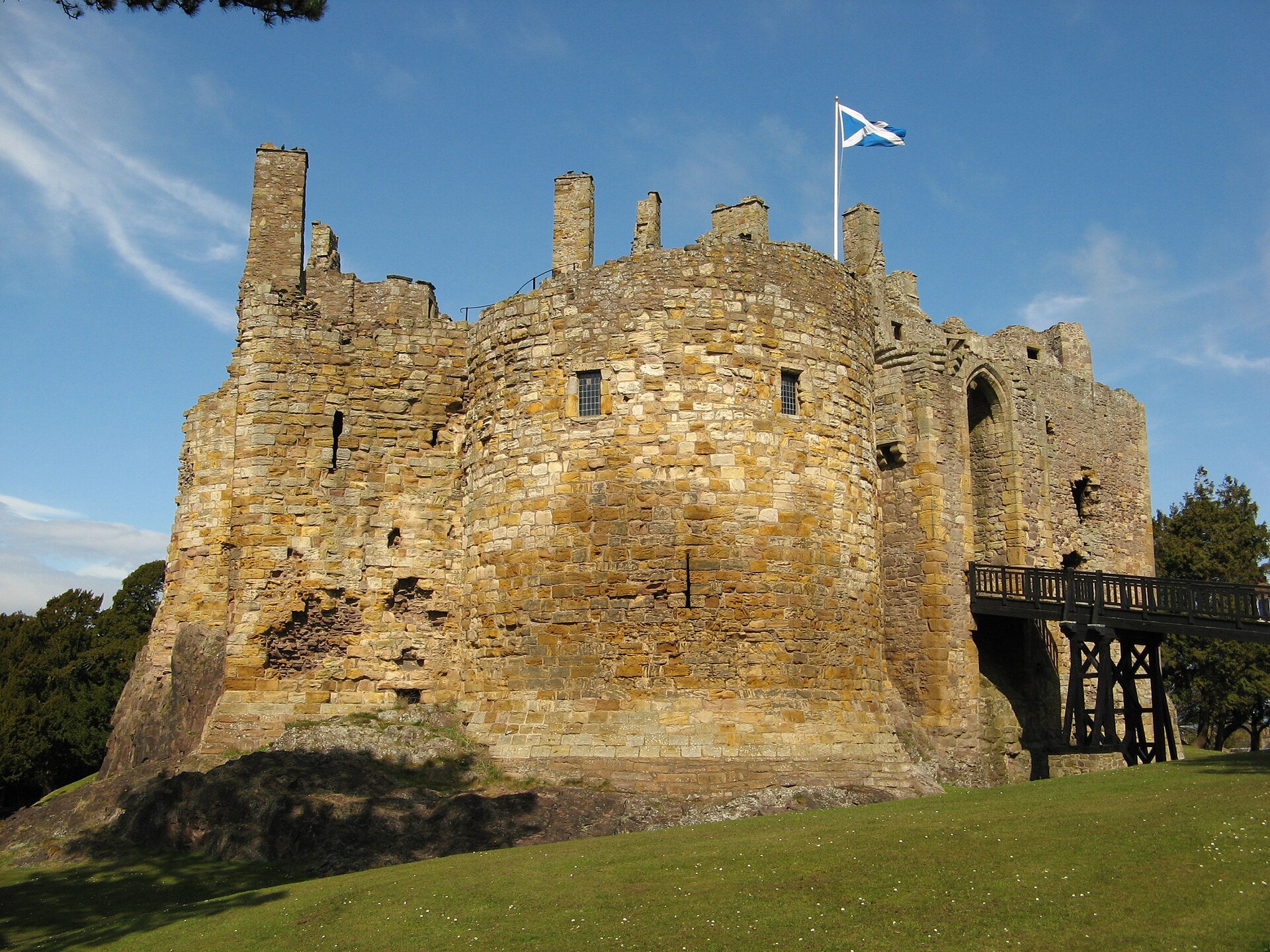
Photo: Jonathan Oldenbuck / Wikimedia Commons / CC BY-SA 3.0 One of the properties Dorothea Stewart, Countess of Gowrie, was ordered to surrender to the crown in May 1584.
-
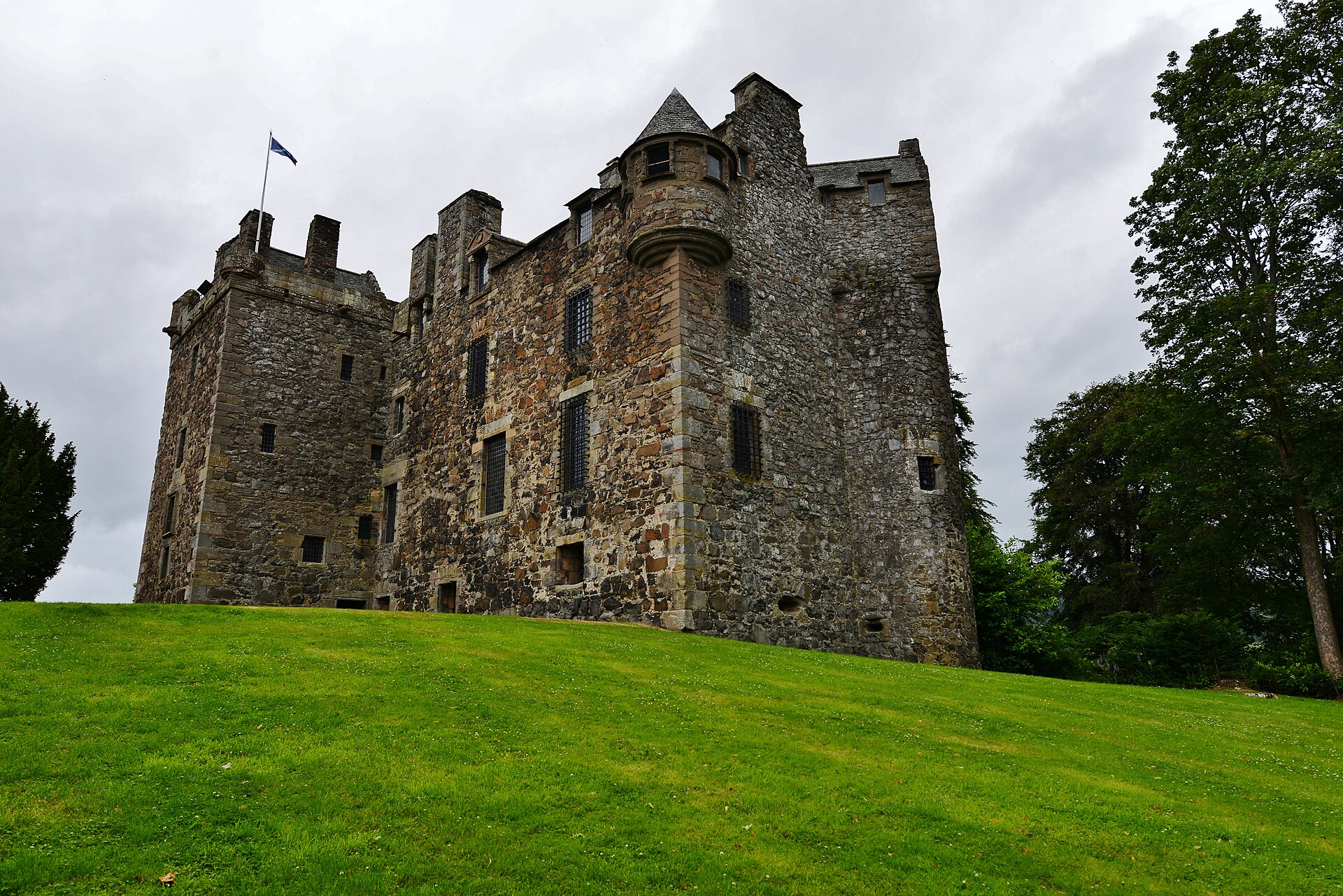
Photo: HARTLEPOOLMARINA2014 / Wikimedia Commons / CC BY-SA 3.0 Another Perthshire castle of the same period, a few miles away on the Tay.
Discovery & excavation
The castle’s former identity as Ruthven survives in the record of the statutory renaming that followed the family’s forfeiture.
What to look for
-
The renamed house
Known as Ruthven Castle for centuries, and renamed after the Ruthven name was suppressed by Act of Parliament in 1600.
Plan your visit
- Location
- 56.4094°N · 3.4883°W
- Nearest settlement
- Perth
- Time needed
- About 60 minutes
- Best time
- Daylight hours
- What survives
- A medieval castle known for its Ruthven associations, whose current name preserves the crown’s enforced erasure of the former owners.
Nearby places
Fortified place · Roman
Bertha (Perth)
Perth and Kinross
A Roman fort north of Perth at the meeting of the Almond and the Tay.
- Near Perth
- Some walking
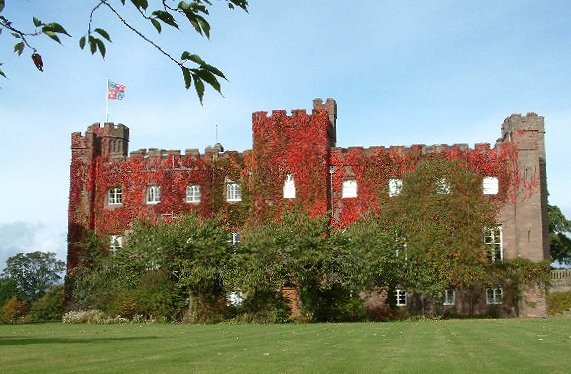
Sacred place · Medieval
Scone Palace / Scone Abbey
Perth and Kinross
The crowning place of forty-two Kings of Scots and the site of Scotland's first parliament: now a Gothic Revival house with nothing left standing o…
- Near Perth
Fortified place · Medieval
Elcho Castle
Perth and Kinross
Nearly burned in 1773 by a crowd who found it full of grain being held back for export during a famine.
- Near Rhynd
Fortified place · Prehistoric
Castle Law, Forgandenny
Perth and Kinross
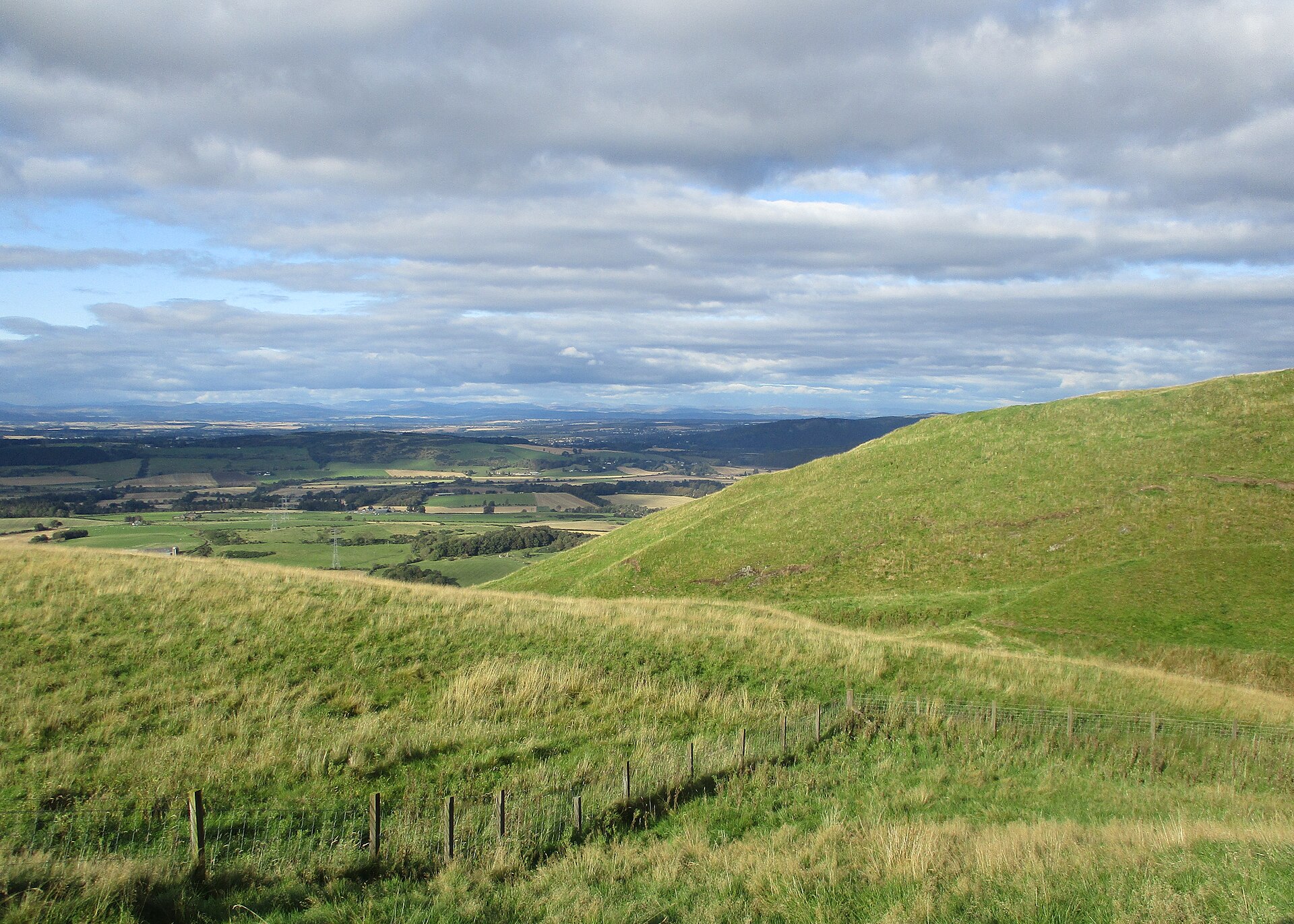
A multiple-enclosure hillfort above Forgandenny whose banks and ditches are effectively its entire history: the written record has almost nothing t…
Questions people ask
- Why is it called Huntingtower?
- Because the Ruthven name was suppressed by Act of Parliament in 1600 after the Gowrie Conspiracy. The castle had been known as Ruthven Castle for centuries.
- What was the Raid of Ruthven?
- The seizure of the young James VI at this castle on 22 or 23 August 1582 by the 1st Earl of Gowrie and his associates, who hoped to gain power by controlling the king. James was held for ten months.
- Who was the Wolf of Badenoch?
- Alexander Stewart, Earl of Buchan, so called for his misdeeds. He died at the castle in 1394.
- Did Mary, Queen of Scots visit?
- Yes, on 25 June and 16 September 1565.
Sources
The Ancient Codex, in your pocket
Get the Pocket Codex app
Carry the directory with you — Huntingtower Castle and thousands of ancient places across Britain and Ireland, offline, wherever you roam.