A thirteenth-century cluster keep of three joined round towers — among the earliest Scottish castles built with towers projecting beyond the walls, a design later copied at Bothwell and Kildrummy.
Three round towers rise together from a rock outcrop set above the East Lothian farmland, fused into a single squat stronghold that architectural historians call a “cluster keep” — a large tower to the south, a smaller one to the west, and a square tower binding them together. Inside, a seven-sided chamber with a pointed vaulted ceiling and a carved fireplace once served as a private hall for the lord and his household, reached past a kitchen, a well, and a hatch that let food be passed straight up from the stores below.
The castle grew in stages over four centuries, as it passed between families whose fortunes rose and fell with the Scottish crown. A Norman knight’s descendants raised the first stone tower in the 1220s and 1230s; a Berwickshire family added a great hall and gatehouse a century later; and by the 1500s the Ruthvens, who married into the estate, had built a further lodging before losing everything in one of the era’s most notorious political killings. Each addition left its mark on the ruin that survives, from blocked doorways to the ovens and prison pit beneath the vanished hall.
Dirleton’s later history turned darker still. In the years around 1650 the castle’s Great Hall hosted the trials of local people accused of witchcraft, while outside its walls a garrison of Royalist raiders drew down an artillery siege from Oliver Cromwell’s army. Long since left as a ruin, the castle’s grounds were transformed instead into gardens that now hold a place in the Guinness Book of Records.
What follows is drawn from published sources, with each claim labelled by how firmly it is established.
History
Two Norman brothers named de Vaux arrived in Scotland after being granted land by King David I in the twelfth century, and John de Vaux received the barony of Dirleton. His descendants first fortified the island of Fidra before beginning a stone castle on the ridge at Dirleton itself, recorded as a stronghold by 1225 and modelled, it is thought, on the Château de Coucy in France, home to the father of the queen he served as steward.
War broke out in 1296, and Dirleton changed hands repeatedly during the Wars of Scottish Independence. In the summer of 1298 the Bishop of Durham besieged the castle, and it held out for months until the English victory at Falkirk allowed heavier siege engines to be brought up. The Scots recaptured Dirleton before 1314 and deliberately damaged it, a practice known as slighting, to keep it from further English use.
The barony passed to the Haliburton family around 1350 through marriage, and after a brief seizure by the Earl of Douglas in 1363 the castle was restored to them. Sir Walter Haliburton served as a hostage for the release of the captive King James I in the 1420s and was later made Treasurer of Scotland, while his family built a new gatehouse and a great hall along the east range, works that continued into the early 1500s when King James IV visited and paid the masons himself.
The last Haliburton heiress carried Dirleton into the Ruthven family in 1515. Patrick, Lord Ruthven, helped murder Mary, Queen of Scots' secretary David Riccio in 1566, and his son led the seizure of the teenage King James VI in the 1582 Raid of Ruthven before being executed two years later for a further plot. The castle changed hands among the Ruthvens until 1600, when the violent end of the Gowrie Conspiracy saw it stripped from the family and handed to Thomas Erskine, seen by many as a reward for his part in the killings at Gowrie House.
In 1649 and 1650, during a wave of witchcraft accusations across southern and eastern Scotland, six people from Dirleton were accused and tried in the castle's Great Hall. Agnes Clarkson confessed under interrogation and named others, including Manie Halieburton and Patrick Watson, who were examined by the notorious witch-pricker John Kincaid for marks said to prove a pact with the devil; no record survives of their eventual sentences, though such trials usually ended in execution.
Oliver Cromwell's army defeated the Scots at Dunbar in September 1650, and a band of Royalist moss-troopers then took shelter at Dirleton to harry his supply lines. Cromwell sent Generals Monck and Lambert with 1,600 men, who used mortars to smash the drawbridge and gate in November, capturing the castle and hanging the moss-troopers' captain from its walls before leaving the ruin to decay.
The lawyer John Nisbet bought the castle and estate in 1663 and built a new house at nearby Archerfield, leaving Dirleton itself to fall further into ruin while his family maintained its gardens. Mary Nisbet, Lady Elgin, added the surrounding walls in the nineteenth century as part of a beautification of the village, and in 1923 the Nisbets passed the castle into state care, since when Historic Environment Scotland has maintained the ruins and gardens.
People
-
John de Vaux
Norman baron who began the 13th-century stone castle at Dirleton, likely modelled on the Château de Coucy.
-
Sir Walter Haliburton
Held hostage for the release of King James I in the 1420s and later served as Treasurer of Scotland.
-
William Ruthven, 1st Earl of Gowrie
Led the 1582 Raid of Ruthven, seizing the young King James VI, and was executed in 1584 for a further plot.
-
Oliver Cromwell
Ordered the 1650 siege that saw the castle's drawbridge and gate destroyed by artillery.
-
John Nisbet, Lord Dirleton
Bought the ruined castle and estate in 1663 and built a new family house at Archerfield.
Cultural influences
-
Château de Coucy
The stone keep begun by John de Vaux around 1230 is thought to have taken as its model the Château de Coucy in Picardy, built by the father of Marie de Coucy, whom de Vaux served as steward on her marriage to King Alexander II.
Connections
-
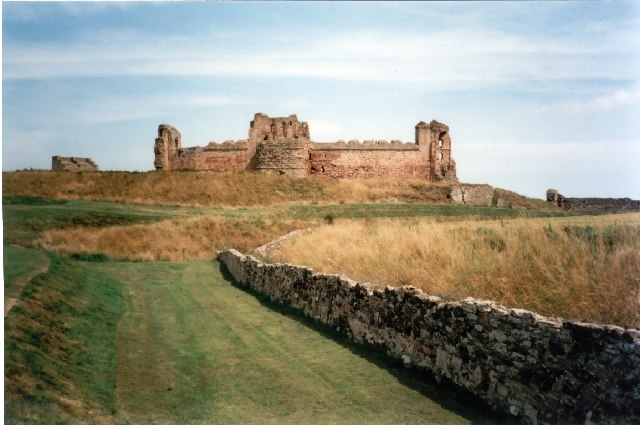
Photo: Lynne Kirton / Wikimedia Commons / CC BY-SA 2.0 Dirleton's 14th-century gatehouse is described as similar in design to the gatehouse at nearby Tantallon Castle.
-
Bothwell Castle and Kildrummy Castle
Both later adopted Dirleton's innovation of round towers projecting beyond the curtain wall, a form first dated in Scotland at Dirleton.
-
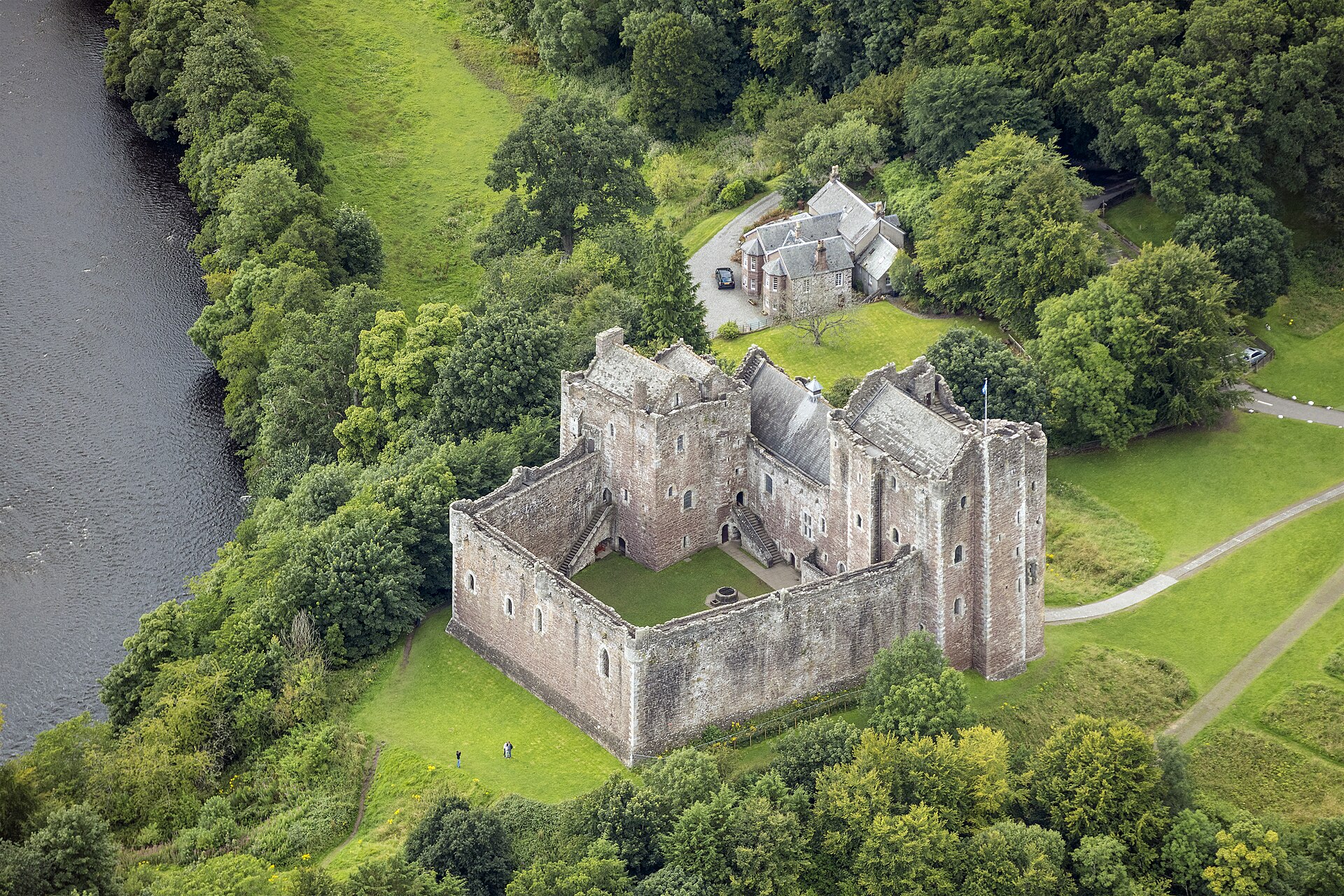
Photo: Godot13 / Wikimedia Commons / CC BY-SA 4.0 The vanished great hall in Dirleton's east range is said to have once rivalled the surviving noble residence at Doune Castle.
-
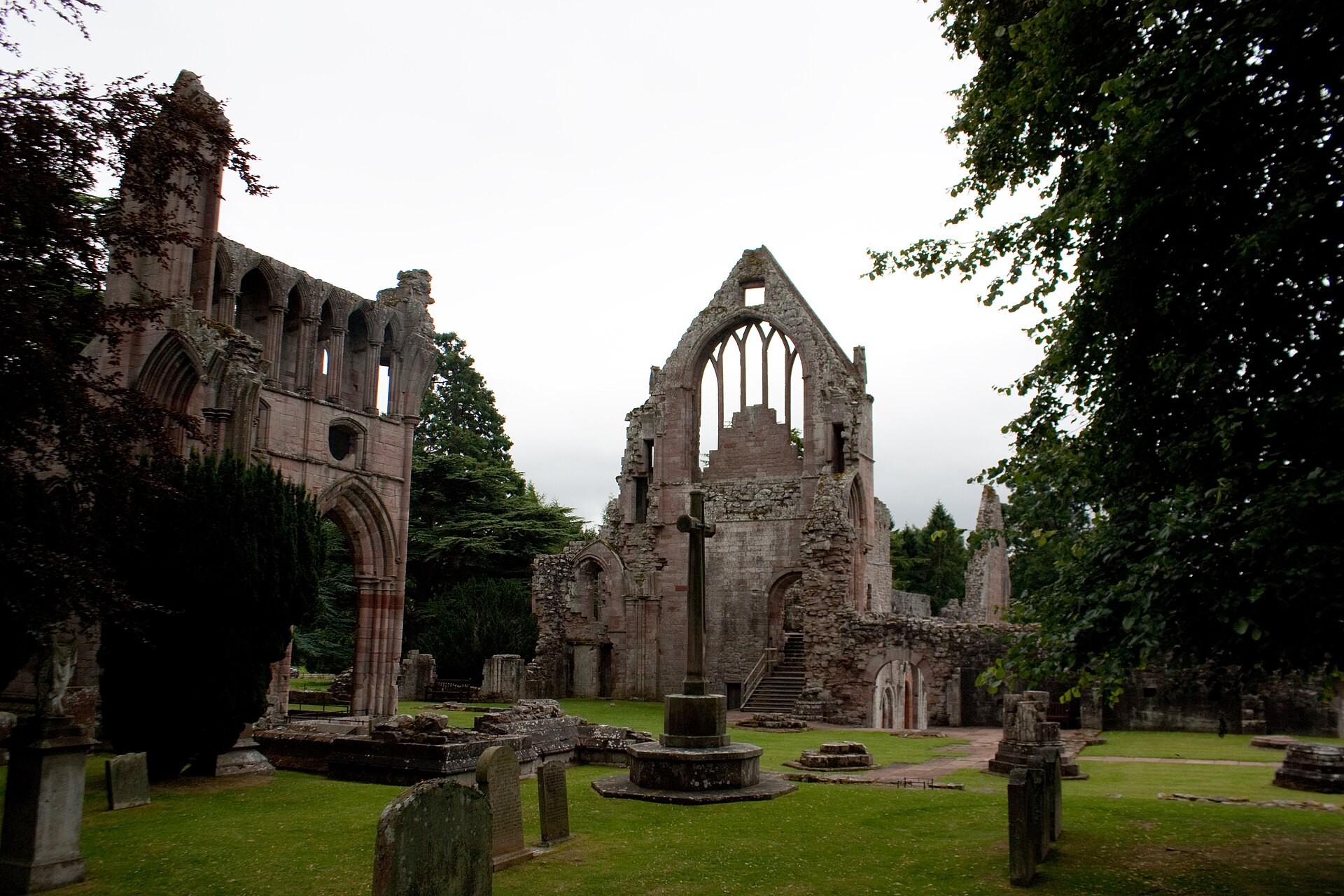
Photo: LeCardinal / Wikimedia Commons / CC BY-SA 3.0 The island of Fidra, site of an earlier de Vaux stronghold, was gifted to the monks of Dryburgh Abbey by William de Vaux in 1220.
In culture
-
J. M. W. Turner sketches
The painter J. M. W. Turner sketched Dirleton Castle, and two of his drawings are held in the Tate collection.
-
Guinness World Record border
The castle garden's 215-metre herbaceous border, laid out in the Arts and Crafts style in the 1920s, is recognised by Guinness World Records as the longest in the world.
What to look for
-
The cluster keep
Three 13th-century towers — a large round tower, a smaller round tower, and a square tower — fused into a single keep, with a vaulted seven-sided chamber and carved fireplace surviving inside.
-
The great kitchens
A 9-metre-high kitchen with two wide fireplaces, a circular roof vent, and a deep well, built by the Haliburtons in the 14th and 15th centuries.
-
The pit prison
A rock-cut pit beneath the east range, 3 metres square, used to hold prisoners of the peasant classes below a separate vaulted prison for freemen.
-
The 16th-century doocot
A beehive-shaped pigeon house 7.6 metres high, containing around 1,000 nesting boxes that once supplied food for the castle's inhabitants.
-
The record-breaking border
A 215-metre herbaceous border in the Arts and Crafts garden, laid out in the 1920s and recognised as the longest of its kind in the world.
What is said
Folklore and tradition, recorded as what is said — not as established fact.
-
The devil on the green at Dirleton
According to Agnes Clarkson's 1649 confession, the devil was said to have appeared to her first as a black dog and then as a man, and she was reputed to have become his servant after a meeting with him on the green at Dirleton.
Plan your visit
- Location
- 56.0458°N · 2.7784°W
- Nearest settlement
- Dunbar
- Access
- Paid entry — managed visitor site
- Terrain
- Moderate walking
- Parking
- A small public car park is about 100 metres from the castle; public toilets are beside it.
- Start point
- The car park is reached along a gentle downhill road to the entrance; gardens have bound-gravel paths and benches, while some ruin areas require steps.
- Time needed
- About 45 minutes
- Best time
- Visit during published opening hours and in dry daylight, when the castle ruins, grounds and views can be explored comfortably.
- What survives
- Dirleton retains substantial medieval castle ruins, gardens and selected Haliburton Range interiors, including the Great Hall, kitchen, vaults and chapel; conservation work currently closes the Guard House, South Entrance and De Vaux range.
- Facilities
- The site has a visitor centre, shop, picnic area, self-service tea/coffee and public toilets beside the car park.
Opening & admission
Paid entry. Check current HES opening times; conservation works currently restrict around a third of the ruins.
- The grounds, gardens and selected areas of the ruins remain open.
Nearby places
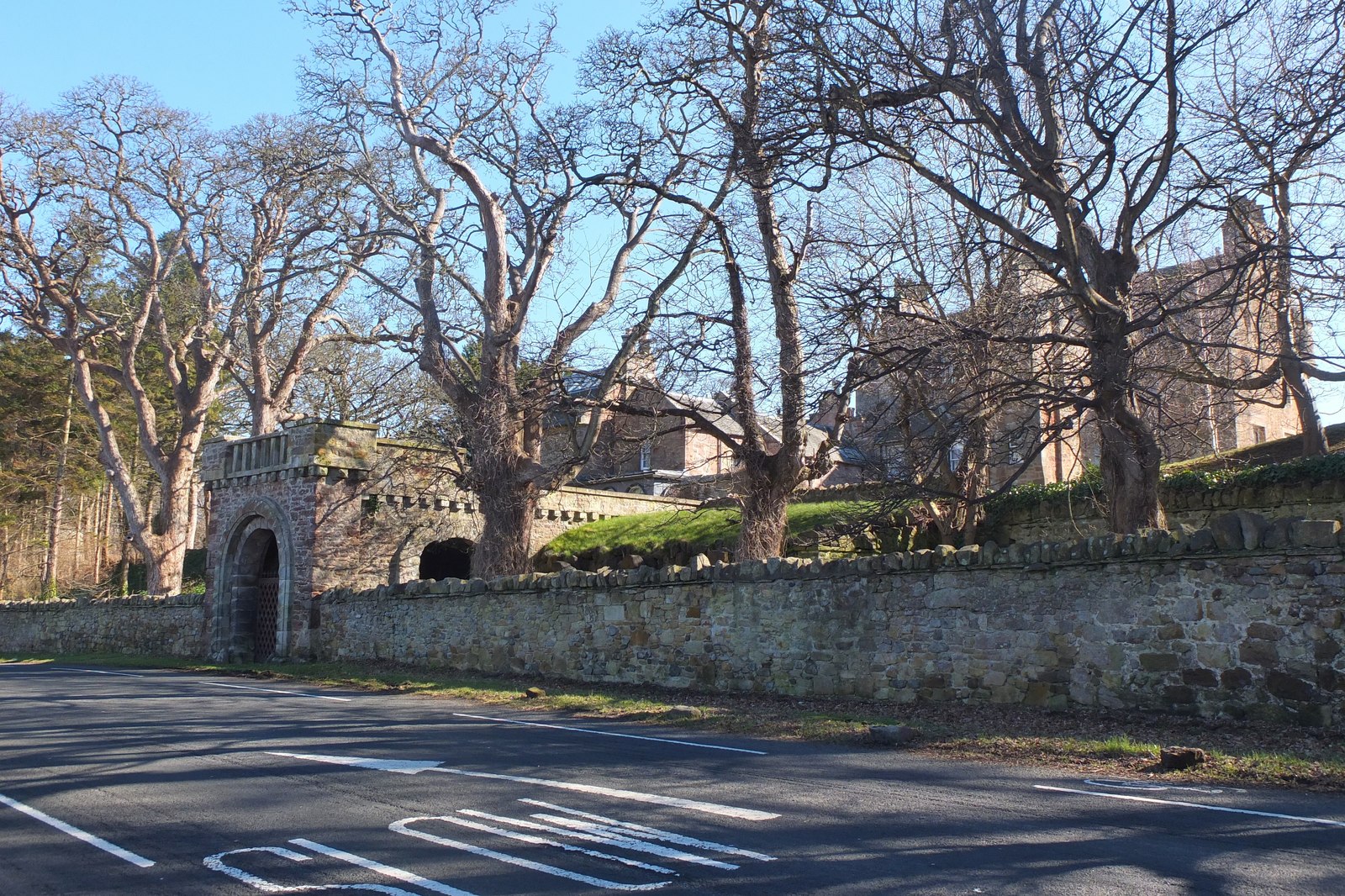
Building or ruin · Medieval
Luffness Castle
East Lothian
Luffness preserves a house within a former fortification, where medieval Lindsay power, a short-lived 1549 French–Scottish fort and later country-h…
- Near Dunbar
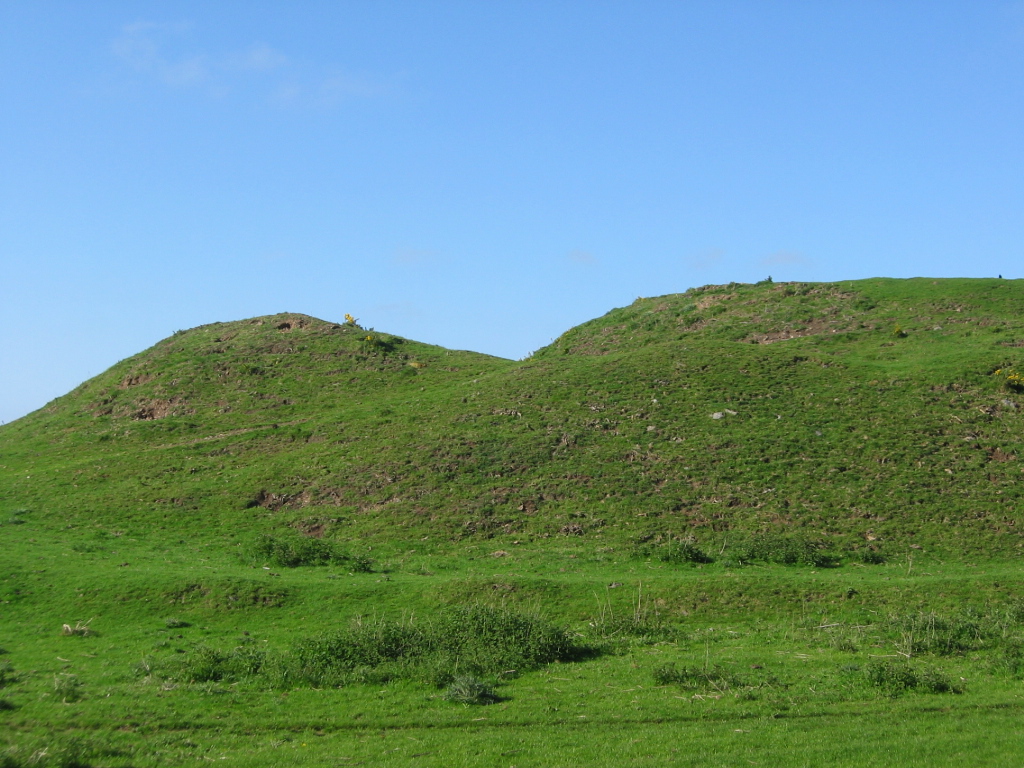
Fortified place · Iron Age
Chesters Hill Fort
East Lothian
A settlement of some twenty roundhouses survives inside its ramparts and ditches: Historic Environment Scotland rates it one of the best-preserved…
- Some walking
Fortified place · Medieval
Tantallon Castle
East Lothian
Tantallon is Scotland’s last medieval curtain-wall castle, a dramatic coastal fortress whose single massive landward wall defended a naturally clif…
- Near North Berwick
- Rough ground
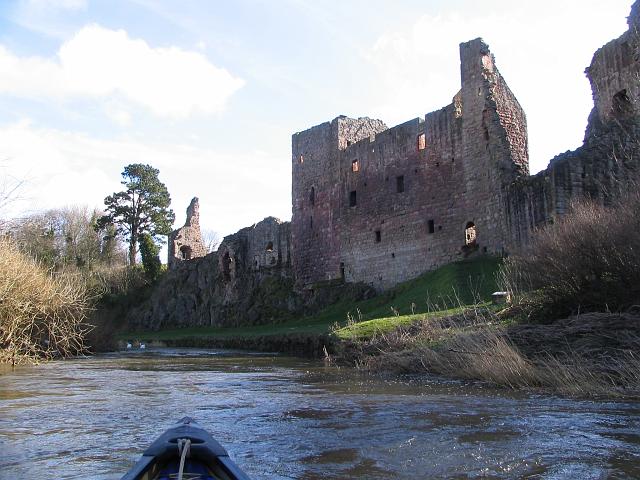
Fortified place · Medieval
Hailes Castle
East Lothian
Hailes Castle is a riverside Hepburn stronghold whose fourteenth-century towers, chapel and service rooms record border warfare and late medieval l…
- Near Dunbar
Questions people ask
- When was Dirleton Castle built?
- Construction began around 1230 to 1240 under John de Vaux, though an earlier timber or stone structure was recorded on the site by 1225.
- Why was Dirleton Castle abandoned?
- It never recovered after Cromwell's forces damaged it in 1650, and its later owner, John Nisbet, chose to build a new house at Archerfield instead.
- What happened during the witch trials at Dirleton?
- Six local people, mostly women, were accused of witchcraft in 1649 and 1650 and tried in the castle's Great Hall; no record of their sentences survives.
- Can visitors go inside Dirleton Castle today?
- Yes. The ruins and gardens are maintained by Historic Environment Scotland and are open to the public as a scheduled ancient monument.
- What is notable about Dirleton's gardens?
- They include a 215-metre herbaceous border recognised by Guinness World Records as the longest in the world, alongside a 16th-century doocot.
Sources
- Wikipedia: Dirleton Castle
- Historic Environment Scotland — Dirleton Castle, Dovecot and Gardens (SM90096)
- Historic Environment Scotland — Dirleton Castle gate, tower (LB1525)
- Historic Environment Scotland — Dirleton Castle blog: The Dirleton Witch Hunts
- Lindsay, Maurice. The Castles of Scotland
- Tabraham, Chris. Dirleton Castle (2nd edition)
Explore more: Fortified places · Medieval · East Lothian
The Ancient Codex, in your pocket
Get the Pocket Codex app
Carry the directory with you — Dirleton Castle and thousands of ancient places across Britain and Ireland, offline, wherever you roam.