
Luffness preserves a house within a former fortification, where medieval Lindsay power, a short-lived 1549 French–Scottish fort and later country-house remodelling overlap.
At Luffness, a three-storey house sits within the outline of a square fortification, its partly infilled ditch hinting at earlier military structures. The building’s domestic calm masks a site repeatedly adapted for war, religion and estate life.
The Lindsays’ medieval fortress, the French–Scottish fort of 1549 and later rebuilding by the Hepburns and Hope family all form part of the same place. Its surviving turnpike stair may contain fabric from the thirteenth-century castle.
What follows is drawn from published sources, with each claim labelled by how firmly it is established.
History
Luffness stands near Aberlady on land granted to the Lindsay family in the twelfth century. They built a large, strong castle in the thirteenth century, and a nearby Carmelite friary followed in 1293 after Sir David Lindsay’s memorial land gift. Edward I’s army occupied the castle in 1311, and an English force sacked it in 1547.
French and Scottish soldiers under Paul de Thermes built a fort at Luffness in 1549 to interrupt English supply to Haddington. Regent Arran called on local people and labourers during construction. Guns were moved from the fort to the harbour in 1550 for shipment to Monifieth, then Mary of Guise ordered the fort demolished in 1552 while preserving an existing house and mansion.
The Hepburn Earls of Bothwell rebuilt the castle in the later sixteenth century, and the estate passed to the Durham and then Hope families. William Burn altered and extended it in 1822, with further work by David Bryce. The present T-shaped three-storey house retains a turnpike stair thought possibly to incorporate thirteenth-century fabric, within the trace of a square fortification.
People
-
Paul de Thermes
Directed the French and Scottish construction of the 1549 fort at Luffness to interrupt English supply to Haddington.
Cultural influences
-
Luffness was shaped by the Rough Wooing: French and Scottish forces built a fort there in 1549 to interrupt English supply to Haddington.
Connections
-
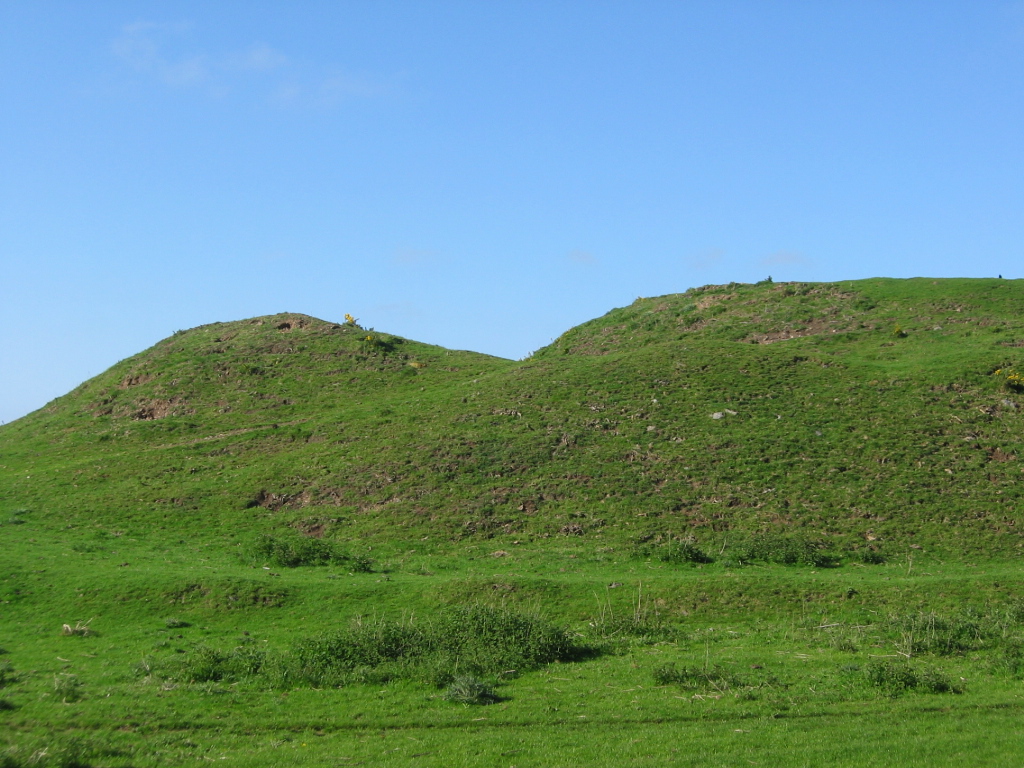
Photo: Renata (talk) / Wikimedia Commons / Public domain A prehistoric defended site in the wider East Lothian landscape, giving Luffness Castle a longer context of settlement and defence.
-
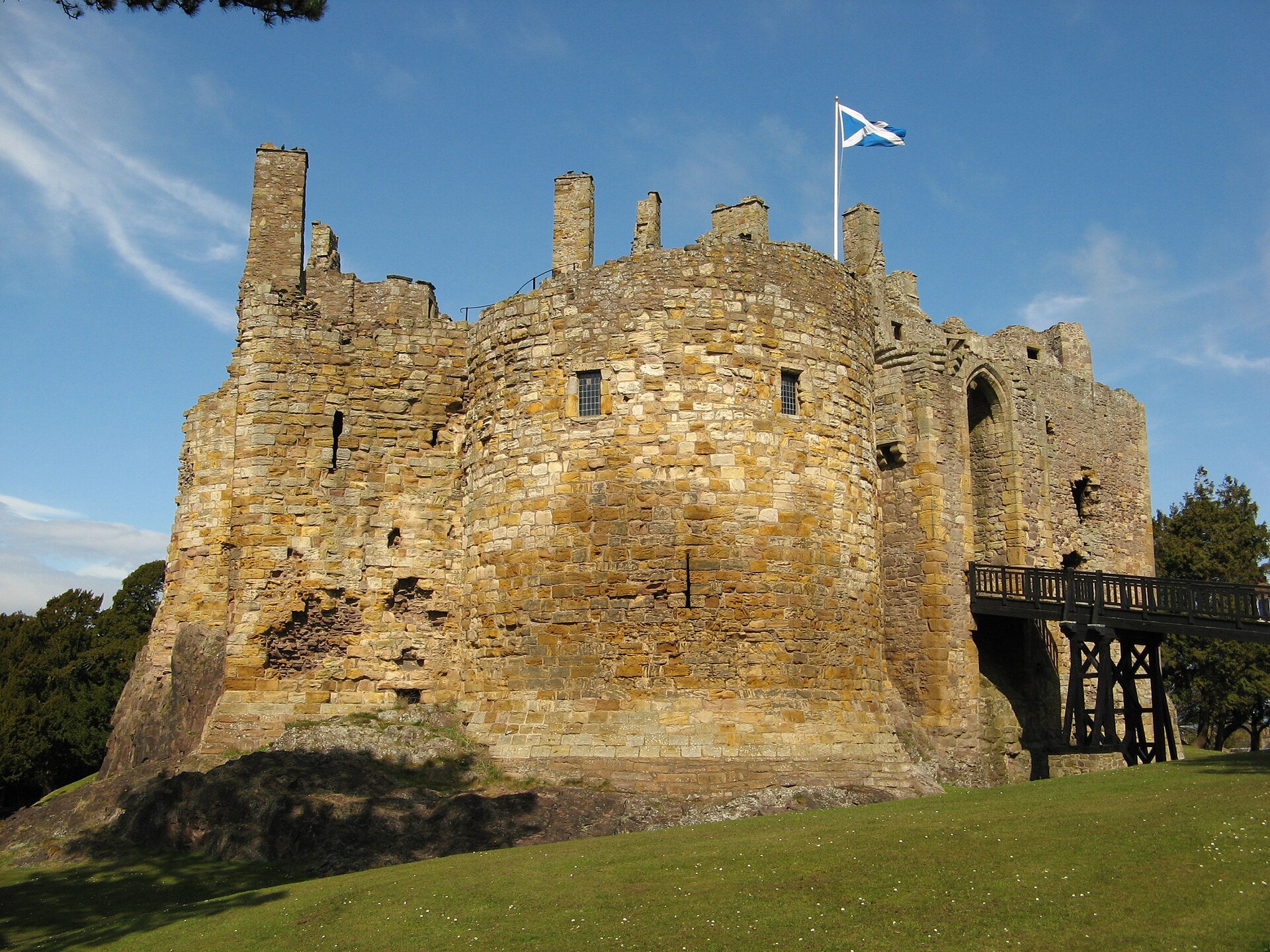
Photo: Jonathan Oldenbuck / Wikimedia Commons / CC BY-SA 3.0 A comparable medieval castle in East Lothian, allowing comparison with Luffness’s coastal baronial setting.
-
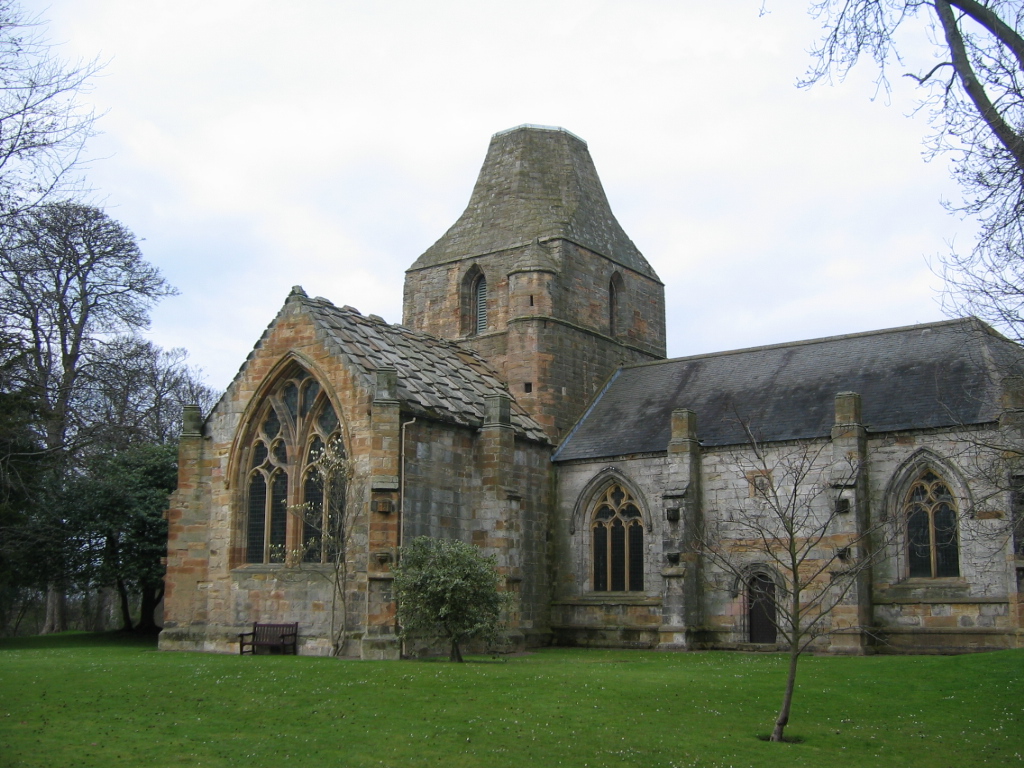
Photo: Renata (talk) / Wikimedia Commons / Public domain A major ecclesiastical foundation in the same regional landscape, contrasting Luffness’s secular lordship with later religious patronage.
What to look for
-
The T-shaped tower
The present T-shaped three-storey house with its square turret reflects later rebuilding, while possibly retaining fabric from the earlier castle.
-
The turnpike stair
A turnpike stair survives in the lower floors and may incorporate thirteenth-century fabric beneath the later nineteenth-century alterations.
-
The infilled ditch
Look for the partly infilled ditch, the surviving trace of the square fortification that enclosed the earlier castle and its defensive ground.
-
The Carmelite friary
Woodland nearby preserves the setting of the Carmelite friary founded in 1293 after Sir David Lindsay’s memorial land gift.
Plan your visit
- Location
- 56.0143°N · 2.8439°W
- Nearest settlement
- Dunbar
- Time needed
- About 45 minutes
Nearby places
Fortified place · Iron Age
Chesters Hill Fort
East Lothian
A settlement of some twenty roundhouses survives inside its ramparts and ditches: Historic Environment Scotland rates it one of the best-preserved…
- Some walking
Fortified place · Medieval
Dirleton Castle
East Lothian
A thirteenth-century cluster keep of three joined round towers: among the earliest Scottish castles built with towers projecting beyond the walls,…
- Near Dunbar
- Some walking
Sacred place · Medieval
Seton Collegiate Church
East Lothian
Seton Collegiate Church is an unusually legible unfinished late-medieval church, preserving its choir, transepts and tower alongside the absent nav…
- Near Dunbar
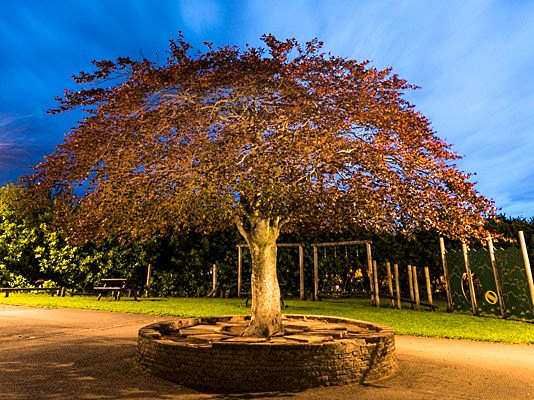
Ancient tree · Medieval
Ding Dong tree
East Lothian
The Ding Dong tree is a copper beech that became a school landmark, won Scotland’s Tree of the Year and shaped children’s outdoor life.
- Near East Lothian
Questions people ask
- What was built at Luffness in 1549?
- French and Scottish troops built a fort to disrupt English supply to Haddington.
- What may survive from the early castle?
- The turnpike stair may incorporate remains of the thirteenth-century castle.
- Who owns Luffness today?
- The house remains occupied by the Hope family.
Sources
The Ancient Codex, in your pocket
Get the Pocket Codex app
Carry the directory with you — Luffness Castle and thousands of ancient places across Britain and Ireland, offline, wherever you roam.