
The Ding Dong tree is a copper beech that became a school landmark, won Scotland’s Tree of the Year and shaped children’s outdoor life.
A copper beech stands in the grounds of Prestonpans Primary School, its canopy used as an outdoor classroom and its trunk at the centre of a children’s game. It is not an old tree.
The tree is approximately thirty years old and was named Scotland’s Tree of the Year in 2016. It placed eighth in the European Tree of the Year Award in 2017. Thirty years is nothing at all in the life of a beech, which can stand for three centuries; what this one has instead of age is a role.
Its name comes from children racing to touch the trunk and shouting “Ding Dong”, while art, science projects and a school calendar keep the tree embedded in community life. A tree that a whole school has grown up running at, and that a village has voted for, is a landmark by use rather than by antiquity.
What follows is drawn from published sources, with each claim labelled by how firmly it is established.
The name
The Ding Dong tree takes its name from a school game in which pupils raced to touch its trunk and shouted Ding Dong.
History
The tree is a copper beech, Fagus sylvatica f. purpurea, growing in the grounds of Prestonpans Primary School, and its recorded age is only about thirty years. That makes its standing social rather than antiquarian. The name came from a game of tig in which pupils raced to touch the trunk and shouted Ding Dong on reaching it, so the tree was christened by the children who used it rather than by anyone recording it.
In 2016 the tree was named Scotland’s Tree of the Year, and the following year it placed eighth in the European Tree of the Year Award — recognition that had far more to do with its place in the school than with its size or age. Its canopy has been used as an outdoor classroom and it has carried art and science projects; images of it make up a school calendar, and its calming effect is drawn on in work with children who have complex emotional needs.
People
-
Martin Whitfield
A former teacher at Prestonpans Primary School who described the tree as part of the shared life of generations of pupils.
Cultural influences
-
The Ding Dong tree shapes daily school life at Prestonpans Primary, where its canopy serves as an outdoor classroom and a calming place for children with complex emotional needs.
Connections
-
Prestonpans Primary School
The tree stands in Prestonpans Primary School’s grounds, where pupils named it through play and teachers use its canopy for learning, art and wellbeing work.
In culture
-
School art and science projects
The tree has been the focus of school art and science projects, and photographs of it form a calendar display inside the school.
What to look for
-
Copper beech canopy
The copper beech canopy functions as an outdoor classroom and a visible focus for school projects.
What is said
Folklore and tradition, recorded as what is said — not as established fact.
-
The Ding Dong game
According to local recollection, children at Prestonpans Primary gave the tree its nickname through a game of tig in which they raced to touch the trunk and shouted Ding Dong.
Plan your visit
- Location
- General area near East Lothian, East Lothian
- Nearest settlement
- East Lothian
- Access
- Reached on a public path
- What survives
- Living-tree condition and access should be checked against current local guidance before any visit copy is expanded.
This is a sensitive or fragile site, so we show only its general area. Please check official heritage sources for access before visiting, and take care not to disturb it.
Nearby places
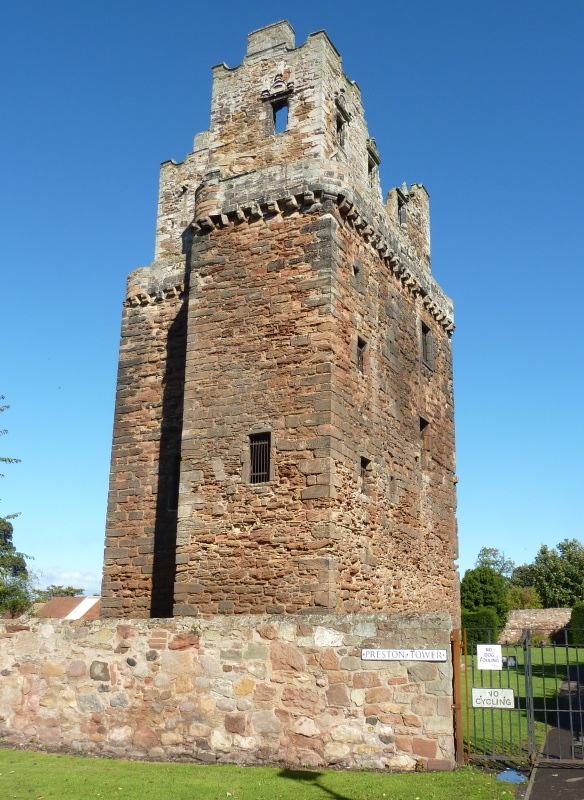
Fortified place · Medieval
Preston Tower, East Lothian
East Lothian
Preston Tower is a rare layered survivor in Prestonpans: a medieval keep enlarged in 1626, repeatedly burned in conflict and accident, and now rest…
- Near Prestonpans
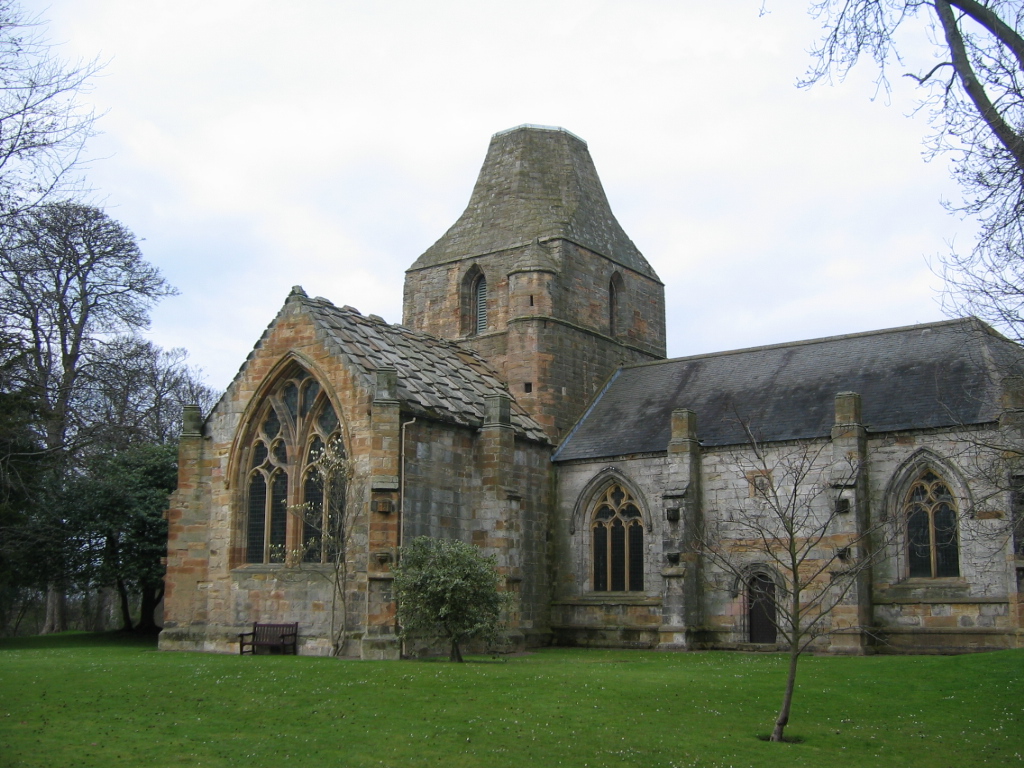
Sacred place · Medieval
Seton Collegiate Church
East Lothian
Seton Collegiate Church is an unusually legible unfinished late-medieval church, preserving its choir, transepts and tower alongside the absent nav…
- Near Dunbar

Fortified place · Roman
Inveresk Roman Fort
East Lothian
Inveresk is a large Antonine-period fort with a civilian settlement, cavalry evidence and Britain’s earliest dated Mithraeum, making it one of Scot…
- Near Dunbar
- Some walking
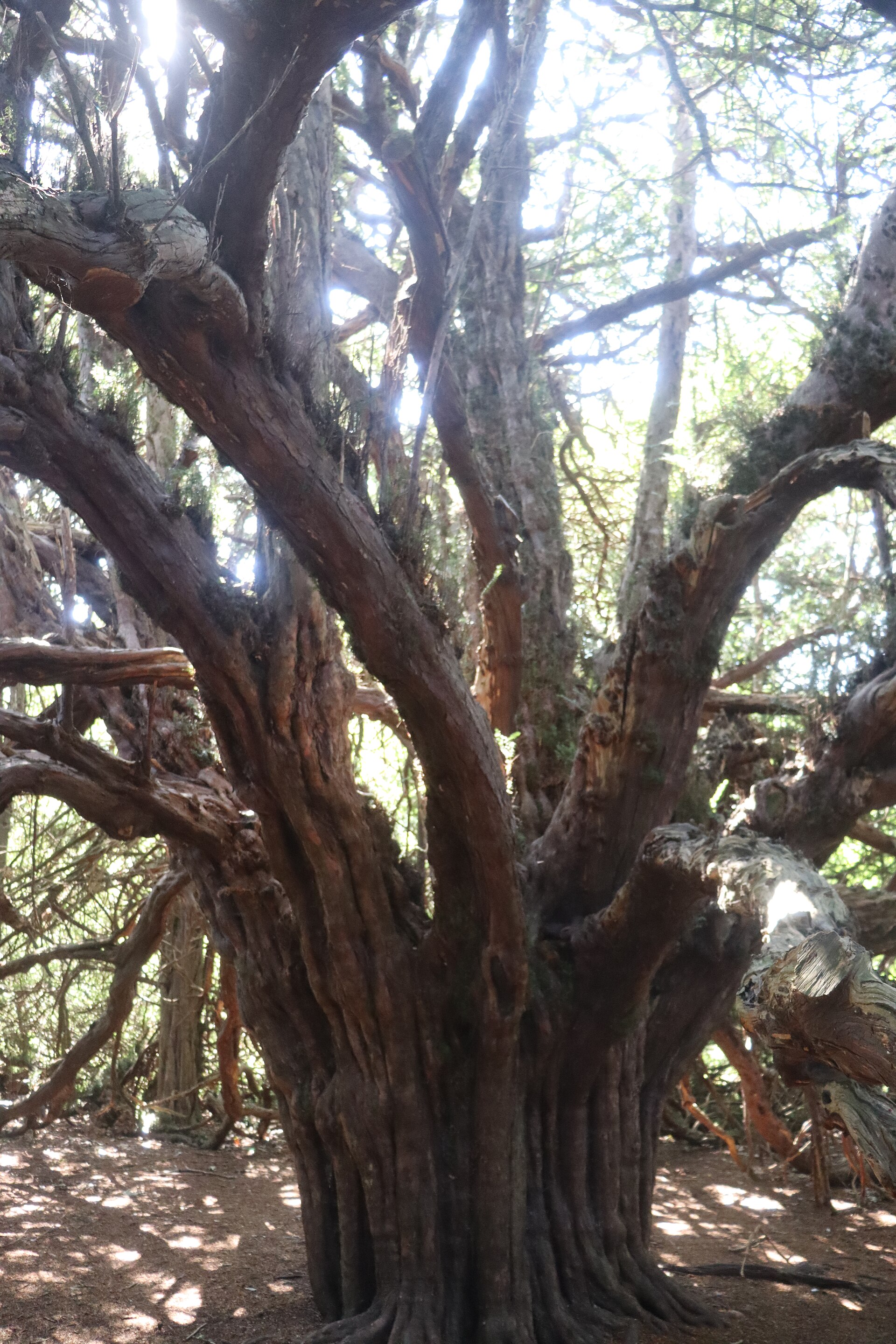
Ancient tree · Medieval
Great Yew of Ormiston
East Lothian
The Great Yew of Ormiston is a layering yew first recorded in 1474 and regarded as a significant surviving tree in Scotland.
- Near East Lothian
Questions people ask
- What kind of tree is it?
- It is a copper beech, Fagus sylvatica f. purpurea.
- Why is it called Ding Dong?
- Children played a game of tig around the trunk and shouted Ding Dong when they touched it.
- What award did it win?
- It was Scotland’s Tree of the Year in 2016 and placed eighth in Europe in 2017.
Sources
- Wikipedia: Ding Dong tree
- Wikidata: Ding Dong tree (Q106855691)
- Woodland Trust — The Ding Dong Tree
- European Tree of the Year — The Ding Dong Tree
Explore more: Ancient trees · Medieval · East Lothian
The Ancient Codex, in your pocket
Get the Pocket Codex app
Carry the directory with you — Ding Dong tree and thousands of ancient places across Britain and Ireland, offline, wherever you roam.