
The Great Yew of Ormiston is a layering yew first recorded in 1474 and regarded as a significant surviving tree in Scotland.
At Ormiston, a broad canopy of yew branches develops into fresh rooted growth where it meets the ground. This is a layering yew rather than an ordinary single-stemmed specimen: the effect is of a living structure spreading sideways, with connected parts taking on the appearance of separate trees.
The documentary record reaches back to 1474, when a document was said to have been signed beneath the largest yew. That reference is significant because it identifies the tree as a local landmark in the late medieval period. It does not, however, date the tree’s planting. The age of an ancient yew cannot be securely calculated from an old written mention or from a circumference alone, and the careful distinction matters here.
The nineteenth-century record adds another layer. A topographical dictionary published in 1846 called the yew remarkable, described it as still vigorous and gave a girth of seventeen feet measured five feet above ground. Later records identify several yews at Ormiston, including a fallen tree that had begun to grow again. They therefore show a site with related, changing growth rather than a single simple measurement that settles its age.
The living form is the essential evidence. The Ancient Tree Forum records ten major branches, some supported by props. At roughly five metres from the bole, branches reach the ground and begin new growth; the Ancient Yew Group also records separate girths for yews within the group. The Great Yew’s importance lies in that continuing pattern of renewal, its documented use as a landmark, and the limits that the evidence places on any more precise claim about its antiquity.
What follows is drawn from published sources, with each claim labelled by how firmly it is established.
History
A record says that a document was signed beneath Ormiston’s largest yew in 1474. That gives the tree a late-medieval documentary presence, but does not establish its planting date: it proves that a substantial yew was already used as a recognised landmark rather than providing a birthday for the living organism. An 1846 topographical dictionary described a remarkable yew at Ormiston Hall as more than 200 years old, in full vigour and seventeen feet in girth at five feet from the ground. The Ancient Yew Group notes the earlier wording but treats ages with caution, because yews are difficult to date from their form alone.
The tree’s defining feature is layering. Several large branches reach down from the bole, root where they contact the ground and send up new growth. The Ancient Tree Forum describes ten major branches, some supported by props, with growth beginning again where the branches meet the ground roughly five metres from the trunk.
The wider site includes more than one yew, which can make an individual measurement difficult to interpret. The Ancient Yew Group’s 2013 record distinguishes a 2.65-metre girth at 0.2 metres for one tree, a 2.08-metre girth at 1.5 metres for another, and a fallen but regrowing yew nearby. Those figures document a changing group rather than fixing an exact age for the Great Yew.
Cultural influences
-
The Great Yew of Ormiston is a layering yew, an unusually significant living form that has made it one of Scotland’s notable trees.
Connections
-
Ormiston
The tree’s documentary association is with Ormiston, where the historic yew remains identified.
-
Ormiston Hall
The yew stands near the ruins of Ormiston Hall; nineteenth-century descriptions identify it with the hall’s grounds.
Discovery & excavation
The Ormiston Yew is first mentioned in written sources in 1474.
Finds now held at: Ormiston.
What to look for
-
Layering growth
The yew’s layering habit is the key feature distinguishing its form from a single-stemmed tree.
-
Branch-supported canopy
Major branches descend towards the ground and form new rooted growth, producing the tree’s unusually broad, interconnected structure.
Plan your visit
- Location
- General area near East Lothian, East Lothian
- Nearest settlement
- East Lothian
- Access
- Reached on a public path
- What survives
- Living-tree condition and access should be checked against current local guidance before any visit copy is expanded.
This is a sensitive or fragile site, so we show only its general area. Please check official heritage sources for access before visiting, and take care not to disturb it.
Nearby places
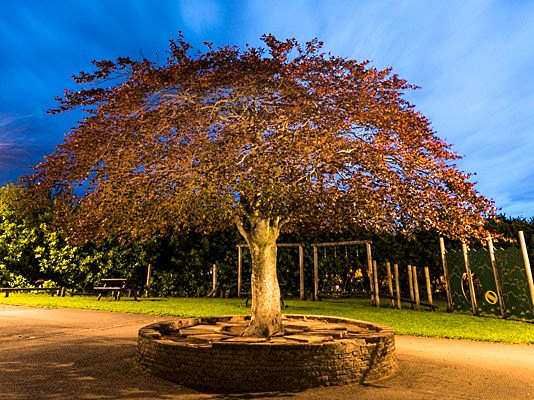
Ancient tree · Medieval
Ding Dong tree
East Lothian
The Ding Dong tree is a copper beech that became a school landmark, won Scotland’s Tree of the Year and shaped children’s outdoor life.
- Near East Lothian
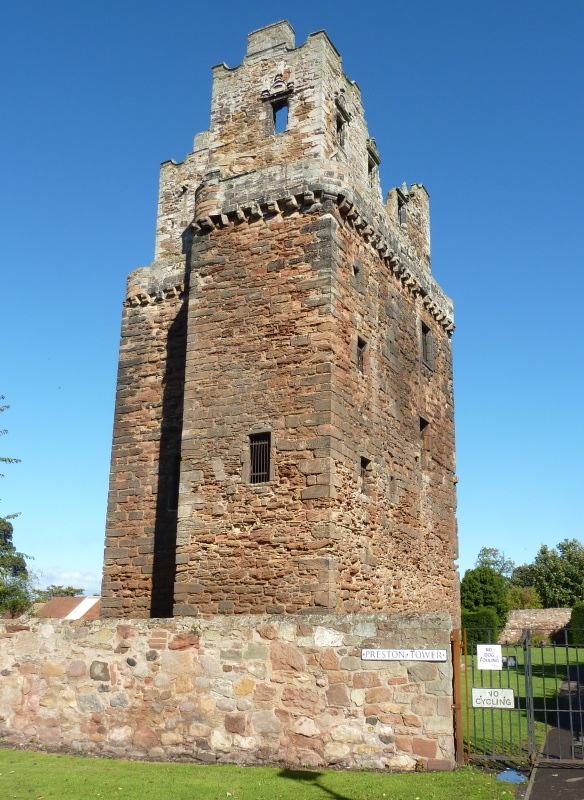
Fortified place · Medieval
Preston Tower, East Lothian
East Lothian
Preston Tower is a rare layered survivor in Prestonpans: a medieval keep enlarged in 1626, repeatedly burned in conflict and accident, and now rest…
- Near Prestonpans

Fortified place · Medieval
Crichton Castle
Midlothian
Crichton Castle preserves the rise and fall of two powerful Scottish families, a Reformation (the sixteenth-century closure of the monasteries)-era…
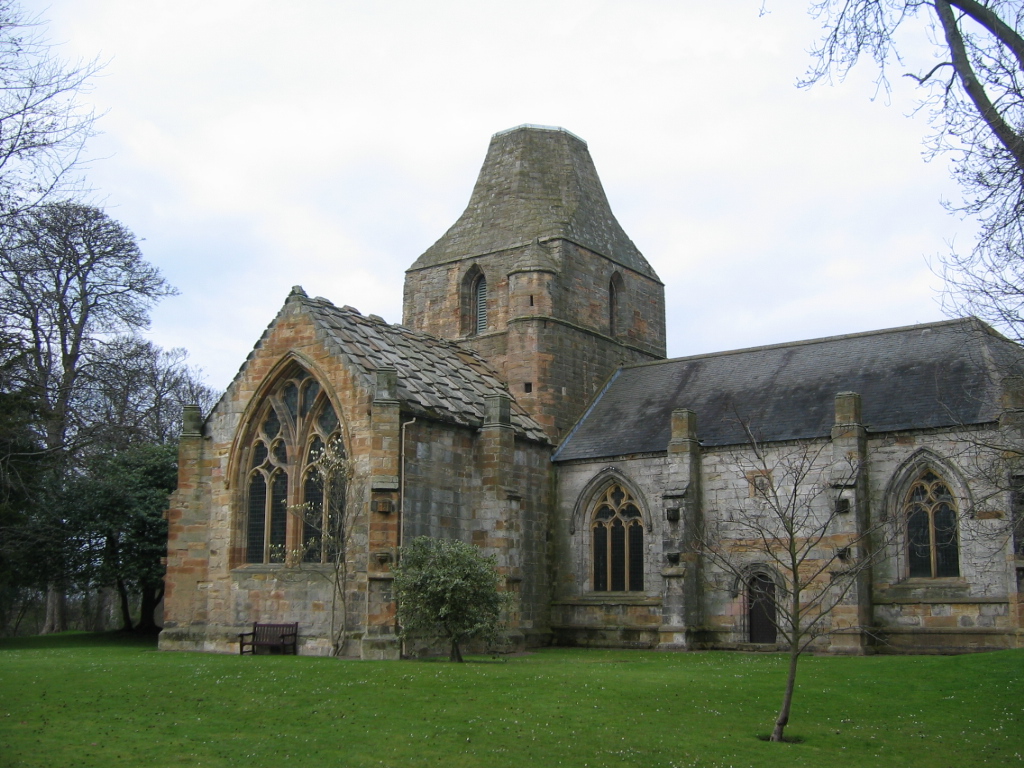
Sacred place · Medieval
Seton Collegiate Church
East Lothian
Seton Collegiate Church is an unusually legible unfinished late-medieval church, preserving its choir, transepts and tower alongside the absent nav…
- Near Dunbar
Questions people ask
- When is it first mentioned?
- A record says that a document was signed under Ormiston’s largest yew in 1474. That dates the tree’s documented role as a landmark, not its planting.
- What kind of yew is it?
- It is a layering yew: major branches reach the ground, root, and produce fresh growth, so the canopy can resemble a small group of trees.
- Why is it significant?
- Its exceptional layered form, long documentary history and survival as a substantial living structure make it a notable Scottish example. Its exact age is not established.
Sources
The Ancient Codex, in your pocket
Get the Pocket Codex app
Carry the directory with you — Great Yew of Ormiston and thousands of ancient places across Britain and Ireland, offline, wherever you roam.