Crichton Castle preserves the rise and fall of two powerful Scottish families, a Reformation (the sixteenth-century closure of the monasteries)-era siege and an unusually ambitious Renaissance redesign whose diamond-patterned court façade brought Italian ideas to Midlothian.
Four ranges gather around a courtyard at Crichton Castle, above the headwaters of the River Tyne in Midlothian. It began as a late-14th-century tower-house residence for the Crichton family and grew as their political power increased.
The castle’s fabric records sudden reversals as well as expansion. The Crichtons lost their lands after backing the Duke of Albany; the Earls of Bothwell inherited the estate, and Crichton was seized in 1559 amid the Scottish Reformation. Francis Stewart, fifth Earl of Bothwell, subsequently transformed the north range with a striking Italianate façade.
Although its later owners allowed it to decline, the ruin remains an unusually legible sequence of medieval towers, halls and Renaissance experiments. It entered state care in 1956 and is now a scheduled monument managed by Historic Environment Scotland.
What follows is drawn from published sources, with each claim labelled by how firmly it is established.
History
John de Crichton built the first tower house as a family residence in the late 14th century. His son William, later Lord Chancellor and Lord Crichton, rebuilt and enlarged it after John of Corstorphine stormed and slighted the castle in 1445, an attack linked to William’s involvement in the 1440 Black Dinner and his acquisition of Bothwell Castle.
The Crichton inheritance was broken in 1483 when the third Lord supported Alexander Stewart, Duke of Albany, whose treason sentence brought forfeiture of lands and titles. After a short grant to Sir John Ramsey also failed, James IV gave the castle to Patrick Hepburn, Lord Hailes, in 1488, beginning its association with the Earls of Bothwell.
During the Scottish Reformation, James Hepburn, fourth Earl of Bothwell, backed Mary of Guise and accepted English money intended for the Lords of the Congregation. The regent ordered an assault on Borthwick and Crichton; the Earl of Arran and Master of Maxwell captured Crichton on 3 November 1559 and removed Bothwell’s legal charters and evidences.
Crichton hosted Jean Hepburn’s wedding to John Stewart, Prior of Coldingham, on 4 January 1562, attended by Mary, Queen of Scots. Jean’s brother, the fourth Earl of Bothwell, was later implicated in Lord Darnley’s murder, married Mary in 1567 and lost his titles and estates, including Crichton, in December of that year.
In 1568 the estate went to Francis Stewart, who became Earl of Bothwell in 1577. After travelling in Europe, he designed the Italianate north range in the 1580s, drawing on Ferrara’s Palazzo dei Diamanti. His later loss of royal favour, witchcraft accusation and 1592 forfeiture preceded the castle’s sale to the Hepburns of Humbie and its eventual neglect.
People
-
William Crichton
Lord Chancellor and Lord Crichton who rebuilt and extended the castle after the 1445 attack.
-
James Hepburn, fourth Earl of Bothwell
Owner during the 1559 capture; later implicated in Lord Darnley’s murder and married Mary, Queen of Scots.
-
Francis Stewart, fifth Earl of Bothwell
Designed the Italianate north range after European travel and lost the estate in 1592.
-

Portrait: Unidentified painter / Wikimedia Commons / Public domain Mary, Queen of Scots
Stayed at Crichton while attending the 1562 wedding of Jean Hepburn and John Stewart.
Cultural influences
-
Inspired the diamond rustication of the north-range courtyard façade.
-
Informed Francis Stewart’s 1580s remodelling and its unusual Scottish details.
-
Set the political context for the 1559 siege and capture.
Connections
-

Photo: Godot13 / Wikimedia Commons / CC BY-SA 4.0 A nearby fifteenth-century tower house also ordered assaulted during the political crisis of 1559.
-

Photo: Otter / Wikimedia Commons / CC BY-SA 3.0 Acquired by William Crichton after the Black Dinner and later linked to the Bothwell inheritance.
-

Photo: Lungoleno / Wikimedia Commons / CC BY-SA 2.5 Palazzo dei Diamanti
Ferrara’s diamond-faced Renaissance palace, explicitly identified as the model for Crichton’s north-range courtyard façade.
In culture
-
Marmion
Sir Walter Scott included the castle in his poem Marmion.
-
Screen locations
The ruins were used for the 1995 film Rob Roy and the 2011 film The Wicker Tree.
-
J. M. W. Turner
Turner painted the castle.
What to look for
-
Diamond-patterned façade
The north-range courtyard façade uses diamond rustication, a striking Scottish adaptation of Ferrara’s Renaissance design.
-
Scale-and-platt stair
The north range contains Scotland’s first recorded modern-style stair, designed with landings between each flight.
-
Medieval towers
East and south towers with the later west block reveal successive medieval enlargements across the castle.
Plan your visit
- Location
- 55.8396°N · 2.9914°W
- Time needed
- About 90 minutes
- Best time
- Visit in daylight and dry conditions, when the castle ruins and surrounding landscape can be viewed safely.
- What survives
- Crichton is a late-medieval courtyard castle above the River Tyne, currently protected by fencing while conservation work keeps its interior closed.
- Facilities
- No dedicated visitor facilities are documented at the ruins; plan to use facilities in nearby settlements.
Opening & admission
The grounds are open to explore, but the castle itself is currently closed for conservation and can be viewed through protective fencing.
- Historic Environment Scotland advises checking the official page before travel.
Nearby places

Fortified place · Medieval
Borthwick Castle
Midlothian
Borthwick Castle is an exceptionally complete 1430 Scottish tower house, associated with Mary, Queen of Scots and visibly marked by Cromwell’s 1650…
- Near Borthwick
Ancient tree · Medieval
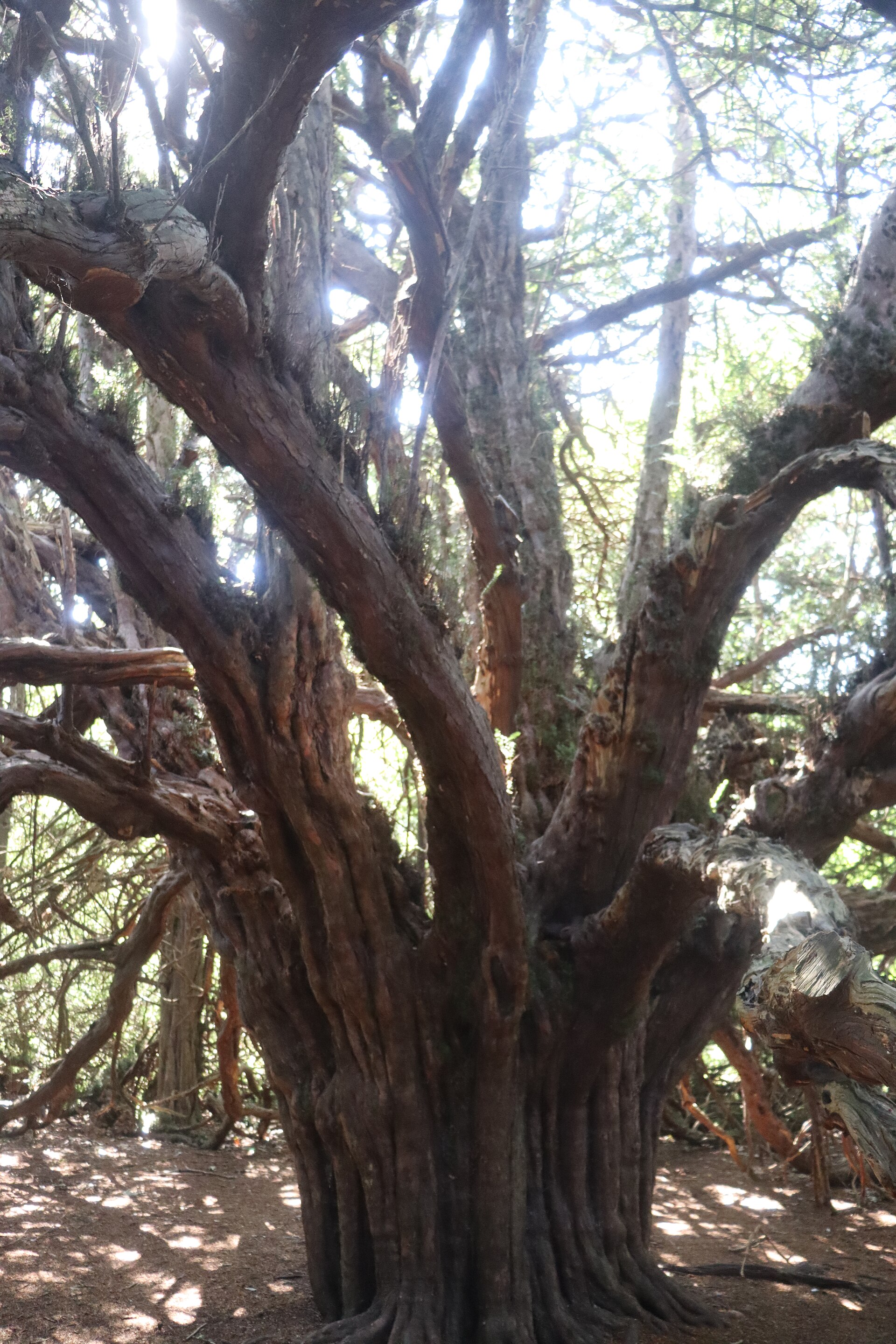
Great Yew of Ormiston
East Lothian
The Great Yew of Ormiston is a layering yew first recorded in 1474 and regarded as a significant surviving tree in Scotland.
- Near East Lothian

Sacred place · Medieval
Newbattle Abbey
Midlothian
Newbattle Abbey links Cistercian settlement, early Scottish coal extraction, repeated Anglo-Scottish conflict, Reformation (the break with Rome tha…
- Near Dalkeith
Fortified place · Roman
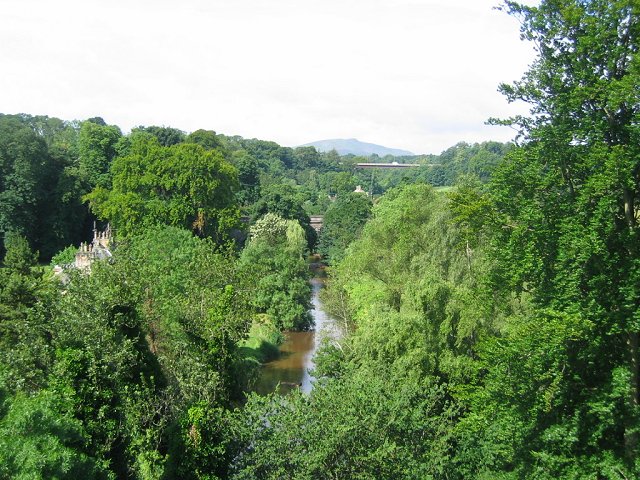
Elginhaugh
Midlothian
Elginhaugh is the Roman Empire’s most completely excavated timber-built auxiliary fort, offering rare evidence for a short Flavian occupation, mixe…
- Near Dalkeith
- Some walking
The setting
Crichton Kirk beside the castle precinct.
Photo: M J Richardson / Wikimedia Commons / CC BY-SA 2.0
Questions people ask
- Why is Crichton Castle’s north range unusual?
- Francis Stewart remodelled it in the 1580s with an Italianate diamond-patterned façade inspired by Ferrara’s Palazzo dei Diamanti.
- Was Crichton Castle involved in the Scottish Reformation?
- Yes. It was besieged and captured on 3 November 1559 after its owner backed Mary of Guise.
- Who manages Crichton Castle today?
- Historic Environment Scotland cares for the scheduled monument, which entered state care in 1956.
Sources
The Ancient Codex, in your pocket
Get the Pocket Codex app
Carry the directory with you — Crichton Castle and thousands of ancient places across Britain and Ireland, offline, wherever you roam.